The Dedalus Book of Decadence
by Brian Stableford (Editor)
On This Page
Description
"The Dedalus Book of Decadence looks south to sample the essence of fine French decadent writing. It succeeds in delivering a range of writers either searching vigorously for the thrill of a healthy crime or lamenting their impuissance from a sickly stupor." -- Andrew St George in The Independent "An invaluable sampler of spleen, everything from Baudelaire and Rimbaud to Dowson and Flecker. Let's hear it for 'luxe, calme et volupte'." -- Anne Billson in Time OutTags
Recommendations












































Member Reviews
The late 19th century literary movement known as Decadence received inspiration from Parisian poet and essayist Charles Baudelaire (1821-1867).
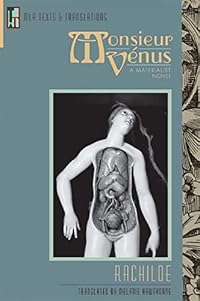
For anyone interested in the late 19th century literary movement known as Decadence, centered in Paris and then spreading overseas, this brief collection of 36 short stories and poems from France: Baudelaire, Lorrain, Verlaine, Rachilde, Rimbaud, de Groumont, Mendès and England: Wilde, Beardsley, Swinburne, Dowson, Lee-Hamilton, Gilchrist, Johnson, Stenbock, Davidson, Flecker, Lee can be read in the course of a week. Also, Brian Stapleford provides a most informative and engaging 80-page introduction covering the cultural, social and historical framework of the movement along with key themes and show more ideas of its leading proponents.
More specifically, from Brian’s Introduction, we read: “The ideal type of the Decadent personality is an artist who rejoices in his power to analyze and display his own curious situation; life itself must become for him a kind of art work.” And again, “If the flame of his ashen spirit is to be reignited he must have recourse to new and more dangerous sensations; the essentially artificial paradises of the imagination. He is likely to seek such artificial paradises by means of drugs – particularly opium and hashish, but also absinthe and ether – but he remains well aware that the greatest artifice of all is, of course, Art itself.”
Some of the Decadent writers were over-the-top mad, bad and dangerous, some lived socially respectable lives, but all of these Decadents luxuriated in lavish, rich, sensual language and followed German philosopher Arthur Schopenhauer in cultivating heightened sensitivity and refined aesthetic tastes as a way of transcending the narrow-mindedness and conventional values of the common mass of humanity. For a small slice of this creamy Decadent cake, here are three poems along with my comments on two short stories from the collection, two stories, that is, by Catulle Mendès, one of my very favorite authors of all times.
Spleen (beginning section) – Charles Baudelaire
Had I lived a thousand years I could not remember more.
An enormous chest of drawers could not hold in store,
Despite that it be crammed with love-letters, verses, tales,
Hanks of hair and records of obsolete entails,
More secrets than I harbor in my wretched mind.
It is a pyramid, a space by stone confined,
Where the bodies of the dead are vilely pressed.
-I am a cemetery by the moon unblessed
Where graveworms carry the slime of dim remorses
Relentlessly into the heart of cherished corpses.
Old Furniture – Catulle Mendès
After a particularly vigorous round of lovemaking during their secret rendezvous, beautiful, fair-skinned, rosy-cheeked, petite Roberta chides her lover, “Look at that! I ask you what will they think of me when they see it tomorrow, with the mattress in that state and everything else you have managed to do? This is a respectable hotel! It must be said, sir, that your treatment of me has been singularly brutal.”
After the couple takes time out to repair the bed to her satisfaction, they begin round two of their lovemaking on a chaise lounge. Darn! Same result: similar to the bed, the broken chaise lounge looks as if it witnessed a bout of modern-day ultimate, extreme cage-fighting . Again, rosy-cheeked Roberta fumes. And again the couple takes time out to repair the damage. What happens next might lead a reader to suspect fair, petite Roberta had a more active role in breaking the furniture than she would like to admit, even to herself.
The Black Nightgown – Catulle Mendès
Ever the true aesthete, Fabrice stretches out on a couch in his morning-coat and Turkish slippers awaiting the return of the ever-faithful love of his life, Geneviève. The chambermaid walks in with the laundry and sets the basket down on a table next to Fabrice. Fabrice’s highly refined eyes cast a glance at Genevieve’s clean clothing and he reflects: “That nightgown of Indian muslin, so nearly transparent, with the short sleeves and the trimmings of Valencienne – wasn’t that the one which he had seen sliding down from her lovely shoulders to reveal the length of her perfectly svelte and perfectly smooth young body, on that evening when, for the first time, Geneviève had surrendered her maidenly virtue?
He remembered the rapt feeling inspired in him by the sight of her rounded, rose-tipped breasts, and the way he had hesitated before enfolding her in his arms, fearful of sacrificing in the intimacy of their kisses the delightful sight of her.” But then crisis. Fabrice catches sight of a unrecognized black nightgown. Ahh! Clear evidence of Genevieve’s betrayal!
When Geneviève finally returns, Fabrice is in a fury. He confronts her with the evidence: “I must congratulate you on your exquisite taste, Madame, what a fine contrast the blackness of the material must make with the delicate whiteness of your sinful flesh! Clad in silk so dark, you might seem to be a flake of snow which falls in the dark night, or the feather of a turtle dove between a raven’s wings. Miserable wretch! I wish I could put a bullet or a swordpoint into each of your white-rimmed eyes! Let us have it, if you please – your explanation!”
You will have to read the story to find out what happens next but let me simply note how these Decadents understood quite well that in matters of passion and emotion men are the amateurs and women are the pros.
Spleen – Paul Verlaine
The roses were so very red.
And the ivy so intensely black.
My love, you have only to turn your head
And all my hopelessness floods back!
The vault of the sky was so deeply blue,
The sea so green and the air so mild.
I fear and hope to win from you
A curse that I might be defiled.
Of the gloss upon the holly leaf,
And the sunlit bush I can take no more.
Through all my far-flung fields of grief,
Your memory has passed before.
Theoretikos - Oscar Wilde
The mighty empire hath but feet of clay:
Of all its ancient chivalry and might
Our little island is forsaken quite:
Some enemy hath stolen its crown of bay,
And from its hills that voice hath passed away
Which spake of Freedom: O come out of it,
Come out of it, my Soul, thou art not fit
For this vile traffic-house, where day by day
Wisdom and reverence are sold at mart,
And the rude people rage with ignorant cries
Against a heritage of centuries.
It mars my calm: wherefore in dreams of Art
And loftiest culture I would stand apart,
Neither for God, nor for his enemies.
Illustration by one of the key artists of the Decadent movement - Aubrey Beardsley show less
The late 19th century literary movement known as Decadence received inspiration from Parisian poet and essayist Charles Baudelaire (1821-1867).
For anyone interested in the late 19th century literary movement known as Decadence, centered in Paris and then spreading overseas, this brief collection of 36 short stories and poems from France: Baudelaire, Lorrain, Verlaine, Rachilde, Rimbaud, de Groumont, Mendès and England: Wilde, Beardsley, Swinburne, Dowson, Lee-Hamilton, Gilchrist, Johnson, Stenbock, Davidson, Flecker, Lee can be read in the course of a week. Also, Brian Stapleford provides a most informative and engaging 80-page introduction covering the cultural, social and historical framework of the movement along with key themes and show more ideas of its leading proponents.
More specifically, from Brian’s Introduction, we read: “The ideal type of the Decadent personality is an artist who rejoices in his power to analyze and display his own curious situation; life itself must become for him a kind of art work.” And again, “If the flame of his ashen spirit is to be reignited he must have recourse to new and more dangerous sensations; the essentially artificial paradises of the imagination. He is likely to seek such artificial paradises by means of drugs – particularly opium and hashish, but also absinthe and ether – but he remains well aware that the greatest artifice of all is, of course, Art itself.”
Some of the Decadent writers were over-the-top mad, bad and dangerous, some lived socially respectable lives, but all of these Decadents luxuriated in lavish, rich, sensual language and followed German philosopher Arthur Schopenhauer in cultivating heightened sensitivity and refined aesthetic tastes as a way of transcending the narrow-mindedness and conventional values of the common mass of humanity. For a small slice of this creamy Decadent cake, here are three poems along with my comments on two short stories from the collection, two stories, that is, by Catulle Mendès, one of my very favorite authors of all times.
Spleen (beginning section) – Charles Baudelaire
Had I lived a thousand years I could not remember more.
An enormous chest of drawers could not hold in store,
Despite that it be crammed with love-letters, verses, tales,
Hanks of hair and records of obsolete entails,
More secrets than I harbor in my wretched mind.
It is a pyramid, a space by stone confined,
Where the bodies of the dead are vilely pressed.
-I am a cemetery by the moon unblessed
Where graveworms carry the slime of dim remorses
Relentlessly into the heart of cherished corpses.
Old Furniture – Catulle Mendès
After a particularly vigorous round of lovemaking during their secret rendezvous, beautiful, fair-skinned, rosy-cheeked, petite Roberta chides her lover, “Look at that! I ask you what will they think of me when they see it tomorrow, with the mattress in that state and everything else you have managed to do? This is a respectable hotel! It must be said, sir, that your treatment of me has been singularly brutal.”
After the couple takes time out to repair the bed to her satisfaction, they begin round two of their lovemaking on a chaise lounge. Darn! Same result: similar to the bed, the broken chaise lounge looks as if it witnessed a bout of modern-day ultimate, extreme cage-fighting . Again, rosy-cheeked Roberta fumes. And again the couple takes time out to repair the damage. What happens next might lead a reader to suspect fair, petite Roberta had a more active role in breaking the furniture than she would like to admit, even to herself.
The Black Nightgown – Catulle Mendès
Ever the true aesthete, Fabrice stretches out on a couch in his morning-coat and Turkish slippers awaiting the return of the ever-faithful love of his life, Geneviève. The chambermaid walks in with the laundry and sets the basket down on a table next to Fabrice. Fabrice’s highly refined eyes cast a glance at Genevieve’s clean clothing and he reflects: “That nightgown of Indian muslin, so nearly transparent, with the short sleeves and the trimmings of Valencienne – wasn’t that the one which he had seen sliding down from her lovely shoulders to reveal the length of her perfectly svelte and perfectly smooth young body, on that evening when, for the first time, Geneviève had surrendered her maidenly virtue?
He remembered the rapt feeling inspired in him by the sight of her rounded, rose-tipped breasts, and the way he had hesitated before enfolding her in his arms, fearful of sacrificing in the intimacy of their kisses the delightful sight of her.” But then crisis. Fabrice catches sight of a unrecognized black nightgown. Ahh! Clear evidence of Genevieve’s betrayal!
When Geneviève finally returns, Fabrice is in a fury. He confronts her with the evidence: “I must congratulate you on your exquisite taste, Madame, what a fine contrast the blackness of the material must make with the delicate whiteness of your sinful flesh! Clad in silk so dark, you might seem to be a flake of snow which falls in the dark night, or the feather of a turtle dove between a raven’s wings. Miserable wretch! I wish I could put a bullet or a swordpoint into each of your white-rimmed eyes! Let us have it, if you please – your explanation!”
You will have to read the story to find out what happens next but let me simply note how these Decadents understood quite well that in matters of passion and emotion men are the amateurs and women are the pros.
Spleen – Paul Verlaine
The roses were so very red.
And the ivy so intensely black.
My love, you have only to turn your head
And all my hopelessness floods back!
The vault of the sky was so deeply blue,
The sea so green and the air so mild.
I fear and hope to win from you
A curse that I might be defiled.
Of the gloss upon the holly leaf,
And the sunlit bush I can take no more.
Through all my far-flung fields of grief,
Your memory has passed before.
Theoretikos - Oscar Wilde
The mighty empire hath but feet of clay:
Of all its ancient chivalry and might
Our little island is forsaken quite:
Some enemy hath stolen its crown of bay,
And from its hills that voice hath passed away
Which spake of Freedom: O come out of it,
Come out of it, my Soul, thou art not fit
For this vile traffic-house, where day by day
Wisdom and reverence are sold at mart,
And the rude people rage with ignorant cries
Against a heritage of centuries.
It mars my calm: wherefore in dreams of Art
And loftiest culture I would stand apart,
Neither for God, nor for his enemies.
Illustration by one of the key artists of the Decadent movement - Aubrey Beardsley show less
Ratings
Members
- Recently Added By
Author Information

Author Brian M. Stableford was born in Shipley, Yorkshire, U. K. on July 25, 1948. He received an undergraduate degree in biology from the University of York in 1969 and a Ph.D. in sociology in 1979. Before becoming a full-time writer in 1988, he taught sociology at the University of Reading. He has published over 100 books, including science show more fiction and fantasy works, non-fiction, translations, and learned articles. He has written under the pseudonym of Brian Craig as well as under Brian Stableford and Brian M. Stableford. He has received numerous awards for both fiction and non-fiction including the British Science Fiction Award (1995), the Distinguished Scholarship Award of the International Association for the Fantastic in the Arts (1987), the J. Lloyd Eaton Award (1987), the Science Fiction Research Association's (SFRA) Pioneer Award (1996), and the SFRA's Pilgrim Award (1999). (Bowker Author Biography) show less
All Editions
Some Editions
Series
Belongs to Publisher Series
Common Knowledge
- Canonical title
- The Dedalus Book of Decadence
Classifications
Statistics
- Members
- 108
- Popularity
- 299,393
- Reviews
- 2
- Rating
- (4.29)
- Languages
- English
- Media
- Paper, Ebook
- ISBNs
- 6
- ASINs
- 1