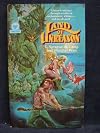
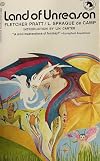
Land of unreason
by L. Sprague de Camp, Fletcher Pratt
There is 1 current discussion about this work.
On This Page
Description
Kidnapped and dropped into the Court of King Oberon and Queen Titania, Fred Barber, a seasoned diplomat, believed only what he saw--but what he was seeing was elves, fairies, sprites, and goblins, all living matter-of-factly in a world of magic.Tags
Recommendations








Member Reviews
Sprague de Camp and Pratt collectively and individually were prolific (Sprague de Camp more so) contributors to mid-twentieth century fantasy. This is one of their many collaborations. It could be called a failed experiment which has its occasional charms.
What they seem to be trying to do is to create a rationally constructed irrational world based on faery. They plunder many literary (and occasionally folklore) traditions in an attempt to construct a story that also has many contemporary references.
The tale is centred on a relatively junior American diplomat experienced in the all-too-real world of the rise of fascism and now (at the time of the book) finding himself in a Britain plunged into air raids. Perhaps he has lost his mind show more under the pressure.
The core of the book was published in the Autumn of 1941 in 'Unknown Worlds' and then expanded into book form for publication in 1942. I have not read the original but perhaps the expansion was more than that original could bear.
The contemporary references largely jar and do not outlast their period. A fight between Fred (our diplomat) as a bat-winged hero, 'allied ' ravens and enemy eagles is rather obviously a dog-fight straight out of the Battle of Britain.
The classic three labours include one set in a totalitarian underwater society of molluscs or similar which is clearly a caricature of Sovietism. There are jive-talking sand devils which are just plain silly. The silliness in the story may be charming to some. Not so much to me.
I am one of those who likes my fantasy straight, dashes of wit perhaps but not played for laughs. Fantasy, always being just a few steps from insanity, should, in my view be taken seriously although I am notorious for my lack of humour when it comes to the arts.
However, there are more positive things to say. The writers (one of them at least) has a remarkable facility for capturing accents to the extent that the Yorkshire couple who help open the tale were so finely drawn that I would have thought the writing could only have been done by an Englishman.
For two Americans to capture, albeit briefly, the felt reality of Britain in wartime conditions suggests considerable imaginative (or research) ability. Neither man was present in the country during the period although Pratt had equal fame as a respected military analyst and historian.
The intellectual ambition of the novel is also to be respected. It could have been pulled off if the two men had not evidently treated the project as a bit of a jape, as too much fun perhaps. The absurdities become mad without the pain that actual madness brings.
And possibilities are lost. There is an implicit sexual frankness and honesty in their writing which remains unexploited. Sexual tensions in Fred are alluded to and then swept over too easily when some exploration might have given us a more sophisticated clue to the fantasy/madness dialectic.
A loss of reason is either an imaginative adventure or it is a breakdown in a person. This version of irrationality lacks psychological truth in either direction. It has all the feel of two clever and literate people plundering cultural tropes and creating a genre gateaux.
This is a shame because, apart from the fact that the men can write when they want to (and there is definite linguistic inventiveness here), the idea had great potential. So, treat it as a piece of cake from another era. Some will enjoy its overdone richness and 'jokes' more than I did. show less
What they seem to be trying to do is to create a rationally constructed irrational world based on faery. They plunder many literary (and occasionally folklore) traditions in an attempt to construct a story that also has many contemporary references.
The tale is centred on a relatively junior American diplomat experienced in the all-too-real world of the rise of fascism and now (at the time of the book) finding himself in a Britain plunged into air raids. Perhaps he has lost his mind show more under the pressure.
The core of the book was published in the Autumn of 1941 in 'Unknown Worlds' and then expanded into book form for publication in 1942. I have not read the original but perhaps the expansion was more than that original could bear.
The contemporary references largely jar and do not outlast their period. A fight between Fred (our diplomat) as a bat-winged hero, 'allied ' ravens and enemy eagles is rather obviously a dog-fight straight out of the Battle of Britain.
The classic three labours include one set in a totalitarian underwater society of molluscs or similar which is clearly a caricature of Sovietism. There are jive-talking sand devils which are just plain silly. The silliness in the story may be charming to some. Not so much to me.
I am one of those who likes my fantasy straight, dashes of wit perhaps but not played for laughs. Fantasy, always being just a few steps from insanity, should, in my view be taken seriously although I am notorious for my lack of humour when it comes to the arts.
However, there are more positive things to say. The writers (one of them at least) has a remarkable facility for capturing accents to the extent that the Yorkshire couple who help open the tale were so finely drawn that I would have thought the writing could only have been done by an Englishman.
For two Americans to capture, albeit briefly, the felt reality of Britain in wartime conditions suggests considerable imaginative (or research) ability. Neither man was present in the country during the period although Pratt had equal fame as a respected military analyst and historian.
The intellectual ambition of the novel is also to be respected. It could have been pulled off if the two men had not evidently treated the project as a bit of a jape, as too much fun perhaps. The absurdities become mad without the pain that actual madness brings.
And possibilities are lost. There is an implicit sexual frankness and honesty in their writing which remains unexploited. Sexual tensions in Fred are alluded to and then swept over too easily when some exploration might have given us a more sophisticated clue to the fantasy/madness dialectic.
A loss of reason is either an imaginative adventure or it is a breakdown in a person. This version of irrationality lacks psychological truth in either direction. It has all the feel of two clever and literate people plundering cultural tropes and creating a genre gateaux.
This is a shame because, apart from the fact that the men can write when they want to (and there is definite linguistic inventiveness here), the idea had great potential. So, treat it as a piece of cake from another era. Some will enjoy its overdone richness and 'jokes' more than I did. show less
"La terra dell'impossibile" è un libro curioso... sembra quasi una sorta di Alice nel Paese delle Meraviglie con protagonista un serioso diplomatico americano al posto della famosa bambina inglese.
Le bizzarrie del mondo che presenta sono del tipo allucinato che solitamente adoro, senza contare una dose di sano humour che apprezzo sempre, tuttavia ho trovato il libro un po' sconclusionato, con delle linee narrative inserite alla fine e sviluppate in fretta e furia che poco si amalgamano con il resto della storia. La traduzione poi non mi ha convinto per niente, anzi credo che buona parte della fatica che ho fatto per andare avanti sia stata colpa di questa. Peccato.
Le bizzarrie del mondo che presenta sono del tipo allucinato che solitamente adoro, senza contare una dose di sano humour che apprezzo sempre, tuttavia ho trovato il libro un po' sconclusionato, con delle linee narrative inserite alla fine e sviluppate in fretta e furia che poco si amalgamano con il resto della storia. La traduzione poi non mi ha convinto per niente, anzi credo che buona parte della fatica che ho fatto per andare avanti sia stata colpa di questa. Peccato.
"La terra dell'impossibile" è un libro curioso... sembra quasi una sorta di Alice nel Paese delle Meraviglie con protagonista un serioso diplomatico americano al posto della famosa bambina inglese.
Le bizzarrie del mondo che presenta sono del tipo allucinato che solitamente adoro, senza contare una dose di sano humour che apprezzo sempre, tuttavia ho trovato il libro un po' sconclusionato, con delle linee narrative inserite alla fine e sviluppate in fretta e furia che poco si amalgamano con il resto della storia. La traduzione poi non mi ha convinto per niente, anzi credo che buona parte della fatica che ho fatto per andare avanti sia stata colpa di questa. Peccato.
Le bizzarrie del mondo che presenta sono del tipo allucinato che solitamente adoro, senza contare una dose di sano humour che apprezzo sempre, tuttavia ho trovato il libro un po' sconclusionato, con delle linee narrative inserite alla fine e sviluppate in fretta e furia che poco si amalgamano con il resto della storia. La traduzione poi non mi ha convinto per niente, anzi credo che buona parte della fatica che ho fatto per andare avanti sia stata colpa di questa. Peccato.
As I found this book fairly early in my quest for top-flight fantasy, I remember it as a pleasant experience. While more easily seen as a 1940's take on Alice in Wonderland meets "A Mid-Summer Night's Dream", the book passes an evening quite pleasantly. Don't substitute booze for the milk left out for the brownies, they resent that sort of humour.
This book was originally published in 1942.
This book was originally published in 1942.
An interesting fantasy excursion but not up to the standard of this team's Harold Shea books. 'Land Of Unreason' shows more influence from de Camp's rather bloodless prose style than Pratt's intriguing hand.
De Camp and Pratt create their own dream come true. Not always idyllic, but fun most of the time.
Ratings
Members
- Recently Added By
Lists

Ballantine Adult Fantasy Series
85 works; 8 members

Cawthorn and Moorcock's Fantasy: The 100 Best Books
110 works; 7 members
Talk Discussions
Current Discussions
A Midummer Night's Gleam in Good Show Sir! — bad science fiction and fantasy covers (June 23)
Author Information

329+ Works 25,132 Members
L. Sprague de Camp, winner of the World Fantasy Award for Life Achievement, was fluent in several languages and traveled the world. He was chased by a hippopotamus in Uganda and sea lions in the Galapagos Islands. He saw tigers and rhinoceroses from elephantback in India, and he was bitten by a lizard in the jungles of Guatemala. His fascinating show more autobiography. Time and Chance, won the 1997 Hugo Award for best nonfiction. L. Sprague de Camp passed away in May 2000 show less

110+ Works 6,287 Members
Some Editions
Awards and Honors
Notable Lists
Series
Belongs to Publisher Series
Work Relationships
Is contained in
Common Knowledge
- Canonical title
- Land of unreason
- Original publication date
- 1942
Classifications
Statistics
- Members
- 377
- Popularity
- 82,584
- Reviews
- 6
- Rating
- (3.35)
- Languages
- English
- Media
- Paper, Ebook
- ISBNs
- 8
- ASINs
- 10