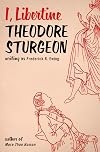
I, Libertine
by Theodore Sturgeon
On This Page
Description
The novel that began as a radio hoax, Theodore Sturgeon's I, Libertine is a hilarious erotic romp through the royal boudoirs of eighteenth-century London Inspired by a notorious radio hoax in the mid-1950s, popular radio host and prankster Jean Shepherd exhorted his faithful listeners to approach their local booksellers the next morning and request copies of the historical novel I, Libertine by Frederick R. Ewing--a book that had never been written, by an author who had never been alive. The show more hoax was so successful that I, Libertine became the talk of the town, even earning the unique distinction of being banned by the Archdiocese of Boston, despite the fact that it didn't yet exist. Now there was nothing left to do but write the thing . . . and fantasy and science fiction legend Theodore Sturgeon was called in to work his magic. Originally written pseudonymously, Sturgeon's I, Libertine is a glorious tale of close shaves, daring escapes, and wildly licentious behavior. It covers the bawdy misdeeds of Captain Lance Courtenay as he carelessly romps through the royal court and the bedchambers of London's finest ladies. Chock-full of wicked wit and Sturgeon's trademark twists and turns, it is a hilarious, picaresque adventure that Ewing himself would certainly have been proud to call his own, if he had existed. This ebook features an illustrated biography of Theodore Sturgeon including rare images and never-before-seen documents from the University of Kansas's Kenneth Spencer Research Library and the author's estate, among other sources. show lessTags
Recommendations





















Member Recommendations

anonymous user Because everyone should read The Word. :)
02
Member Reviews
This is a delightful book that enjoyed thoroughly. As a book that started out life as a rumor on Jean Shepeard's night time radio talk show, then ended up on the N.Y. Times Bestseller List simply based on the requests of his listeners, and later turned into a physical book by Ian Ballantine of Ballantine Books, who got Theodore Sturgeon to write all but the last chapter, which was written by his wife, Betty Ballantine.
The story itself was actually researched and written in a single marathon typing session. It is a story of Lance, Captain Courtney, a young man wishing to rise in London society and how he gets himself intertwined with the lives of different women. Liv Chudney, Lilith Axelrood and Elaine Huestes (sp?) I actually listened show more to the audio version.
While you would never call Lance a Libertine, there are so many machinations and legal manipulations in the story that it is always interesting. Revenge, revenue, alchemy and hair removal all play their roles in Lance's life. He even finds love and sorrow, along with parents.
All around, a capital achievement by Mr. Sturgeon. Give it a listen at www.uvula_audio.com They have some great classics there. show less
The story itself was actually researched and written in a single marathon typing session. It is a story of Lance, Captain Courtney, a young man wishing to rise in London society and how he gets himself intertwined with the lives of different women. Liv Chudney, Lilith Axelrood and Elaine Huestes (sp?) I actually listened show more to the audio version.
While you would never call Lance a Libertine, there are so many machinations and legal manipulations in the story that it is always interesting. Revenge, revenue, alchemy and hair removal all play their roles in Lance's life. He even finds love and sorrow, along with parents.
All around, a capital achievement by Mr. Sturgeon. Give it a listen at www.uvula_audio.com They have some great classics there. show less
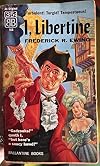
We all know the saying, don't judge a book by its cover -- but have you ever bought a book just for its cover? I love old paperbacks and purchased a tattered copy of I, Libertine solely on the strength of the Turbulent! Turgid! Tempestuous! illustration on the cover. (Which turned out to be by noted science fiction artist and sometime Mad magazine contributor Frank Kelly Freas.) I Googled my new treasure and discovered the book in my hands was one of the greatest practical jokes in publishing history (details below.)
Will I ever read I, Libertine? Hardly likely. A sample paragraph, picked at random, may explain: “ ‘We...we burned your clothes,’ ” he said, as the only thing he could think of to say. Which reminded him of the show more reason for their cremation, which brought back the veritable diapason of that earth-shaking petal-shriveling, light-bending miasma, which in turn made it clear to him that he recognized the odor not exclusively in memory. Miss Callow still smelt like the midden of an almshouse.”
But the story of how the book came to be is too delightful not to share. So I'll quote from Wikipedia to raise the curtain on the ruse:
"I, Libertine" was a literary hoax that began as a practical joke by late-night radio raconteur Jean Shepherd. Shepherd was highly annoyed at the way that the bestseller lists were being compiled in the mid-1950s. These lists were not determined only from sales figures but were also derived from the number of requests for new and upcoming books at bookstores.
Shepherd urged his listeners to enter bookstores and ask for a book that did not exist. He fabricated the author (Frederick R. Ewing) of this imaginary novel, concocted a title (I, Libertine), and outlined a basic plot for his listeners to use on skeptical or confused bookstore clerks. Shepherd eventually proved his point that the process of choosing bestsellers was flawed.
Bookstores became interested in carrying Ewing's novel, which reportedly had been banned in Boston. When publisher Ian Ballantine, novelist Theodore Sturgeon and Shepherd met for lunch, Ballantine hired Sturgeon to write a novel based on Shepherd's outline. Betty Ballantine completed the final chapter after an exhausted Sturgeon fell asleep on the Ballantines' couch, having attempted to meet the deadline in one marathon typing session.
On September 13, 1956, Ballantine Books published I, Libertine simultaneously in hardcover and paperback editions with Shepherd seen as Ewing in the back cover photograph. In effect, the hoax actually begot the book. The proceeds were donated to charity.
The cover painting by Frank Kelly Freas includes hidden images and inside jokes: The sign on the tavern, Fish & Staff, has a shepherd's staff, referencing both Sturgeon and Shepherd. A tiny portion of the word often spoken on the air by Shepherd — "Excelsior!" — can be seen in a triangular area at extreme left, and the exclamation is also hidden in the ruffles on the dress worn by the woman on the right side of the painting.
To comply with Wikipedia's very reasonable requirements for redistribution of text from their site, the above work is released under CC-BY-SA: http://creativecommons.org/licenses/by-sa/3.0/ A link to the Wiki page where text appears: http://en.wikipedia.org/wiki/I,_Libertine show less
Will I ever read I, Libertine? Hardly likely. A sample paragraph, picked at random, may explain: “ ‘We...we burned your clothes,’ ” he said, as the only thing he could think of to say. Which reminded him of the show more reason for their cremation, which brought back the veritable diapason of that earth-shaking petal-shriveling, light-bending miasma, which in turn made it clear to him that he recognized the odor not exclusively in memory. Miss Callow still smelt like the midden of an almshouse.”
But the story of how the book came to be is too delightful not to share. So I'll quote from Wikipedia to raise the curtain on the ruse:
"I, Libertine" was a literary hoax that began as a practical joke by late-night radio raconteur Jean Shepherd. Shepherd was highly annoyed at the way that the bestseller lists were being compiled in the mid-1950s. These lists were not determined only from sales figures but were also derived from the number of requests for new and upcoming books at bookstores.
Shepherd urged his listeners to enter bookstores and ask for a book that did not exist. He fabricated the author (Frederick R. Ewing) of this imaginary novel, concocted a title (I, Libertine), and outlined a basic plot for his listeners to use on skeptical or confused bookstore clerks. Shepherd eventually proved his point that the process of choosing bestsellers was flawed.
Bookstores became interested in carrying Ewing's novel, which reportedly had been banned in Boston. When publisher Ian Ballantine, novelist Theodore Sturgeon and Shepherd met for lunch, Ballantine hired Sturgeon to write a novel based on Shepherd's outline. Betty Ballantine completed the final chapter after an exhausted Sturgeon fell asleep on the Ballantines' couch, having attempted to meet the deadline in one marathon typing session.
On September 13, 1956, Ballantine Books published I, Libertine simultaneously in hardcover and paperback editions with Shepherd seen as Ewing in the back cover photograph. In effect, the hoax actually begot the book. The proceeds were donated to charity.
The cover painting by Frank Kelly Freas includes hidden images and inside jokes: The sign on the tavern, Fish & Staff, has a shepherd's staff, referencing both Sturgeon and Shepherd. A tiny portion of the word often spoken on the air by Shepherd — "Excelsior!" — can be seen in a triangular area at extreme left, and the exclamation is also hidden in the ruffles on the dress worn by the woman on the right side of the painting.
To comply with Wikipedia's very reasonable requirements for redistribution of text from their site, the above work is released under CC-BY-SA: http://creativecommons.org/licenses/by-sa/3.0/ A link to the Wiki page where text appears: http://en.wikipedia.org/wiki/I,_Libertine show less
Ratings
Members
- Recently Added By
Lists

Pants on fire
27 works; 4 members

Fakes, Forgeries, and Fictitious Authors
112 works; 4 members
Author Information

Theodore Sturgeon was born Edward Hamilton Waldo in New York City on February 26, 1918. He sold his first short story, Heavy Insurance, while serving in the United States Merchant Marine from 1935 to 1938. He won numerous awards including the 1954 International Fantasy Award for More than Human, the 1970 Nebula and Hugo Awards for Slow Sculpture, show more and the 1985 World Fantasy Award for Lifetime Achievement. He was inducted into the Science Fiction and Fantasy Hall of Fame in 2000. He died of pneumonia in Eugene, Oregon on May 8, 1985. (Bowker Author Biography) Theodore Sturgeon was the author of numerous novels and over 200 stories. He died in 1985. (Publisher Provided) show less
All Editions
Some Editions
Common Knowledge
- Original publication date
- 1956-07-13; 1956
Classifications
- Genres
- Fiction and Literature, General Fiction, Historical Fiction
- DDC/MDS
- 813.54 — Literature & rhetoric American literature in English American fiction in English 1900-1999 1945-1999
- LCC
- PZ4 .S5485 — Language and Literature Fiction and juvenile belles lettres Fiction and juvenile belles lettres Fiction in English
- BISAC
Statistics
- Members
- 55
- Popularity
- 557,041
- Reviews
- 2
- Rating
- (3.36)
- Languages
- English
- Media
- Paper, Ebook
- ISBNs
- 2
- ASINs
- 4