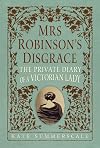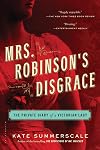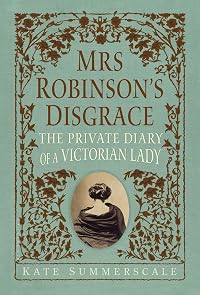
Mrs Robinson's Disgrace: The Private Diary of a Victorian Lady
by Kate Summerscale
On This Page
Description
"I think people marry far too much; it is such a lottery, and for a poor woman--bodily and morally the husband's slave--a very doubtful happiness." --Queen Victoria to her recently married daughter Vicky Headstrong, high-spirited, and already widowed, Isabella Walker became Mrs. Henry Robinson at age thirty-one in 1844. Her first husband had died suddenly, leaving his estate to a son from a previous marriage, so she inherited nothing. A successful civil engineer, Henry moved them, by then show more with two sons, to Edinburgh's elegant society in 1850. But Henry traveled often and was cold and remote when home, leaving Isabella to her fantasies. No doubt thousands of Victorian women faced the same circumstances, but Isabella chose to record her innermost thoughts--and especially her infatuation with a married Dr. Edward Lane--in her diary. Over five years the entries mounted--passionate, sensual, suggestive. One fateful day in 1858 Henry chanced on the diary and, broaching its privacy, read Isabella's intimate entries. Aghast at his wife's perceived infidelity, Henry petitioned for divorce on the grounds of adultery. Until that year, divorce had been illegal in England, the marital bond being a cornerstone of English life. Their trial would be a cause celebre, threatening the foundations of Victorian society with the specter of "a new and disturbing figure: a middle class wife who was restless, unhappy, avid for arousal." Her diary, read in court, was as explosive as Flaubert's Madame Bovary, just published in France but considered too scandalous to be translated into English until the 1880s. As she accomplished in her award-winning and bestselling The Suspicions of Mr. Whicher, Kate Summerscale brilliantly recreates the Victorian world, chronicling in exquisite and compelling detail the life of Isabella Robinson, wherein the longings of a frustrated wife collided with a society clinging to rigid ideas about sanity, the boundaries of privacy, the institution of marriage, and female sexuality. show lessTags
Recommendations









Member Recommendations

souloftherose Kate Summerscale's book, Mrs Robinson's Disgrace, covers the details of an historical divorce case reference in Donoghue's historical novel. Donoghue's novel is a fictionalised account of an historical divorce case of a similar sort to the one covered by Summerscale's book.
Also recommended by GCPLreader
Member Reviews
This morning I heard a story on the radio show Radio 360 about Jace Clayton, a Brooklyn-based DJ also known as DJ/rupture, and how he pulls together sometimes quite different pieces of music and merges them into something new. I found it thrilling to hear the original pieces and then hear how Clayton brought them together. This was similar to how I felt while reading Mrs Robinson's Disgrace. Kate Summerscale skillfully weaves a variety of elements into a cohesive narrative, which I found absolutely engaging.
I picked up this book after reading a review by Teresa on Shelf Love. Teresa seemed most struck by the idea that the act of keeping a diary would in itself have an influence on the diarist's thoughts and actions, that because in her show more diary Isabella Robinson dwelled so much on her infatuations and her feelings of being trapped by her marriage, she actually heightened and perpetuated those feelings.
While I, too, found this idea intriguing, I was more interested in where Mrs Robinson's diary and the ensuing divorce trial were situated in relation to the culture at that time. Victorian England was very focused on appearances and on maintaining institutions. While, given that atmosphere, it might seem an odd time to establish a Divorce Court, it wasn't really divorce as we think of it today. The purpose of the Divorce Court in Victorian England wasn't to dissolve unions that were unpleasant for either party. The purpose of the Divorce Court at the time, Summerscale suggests, was to strengthen the institution of marriage by weeding out the "bad" examples.
As a result, many of the rulings contained elements that we might find strange today. For example, there was the case in which Fanny Curtis was granted a divorce from her abusive husband but was not granted custody of their children. The vice-chancellor deciding the custody case determined that it was more important to the fabric of society to uphold a husband's rights, even if that meant leaving children in the hands of someone known to be abusive in his actions. "However harsh, however cruel the husband may be," the vice-chancellor explained, "it does not justify the wife's want of that due submission to the husband, which is her duty both by the law of God and by the law of man." Upholding the institution of marriage and the man's role within it was more important than the safety and wellbeing of the people affected by it. If the institution of marriage should fall, the concern seemed to be, society itself would be in danger.
It struck me several times while reading this book just how delicate the Victorians seemed to view society. Everywhere you turn, there's a threat. After Henry Robinson read his wife's diary with its apparent confession of adultery and amorous feelings for multiple men, he filed for divorce in the new court. Because he had no evidence for the adultery besides his wife's diary, excerpts were presented as evidence in court. Initially, the newspapers printed these excerpts as they were read in court, but after a while, the prurient content of the excerpts began to alarm some readers. Women had been barred from the courtroom during the reading of the most expository of the passages, but here women and even children could read the same material in the morning paper. Some publications chose not to publish these extracts because they might give readers (particularly women) bad ideas.
Summerscale writes:
England recognized the bad influence of foreign novels like Flaubert's Madame Bovary, which addresses issues of adultery and (gasp!) women's sexual urges, but now it appeared necessary to protect the women of England even from themselves.
This is the beauty of this book. Summerscale doesn't just present the diary of one woman or chronicle the collapse of one marriage. Instead, she places these elements in historical context. We see how the lives of Isabella and Henry Robinson are interwoven with the culture and the ideas that were emerging at the time. She clearly demonstrates to her readers the tumult in England at the time as ideas of spirituality, sexuality, art, intellectualism, and the role of institutions in the lives of individuals were being scrutinized and inevitably altered in the examining. She shows the anxiety with which these new and dangerous ideas were received and how all of this coalesced in the pages of Isabella Robinson's diary and then intersected with the public sphere again during the divorce proceedings.
I enjoyed observing Summerscale's skill in pulling all of this together, and I highly enjoyed reading the resulting narrative. show less
I picked up this book after reading a review by Teresa on Shelf Love. Teresa seemed most struck by the idea that the act of keeping a diary would in itself have an influence on the diarist's thoughts and actions, that because in her show more diary Isabella Robinson dwelled so much on her infatuations and her feelings of being trapped by her marriage, she actually heightened and perpetuated those feelings.
While I, too, found this idea intriguing, I was more interested in where Mrs Robinson's diary and the ensuing divorce trial were situated in relation to the culture at that time. Victorian England was very focused on appearances and on maintaining institutions. While, given that atmosphere, it might seem an odd time to establish a Divorce Court, it wasn't really divorce as we think of it today. The purpose of the Divorce Court in Victorian England wasn't to dissolve unions that were unpleasant for either party. The purpose of the Divorce Court at the time, Summerscale suggests, was to strengthen the institution of marriage by weeding out the "bad" examples.
As a result, many of the rulings contained elements that we might find strange today. For example, there was the case in which Fanny Curtis was granted a divorce from her abusive husband but was not granted custody of their children. The vice-chancellor deciding the custody case determined that it was more important to the fabric of society to uphold a husband's rights, even if that meant leaving children in the hands of someone known to be abusive in his actions. "However harsh, however cruel the husband may be," the vice-chancellor explained, "it does not justify the wife's want of that due submission to the husband, which is her duty both by the law of God and by the law of man." Upholding the institution of marriage and the man's role within it was more important than the safety and wellbeing of the people affected by it. If the institution of marriage should fall, the concern seemed to be, society itself would be in danger.
It struck me several times while reading this book just how delicate the Victorians seemed to view society. Everywhere you turn, there's a threat. After Henry Robinson read his wife's diary with its apparent confession of adultery and amorous feelings for multiple men, he filed for divorce in the new court. Because he had no evidence for the adultery besides his wife's diary, excerpts were presented as evidence in court. Initially, the newspapers printed these excerpts as they were read in court, but after a while, the prurient content of the excerpts began to alarm some readers. Women had been barred from the courtroom during the reading of the most expository of the passages, but here women and even children could read the same material in the morning paper. Some publications chose not to publish these extracts because they might give readers (particularly women) bad ideas.
Summerscale writes:
The idea that certain kinds of writing were dangerous---especially to young women---was commonplace: usually the culprits were French novels, but Isabella Robinson's diary showed that a middle-class Englishwoman could assault her own decency in prose.
England recognized the bad influence of foreign novels like Flaubert's Madame Bovary, which addresses issues of adultery and (gasp!) women's sexual urges, but now it appeared necessary to protect the women of England even from themselves.
This is the beauty of this book. Summerscale doesn't just present the diary of one woman or chronicle the collapse of one marriage. Instead, she places these elements in historical context. We see how the lives of Isabella and Henry Robinson are interwoven with the culture and the ideas that were emerging at the time. She clearly demonstrates to her readers the tumult in England at the time as ideas of spirituality, sexuality, art, intellectualism, and the role of institutions in the lives of individuals were being scrutinized and inevitably altered in the examining. She shows the anxiety with which these new and dangerous ideas were received and how all of this coalesced in the pages of Isabella Robinson's diary and then intersected with the public sphere again during the divorce proceedings.
I enjoyed observing Summerscale's skill in pulling all of this together, and I highly enjoyed reading the resulting narrative. show less
This is the story of Isabella Robinson, a woman who made the mistake of a) marrying an a-hole and b) keeping a diary of her feelings, flirtations, and, possibly, indiscretions. In 1858, England started allowing faster and cheaper divorces and Mr. Robinson was first in line, accusing his wife of infidelity based on the diary that he found in her desk while she was ill. What followed was a battle in the public eye over whether she was an evil adulteress or a typical woman, deranged by her malfunctioning uterus.
The book really got to me. It was difficult to read how women were marginalized and abused, both by society and by the law, in Victorian times (and earlier). Isabella moved in rather grand circles and one of her purported lovers show more owned a health spa, frequented by the likes of Charles Darwin and female authors Dinah Maria Mulock and Georgiana Craik. It was this doctor who put up the defense during the divorce proceedings (because he was named as co-defendant) that her journal was nothing but fantasy, a writing exercise, and that she had such vivid imaginings because of her female troubles. The book does not come to a conclusion as to the veracity of the journal but we as readers do come to the conclusion that Isabella was very unjustly treated by one or more men in her life.
http://webereading.com/2016/02/mental-health-and-victorian-or-modern.html show less
The book really got to me. It was difficult to read how women were marginalized and abused, both by society and by the law, in Victorian times (and earlier). Isabella moved in rather grand circles and one of her purported lovers show more owned a health spa, frequented by the likes of Charles Darwin and female authors Dinah Maria Mulock and Georgiana Craik. It was this doctor who put up the defense during the divorce proceedings (because he was named as co-defendant) that her journal was nothing but fantasy, a writing exercise, and that she had such vivid imaginings because of her female troubles. The book does not come to a conclusion as to the veracity of the journal but we as readers do come to the conclusion that Isabella was very unjustly treated by one or more men in her life.
http://webereading.com/2016/02/mental-health-and-victorian-or-modern.html show less
I found this book ultimately unsatisfying. In the end it all falls apart as you realize that the author doesn't really know what happened, and doesn't even have the full text of the famous diary. Mrs. Robinson's life after the divorce case is just dimly outlined. I think a novelist could have had a lot of fun with this, but there just plain wasn't enough solid information for a biographical work. In stead it is padded with trivia that isn't to the point.
What a fascinating and well-structured look at a very specific historical period in England . . . and a rather horrifying illumination or reminder of some things that were simply accepted as the norm at the time. (The repeated assertions that misery, violence, and abuse are not enough to justify a divorce, for example, and explicit statements that men and women should indeed suffer on through such in a marriage.)
Indeed, as the coda poses and as Isabella herself did in one diary entry, one pities her, even if she was the author of some of her own ill fortune - equally perhaps she was a victim of the society in which she lived, and outsize consequences following choices she made, and nearly everyone she knew turning on her when it came to show more it.
It is somewhat of a shame that Isabella's original journal and indeed the copies made for legal reasons have been destroyed; not that it would offer any more clarity to what truly happened but one is left curious what it was like in its entirety. (Though there are many excerpts in this book, gathered from papers of the time, around the divorce proceedings.)
The author has quite a knack for representing well and both admitting when there are impossible-to-fill gaps and at times theorising for them. I'm left quite curious and will have to look up some of her other works in similar vein. show less
Indeed, as the coda poses and as Isabella herself did in one diary entry, one pities her, even if she was the author of some of her own ill fortune - equally perhaps she was a victim of the society in which she lived, and outsize consequences following choices she made, and nearly everyone she knew turning on her when it came to show more it.
It is somewhat of a shame that Isabella's original journal and indeed the copies made for legal reasons have been destroyed; not that it would offer any more clarity to what truly happened but one is left curious what it was like in its entirety. (Though there are many excerpts in this book, gathered from papers of the time, around the divorce proceedings.)
The author has quite a knack for representing well and both admitting when there are impossible-to-fill gaps and at times theorising for them. I'm left quite curious and will have to look up some of her other works in similar vein. show less
In Mrs Robinson's Disgrace Kate Summerscale brings us another account of intrigue and betrayal in Victorian England; no murder this time but plenty of adultery, divorce and madness.
The background to this account is the change in the rules surrounding divorce which occurred in 1858. Before this new law the divorce process itself was far too expensive for anyone other than the very rich upper classes to be able to afford - a marriage could only be dissolved by an Act of Parliament. With the new 1858 law the process was simplified and became affordable for the middle-class. A new court was set up to dissolve marriages, The Court of Divorce and Matrimonial Causes although proving the grounds for a divorce was still difficult. A man had to show more prove his wife had been guilty of adultery, a woman had to prove her husband had been guilty of two matrimonial offences: she had to prove he had been unfaithful and that he was also guilty of desertion, cruelty or sexual misdeeds such as bigamy, incest, bestiality, rape or sodomy.
One of the first cases to be heard by the new court was the case of Henry and Isabella Robinson. Henry Robinson was petitioning for divorce on the grounds of his wife's adultery. His proof: her diary. In the book Summerscale describes the diary as 'detailed, sensual, alternately anguished and euphoric, more godless and abandoned than anything in contemporary English fiction' but the use of someone's diary as evidence against them was an unprecedented one. What the court had to decide was whether her diaries contained a true account of the events that took place or whether they were the deluded writings of an unstable mind.
The first half of the book covers the period leading up to the trial and Summerscale attempts to piece together what happened between Isabella Robinson and Edward Lane, the man with whom she was accused of having an affair, as well as to paint a picture of Isabella's unhappy marriage using extracts from her diary. The second half of the book covers the trial itself and the arguments used by the prosecution and defence lawyers as well as the final verdict.
The parts I found most interesting were the side matters Summerscale had to explain so that the trial and its proceedings made sense. Victorian views on sex and sexuality for both men and women, insanity, women's health and the science of phrenology all made for some fascinating reading. I also enjoyed the sections where Summerscale touches on the potential influence of this trial in the contemporary literature of the period: both in novels that feature diaries by authors such as Wilkie Collins to the portrayal of dissatisfied wives in the sensation novels of the 1860s.
I really enjoyed this and found it very helpful in understanding the background to novels published in the years following this case but I'm not sure whether this book might come across as a bit dry to someone who's not already interested in the period. show less
The background to this account is the change in the rules surrounding divorce which occurred in 1858. Before this new law the divorce process itself was far too expensive for anyone other than the very rich upper classes to be able to afford - a marriage could only be dissolved by an Act of Parliament. With the new 1858 law the process was simplified and became affordable for the middle-class. A new court was set up to dissolve marriages, The Court of Divorce and Matrimonial Causes although proving the grounds for a divorce was still difficult. A man had to show more prove his wife had been guilty of adultery, a woman had to prove her husband had been guilty of two matrimonial offences: she had to prove he had been unfaithful and that he was also guilty of desertion, cruelty or sexual misdeeds such as bigamy, incest, bestiality, rape or sodomy.
One of the first cases to be heard by the new court was the case of Henry and Isabella Robinson. Henry Robinson was petitioning for divorce on the grounds of his wife's adultery. His proof: her diary. In the book Summerscale describes the diary as 'detailed, sensual, alternately anguished and euphoric, more godless and abandoned than anything in contemporary English fiction' but the use of someone's diary as evidence against them was an unprecedented one. What the court had to decide was whether her diaries contained a true account of the events that took place or whether they were the deluded writings of an unstable mind.
The first half of the book covers the period leading up to the trial and Summerscale attempts to piece together what happened between Isabella Robinson and Edward Lane, the man with whom she was accused of having an affair, as well as to paint a picture of Isabella's unhappy marriage using extracts from her diary. The second half of the book covers the trial itself and the arguments used by the prosecution and defence lawyers as well as the final verdict.
The parts I found most interesting were the side matters Summerscale had to explain so that the trial and its proceedings made sense. Victorian views on sex and sexuality for both men and women, insanity, women's health and the science of phrenology all made for some fascinating reading. I also enjoyed the sections where Summerscale touches on the potential influence of this trial in the contemporary literature of the period: both in novels that feature diaries by authors such as Wilkie Collins to the portrayal of dissatisfied wives in the sensation novels of the 1860s.
I really enjoyed this and found it very helpful in understanding the background to novels published in the years following this case but I'm not sure whether this book might come across as a bit dry to someone who's not already interested in the period. show less
I knew of Kate Summerscale from her book, The Suspicions of Mr. Whicher. This book is about a Victorian woman, Isabella Robinson, and how her private diary was used by her husband to prosecute a divorce.
The Robinsons, Henry and Isabella, are an upper middle class family. Isabella meets Edward Lane and writes in her diary about how attracted she is to him. They take evening walks together and have several encounters that are vaguely but romantically described and may imply that they actually have sex. Or maybe not. But probably.
So when Isabella gets sick, her husband Henry reads the diary and then decides to use it to attain a divorce. In the end, the divorce is not granted (well, not this trial of it - they later get a divorce based show more on a subsequent affair) but the book becomes about so much more than this one couple's experience. Summerscale uses their loveless marriage to explore women's issues such as the comical beliefs (at least from this remove) around sexual appetites and what they mean - usually that if you have any interest in sex you're insane or have some sort of uterine disease. This is certainly the belief about women, but extends to men at least a bit as well. Summerscale also details the changing divorce laws. The Robinsons were one of the first couples heard in a new divorce court which loosened the rules for granting a divorce and made is much less expensive. By the way, no one cared that Henry had been cheating on Isabella for basically their whole marriage, even fathering several illegitimate children. Also, much of the diary was published in the newspapers leading to discussions of journaling in the Victorian era, both in fiction and in the life of everyday women. Imagine, though, having your private journal which may or may not have been entirely true but certainly involved real people that you saw on a daily basis published for all to see. Isabella used her diary as her defense though. Instead of trying to prove that she didn't have an affair, she tried to claim insanity through her diary. Her sexual yearnings were proof in the Victorian era that she was insane.
Overall, I found this book very entertaining but it made me glad I wasn't a Victorian era woman. show less
The Robinsons, Henry and Isabella, are an upper middle class family. Isabella meets Edward Lane and writes in her diary about how attracted she is to him. They take evening walks together and have several encounters that are vaguely but romantically described and may imply that they actually have sex. Or maybe not. But probably.
So when Isabella gets sick, her husband Henry reads the diary and then decides to use it to attain a divorce. In the end, the divorce is not granted (well, not this trial of it - they later get a divorce based show more on a subsequent affair) but the book becomes about so much more than this one couple's experience. Summerscale uses their loveless marriage to explore women's issues such as the comical beliefs (at least from this remove) around sexual appetites and what they mean - usually that if you have any interest in sex you're insane or have some sort of uterine disease. This is certainly the belief about women, but extends to men at least a bit as well. Summerscale also details the changing divorce laws. The Robinsons were one of the first couples heard in a new divorce court which loosened the rules for granting a divorce and made is much less expensive. By the way, no one cared that Henry had been cheating on Isabella for basically their whole marriage, even fathering several illegitimate children. Also, much of the diary was published in the newspapers leading to discussions of journaling in the Victorian era, both in fiction and in the life of everyday women. Imagine, though, having your private journal which may or may not have been entirely true but certainly involved real people that you saw on a daily basis published for all to see. Isabella used her diary as her defense though. Instead of trying to prove that she didn't have an affair, she tried to claim insanity through her diary. Her sexual yearnings were proof in the Victorian era that she was insane.
Overall, I found this book very entertaining but it made me glad I wasn't a Victorian era woman. show less
Imagine a time when the speculum in controversial and you have to plead hysterical insanity to protect the careers of your friends and lovers.
If you want a reminder of why it is so good to be a woman in western civilization in the twenty-first century--this book is a good place to start. If you have a reason to be grateful for divorce laws then that is the second reason to read it. If you are a book history and publishing buff or you keep a journal there is a wonderful whole chapter dedicated to the rise of journals and the use of diaries in the 19th century and a third reason to read it.
Summerscale on reading the diary which is the evidence used in the central divorce trial and is the basis of the book, "It gives us a flicker of our show more own world taking shape in the past." show less
If you want a reminder of why it is so good to be a woman in western civilization in the twenty-first century--this book is a good place to start. If you have a reason to be grateful for divorce laws then that is the second reason to read it. If you are a book history and publishing buff or you keep a journal there is a wonderful whole chapter dedicated to the rise of journals and the use of diaries in the 19th century and a third reason to read it.
Summerscale on reading the diary which is the evidence used in the central divorce trial and is the basis of the book, "It gives us a flicker of our show more own world taking shape in the past." show less
Members
- Recently Added By
Lists

Hot Gossip from Another Century
25 works; 3 members

Historical Literary Non-fiction
11 works; 2 members
Author Information

7+ Works 6,198 Members
Kate Summerscale is the former literary editor of the Daily Telegraph and the author of The Queen of Whale Cay, which won the Somerset Maugham Award and was shortlisted for the Whitbread biography award. She lives in London.
Awards and Honors
Distinctions
Common Knowledge
- Canonical title
- Mrs Robinson's Disgrace: The Private Diary of a Victorian Lady
- Original title
- Mrs Robinson's Disgrace: The Private Diary of a Victorian Lady
- Original publication date
- 2012-04-30
- People/Characters
- Isabella Robinson; Edward Lane; Mary Lane; Lady Drysdale; Charles Darwin [Charles Robert: 1809-1882]; George Combe
- Important places
- Edinburgh, Scotland, UK; Reading, Berkshire, England, UK
- Dedication
- In memory of my grandmothers, Nelle and Doris, and my great-aunt Phyllis
- First words
- (Prologue) In London in the summer of 1858, a court of law began to grant divorces to the English middle classes.
In the evening of 15 November, 1850, a mild Friday night, Isabella Robinson set out for a party near her house in Edinburgh. - Last words
- (Click to show. Warning: May contain spoilers.)The original diaries and the copies made of them were, as far as we know, destroyed.
Classifications
- Genres
- General Nonfiction, History, Nonfiction, Biography & Memoir
- DDC/MDS
- 941.34081092 — History & geography History of Europe British Isles South central Scotland Kinross
- LCC
- DA550 .S86 — History of Europe, Asia, Africa and Oceania Great Britain History of Great Britain England History By period Modern, 1485- Victorian era, 1837-1901
- BISAC
Statistics
- Members
- 761
- Popularity
- 36,892
- Reviews
- 47
- Rating
- (3.40)
- Languages
- 5 — Dutch, English, French, German, Italian
- Media
- Paper, Audiobook, Ebook
- ISBNs
- 23
- ASINs
- 7