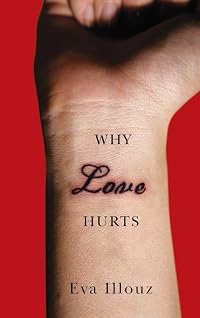
Why Love Hurts: A Sociological Explanation
by Eva Illouz
On This Page
Description
Few of us have been spared the agonies of intimate relationships. They come in many shapes: loving a man or a woman who will not commit to us, being heartbroken when we're abandoned by a lover, engaging in Sisyphean internet searches, coming back lonely from bars, parties, or blind dates, feeling bored in a relationship that is so much less than we had envisaged - these are only some of the ways in which the search for love is a difficult and often painful experience. Despite the widespread show more and almost collective character of these experiences, our culture insists they are the result of faulty or insufficiently mature psyches. For many, the Freudian idea that the family designs the pattern of an individual's erotic career has been the main explanation for why and how we fail to find or sustain love. Psychoanalysis and popular psychology have succeeded spectacularly in convincing us that individuals bear responsibility for the misery of their romantic and erotic lives. The purpose of this book is to change our way of thinking about what is wrong in modern relationships. The problem is not dysfunctional childhoods or insufficiently self-aware psyches, but rather the institutional forces shaping how we love. The argument of this book is that the modern romantic experience is shaped by a fundamental transformation in the ecology and architecture of romantic choice. The samples from which men and women choose a partner, the modes of evaluating prospective partners, the very importance of choice and autonomy and what people imagine to be the spectrum of their choices: all these aspects of choice have transformed the very core of the will, how we want a partner, the sense of worth bestowed by relationships, and the organization of desire. This book does to love what Marx did to commodities: it shows that it is shaped by social relations and institutions and that it circulates in a marketplace of unequal actors. show lessTags
Recommendations

















Member Recommendations


Member Reviews
Una obra imprescindible para entender de qué modo organizamos nuestro deseo.
Todos hemos sufrido a causa de las relaciones amorosas: ya sea por amar a alguien que no se compromete, al ser abandonados por un amante que nos partió el corazón, o cuando regresamos solos de una fiesta o fracasamos en una cita a ciegas. Y a pesar de lo generalizado de estas experiencias, solemos creer que estas dificultades son resultado de problemas personales, de un trauma infantil o de nuestra propia inmadurez, lo que casi siempre termina por producir dolorosos mecanismos de autoinculpación.
Eva Illouz se vale de obras literarias, revistas femeninas, sitios de Internet, entrevistas varias, para brindar un análisis que cambia radicalmente nuestra manera show more de pensar el amor. El problema, dice la autora, reside en la naturaleza de las fuerzas sociales e institucionales características de la modernidad que modelan la forma en que amamos y determinan la elección de pareja. Desentrañar el funcionamiento de esas fuerzas es la tarea de esta obra imprescindible para entender de qué modo organizamos nuestro deseo. show less
Todos hemos sufrido a causa de las relaciones amorosas: ya sea por amar a alguien que no se compromete, al ser abandonados por un amante que nos partió el corazón, o cuando regresamos solos de una fiesta o fracasamos en una cita a ciegas. Y a pesar de lo generalizado de estas experiencias, solemos creer que estas dificultades son resultado de problemas personales, de un trauma infantil o de nuestra propia inmadurez, lo que casi siempre termina por producir dolorosos mecanismos de autoinculpación.
Eva Illouz se vale de obras literarias, revistas femeninas, sitios de Internet, entrevistas varias, para brindar un análisis que cambia radicalmente nuestra manera show more de pensar el amor. El problema, dice la autora, reside en la naturaleza de las fuerzas sociales e institucionales características de la modernidad que modelan la forma en que amamos y determinan la elección de pareja. Desentrañar el funcionamiento de esas fuerzas es la tarea de esta obra imprescindible para entender de qué modo organizamos nuestro deseo. show less
May 28, 2025Spanish
Dit boek geeft een goed beeld over hoe onze visie op liefde door de tijd geëvolueerd is, en wat de uitdagingen nu kunnen zijn.
Het gaf me inzichten in mijn eigen rusteloosheid, zoektocht.
Het gaf me inzichten in mijn eigen rusteloosheid, zoektocht.
May 8, 2016Dutch
Ratings
Members
- Recently Added By
Lists

Reading list
170 works; 1 member
Author Information

Eva Illouz is Professor of Sociology at the Hebrew University of Jerusalem.
All Editions
Awards and Honors
Common Knowledge
- Original title
- Why Love Hurts
- Epigraph
- I want my works to be read by the far-from-frigid virgin
On fire for her sweetheart, by the boy,
In love for the very first time. May some fellow-sufferer
Perusing my anatomy of a desire,
See his own passion refle... (show all)cted there, cry in amazement:
Who told this scribbler about my private affairs?
Ovid, Amores - First words
- Wuthering Heights (1847) belongs to a long literary tradition portraying love as an agonizing painful emotion.
Classifications
Statistics
- Members
- 195
- Popularity
- 168,388
- Reviews
- 2
- Rating
- (3.97)
- Languages
- 7 — Dutch, English, French, German, Polish, Spanish, Swedish
- Media
- Paper, Audiobook, Ebook
- ISBNs
- 22
- ASINs
- 3