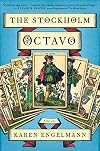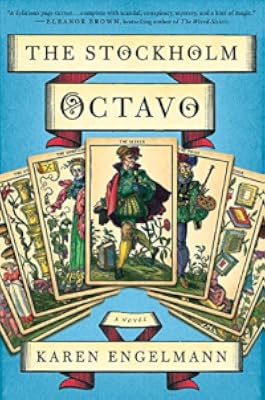
The Stockholm Octavo
by Karen Engelmann
On This Page
Description
One man's fortune holds the key to a nation's fate in this sensational debut novel set in 18th-century Sweden.The Stockholm Octavo by Karen Engelmann transports readers to a colorful Scandinavian world of intrigue and magic in a dazzling golden age of high art, music, and opulent fashion.
A masterwork of historical fiction in the vein of Patrick Suskind's classic novel, Perfume, Karen Engelmann's The Stockholm Octavo is mysterious and romantic—as magical and enthralling as The Night show more Circus by Erin Morgenstern—and features a brilliant and unforgettable cast of extraordinary characters.
. show less
Tags
Recommendations





















Member Reviews
An intriguing conceit, that one's fate is determined by the interaction of 8 people, forms the basis for this fascinating and well-executed novel of Stockholm circa 1791. The idea is well-developed and the author holds the reader's interest as the characters are revealed in their relevant places as the novel progresses.
Many interesting and complex characters are explored here, so well that the reader finds herself loving and hating them with quite a bit of fervor.
Lots of political intrigue (it is, incidentally, a story about the French Revolution from a Swedish perspective), plenty of historical details, and some surprising plot twists keep one turning the pages.
A most suprerior historical novel.
Many interesting and complex characters are explored here, so well that the reader finds herself loving and hating them with quite a bit of fervor.
Lots of political intrigue (it is, incidentally, a story about the French Revolution from a Swedish perspective), plenty of historical details, and some surprising plot twists keep one turning the pages.
A most suprerior historical novel.
Rating: 4* of five
The Publisher Says: Life is close to perfect for Emil Larsson, a self-satisfied bureaucrat in the Office of Customs and Excise in 1791 Stockholm. He is a true man of the Town—a drinker, card player, and contented bachelor—until one evening when Mrs. Sofia Sparrow, a fortune-teller and proprietor of an exclusive gaming parlor, shares with him a vision she has had: a golden path that will lead him to love and connection. She lays an Octavo for him, a spread of eight cards that augur the eight individuals who can help him realize this vision—if he can find them.
Emil begins his search, intrigued by the puzzle of his Octavo and the good fortune Mrs. Sparrow's vision portends. But when Mrs. Sparrow wins a mysterious show more folding fan in a card game, the Octavo's deeper powers are revealed. For Emil it is no longer just a game of the heart; collecting his eight is now crucial to pulling his country back from the crumbling precipice of rebellion and chaos. Set against the luminous backdrop of late eighteenth-century Stockholm, as the winds of revolution rage through the great capitals of Europe, The Stockholm Octavo brings together a collection of characters, both fictional and historical, whose lives tangle in political conspiracy, love, and magic in a breathtaking debut that will leave you spellbound.
My Review: In eighteenth-century Stockholm, there were yuppies. Revolting Babbitty yuppies. I suppose every generation has them, call them what one likes: The conformist, comfort-seeking anti-rebels whose focus is wholly personal. Emil Larsson, the main character of this novel, is one. I got a lovely foreboding frisson that I was about to watch Emil Larsson take a mega-dive, which always gives me a happy. (Conservatives going down in flames makes me smile no matter when, who, or where.) And sure enough! Happy received! Book rated highly, one third of the way through.
And then.
Whoa NELLY! Quel surprise, tyro historical novelist Engelmann pulls the old switcheroo on me, and uses Tarot (a strong interest of mine since 1974) to winkle out of me the sympathy a decent human being must (reluctantly) feel for one's fellow human in the throes of personal growth and maturation. Apparently Sweden in the 1790s was a place undergoing the Culture Wars so dear (!) to our hearts today. The King, Gustav III, was the leading Liberal (!!) and his little brother the leading Conservative. The modern Swedish state owes its existence to Gustav! What a head-rush!
Okay, so here's where we get Emil's growth...he's got, in the form of the Octavo laid for him by French émigré Sofia Sparrow with her trippy German Tarot cards:
The spread is one of Mrs. Sparrow's own invention, using eight places to discover the people who will make it possible for the subject of the reading to realize in the world a vision had by Mrs. Sparrow:
The thing is...the vision comes all unbidden; the spread cannot be done absent a vision; and the Seeker must commit to realizing the vision or the bad luck is dire. In the case of this vision, the consequences of failure or misinterpretation are no less than actual, bleeding Civil War and revolution for the progressive Swedish monarchy. Emil, of course, sees the vision in terms of his desire to marry a rich girl so he can keep his place in the Town's hierarchy. Mrs. Sparrow, to her credit, never bats him one upside the head to force him into seeing things outside himself; Life does that for her, as one burdened with the horrible gift of the Sight well knows it will.
Set all of this in a place and at a time when the French Revolution has all the world on edge, and the King of a smallish country is acting most bizarrely in favor of the commonfolk, and the Enlightenment has lit the torches of scientific understanding of the Universe (much to the enduring disgust of the various churches), and I was hooked from the get-go.
But then Engelmann makes the shift from “mmm nice” to “oh yes indeed! Nice!” by creating the repulsive Emil Larsson and growing him into a man of some values. I can't say I'd ever hand him my wallet and come back in a year expecting the money all to be there. But I would allow him to watch over my debauched daughter. (Not you, sweetiedarling, my IMAGINARY debauched daughter.) He'd protect someone weaker than himself, against his natural leanings. He's a rotten man, made into his best self. Which is, frankly, none too good.
And Sweden...well! Who knew they had history there too! If I ever thought about Sweden before this, it went sort of like “IKEA Volvo Electrolux SAAB ABBA” and from there into reverie about the Swede I dated once (only the second time in my life I've had to turn my face up to be kissed, an agreeable sensation, I see why girls like it, there's a lamentable shortage of gay guys over 6ft6in tall). Turns out the stakes were very high there in those days...Gustav III was the prime mover behind a plan to rescue Louis XVI and Marie Antoinette that ended in the Varennes capture and their eventual executions. Plus the aforementioned Swedish revolution that needed forestalling.
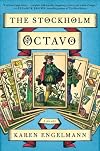
All in all, my favorite kind of read: Characters doing exciting and interesting things, growing as humans, illuminating history and human nature in ways I'd never given a thought to, and using Tarot to do it! I was extra-special pleased by the beauty of the book, from lovely turquoise jacket to handsomely illustrated endsheets to the in-text illustrations of the Tarot cards and spread. So satisfying.
Now for the things that did not please me near so much: Speechifying. The characters are prone to it. It's a first-novel issue, I feel sure, because the nature of the speechifying was appropriate to the situations in which the characters made the speeches. It takes time to learn what other means there are to convey some, though never all, of this information outside the speech. It's a flaw nonetheless. A half-star disappeared about p94-96 because of the issue.
Organizationally, the Octavo was an interesting experiment. Part of the point is that it must be laid out over eight successive nights, a card a night. No reason is asserted for this, and it causes some pacing problems: Eight nights? The events of an entire novel can last less than that and be satisfying; but to front-load the import of the story and still make us drag through eight days is not entirely wise. It worked only partially for me, and I suspect largely due to my deep interest in Tarot. It could cause Backstory Fatigue Syndrome in some pace-sensitive readers.
And lastly, The Fan. I knew next to nothing about the cult and language of fans among Enlightenment-era noble ladies. I know more now, and it was really fascinating, but it ended up feeling very much like something the author wanted me to know, even though she wove it into the story in as deft a way as one could wish. The effect of The Fan on the story is quite exciting, don't mistake me, but...a little less? A lot more, like making The Fan and not the Tarot central to the book? I don't know, somehow the fan thing made itself obtrusive and I was taken out of the story when the blasted things showed up.
I hope, though, that my warblings of pleasure about the experience of reading the book will cause you to plunk down the old spondulix and support Ecco Press and Engelmann in their gamble that there is still an audience for solidly made, intriguing, fun-to-read fiction about times and places not our own.
*Animal sensitivity note: Passages in this book won't sit well with those readers. Probably best to avoid.* show less
The Publisher Says: Life is close to perfect for Emil Larsson, a self-satisfied bureaucrat in the Office of Customs and Excise in 1791 Stockholm. He is a true man of the Town—a drinker, card player, and contented bachelor—until one evening when Mrs. Sofia Sparrow, a fortune-teller and proprietor of an exclusive gaming parlor, shares with him a vision she has had: a golden path that will lead him to love and connection. She lays an Octavo for him, a spread of eight cards that augur the eight individuals who can help him realize this vision—if he can find them.
Emil begins his search, intrigued by the puzzle of his Octavo and the good fortune Mrs. Sparrow's vision portends. But when Mrs. Sparrow wins a mysterious show more folding fan in a card game, the Octavo's deeper powers are revealed. For Emil it is no longer just a game of the heart; collecting his eight is now crucial to pulling his country back from the crumbling precipice of rebellion and chaos. Set against the luminous backdrop of late eighteenth-century Stockholm, as the winds of revolution rage through the great capitals of Europe, The Stockholm Octavo brings together a collection of characters, both fictional and historical, whose lives tangle in political conspiracy, love, and magic in a breathtaking debut that will leave you spellbound.
My Review: In eighteenth-century Stockholm, there were yuppies. Revolting Babbitty yuppies. I suppose every generation has them, call them what one likes: The conformist, comfort-seeking anti-rebels whose focus is wholly personal. Emil Larsson, the main character of this novel, is one. I got a lovely foreboding frisson that I was about to watch Emil Larsson take a mega-dive, which always gives me a happy. (Conservatives going down in flames makes me smile no matter when, who, or where.) And sure enough! Happy received! Book rated highly, one third of the way through.
And then.
Whoa NELLY! Quel surprise, tyro historical novelist Engelmann pulls the old switcheroo on me, and uses Tarot (a strong interest of mine since 1974) to winkle out of me the sympathy a decent human being must (reluctantly) feel for one's fellow human in the throes of personal growth and maturation. Apparently Sweden in the 1790s was a place undergoing the Culture Wars so dear (!) to our hearts today. The King, Gustav III, was the leading Liberal (!!) and his little brother the leading Conservative. The modern Swedish state owes its existence to Gustav! What a head-rush!
Okay, so here's where we get Emil's growth...he's got, in the form of the Octavo laid for him by French émigré Sofia Sparrow with her trippy German Tarot cards:
The spread is one of Mrs. Sparrow's own invention, using eight places to discover the people who will make it possible for the subject of the reading to realize in the world a vision had by Mrs. Sparrow:
The Seeker goes on the quest
The Companion is the sidekick
The Prisoner is a hostage to the Seeker
The Teacher doesn't need to be explained
The Courier has access to places the Seeker's message needs to go
The Trickster also doesn't need explanation
The Magpie makes a lot of noise and helps or hinders the Seeker with it
The Prize is, well, the reward...adding someone to one's life for good or ill is a prize, after all
The Key is the person whose unique position and talent are the ONLY way for the Seeker to achieve the goal in the vision
The thing is...the vision comes all unbidden; the spread cannot be done absent a vision; and the Seeker must commit to realizing the vision or the bad luck is dire. In the case of this vision, the consequences of failure or misinterpretation are no less than actual, bleeding Civil War and revolution for the progressive Swedish monarchy. Emil, of course, sees the vision in terms of his desire to marry a rich girl so he can keep his place in the Town's hierarchy. Mrs. Sparrow, to her credit, never bats him one upside the head to force him into seeing things outside himself; Life does that for her, as one burdened with the horrible gift of the Sight well knows it will.
Set all of this in a place and at a time when the French Revolution has all the world on edge, and the King of a smallish country is acting most bizarrely in favor of the commonfolk, and the Enlightenment has lit the torches of scientific understanding of the Universe (much to the enduring disgust of the various churches), and I was hooked from the get-go.
But then Engelmann makes the shift from “mmm nice” to “oh yes indeed! Nice!” by creating the repulsive Emil Larsson and growing him into a man of some values. I can't say I'd ever hand him my wallet and come back in a year expecting the money all to be there. But I would allow him to watch over my debauched daughter. (Not you, sweetiedarling, my IMAGINARY debauched daughter.) He'd protect someone weaker than himself, against his natural leanings. He's a rotten man, made into his best self. Which is, frankly, none too good.
And Sweden...well! Who knew they had history there too! If I ever thought about Sweden before this, it went sort of like “IKEA Volvo Electrolux SAAB ABBA” and from there into reverie about the Swede I dated once (only the second time in my life I've had to turn my face up to be kissed, an agreeable sensation, I see why girls like it, there's a lamentable shortage of gay guys over 6ft6in tall). Turns out the stakes were very high there in those days...Gustav III was the prime mover behind a plan to rescue Louis XVI and Marie Antoinette that ended in the Varennes capture and their eventual executions. Plus the aforementioned Swedish revolution that needed forestalling.
All in all, my favorite kind of read: Characters doing exciting and interesting things, growing as humans, illuminating history and human nature in ways I'd never given a thought to, and using Tarot to do it! I was extra-special pleased by the beauty of the book, from lovely turquoise jacket to handsomely illustrated endsheets to the in-text illustrations of the Tarot cards and spread. So satisfying.
Now for the things that did not please me near so much: Speechifying. The characters are prone to it. It's a first-novel issue, I feel sure, because the nature of the speechifying was appropriate to the situations in which the characters made the speeches. It takes time to learn what other means there are to convey some, though never all, of this information outside the speech. It's a flaw nonetheless. A half-star disappeared about p94-96 because of the issue.
Organizationally, the Octavo was an interesting experiment. Part of the point is that it must be laid out over eight successive nights, a card a night. No reason is asserted for this, and it causes some pacing problems: Eight nights? The events of an entire novel can last less than that and be satisfying; but to front-load the import of the story and still make us drag through eight days is not entirely wise. It worked only partially for me, and I suspect largely due to my deep interest in Tarot. It could cause Backstory Fatigue Syndrome in some pace-sensitive readers.
And lastly, The Fan. I knew next to nothing about the cult and language of fans among Enlightenment-era noble ladies. I know more now, and it was really fascinating, but it ended up feeling very much like something the author wanted me to know, even though she wove it into the story in as deft a way as one could wish. The effect of The Fan on the story is quite exciting, don't mistake me, but...a little less? A lot more, like making The Fan and not the Tarot central to the book? I don't know, somehow the fan thing made itself obtrusive and I was taken out of the story when the blasted things showed up.
I hope, though, that my warblings of pleasure about the experience of reading the book will cause you to plunk down the old spondulix and support Ecco Press and Engelmann in their gamble that there is still an audience for solidly made, intriguing, fun-to-read fiction about times and places not our own.
*Animal sensitivity note: Passages in this book won't sit well with those readers. Probably best to avoid.* show less
An extremely impressive debut novel, Karen Engelmann's The Stockholm Octavo takes us to the Stockholm of the early 1790s. Emil Larsson, a minor government functionary in search of a wife, agrees to take part in a lengthy, tarot-like process known as the Octavo. If he can locate the eight people his Octavo reading represents, the fortune-telling Mrs. Sparrow tells him, they'll be able to help him meet his goals. But there's more to the Octavo than is immediately apparent, and Larsson discovers that he's just one component in what turns into a much broader story, with far-reaching political and social implications for Larsson and those around him.
Filled with political and social intrigue, and using the mysterious "language of the fan" as show more a key component of the plot, the book makes for absolutely riveting reading, and was difficult to set aside for any great length of time. Engelmann's created some fascinatingly complex characters, a multi-layered plot that weaves its web with great skill and subtlety, and a book that is a thrill to read, from start to finish. show less
Filled with political and social intrigue, and using the mysterious "language of the fan" as show more a key component of the plot, the book makes for absolutely riveting reading, and was difficult to set aside for any great length of time. Engelmann's created some fascinatingly complex characters, a multi-layered plot that weaves its web with great skill and subtlety, and a book that is a thrill to read, from start to finish. show less
While I was immediately sucked into this book and finished it in two days, I am having great difficulty figuring out why. The main character is a bit of a non-entity, with no real distinctive personality (except perhaps a tendency towards excess) but, like the book, he's somehow endearing. The pacing was perfect, with a constant steady pace and no extraneous historical sidebars, which are often the hallmark of historical fiction and invariably disturb the narrative flow. Card playing and gambling, the art of hand fans and Sweden's political upheavals merge seamlessly with the plot, miraculously and don't feel like tacked-on details to add historical accuracy.
Highly recommended, especially to those who think they don't like historical show more fiction. show less
Highly recommended, especially to those who think they don't like historical show more fiction. show less
That night of cards began two years of exceeding good fortune at the tables, and in time led me to the Octavo – a form of divination unique to Mrs. Sparrow. It required a spread of eight cards from an old and mysterious deck distinct from any I have ever seen before. Unlike the vague meanderings of the market square gypsies, her exacting method was inspired by her visions and revealed eight people that would bring about the event her vision conveyed, an event that would shepherd a transformation, a rebirth for the seeker. Of course, rebirth implies a death, but that was never mentioned when the cards were laid. - from The Stockholm Octavo, page 9 -
It is Stockholm in 1791 – France has become a constitutional monarchy, and Sweden has show more won the war against Russia, but not without a huge loss of life and financial disaster. Emil Larsson, a bureaucrat in the Office of Customs and Excise, is single and enjoying success at cards when he meets Mrs. Sofia Sparrow who tells him she has had a vision. She proposes to lay an Octavo for Emil – a spread of eight cards which will identify eight individuals to help him realize the vision of love and connection. When Emil agrees to accept the Octavo, he has no idea it will lead to betrayal, murder and political intrigue as he navigates Swedish society in search of his eight.
The Stockholm Octavo unfurls like a beautiful silk fan, slowly revealing the characters and their real motivations and desires. The characters in this debut novel are seductive and gorgeously drawn. There is The Uzanne, a wealthy woman who collects fans and instructs young women in the art of the fan including Engagement and Domination.
“Miss Plomgren, you must learn that engagement is a crucial stage in any battle. If you draw close and are at your most enticing, you can extract your husband’s pension before your revenge.” – from The Stockholm Octavo, page 233 -
Johanna Grey (aka Johanna Bloom) is trained in the art of apothicaire and finds herself embroiled in a dark plot she has not anticipated. Mrs. Sparrow is mystical, slightly eccentric, and driven to solve the geometry of the Octavo to better understand her visions. The Nordens are Swedish fan-makers who have fled from the upheaval in France. The Plum (aka Anna Maria Plomgren) is a seductress who uses her feminine wiles to ascend the ladder into a world of the wealthy and politically powerful. There are also historical characters introduced: King Gustav III and his brother Duke Karl, and General Pechlin who was a longtime enemy of the King and led the Patriot forces against him.
Karen Englemann constructs her novel like a puzzle, adding the pieces, rearranging them, and finally revealing the complete plot while taking her readers on a delicious romp through 18th century Sweden. By mid-way through the novel, I was hooked and intrigued. Englemann captures the era and adds depth to the complicated history of Sweden which was on the brink of revolution by the end of 1791. The women characters in the book demonstrate the power women wielded during that time period (it is interesting to note that in France it was Parisian women who stormed Versailles in 1789 to protest the escalating bread prices).
I thoroughly enjoyed The Stockholm Octavo with its political intrigue, romance, betrayal, murder, magic and the snap of a lady’s fan. This is historical fiction at its best. Readers who love original plots and fascinating characters played out against the backdrop of history, will love this debut. I am looking forward to reading more of Karen Engelmann’s work.
Highly Recommended. show less
It is Stockholm in 1791 – France has become a constitutional monarchy, and Sweden has show more won the war against Russia, but not without a huge loss of life and financial disaster. Emil Larsson, a bureaucrat in the Office of Customs and Excise, is single and enjoying success at cards when he meets Mrs. Sofia Sparrow who tells him she has had a vision. She proposes to lay an Octavo for Emil – a spread of eight cards which will identify eight individuals to help him realize the vision of love and connection. When Emil agrees to accept the Octavo, he has no idea it will lead to betrayal, murder and political intrigue as he navigates Swedish society in search of his eight.
The Stockholm Octavo unfurls like a beautiful silk fan, slowly revealing the characters and their real motivations and desires. The characters in this debut novel are seductive and gorgeously drawn. There is The Uzanne, a wealthy woman who collects fans and instructs young women in the art of the fan including Engagement and Domination.
“Miss Plomgren, you must learn that engagement is a crucial stage in any battle. If you draw close and are at your most enticing, you can extract your husband’s pension before your revenge.” – from The Stockholm Octavo, page 233 -
Johanna Grey (aka Johanna Bloom) is trained in the art of apothicaire and finds herself embroiled in a dark plot she has not anticipated. Mrs. Sparrow is mystical, slightly eccentric, and driven to solve the geometry of the Octavo to better understand her visions. The Nordens are Swedish fan-makers who have fled from the upheaval in France. The Plum (aka Anna Maria Plomgren) is a seductress who uses her feminine wiles to ascend the ladder into a world of the wealthy and politically powerful. There are also historical characters introduced: King Gustav III and his brother Duke Karl, and General Pechlin who was a longtime enemy of the King and led the Patriot forces against him.
Karen Englemann constructs her novel like a puzzle, adding the pieces, rearranging them, and finally revealing the complete plot while taking her readers on a delicious romp through 18th century Sweden. By mid-way through the novel, I was hooked and intrigued. Englemann captures the era and adds depth to the complicated history of Sweden which was on the brink of revolution by the end of 1791. The women characters in the book demonstrate the power women wielded during that time period (it is interesting to note that in France it was Parisian women who stormed Versailles in 1789 to protest the escalating bread prices).
I thoroughly enjoyed The Stockholm Octavo with its political intrigue, romance, betrayal, murder, magic and the snap of a lady’s fan. This is historical fiction at its best. Readers who love original plots and fascinating characters played out against the backdrop of history, will love this debut. I am looking forward to reading more of Karen Engelmann’s work.
Highly Recommended. show less
Emil Larsson is a young man working for the Office of Customs and Excise in Stockholm at the end of the eighteenth century. A sworn bachelor, he leads a fairly dissolute lifestyle until his superior sets him an ultimatum: marry or lose your position. Among Emil’s acquaintances is a Mrs Sparrow, a refugee from revolutionary France, owner of an exclusive gaming house and fortune teller practising an obscure form of cartomancy. One day she has a vision relating to Emil and offers to lay the Octavo for him; this would enable him to fulfil his destiny of love and connection if he could find the eight individuals who can help him realise it. But by entering into this agreement with Mrs Sparrow, he gets more than he bargained for as he finds show more himself embroiled in a political conspiracy to kidnap the king and replace him with his brother.
This is a historical novel with a supernatural tinge. It shows how the fates of France and Sweden were closely linked from the 1770s onwards up until the horrors of the French Revolution and beyond to the present day. Its title of The Stockholm Octavo refers to a particular form of cartomancy where the fortune of an individual is predicted by the laying and interpretation of playing cards. Told in the first person from Emil’s point of view, the book tells of his search for the eight, and how this quest develops from a personal to a political one of national importance as the king, Gustav III, is threatened. Karen Engelmann’s prose is a delight, her descriptions of the location and period evocative and atmospheric, and the development of her major characters realistic and believable. The initial pace of the novel is, unfortunately, not sustained all the way through, and while I recognise that the lengthy middle section of the novel, where Emil ponders the possible identities of the eight individuals and we learn about the art of the language of the fan, is probably essential to establish the various characters, it also slowed down the narrative momentum considerably. The book feels impeccably researched (the author spent a few years in Sweden herself), and I was very interested to learn about the historical and political background to the plot that’s described in the novel. I would have welcomed an author’s note in the appendix where she elaborated a little on the historic events portrayed in the book, but that is a minor quibble. A very enjoyable (though not perfect) debut offering by a promising new author, I would recommend this novel to anyone looking for a well-written, skilfully crafted historical novel. If this book is anything to go by, Karen Engelmann's name will be one to watch.
(This review was originally written as part of Amazon's Vine programme.) show less
This is a historical novel with a supernatural tinge. It shows how the fates of France and Sweden were closely linked from the 1770s onwards up until the horrors of the French Revolution and beyond to the present day. Its title of The Stockholm Octavo refers to a particular form of cartomancy where the fortune of an individual is predicted by the laying and interpretation of playing cards. Told in the first person from Emil’s point of view, the book tells of his search for the eight, and how this quest develops from a personal to a political one of national importance as the king, Gustav III, is threatened. Karen Engelmann’s prose is a delight, her descriptions of the location and period evocative and atmospheric, and the development of her major characters realistic and believable. The initial pace of the novel is, unfortunately, not sustained all the way through, and while I recognise that the lengthy middle section of the novel, where Emil ponders the possible identities of the eight individuals and we learn about the art of the language of the fan, is probably essential to establish the various characters, it also slowed down the narrative momentum considerably. The book feels impeccably researched (the author spent a few years in Sweden herself), and I was very interested to learn about the historical and political background to the plot that’s described in the novel. I would have welcomed an author’s note in the appendix where she elaborated a little on the historic events portrayed in the book, but that is a minor quibble. A very enjoyable (though not perfect) debut offering by a promising new author, I would recommend this novel to anyone looking for a well-written, skilfully crafted historical novel. If this book is anything to go by, Karen Engelmann's name will be one to watch.
(This review was originally written as part of Amazon's Vine programme.) show less
Englemann's novel reminded me of a much more accessible Tale of Two Cities, albeit it one about Sweden and the plot to assassinate Gustav III. The French Revolution is closely intertwined with this king’s notions of royalty, preserving his right to rule (and that of other sovereigns), yet retaining the love and goodwill of his subjects. Mrs. Sparrow does her best to help Gustav navigate the treachery among members of his court, and her card readings, and the intricate fan messages of the ladies at court, overtake the role of Madame Defarge’s knitting needles as far as messages and instruments of destruction are concerned. Swedish history was a complete mystery to me and Engelmann does a worthy job of providing an overview of its show more political structure and concerns of the time, while her plot and characters flesh out its social history, mores and workings of the community. The lives of the nobility and their use of pawns in murder plots as they jockey for power and position, corruption and graft within the government, and trends and fashions of the times are all created in historical accuracy, and skillfully rendered prose and dialogue.
Also of interest were fanaticism and the use of the tarot cards and fortune tellers to determine plans and a path of life achievement. The Octavo is far from infallible and requires a considerable amount of guesswork and fitting facts into its framework- to those caught up in its events it can seem to make sense, but as an outsider to their world I had a healthy dose of skepticism as to its accuracy. Their unwavering belief in it, no matter what happened, was tedious at times. As much as I wanted to shake some of the characters, I could also see how they wanted to buy into the allure of the cards, and how they offered connections to other people- they provided meaningful opportunities for interaction among those who were lonely, new to the country or just needed something to believe in. Engaging characters and a well-integrated historical plot make for a charming and thought-provoking read. show less
Also of interest were fanaticism and the use of the tarot cards and fortune tellers to determine plans and a path of life achievement. The Octavo is far from infallible and requires a considerable amount of guesswork and fitting facts into its framework- to those caught up in its events it can seem to make sense, but as an outsider to their world I had a healthy dose of skepticism as to its accuracy. Their unwavering belief in it, no matter what happened, was tedious at times. As much as I wanted to shake some of the characters, I could also see how they wanted to buy into the allure of the cards, and how they offered connections to other people- they provided meaningful opportunities for interaction among those who were lonely, new to the country or just needed something to believe in. Engaging characters and a well-integrated historical plot make for a charming and thought-provoking read. show less
Members
- Recently Added By
Author Information

4+ Works 587 Members
Awards and Honors
Awards
Distinctions
Common Knowledge
- Canonical title
- The Stockholm Octavo
- Original publication date
- 2012
- First words
- Stockholm is called the Venice of the North, and with good reason.
- Quotations
- Science and magic are always close, Mr. Larsson, one chasing the other. Last year's evil is now a property of physics. The heavens that were once the realm of gods are revealed as planets and stars, moving in precise mathemat... (show all)ical orbits. And yet people perform feats that cannot be explained: heal from deadly contagion, lift fallen trees off their comrades in battle, see visions that portent to future, die and rise again. We are wise to keep an open mind to both.
Classifications
- Genres
- Fiction and Literature, General Fiction, Historical Fiction, Mystery
- DDC/MDS
- 813.54 — Literature & rhetoric American literature in English American fiction in English 1900-1999 1945-1999
- LCC
- PS3555 .N413 — Language and Literature American literature American literature Individual authors 1961-
- BISAC
Statistics
- Members
- 570
- Popularity
- 52,166
- Reviews
- 36
- Rating
- (3.62)
- Languages
- 10 — Dutch, English, German, Italian, Multiple languages, Norwegian (Bokmål), Norwegian, Portuguese (Portugal), Spanish, Swedish
- Media
- Paper, Audiobook, Ebook
- ISBNs
- 27
- ASINs
- 4