
Bend Sinister
by Vladimir Nabokov
On This Page
Description
The first novel Nabokov wrote while living in America and the most overtly political novel he ever wrote, Bend Sinister is a modern classic.nbsp;nbsp;While it is filled with veiled puns and characteristically delightful wordplay, it is, first and foremost, a haunting and compelling narrative about a civilized man caught in the tyranny of a police state. It is first and foremost a compelling narrative about a civilized man and his child caught up in the tyranny of a police show more state.nbsp;nbsp;Professor Adam Krug, the country's foremost philosopher, offers the only hope of resistance to Paduk, dictator and leader of the Party of the Average Man.nbsp;nbsp;In a folly of bureaucratic bungling and ineptitude, the government attempts to co-opt Krug's support in order to validate the new regime. show lessTags
Recommendations







Member Recommendations
Nickelini Absurd happenings behind the Iron Curtain
Member Reviews
Bend Sinister is the second novel that Nabokov wrote in English, the first he wrote in America; a novel fated to live in the shade of his later American novels, destined to be considered about something that is not what Nabokov himself said it was about, which is different from what it seems to be about to me. Contemporaneous reviewers no less than current ones were struck by his otherworldly mastery and use of his adopted language, though not always in a net positive sense. Reviews were mixed, with The New Republic's literary critic complaining that the novel reflected Nabokov's "apparent fascination with his own linguistic achievement," or in other words, that Nabokov was being a smarty pants show off.
Bend Sinister is typically said show more to be about living in a totalitarian state, and gets compared to Orwell's 1984. It certainly is set under a new totalitarian regime, a bumbling one that reflects Nabokov's opinion that dictatorships are marked by incompetent buffoonery more than by competent evil, and concerns a free man's absolute destruction by said regime. In his introduction written almost two decades later, Nabokov disputed this interpretation, writing that, "The story in Bend Sinister is not really about life and death in a grotesque police state... The main theme of Bend Sinister, then, is the beating of Krug's loving heart, the torture an intense tenderness is subjected to - and it is for the sake of the pages about David and his father that the book was written and should be read."
That's right, you think this is a grand political novel about totalitarianism, a useful Cold War cultural weapon fashioned by an anti-communist Russian exile, but really it is an affecting love story about parenthood. The editors who solicited and published this later introduction seem a bit incredulous themselves, writing in a preface, rather plaintively one feels, that "It is always a bit hard to say whether Nabokov is spoofing."
I read the novel in yet a third way, a novel about writing a novel. This is due to its meta-fictional elements (the text also includes homages to Joyce, for what its worth). Nabokov inserts himself as author directly into the work right from the first page. Although initially it appears the "I" in the brief first chapter is the main character, Krug, the final page shows that it is in fact Nabokov, or at the least a combined Krug/Nabokov. The book's opening:
Supposedly this is Krug looking out a hospital window and taking in the view. On the novel's last page, Nabokov has just brazenly broken the fourth wall
Nabokov has taken his persistent fascination with doubles and reflections into the realm of meta-fiction here, mirroring the opening "fictional" paragraph with a closing "non-fictional" paragraph, making plain the author's incorporation of real life into fiction. At other times in the novel the perspective shifts from third person to first and back to third, drawing attention to the author's consciousness in deciding between approaches, and at times the author's thinking intrudes even more plainly, as in Chapter 5 when Krug visits his friend Ember in the latter's bedroom:
Nabokov will leave the bedroom undescribed, then. Fair enough.
Also interesting are the comments on translation included in the text. Nabokov had written nine previous novels in his native Russian. He had translated one, Despair, himself, in 1937. Another, Laughter in the Dark, had been translated in 1936 by an English translator, which Nabokov claimed to be greatly displeased by, and which was then re-written/re-translated by himself in 1938. He thus had some experience with the topic. Nabokov first addresses the subject in chapter 3, in the guise of Ember's translating of Hamlet:
Even more direct is he in chapter seven:
The remaining seven of Nabokov's Russian language novels would eventually be translated over the next three decades, always involving Nabokov himself, often including his son Dmitri. Never left to the "suicidal limitation" of some unrelated translator who had submitted themselves to Nabokov's genius in the making of a mechanical imitation. Nabokov clearly wasn't going to have that. show less
Bend Sinister is typically said show more to be about living in a totalitarian state, and gets compared to Orwell's 1984. It certainly is set under a new totalitarian regime, a bumbling one that reflects Nabokov's opinion that dictatorships are marked by incompetent buffoonery more than by competent evil, and concerns a free man's absolute destruction by said regime. In his introduction written almost two decades later, Nabokov disputed this interpretation, writing that, "The story in Bend Sinister is not really about life and death in a grotesque police state... The main theme of Bend Sinister, then, is the beating of Krug's loving heart, the torture an intense tenderness is subjected to - and it is for the sake of the pages about David and his father that the book was written and should be read."
That's right, you think this is a grand political novel about totalitarianism, a useful Cold War cultural weapon fashioned by an anti-communist Russian exile, but really it is an affecting love story about parenthood. The editors who solicited and published this later introduction seem a bit incredulous themselves, writing in a preface, rather plaintively one feels, that "It is always a bit hard to say whether Nabokov is spoofing."
I read the novel in yet a third way, a novel about writing a novel. This is due to its meta-fictional elements (the text also includes homages to Joyce, for what its worth). Nabokov inserts himself as author directly into the work right from the first page. Although initially it appears the "I" in the brief first chapter is the main character, Krug, the final page shows that it is in fact Nabokov, or at the least a combined Krug/Nabokov. The book's opening:
An oblong puddle inset in the coarse asphalt; like a fancy footprint filled to the brim with quicksilver; like a spatulate hole through which you can see the nether sky. Surrounded, I note, by a diffuse tentacled black dampness where some dull dun dead leaves have stuck. Drowned, I should say, before the puddle had shrunk to its present size.
Supposedly this is Krug looking out a hospital window and taking in the view. On the novel's last page, Nabokov has just brazenly broken the fourth wall
Krug ran towards him, and just a fraction of an instant before another and better bullet hit him, he shouted again: You, you - and the wall vanished, like a rapidly withdrawn slide, and I stretched myself and got up from among the chaos of written and rewritten pages, to investigate the sudden twang that something had made in striking the wire netting of my window.Looking out his window, now writing a page of memoir rather than fiction, Nabokov notes
I could also distinguish the glint of a special puddle (the one Krug had somehow perceived through the layer of his own life), an oblong puddle invariably acquiring the same form after every shower because of the constant spatulate shape of a depression in the ground.
Nabokov has taken his persistent fascination with doubles and reflections into the realm of meta-fiction here, mirroring the opening "fictional" paragraph with a closing "non-fictional" paragraph, making plain the author's incorporation of real life into fiction. At other times in the novel the perspective shifts from third person to first and back to third, drawing attention to the author's consciousness in deciding between approaches, and at times the author's thinking intrudes even more plainly, as in Chapter 5 when Krug visits his friend Ember in the latter's bedroom:
Ember gratefully adopts the subject selected. He might have asked: "Why then?" He will learn the reason a little later. Vaguely he perceives emotional dangers in that dim region. So he prefers to talk shop. Last chance of describing the bedroom. Too late. Ember gushes.
Nabokov will leave the bedroom undescribed, then. Fair enough.
Also interesting are the comments on translation included in the text. Nabokov had written nine previous novels in his native Russian. He had translated one, Despair, himself, in 1937. Another, Laughter in the Dark, had been translated in 1936 by an English translator, which Nabokov claimed to be greatly displeased by, and which was then re-written/re-translated by himself in 1938. He thus had some experience with the topic. Nabokov first addresses the subject in chapter 3, in the guise of Ember's translating of Hamlet:
The unfinished translation of his favorite lines in Shakespeare's greatest play - follow the perttaunt jauncing 'neath the rack / with her pale skeins-mate. - crept up tentatively but it would not scan because in his native tongue "rack" was anapaestic. Like pulling a grand piano through a door. Take it to pieces. Or turn the corner into the next line. But the berth there was taken, the table was reserved, the line was engaged.
Even more direct is he in chapter seven:
Nature had once produced an Englishman whose domed head had been a hive of words; a man who had only to breathe on any particle of his stupendous vocabulary to have that particle live and expand and throw out tremulous tentacles until it became a complex image with a pulsing brain and correlated limbs. Three centuries later, another man, in another country, was trying to render these rhythms and metaphors in a different tongue. This process entailed a prodigious amount of labor, for the necessity of which no real reason could be given. It was as if someone, having seen a certain oak tree (further called Individual T) growing in a certain land and casting its own unique shadow on the green and brown ground, had proceeded to erect in his garden a prodigiously intricate piece of machinery which in itself was as unlike that or any other tree as the translator's inspiration and language were unlike those of the original author, but which, by means of ingenious combinations of parts, light effects, breeze-engendering engines, would, when completed, cast a shadow exactly similar to that of Individual T - the same outline, changing in the same manner, with the same double and single spots of suns rippling in the same position, at the same hour of the day. From a practical point of view, such a waste of time and material (those headaches, those midnight triumphs that turn out to be disasters in the sober light of morning!) was almost criminally absurd, since the greatest masterpiece of imitation presupposed a voluntary limitation of thought, in submission to another man's genius. Could this suicidal limitation and submission be compensated by the miracle of adaptive tactics, by the thousand devices of shadography, by the keen pleasure that the weaver of words and their witness experienced at every new wile in the warp, or was it, taken all in all, but an exaggerated and spiritualized replica of Paduk's writing machine?"
The remaining seven of Nabokov's Russian language novels would eventually be translated over the next three decades, always involving Nabokov himself, often including his son Dmitri. Never left to the "suicidal limitation" of some unrelated translator who had submitted themselves to Nabokov's genius in the making of a mechanical imitation. Nabokov clearly wasn't going to have that. show less
10. Bend Sinister by Vladimir Nabokov
published: 1947
format: 185-page kindle ebook
acquired: February 28
read: Feb 28 – Mar 20
time reading: 10 hr 6 min, 3.4 min/page
rating: 4
locations: fictional autocratic state
about the author: 1899 – 1977. Russia born, educated at Trinity College in Cambridge, 1922. Lived in Berlin (1922-1937), Paris, the US (1941-1961) and Montreux, Switzerland (1961-1977).
Nabokov‘s first American novel pokes tragic fun at the Soviet Union and the surreal experience of arbitrary terror and constant warping of reality. It‘s a bit difficult, as he plays games with different languages, obscure English words and syntaxes. And I had trouble getting going. I felt for a while I was just hacking through trying to find show more some direction. There is a sense here of attack on the English language, and it might be intentional.
But ultimately the plot is clear enough. A philosopher and half-brother of a dictator suffers under this regime of terror both literally and psychologically. And, unwilling to serve and wanting to basically hide, slowly begins to lose his protection and immunity.
The book relishes in surreal absurdities. In his intro, VN says, “automatic comparisons between Bend Sinister and Kafka's creations or Orwell's clichés would go merely to prove that the automaton could not have read either the great German writer or the mediocre English one.” But these two references go a long way to explaining the atmosphere of the novel and its dark humor. Nabokov works the tension of situations especially by mixing an irreverent dryer humor with dreadful happenings. That could be said for most of his novels, although he might go a little darker here. Certainly nothing was sacred in fiction for this author. (Bring on [Lolita]!)
2021
https://www.librarything.com/topic/330945#7464552 show less
published: 1947
format: 185-page kindle ebook
acquired: February 28
read: Feb 28 – Mar 20
time reading: 10 hr 6 min, 3.4 min/page
rating: 4
locations: fictional autocratic state
about the author: 1899 – 1977. Russia born, educated at Trinity College in Cambridge, 1922. Lived in Berlin (1922-1937), Paris, the US (1941-1961) and Montreux, Switzerland (1961-1977).
Nabokov‘s first American novel pokes tragic fun at the Soviet Union and the surreal experience of arbitrary terror and constant warping of reality. It‘s a bit difficult, as he plays games with different languages, obscure English words and syntaxes. And I had trouble getting going. I felt for a while I was just hacking through trying to find show more some direction. There is a sense here of attack on the English language, and it might be intentional.
But ultimately the plot is clear enough. A philosopher and half-brother of a dictator suffers under this regime of terror both literally and psychologically. And, unwilling to serve and wanting to basically hide, slowly begins to lose his protection and immunity.
The book relishes in surreal absurdities. In his intro, VN says, “automatic comparisons between Bend Sinister and Kafka's creations or Orwell's clichés would go merely to prove that the automaton could not have read either the great German writer or the mediocre English one.” But these two references go a long way to explaining the atmosphere of the novel and its dark humor. Nabokov works the tension of situations especially by mixing an irreverent dryer humor with dreadful happenings. That could be said for most of his novels, although he might go a little darker here. Certainly nothing was sacred in fiction for this author. (Bring on [Lolita]!)
2021
https://www.librarything.com/topic/330945#7464552 show less
Often Incomprehensible
A review of the Audible Studios audiobook (2010) narrated by [author:Robert Blumenfeld|232660] of the Henry Holt & Company hardcover original (1947), also with reference to the eBook.
Unfortunately this one earns a postcard from Outlier Island 🏝️📨📬as well as an Unsatisfactory Ending Alert™.
This is a small world dystopian novel which was one of the first that Nabokov wrote in English after immigrating to the U.S. It tells the story of a philosopher named Krug who is living in a city dictatorship ruled over by a past schoolboy acquaintance named Paduk, whose "Party of the Average Man" has assumed power.
The widower Krug is subjected to increasing torments, the arrests of his fellow professors and show more colleagues, the kidnapping of his son, etc. in efforts to have him declare his subservience to Paduk's authority. Eventually he goes mad and the author finally takes pity on him and breaks the fourth wall at the end to tell the reader it is all a fiction.
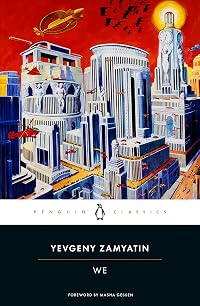
It is all meant as a parody of Stalin's Communist Russia and the "Dictatorship of the Proletariat" but the effect is considerably less than in books such as Yevgeny Zamyatin's [book:We|76171] (1924) or George Orwell's [book:1984|61439040] (1949).
There is a lack of focus which seems to be a combination of Nabokov wanting to show off his English language capabilities with very bizarre tangents. The oddest one was a discourse on Shakespeare's Hamlet that tried to make a case for Fortinbras being the main subject of the play. That went on for several pages. Interspersed throughout was the use of transcribed Russian, usually followed by an English translation. Other phrases used were in French and German, but those were left untranslated. Anyway, the cumulative effect was of an author showing off but leaving the reader completely detached.
I started this as an audiobook through an Audible Deal of the Day. I found it so hard to follow on audio that I ended up reading an eBook in parallel. Neither were satisfactory in the end. Your result may differ as the average rating for the book is a 3.8 star on GR.
Random Estonian reference
"A certain anaemic Esthonian housemaid" is mentioned roughly halfway in the book.
A surprising polite euphemism
About 10% into the book, a polite phrasing is made of a rather notoriously crude Russian expression, also often expressed in English as a single word.
"The two soldiers (both, oddly enough, had pockmarked faces) were asking, Krug understood, for his (Krug’s) papers. While he was fumbling for the pass they bade him hurry and mentioned a brief love affair they had had, or would have, or invited him to have with his mother." show less
A review of the Audible Studios audiobook (2010) narrated by [author:Robert Blumenfeld|232660] of the Henry Holt & Company hardcover original (1947), also with reference to the eBook.
Unfortunately this one earns a postcard from Outlier Island 🏝️📨📬as well as an Unsatisfactory Ending Alert™.
This is a small world dystopian novel which was one of the first that Nabokov wrote in English after immigrating to the U.S. It tells the story of a philosopher named Krug who is living in a city dictatorship ruled over by a past schoolboy acquaintance named Paduk, whose "Party of the Average Man" has assumed power.
The widower Krug is subjected to increasing torments, the arrests of his fellow professors and show more colleagues, the kidnapping of his son, etc. in efforts to have him declare his subservience to Paduk's authority. Eventually he goes mad and the author finally takes pity on him and breaks the fourth wall at the end to tell the reader it is all a fiction.
It is all meant as a parody of Stalin's Communist Russia and the "Dictatorship of the Proletariat" but the effect is considerably less than in books such as Yevgeny Zamyatin's [book:We|76171] (1924) or George Orwell's [book:1984|61439040] (1949).
There is a lack of focus which seems to be a combination of Nabokov wanting to show off his English language capabilities with very bizarre tangents. The oddest one was a discourse on Shakespeare's Hamlet that tried to make a case for Fortinbras being the main subject of the play. That went on for several pages. Interspersed throughout was the use of transcribed Russian, usually followed by an English translation. Other phrases used were in French and German, but those were left untranslated. Anyway, the cumulative effect was of an author showing off but leaving the reader completely detached.
I started this as an audiobook through an Audible Deal of the Day. I found it so hard to follow on audio that I ended up reading an eBook in parallel. Neither were satisfactory in the end. Your result may differ as the average rating for the book is a 3.8 star on GR.
Random Estonian reference
"A certain anaemic Esthonian housemaid" is mentioned roughly halfway in the book.
A surprising polite euphemism
About 10% into the book, a polite phrasing is made of a rather notoriously crude Russian expression, also often expressed in English as a single word.
"The two soldiers (both, oddly enough, had pockmarked faces) were asking, Krug understood, for his (Krug’s) papers. While he was fumbling for the pass they bade him hurry and mentioned a brief love affair they had had, or would have, or invited him to have with his mother." show less
This is an entertaining and intriguing novel. It is a story set in a time slightly different than any that does or has actually existed – a strife-torn unnamed European country that is being ruled by a dictator who happens to be the school-time “friend” of the novel’s protagonist, a famous philosopher named Professor Adam Krug. The tone of the novel is established in the first chapter with a ridiculous, although funny in a catch-22 sort of way, situation in which Krug is allowed to cross a bridge, only to be turned back because papers are not appropriately signed. On returning, the guards on the side of the bridge that first let him cross will not let him come back. And so, for a short time, he is between the two worlds.
The show more novel itself is the story of various groups trying to bring Krug and the dictator together, each for their own ends. This includes the dictator’s desire to reconcile. In the end, the dictator finds Krug’s weak spot, but this only leads to additional tragedy. The unveiling of that tragedy was like watching a slow motion car crash – the reader can tell what is coming, but watching that ultimate disaster occur holds its own weird enchantment.
The novels contains humor and tragedy and satire and truth, and Nabokov handles it all so skillfully we almost do not see how much is being accomplished.
And then I went back and read the author’s new introduction (new as of publication of this edition – 1964). And the story became that much better. And now I want to go back and reread it with this new found knowledge. Nabokov was playing even more games in the writing than I first suspected. And, the way he plays games, you can’t even be sure he isn’t playing games in the introduction.
Don’t read too much about this novel before diving in. Read it. Then learn more about what it is. Then read it again. And, as I am sure I will do, read it one more time. show less
The show more novel itself is the story of various groups trying to bring Krug and the dictator together, each for their own ends. This includes the dictator’s desire to reconcile. In the end, the dictator finds Krug’s weak spot, but this only leads to additional tragedy. The unveiling of that tragedy was like watching a slow motion car crash – the reader can tell what is coming, but watching that ultimate disaster occur holds its own weird enchantment.
The novels contains humor and tragedy and satire and truth, and Nabokov handles it all so skillfully we almost do not see how much is being accomplished.
And then I went back and read the author’s new introduction (new as of publication of this edition – 1964). And the story became that much better. And now I want to go back and reread it with this new found knowledge. Nabokov was playing even more games in the writing than I first suspected. And, the way he plays games, you can’t even be sure he isn’t playing games in the introduction.
Don’t read too much about this novel before diving in. Read it. Then learn more about what it is. Then read it again. And, as I am sure I will do, read it one more time. show less
Nabokov here writes in a post-modern, self-referential, metafictional style, using techniques that when used by other authors have made me feel detached from fictional outcomes.
But with Nabokov these self-referential devices work to draw me in, rather than keep me detached. I don't know quite how he did that. I cared deeply for these characters, even as I was being constantly reminded they were nothing more than lines of words on a page. I had the same impression when reading Nabokov's short story masterpiece Symbols and Signs, which was able to mock fictional techniques while at the same time exploiting those techniques to move me.
I'm very happy to know people still read this book. It's so extraordinary, and it requires a leap of show more faith to keep yourself reading. It's not like any other book and that can be disorienting. You have to surrender to it.
And, I'm just glad there is a book in the world called "Bend Sinister." show less
But with Nabokov these self-referential devices work to draw me in, rather than keep me detached. I don't know quite how he did that. I cared deeply for these characters, even as I was being constantly reminded they were nothing more than lines of words on a page. I had the same impression when reading Nabokov's short story masterpiece Symbols and Signs, which was able to mock fictional techniques while at the same time exploiting those techniques to move me.
I'm very happy to know people still read this book. It's so extraordinary, and it requires a leap of show more faith to keep yourself reading. It's not like any other book and that can be disorienting. You have to surrender to it.
And, I'm just glad there is a book in the world called "Bend Sinister." show less
Dystopian novel set in an unnamed country in the city of Padukgrad, protagonist Adam Krug is a well-known philosopher with an eight-year-old son. His wife died but he cannot bring himself to tell his son. The Ekwilist movement, the “Party of the Average Man,” is run by dictator Paduk, a former schoolmate. Krug is asked to support the party, but refuses. Published in 1947, the Ekwilist party is obviously based on a totalitarian regime.
The preface to this book indicates it should be read as a spoof, however, it did not read as humorous to me. The writing is erudite. I enjoyed the relationship between Krug and his son, whom he obviously loves dearly.
“And what agony, thought Krug the thinker, to love so madly a little creature, show more formed in some mysterious fashion (even more mysterious to us than it had been to the very first thinkers in their pale olive gloves) by the fusion of two mysteries, or rather two sets of a trillion of mysteries each; formed by a fusion which is, at the same time, a matter of choice and a matter of chance and a matter of pure enchantment; thus formed and then permitted to accumulate trillions of its own mysteries; the whole suffused with consciousness, which is the only real thing in the world and the greatest mystery of all.”
The ending is horrifying. I do not want to spoil it, but if you are easily disturbed by what you read, I would give this one a pass.
2.5 (based on personal enjoyment, not literary merit) show less
The preface to this book indicates it should be read as a spoof, however, it did not read as humorous to me. The writing is erudite. I enjoyed the relationship between Krug and his son, whom he obviously loves dearly.
“And what agony, thought Krug the thinker, to love so madly a little creature, show more formed in some mysterious fashion (even more mysterious to us than it had been to the very first thinkers in their pale olive gloves) by the fusion of two mysteries, or rather two sets of a trillion of mysteries each; formed by a fusion which is, at the same time, a matter of choice and a matter of chance and a matter of pure enchantment; thus formed and then permitted to accumulate trillions of its own mysteries; the whole suffused with consciousness, which is the only real thing in the world and the greatest mystery of all.”
The ending is horrifying. I do not want to spoil it, but if you are easily disturbed by what you read, I would give this one a pass.
2.5 (based on personal enjoyment, not literary merit) show less
One thing I find hardest to do is blast a novel by a well-known, widely-admired, great writer. So I struggle to write this review of Bend Sinister by Vladimir Nabokov. I read this novel long before I started keeping track of my reading with this journal more than 10 years ago. Perhaps I notice the things which bothered me more now that I have experience writing these reviews. Reading with a possible public review in mind certainly has affected these writings.
Nabokov is well-known for his meticulous pursuit of the correct word in a sentence. I have heard tell he sometimes spent hours trying to find a precise word to fill a blank in a sentence, of a chapter, of a novel. I admit to sometimes searching for a particular word, but I never show more spent more than a few minutes – sometimes with the help of a dictionary and a thesaurus.
When I began re-reading Bend Sinister, I was immediately struck by his diction. In the first chapter, he wrote, “An oblong puddle in the coarse asphalt; like a fancy footprint filled to the brim with quicksilver; like a spatulate hole through which you can see nether sky. Surrounded. I note, by a diffuse tentacled black dampness where some dull dun leaves have stuck. Drowned, I should say, before the puddle had shrunk to its present size” (1). Can readers spot the two “made-up words”? Can you spot words that seem just a bit pretentious? Not to forget to mention some rather strange syntax?
Now, I pride myself on a higher than usual vocabulary, but on the other hand I have long fought the fight against obfuscation in my diction. I suspect the latter was a reaction to the legalese I suffered through for about 15 years. I might also blame my admiration for Hemingway, that is, his diction not his misogyny. I even find this paragraph a bit pretentious. What is a reader/writer to do?
Well, I have decided. I am going to tell the world I believe the emperor has no clothes or, rather, the emperor has too many dictionary pages stuck to his crown.
Here is part of another paragraph my reading notes labeled as poetic. Nabokov wrote, “November trees, poplars, I imagine, two of them growing straight out of the asphalt: all of them in the cold bright sun, bright richly furrowed bark and an intricate sweep of numberless burnished bare twigs, old gold—because getting more of the falsely mellow sun in the higher air. Their immobility is in contrast with the spasmodic ruffling of the inset reflection—for the visible emotion of a tree is the mass of its leaves, and there remain hardly more than thirty-seven or so here and there on one side of the tree. They just flicker a little, of a neutral tint, but burnished by the sun to the same ikontinct…” (2). “Ikontinct” is not in my OED or my Random House Dictionary of well-over twenty-four hundred pages. It is amazing how a single word can spoil otherwise wonderful poetic phrasing.
Okay, so now I must choose: slog through hundreds of pages with who knows how many unidentifiable words, or revert with a measure of pretension of my own to that old Latin phrase: Quot Libros, Quam Breve Tempus. Look it up if you wish. 2 stars.
--Jim, 3/5/17 show less
Nabokov is well-known for his meticulous pursuit of the correct word in a sentence. I have heard tell he sometimes spent hours trying to find a precise word to fill a blank in a sentence, of a chapter, of a novel. I admit to sometimes searching for a particular word, but I never show more spent more than a few minutes – sometimes with the help of a dictionary and a thesaurus.
When I began re-reading Bend Sinister, I was immediately struck by his diction. In the first chapter, he wrote, “An oblong puddle in the coarse asphalt; like a fancy footprint filled to the brim with quicksilver; like a spatulate hole through which you can see nether sky. Surrounded. I note, by a diffuse tentacled black dampness where some dull dun leaves have stuck. Drowned, I should say, before the puddle had shrunk to its present size” (1). Can readers spot the two “made-up words”? Can you spot words that seem just a bit pretentious? Not to forget to mention some rather strange syntax?
Now, I pride myself on a higher than usual vocabulary, but on the other hand I have long fought the fight against obfuscation in my diction. I suspect the latter was a reaction to the legalese I suffered through for about 15 years. I might also blame my admiration for Hemingway, that is, his diction not his misogyny. I even find this paragraph a bit pretentious. What is a reader/writer to do?
Well, I have decided. I am going to tell the world I believe the emperor has no clothes or, rather, the emperor has too many dictionary pages stuck to his crown.
Here is part of another paragraph my reading notes labeled as poetic. Nabokov wrote, “November trees, poplars, I imagine, two of them growing straight out of the asphalt: all of them in the cold bright sun, bright richly furrowed bark and an intricate sweep of numberless burnished bare twigs, old gold—because getting more of the falsely mellow sun in the higher air. Their immobility is in contrast with the spasmodic ruffling of the inset reflection—for the visible emotion of a tree is the mass of its leaves, and there remain hardly more than thirty-seven or so here and there on one side of the tree. They just flicker a little, of a neutral tint, but burnished by the sun to the same ikontinct…” (2). “Ikontinct” is not in my OED or my Random House Dictionary of well-over twenty-four hundred pages. It is amazing how a single word can spoil otherwise wonderful poetic phrasing.
Okay, so now I must choose: slog through hundreds of pages with who knows how many unidentifiable words, or revert with a measure of pretension of my own to that old Latin phrase: Quot Libros, Quam Breve Tempus. Look it up if you wish. 2 stars.
--Jim, 3/5/17 show less
Members
- Recently Added By
Lists

20th Century Literature
1,161 works; 55 members

Significant works of postmodern fiction
86 works; 25 members

Dystopian and Apocalyptic Literature
350 works; 74 members

Books Read in 2016
4,666 works; 197 members

2015 Reading challenge
18 works; 1 member

SHOULD Read Books!
354 works; 9 members
Fictional European countries
58 works; 2 members

Jones & Newman: Best Horror Books Further Recommended Reading
577 works; 4 members
Author Information

431+ Works 96,054 Members
Vladimir Vladimirovich Nobokov was born April 22, 1899 in St. Petersburg, Russia to a wealthy family. He attended Trinity College, Cambridge. When he left Russia, he moved to Paris and eventually to the United States in 1940. He taught at Wellesley College and Cornell University. Nobokov is revered as one of the great American novelists of the show more 20th Century. Before he moved to the United States, he wrote under the pseudonym Vladimir Serin. Among those titles, were Mashenka, his first novel and Invitation to a Beheading. The first book he wrote in English was The Real Life of Sebastian Knight. He is best know for his work Lolita which was made into a movie in 1962. In addition to novels, he also wrote poetry and short stories. He was a finalist for the National Book Award for Fiction seven times, but never won it. Nabokov died July 2, 1977. show less
Some Editions
Series
Belongs to Publisher Series
Work Relationships
Common Knowledge
- Canonical title
- Bend Sinister
- Original title
- Bend sinister
- Original publication date
- 1947
- People/Characters
- Adam Krug
- First words
- An oblong puddle inset in the coarse asphalt; like a fancy footprint filled to the brim with quicksilver; like a spatulate hole through which you can see the nether sky.
- Last words
- (Click to show. Warning: May contain spoilers.)A good night for mothing.
- Original language*
- englanti
*Some information comes from Common Knowledge in other languages. Click "Edit" for more information.
Classifications
Statistics
- Members
- 1,831
- Popularity
- 11,845
- Reviews
- 26
- Rating
- (3.72)
- Languages
- 14 — Czech, Dutch, English, Finnish, French, German, Greek, Hungarian, Italian, Japanese, Romanian, Russian, Spanish, Turkish
- Media
- Paper, Audiobook, Ebook
- ISBNs
- 43
- ASINs
- 28