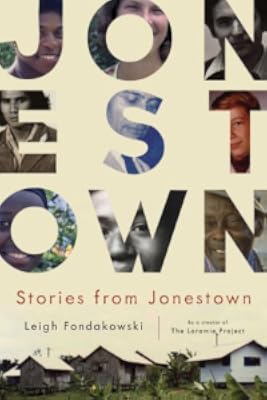
Stories from Jonestown
by Leigh Fondakowski
On This Page
Description
"The saga of Jonestown didn't end on the day in November 1978 when more than nine hundred Americans died in a mass murder-suicide in the Guyanese jungle. While only a handful of people present at the agricultural project survived that day in Jonestown, more than eighty members of Peoples Temple, led by Jim Jones, were elsewhere in Guyana on that day, and thousands more members of the movement still lived in California. Emmy-nominated writer Leigh Fondakowski, who is best known for her work show more on the play and HBO film The Laramie Project, spent three years traveling the United States to interview these survivors, many of whom have never talked publicly about the tragedy. Using more than two hundred hours of interview material, Fondakowski creates intimate portraits of these survivors as they tell their unforgettable stories. Collectively this is a record of ordinary people, stigmatized as cultists, who after the Jonestown massacre were left to deal with their grief, reassemble their lives, and try to make sense of how a movement born in a gospel of racial and social justice could have gone so horrifically wrong--taking with it the lives of their sons and daughters, husbands and wives, fathers and mothers, and brothers and sisters. As these survivors look back, we learn what led them to join the Peoples Temple movement, what life in the church was like, and how the trauma of Jonestown's end still affects their lives decades later. What emerges are portrayals both haunting and hopeful--of unimaginable sadness, guilt, and shame but also resilience and redemption. Weaving her own artistic journey of discovery throughout the book in a compelling historical context, Fondakowski delivers, with both empathy and clarity, one of the most gripping, moving, and humanizing accounts of Jonestown ever written"--Provided by publisher. show lessTags
Recommendations










Member Reviews
I don't think I need to give a history lesson on what happened in Jonestown, Guyana in November, 1978. Most everyone I know either watched the evening news stories as one of the biggest human tragedies unfolded before their eyes or have seen the documentaries and made-for-TV movies. Some have even read a book or two on the subject. We know what happened. Or do we?
Stories from Jonestown is amazing. It is difficult to read but it is absolutely essential if you want to get a sense of what really happened, how, and most importantly, why over 900 members of Peoples Temple died at the order of Jim Jones.
The book chronicles stories of life before, during and after Jonestown, but it is as much a book about the gathering of those stories as it show more is about the stories themselves. The author got the stories in preparation of writing a play about Peoples Temple and she felt that it was essential to hear from living voices of some of those left behind. And what voices they are. The different perspectives are powerful.
These are the stories of the survivors, those who were spared simply because they were away from Jonestown when the curtain fell. These are the stories of those who were part of the Peoples Temple in San Francisco, some of whom planned to join family and friends in the jungle utopia. These are the stories of the followers who, over time, realized that their haven was nothing more than a crumbling illusion and fled.
This is not speculation. These people don't have to wonder what happened. They know. They were there. They were a part of it. We hear their stories, their experiences. Some of them want the world to know their side of the story. Others are reluctant to become involved but they tell their stories anyway because it is important that they be heard. We hear from Jones' sons. We hear from a man who was unable to stop the deaths of his wife and infant son. From outside of the Temple community, we hear from members of the press who followed and wrote about Jones. We hear from an investigator who works with death row prisoners, one of whom is a former Temple member.
They tell about the good times as well as the bad. They talk about the sense of family and community and belonging. They talk openly about it all falling apart. They talk of the stigma of being labeled as "cult members" even as they grieved their losses and reintegrated into the world.
I think the one interview that struck me the most is this. One survivor, when asked how such a madman could have held such power over so many, responded that everyone wanted something from Jim Jones. If you needed a job, he had something for you to do. If you were afraid that your child would be drawn in by the crime infested neighborhood where you lived, he offered your entire family a safe place. If you were bored by life, he gave you a reason to be. They were, after all, going to change the world.
The book is sad and horrifying but it is also a testament to the human spirit and will to live. Recommended. show less
Stories from Jonestown is amazing. It is difficult to read but it is absolutely essential if you want to get a sense of what really happened, how, and most importantly, why over 900 members of Peoples Temple died at the order of Jim Jones.
The book chronicles stories of life before, during and after Jonestown, but it is as much a book about the gathering of those stories as it show more is about the stories themselves. The author got the stories in preparation of writing a play about Peoples Temple and she felt that it was essential to hear from living voices of some of those left behind. And what voices they are. The different perspectives are powerful.
These are the stories of the survivors, those who were spared simply because they were away from Jonestown when the curtain fell. These are the stories of those who were part of the Peoples Temple in San Francisco, some of whom planned to join family and friends in the jungle utopia. These are the stories of the followers who, over time, realized that their haven was nothing more than a crumbling illusion and fled.
This is not speculation. These people don't have to wonder what happened. They know. They were there. They were a part of it. We hear their stories, their experiences. Some of them want the world to know their side of the story. Others are reluctant to become involved but they tell their stories anyway because it is important that they be heard. We hear from Jones' sons. We hear from a man who was unable to stop the deaths of his wife and infant son. From outside of the Temple community, we hear from members of the press who followed and wrote about Jones. We hear from an investigator who works with death row prisoners, one of whom is a former Temple member.
They tell about the good times as well as the bad. They talk about the sense of family and community and belonging. They talk openly about it all falling apart. They talk of the stigma of being labeled as "cult members" even as they grieved their losses and reintegrated into the world.
I think the one interview that struck me the most is this. One survivor, when asked how such a madman could have held such power over so many, responded that everyone wanted something from Jim Jones. If you needed a job, he had something for you to do. If you were afraid that your child would be drawn in by the crime infested neighborhood where you lived, he offered your entire family a safe place. If you were bored by life, he gave you a reason to be. They were, after all, going to change the world.
The book is sad and horrifying but it is also a testament to the human spirit and will to live. Recommended. show less
Stories from Jonestown is a unique oral history. I’m used to Studs Terkel type books where the interviews stand alone. The author isn’t a part of the story and the focus is solely on an individual’s story. This book was different in that you also witness the process of research that was completed for a play that was created and staged by the author and collaborators. The book was almost a by-product of that research and set of interviews.
As a writer and editor—I appreciated this take. The author uses research through the California Historical Society and through meeting of survivors and makes a good survey of the information that is out there about this American tragedy. I think this book will serve future generations of show more scholars as a good place to start. Information about what is maintained by the Historical society—photos, tapes, and items. There is also a cataloguing of sorts of the information left behind—the Temple’s own historian interviewed members before the end about their lives and what drew them to the Temple—and this was included.
One focus of the book is the reluctance of former African-American members and their families to talk. Read this book for their story. I found the interview with Reverend Arnold Townsend who talked about the history of progressivism in Fillmore where the Temple was located especially insightful and sad. He laments the loss of the 900 souls who wanted change and are now no longer around when they would be of a mentoring age. “I’m not a conspiracist,” he said. “But, man, Jonestown ripped out the heart of the most progressive community in America.”
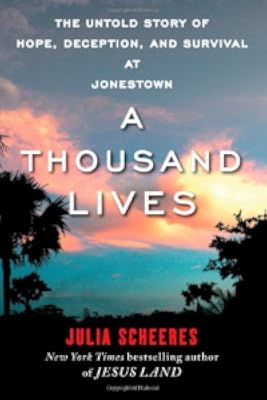
I’ve read other books on Jonestown and in addition to this book I also highly recommend A Thousand Lives: The Untold Story of Hope, Deception, and Survival at Jonestown. show less
As a writer and editor—I appreciated this take. The author uses research through the California Historical Society and through meeting of survivors and makes a good survey of the information that is out there about this American tragedy. I think this book will serve future generations of show more scholars as a good place to start. Information about what is maintained by the Historical society—photos, tapes, and items. There is also a cataloguing of sorts of the information left behind—the Temple’s own historian interviewed members before the end about their lives and what drew them to the Temple—and this was included.
One focus of the book is the reluctance of former African-American members and their families to talk. Read this book for their story. I found the interview with Reverend Arnold Townsend who talked about the history of progressivism in Fillmore where the Temple was located especially insightful and sad. He laments the loss of the 900 souls who wanted change and are now no longer around when they would be of a mentoring age. “I’m not a conspiracist,” he said. “But, man, Jonestown ripped out the heart of the most progressive community in America.”
I’ve read other books on Jonestown and in addition to this book I also highly recommend A Thousand Lives: The Untold Story of Hope, Deception, and Survival at Jonestown. show less
The author has assembled several years of interviews, documents and research on the Jonestown suicide/homicide in her work in writing a play. The text consists mainly of interviews with survivors and relatives of the Peoples Temple started and perpetuated by Jim Jones. Many victims were finally able to share their feelings due to the author's sensitivity in approaching them. What struck me was the mixture of anger, rationalization and compassion expressed by those survivors, many of who were directly involved in day to day operations away from the Ghana site of the mass killings. This is a powerful book for its insights into the dreams and gullibility of victims of Jim Jones.
This book was an e-book format obtained from the publisher in show more exchange for an honest review. show less
This book was an e-book format obtained from the publisher in show more exchange for an honest review. show less
With the phrase "drink the Kool-Aid" part of our lexicon it behooves us to go back and look at where that phrase originated. In Stories from Jonestown by Leigh Fondakowski we learn that it wasn't Kool-Aid, but was, in fact, poisoned Flavor-Aid that was used in the mass suicide/murder of over 900 followers of Jim Jones People's Temple agricultural project in Guyana on November 18, 1978. About half of those who died were children. Included in the 918 people who died were U.S. Congressman Leo Ryan and three journalists who were accompanying Ryan on a fact-finding mission to Guyana.
Jim Jones group began as a Christian church in Indiana. He moved to San Francisco in the 1960s. While the group began as a integrated group who wanted to help show more the community, it soon changed into a much less altruistic socialist experiment. But this book is not about Jim Jones. It is about the survivors. Some of them still think the Peoples Temple was wonderful, others wonder at their blindness to the warning signs that there were problems and Jones was no longer the man or leader they thought they were following.
There are already numerous accounts written about Jim Jones and The Peoples Temple murder/suicide. In Stories from Jonestown, author Fondakowski focus is on interviewing the survivors. She points out that only they "can truly know what it means to survive a tragedy of this magnitude. These are the stories of the survivors. It is a privilege to tell them." Fondakowski, a playwright, spent over three years interviewing survivors, reviewing documents, and collecting letters trying to compose a complete picture of what happened while gathering material in order to write a play about their experiences. The book is a compilation of the many interviews and stories she collected.
Very Highly Recommended - but not an easy book to read
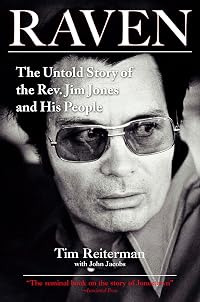
Since Stories from Jonestown is composed of interviews and materials gathered for Fondakowski's play, "The Peoples Temple," this book does not include extensive research or a complete chronological record into all the details of Jim Jones and The Peoples Temple. Readers who don't have previous knowledge of Jim Jones and what happened in 1978 might want to look into some other works that cover that information. This book is about the survivors, what they remember and how they are handling dealing with those memories. Recommended books by those who know include: A Thousand Lives: The Untold Story of Jonestown by Julia Scheeres; Raven: The Untold Story of the Rev. Jim Jones and His People by Tim Reiterman; Understanding Jonestown and Peoples Temple by Rebecca Moore.
Disclosure: My Kindle edition was courtesy of Netgalley for review purposes.
http://shetreadssoftly.blogspot.com/ show less
Jim Jones group began as a Christian church in Indiana. He moved to San Francisco in the 1960s. While the group began as a integrated group who wanted to help show more the community, it soon changed into a much less altruistic socialist experiment. But this book is not about Jim Jones. It is about the survivors. Some of them still think the Peoples Temple was wonderful, others wonder at their blindness to the warning signs that there were problems and Jones was no longer the man or leader they thought they were following.
There are already numerous accounts written about Jim Jones and The Peoples Temple murder/suicide. In Stories from Jonestown, author Fondakowski focus is on interviewing the survivors. She points out that only they "can truly know what it means to survive a tragedy of this magnitude. These are the stories of the survivors. It is a privilege to tell them." Fondakowski, a playwright, spent over three years interviewing survivors, reviewing documents, and collecting letters trying to compose a complete picture of what happened while gathering material in order to write a play about their experiences. The book is a compilation of the many interviews and stories she collected.
Very Highly Recommended - but not an easy book to read
Since Stories from Jonestown is composed of interviews and materials gathered for Fondakowski's play, "The Peoples Temple," this book does not include extensive research or a complete chronological record into all the details of Jim Jones and The Peoples Temple. Readers who don't have previous knowledge of Jim Jones and what happened in 1978 might want to look into some other works that cover that information. This book is about the survivors, what they remember and how they are handling dealing with those memories. Recommended books by those who know include: A Thousand Lives: The Untold Story of Jonestown by Julia Scheeres; Raven: The Untold Story of the Rev. Jim Jones and His People by Tim Reiterman; Understanding Jonestown and Peoples Temple by Rebecca Moore.
Disclosure: My Kindle edition was courtesy of Netgalley for review purposes.
http://shetreadssoftly.blogspot.com/ show less
The story of Jonestown, the masacre and the survivors is incredibly moving and very powerful. I knew a little about the events of the masacre and refer to it when teaching psychology, but this tome goes well beyond a superficial recounting of the People's Temple members and the death of its followers. The author's interviews with people who had left the Temple and those who had stayed, and survived really delivers the human side of the story without needless sensationalising. Fondakowski has put years into the realisation of this book and her passion for it really shows. I had a real sense of getting to the truth in an unbiased way as I read story through the words of those who were there and those who still bear the scars of this show more terrible event. A highly recommended read for anyone interested in reading about these events and the Temple in much more depth than is typically available. show less
Most of my prior knowledge of Jonestown had come from short segments on TV or quick passages in books, as the massacre took place before I was born. Stories from Jonestown filled in huge gaps for me; much more than I would have been able to find in random curious internet searches.
While I enjoyed the interview format of the book, the structure was a serious drawback for me and actually made it somewhat difficult to sort through some of the information. Though the copy I was reading was an uncorrected proof, it seemed to be divided into chapters - however, the chapters were not quite thematic. I would have loved to see some of the interviews grouped together more closely by theme or even time period and collected into chapters to make show more the narrative a bit less jumpy. Without this, I felt like some information was being repeated while bits may have been omitted. show less
While I enjoyed the interview format of the book, the structure was a serious drawback for me and actually made it somewhat difficult to sort through some of the information. Though the copy I was reading was an uncorrected proof, it seemed to be divided into chapters - however, the chapters were not quite thematic. I would have loved to see some of the interviews grouped together more closely by theme or even time period and collected into chapters to make show more the narrative a bit less jumpy. Without this, I felt like some information was being repeated while bits may have been omitted. show less
Much has been written about Jonestown's final days in 1978. However, few have tracked down the survivors to find out how Jonestown affected their lives. Leigh has compiled numerous interviews on the subject, humanizing Jonestown's victims and survivors.
At times I found this book to be repetitive. It did not seem to be organized in any manner, other than relating Leigh's journey to interview these people. The stories were often similar, making it hard to remember the individual players. Instead of trying to include as many stories as possible, I wish the author had focused on showing divergent viewpoints. Overall, not a bad book, just one that could have used editing.
At times I found this book to be repetitive. It did not seem to be organized in any manner, other than relating Leigh's journey to interview these people. The stories were often similar, making it hard to remember the individual players. Instead of trying to include as many stories as possible, I wish the author had focused on showing divergent viewpoints. Overall, not a bad book, just one that could have used editing.
Members
- Recently Added By
Author Information
2+ Works 105 Members
Classifications
- Genres
- Nonfiction, History, General Nonfiction, Religion & Spirituality
- DDC/MDS
- 988.103 — History & geography History of South America Guiana Guyana
- LCC
- BP605 .P46 .F66 — Philosophy, Psychology and Religion Islam. Bahaism. Theosophy, etc. Islam. Bahai Faith. Theosophy, etc. Other beliefs and movements
- BISAC
Statistics
- Members
- 89
- Popularity
- 361,434
- Reviews
- 8
- Rating
- (4.13)
- Languages
- English
- Media
- Paper, Ebook
- ISBNs
- 5
- ASINs
- 1