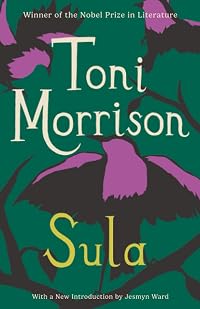
Sula
by Toni Morrison
On This Page
Description
From the acclaimed Nobel Prize winner: Two girls who grow up to become women. Two friends who become something worse than enemies. This brilliantly imagined novel brings us the story of Nel Wright and Sula Peace, who meet as children in the small town of Medallion, Ohio.Nel and Sula's devotion is fierce enough to withstand bullies and the burden of a dreadful secret. It endures even after Nel has grown up to be a pillar of the black community and Sula has become a pariah. But their show more friendship ends in an unforgivable betrayal—or does it end? Terrifying, comic, ribald and tragic, Sula is a work that overflows with life. show less
Tags
Recommendations
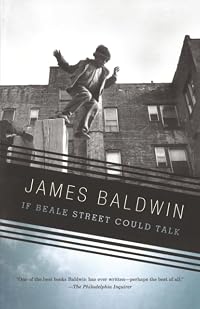
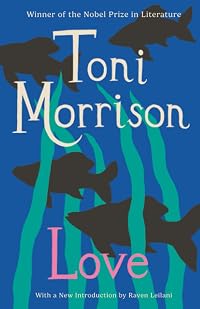
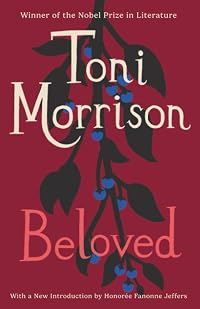
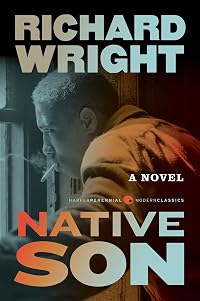



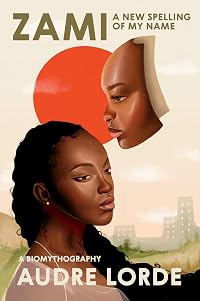
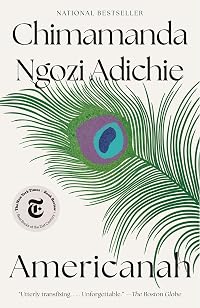
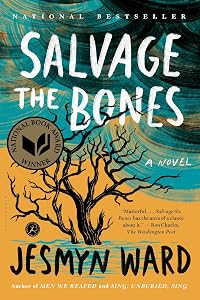

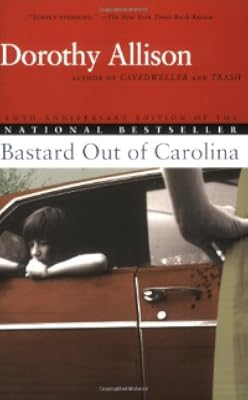
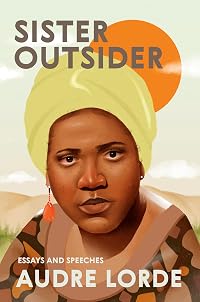
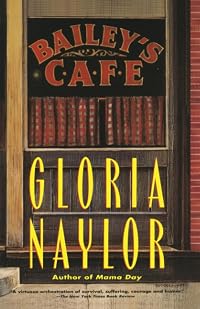
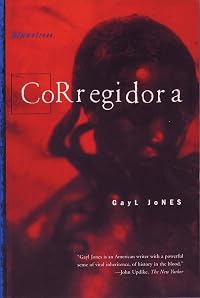
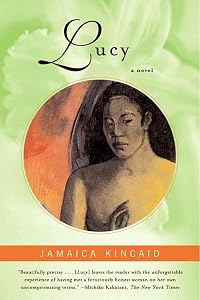
Member Recommendations
Member Reviews
To be honest, I picked this book up thinking "it's required." There are certain things that you have to read before you die, certain authors that are "required" to be a fully rounded person. At least that's what I believe. But from Steinbeck to Hurston and yes, even Shakespeare, I wasn't here for it. I read The Color of Water and Jane Eyre and I could have just as easily gone on with my life having never read either.
Sula isn't that. Sula isn't anything you're thinking but it's exactly what you need.
Sula is real characters, with their flaws and horrors and humanity on full display. Sula is who you wish you could be, who you are, who you could never be, and the person you become in certain circumstances. It is the individual, the show more community, the partner and lover and friend. It is the full scope of human relationships as well as the very minutia of what it means to be Black and a woman, but more specifically a Black woman.
For people who want a deeper look at themselves and how stories are written not as sex (rising action, climax, falling action) but as life (shit happens, y'all, and it keeps going) then this is the book for you! show less
Sula isn't that. Sula isn't anything you're thinking but it's exactly what you need.
Sula is real characters, with their flaws and horrors and humanity on full display. Sula is who you wish you could be, who you are, who you could never be, and the person you become in certain circumstances. It is the individual, the show more community, the partner and lover and friend. It is the full scope of human relationships as well as the very minutia of what it means to be Black and a woman, but more specifically a Black woman.
For people who want a deeper look at themselves and how stories are written not as sex (rising action, climax, falling action) but as life (shit happens, y'all, and it keeps going) then this is the book for you! show less
Sula by African American female writer Toni Morrison demonstrates definitively why she was awarded the Nobel Prize. Her prose borders on poetry, painting rich and detailed pictures in very few words.
The general tone of this book strongly conveys the desperation and poverty Black Americans endure as the result of racism without ever talking about racism. Every moment, every episode hinges on the impoverished, second class citizen status of the character, yet the story is universal, the characters are not stereotypes but instead are typical of characters existing anywhere in the world. Sula and her friend Nel represent two very different types of people, those that are crushed by their circumstances and others who stand above them even show more as they continue to be marginalized.
The storyline begins with a scene from WW I and proceeds through the next several years tracing the lives of the protagonists, of their relationship with each other and with others, and of their ultimate movement in vastly different directions.
This is a powerful read eliciting empathy and compassion from any thoughtful reader. show less
The general tone of this book strongly conveys the desperation and poverty Black Americans endure as the result of racism without ever talking about racism. Every moment, every episode hinges on the impoverished, second class citizen status of the character, yet the story is universal, the characters are not stereotypes but instead are typical of characters existing anywhere in the world. Sula and her friend Nel represent two very different types of people, those that are crushed by their circumstances and others who stand above them even show more as they continue to be marginalized.
The storyline begins with a scene from WW I and proceeds through the next several years tracing the lives of the protagonists, of their relationship with each other and with others, and of their ultimate movement in vastly different directions.
This is a powerful read eliciting empathy and compassion from any thoughtful reader. show less
30. Sula by Toni Morrison (1973, 181 pages, read July 3-8)
How to capture this?
Morrison’s second novel leaves a mark. It reminds me of a side story by Pat Conroy in his memoir My Reading Life. As a young author he had a chance to meet Toni Morrison, but she refused to sign a book or talk with him apparently because he was white and male. Conroy obviously never forgave her. Before Sula I hadn’t been able to see that person behind Morrison’s writing (although there are strong hints in Guitar and his carefully reasoned murders in Song of Solomon). There is a complex but palpable anger underneath Sula. In a 2004 forward to the novel Morrison wrote about [Sula] that she "rooted the narrative in a landscape already tainted by the fact show more that it existed" - and this is an underlying point in the novel, the hurt and limitations of being black in the US.
The short novel parallels the lives of Nel Wright, a good girl raised in a good home, and her childhood best friend Sula Peace, who grew up in more wild circumstances too complex to describe here. Both grew up in an impoverished segregated black community in the hills outside a white valley Ohio town in roughly the 1930’s (??). In Sula the reader is confronted. A complicated character, she searches for her own freedom in a variety of forms, breaking many societal norms, and crossing over into some gut-wrenching crimes...crimes that don’t seem to bother her. The reader is left to wonder what do with our mixed feelings of admiration and disturbance, and Morrison offers no easy answers.
This is a terrific read that can stir up some conflicting emotions deep down in the reader.
2013
http://www.librarything.com/topic/154187#4254191 show less
How to capture this?
Morrison’s second novel leaves a mark. It reminds me of a side story by Pat Conroy in his memoir My Reading Life. As a young author he had a chance to meet Toni Morrison, but she refused to sign a book or talk with him apparently because he was white and male. Conroy obviously never forgave her. Before Sula I hadn’t been able to see that person behind Morrison’s writing (although there are strong hints in Guitar and his carefully reasoned murders in Song of Solomon). There is a complex but palpable anger underneath Sula. In a 2004 forward to the novel Morrison wrote about [Sula] that she "rooted the narrative in a landscape already tainted by the fact show more that it existed" - and this is an underlying point in the novel, the hurt and limitations of being black in the US.
The short novel parallels the lives of Nel Wright, a good girl raised in a good home, and her childhood best friend Sula Peace, who grew up in more wild circumstances too complex to describe here. Both grew up in an impoverished segregated black community in the hills outside a white valley Ohio town in roughly the 1930’s (??). In Sula the reader is confronted. A complicated character, she searches for her own freedom in a variety of forms, breaking many societal norms, and crossing over into some gut-wrenching crimes...crimes that don’t seem to bother her. The reader is left to wonder what do with our mixed feelings of admiration and disturbance, and Morrison offers no easy answers.
This is a terrific read that can stir up some conflicting emotions deep down in the reader.
2013
http://www.librarything.com/topic/154187#4254191 show less
Morrison's second novel is another short, deceptively slight-looking book, set in a small black community on the fringes of an Ohio town in the inter-war years. It's not explicitly a political story, the plot is about a friendship between two women, but Morrison makes it pretty clear that everything that happens in the story is influenced and constrained by the nature of relations between white and black, male and female in that time and place. Even the settlement itself grew up where it is because the land there wasn't valuable enough to be wanted by white farmers; in a pair of frame chapters from a 1960s viewpoint, the narrator tells us that the settlement has since disappeared, not because of racial integration but because hilly land show more became attractive for suburban houses and golf courses and the black families couldn't afford to stay.
Morrison sets up the contrast between two matriarchal clans, on the one hand the Wrights, driven by the need for respectability and by Helene Wright's shame about her southern mixed-race background, and on the other the Peaces, anarchistic women who see themselves as having nothing to lose and no reason to keep to anyone else's rules. Nel Wright and Sula Peace become friends across this social divide as small children, and maintain the warm, close friendship through a number of grotesque incidents right into adulthood, until they are finally forced to recognise the depth of the ethical gap between them when Sula does something she sees as trivial and Nel as fundamental.
Morrison steers away here from the kind of stylistic flourishes that got her into trouble with critics in The bluest eye, but she goes for narrative excesses instead: there are magic-realist elements where the external world is reacting in strange ways to the actions of the characters, and many of the darker human incidents in the plot have a non-realistic, fairy-tale flavour to them, especially the climactic scene where the inhabitants of the township are led Pied-Piper style to their collective doom. She seems to be flexing her muscles and telling the critics: "Just because I'm an African-American woman, that doesn't mean I've got to restrict myself to writing social-realistic political fiction." But there's also perhaps a sense that the situation of black people in America is something that isn't adequately to be described within the confines of realistic fiction: we need this element of fairy-tale to make sense of the recent past and start to understand how it continues to affect our relations in the present. show less
Morrison sets up the contrast between two matriarchal clans, on the one hand the Wrights, driven by the need for respectability and by Helene Wright's shame about her southern mixed-race background, and on the other the Peaces, anarchistic women who see themselves as having nothing to lose and no reason to keep to anyone else's rules. Nel Wright and Sula Peace become friends across this social divide as small children, and maintain the warm, close friendship through a number of grotesque incidents right into adulthood, until they are finally forced to recognise the depth of the ethical gap between them when Sula does something she sees as trivial and Nel as fundamental.
Morrison steers away here from the kind of stylistic flourishes that got her into trouble with critics in The bluest eye, but she goes for narrative excesses instead: there are magic-realist elements where the external world is reacting in strange ways to the actions of the characters, and many of the darker human incidents in the plot have a non-realistic, fairy-tale flavour to them, especially the climactic scene where the inhabitants of the township are led Pied-Piper style to their collective doom. She seems to be flexing her muscles and telling the critics: "Just because I'm an African-American woman, that doesn't mean I've got to restrict myself to writing social-realistic political fiction." But there's also perhaps a sense that the situation of black people in America is something that isn't adequately to be described within the confines of realistic fiction: we need this element of fairy-tale to make sense of the recent past and start to understand how it continues to affect our relations in the present. show less
Sula by Toni Morrison is a complex and emotionally charged novel that explores the lives and friendship of two black women, Sula Peace and Nel Wright, against the backdrop of the “Bottom”, a black neighborhood in Ohio. Sula is a powerful exploration of friendship, identity, societal expectations, and the complexities of human relationships within the context of a close-knit African American community. Toni Morrison's evocative storytelling and vivid character portrayals make it a thought-provoking and emotionally resonant novel.
I just want to apologize for taking this long to read a Toni Morrison novel. Who am I apologizing to? Myself, mostly. This book was beautiful in the most tragic way. Along with Sula and Nel, you really get to show more know everyone in the “Bottom” and their story’s. you understand the hole left in the neighborhood every time you hear of someone leaving and the reactions when someone comes back.
Reading this right after Before the coffee gets cold, I have two new worlds that will always live in my heart. This month is off to an amazing start. show less
I just want to apologize for taking this long to read a Toni Morrison novel. Who am I apologizing to? Myself, mostly. This book was beautiful in the most tragic way. Along with Sula and Nel, you really get to show more know everyone in the “Bottom” and their story’s. you understand the hole left in the neighborhood every time you hear of someone leaving and the reactions when someone comes back.
Reading this right after Before the coffee gets cold, I have two new worlds that will always live in my heart. This month is off to an amazing start. show less
Like most people who've earned a degree in literature in the United States since 1990, I've read Toni Morrison's "Beloved" about three times. I really like parts of that one -- mostly the bit where the characters retell their past experiences or when the author goes head-to-head with William Faulkner. Much of the rest of that book seems a bit stagy to me, though, a bit stiff.
So Sula surprised me a little. It's a much looser affair than "Beloved", and while I can't call it a happy book, necessarily, it's got more room for eccentricity and its own sort of humor. Its lens is also a bit wider than that other novel's, too. It takes place over about seventy years -- one human lifespan -- and Morrison takes as her subject the entire black show more community living in the town of Medallion, Ohio, not just Nell and Sula, the two women at the novel's center. So we hear about war veterans that didn't come back quite right and pool halls and candy stores and small-town gossip even while Morrison works out some of the themes that she'd express more fully in "Beloved." We hear a lot about the characters' houses and their bodies and the all-consuming sense of emptiness some of them contend with. I don't know if I can say that "Sula" is as successful or as ambitious as "Beloved" is: the latter is due for a re-read. But for a novel that clocks at just under two hundred pages, it feels marvelously rich and complete, and features many examples of real high-quality prose, the stuff that separates the pretenders from the contenders, when all is done. This is an astonishingly polished and impressive performance, especially considering it was just Morrison's second novel. Recommended, especially if you couldn't understand why "Beloved" got such great reviews. show less
So Sula surprised me a little. It's a much looser affair than "Beloved", and while I can't call it a happy book, necessarily, it's got more room for eccentricity and its own sort of humor. Its lens is also a bit wider than that other novel's, too. It takes place over about seventy years -- one human lifespan -- and Morrison takes as her subject the entire black show more community living in the town of Medallion, Ohio, not just Nell and Sula, the two women at the novel's center. So we hear about war veterans that didn't come back quite right and pool halls and candy stores and small-town gossip even while Morrison works out some of the themes that she'd express more fully in "Beloved." We hear a lot about the characters' houses and their bodies and the all-consuming sense of emptiness some of them contend with. I don't know if I can say that "Sula" is as successful or as ambitious as "Beloved" is: the latter is due for a re-read. But for a novel that clocks at just under two hundred pages, it feels marvelously rich and complete, and features many examples of real high-quality prose, the stuff that separates the pretenders from the contenders, when all is done. This is an astonishingly polished and impressive performance, especially considering it was just Morrison's second novel. Recommended, especially if you couldn't understand why "Beloved" got such great reviews. show less
Loved every sentence of this re-read. I remember the first time I read Sula; I went in expecting an innocent and charming story about friendship from the small talk I had heard of the book. Nothing had prepared me for the complexity in the relationship between Sula and Nel; nothing had prepared me for the force that was Sula. I remember my initial feelings towards Sula: at first fascination, then shock, then almost-loathing, later understanding and loving, and, finally, missing her when all was done.
The story opens with a short description of the setting of the book. The Bottom, a Black neighbourhood in Ohio; the irony in its name; the history of the place; its attractions. The introduction is told in a reflective and nostalgic tone. Of show more a place distant, disappearing, and being gentrified. Then the story of the people of the place begins, focus being on Nel and Sula, two friends who love and need each other in various complex ways.
Toni Morrison says in her foreword to this book:
"Outlaw women are fascinating - not always for their behaviour, but because historically women are seen as disruptive and their status is an illegal one from birth if it is not under the rule of men. In much literature a woman's escape from male rule led to regret, misery, if not disaster. In Sula I wanted to explore the consequences of what that escape might be, on not only a conventional black society, but on female friendship. In 1969, in Queens, snatching liberty seemed compelling. Some of us thrived; some of us died. All of us had a taste."
Sula is an outlaw. A woman who lives fully for herself, with no apologies for it to the end. One of the stunning bits of dialogue from this book, the final conversation between Nel and Sula, Nel asks her what she has to show for the life she lived, to which Sula responds: "Show? To who? Girl, I got my mind. And what goes in it. Which is to say, I got me." To which Nel remarks, "Lonely, ain't it?" Sula's brilliant reply: "Yes. But my lonely is mine. Now your lonely is somebody else's. Made by somebody else and handed to you. Ain't that something? A secondhand lonely."
Re-reading this meant diving into the richness of this book all over again. The wonderful world that Morrison creates with the Bottom and its people, and the beauty of the language. show less
The story opens with a short description of the setting of the book. The Bottom, a Black neighbourhood in Ohio; the irony in its name; the history of the place; its attractions. The introduction is told in a reflective and nostalgic tone. Of show more a place distant, disappearing, and being gentrified. Then the story of the people of the place begins, focus being on Nel and Sula, two friends who love and need each other in various complex ways.
Toni Morrison says in her foreword to this book:
"Outlaw women are fascinating - not always for their behaviour, but because historically women are seen as disruptive and their status is an illegal one from birth if it is not under the rule of men. In much literature a woman's escape from male rule led to regret, misery, if not disaster. In Sula I wanted to explore the consequences of what that escape might be, on not only a conventional black society, but on female friendship. In 1969, in Queens, snatching liberty seemed compelling. Some of us thrived; some of us died. All of us had a taste."
Sula is an outlaw. A woman who lives fully for herself, with no apologies for it to the end. One of the stunning bits of dialogue from this book, the final conversation between Nel and Sula, Nel asks her what she has to show for the life she lived, to which Sula responds: "Show? To who? Girl, I got my mind. And what goes in it. Which is to say, I got me." To which Nel remarks, "Lonely, ain't it?" Sula's brilliant reply: "Yes. But my lonely is mine. Now your lonely is somebody else's. Made by somebody else and handed to you. Ain't that something? A secondhand lonely."
Re-reading this meant diving into the richness of this book all over again. The wonderful world that Morrison creates with the Bottom and its people, and the beauty of the language. show less
Members
- Recently Added By
Lists

1001 Books You Must Read Before You Die
1,448 works; 1,137 members

Novels from The Guardian's Great American Novelist Tournament
148 works; 24 members

Classics you know you should have read but probably haven't
421 works; 409 members

Oprah's Book Club (original and 2.0)
91 works; 21 members

20th Century Literature
1,161 works; 55 members

Books recommended by Barack Obama
295 works; 29 members

National Book Award Finalists - Fiction
377 works; 12 members

Best Friendship Stories
205 works; 16 members

1970s
657 works; 23 members

Unread books
1,063 works; 87 members

Best African American Literature
53 works; 9 members

Top Five Books of 2014
1,064 works; 398 members

Speculative Fiction: Slipstream Literature
166 works; 16 members

Lithub: The 50 Best Contemporary Novels Under 200 Pages
50 works; 4 members

100 Most Recommended Works
100 works; 11 members
Literature About Women and Girls
426 works; 40 members

The Zora Canon
98 works; 4 members
Short and Sweet
246 works; 24 members

Carole's List
445 works; 13 members

Read in 2021
25 works; 1 member

Existentialism
90 works; 11 members

Books Read in 2022
5,226 works; 115 members

Powell's 50 Books for 50 Years
50 works; 4 members

Books Read in 2017
4,249 works; 130 members

Llibres que he llegit el 2017
49 works; 1 member

Literary Witches
86 works; 4 members
American Lit for Eng 11 Research Project
368 works; 6 members

Gen X Library
245 works; 4 members
Totally Biased List of Tookie’s Favorite Books: Short Perfect Novels
13 works; 1 member

Books I Own But Haven't Read
144 works; 2 members
Vlogbrothers Book Recommendations
307 works; 4 members

Schomburg Centennial Reading List
100 works; 4 members

bound
100 works; 1 member

Library List - Pulitzer Adjacent
40 works; 1 member
The Atlantic's The Great American Novel
136 works; 12 members

Swinging Seventies
255 works; 18 members
Great Short Books: A Year of Reading-Briefly
59 works; 4 members
Totally Biased List of Tookie’s Favorite Books
10 works; 1 member

AP Lit
363 works; 6 members
Books by Black Authors: Potential Reads
12 works; 1 member

Books Bought & Received as Gifts in 2014
81 works; 1 member

Rebel Women Reading List
25 works; 2 members

Zora Canon
100 works; 6 members
Anti-heroines in fiction
59 works; 9 members

Library List 4.5
11 works; 1 member
Talk Discussions
Past Discussions
Group Read, January 2015: Sula in 1001 Books to read before you die (January 2015)
Author Information

102+ Works 80,430 Members
Some Editions
Awards and Honors
Awards
Distinctions
Series
Belongs to Publisher Series
rororo neue frau (5470)
Keltainen kirjasto (278)
Work Relationships
Is contained in
Has as a commentary on the text
Has as a student's study guide
Common Knowledge
- Canonical title*
- Sula
- Original title
- Sula
- Original publication date
- 1973-11
- People/Characters
- Sula Peace; Nel Wright; Jude; Ajax; Shadrack; Eva Peace (show all 14); BoyBoy; Hannah Peace; Eva Peace "Pearl"; Ralph Peace "Plum"; Helene Wright; Pretty Johnnie "Tar Baby"; The deweys; Chicken Little
- Important places
- Ohio, USA
- Epigraph
- 'Nobody knew my rose of the world but me.... I had too much glory. They don't want glory like that in nobody's heart."
- The Rose Tattoo - Dedication
- It is sheer good fortune to miss someone long before they leave you. This book is for Ford and Slade, whom I miss although they have not left me.
- First words
- In that place, where they tore the nightshade and blackberry patches from the roots to make room for the Medallion City Golf Course, there was once a neighborhood.
- Quotations
- the only way to avoid the Hand of God is to get in it
- Last words
- (Click to show. Warning: May contain spoilers.)"We was girls together," she said as though explaining something. "O Lord, Sula," she cried, "girl, girl, girlgirlgirl."
It was a fine cry–loud and long–but it had no bottom and it had no top, just circles and circles of sorrow. - Blurbers
- Waugh, Auberon; Wordsworth, Christopher; Bragg, Melvyn
- Original language
- English
- Canonical DDC/MDS
- 813.54
- Canonical LCC
- PS3563.O8749
*Some information comes from Common Knowledge in other languages. Click "Edit" for more information.
Classifications
Statistics
- Members
- 8,939
- Popularity
- 1,210
- Reviews
- 118
- Rating
- (3.88)
- Languages
- 17 — Catalan, Chinese, Danish, Dutch, English, Finnish, French, German, Italian, Lithuanian, Malayalam, Norwegian (Bokmål), Farsi/Persian, Portuguese, Spanish, Swedish, Turkish
- Media
- Paper, Audiobook, Ebook
- ISBNs
- 88
- ASINs
- 29