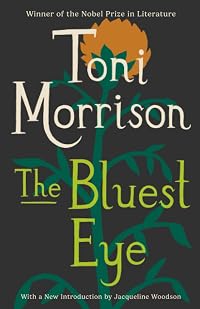
The Bluest Eye
by Toni Morrison
On This Page
Description
Pecola Breedlove, a young eleven-year-old black girl, prays everyday for beauty. Mocked by other children for the dark skin, curly hair, and brown eyes that set her apart, she yearns for the blond hair and blue eyes that she believes will allow her to finally fit in. Yet as her dreams grow more fervent, her life slowly starts to disintegrate in the face of adversity and strife. A powerful examination of our obsession with beauty and conformity--Publisher.Tags
Recommendations
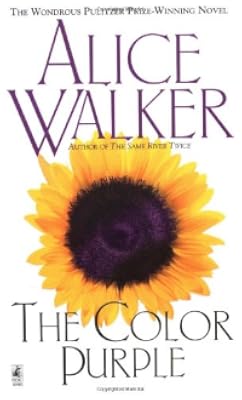
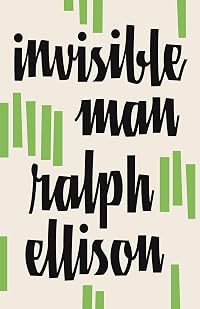
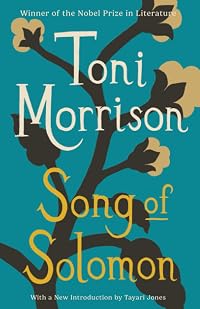
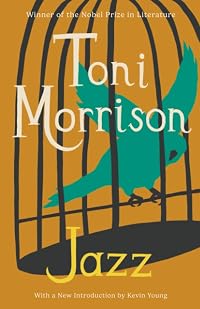
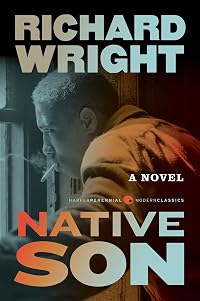
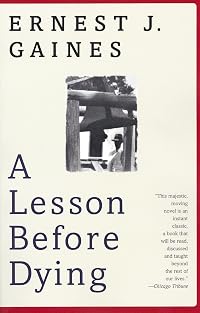
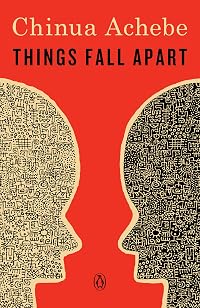
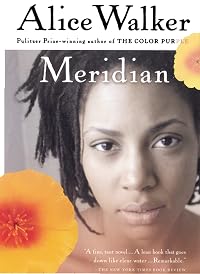
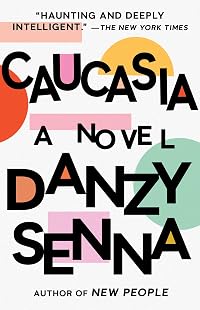

Member Recommendations
by aprille
Member Reviews
Eleven-year-old Pecola Breedlove’s biggest desire is to be not black but white, with the bluest eyes ever. She believes that would make her beautiful, and thus beloved, and might have prevented her biggest problem, revealed in the novel’s opening sentences: “Quiet as it’s kept, there were no marigolds in the fall of 1941. We thought, at the time, that it was because Pecola was having her father’s baby that the marigolds did not grow.”
The novel is an immersion in Black America between the world wars and, like Alice Walker’s The Color Purple, an exploration of people’s backstories to show how they become who they are. Its structure is clever, opening with a paragraph from the happy Dick-and-Jane reading primer that show more Morrison immediately implodes, reassembling the ruins as chapters about Pecola’s friends, house, family, cat, dog, Mother and Father. As with many banned books, it’s an important story and one that takes readers beyond pity and anguish to a mobilizing anger.
I’m grateful for my timing in reading this novel -- that it likely attuned me to reports of the new Sesame Street song, I Love My Hair (CNN story here), by the show’s head writer whose adopted Ethiopian daughter wanted straight blond hair. show less
The novel is an immersion in Black America between the world wars and, like Alice Walker’s The Color Purple, an exploration of people’s backstories to show how they become who they are. Its structure is clever, opening with a paragraph from the happy Dick-and-Jane reading primer that show more Morrison immediately implodes, reassembling the ruins as chapters about Pecola’s friends, house, family, cat, dog, Mother and Father. As with many banned books, it’s an important story and one that takes readers beyond pity and anguish to a mobilizing anger.
I’m grateful for my timing in reading this novel -- that it likely attuned me to reports of the new Sesame Street song, I Love My Hair (CNN story here), by the show’s head writer whose adopted Ethiopian daughter wanted straight blond hair. show less
Pecola Breedlove is a little girl that Claudia - the narrator for most of the story - goes to school with. Pecola is poor and abused and has so internalized racism that she wants nothing more than to have blue eyes so she can be beautiful. Interspersed with Claudia's more straightforward narrative, we also get the stories of various adults in this small Ohio town who come into contact with the kids and affect their lives.
What happens when everyone outside of you tells you you're lesser, worthless, ugly, and will never amount to anything? That's what Morrison explores in this book, through multiple characters who have all been affected by racism in one way or another. Claudia and her sister have loving parents and stability, but they show more like all the other kids in their class buy into colorism. Some of the adults, affected by their own pasts, perpetuate trauma on the next generation. We're told early on that Pecola's father rapes her, and a later chapter gives us the perspective of a pedophile. Pecola's story is the most depressing because she has nothing going for her, but everyone is affected to a lesser or greater extent, and no one - or at least no adult - is fully innocent. This is Morrison's debut novel, and you can see the hallmarks of her style, with beautiful language and memorable characters grappling with racism and the difficulties life brings them. It's not an easy or a happy read, but it's worth engaging with. show less
What happens when everyone outside of you tells you you're lesser, worthless, ugly, and will never amount to anything? That's what Morrison explores in this book, through multiple characters who have all been affected by racism in one way or another. Claudia and her sister have loving parents and stability, but they show more like all the other kids in their class buy into colorism. Some of the adults, affected by their own pasts, perpetuate trauma on the next generation. We're told early on that Pecola's father rapes her, and a later chapter gives us the perspective of a pedophile. Pecola's story is the most depressing because she has nothing going for her, but everyone is affected to a lesser or greater extent, and no one - or at least no adult - is fully innocent. This is Morrison's debut novel, and you can see the hallmarks of her style, with beautiful language and memorable characters grappling with racism and the difficulties life brings them. It's not an easy or a happy read, but it's worth engaging with. show less
This was very good. Starting with Claudia and Frieda, two preteen sisters from a dirt poor black family in Ohio in the 1940s, the focus soon shifts to twelve-year-old Pecola, a temporary foster child, whose father raped her and got her with child. Later in the novel, extended flashbacks delve into the histories of each of Pecola’s parents.
This is not a happy read: essentially, the book deals withsuccessive generations succumbing to cycles of abandonment, violence and internalised inferiority complexes. It is about concentric circles of rancor: within each marginalised group a power dynamic develops that recreates that external enmity -- all the way down into the individual. The bluest eye is not a straightforward read, either: show more different focalisers skip from first-person to third-person, and the story jumps back and forth between several decades.
Speaking as a white person, grokking systemic racism is hard to do. This book definitely helps in turning intellectual understanding into a glimpse of, well, grokking. show less
This is not a happy read: essentially, the book deals with
Speaking as a white person, grokking systemic racism is hard to do. This book definitely helps in turning intellectual understanding into a glimpse of, well, grokking. show less
his soil," concludes the young narrator of this quiet chronicle of garrotted innocence, "is bad for all kinds of flowers. Certain seeds it will not nurture, certain fruit it will not bear." And among the exclusions of white rural Ohio, echoed by black respectability, is ugly, black, loveless, twelve-year-old Pecola. But in a world where blue-eyed gifts are clucked over and admired, and the Pecolas are simply not seen, there is always the possibility of the dream and wish—for blue eyes. Born of a mother who adjusted her life to the clarity and serenity of white households and "acquired virtues that were easy to maintain" and a father, Cholly, stunted by early rejections and humiliations, Pecola just might have been loved—for in show more raping his daughter Cholly did at least touch her. But "Love is never better than the lover," and with the death of her baby, the child herself, accepting absolutely the gift of blue eyes from a faith healer (whose perverse interest in little girls does not preclude understanding), inches over into madness. A skillful understated tribute to the fall of a sparrow for whose small tragedy there was no watching eye.
-Kirkus Review show less
-Kirkus Review show less
This is the only book of Toni Morrison's that I have been able to read all the way through and it was powerful. It tells the story of young Pecola by telling the stories of the people around her. Morrison's descriptions and insights were nuanced and well-told.
What also makes this book effective is the generational nature of abuse, not just from one generation to the next but also the ways in which abuse happens within a generation. Pecola's parents subject one another to abuse as their lives together break down. She witnesses the abuse and rather than run away like her brother she retreats into herself. She has nowhere else to turn for guidance or comfort.
And I was struck by the insight into how compassion and empathy are luxuries that show more few of the characters can afford. Generations of African-American families have gone through sexual humiliation and degrees of violence, and the scars become visible as harsh words or actions directed towards another. To understand and be forgiven is not an automatic response, and I saw that emptiness as another, larger tragedy for the characters and their tales. show less
What also makes this book effective is the generational nature of abuse, not just from one generation to the next but also the ways in which abuse happens within a generation. Pecola's parents subject one another to abuse as their lives together break down. She witnesses the abuse and rather than run away like her brother she retreats into herself. She has nowhere else to turn for guidance or comfort.
And I was struck by the insight into how compassion and empathy are luxuries that show more few of the characters can afford. Generations of African-American families have gone through sexual humiliation and degrees of violence, and the scars become visible as harsh words or actions directed towards another. To understand and be forgiven is not an automatic response, and I saw that emptiness as another, larger tragedy for the characters and their tales. show less
God. This is a novel too monstrous and perverse it has left me cold and nauseated but with exceedingly brilliant intentions. It scrapes the skin until it finds the time to burrow underneath it. It squirms then stings like a fresh, bleeding wound washed by running water from a faucet. My mind still reels not only from how painful and horrific it all is but also with the thought-provokingly cascaded perspectives from multiple point of views.
“There is nothing more to say—except why. But since why is difficult to handle, one must take refuge in how.”
What struck me most is the internalised racism in The Bluest Eye which most of the characters manoeuvre in. It is recognisably and frighteningly merciless. In a society that deeply favours show more Eurocentric features it does an endless amount of harm, especially on women, through the self-hatred it cultivates on the nonconformists. With the word “ugly” dropped objectively, rigidly, and bitterly multiple times, it further widens the already existing rift within minority groups, particularly between black American girls / women here; where in differing shades of black, perhaps even considered better facial symmetry, the lighter ones expectedly get nicer treatment and privilege whilst the darker ones receive damaging taunts and teases. Morrison is compelling and vivid; poetic and poignant. There is never a word wasted. The self-hatred intensifies resulting in an immense need to take any kind of love in whatever—frequently malleable and deceitful—shape or form it presents itself as; and the difficulty to leave these abusive relationships is rooted from unaddressed insecurities and traumas. The body is constantly used, objectified, and bruised. Poverty gives additional weight to the inability to accept the possibility of freedom. But it is hard to recognise love as true and tender when prior loves experienced amount to nothing.
As The Bluest Eye traverses the complications of established notions on physical beauty, it microscopes on dysfunctional family units of a race continuously oppressed where, brutally, oppression also thrives. A number of people may feel the violence in The Bluest Eye is unnecessary and excessive but this opens an important discourse not only on rape culture but also domestic violence and child abuse. These mostly remain unreported due to families and friends doubting the victim, that or turning a blind eye over issues they don’t want to confront once learned. Until the end, the novel is fraught with despair. Hope is nowhere in sight. There is a maddening guilt and self-blame that looms all over the pages. And the ugliest is the pleasure and self-confidence people derive in comparing themselves to the unfortunate ones. Childhood innocence here slips and fleets. It is eventually crushed by the hands of corruption. The Bluest Eye is covered in grit and dirt; in blood and violation. It turns your head and makes you see what's often disregarded: the physical scars go but the emotional ones don’t. show less
“There is nothing more to say—except why. But since why is difficult to handle, one must take refuge in how.”
What struck me most is the internalised racism in The Bluest Eye which most of the characters manoeuvre in. It is recognisably and frighteningly merciless. In a society that deeply favours show more Eurocentric features it does an endless amount of harm, especially on women, through the self-hatred it cultivates on the nonconformists. With the word “ugly” dropped objectively, rigidly, and bitterly multiple times, it further widens the already existing rift within minority groups, particularly between black American girls / women here; where in differing shades of black, perhaps even considered better facial symmetry, the lighter ones expectedly get nicer treatment and privilege whilst the darker ones receive damaging taunts and teases. Morrison is compelling and vivid; poetic and poignant. There is never a word wasted. The self-hatred intensifies resulting in an immense need to take any kind of love in whatever—frequently malleable and deceitful—shape or form it presents itself as; and the difficulty to leave these abusive relationships is rooted from unaddressed insecurities and traumas. The body is constantly used, objectified, and bruised. Poverty gives additional weight to the inability to accept the possibility of freedom. But it is hard to recognise love as true and tender when prior loves experienced amount to nothing.
As The Bluest Eye traverses the complications of established notions on physical beauty, it microscopes on dysfunctional family units of a race continuously oppressed where, brutally, oppression also thrives. A number of people may feel the violence in The Bluest Eye is unnecessary and excessive but this opens an important discourse not only on rape culture but also domestic violence and child abuse. These mostly remain unreported due to families and friends doubting the victim, that or turning a blind eye over issues they don’t want to confront once learned. Until the end, the novel is fraught with despair. Hope is nowhere in sight. There is a maddening guilt and self-blame that looms all over the pages. And the ugliest is the pleasure and self-confidence people derive in comparing themselves to the unfortunate ones. Childhood innocence here slips and fleets. It is eventually crushed by the hands of corruption. The Bluest Eye is covered in grit and dirt; in blood and violation. It turns your head and makes you see what's often disregarded: the physical scars go but the emotional ones don’t. show less
If you have the kind of facebook friends I have (literature academics), you may remember a few years ago when a bunch of articles trended with titles like "Reading Novels Makes You More Empathetic" and "Reading Novels Makes You a Better Person" and so on. (Here's an example from Scientific American.) This was the scientific study-backed version of something previous posited by the literary critic Elaine Scarry in The Handbook of Interethnic Coexistence in 1998, in an essay called "The Difficulty of Imagining Other Persons."
Scarry argues that human beings are actually really quite terrible at imagining what it's like to be a different human being, and that this has dangerous, real world consequences: "The human capacity to injure other show more people has always been much greater than its ability to imagine other people. Or perhaps we should say, the human capacity to injure other people is very great precisely because our ability to imagine other people is very small. […] But there is a place—namely, the place of great literature—where the ability to imagine others is very strong" (45-6). Literature, she argues is all about imagining oneself as another person: "literature at least holds out to use the constant invitation to read about others, not only other ethnic groups within one’s own country but the great Russian or German or Chinese writings; and universities are, in their departmental organizations, still structured to encourage this cross-country imagining" (47). We might be able to easily think of novels that have created empathy in notable ways, such as how Uncle Tom's Cabin created empathy with the plight of slaves.
But Scarry isn't as optimistic as she might initially seem, because she goes on to argue that
we must recognize severe limits on what the imagination can accomplish. One key limit is the number of characters. […] Presented with the huge number of characters one finds in Dickens or in Tolstoi, one must constantly strain to keep them sorted out; and of course their numbers are tiny when compared with the number of persons to whom we are responsible in political life. […] For this, literature prepares us inadequately, since even secondary characters (let alone second hundredth or second thousandth characters) lack the density of personhood that is attributed to the central character. […] Literature—even when it enlists us into the greatest imaginative acts and the most expansive compassion—always confesses the limits on the imagination by the structural necessity of major and minor persons, center stage and lateral figures. (47)
You might access the plight of the urban poor better if you read Oliver Twist, but though you now better empathize with Oliver himself, you empathize no better with the vast majority of the characters in the novel, some of whom can remain quite one-dimensional.
Therefore, the best literature (according to Scarry) turns this bug into a feature. "Literature […] is most helpful not insofar as it takes away the problem of the Other—for only with greatest rarity can it do this—but when it instead takes as its own subject the problem of Imagining Others. The British novelist Thomas Hardy is a brilliant explicator of this problem. […] Hardy maximizes the imaginary density of a person, then lets us watch the painful subtraction each undergoes as she or he comes to be perceived by others" (48). According to Scarry, we inhabit Tess's world for most of Tess of the D'Urbervilles, but then we jump to someone else's perspective and see how they look at Tess so shallowly, missing most of what constitutes her: that is "painful subtraction." Suddenly Tess becomes a secondary character in someone else's story, and we discover how easy it is to not empathize with someone eminently deserving of empathy.
All of this is a long-winded introduction to the fact that I would argue that The Bluest Eye belongs to the same category of novels as Scarry claims for Tess. It is not just designed to make us empathize with other persons, but takes as "its own subject the problem of Imagining Others." The book is all about Pecola Breedlove, but for most of the novel, we never get a scene written from her perspective. All of our empathizing with Pecola must be done without the benefit of interiority. When we finally do go inside Pecola, it's to find out she's fallen apart: there are two Pecolas, and she/they utterly believe they finally have the blue eyes that will make them attractive.
If anything, the structure of The Bluest Eye emphasizes what we might call "painful addition." We switch back and forth between Claudia's narration about her relationship with Pecola Breedlove and flashbacks seemingly told by an omniscient narrator that tell us more about Pecola and her family. Even though Claudia is the best friend Pecola has, each flashback makes it clear that there's so much about Pecola that no one knows, not even her. We learn about how the terrible home life of the Breedloves made Pecola the way she was, then about how Pecola's mother became the way she was, then about how Pecola's father became the way he was. When we finally see the rape of Pecola by her own father, it's from the perspective of her father. We are made to understand why he does what he does. Yet, as the novel makes clear, no one other than the reader (and, to a lesser extent, Claudia) will ever have this level of understanding of these characters. Pecola, as Morrison says in her afterword, is the hole at the center of the novel.
In a sense, we know nothing about Pecola. But in creating painful addition, Morrison makes us see how horrific it is that we know nothing about Pecola. show less
Scarry argues that human beings are actually really quite terrible at imagining what it's like to be a different human being, and that this has dangerous, real world consequences: "The human capacity to injure other show more people has always been much greater than its ability to imagine other people. Or perhaps we should say, the human capacity to injure other people is very great precisely because our ability to imagine other people is very small. […] But there is a place—namely, the place of great literature—where the ability to imagine others is very strong" (45-6). Literature, she argues is all about imagining oneself as another person: "literature at least holds out to use the constant invitation to read about others, not only other ethnic groups within one’s own country but the great Russian or German or Chinese writings; and universities are, in their departmental organizations, still structured to encourage this cross-country imagining" (47). We might be able to easily think of novels that have created empathy in notable ways, such as how Uncle Tom's Cabin created empathy with the plight of slaves.
But Scarry isn't as optimistic as she might initially seem, because she goes on to argue that
we must recognize severe limits on what the imagination can accomplish. One key limit is the number of characters. […] Presented with the huge number of characters one finds in Dickens or in Tolstoi, one must constantly strain to keep them sorted out; and of course their numbers are tiny when compared with the number of persons to whom we are responsible in political life. […] For this, literature prepares us inadequately, since even secondary characters (let alone second hundredth or second thousandth characters) lack the density of personhood that is attributed to the central character. […] Literature—even when it enlists us into the greatest imaginative acts and the most expansive compassion—always confesses the limits on the imagination by the structural necessity of major and minor persons, center stage and lateral figures. (47)
You might access the plight of the urban poor better if you read Oliver Twist, but though you now better empathize with Oliver himself, you empathize no better with the vast majority of the characters in the novel, some of whom can remain quite one-dimensional.
Therefore, the best literature (according to Scarry) turns this bug into a feature. "Literature […] is most helpful not insofar as it takes away the problem of the Other—for only with greatest rarity can it do this—but when it instead takes as its own subject the problem of Imagining Others. The British novelist Thomas Hardy is a brilliant explicator of this problem. […] Hardy maximizes the imaginary density of a person, then lets us watch the painful subtraction each undergoes as she or he comes to be perceived by others" (48). According to Scarry, we inhabit Tess's world for most of Tess of the D'Urbervilles, but then we jump to someone else's perspective and see how they look at Tess so shallowly, missing most of what constitutes her: that is "painful subtraction." Suddenly Tess becomes a secondary character in someone else's story, and we discover how easy it is to not empathize with someone eminently deserving of empathy.
All of this is a long-winded introduction to the fact that I would argue that The Bluest Eye belongs to the same category of novels as Scarry claims for Tess. It is not just designed to make us empathize with other persons, but takes as "its own subject the problem of Imagining Others." The book is all about Pecola Breedlove, but for most of the novel, we never get a scene written from her perspective. All of our empathizing with Pecola must be done without the benefit of interiority. When we finally do go inside Pecola, it's to find out she's fallen apart: there are two Pecolas, and she/they utterly believe they finally have the blue eyes that will make them attractive.
If anything, the structure of The Bluest Eye emphasizes what we might call "painful addition." We switch back and forth between Claudia's narration about her relationship with Pecola Breedlove and flashbacks seemingly told by an omniscient narrator that tell us more about Pecola and her family. Even though Claudia is the best friend Pecola has, each flashback makes it clear that there's so much about Pecola that no one knows, not even her. We learn about how the terrible home life of the Breedloves made Pecola the way she was, then about how Pecola's mother became the way she was, then about how Pecola's father became the way he was. When we finally see the rape of Pecola by her own father, it's from the perspective of her father. We are made to understand why he does what he does. Yet, as the novel makes clear, no one other than the reader (and, to a lesser extent, Claudia) will ever have this level of understanding of these characters. Pecola, as Morrison says in her afterword, is the hole at the center of the novel.
In a sense, we know nothing about Pecola. But in creating painful addition, Morrison makes us see how horrific it is that we know nothing about Pecola. show less
Members
- Recently Added By
Published Reviews
ThingScore 100
I have said "poetry." But "The Bluest Eye" is also history, sociology, folklore, nightmare and music. It is one thing to state that we have institutionalized waste, that children suffocate under mountains of merchandised lies. It is another thing to demonstrate that waste, to re-create those children, to live and die by it. Miss Morrison's angry sadness overwhelms.
added by jlelliott
Lists

1001 Books You Must Read Before You Die
1,448 works; 1,134 members

The Guardian's 1000 Novels Everyone Must Read
1,005 works; 551 members

Classics you know you should have read but probably haven't
421 works; 407 members

Novels from The Guardian's Great American Novelist Tournament
148 works; 24 members
20th Century Literature
1,161 works; 55 members

Banned Books Week 2014
268 works; 63 members

Books recommended by Barack Obama
295 works; 28 members

Unread books
1,063 works; 87 members

Oprah's Book Club (original and 2.0)
91 works; 21 members

Magic Realism
371 works; 52 members

Must-Read Books by Black Authors
114 works; 92 members
Banned or Challenged Books
400 works; 41 members

Female Protagonist
1,056 works; 57 members
Favorite Coming of Age Novels.
164 works; 51 members

Black Authors
384 works; 32 members

Nobel Price Winners
222 works; 20 members
Female Author
1,234 works; 67 members
Best African American Literature
53 works; 9 members

1970s
657 works; 23 members
Literature About Women and Girls
394 works; 39 members

A Novel Cure
742 works; 23 members
Best of American Literature
146 works; 9 members
Banned and Challenged Books List
14 works; 3 members

Books Set in Ohio
30 works; 6 members
1,001 BYMRBYD Concensus
723 works; 27 members

Blue Pyramid 1,276 Best Books of All Time
1,248 works; 32 members

Best African and African diaspora books
111 works; 4 members

Books with Colourful Titles
171 works; 8 members
100 World Classics
99 works; 15 members

Five star books
1,767 works; 110 members
Best Domestic Fiction
77 works; 6 members
First Novels
373 works; 17 members

Literary Travelogue of the United States Challenge
133 works; 6 members

Recommendations
17 works; 1 member

Books Featured on Readers' Review of the Diane Rehm Show
161 works; 8 members

42 Books Every Clevelander Should Read
42 works; 3 members

llibres que he llegit el 2005
12 works; 1 member

ALA's Top 10 Most Challenged Books of 2021
10 works; 1 member

Books Read in 2022
5,226 works; 115 members
Racism and Race Relations in Literature
48 works; 9 members

Literature which inspired Pop songs
85 works; 9 members

Literary Witches
86 works; 4 members
American Lit for Eng 11 Research Project
368 works; 6 members

Book Club Suggestions for 2020
27 works; 2 members

Ten Before The End
10 works; 1 member

1970 Club
85 works; 2 members
ethnic history
19 works; 1 member

Gen X Library
245 works; 4 members

Youth: BLM
265 works; 1 member

.
396 works; 1 member

20th-Century American Women Writers Reading List
15 works; 1 member
Banned Books
40 works; 2 members
Widely acclaimed, one book per year
105 works; 3 members
Vlogbrothers Book Recommendations
307 works; 4 members
School Made Us Read It
380 works; 196 members

Books Read in 2025
4,128 works; 98 members

Read with Jenna
91 works; 2 members

Book Riot Read Harder 2026
80 works; 1 member

Books Read in 2024
4,727 works; 128 members

Books About Girls
219 works; 17 members

2024
34 works; 1 member

Books mentioned in bell hooks' All About Love
70 works; 1 member

Published in 1970
58 works; 7 members

Read
293 works; 4 members

Swinging Seventies
255 works; 18 members

A Rainbow of Books: Colors in the Title
570 works; 24 members

Penguin Random House
458 works; 4 members

To Read
617 works; 7 members

Books With Body Parts in the Title
153 works; 9 members

Bildungsromans
26 works; 1 member

African American History Month
99 works; 2 members

Books Read in 2021
5,361 works; 114 members
Kansas Book Ban List
29 works; 1 member

Florida's Book Bans and Challenges
311 works; 4 members

Books You Can Read in a Weekend
7 works; 1 member

AP Lit
363 works; 6 members

Rainbow Gardens: Parent Collection
19 works; 1 member
Virginia Banned Books 2023
68 works; 3 members
English Literature Class
25 works; 1 member
Best of World Literature
435 works; 52 members
Author Information

101+ Works 80,264 Members
Some Editions
Awards and Honors
Distinctions
Notable Lists
Greatest Books algorithm (717)
Series
Belongs to Publisher Series
Work Relationships
Is contained in
Has the adaptation
Is abridged in
Has as a commentary on the text
Has as a student's study guide
Has as a teacher's guide
Common Knowledge
- Canonical title
- The Bluest Eye
- Original title
- The Bluest Eye
- Original publication date
- 1970
- People/Characters
- Soaphead Church/Elihue Micah Whitcomb; Pecola Breedlove; Cholly Breedlove/Fuller; Pauline (Williams | Williams); Sam Breedlove; Claudia MacTeer (show all 38); Frieda MacTeer; Henry Washington; Great Aunt Jimmy; Rosemary Villanucci; Mrs. MacTeer; Della Jones; Mr Yacobowski; China; Poland; Miss Marie/Maginot Line; Maureen Peal; Bay Boy; Woodrow Cain; Buddy Wilson; Junie Bug; Miss Bertha; Geraldine; Louis Junior; P.L.; Ralph Nisensky; Mr. Buford; Miss Dunion; Blue Jack; Miss Alice; M'Dear; Mrs. Gaines; Essie Foster; Jake; Suky; Darlene; Samson Fuller; Velma
- Important places
- Lorain, Ohio, USA; Macon, Georgia, USA; Kentucky, USA; Ohio, USA; Georgia, USA
- Dedication
- To the two who gave me life
and the one who made me free - First words
- Quiet as it's kept, there were no marigolds in the fall of 1941.
- Quotations
- And it is the blackness that accounts for, that creates,the vacuum edged with distaste in white eyes.
But we listened for the one who would say, “Poor little girl,” or, “Poor baby,” but there was only head-wagging where those words should have been. We looked for eyes creased with concern, but saw only veils. - Last words
- (Click to show. Warning: May contain spoilers.)Oh, some of us "loved" her. The Maginot Line. And Cholly loved her. I'm sure he did. He, at any rate, was the one who loved her enough to touch her, envelop her, give something of himself to her. But his touch was fatal, and the something he gave her filled the matrix of her agony with death. Love is never any better than the lover. Wicked people love wickedly, violent people love violently, weak people love weakly, stupid people love stupidly, but the love of a free man is never safe. There is no gift for the beloved. The lover alone possesses his gift of love. The loved one is shorn, neutralized, frozen in the glare of the lover's inward eye.
And now when I see her searching the garbage--for what? The thing we assassinated? I talk about how I did not plant the seeds too deeply, how it was the fault of the earth, the land, of our town. I even think now that the land of the entire country was hostile to marigolds that year. This soil is bad for certain kinds of flowers. Certain seeds it will not nurture, certain fruits it will not bear, and when the land kills of its own volition, we acquiesce and say the victim had no right to live. We are wrong, of course, but it doesn't matter. It's too late. At least on the edge of my town, among the garbage and the sunflowers of my town, it's much, much, much too late. - Blurbers
- Leonard, John
- Original language
- English
- Canonical DDC/MDS
- 813.54
- Canonical LCC
- PS3563.O8749
- Disambiguation notice
- Please distinguish between this complete 1970 novel and any abridgement of the original Work. Thank you.
Classifications
Statistics
- Members
- 15,983
- Popularity
- 431
- Reviews
- 271
- Rating
- (3.92)
- Languages
- 20 — Chinese, Czech, Danish, Dutch, English, Finnish, French, German, Hebrew, Hungarian, Italian, Norwegian (Bokmål), Norwegian, Polish, Portuguese, Russian, Serbian, Spanish, Swedish, Turkish
- Media
- Paper, Audiobook, Ebook
- ISBNs
- 105
- UPCs
- 1
- ASINs
- 62