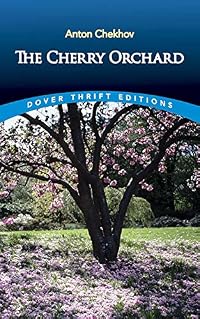
The Cherry Orchard
by Anton Chekhov
On This Page
Description
Chekhov's masterful last play, The Cherry Orchard, is a work of timeless, bittersweet beauty about the fading fortunes of an aristocratic Russian family and their struggle to maintain their status in a changing world. Alternately touching and farcical, this subtle, intelligent play stars the incomparable Marsha Mason.An L.A. Theatre Works full-cast performance starring: Marsha Mason as Madame Lyubov Andreyevna Ranyevskaya, Hector Elizondo as Leonid Andreyevich Gayev, Michael Cristofer as show more Yermolay Alekseyevich Lopakhin, Jennifer Tilly as Dunyasha (Avdotya Fyodorovna), Joey Slotnick as Semyon Panteleyevich Yepikhodov, Christy Keefe as Anya Ranyevskaya, Amy Pietz as Varya Ranyevskaya, Jordan Baker as Charlotta Ivanovna, Jeffrey Jones as Boris Borisovich Semyonov-Pischick, Charles Durning as Feers, John Chardiet as Yasha, Tim DeKay as Pyotr Sergeyevich Trofimov, John Chardiet as Passer-By. Translated and adapted by Frank Dwyer and Nicholas Saunders. Directed by Rosalind Ayres. Recorded before a live audience at the Skirball Cultural Center, Los Angeles.
. show less
Tags
Recommendations
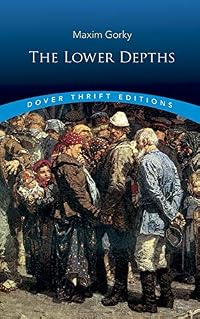

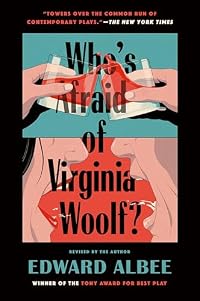
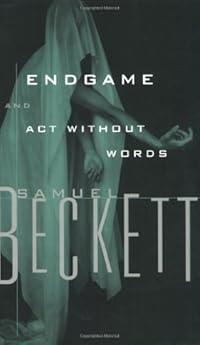
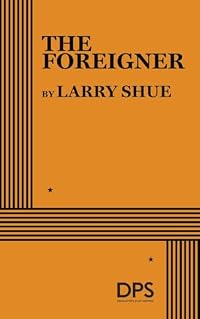



Member Recommendations

Member Reviews
This play is different every time I read it. When I was younger and still believed that my family's land would continue to be passed down the generations, it was tragic; when I had learned about the Japanese word "aware" it was beautiful; when I had learned something about how easily even clever women fall into traps and call them love, I wanted to believe somehow that Lyuba's generosity meant something anyway; as a young person of business I feared becoming Lopakhin with his, as it seemed to me, idealistic excuses for exploitation no different from those of the old aristocracy; after a few years of good fortune I looked less pityingly on old Pishtchik, whose attitude really isn't so absurd, though he may not be a gifted show more accountant.
Through this reading, though, all I could think about was Firs saying "They knew some way in those days.... They've forgotten. Nobody remembers how to do it." And I look out the window at people who don't remember when shoes were supposed to last more than one season, lenders weren't allowed to charge 25%, growing food wasn't just a health craze but a normal way of life, books didn't cost $10 plus a special $180 decoder gizmo that would be outmoded in a year - and I think about all the people my age who have no idea how to run a business or why it would be desirable to own land - and I think it may not be the cherry orchard, but the Firs of this world, the ones who remember good sense and precaution, the ones who knew their ancestors' knowledge, we must fear most to lose. show less
Through this reading, though, all I could think about was Firs saying "They knew some way in those days.... They've forgotten. Nobody remembers how to do it." And I look out the window at people who don't remember when shoes were supposed to last more than one season, lenders weren't allowed to charge 25%, growing food wasn't just a health craze but a normal way of life, books didn't cost $10 plus a special $180 decoder gizmo that would be outmoded in a year - and I think about all the people my age who have no idea how to run a business or why it would be desirable to own land - and I think it may not be the cherry orchard, but the Firs of this world, the ones who remember good sense and precaution, the ones who knew their ancestors' knowledge, we must fear most to lose. show less
I read this prior to seeing a production of the Cherry Orchard at the Munich Kammerspiele. The translation is great and the notes provide significant insight.
Although the work is 100 years old, it speaks directly to our times.
Although the work is 100 years old, it speaks directly to our times.
The orchard and the thudding throes of its vast but stifling space creates a landscape-on-stage that combines the sensual world into an emptiness of sorts. One could see, smell and of course hear the sound of a hopelessness which screams with longing to be filled again with something substantial; not the same dead-habits of effluent but numb and cold gestural drift ... but with a slightly more deeper sense, to be sensed by two individuals.
. . .
. . .
A sad tale about an aristocratic family in decline. With their fortune spent and their ancestral home up for auction, they spend their last days recalling better times and overlooking opportunities to save themselves. It's mournful and haunting with layers of complexity and depth.
LATW audio production of the classic play recounting the challenges facing an aristocratic Russian family who desperately wants to maintain their way of life even as their finances fall on hard times. I found it challenging to keep characters straight in this one and wasn't always certain which character was who - possibly complicated by the complexities of Russian names. This would have been easier to keep straight in a traditional production as you have faces to track with the voice. Not a bad listen but not a play I'm likely to revisit.
Chekhov's play is great. When I started reading it, I was not expecting to be as engaged as I ended up being by it. I am aware that it is mostly considered a tragedy; however, after reading it, I see it as a tragicomedy, as I found funny and witty some of the dialog and actions.
Now, I would really love to see the play onstage!
Now, I would really love to see the play onstage!
Another example of how I'm usually disappointed when I listen to something that other people consider great, but which does not a priori sound appealing.
This probably reveals me as a philistine, but I just couldn't found much of value in this. We have a bunch of upper-class Russian twits who think the world owes them a living, who do absolutely nothing of value to anyone, not even things of abstract value like art or science, and who are bitterly disappointed when the tragedy that everyone has been warning them about for years finally arrives and no deus ex machina saves them.
The only character in the play I had the remotest sympathy for was the student who tells them to their faces that they are parasites and that their day is over, show more not that his warnings are heeded.
Maybe this play is viewed in the same way as Gone with the Wind nostalgia --- everyone who pines for this better simpler way of life assumes that for some reason they're going to be part of the aristrocracy in this alternate world, not one of the lower classes. show less
This probably reveals me as a philistine, but I just couldn't found much of value in this. We have a bunch of upper-class Russian twits who think the world owes them a living, who do absolutely nothing of value to anyone, not even things of abstract value like art or science, and who are bitterly disappointed when the tragedy that everyone has been warning them about for years finally arrives and no deus ex machina saves them.
The only character in the play I had the remotest sympathy for was the student who tells them to their faces that they are parasites and that their day is over, show more not that his warnings are heeded.
Maybe this play is viewed in the same way as Gone with the Wind nostalgia --- everyone who pines for this better simpler way of life assumes that for some reason they're going to be part of the aristrocracy in this alternate world, not one of the lower classes. show less
Members
- Recently Added By
Lists

Books You Read During High School (For School)
301 works; 53 members

Greatest Books, allegedly
484 works; 9 members

In Our Time books
4,934 works; 2 members

My Play Collection
769 works; 3 members

Recommended Reading : 600 Classics Reviewed, Editors of Salem Press, 2015
634 works; 6 members

The Well-Educated Mind, Susan Wise Bauer, 2016
179 works; 3 members

Books Read in 2024
4,623 works; 126 members

readingList
38 works; 1 member

New Lifetime Reading Plan by Fadiman and Major
225 works; 5 members
Essential/Recognized Stage Plays
115 works; 4 members

Mustich's 1000 Books to Read Before You Die: A Life Changing List
1,001 works; 18 members

AP Lit
363 works; 6 members

Well-Educated Mind
150 works; 3 members

Russian Literature
184 works; 35 members

Tom's Bookstore
346 works; 2 members
The Well-Educated Mind Reading Challenge
75 works; 7 members
Mensa for Kids Excellence in Reading Award Program (Grades 9-12)
116 works; 3 members
Mensa for Kids Excellence in Reading Award Program (Grades 9-12)
116 works; 5 members

20th Century Literature
1,161 works; 55 members

A Rainbow of Books: Colors in the Title
570 works; 24 members

The College Board: 101 Great Books Recommended for College-Bound Readers
111 works; 7 members

100 Most Recommended Works
100 works; 11 members

Western World's Greatest Books - Project Gutenberg
295 works; 15 members

1900s (Decade, not century)
73 works; 17 members
Favourite Books
1,817 works; 316 members

bound
100 works; 1 member
Author Information

2,637+ Works 44,703 Members
Anton Pavlovich Chekhov was born in the provincial town of Taganrog, Ukraine, in 1860. In the mid-1880s, Chekhov became a physician, and shortly thereafter he began to write short stories. Chekhov started writing plays a few years later, mainly short comic sketches he called vaudvilles. The first collection of his humorous writings, Motley show more Stories, appeared in 1886, and his first play, Ivanov, was produced in Moscow the next year. In 1896, the Alexandrinsky Theater in St. Petersburg performed his first full- length drama, The Seagull. Some of Chekhov's most successful plays include The Cherry Orchard, Uncle Vanya, and Three Sisters. Chekhov brought believable but complex personalizations to his characters, while exploring the conflict between the landed gentry and the oppressed peasant classes. Chekhov voiced a need for serious, even revolutionary, action, and the social stresses he described prefigured the Communist Revolution in Russia by twenty years. He is considered one of Russia's greatest playwrights. Chekhov contracted tuberculosis in 1884, and was certain he would die an early death. In 1901, he married Olga Knipper, an actress who had played leading roles in several of his plays. Chekhov died in 1904, spending his final years in Yalta. (Bowker Author Biography) show less
Some Editions
Awards and Honors
Notable Lists
Series
Belongs to Publisher Series
Work Relationships
Is contained in
Has the adaptation
Has as a study
Has as a supplement
Common Knowledge
- Canonical title
- The Cherry Orchard
- Original title
- Вишнёвый сад
- Alternate titles*
- Kirsikkatarha : nelinäytöksinen komedia
- Original publication date
- 1904
- Related movies
- The Cherry Orchard (1999 | IMDb)
- Original language
- Russian
*Some information comes from Common Knowledge in other languages. Click "Edit" for more information.
Classifications
- Genre
- Fiction and Literature
- DDC/MDS
- 891.723 — Literature & rhetoric Literatures of other languages East Indo-European and Celtic literatures Russian and East Slavic languages Russian drama 1800–1917
- LCC
- PG3456 .V5 .E5 — Language and Literature Slavic languages and literatures. Baltic languages. Albanian language Slavic. Baltic. Albanian Russian literature Individual authors and works 1870-1917 Chekhov
- BISAC
Statistics
- Members
- 1,777
- Popularity
- 12,266
- Reviews
- 27
- Rating
- (3.58)
- Languages
- 20 — Czech, Danish, Dutch, English, Finnish, French, German, Greek, Hungarian, Italian, Norwegian (Bokmål), Norwegian, Farsi/Persian, Portuguese, Romanian, Russian, Spanish, Swedish, Turkish, Welsh
- Media
- Paper, Audiobook, Ebook
- ISBNs
- 183
- UPCs
- 2
- ASINs
- 58