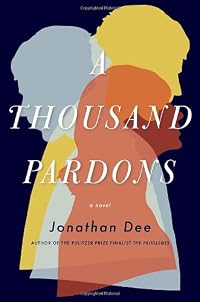
A Thousand Pardons: A Novel
by Jonathan Dee
On This Page
Description
NAMED ONE OF THE BEST BOOKS OF THE YEAR BY KIRKUS REVIEWSFor readers of Jonathan Franzen and Richard Russo, Jonathan Dee’s novels are masterful works of literary fiction. In this sharply observed tale of self-invention and public scandal, Dee raises a trenchant question: what do we really want when we ask for forgiveness?
Once a privileged and loving couple, the Armsteads have now reached a breaking point. Ben, a partner in a prestigious law firm, has become unpredictable at work and show more withdrawn at home—a change that weighs heavily on his wife, Helen, and their preteen daughter, Sara. Then, in one afternoon, Ben’s recklessness takes an alarming turn, and everything the Armsteads have built together unravels, swiftly and spectacularly.
Thrust back into the working world, Helen finds a job in public relations and relocates with Sara from their home in upstate New York to an apartment in Manhattan. There, Helen discovers she has a rare gift, indispensable in the world of image control: She can convince arrogant men to admit their mistakes, spinning crises into second chances. Yet redemption is more easily granted in her professional life than in her personal one.
As she is confronted with the biggest case of her career, the fallout from her marriage, and Sara’s increasingly distant behavior, Helen must face the limits of accountability and her own capacity for forgiveness.
Look for special features inside. Join the Random House Reader’s Circle for author chats and more.
Praise for A Thousand Pardons
“A Thousand Pardons is that rare thing: a genuine literary thriller. Eerily suspenseful and packed with dramatic event, it also offers a trenchant, hilarious portrait of our collective longing for authenticity in these overmediated times.”—Jennifer Egan, Pulitzer Prize–winning author of A Visit from the Goon Squad
“Hugely enjoyable . . . Dee is a snappy, cinematic writer. . . . A Thousand Pardons moves fast. It’s a mere 200 or so pages, and it packs a lot of turns of fate within there.”—The Boston Globe
“Dee’s gifts are often dazzling and his material meticulously shaped. . . . [He] articulates complex emotional dynamics with precision and insight.”—The New York Times Book Review
“Some stories begin with a bang. And some begin with a roaring fireball of truth. Jonathan Dee’s latest novel belongs in the latter camp.”—O: The Oprah Magazine
“Dee bounds gracefully among Helen’s, Ben’s, and Sara’s points of view as they try to reassemble their lives. Their stories feel honest, and the prose is beautiful.”—Entertainment Weekly
“A page turner . . . What a triumph.”—Kirkus Reviews (starred review)
“Graceful prose and such a sharp understanding of human weakness that you’ll wince as you laugh.”—People
“Propulsively readable.”—The Millions
“Dee continues to establish himself as an ironic observer of contemporary behavior. . . . The plot is energetic. . . . But most compelling is the acuteness of the details.”—The Atlantic. show less
Tags
Recommendations
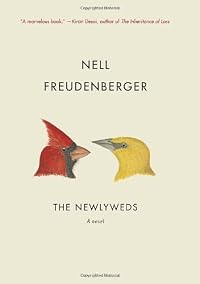
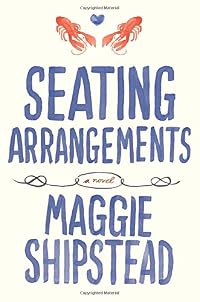
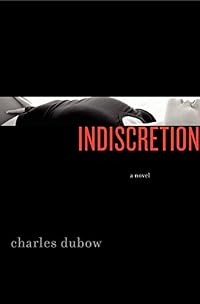
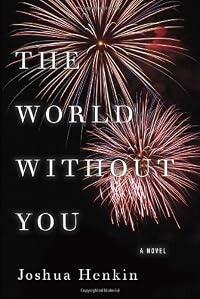

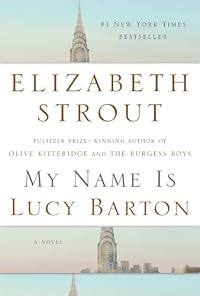
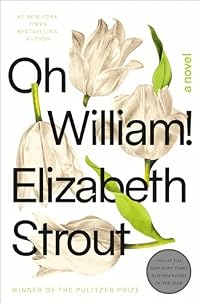
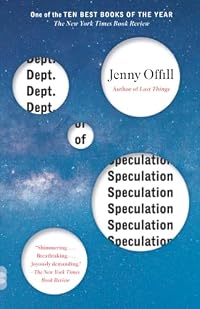
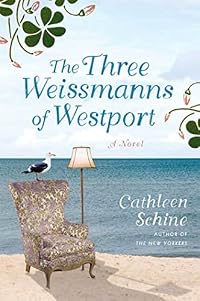
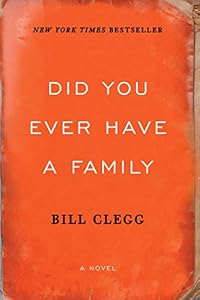
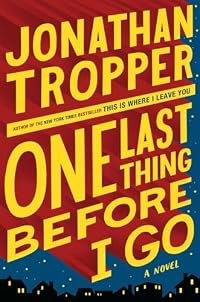
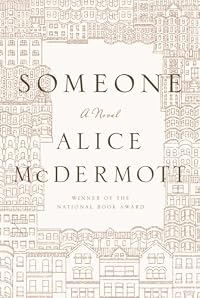
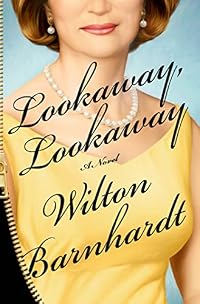
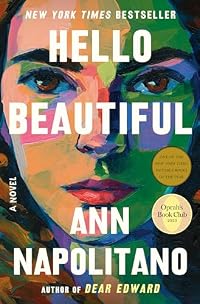

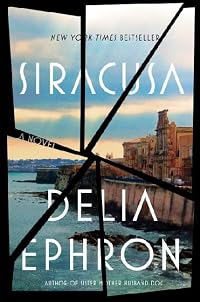
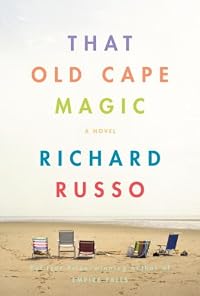
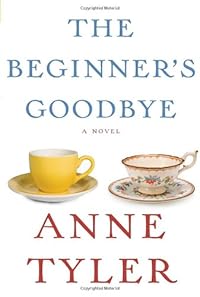





Member Recommendations
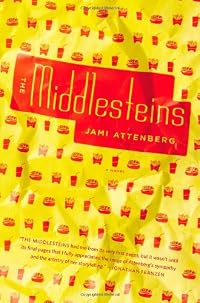
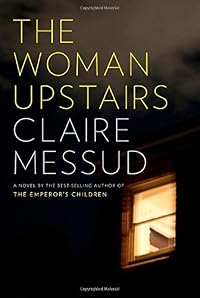
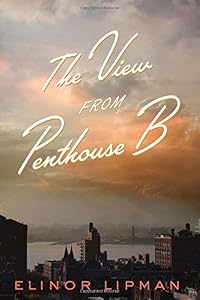
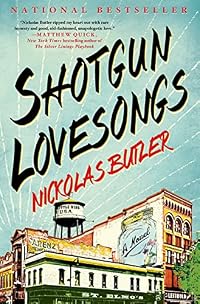
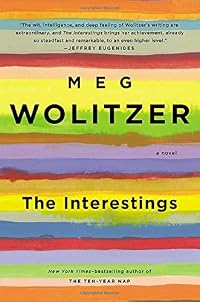
jayne_charles Both novels are based on women finding inner reserves of strength after being spectacularly let down by their husbands
Member Reviews
As this is a slim novel you’d expect it to get to the point quickly, and it does - in medias res I believe it’s called. You enter the story to find Helen and Ben at a crisis, but have no explanation of how they got there. You exit in a similar way. The crisis has passed, but you don’t know where H & B will go next.
While not perfect, I liked the fresh feeling the story had. That we didn’t have to wade through their marital difficulties was one, that Helen wasn’t your typical floundering victim was another. Although the miracle job and her huge and hidden talent for it did seem to be a bit of a stretch. I’d rather have had her working at something similar, even part time, to make that seem plausible. Also, she doesn’t just show more dump all responsibility on Ben, although he has to take most of it. She wonders how her own actions (or inactions) contributed to his dismal state. It doesn’t go further than that and Ben doesn’t blame her; only himself. Kind of nice that. So many men write their male characters in a way that puts their faults, actions and desires at the feet of their women.
I liked Helen, but didn’t understand her much. Her sudden and all-encompassing devotion to Hamilton and his current idiotic situation was out of the blue. Why would she risk her miraculous career for him? It’s weird. Also weird is Sara’s extreme reaction to basically everything around her. She seemed a bit young for that kind of teenage angst and anger, but she has it in spades. A right asshole she is. Deliberately cruel to her mother when she’s old enough to understand Helen’s predicament. Ugh.
Some passages I quite liked -
“The building’s main security system seemed to be its own essential undesirability, which left it all but invisible.” p 52
“...the young executive - who was wearing one of those striped dress shirts with a white collar; Lord, Helen hated those shirts, they were like sandwich boards for assholes…” p 78
A much younger man has just asked Helen out -
“She had no idea what to make of it. Maybe he had some kind of depraved mommy issue.” p 117
Overall well written and presented, but just a little bit too abbreviated in the end. I’d have liked more insight into how Helen comes back to Ben, their lives and their home. It seemed rushed and without a proper explanation I just can’t see it. show less
While not perfect, I liked the fresh feeling the story had. That we didn’t have to wade through their marital difficulties was one, that Helen wasn’t your typical floundering victim was another. Although the miracle job and her huge and hidden talent for it did seem to be a bit of a stretch. I’d rather have had her working at something similar, even part time, to make that seem plausible. Also, she doesn’t just show more dump all responsibility on Ben, although he has to take most of it. She wonders how her own actions (or inactions) contributed to his dismal state. It doesn’t go further than that and Ben doesn’t blame her; only himself. Kind of nice that. So many men write their male characters in a way that puts their faults, actions and desires at the feet of their women.
I liked Helen, but didn’t understand her much. Her sudden and all-encompassing devotion to Hamilton and his current idiotic situation was out of the blue. Why would she risk her miraculous career for him? It’s weird. Also weird is Sara’s extreme reaction to basically everything around her. She seemed a bit young for that kind of teenage angst and anger, but she has it in spades. A right asshole she is. Deliberately cruel to her mother when she’s old enough to understand Helen’s predicament. Ugh.
Some passages I quite liked -
“The building’s main security system seemed to be its own essential undesirability, which left it all but invisible.” p 52
“...the young executive - who was wearing one of those striped dress shirts with a white collar; Lord, Helen hated those shirts, they were like sandwich boards for assholes…” p 78
A much younger man has just asked Helen out -
“She had no idea what to make of it. Maybe he had some kind of depraved mommy issue.” p 117
Overall well written and presented, but just a little bit too abbreviated in the end. I’d have liked more insight into how Helen comes back to Ben, their lives and their home. It seemed rushed and without a proper explanation I just can’t see it. show less
The backstory: After loving Jonathan Dee's last novel, Pulitzer Prize finalist The Privileges (my review) so much it made my Best of 2011 list, I was ecstatic to hear he has a new novel out.
The basics: A Thousand Pardons is the story of Helen and Ben Armstead. The Armsteads live in Rensselaer Valley, an upstate suburb of New York City, with their adopted daughter Sara. When Ben's actions bring scandal to the family, their marriage ends, and Helen must find a job.
My thoughts: A Thousand Pardons is a slim novel composed of seven lengthy chapters. The novel's first chapter pulled me into this family and the narrative and left me stunned. It's a fascinating and bold set-up for the novel, but it also lulled me into thinking this was a show more different sort of novel than it turned out to be. The second chapter slowed the narrative's pace, and while I settled into the rest of the novel, I wondered if Dee would return to the pace of the novel's first chapter.
What propels the novel into action is a scandal. Dee crafts a wonderfully ordinary scandal for Ben. In our scandal-obsessed culture, it would be easy to think, 'that's it?' When you stop to think about the reaction his actions would have on those around him, however, and the scandal is at once ordinary and shocking:
"I mean, it goes both ways," Sara said. "I understand you too. I get why you'd just wake up one day and say, Is this really my life? How did I even get here? And if you can't answer that question, you might start to act a little crazy."
A Thousand Pardons feels both small and large. It's ultimately the story of a family, but there are also numerous subplots. It's partially a coming of age story for Sara:
"You have to start seeing your parents as real people at some point."
It's a story of Helen's career resurgence in public relations, which underscores the themes of mistakes and forgiveness. It's the story of connections from long ago and forming new ones. Not all of these storylines are as satisfying as others, but A Thousand Pardons is a novel I enjoyed while I read it, but my appreciation for its scope came after I turned the last page.
Favorite passage:"That was it: she hated this place because she believed that some earlier, embarrassing version of herself still lived here."
The verdict: A Thousand Pardons is a satisfying read, but in its title and ending, Dee makes it clear it's a novel meant to be more than the sum of its parts. It's engaging plot and intriguing characters are enjoyable, if sometimes meandering, but its ending will keep me thinking for some time. show less
The basics: A Thousand Pardons is the story of Helen and Ben Armstead. The Armsteads live in Rensselaer Valley, an upstate suburb of New York City, with their adopted daughter Sara. When Ben's actions bring scandal to the family, their marriage ends, and Helen must find a job.
My thoughts: A Thousand Pardons is a slim novel composed of seven lengthy chapters. The novel's first chapter pulled me into this family and the narrative and left me stunned. It's a fascinating and bold set-up for the novel, but it also lulled me into thinking this was a show more different sort of novel than it turned out to be. The second chapter slowed the narrative's pace, and while I settled into the rest of the novel, I wondered if Dee would return to the pace of the novel's first chapter.
What propels the novel into action is a scandal. Dee crafts a wonderfully ordinary scandal for Ben. In our scandal-obsessed culture, it would be easy to think, 'that's it?' When you stop to think about the reaction his actions would have on those around him, however, and the scandal is at once ordinary and shocking:
"I mean, it goes both ways," Sara said. "I understand you too. I get why you'd just wake up one day and say, Is this really my life? How did I even get here? And if you can't answer that question, you might start to act a little crazy."
A Thousand Pardons feels both small and large. It's ultimately the story of a family, but there are also numerous subplots. It's partially a coming of age story for Sara:
"You have to start seeing your parents as real people at some point."
It's a story of Helen's career resurgence in public relations, which underscores the themes of mistakes and forgiveness. It's the story of connections from long ago and forming new ones. Not all of these storylines are as satisfying as others, but A Thousand Pardons is a novel I enjoyed while I read it, but my appreciation for its scope came after I turned the last page.
Favorite passage:"That was it: she hated this place because she believed that some earlier, embarrassing version of herself still lived here."
The verdict: A Thousand Pardons is a satisfying read, but in its title and ending, Dee makes it clear it's a novel meant to be more than the sum of its parts. It's engaging plot and intriguing characters are enjoyable, if sometimes meandering, but its ending will keep me thinking for some time. show less
The theme of A Thousand Pardons is redemption. In that spirit I'm going to forgive Jonathan Dee for making me like a book I had no business liking.
The characters are big jerks. The ending is somewhat vague. A few things happen that stretched my imagination a bit too far. (Example: Helen jaunts on down to Manhattan and lands a good job after being unemployed for 14 years.)
And yet. I ate this book up with a spoon and wanted more of it. The writing is clean and refreshing. Even though the characters were twits they were real twits and I wanted to know what happened to them.
The "flaws" in this book are usually deal breakers for me. Not this time. How did you do that Mr. Dee?!
Ah yes, I do believe it's called talent.
The characters are big jerks. The ending is somewhat vague. A few things happen that stretched my imagination a bit too far. (Example: Helen jaunts on down to Manhattan and lands a good job after being unemployed for 14 years.)
And yet. I ate this book up with a spoon and wanted more of it. The writing is clean and refreshing. Even though the characters were twits they were real twits and I wanted to know what happened to them.
The "flaws" in this book are usually deal breakers for me. Not this time. How did you do that Mr. Dee?!
Ah yes, I do believe it's called talent.
There are two ways to look at this book. On the one hand, it’s set in a world where all men are either charmless, borderline alcoholics or criminals (and in some cases all three), and most of the women are pretty nasty too. There does however exist one woman – the central character Helen – who is pretty nice, and despite being out of the workforce for many years, she manages to slot into a PR firm and single handedly discover that contrary to all the accepted practices of public relations, the answer to every crisis is to apologise, apologise, apologise. Wear a hair shirt, beat your chest, the whole shooting match. Not only this, the world at large beats a path to her door, desperate to pay over the odds for her to tell them to show more apologise. I can’t help wondering why nobody ever hit on this amazing panacea before.
On the other hand, it is a beautifully written book which allows itself time to pause and reflect, and is generous with the personality time allotted to its characters. What initially seems to be a fairly standard tale of a wife finding inner reserves of strength after being spectacularly dumped on by her husband takes unexpected turns. There are humorous moments, thought provoking moments, and moments of high tension. It was interesting, too, to learn about the business of PR and crisis management.
In the end, the view that wins out for me is the second. In spite of all my cynicism I loved this book. I could scarcely put it down and was sorry when it ended. I had never heard of this author before but will definitely be seeking his work out in future. show less
On the other hand, it is a beautifully written book which allows itself time to pause and reflect, and is generous with the personality time allotted to its characters. What initially seems to be a fairly standard tale of a wife finding inner reserves of strength after being spectacularly dumped on by her husband takes unexpected turns. There are humorous moments, thought provoking moments, and moments of high tension. It was interesting, too, to learn about the business of PR and crisis management.
In the end, the view that wins out for me is the second. In spite of all my cynicism I loved this book. I could scarcely put it down and was sorry when it ended. I had never heard of this author before but will definitely be seeking his work out in future. show less
It's so much a cliche in contemporary fiction, that you can almost assume it's the plot of every new novel: the suburban couple, mind-numbingly unhappy, despite their perfect home and family. In some cases writers are able to create successful characters, regardless of the trappings of their stereotype, while others are crushed by the weight of it.
In A Thousand Pardons, Jonathan Dee seems quite aware of the fact that he is writing a familiar frame from the beginning. Rather than giving readers a painstakingly detailed account of the missteps that lead Helen and Ben to a therapist's couch for their "Date Night", Dee describes with amazing subtlety the monotony that can come with several decades of a marriage. He is then quick to cut to show more the big event that leads to their separation, putting the major plot in motion. Helen thrives in her newly single position, and the pace of the novel does, too. Unfortunately, the characters' behaviors in the second half of the novel seem to steer off track, hanging ever close to the cliches Dee worked to avoid. Still, as a whole, A Thousand Pardons is a refreshing story outside what you'd expect from a seemingly usual suspect. show less
In A Thousand Pardons, Jonathan Dee seems quite aware of the fact that he is writing a familiar frame from the beginning. Rather than giving readers a painstakingly detailed account of the missteps that lead Helen and Ben to a therapist's couch for their "Date Night", Dee describes with amazing subtlety the monotony that can come with several decades of a marriage. He is then quick to cut to show more the big event that leads to their separation, putting the major plot in motion. Helen thrives in her newly single position, and the pace of the novel does, too. Unfortunately, the characters' behaviors in the second half of the novel seem to steer off track, hanging ever close to the cliches Dee worked to avoid. Still, as a whole, A Thousand Pardons is a refreshing story outside what you'd expect from a seemingly usual suspect. show less
Early in "A Thousand Pardons," Jonathan Dee's crafty and wise parable of loss and redemption, a seasoned professional describes how the practice of public relations works: "We tell stories. We tell stories to the public because stories are what people pay attention to, what they remember."
Stories, indeed, are what persuade and entertain and become like stickpins in our brain. And Dee, in his newest tale of soaring hubris and crashing ennui, is a really, really good story teller at the top of his game. I read the novel in February and believe "A Thousand Pardons" is one of the best books I'll read in 2013. The story resonates like a modern-day fairytale with lessons to be learned by grownups.
I was given this book by GoodReads.
Stories, indeed, are what persuade and entertain and become like stickpins in our brain. And Dee, in his newest tale of soaring hubris and crashing ennui, is a really, really good story teller at the top of his game. I read the novel in February and believe "A Thousand Pardons" is one of the best books I'll read in 2013. The story resonates like a modern-day fairytale with lessons to be learned by grownups.
I was given this book by GoodReads.
After her husband Ben commits and illegal and scandalous act, stay-at-home mom Helen divorces him and finds she must support herself and their adopted Chinese daughter Sara, age 12. Without any particular education or experience, Helen looks into a job at a decrepit PR firm, and discovers she has a talent for crisis management, or, more particularly, for helping people to apologize in a way that seems sincere.
In an interview the author states, "To me, A Thousand Pardons is a book not about spin or scandal or PR or even forgiveness, but about religious heritage." He further states, "It would be going way too far to say I wanted the novel to be a parable, but I wanted it to have some formal aspects of a parable....Parables are short and show more sweet; they move only forward from event to event, as you say; they don't contain flashbacks or other devices for reordering time; there's no pause in them for re-election or commentary or explorations of meaning."
And that is as good a description of this book as any. We follow Helen and Sara as she moves forward with her life, as she deals with others who also have scandal and/or crisis in their lives, and as she decides how to move forward with or without Ben. Another interesting and well-written book by Jonathan Dee with richly portrayed characters.
3 stars. show less
In an interview the author states, "To me, A Thousand Pardons is a book not about spin or scandal or PR or even forgiveness, but about religious heritage." He further states, "It would be going way too far to say I wanted the novel to be a parable, but I wanted it to have some formal aspects of a parable....Parables are short and show more sweet; they move only forward from event to event, as you say; they don't contain flashbacks or other devices for reordering time; there's no pause in them for re-election or commentary or explorations of meaning."
And that is as good a description of this book as any. We follow Helen and Sara as she moves forward with her life, as she deals with others who also have scandal and/or crisis in their lives, and as she decides how to move forward with or without Ben. Another interesting and well-written book by Jonathan Dee with richly portrayed characters.
3 stars. show less
Members
- Recently Added By
Published Reviews
ThingScore 75
Dee keeps all three of his protagonists sympathetic, which makes this an engaging read, and he writes with a cool precision and light touch. The novel is brief, pacy, intelligent; but it never delves deeply into the complexities and contradictions of America's relationship to redemption. In the end, just as he accuses the American public of doing, Dee is a little too eager to let everyone off show more the hook, including the reader, and perhaps even himself. show less
added by Bookmarque
Lists

Kirkus Reviews Best Fiction of 2013
99 works; 6 members

Books Read in 2019
4,052 works; 110 members
Author Information

8+ Works 1,617 Members
Some Editions
Awards and Honors
Distinctions
Common Knowledge
- Original publication date
- 2013
Classifications
Statistics
- Members
- 355
- Popularity
- 88,444
- Reviews
- 47
- Rating
- (3.25)
- Languages
- Dutch, English
- Media
- Paper, Audiobook, Ebook
- ISBNs
- 11
- ASINs
- 4