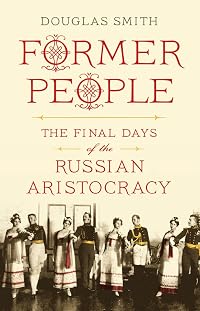
Former People: The Final Days of the Russian Aristocracy
by Douglas Smith
On This Page
Description
Examines the fate of two Russian aristocratic families in a detailed account of the Bolshevik Revolution's effect on the upper class, discussing the relentless lootings, harrowing escapes, humbling exile and imprisonment, and summary executions that took place during this violent time of transition.Tags
Recommendations



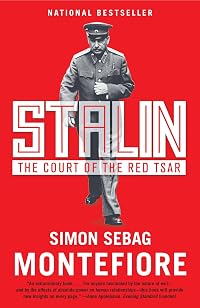
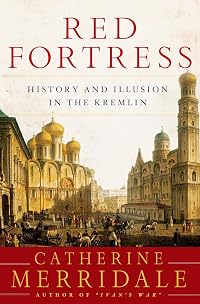
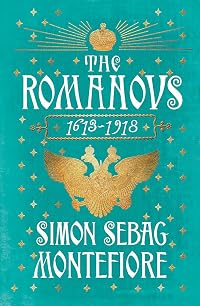
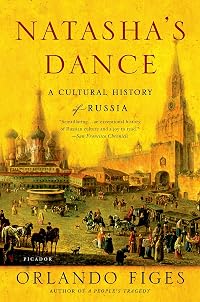









Member Recommendations


Member Reviews
Ровно сто лет назад была расстреляна царская семья. Читая книгу Дугласа Смита, можно посчитать, что Николаю II еще повезло. «Последние дни» русской аристократии растянулись на десятилетия, но история дворянства (почти 2 млн. человек на конец XIX века) была одним из многочисленных «белых пятен» в истории CCCР, о ней нельзя было говорить, и по этой причине она не существовала, словно была стерта и исчезла. «Бывшие show more люди», пожалуй, первая в мире книга, посвященная исследованию судеб российских дворян после революции. Уточним, что в основном речь в ней идет о трех больших фамилиях – Голицыных, Трубецких и Шереметевых, однако в силу их размера, знатности, влиятельности и богатства экс-князья и графы в наибольшей мере ощутили прелести контакта с ненавидящим их режимом. Выжили единицы, и, пожалуй, стоило сразу бежать, но существовал узнаваемый нюанс. С началом Первой мировой войны многие дворяне перевели капиталы из заграницы в Россию в знак готовности поддержать хозяйство страны в военное время. Вывод капитала из страны считался непатриотичным. К началу революции лишь очень немногие дворяне располагали заграничными капиталами, на которые могли рассчитывать. show less
"Former people" - the very phrase invokes ghostly images. And though it's a rather loose translation of the Russian word "lishentzy" - meaning "people without any rights in the society", it's an adequate phrase, in the light of events portrayed in the book, to describe former nobles and aristocrats, those that didn't leave Russia after the Revolution of 1917. That's how the author refers to them throughout the book, concentrating on the fate of two most prominent noble families and their descendants - the Sheremetevs and the Golittsyns - but also touching upon countless more former nobles (counts and countesses, princes and princesses, aristocrats and landlords) and their lives on the brink of and after the Revolution. The book show more describes the futility of their efforts to stay afloat in this new political climate that totally disregarded them by not allowing them to work, or if they could find work to barely survive, they had to constantly be in fear of imprisonment for some dreamed up crimes against the new government. The paranoia of Lenin and Stalin is not a secret anymore, and it reflected on many more citizens in those first decades of the new state (up until Stalin's death in 1953), not just former nobles, but Douglas Smith collected invaluable evidence of how this particular class of people was treated. It only shows that it was Russia who lost - because all these people were highly educated and they could have been a great asset to any society in that regard (and they were more than willing to serve in professional capacity of any kind, even though stripped of all their possessions).
I think the author says it best in the end, summarizing his story:
"... the events described in this book, or, more precisely, the causes behind them, lie beyond reason, as much as we might like to think otherwise.... There was a randomness to the violence and repression that speaks to the illogical nature of Russian life in twentieth century... There simply is no way to explain why some perished and some survived. It was, and remains, inexplicable. It was chance or, as many Russians would have it, fate."
-- show less
I think the author says it best in the end, summarizing his story:
"... the events described in this book, or, more precisely, the causes behind them, lie beyond reason, as much as we might like to think otherwise.... There was a randomness to the violence and repression that speaks to the illogical nature of Russian life in twentieth century... There simply is no way to explain why some perished and some survived. It was, and remains, inexplicable. It was chance or, as many Russians would have it, fate."
-- show less
This is certainly "Epic in scope" and "intimate in detail" and Douglas Smith describes what happened to the Sheremetevs and Golitsyn's families, two of Russia's grandest and oldest aristocratic families during and after the Russian Revolution.
I really enjoy Russian history and have read quite a lot of non fiction on the Russian Revolution but this one came across as quite dry and dense. While the author focus his research on two families there are a lot of other family names mentioned throughout this account and even through there is long list of principal figures and two pages of family trees at the beginning of the book I still had great difficulty keeping track of who was who and who belonged and who belonged to which family.
This show more felt more like a chore to pick up and sift through the information that was of interest to me. It is without a brilliantly researched book and is based on diaries and other written material of these families. The harshness and cruelty of the regime of the time is well documented and makes for difficult reading. As always I really enjoyed the maps and photos included as these really do help the reader establish a connection.
This book didn't suit me as it was too dense and dry and I felt it felt more like study than reading for pleasure and while I waded through I didn't really enjoy the experience. However I appreciate that this is well written and researched and other readers may love this book for the very reasons I didn't. show less
I really enjoy Russian history and have read quite a lot of non fiction on the Russian Revolution but this one came across as quite dry and dense. While the author focus his research on two families there are a lot of other family names mentioned throughout this account and even through there is long list of principal figures and two pages of family trees at the beginning of the book I still had great difficulty keeping track of who was who and who belonged and who belonged to which family.
This show more felt more like a chore to pick up and sift through the information that was of interest to me. It is without a brilliantly researched book and is based on diaries and other written material of these families. The harshness and cruelty of the regime of the time is well documented and makes for difficult reading. As always I really enjoyed the maps and photos included as these really do help the reader establish a connection.
This book didn't suit me as it was too dense and dry and I felt it felt more like study than reading for pleasure and while I waded through I didn't really enjoy the experience. However I appreciate that this is well written and researched and other readers may love this book for the very reasons I didn't. show less
Douglas Smith has written about the "former people" who lived in the Soviet Union from the founding of the USSR until Stalin's death. They were those who were aristocrats in tsarist times. This is a disturbing but fascinating book as it reveals the depth of the Bolsheviks' hatred toward these people. The equivalent of racism, there was nothing the former people could do to remove the stigma from themselves as it was only based on who their ancestors were. They could be model citizens and hard workers in the new world in which they found themselves, but it mattered not. Former people suffered waves of persecution in which they were declared ineligible for both jobs and housing. Entire families would return home from work at the end of show more days and find their names on a list of "Non-people" and their belongings out on the sidewalk. Smith specifically follows two families, the Golitsyns and the Sheremetevs. Some of them fled when Russia fell to the Red forces at the end of the civil war while others could not bear to leave the Motherland. Most of those who stayed died while those who left prospered. Interestingly, there are now more Golitsyns in the United States than there are in Russia. This is a truly fascinating and disturbing book that chronicles how evil man can act toward his fellow man. show less
Douglas Smith has written a fascinating and informative account of the end of the Russian aristocracy during the early twentieth century. The story of how an entire class of people were subjected to brutal and often arbitrary repression is heart-breaking - even more so as Smith focuses on two families: the Sheremetevs and the Golitsyns whose personal stories bring a human perspective to the end of an era. Yet, not all the events are so grim: often there are glimmers of hope, love, and simple pleasures that provide some comfort amid the terror of Communist Russia.
Smith has used unprecedented access to family archives and utilises a number of important secondary sources too. This has allowed him to write one of the first books on this show more subject ever. This book is epic in scope and yet intimate in detail and is illuminating for the resilience of those described therein, and their perspective on the most tumultuous forty years of Russian history. show less
Smith has used unprecedented access to family archives and utilises a number of important secondary sources too. This has allowed him to write one of the first books on this show more subject ever. This book is epic in scope and yet intimate in detail and is illuminating for the resilience of those described therein, and their perspective on the most tumultuous forty years of Russian history. show less
According to the author, this book is the first in any language to examine the fate of the Russian nobility after the revolution of 1917. He has gained access to the diaries and letters of various members of two noble families. These sources are particularly pertinent in the first half of the book, which deals with the Bolshevik coup and its immediate aftermath. He has also plowed through an enormous amount of reports and petitions to trace the ultimate destinies of various "former people" in Stalin's persecutions in the 1930s, which is the main topic of the second half of the book.
The first half was in my opinion more interesting than the second, perhaps because the members of these families still had the leisure and comfort to write show more down their thoughts and experiences in the early years of the tumultuous revolution. The author ties the political twists and turns of 1917 closely to individual stories, and explains why Lenin's political ideology of liquidation of the nobility worked in his favor.
By the second half of the book, which focuses mostly on the 1930s, the members of the noble families were already leading a meagre existence. Here the author sticks closely to the stories of various individuals without saying much about Stalin's totalitarian state or the reasons that may have motivated his mad totalitarianism. The terror needed a target and it's clear that the former nobility remained in the bullseye as long as it could be identified. However, the author could in my opinion have intertwined personal accounts more strongly with historical events. I would in fact recommend the second half of this book to be read in conjunction with a more general work on Stalin's Russia just to clarify the context.
Nevertheless, this is a book worth reading. It provides a good number of biographic portraits and serves as a reminder of the tragic individual fates of millions of victims unjustly killed in the Soviet Union in these years. show less
The first half was in my opinion more interesting than the second, perhaps because the members of these families still had the leisure and comfort to write show more down their thoughts and experiences in the early years of the tumultuous revolution. The author ties the political twists and turns of 1917 closely to individual stories, and explains why Lenin's political ideology of liquidation of the nobility worked in his favor.
By the second half of the book, which focuses mostly on the 1930s, the members of the noble families were already leading a meagre existence. Here the author sticks closely to the stories of various individuals without saying much about Stalin's totalitarian state or the reasons that may have motivated his mad totalitarianism. The terror needed a target and it's clear that the former nobility remained in the bullseye as long as it could be identified. However, the author could in my opinion have intertwined personal accounts more strongly with historical events. I would in fact recommend the second half of this book to be read in conjunction with a more general work on Stalin's Russia just to clarify the context.
Nevertheless, this is a book worth reading. It provides a good number of biographic portraits and serves as a reminder of the tragic individual fates of millions of victims unjustly killed in the Soviet Union in these years. show less
I confess when I first picked this up at the library, I was thinking it was going to be a Downton Abbey but with Russians kind of a book, and then it turned out to be a more serious history, with historical analysis and everything, so more of a dense read than I was expecting. But still awesome! And it will come in useful for at work when faculty ask me what I've read lately, because this doesn't seem as weird as saying The Black Stallion Returns which is usually what I've been reading.
It primarily looks at two prominent families, starting in the last years of the tsar and then covering the years of the revolution(s), Lenin, and through Stalin. As you might imagine (or maybe not, because I for one was imagining Downton Abbey with show more Russians, as I mentioned), things did not go well. The author does a great job of outlining the political and social upheavals they faced, and putting them in context alongside the sufferings of the peasants, the horrors inflicted upon the Jews, and the general dismal state of things for just about everyone else in Russia as well.
It's a tragic story, but also mesmerizing. And, as an added bonus, all the people and place names make you feel like you're reading Tolkien. We're fleeing the Tauride Palace and headed to Irkutsk, but avoiding the Ataman Semenov! I especially liked the accounts of families who fled east ahead of the Red Army, on the Trans Siberian Railroad. This is no doubt informed by my love of The Endless Steppe (hardship! living in boxcars!) and I feel like so many accounts from this era mention the beauty of Siberia, despite the fact of its being the site of exile. I dream of visiting Lake Baikal, which I just now read is the world's oldest lake. I don't even know how that is determined, but it makes the appeal even greater. The oldest lake in the world! show less
It primarily looks at two prominent families, starting in the last years of the tsar and then covering the years of the revolution(s), Lenin, and through Stalin. As you might imagine (or maybe not, because I for one was imagining Downton Abbey with show more Russians, as I mentioned), things did not go well. The author does a great job of outlining the political and social upheavals they faced, and putting them in context alongside the sufferings of the peasants, the horrors inflicted upon the Jews, and the general dismal state of things for just about everyone else in Russia as well.
It's a tragic story, but also mesmerizing. And, as an added bonus, all the people and place names make you feel like you're reading Tolkien. We're fleeing the Tauride Palace and headed to Irkutsk, but avoiding the Ataman Semenov! I especially liked the accounts of families who fled east ahead of the Red Army, on the Trans Siberian Railroad. This is no doubt informed by my love of The Endless Steppe (hardship! living in boxcars!) and I feel like so many accounts from this era mention the beauty of Siberia, despite the fact of its being the site of exile. I dream of visiting Lake Baikal, which I just now read is the world's oldest lake. I don't even know how that is determined, but it makes the appeal even greater. The oldest lake in the world! show less
Members
- Recently Added By
Published Reviews
Mr. Smith has written an engaging and absorbing book. If an exploration of the tragic fate of previously pampered people does little to expand our understanding of the Soviet system, his book does offer an opportunity to revisit some of its more horrific aspects.
added by sgump
Lists

All Things Russia
459 works; 11 members
Author Information

8+ Works 1,066 Members
Douglas Smith is a resident scholar at the University of Washington and the author of the prize-winning books Working the Rough Stone: Freemasonry and Society in Eighteenth-Century Russia and Love and Conquest: Personal Correspondence of Catherine the Great and Prince Grigory Potemkin.
Some Editions
Awards and Honors
Common Knowledge
- Canonical title*
- Verloren adel
- Original title
- Former People: The Final Days of the Russian Aristocracy
- Original publication date
- 2012
- People/Characters
- Alexander Golitsyn; Anna Golitsyn; Mikhail Golitsyn; Sergei Golitsyn; Vladimir Golitsyn; Vladimir Mikhailovich Golitsyn (show all 31); Yelena Golitsyn; Maria Gudovich; Vladimir Lenin; Nicholas II, Emperor of Russia; Varvara Obolensky; Alexandra Osorgin; Georgy Osorgin; Alexander Saburov; Anna Saburov; Boris Saburov; Georgy Saburov; Xenia Saburov; Dmitry Sheremetev; Irina Sheremetev; Nikolai Sheremetev; Olga Sheremetev; Pavel Sheremetev; Sergei Dmitrievich Sheremetev; Vasily Dmitrievich Sheremetev; Yekaterina Pavlovna Sheremetev; Joseph Stalin; Leon Trotsky; Vladimir Sergeevich Trubetskoy; Yelizaveta Golitsyn Trubetskoy; Maria Veselovsky
- Important places
- Russian Empire
- Important events
- Russian Revolution
- Epigraph*
- There is no more Russian nobility. There is no more Russian aristocracy... A future historian will describe in precise detail how this class died. You will read this account, and you will experience madness and horror...
... (show all)The Red Newspaper Petrograd,
No 10 January 14, 1922 - Dedication
- To Emma and Andrew
- First words*
- The nurse was preparing a fresh bandage when the men from the Cheka, the feared Bolshevik political police, burst into the room.
- Blurbers
- Service, Robert; Ignatieff, Michael; Montefiore, Simon Sebag; Foreman, Amanda
- Canonical DDC/MDS
- 305.520947
- Canonical LCC
- HT653.S65
*Some information comes from Common Knowledge in other languages. Click "Edit" for more information.
Classifications
- Genres
- History, Nonfiction, General Nonfiction, Biography & Memoir
- DDC/MDS
- 305.520947 — Society, government, & culture Social sciences, sociology & anthropology Social group - Age, Gender, Ethnicity People by social and economic levels Upper Class
- LCC
- HT653 .S65 — Social sciences Communities. Classes. Races Communities. Classes. Races Classes Classes arising from birth
- BISAC
Statistics
- Members
- 447
- Popularity
- 68,619
- Reviews
- 12
- Rating
- (3.93)
- Languages
- 7 — Dutch, English, Estonian, French, German, Portuguese, Spanish
- Media
- Paper, Ebook
- ISBNs
- 19
- ASINs
- 8