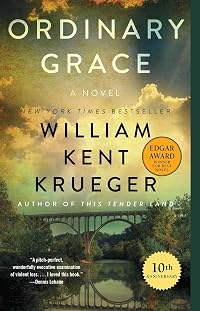
Ordinary Grace
by William Kent Krueger
On This Page
Description
Looking back at a tragic event that occurred during his thirteenth year, Frank Drum explores how a complicated web of secrets, adultery, and betrayal shattered his Methodist family and their small 1961 Minnesota community.Tags
Recommendations




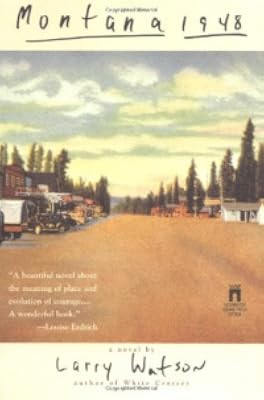
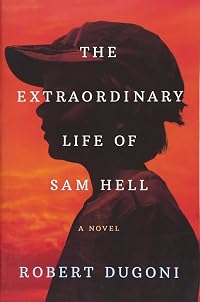
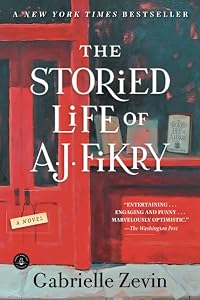
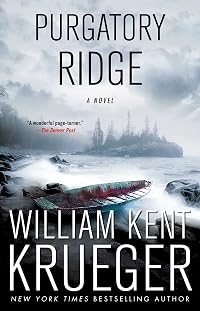




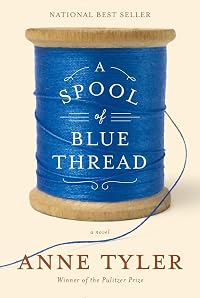


Member Recommendations
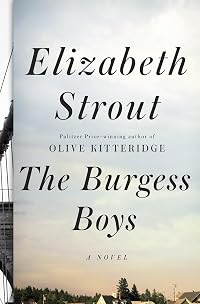
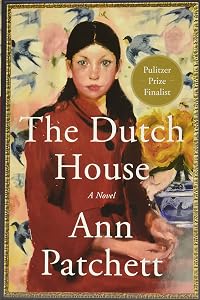
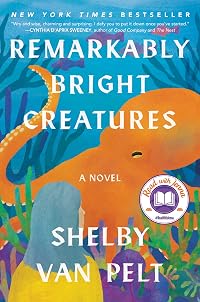
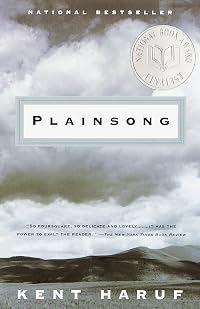
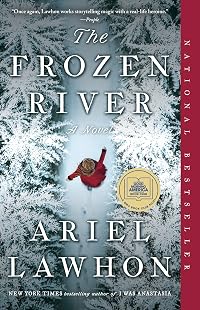
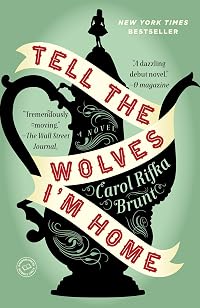
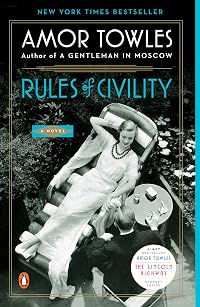
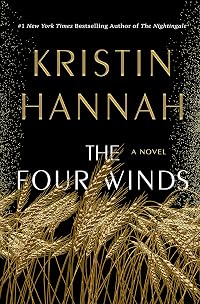
BookshelfMonstrosity These lyrical, meditative novels brim with bittersweet nostalgia in their evocatively detailed portraits of small American towns in the mid-20th century. Both focus on sensitive teen protagonists struggling to understand shocking tragedies and complex family drama.
40

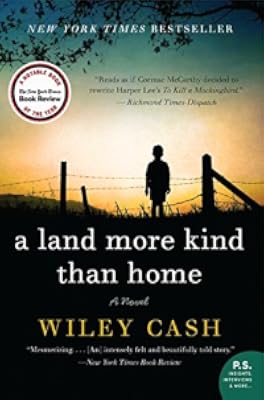
bjappleg8 Similar story of a father's faith through family trials and tribulations as seen through a young boy's eyes.
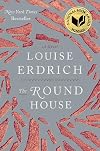
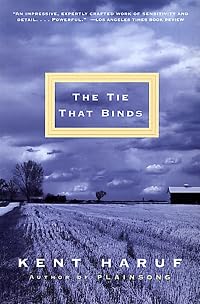
tangledthread Similar coming of age story. Similar issues, and very good writing in both books.
Member Reviews
Although this author is best known as a writer of mysteries, and this book indeed features some crimes, I believe it is better characterized as literary fiction with a coming-of-age aspect to it. It is also a book deserving of the many accolades it has garnered.
The story is narrated by Frank Drum, now 53 and looking back at the summer of 1961 when he was 13. Frank’s father is a Methodist minister, and much of the life of their family revolves around the church. Frank’s mother sings in the choir, and his older sister Ariel, talented enough to have been accepted into Julliard in the coming fall, plays the organ. Frank and his younger brother Jake are expected to attend all three of the services his father conducts on Sundays.
Ariel, show more who also plays piano and composes music, studies with Emil Brandt, “the best composer and pianist in Minnesota.” He was formerly engaged to Frank’s mother. Ariel is dating a younger member of the Brandt family, Karl, polite and funny and highly regarded by Frank’s family.
The family's seemingly normal life is disrupted that summer when a number of deaths occur in the town, and Frank is tied to all of them in a way. It is unclear at first whether some or all of the deaths are related, and who might have been responsible for any or all of them. But passions run high in the town, and those who fall under suspicion have reason to fear for their lives.
Discussion: The deaths that occur drive the plot forward, and yet aren’t totally central to the book. Rather, it is the exploration of the characters of the living, and how they deal with trauma and loss, that dominate the story. The fact that all of this is filtered through the eyes and mind of a 13-year-old boy allows these impressions and insights to retain elements of a youthful perspective that would not be present with an adult narrator: the combination of naivety about the adult world with the shock of finding out some of what it's about; the volatility of emotions; and the willingness to hold on to faith, hope and love when more cynical adults might resist such optimism. Frank is becoming aware of the complexity of human behavior, but doesn’t always understand it in the way he will later, and in the way we readers can glean from what he hears and observes.
God figures as large as any other character in this novel. What is nature of His grace? How can faith in the "ordinary" grace of God be retained when one also becomes acquainted with “the awful grace of God” - that is, the occurrence of terrible things beyond our understanding?
Evaluation: This is above all a beautiful elegy and meditation on death, faith, and the decision either to turn one’s face away from God, or accept God’s grace in all of its manifestations. There is also an examination of the range of non-faith-based responses to senseless violence, from fear to anger to the base tendency to let irrational prejudices assign blame and focus retribution. This is an extraordinary book. Highly recommended! show less
The story is narrated by Frank Drum, now 53 and looking back at the summer of 1961 when he was 13. Frank’s father is a Methodist minister, and much of the life of their family revolves around the church. Frank’s mother sings in the choir, and his older sister Ariel, talented enough to have been accepted into Julliard in the coming fall, plays the organ. Frank and his younger brother Jake are expected to attend all three of the services his father conducts on Sundays.
Ariel, show more who also plays piano and composes music, studies with Emil Brandt, “the best composer and pianist in Minnesota.” He was formerly engaged to Frank’s mother. Ariel is dating a younger member of the Brandt family, Karl, polite and funny and highly regarded by Frank’s family.
The family's seemingly normal life is disrupted that summer when a number of deaths occur in the town, and Frank is tied to all of them in a way. It is unclear at first whether some or all of the deaths are related, and who might have been responsible for any or all of them. But passions run high in the town, and those who fall under suspicion have reason to fear for their lives.
Discussion: The deaths that occur drive the plot forward, and yet aren’t totally central to the book. Rather, it is the exploration of the characters of the living, and how they deal with trauma and loss, that dominate the story. The fact that all of this is filtered through the eyes and mind of a 13-year-old boy allows these impressions and insights to retain elements of a youthful perspective that would not be present with an adult narrator: the combination of naivety about the adult world with the shock of finding out some of what it's about; the volatility of emotions; and the willingness to hold on to faith, hope and love when more cynical adults might resist such optimism. Frank is becoming aware of the complexity of human behavior, but doesn’t always understand it in the way he will later, and in the way we readers can glean from what he hears and observes.
God figures as large as any other character in this novel. What is nature of His grace? How can faith in the "ordinary" grace of God be retained when one also becomes acquainted with “the awful grace of God” - that is, the occurrence of terrible things beyond our understanding?
Evaluation: This is above all a beautiful elegy and meditation on death, faith, and the decision either to turn one’s face away from God, or accept God’s grace in all of its manifestations. There is also an examination of the range of non-faith-based responses to senseless violence, from fear to anger to the base tendency to let irrational prejudices assign blame and focus retribution. This is an extraordinary book. Highly recommended! show less
Ordinary Grace, by William Kent Krueger, astounded me. It's the winner of an Edgar Award for best crime novel, and I was expecting the usual: cops, bad guys, private detectives, a focus on solving a tricky mystery. There were a few cops in this book, but that's where the similarity ends. The book was profoundly Christian, philosophical, and broke my heart in several places. I have never wept over a crime novel; this book left me damp of face and saying my own prayers for the gift that was this book.
Ordinary Grace is set in small-town southern Minnesota in the summer of 1961. Frank and Jake Drum, ages 13 and 11, respectively, are the sons of Nathan, the town's preacher, and Ruth, his music-loving wife. A small boy from the town is found show more in the river below a railway trestle, and then that river delivers up more bodies, and the once-trusting, open-hearted town is turned grief-stricken and afraid.
I don't know much about Minnesota, and I know nothing of what it's like to be a growing boy in summertime, the days of no school leaving me free to wander and play. I was a girl in the mid-sixties and do remember what that freedom was like. After this book, I feel like I understand something of a boy's coming of age. Frank and Jake are children at the beginning of the book, but by the novel's end are more mature, young men, respectful and respected. It has taken tragedy to mature them, and I grieve their loss of innocence. i admire Krueger's ability to paint boyhood so vividly. He writes so well.
It has occurred to me that I really like a well-written boy's coming of age story. Two books which I love deal with that theme: James Agee's A Death in the Family, and Ray Bradbury's Dandelion Wine. I think Ordinary Grace stands up with those well-loved classics.
I particularly liked the character of Gus, the preacher's best friend and Korean war buddy. He deals with the mental scars of war by drinking too much, he's been in jail more than once, and he uses his fists when necessary. He is a flawed character; I think he is Everyman. Nathan trusts Gus with his boys, considers him part of the family, and in so doing, helps Gus to heal. I think that's a lesson put forth by the author, that loving and trusting those who have not lived up to our expectations is as much a balm as an aloe vera plant. It's a lesson I plan to use in my own life.
This book will reside on my shelves of favourite books, alongside Camus and Patrick White and Nadine Gordimer. I finished the audiobook half an hour ago, and have already ordered myself a physical copy. I'm so glad I read it, and I recommend it to everyone except those who scorn faith. show less
Ordinary Grace is set in small-town southern Minnesota in the summer of 1961. Frank and Jake Drum, ages 13 and 11, respectively, are the sons of Nathan, the town's preacher, and Ruth, his music-loving wife. A small boy from the town is found show more in the river below a railway trestle, and then that river delivers up more bodies, and the once-trusting, open-hearted town is turned grief-stricken and afraid.
I don't know much about Minnesota, and I know nothing of what it's like to be a growing boy in summertime, the days of no school leaving me free to wander and play. I was a girl in the mid-sixties and do remember what that freedom was like. After this book, I feel like I understand something of a boy's coming of age. Frank and Jake are children at the beginning of the book, but by the novel's end are more mature, young men, respectful and respected. It has taken tragedy to mature them, and I grieve their loss of innocence. i admire Krueger's ability to paint boyhood so vividly. He writes so well.
It has occurred to me that I really like a well-written boy's coming of age story. Two books which I love deal with that theme: James Agee's A Death in the Family, and Ray Bradbury's Dandelion Wine. I think Ordinary Grace stands up with those well-loved classics.
I particularly liked the character of Gus, the preacher's best friend and Korean war buddy. He deals with the mental scars of war by drinking too much, he's been in jail more than once, and he uses his fists when necessary. He is a flawed character; I think he is Everyman. Nathan trusts Gus with his boys, considers him part of the family, and in so doing, helps Gus to heal. I think that's a lesson put forth by the author, that loving and trusting those who have not lived up to our expectations is as much a balm as an aloe vera plant. It's a lesson I plan to use in my own life.
This book will reside on my shelves of favourite books, alongside Camus and Patrick White and Nadine Gordimer. I finished the audiobook half an hour ago, and have already ordered myself a physical copy. I'm so glad I read it, and I recommend it to everyone except those who scorn faith. show less
You could read this for the engaging plot, which - though it revolves around a series of deaths in a small town in Minnesota in 1961 - is refreshingly free of the usual tropes of the "small town murder mystery" genre (serial murderers, gruesome deaths, terrible secrets, etc.) The tone of the novel is sympathetic rather than sensational, the murders merely a structure for what turns out to be a moving and beautifully written exploration of human experiences and emotions.
Or, you could read this for the cozy nostalgia, a voyage back through time to small town, mid-century, Midwest America, where men drove Packards and Indian motorcycles, teens hung out at the soda fountain or local quarry swimming hole, and little kids read comic books show more when they weren't playing pickup softball games with the other kids in the neighborhood.
Or, you could read this for the appealing characters, starting with the story's engaging and wholly sympathetic narrator, 13yr old Frankie, son of the town's abidingly gentle Methodist preacher, plus a memorable supporting staff of townfolk (descendants of the Norwegian and German emigrees that settled Minnesota) and the area's indigenous Sioux.
But the real reason you want to read this is the tale's powerful and affecting message of the importance of extending grace to all the wounded people of the world. Because ultimately all of us are wounded in some way, Krueger suggests: by war (Frankie's father), disappointment (Frankie's mother), unrequited love (Frankie's sister), intolerance, domestic violence, physical handicaps, grief .... Through the simple of act of extending "ordinary grace" - sometimes towards others, sometimes towards themselves - Krueger's characters navigate their way through grief and despair, eventually achieving wisdom and peace.
For those who, like me, aren't particularly religious, never fear - this book is about humanity rather than spirituality. In this sensitive tale of love and understanding, it's humans who, despite their flaws, are the ultimately source of mercy and redemption. This love child of *Stand By Me* by way of *To Kill A Mockingbird* and Karan's *At Home In Mitford* manages to be simultaneously literary, lyric, and lovely. show less
Or, you could read this for the cozy nostalgia, a voyage back through time to small town, mid-century, Midwest America, where men drove Packards and Indian motorcycles, teens hung out at the soda fountain or local quarry swimming hole, and little kids read comic books show more when they weren't playing pickup softball games with the other kids in the neighborhood.
Or, you could read this for the appealing characters, starting with the story's engaging and wholly sympathetic narrator, 13yr old Frankie, son of the town's abidingly gentle Methodist preacher, plus a memorable supporting staff of townfolk (descendants of the Norwegian and German emigrees that settled Minnesota) and the area's indigenous Sioux.
But the real reason you want to read this is the tale's powerful and affecting message of the importance of extending grace to all the wounded people of the world. Because ultimately all of us are wounded in some way, Krueger suggests: by war (Frankie's father), disappointment (Frankie's mother), unrequited love (Frankie's sister), intolerance, domestic violence, physical handicaps, grief .... Through the simple of act of extending "ordinary grace" - sometimes towards others, sometimes towards themselves - Krueger's characters navigate their way through grief and despair, eventually achieving wisdom and peace.
For those who, like me, aren't particularly religious, never fear - this book is about humanity rather than spirituality. In this sensitive tale of love and understanding, it's humans who, despite their flaws, are the ultimately source of mercy and redemption. This love child of *Stand By Me* by way of *To Kill A Mockingbird* and Karan's *At Home In Mitford* manages to be simultaneously literary, lyric, and lovely. show less
When I state that To Kill a Mockingbird is one of my top three all-time reads, and when I note that Ordinary Grace is similar in power, then there is no higher praise I can give! I now have four favorite books.
How I love this book...so much so that I went back to Barnes and Noble and bought the three remaining copies off the shelf in order to give them to those I think will appreciate this incredible tale.
In 1961 there is an unusually high number of deaths, murder, accidents, and suicide, with each impacting the town of New Breman, Minnesota in varying degrees of disbelief, prejudice and reconciliation.
Looking back forty years later, Frank Drum, who was thirteen years old that fateful summer, he tells a spirit filled, wonderful, show more emotional eulogy to those most impacted. There is a strong element of spirituality in this book. Without preaching, the author shines a bright light on the tragedies life brings us and the ensuing trials and testing of faith, and grace.
While there are many themes, the author paints them all with a lovely brush of color. There is the story of two brothers, Frank the older and Jake the younger who stutters his way through child hood. And, there is a story of the two brothers and their relationship, and severe grief when their beloved sister is found dead in a river. The character development is excellent.
In To Kill a Mockingbird, Atticus Finch is a moral, strong father, Frank and Jake's father is a steady light of finding grace in the midst of tragedy. He is a father worthy of respect. He is a minister of three small country churches, and we learn of his commitment through his ministry to those he helps, and to his family and friends.
Yet, to say that the father always finds sunshine would do grave dis service to the book. As their world spins out of control when their daughter/sister is found dead, and most likely murdered by someone in the town, the family seam is riven, tragically splitting, and then they eventually discover a way to sew their relationships back together.
To focus on this as only a coming of age story, would also do a dis service to the book. Too often, books are labeled young adult simply because the main character is not an adult, but has a life changing event that suddenly matures him or her. I credit the publisher and author in not making the error of pigeon holing this as a young adult book. Rather, it is a wonderful, incredible story beautifully told by a wise, sensitive young man who looks back and focuses on events that mold and shape.
HIGHLY RECOMMENDED show less
How I love this book...so much so that I went back to Barnes and Noble and bought the three remaining copies off the shelf in order to give them to those I think will appreciate this incredible tale.
In 1961 there is an unusually high number of deaths, murder, accidents, and suicide, with each impacting the town of New Breman, Minnesota in varying degrees of disbelief, prejudice and reconciliation.
Looking back forty years later, Frank Drum, who was thirteen years old that fateful summer, he tells a spirit filled, wonderful, show more emotional eulogy to those most impacted. There is a strong element of spirituality in this book. Without preaching, the author shines a bright light on the tragedies life brings us and the ensuing trials and testing of faith, and grace.
While there are many themes, the author paints them all with a lovely brush of color. There is the story of two brothers, Frank the older and Jake the younger who stutters his way through child hood. And, there is a story of the two brothers and their relationship, and severe grief when their beloved sister is found dead in a river. The character development is excellent.
In To Kill a Mockingbird, Atticus Finch is a moral, strong father, Frank and Jake's father is a steady light of finding grace in the midst of tragedy. He is a father worthy of respect. He is a minister of three small country churches, and we learn of his commitment through his ministry to those he helps, and to his family and friends.
Yet, to say that the father always finds sunshine would do grave dis service to the book. As their world spins out of control when their daughter/sister is found dead, and most likely murdered by someone in the town, the family seam is riven, tragically splitting, and then they eventually discover a way to sew their relationships back together.
To focus on this as only a coming of age story, would also do a dis service to the book. Too often, books are labeled young adult simply because the main character is not an adult, but has a life changing event that suddenly matures him or her. I credit the publisher and author in not making the error of pigeon holing this as a young adult book. Rather, it is a wonderful, incredible story beautifully told by a wise, sensitive young man who looks back and focuses on events that mold and shape.
HIGHLY RECOMMENDED show less
I began reading this somewhat reluctantly. The reviews were mostly sparkling but I am usually dubious of “coming of age” stories that wistfully harken back to a bygone era. The children are usually too cute by half--precocious preteens wise beyond their years spouting a wisdom that defies rationale. ORDINARY GRACE was a pleasant surprise. I was not impressed with the writing itself (seems like one more close edit was called for) but sometimes beauty can spring from inelegant tools. I expected to fight my way through this book but somewhere in the first few chapters the story disarmed me as the narrative gracefully drifted into reminiscence. I was no longer reading a novel but instead a warm recollection of a small Minnesota town show more shimmering in a between wars era America. Our child narrator brings all the corners of this town to life. It’s an achievement that the author avoids dreary geographical exposition and yet I feel I could draw a map of the town from memory. Small town dramas at play provide the initial backdrop showing all those who orbit around the life of our main character. When drama turns to tragedy, all those orbiting characters become fixed points of light shining down their terrible truths. Three local tragedies build upon each other—each in turn striking closer to home until the shimmer surrounding this small town turns to dust. ORDINARY GRACE shows each character having a unique arc to their grief. There is no right and wrong to grieving—there is just how each character manages to live with it.
I am also reluctant to approach books with a religious overtone—concerned that will become the thrust of the story. That concern also fell away a few chapters in. There is a river that runs adjacent to the town—acting as a natural stand in for religion. It is always there, always flowing, in turns embraced and cursed by the locals as it is a nexus of the most significant events in the novel. Water is life and rivers connect us but there always seems to be a struggle to access it. Everyone seems to take a different path to the river, sometimes surprised when it pops up before them or below them. No one enters the water who is not changed. In this way religion plays its most important part in the novel: a genuine force without the misrepresentations of man. Then there is a more straight-forward presentation of religion through the family’s father a Methodist Minister. He serves three towns but one God. He has doubts but does not waver. In his darkest hour, when he is losing more than he is gaining by maintaining his devotion—he does not waver. Like a stone in the river, those swept away eventually gather to him. Ultimately touching where I feared it becoming maudlin, tender where I feared it becoming saccharine this book was a marvel show less
I am also reluctant to approach books with a religious overtone—concerned that will become the thrust of the story. That concern also fell away a few chapters in. There is a river that runs adjacent to the town—acting as a natural stand in for religion. It is always there, always flowing, in turns embraced and cursed by the locals as it is a nexus of the most significant events in the novel. Water is life and rivers connect us but there always seems to be a struggle to access it. Everyone seems to take a different path to the river, sometimes surprised when it pops up before them or below them. No one enters the water who is not changed. In this way religion plays its most important part in the novel: a genuine force without the misrepresentations of man. Then there is a more straight-forward presentation of religion through the family’s father a Methodist Minister. He serves three towns but one God. He has doubts but does not waver. In his darkest hour, when he is losing more than he is gaining by maintaining his devotion—he does not waver. Like a stone in the river, those swept away eventually gather to him. Ultimately touching where I feared it becoming maudlin, tender where I feared it becoming saccharine this book was a marvel show less
This originally appeared at The Irresponsible Reader.
---
All the dying that summer began with the death of a child, a boy with golden hair and thick glasses, killed on the railroad tracks outside New Bremen, Minnesota, sliced into pieces by a thousand tons of steel speeding across the prairie toward South Dakota. His name was Bobby Cole. He was a sweet-looking kid and by that I mean he had eyes that seemed full of dreaming and he wore a half smile as if he was just about to understand something you’d spent an hour trying to explain. I should have known him better, been a better friend. He lived not far from my house and we were the same age. But he was two years behind me in school and might have been held back even more except for show more the kindness of certain teachers. He was a small kid, a simple child, no match at all for the diesel-fed drive of a Union Pacific locomotive.
WHAT'S ORDINARY GRACE ABOUT?
It's the summer of 1961, and thirteen-year-old Frank and his younger brother, Jake, are going to be irrevocably changed over the next few months. Their small Minnesotan town of New Bremen, will be rocked by five deaths and some near-deaths, as well.
Frank and James live there with their older sister, Ariel—eighteen and about to leave their parents' home. Nathan and Ruth married before Nathan went to serve in WWII—when he came home, he became a Methodist minister instead of the lawyer he'd planned on being before the war changed him. Ruth hasn't entirely forgiven him for that but does her best to take part in congregational life, and to make do with his small salary.
Ariel is their golden child, Julliard-bound. Jake stutters, and is clearly fearful of almost everything—and everyone—around him, drawing what little confidence he has from his proximity to Frank. Frank is the family rebel—by most standards, he's only slightly mischievous, but compared to the rest of the Drum family, he's the equivalent of Bart Simpson.
The first death (see the quotation of the novel's first paragraph, above) is that of someone that Frank and Jake knew--even played with. The boys discover the second body, a stranger to them. Those two are enough to alter the course of their development to a degree—but the next three (and the accompanying events) are what will leave an indelible mark on the entire family.
GOD'S AWFUL GRACE
Krueger likes to use the phrase "the awful grace of God," and makes other references to it, he wants that idea in your head as you read about the horrible things and deaths the reader and the characters encounter. You're supposed to think about the (apparent) contrast between "awful" and "grace", as well as catch the references to Aeschylus and Robert F. Kennedy (and, by extension, Martin Luther King's death).
As far as the Aeschylus/RFK allusions go—yes, think about those. I think there's a lot to chew on there. Sure Kennedy has yet to cite that poem, but the narrator has heard it--he's writing from the perspective of four decades later.
But the former suggestion? I'm sure that Krueger, and many/most of his readers, know the phrase isn't to evoke something extremely bad or shocking/saddening, but the archaic definition of awe-inspiring or enormous. But the reflex for contemporary readers isn't to go with the lesser-known/used understanding but to think of the surface and the tension between the ideas, and it bothers me that we're supposed to spend time on that understanding, even if it's only a little bit. I'm not sure why it does, but it does.
But while I'm here on the subject of God's grace, can I just say that the one sermon that we get all of from Nathan Drum, during the darkest part of this book, is one of the best I've read in a long time. Drum doesn't understand grace the same way that RFK or Aeschylus does—grace to him is the unmerited sort, the kind that will come to someone in loss, in misery, in despair, and will cause them to believe, hope, and love. The book was worth the effort for this sermon alone, the rest is just gravy.
KRUEGER'S PROSE
On the one hand, the prose is gorgeous—Krueger's one of those authors that feels like he's writing, perpetrating hooptedoodle. He breaks most of Leonard's rules for writing all over the place, notably, "If it sounds like writing, I rewrite it." But, as Leonard notes himself, there are authors who can skip them--Krueger's one of those authors.
Still, there are a couple of things that got under my skin and would frequently take me out of the moment. For one, Krueger is sparing in his use of commas—a couple of times, I'd read a sentence out loud the way it's in the book, and then with the missing commas; and I think I could get close to understanding why he made the choice. I didn't agree, but I could maybe see what he's going for.
But the thing that really bothered me was the dialogue. It really reads like someone wrote it, everyone (or almost everyone) is almost constantly sounding like they're making a profound point about whatever. Particularly when it comes to Frank and his brother—I don't need prepubescent boys uttering sentences with layers of meaning and dripping with wisdom nearly every time they say something.
That doesn't mean that some of those sentences aren't great and readable and even quotable. It just means it bothered me.
SO, WHAT DID I THINK ABOUT ORDINARY GRACE?
"... He’s a vet. Korea. Had a tough time over there. It’s eating at him, I believe. He drinks. He’s hard on his family..."
"Sometimes, Nathan, I think it wasn't as what we took into the war. Whatever cracks were already there the war forced apart, and what we might otherwise have kept inside came spilling out."
Once I'd gotten on board with the hooptedoodle, I was able to appreciate what Krueger was about. This really brought Tiffany McDaniel's The Summer That Melted Everything to mind (and Betty to a lesser extent). I also was reminded of Songs In Ordinary Time by Mary McGarry Morris, A Prayer for Owen Meany by John Irving, and early Richard Russo, as I read this. None of which would ever be considered for the Edgar, Anthony, Macavity, or Barry Awards like Ordinary Grace won. I know those awards mean I should think of this as a Mystery or Crime novel, but I just don't. It fits with the others better, I think (but I do see why it won those).
It's a book that will get its hooks into you, if you let it, just not the way that most Mystery novels do. It will make you think, it will make you feel, and it may cause you to think deeper (or more shallow, I suppose) thoughts about God and His grace. But mostly, it'll make you think about humanity and many of the ways we can harm each other, intentionally or not.
I won't say that I enjoyed 98% of this book—but the entire time I spent reading it I was fully aware that I was reading something of quality--something that deserved my attention, and I was glad to give it. I also had no trouble seeing why my friend recommended it to me--and I owe her a solid recommendation in return. show less
---
All the dying that summer began with the death of a child, a boy with golden hair and thick glasses, killed on the railroad tracks outside New Bremen, Minnesota, sliced into pieces by a thousand tons of steel speeding across the prairie toward South Dakota. His name was Bobby Cole. He was a sweet-looking kid and by that I mean he had eyes that seemed full of dreaming and he wore a half smile as if he was just about to understand something you’d spent an hour trying to explain. I should have known him better, been a better friend. He lived not far from my house and we were the same age. But he was two years behind me in school and might have been held back even more except for show more the kindness of certain teachers. He was a small kid, a simple child, no match at all for the diesel-fed drive of a Union Pacific locomotive.
WHAT'S ORDINARY GRACE ABOUT?
It's the summer of 1961, and thirteen-year-old Frank and his younger brother, Jake, are going to be irrevocably changed over the next few months. Their small Minnesotan town of New Bremen, will be rocked by five deaths and some near-deaths, as well.
Frank and James live there with their older sister, Ariel—eighteen and about to leave their parents' home. Nathan and Ruth married before Nathan went to serve in WWII—when he came home, he became a Methodist minister instead of the lawyer he'd planned on being before the war changed him. Ruth hasn't entirely forgiven him for that but does her best to take part in congregational life, and to make do with his small salary.
Ariel is their golden child, Julliard-bound. Jake stutters, and is clearly fearful of almost everything—and everyone—around him, drawing what little confidence he has from his proximity to Frank. Frank is the family rebel—by most standards, he's only slightly mischievous, but compared to the rest of the Drum family, he's the equivalent of Bart Simpson.
The first death (see the quotation of the novel's first paragraph, above) is that of someone that Frank and Jake knew--even played with. The boys discover the second body, a stranger to them. Those two are enough to alter the course of their development to a degree—but the next three (and the accompanying events) are what will leave an indelible mark on the entire family.
GOD'S AWFUL GRACE
Krueger likes to use the phrase "the awful grace of God," and makes other references to it, he wants that idea in your head as you read about the horrible things and deaths the reader and the characters encounter. You're supposed to think about the (apparent) contrast between "awful" and "grace", as well as catch the references to Aeschylus and Robert F. Kennedy (and, by extension, Martin Luther King's death).
As far as the Aeschylus/RFK allusions go—yes, think about those. I think there's a lot to chew on there. Sure Kennedy has yet to cite that poem, but the narrator has heard it--he's writing from the perspective of four decades later.
But the former suggestion? I'm sure that Krueger, and many/most of his readers, know the phrase isn't to evoke something extremely bad or shocking/saddening, but the archaic definition of awe-inspiring or enormous. But the reflex for contemporary readers isn't to go with the lesser-known/used understanding but to think of the surface and the tension between the ideas, and it bothers me that we're supposed to spend time on that understanding, even if it's only a little bit. I'm not sure why it does, but it does.
But while I'm here on the subject of God's grace, can I just say that the one sermon that we get all of from Nathan Drum, during the darkest part of this book, is one of the best I've read in a long time. Drum doesn't understand grace the same way that RFK or Aeschylus does—grace to him is the unmerited sort, the kind that will come to someone in loss, in misery, in despair, and will cause them to believe, hope, and love. The book was worth the effort for this sermon alone, the rest is just gravy.
KRUEGER'S PROSE
On the one hand, the prose is gorgeous—Krueger's one of those authors that feels like he's writing, perpetrating hooptedoodle. He breaks most of Leonard's rules for writing all over the place, notably, "If it sounds like writing, I rewrite it." But, as Leonard notes himself, there are authors who can skip them--Krueger's one of those authors.
Still, there are a couple of things that got under my skin and would frequently take me out of the moment. For one, Krueger is sparing in his use of commas—a couple of times, I'd read a sentence out loud the way it's in the book, and then with the missing commas; and I think I could get close to understanding why he made the choice. I didn't agree, but I could maybe see what he's going for.
But the thing that really bothered me was the dialogue. It really reads like someone wrote it, everyone (or almost everyone) is almost constantly sounding like they're making a profound point about whatever. Particularly when it comes to Frank and his brother—I don't need prepubescent boys uttering sentences with layers of meaning and dripping with wisdom nearly every time they say something.
That doesn't mean that some of those sentences aren't great and readable and even quotable. It just means it bothered me.
SO, WHAT DID I THINK ABOUT ORDINARY GRACE?
"... He’s a vet. Korea. Had a tough time over there. It’s eating at him, I believe. He drinks. He’s hard on his family..."
"Sometimes, Nathan, I think it wasn't as what we took into the war. Whatever cracks were already there the war forced apart, and what we might otherwise have kept inside came spilling out."
Once I'd gotten on board with the hooptedoodle, I was able to appreciate what Krueger was about. This really brought Tiffany McDaniel's The Summer That Melted Everything to mind (and Betty to a lesser extent). I also was reminded of Songs In Ordinary Time by Mary McGarry Morris, A Prayer for Owen Meany by John Irving, and early Richard Russo, as I read this. None of which would ever be considered for the Edgar, Anthony, Macavity, or Barry Awards like Ordinary Grace won. I know those awards mean I should think of this as a Mystery or Crime novel, but I just don't. It fits with the others better, I think (but I do see why it won those).
It's a book that will get its hooks into you, if you let it, just not the way that most Mystery novels do. It will make you think, it will make you feel, and it may cause you to think deeper (or more shallow, I suppose) thoughts about God and His grace. But mostly, it'll make you think about humanity and many of the ways we can harm each other, intentionally or not.
I won't say that I enjoyed 98% of this book—but the entire time I spent reading it I was fully aware that I was reading something of quality--something that deserved my attention, and I was glad to give it. I also had no trouble seeing why my friend recommended it to me--and I owe her a solid recommendation in return. show less
“In 1961 New Bremen, MN, all is quiet and serene. But that serenity is thrown into turmoil as a series of tragic deaths lead thirteen-year-old Frank Drum and his family on a search for terrible truths.” Krueger writes a poignant novel that while hopeful is at the same time sad, but not necessarily in a bad way. It is the sadness born of growing up and losing our naïve view of the world. The book resonates with a boyhood filled with the wonder of summer – of swimming and root beer and fireworks and wonder, and Krueger paints the picture masterfully. The characters could have been people we grew up with, or even us. And for the Frank and his brother Jake and their friends it promised to be a magical summer until the loss of a show more friend who dies under mysterious circumstances, “He held happiness in his hand as easy as if he’d just, I don’t know, plucked a blade of grass from the ground. And all he did his whole short life was offer that happiness to anybody who’d smile at him.” But the ominous start of the summer turns suddenly personal because the next day strikes closer to the drums and launches them into a deep tragedy that threatens to engulf them. The book is filled with the precious gifts of ordinary life and explores those gifts in the midst of the kinds of struggles we all face. Reverend Drum, Frank’s father, says that God gives us all three gifts, faith, hope, and love, and it is up to us to hold on to faith, to seek hope and live with love even in the face of death, grief and tragedy. Frank discovers grace in the presence of his younger brother Jake – a “grace so ordinary there was no reason at all to remember it. Yet I have never across the forty years since it was spoken forgotten a single word.” Krueger is best known for his mystery books, and this book does indeed have a mystery to solve – a murder mystery – but in the struggle and turmoil as the boys seek the murderer, they discover that the real mystery is life and the only way to solve it is to live it. All of it, the good, and the bad and to find the grace in the ordinary moments. An outstanding read!! show less
Members
- Recently Added By
Published Reviews
ThingScore 88
It's the kind of book where you fight between wanting to race through it to the finish and attempting to make it last. Luckily it's paced so well and is so satisfying a meal for the mind, I was able to put it down every few chapters and happily mull over what has gone before, feeling sated.
It's the kind of introspective, intelligent novel where there are layers of meaning behind every word, show more and personal history and context wrapped in the motives of every character. It also has a strong plot, for those who like Kent Krueger for his thrillers. show less
It's the kind of introspective, intelligent novel where there are layers of meaning behind every word, show more and personal history and context wrapped in the motives of every character. It also has a strong plot, for those who like Kent Krueger for his thrillers. show less
added by vancouverdeb
Krueger has created a cast of compelling characters (young and old), each in his or her own way searching for something, including the narrator’s father, the town’s Methodist pastor, and his mother, whose bold personality worries his congregation.
Although Krueger’s plot rises to a predictable conclusion, there’s such a quiet beauty in his prose and such depth to his characters that I show more was completely captivated by this book’s ordinary grace show less
Although Krueger’s plot rises to a predictable conclusion, there’s such a quiet beauty in his prose and such depth to his characters that I show more was completely captivated by this book’s ordinary grace show less
added by vancouverdeb
Lists

child hero ~ adult novel
60 works; 12 members

Top Five Books of 2017
757 works; 231 members

Top Five Books of 2015
811 works; 240 members

1960s
281 works; 16 members

Books Read in 2015
3,299 works; 129 members

Books Set in Small Towns and Villages
278 works; 16 members

Books Read in 2022
5,168 works; 114 members

Edgar Award
418 works; 15 members

Books Read in 2018
4,360 works; 110 members

Books About Boys
175 works; 15 members

Top Five Books of 2023
767 works; 317 members

Books recommended by Calgary Public Library staff
1,588 works; 4 members

Books read in 2025
49 works; 1 member

Coming of Age
33 works; 1 member

Books Read in 2025
4,091 works; 97 members

Summer 2025
16 works; 1 member

Top Five Books of 2025
954 works; 303 members

Summer 2026
17 works; 1 member
Author Information

47+ Works 23,187 Members
William Kent Krueger grew up in the Cascade Mountains of Oregon. A former logger, construction worker, freelance journalist, & researcher in childhood development, he is the author of two other acclaimed Cork O'Connor novels, "Iron Lake" & "Boundary Waters". (Publisher Provided) William Kent Krueger was born in Torrington, Wyoming on November 16, show more 1950. He attended Stanford University for one year before losing his academic scholarship for participation in a takeover of the president's office in protest of what he saw as the University's complicity in weapons production during the Vietnam War. He wrote short stories and sketches for many years. His first novel, Iron Lake, won the Anthony Award for Best First Novel, the Barry Award for Best First Novel, the Minnesota Book Award, and the Loft-McKnight Fiction Award. He writes the Cork O'Connor series. In 2005 and 2006, he won back-to-back Anthony Awards for best novel. Ordinary Grace won the Edgar Award for Best Novel in 2014. (Bowker Author Biography) show less
Some Editions
Awards and Honors
Awards
Distinctions
Series
Belongs to Publisher Series
Piper (31610)
Work Relationships
Common Knowledge
- Canonical title
- Ordinary Grace
- Original title
- Ordinary Grace
- Original publication date
- 2013
- People/Characters
- Frank Drum; Bobby Cole; Gus; Officer Doyle; Nathan Drum; Jim Grant (show all 24); Travis Klement; Danny O'Keefe; Axel Brandt; Julia Brandt; Karl Brandt; Warren Redstone; Jerry Stowe; Fr. Peter Driscoll; Bob Hartwig; Jake Drum; Lizzie; Morris Engdahl; Ruth Drum; Emil Brandt; Mr. Van der Waal; Elizabeth; Ed Florentine; Lise Brandt
- Important places
- New Bremen, Minnesota, USA; Missouri Valley Community Hospital; Twin Cities, Minnesota, USA; Cadbury, Minnesota, USA; New York, New York, USA; Mankato, Minnesota, USA
- Epigraph
- The heart has reasons that reason does not understand. -- Blaise Pascal
- Dedication
- For Diane, my extraordinary grace
- First words
- All the dying that summer began with the death of a child, a boy with golden hair and thick glasses, killed on the railroad tracks outside New Bremen, Minnesota, sliced into pieces by a thousand tons of steel speeding across ... (show all)the prairie toward South Dakota.
- Quotations
- With Mother home I liked the idea that we’d been saved as a family by the miracle of that ordinary grace.
I still spend a lot of time thinking about the events of that summer. About the terrible price of wisdom. The awful grace of God. - Last words
- (Click to show. Warning: May contain spoilers.)They're in our hearts and on our minds and in the end all that separates us from them is a single breath, one final puff of air.
- Blurbers
- Lehane, Dennis
- Original language
- English
Classifications
- Genres
- Fiction and Literature, Mystery, General Fiction, Historical Fiction
- DDC/MDS
- 813.54 — Literature & rhetoric American literature in English American fiction in English 1900-1999 1945-1999
- LCC
- PS3561 .R766 .O73 — Language and Literature American literature American literature Individual authors 1961-
- BISAC
Statistics
- Members
- 3,564
- Popularity
- 4,607
- Reviews
- 225
- Rating
- (4.17)
- Languages
- Dutch, English, German
- Media
- Paper, Audiobook, Ebook
- ISBNs
- 21
- UPCs
- 1
- ASINs
- 10