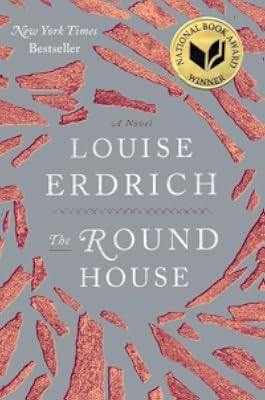
On This Page
Description
When his mother, a tribal enrollment specialist living on a reservation in North Dakota, slips into an abyss of depression after being brutally attacked, 14-year-old Joe Coutz sets out with his three friends to find the person that destroyed his family.Tags
Recommendations
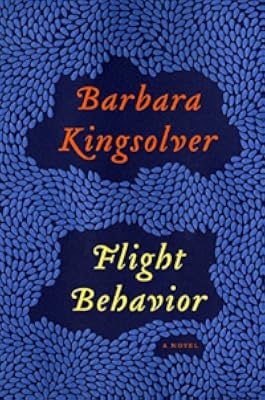
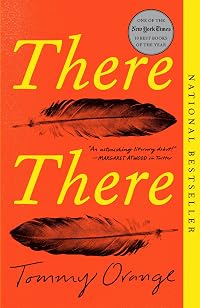
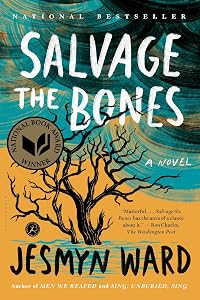
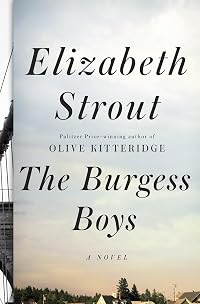


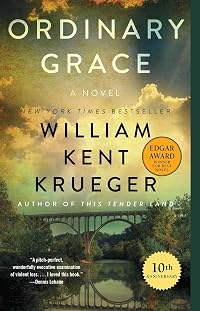
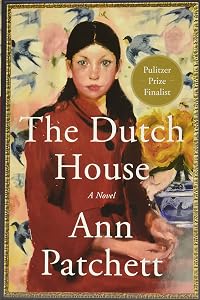
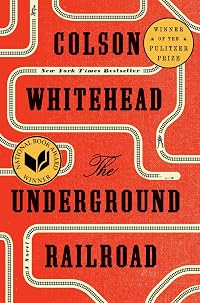

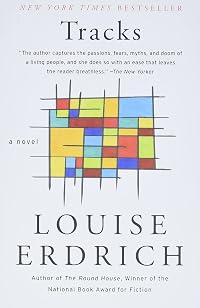
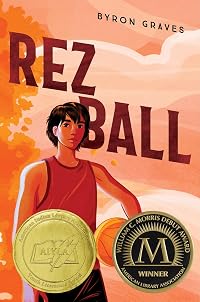
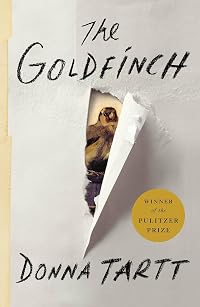
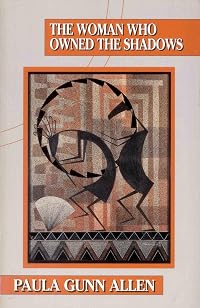
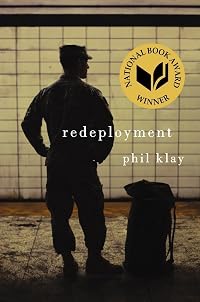



Member Recommendations
Caramellunacy Alexie's Absolutely True Diary shows a teenager (a little older than Joe) struggling with the poverty, alcoholism and injustice found on the reservation and the bullying and racism he faces from the outside world. A similar theme of the heartaches of growing up on a reservation in an unjust world - Alexie's work shows more humor, though.
51
sweetiegherkin Both books deal with a huge family crisis (the rape of the mother in The Round House, the trial of the mother in Midwives) and are told from the point of view of the family's 12- to 14-year-old only child, interspersing the tragic with the everyday life of a preteen/teen; both books also have unexpected endings.
40
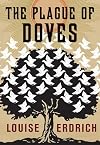
Limelite Not exactly a prequel, but featuring several of the same characters that appear in this more recent novel.
BookshelfMonstrosity If you want to read more about the characters and events portrayed in The Round House, read The Plague of Doves, which shares characters and events with the later novel.
30
Member Reviews
Happy endings are expected in romance novels, and because this isn't one, prospective readers will need to adjust their definition of a happy ending. A very well-written account of the prevalence of rape culture and femicide on both Native American Reservations and across the Plains states. In addition, this one requires an immediate shift in perspective regarding when and where vigilante justice is not only morally acceptable but mandatory.
Joe's mother Geraldine is brutally attacked, leaving him and his father, a judge in Ojibwe tribal court, floundering. His mother draws into herself and cannot speak about the attack or tell them who hurt her. Joe is determined to bring the rapist to justice, and enlists the help of his friends in piecing together the mystery.
Based on that short description, I was fairly certain that I did not want to read this book, and was a little leery of reading it when it was voted onto my library's book discussion list for this year. So I will now go on record as saying not only should I not judge a book by its cover, but I should not judge a book by its blurb. Because the story is so much more than about a woman being raped. It's about a son's show more relationship with his parents, his friends, and his tribe. It's about tribal law and the complicated mess that it can be to figure out jurisdiction. It's also about justice. The characters - and there are many - came alive for me from Geraldine's sister Clemence trying to care for her elderly, cantankerous father Mooshum; to the sex-obsessed Grandma Ignatia; to the military man turned priest; and many, many more. The people and their relationships are complicated and true. I also was impressed with the way in which reservation life was described and what a fantastic job the author does of presenting people and situations warts-and-all without making sweeping judgments or political commentary. The storyline has many threads and I could easily revisiting this book to get even more out of it. show less
Based on that short description, I was fairly certain that I did not want to read this book, and was a little leery of reading it when it was voted onto my library's book discussion list for this year. So I will now go on record as saying not only should I not judge a book by its cover, but I should not judge a book by its blurb. Because the story is so much more than about a woman being raped. It's about a son's show more relationship with his parents, his friends, and his tribe. It's about tribal law and the complicated mess that it can be to figure out jurisdiction. It's also about justice. The characters - and there are many - came alive for me from Geraldine's sister Clemence trying to care for her elderly, cantankerous father Mooshum; to the sex-obsessed Grandma Ignatia; to the military man turned priest; and many, many more. The people and their relationships are complicated and true. I also was impressed with the way in which reservation life was described and what a fantastic job the author does of presenting people and situations warts-and-all without making sweeping judgments or political commentary. The storyline has many threads and I could easily revisiting this book to get even more out of it. show less
The round house of the story is a building on an Ojibwe reservation in North Dakota where people gather not only to socialize but also to dance and celebrate their sacred traditions. It is also the setting of a horrific crime in the summer of 1988.
Joe, the narrator, is a young adolescent at the time the crime occurs. He tells of how the crime shatters his sense of safety, and how, with the help of his friends, especially Cappy, he tries to discover the perpetrator of this crime in hopes of putting his family back together again.
But seeking justice is never simple. Land ownership is an issue, jurisdiction is an issue, and in the small world of the reservation and North Dakota old grudges are an issue. When Joe’s mother Geraldine show more finally talks about what happened, we discover that the roots of this crime run deep indeed. Joe and his father are angry. Geraldine is frightened and angry. And healing and justice are not the same thing.
I especially liked the slow pace of this story, as we become acquainted with Joe, his father, his friends and the network of family and relationships Joe is sustained by. I also liked the way in which Mooshum & his stories give Joe insight into how to proceed, as well as filling in the history of the round house and providing some much needed laughs.
This is a richly textured novel, and well worth the read. show less
Joe, the narrator, is a young adolescent at the time the crime occurs. He tells of how the crime shatters his sense of safety, and how, with the help of his friends, especially Cappy, he tries to discover the perpetrator of this crime in hopes of putting his family back together again.
But seeking justice is never simple. Land ownership is an issue, jurisdiction is an issue, and in the small world of the reservation and North Dakota old grudges are an issue. When Joe’s mother Geraldine show more finally talks about what happened, we discover that the roots of this crime run deep indeed. Joe and his father are angry. Geraldine is frightened and angry. And healing and justice are not the same thing.
I especially liked the slow pace of this story, as we become acquainted with Joe, his father, his friends and the network of family and relationships Joe is sustained by. I also liked the way in which Mooshum & his stories give Joe insight into how to proceed, as well as filling in the history of the round house and providing some much needed laughs.
This is a richly textured novel, and well worth the read. show less
This is one of the best books I've read, but it absolutely destroyed me, in part because it reminded me of a situation a friend of mine was going through. It is a coming-of-age story about a Native community in North Dakota. The main character's mother is violently raped, and enters a dark, deep depression. The boy and his father go on a quest to find his mother's attacker and bring her justice. It is a story about how White law enforcement and the White justice system interacts with the Native populations, and about what is life is like on a modern reservation.
The book made my cry multiple times, but it is so filled with love and growth that I could not put it down. Highly recommended, if you have the capacity for something that heavy.
The book made my cry multiple times, but it is so filled with love and growth that I could not put it down. Highly recommended, if you have the capacity for something that heavy.
It's 1988, and 13-year-old Joe's mother has barely escaped with her life after a brutal rape. If she knows who the perpetrator was, though, she is refusing to say, leaving Joe determined to learn the truth.
There are, I think, places where this novel feels more than a little resonant of the kind of mystery story where plucky kids investigate crimes, but it's a version of that sort of thing that's infinitely more adult, complex, dark, and sad.
It's also interesting to think about it in terms of discussions I've seen in recent years about stories that feature the rape of women, but focus not on the experiences of the women themselves, but on those of the men around them. Far too often, what happens in such cases is that the women become show more little more than props in a male character's story, there to provide something for them to be upset over and to motivate their actions. Which is ugly on multiple levels.
On the surface of it, I suppose you could characterize this as one such story, and maybe one could legitimately criticize it for that, but Erdrich's use of this particular narrative feels anything but cheap and misogynistic to me. This isn't really a story about a woman being sacrificed on the altar of some male hero's dramatic character development, so much as it is a larger story about various kinds of justice and injustice in the lives and the history of Native Americans, both men and women. And that, I think, it does in nuanced, thoughtful, and affecting ways. Also with a last line that left an achy feeling in my heart. show less
There are, I think, places where this novel feels more than a little resonant of the kind of mystery story where plucky kids investigate crimes, but it's a version of that sort of thing that's infinitely more adult, complex, dark, and sad.
It's also interesting to think about it in terms of discussions I've seen in recent years about stories that feature the rape of women, but focus not on the experiences of the women themselves, but on those of the men around them. Far too often, what happens in such cases is that the women become show more little more than props in a male character's story, there to provide something for them to be upset over and to motivate their actions. Which is ugly on multiple levels.
On the surface of it, I suppose you could characterize this as one such story, and maybe one could legitimately criticize it for that, but Erdrich's use of this particular narrative feels anything but cheap and misogynistic to me. This isn't really a story about a woman being sacrificed on the altar of some male hero's dramatic character development, so much as it is a larger story about various kinds of justice and injustice in the lives and the history of Native Americans, both men and women. And that, I think, it does in nuanced, thoughtful, and affecting ways. Also with a last line that left an achy feeling in my heart. show less
This excellent book is set in the same community as A Plague of Doves but takes place in the 20th century without all the time hopping of the first one. It combines a realistic story with Native American fables to show how they point out essential complexities. Most importantly this is a perfect time to read it because it underscores the need for the new provisions in the Violence Against Women Act that the Republicans object to - the necessity of allowing Native American courts to have jurisdiction over crimes committed against their citizens even if the perpetrator is not Native American. This is a very powerful, very well told story.
At the beginning of The Round House, Joe, a 13-year old Ojibwe youth, is working in the yard with his father and waiting for his mother to return from the tribal offices where she has gone to retrieve a file. When she reaches home, she has been hurt and (no spoiler here) it turns out she has been raped. she retreats into herself and Joe and his father (who is a tribal judge) believe it has something to do with one of the cases he has judged.
In the course of learning how Joe and his friends set out to unravel who was responsible, the author includes so much more. It's part coming-of-age and the mysterious ways and thoughts of 13-year old boys (including their obsession with girls and sex). There's also some history of the Native show more Americans and white treaties and how unfairly Native Americans were treated and how much was lost when they were forced onto reservations. And there's information on how difficult it is to get justice as the rules change depending on where the crime takes place and by whom. In book club yesterday, we also discussed how seldom you read about a stable marriage in books these days and how devoted Joe's parents were to each other.
I haven't read much by this author but have a few more of her books on my TBR and hope to get to them soon. There's just something about how she writes... show less
In the course of learning how Joe and his friends set out to unravel who was responsible, the author includes so much more. It's part coming-of-age and the mysterious ways and thoughts of 13-year old boys (including their obsession with girls and sex). There's also some history of the Native show more Americans and white treaties and how unfairly Native Americans were treated and how much was lost when they were forced onto reservations. And there's information on how difficult it is to get justice as the rules change depending on where the crime takes place and by whom. In book club yesterday, we also discussed how seldom you read about a stable marriage in books these days and how devoted Joe's parents were to each other.
I haven't read much by this author but have a few more of her books on my TBR and hope to get to them soon. There's just something about how she writes... show less
Members
- Recently Added By
Published Reviews
ThingScore 94
With “The Round House,” her 14th novel, Louise Erdrich takes us back to the North Dakota Ojibwe reservation that she has conjured and mapped in so many earlier books, and made as indelibly real as Faulkner’s Yoknapatawpha County or Joyce’s Dublin. This time she focuses on one nuclear family — the 13-year-old Joe Coutts; his mother, Geraldine; and his father, Judge Antone Coutts — show more that is shattered and remade after a terrible event.
Although its plot suffers from a schematic quality that inhibits Ms. Erdrich’s talent for elliptical storytelling, the novel showcases her extraordinary ability to delineate the ties of love, resentment, need, duty and sympathy that bind families together. “The Round House” — a National Book Award finalist in the fiction category — opens out to become a detective story and a coming-of-age story, a story about how Joe is initiated into the sadnesses and disillusionments of grown-up life and the somber realities of his people’s history. show less
Although its plot suffers from a schematic quality that inhibits Ms. Erdrich’s talent for elliptical storytelling, the novel showcases her extraordinary ability to delineate the ties of love, resentment, need, duty and sympathy that bind families together. “The Round House” — a National Book Award finalist in the fiction category — opens out to become a detective story and a coming-of-age story, a story about how Joe is initiated into the sadnesses and disillusionments of grown-up life and the somber realities of his people’s history. show less
added by kidzdoc
“The Round House” represents something of a departure for Erdrich, whose past novels of Indian life have usually relied on a rotating cast of narrators, a kind of storytelling chorus. Here, though, Joe is the only narrator, and the urgency of his account gives the action the momentum and tight focus of a crime novel, which, in a sense, it is. But for Erdrich, “The Round House” is also show more a return to form. show less
added by zhejw
Each new Erdrich novel adds new layers of pathos and comedy, earthiness and spiritual questing, to her priceless multigenerational drama. “The Round House’’ is one of her best — concentrated, suspenseful, and morally profound.
added by zhejw
Lists

Top Five Books of 2013
1,562 works; 715 members

Best 21st Century Books (So Far)
670 works; 85 members

Native American / Indigenous Literature
172 works; 100 members

2013 Notable Books for Adults
26 works; 5 members

Female Author
1,235 works; 67 members

Best of Native American Literature
11 works; 2 members

National Book Award - Fiction
78 works; 10 members

Top Five Books of 2022
736 works; 272 members

LibraryThingers' 1001 Books You Must Read Before You Die
442 works; 30 members

50 Books from the Past 50 Years
50 works; 8 members
Contemporary Fiction
109 works; 7 members

Books Read in 2023
5,547 works; 145 members

My E-Book Collection - Opinions Welcome
92 works; 10 members
Overdue Podcast
806 works; 9 members
Books Set in North Dakota
8 works; 4 members

SHOULD Read Books!
354 works; 9 members

Carole's List
445 works; 13 members
Literary Travelogue of the United States Challenge
133 works; 6 members

SantaThing 2014 Gifts
299 works; 17 members

The Atlantic's The Great American Novel
136 works; 12 members

Retrospective of 20th- and 21st-century literature
154 works; 1 member

Florida
366 works; 3 members

Books Read in 2025
4,091 works; 97 members
Which house?
423 works; 16 members

Favorite Books Published in 2012
57 works; 17 members

AP Lit
363 works; 6 members

Books Read in 2021
5,361 works; 113 members

Indigenous America Reader
145 works; 12 members

National Book Award winners
65 works; 11 members

Books Read in 2018
4,360 works; 110 members

I Could Live There
185 works; 12 members

Books About Boys
175 works; 15 members

IMPAC Dublin Literary Award 2014 longlist
150 works; 3 members

.
184 works; 1 member
Talk Discussions
Past Discussions
Group Read of The Round House by Erdrich in 75 Books Challenge for 2017 (February 2017)
Author Information

70+ Works 45,355 Members
Karen Louise Erdrich was born on June 7, 1954 in Little Falls, Minnesota. Erdrich grew up in Wahpeton, North Dakota, where both of her parents were employed by the Bureau of Indian Affairs. She is a member of the Turtle Mountain Band of Chippewa. Erdrich graduated from Dartmouth College in 1976 with an AB degree, and she received a Master of Arts show more in creative writing from Johns Hopkins University in 1979. Erdrich published a number of poems and short stories from 1978 to 1982. In 1981 she married author and anthropologist Michael Dorris, and together they published The World's Greatest Fisherman, which won the Nelson Algren Award in 1982. In 1984 she won the National Book Critics Circle Award for Love Medicine, which is an expansion of a story that she had co-written with Dorris. Love Medicine was also awarded the Virginia McCormick Scully Prize (1984), the Sue Kaufman Prize (1985) and the Los Angeles Times Award for best novel (1985). In addition to her prose, Erdrich has written several volumes of poetry, a textbook, children's books, and short stories and essays for popular magazines. She has been the recipient of numerous awards for professional excellence, including the National Magazine Fiction Award in 1983 and a first-prize O. Henry Award in 1987. Erdrich has also received the Pushcart Prize in Poetry, the Western Literacy Association Award, the 1999 World Fantasy Award, and the Scott O'Dell Award for Historical Fiction in 2006. In 2007 she refused to accept an honorary doctorate from the University of North Dakota in protest of its use of the "Fighting Sioux" name and logo. Erdrich's novel The Round House made the New York Times bestseller list in 2013. Her other New York Times bestsellers include Future Home of the Living God (2017). (Bowker Author Biography) show less
Some Editions
Awards and Honors
Awards
Distinctions
Notable Lists
Series

Belongs to Publisher Series
Work Relationships
Is contained in
Has as a student's study guide
Common Knowledge
- Canonical title*
- Dans le silence du vent
- Original title
- The Round House
- Original publication date
- 2012 (1e édition originale américaine, Harper Collins) (1e é | dition originale amé | ricaine, Harper Collins); 2013-08-21 (1e traduction et édition française, Terres d'Amérique, Albin Michel) (1e traduction et é | dition franç | aise, Terres d'Amé | rique, Albin Michel)
- People/Characters
- Joe Coutts; Geraldine Coutts; Bazil Coutts; Joseph; Ruby Smoke; Virgil Lafournais (show all 38); Doe Lafournais; Suzette; Vince Madwesen; Frances Whiteboy; Neal; Liver Eating Johnson; Shawn; Clemence Milk; Mooshum; Cappy; Randall; Zack Pearce; Angus Kashpaw; Aunt Star; Carleen Thunder; Travis Wozniak (priest); Edward; Linda Wishkob; Grace Lark; George Lark; Linden Lark; Betty Wishkob; Sheryl; Cedric Wiskob; Whitey; Sonja; Soren Bjerke (Special Agent FBI); Mayla Wolfskin; Curtis Yeltow; LaRose; Zelia; Ignatia Thunder
- Important places
- North Dakota, USA; Bismarck, North Dakota, USA; Puffy's Place, North Dakota, USA; St. Luke's Hospital, North Dakota, USA; Fargo, North Dakota, USA
- Epigraph*
- /
- Dedication
- To Pallas
- First words
- Small trees had attacked my parents' home at the foundation.
[Afterword] This book is set in 1998, but the tangle of laws that hinder prosecution of rape cases on many reservations still exists. - Quotations
- "Women don't realize how much store men set on the regularity of their habits," Joe says. "Our pulse is set to theirs, and as always on a weekend afternoon we were waiting for my mother to start us ticking away on the evening... (show all)."
- Last words
- (Click to show. Warning: May contain spoilers.)We just kept going.
(Click to show. Warning: May contain spoilers.)[Afterword] This book is not meant to portray anyone alive or dead and, as always, any mistakes in the Ojibwe language are mine and do not reflect on my patient teachers. - Blurbers
- Charles, Ron; Ciabattari, Jane; Russo, Maria; Taylor, Elizabeth; Ciuraru, Carmela; Seaman, Donna (show all 8); Antopol, Molly; Reynolds, Susan Salter
- Original language*
- Anglais (Etats-Unis) (Etats-Unis)
- Canonical DDC/MDS
- 813.54
- Canonical LCC
- PS3555.R42
*Some information comes from Common Knowledge in other languages. Click "Edit" for more information.
Classifications
Statistics
- Members
- 4,631
- Popularity
- 3,121
- Reviews
- 228
- Rating
- (4.00)
- Languages
- 7 — English, Finnish, French, German, Italian, Portuguese, Spanish
- Media
- Paper, Audiobook, Ebook
- ISBNs
- 41
- ASINs
- 17