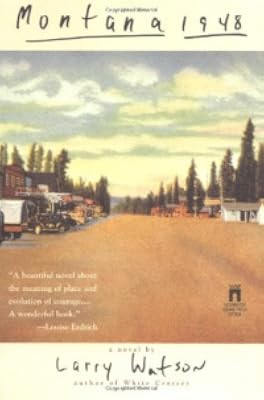
Montana 1948
by Larry Watson
On This Page
Description
The tragic tale of a Montana family ripped apart by scandal and murder: "a significant and elegant addition to the fiction of the American West" (Washington Post). In the summer of 1948, twelve-year-old David Hayden witnessed and experienced a series of cataclysmic events that would forever change the way he saw his family. The Haydens had been pillars of their small Montana town: David's father was the town sheriff; his uncle Frank was a war hero and respected doctor. But the family's solid show more foundation was suddenly shattered by a bombshell revelation. The Hayden's Sioux housekeeper, Marie Little Soldier, tells them that Frank has been sexually assaulting his female Indian patients for years-and that she herself was his latest victim. As the tragic fallout unravels around David, he learns that truth is not what one believes it to be, that power is abused, and that sometimes one has to choose between loyalty and justice. show lessTags
Recommendations



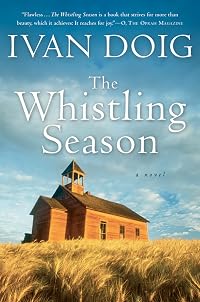
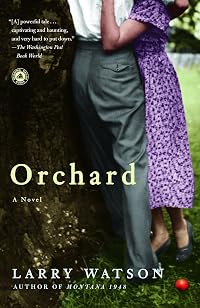

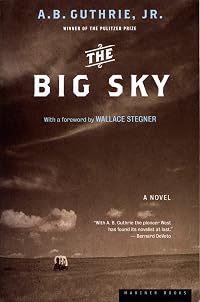
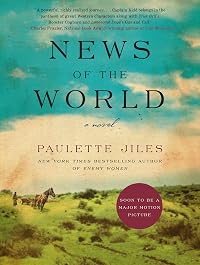






Member Recommendations
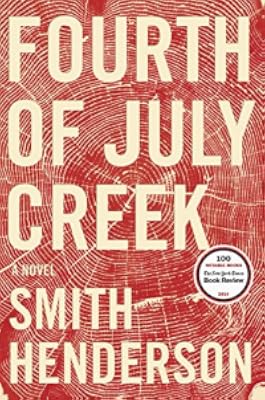
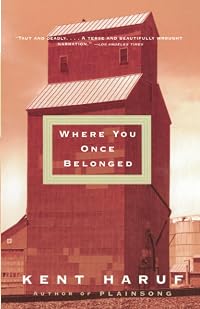
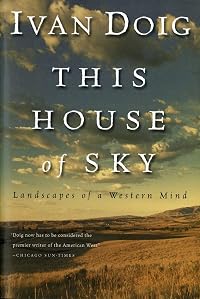
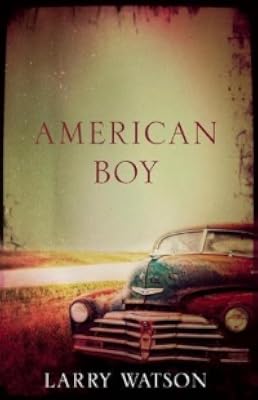
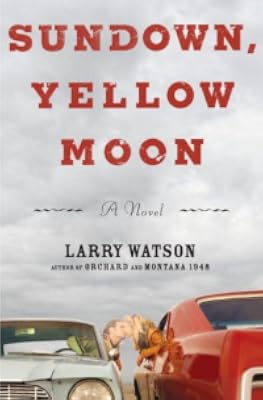
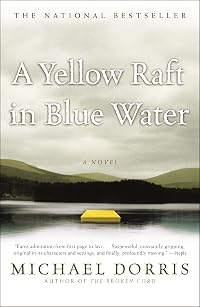
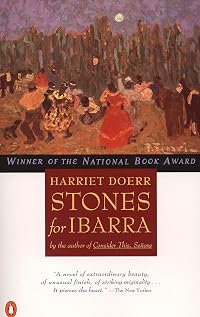
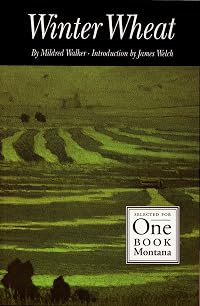
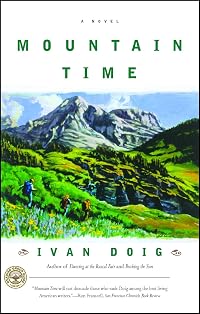
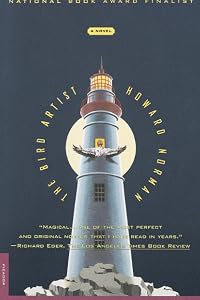
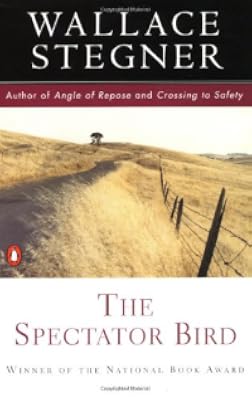
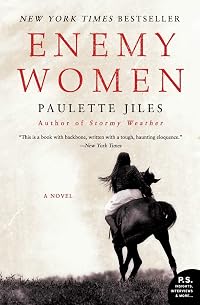
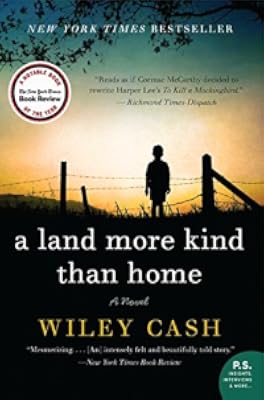
BookshelfMonstrosity These lyrical, meditative novels brim with bittersweet nostalgia in their evocatively detailed portraits of small American towns in the mid-20th century. Both focus on sensitive teen protagonists struggling to understand shocking tragedies and complex family drama.
Member Reviews
This is a story of sibling rivalry, the malleability of the criminal justice system when it's applied to people of color, the internal struggles that we all experience when it feels like the only way to do the right thing is by doing the wrong thing. The spare prose and the slender size of the book make the complex depth of the characters all the more astonishing.
David Hayden is 12 years old in 1948, when his family's housekeeper, a Native American woman named Marie Little Feather, becomes ill and is later found dead in her room at the Hayden house. The truth about what happened to her, and the repercussions of both the original acts and the subsequent reactions, tear apart the Hayden family in painful and irrevocable ways.
Watson has a show more way with evocative description that made me feel as if I had once visited the small Montana town where the Haydens lived, in the High Plains eastern part of the state. And his rendering of Adult David's thoughts about the events of that long-ago summer made me feel as if I was right there in his head, looking back on my own memories:
... the sound of breaking glass, the odor of rotting vegetables. ... I offer these images in the order in which they occurred, yet the events that produced these sights and sounds are so rapid and tumbled together that any chronological sequence seems wrong. Imagine instead a movie screen divided into boxes and panels, each with its own scene, so that one moment can occur simultaneously with another, so that no action has to fly off in time, so nothing happens before or after, only during. That's the way these images coexist in my memory, like the Sioux picture calendars in which the whole year's event are painted on the same buffalo hide, or like a tapestry with every scene woven into the same cloth, every moment on the same flat plane, the summer of 1948 ...;
Watson effectively uses the first-person perspective of an adult David looking back on this time in his life. While grown-up David occasionally adds some big-picture perspective and hindsight, he's also careful to emphasize his younger self's bafflement at some of the secrets and discussion that he overhears. He calls himself naïve for a boy of 12, and I think he would be in today's culture, but I suspect many 1948-era 12-year-olds would seem rather immature to today's tweens.
I suggested this book to my real-life book club as part of our criminal justice theme. (I first read it in 2015 but didn't review it then and didn't remember enough to feel comfortable leading a discussion without re-reading.) The other books we've read for this theme include [The Green Mile], [Minority Report], [A Study in Emerald], and [Just Mercy]. The Stevenson book is without doubt the most important, but this one just might be my favorite. show less
David Hayden is 12 years old in 1948, when his family's housekeeper, a Native American woman named Marie Little Feather, becomes ill and is later found dead in her room at the Hayden house. The truth about what happened to her, and the repercussions of both the original acts and the subsequent reactions, tear apart the Hayden family in painful and irrevocable ways.
Watson has a show more way with evocative description that made me feel as if I had once visited the small Montana town where the Haydens lived, in the High Plains eastern part of the state. And his rendering of Adult David's thoughts about the events of that long-ago summer made me feel as if I was right there in his head, looking back on my own memories:
... the sound of breaking glass, the odor of rotting vegetables. ... I offer these images in the order in which they occurred, yet the events that produced these sights and sounds are so rapid and tumbled together that any chronological sequence seems wrong. Imagine instead a movie screen divided into boxes and panels, each with its own scene, so that one moment can occur simultaneously with another, so that no action has to fly off in time, so nothing happens before or after, only during. That's the way these images coexist in my memory, like the Sioux picture calendars in which the whole year's event are painted on the same buffalo hide, or like a tapestry with every scene woven into the same cloth, every moment on the same flat plane, the summer of 1948 ...;
Watson effectively uses the first-person perspective of an adult David looking back on this time in his life. While grown-up David occasionally adds some big-picture perspective and hindsight, he's also careful to emphasize his younger self's bafflement at some of the secrets and discussion that he overhears. He calls himself naïve for a boy of 12, and I think he would be in today's culture, but I suspect many 1948-era 12-year-olds would seem rather immature to today's tweens.
I suggested this book to my real-life book club as part of our criminal justice theme. (I first read it in 2015 but didn't review it then and didn't remember enough to feel comfortable leading a discussion without re-reading.) The other books we've read for this theme include [The Green Mile], [Minority Report], [A Study in Emerald], and [Just Mercy]. The Stevenson book is without doubt the most important, but this one just might be my favorite. show less
This book is a mini masterpiece – mini because it is under 200 pages. Protagonist David tells the story as an adult looking back forty years, when, at age twelve, in 1948, the discovery of family scandal profoundly changed many lives. This excerpt from the prologue provides an idea of what to expect:
“Two months ago, my mother died. She made, as the expression goes, a good death. She came inside the house from working in her garden, and a heart attack, as sudden as a sneeze, felled her in the kitchen. My father’s death, ten years earlier, was less merciful. Cancer hollowed him out over the years until he could not stand up to a stiff wind. And Marie Little Soldier? Her fate contains too much of the story for me to give away.
A show more story that is now only mine to tell. I may not be the only witness left – there might still be someone in that small Montana town who remembers those events as well as I, but no one knew all three of these people better.
And no one loved them more.”
It is a story that pits family loyalty against justice. The writing is articulate – not a word is wasted. The sense of place is vivid. The characters feel authentic. The social commentary, involving abuse of power and racism against Native Americans, is embedded into the narrative. Watson employs a classic style. He sets the stage at the beginning, then launches into the story. He induces the reader to proceed by providing a new morsel of information that piques curiosity. I set out to read a chapter or two, and before I knew it, I had read the entire book.
Montana 1948 feels evergreen. It is delivered with lucidity, brevity, and humanity. It is both subtle and complex, infused with layers of meaning. It was a delight to read such a masterfully crafted work. I am adding it to my favorites, and certain it will make my top ten for the year. show less
“Two months ago, my mother died. She made, as the expression goes, a good death. She came inside the house from working in her garden, and a heart attack, as sudden as a sneeze, felled her in the kitchen. My father’s death, ten years earlier, was less merciful. Cancer hollowed him out over the years until he could not stand up to a stiff wind. And Marie Little Soldier? Her fate contains too much of the story for me to give away.
A show more story that is now only mine to tell. I may not be the only witness left – there might still be someone in that small Montana town who remembers those events as well as I, but no one knew all three of these people better.
And no one loved them more.”
It is a story that pits family loyalty against justice. The writing is articulate – not a word is wasted. The sense of place is vivid. The characters feel authentic. The social commentary, involving abuse of power and racism against Native Americans, is embedded into the narrative. Watson employs a classic style. He sets the stage at the beginning, then launches into the story. He induces the reader to proceed by providing a new morsel of information that piques curiosity. I set out to read a chapter or two, and before I knew it, I had read the entire book.
Montana 1948 feels evergreen. It is delivered with lucidity, brevity, and humanity. It is both subtle and complex, infused with layers of meaning. It was a delight to read such a masterfully crafted work. I am adding it to my favorites, and certain it will make my top ten for the year. show less
Rating: 5* of five Another one I'd give six stars to if I could.
The Publisher Says: The events of that small-town summer forever alter David Hayden's view of his family: his self-effacing father, a sheriff who never wears his badge; his clear sighted mother; his uncle, a charming war hero and respected doctor; and the Hayden's lively, statuesque Sioux housekeeper, Marie Little Soldier, whose revelations are at the heart of the story. It is a tale of love and courage, of power abused, and of the terrible choice between family loyalty and justice.
My Review: The Doubleday UK meme, a book a day for July 2014, is the goad I'm using to get through my snit-based unwritten reviews. Today's prompt is to identify the novel you most like to give show more to friends.
This book has a deeply personal connection to me and my life. I've mentioned elsewhere that I have given many copies of this book away, and why. I was given heart, comfort, and guidance by this work of fiction, such as no corporeal person could have given me.
But to consider this as a book, a novel written for an audience by a writer, is to appreciate anew the benefits of craftsmanship and the ungovernable lightning of talent. There are very few books I can give the accolade of "I wouldn't change a single thing" to, and this is one of them. Not one word out of place, not one simile or metaphor ill-used, unused, or overused, nothing could be added without compromising the beauty of the book, and nothing need be removed to clear aside clutter.
If brevity is the soul of wit, it is also the soul of wisdom, and this book is wise, so wise, to its child narrator's painful coming to adulthood. It's also wise to the nature of love as lived from day to day, and how it so often can curdle into acceptance of what one cannot change...but should, or should always strive to, because some things are simply, inarguably, Right.
As a meditation on one's remembered past, this is a crystal clear and unsparing récit; as a story, it's so simple as to be mindless, except that it's mindful of the role of unadorned narrative in making the world a better place.
I would like to know the characters in this novel, really know them, sit in their kitchens and listen to their stories and drink their vile percolated coffee. I loved each of them, yes even the one whose bad deeds set the story in motion, loved them for being real and nuanced and far more vulnerable than most of the real people I know.
I can't simply and blindly recommend this book to you, because it's very strong meat; I can encourage you to read it if you care for justice, the horrible cost of it and the terrifying price it exacts from those it visits; but you will come away from it changed, as I was, possibly for the better but changed. Don't ever ask questions you don't want the answers to...and this book answers some very, very nasty questions with grace and beauty and forgiveness. show less
The Publisher Says: The events of that small-town summer forever alter David Hayden's view of his family: his self-effacing father, a sheriff who never wears his badge; his clear sighted mother; his uncle, a charming war hero and respected doctor; and the Hayden's lively, statuesque Sioux housekeeper, Marie Little Soldier, whose revelations are at the heart of the story. It is a tale of love and courage, of power abused, and of the terrible choice between family loyalty and justice.
My Review: The Doubleday UK meme, a book a day for July 2014, is the goad I'm using to get through my snit-based unwritten reviews. Today's prompt is to identify the novel you most like to give show more to friends.
This book has a deeply personal connection to me and my life. I've mentioned elsewhere that I have given many copies of this book away, and why. I was given heart, comfort, and guidance by this work of fiction, such as no corporeal person could have given me.
But to consider this as a book, a novel written for an audience by a writer, is to appreciate anew the benefits of craftsmanship and the ungovernable lightning of talent. There are very few books I can give the accolade of "I wouldn't change a single thing" to, and this is one of them. Not one word out of place, not one simile or metaphor ill-used, unused, or overused, nothing could be added without compromising the beauty of the book, and nothing need be removed to clear aside clutter.
If brevity is the soul of wit, it is also the soul of wisdom, and this book is wise, so wise, to its child narrator's painful coming to adulthood. It's also wise to the nature of love as lived from day to day, and how it so often can curdle into acceptance of what one cannot change...but should, or should always strive to, because some things are simply, inarguably, Right.
As a meditation on one's remembered past, this is a crystal clear and unsparing récit; as a story, it's so simple as to be mindless, except that it's mindful of the role of unadorned narrative in making the world a better place.
I would like to know the characters in this novel, really know them, sit in their kitchens and listen to their stories and drink their vile percolated coffee. I loved each of them, yes even the one whose bad deeds set the story in motion, loved them for being real and nuanced and far more vulnerable than most of the real people I know.
I can't simply and blindly recommend this book to you, because it's very strong meat; I can encourage you to read it if you care for justice, the horrible cost of it and the terrifying price it exacts from those it visits; but you will come away from it changed, as I was, possibly for the better but changed. Don't ever ask questions you don't want the answers to...and this book answers some very, very nasty questions with grace and beauty and forgiveness. show less
You might not expect much from a short novel (just 169 pages) with a title like “Montana 1948” (1993). I didn't, but having read two later novels by Larry Watson, I should have known better. The title may sound like a book of regional history. The book itself may look like an ambitious tourism pamphlet. But this is Larry Watson, and the man can write.
This coming-of-age story set in northeastern Montana in the summer of 1948 is narrated by a boy who is the son of the county sheriff, Wesley Hayden, who is himself the son of a sheriff. David Hayden's grandfather is a blustery, powerful man used to getting his own way, both in his family and in Mercer Country. He has never made it a secret that his favorite son is not Wesley, who gave show more up a career practicing law to enforce the law as his own father did. The favored son is Frank, a handsome and charming war hero who is now a prominent doctor in the community.
This last summer in Bentrock, Montana, begins to unravel when Marie Little Soldier, the Indian woman who lives with the Haydens and watches over David, becomes ill. When calling a doctor is suggested, she protests, but Frank is called in anyway. Mariel screams in fear when he arrives.
Eventually David's mother learns from Marie that Frank has a reputation of sexually molesting Indian women. She persuades her husband to investigate, which he does, first with reluctance and then with determination to see it through, whatever the consequences.
And those consequences turn out to be profound for everyone involved.
This may be a little novel with an odd title, but it packs quite a punch. show less
This coming-of-age story set in northeastern Montana in the summer of 1948 is narrated by a boy who is the son of the county sheriff, Wesley Hayden, who is himself the son of a sheriff. David Hayden's grandfather is a blustery, powerful man used to getting his own way, both in his family and in Mercer Country. He has never made it a secret that his favorite son is not Wesley, who gave show more up a career practicing law to enforce the law as his own father did. The favored son is Frank, a handsome and charming war hero who is now a prominent doctor in the community.
This last summer in Bentrock, Montana, begins to unravel when Marie Little Soldier, the Indian woman who lives with the Haydens and watches over David, becomes ill. When calling a doctor is suggested, she protests, but Frank is called in anyway. Mariel screams in fear when he arrives.
Eventually David's mother learns from Marie that Frank has a reputation of sexually molesting Indian women. She persuades her husband to investigate, which he does, first with reluctance and then with determination to see it through, whatever the consequences.
And those consequences turn out to be profound for everyone involved.
This may be a little novel with an odd title, but it packs quite a punch. show less
David adores Marie Little Soldier, the young Sioux woman who looks after him and the Hayden home while his parents work. When she becomes ill, they naturally call on Frank Hayden, David’s uncle and the town doctor to care for her. But for some reason, Marie adamantly refuses to see him and begs David to tell his mother that she doesn’t need a doctor. His father cracks, sarcastically, “What does she need, David? A medicine man?” When Marie confides her true fears to David’s mother, Gail, she reveals the terrible truth about Frank Hayden. He may be one of the most charming and highly respected men in town, but Frank Hayden is a criminal. And David’s father is the town sheriff.
As the truth unravels, David’s father, Wes, is show more torn between his loyalty to his family, his responsibilities as sheriff and his own ethics. In this gripping story, David watches on as his mother shows her quiet strength, his grandfather shows his ruthlessness and his father struggles with his decision.
The writing style is strong and spare, like the Montana setting. And, just like the characters in the story, the things that are not said aloud are often more important than the words that are expressed. Some schools may shy from the adult subject matter the book addresses, but for those high school teachers willing to take on mature topics, it will generate serious discussion about ethics, prejudice, and hidden truths. show less
As the truth unravels, David’s father, Wes, is show more torn between his loyalty to his family, his responsibilities as sheriff and his own ethics. In this gripping story, David watches on as his mother shows her quiet strength, his grandfather shows his ruthlessness and his father struggles with his decision.
The writing style is strong and spare, like the Montana setting. And, just like the characters in the story, the things that are not said aloud are often more important than the words that are expressed. Some schools may shy from the adult subject matter the book addresses, but for those high school teachers willing to take on mature topics, it will generate serious discussion about ethics, prejudice, and hidden truths. show less
Montana 1948 by Larry Watson chronicles the events in a small Montana town, and in particular, the effects these events had on one family. As told through the eyes of the only child in the family, David, we learn of his quiet, inward looking father, sheriff of the town and his morally upright but loving mother. They are all part of the Hayden family who were a power source in the county. People looked up to and respected the Haydens, his rancher grandfather who had spent previous years himself as the sheriff, his war hero uncle, the local doctor and his father. Another important character was Marie Little Soldier, the Sioux housekeeper, and the catalyst of the events that were to change this family forever.
This is a story that I felt show more viscerally, the author writes simply and from the heart. As the plot develops I felt David’s loss of innocence as his small town life of fishing, riding and hunting changes when racism, betrayal and violence come into it. His own identity and strong family ties are shattered. He is telling the story as an adult, looking back upon that summer, but the reader intimately feels the child’s confusion and anguish.
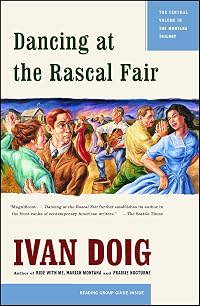
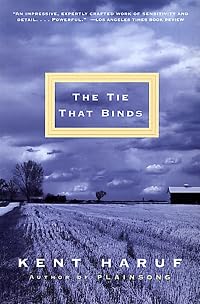
Larry Watson’s writing reminds me in many ways of both Ivan Doig and Kent Haruf. These men write with a western viewpoint. Their writing is rich, meditative and stripped of any extra unneeded words, cutting right into the soul of the story. Montana 1948 tells a powerful, candid and emotionally charged story in under 200 pages. I admire both the writing and the story. show less
This is a story that I felt show more viscerally, the author writes simply and from the heart. As the plot develops I felt David’s loss of innocence as his small town life of fishing, riding and hunting changes when racism, betrayal and violence come into it. His own identity and strong family ties are shattered. He is telling the story as an adult, looking back upon that summer, but the reader intimately feels the child’s confusion and anguish.
Larry Watson’s writing reminds me in many ways of both Ivan Doig and Kent Haruf. These men write with a western viewpoint. Their writing is rich, meditative and stripped of any extra unneeded words, cutting right into the soul of the story. Montana 1948 tells a powerful, candid and emotionally charged story in under 200 pages. I admire both the writing and the story. show less
Rarely can I say that a book leaves me speechless or searching to describe how much of an impact it registers. Montana 1948 is such a tale.
Not since reading To Kill a Mockingbird, has the written word resonated on this level.
Published in 1960, Harper Lee's incredible one-hit wonder marks its 50 year anniversary this summer. Recently Lee remarked to her 80 year old Monroeville, Alabama minister that there was no need to write another and stated that she wrote "a simple tale about the conflict of the human soul."
While reading Montana 1948 I was reminded of To Kill a Mockingbird. The similarities are striking in many ways. There are strong characters. There is a child seeking sense of adult behaviors in difficult moral and ethical show more situations. There are black and white events with graduated bands of gray in their complexity.
There are flawed, bigoted individuals who tenaciously hold fast to their belief of superiority. There is an overwhelming theme that choosing the "right" thing to do can have far reaching consequences that usually do not net the end result of fairness and goodness to the individual who sacrifices.
Montana 1948 is indeed a story of the conflict and complexity of the human soul.
Run, don't walk to the bookstore to obtain this book! Then, spend a few hours savoring each and every word and all the incredible nuances.
I believe that when you finish, you will want to tell your friends, your co-workers, your family about this book. I also believe you may struggle to explain the depth of feeling, and it may be difficult to find words to describe the sheer power of its beauty. show less
Not since reading To Kill a Mockingbird, has the written word resonated on this level.
Published in 1960, Harper Lee's incredible one-hit wonder marks its 50 year anniversary this summer. Recently Lee remarked to her 80 year old Monroeville, Alabama minister that there was no need to write another and stated that she wrote "a simple tale about the conflict of the human soul."
While reading Montana 1948 I was reminded of To Kill a Mockingbird. The similarities are striking in many ways. There are strong characters. There is a child seeking sense of adult behaviors in difficult moral and ethical show more situations. There are black and white events with graduated bands of gray in their complexity.
There are flawed, bigoted individuals who tenaciously hold fast to their belief of superiority. There is an overwhelming theme that choosing the "right" thing to do can have far reaching consequences that usually do not net the end result of fairness and goodness to the individual who sacrifices.
Montana 1948 is indeed a story of the conflict and complexity of the human soul.
Run, don't walk to the bookstore to obtain this book! Then, spend a few hours savoring each and every word and all the incredible nuances.
I believe that when you finish, you will want to tell your friends, your co-workers, your family about this book. I also believe you may struggle to explain the depth of feeling, and it may be difficult to find words to describe the sheer power of its beauty. show less
Members
- Recently Added By
Lists

Favorite Coming of Age Novels.
164 works; 51 members

Top Five Books of 2013
1,562 works; 715 members

1940s
221 works; 25 members

Top Five Books of 2015
811 works; 240 members

Adult Books for YA Readers
194 works; 6 members

Books Read in 2016
4,666 works; 197 members

Books Set in Montana
9 works; 4 members

Books About Boys
175 works; 15 members

Books With Place Names in the Title
215 works; 10 members
Author Information

14+ Works 3,842 Members
Born in Rugby, North Dakota, & raised in Bismark, Larry Watson received his B.A., & M.A. in English from the University of North Dakota & his Ph.D. in creative writing from the University of Utah. Watson is the author of the novel "In a Dark Time" & a book of poetry, "Leaving Dakota". He taught English at the University of Wisconsin at Stevens show more Point & lives in Plover, Wisconsin. (Bowker Author Biography) show less
Some Editions
Awards and Honors
Awards
Distinctions
Notable Lists
Work Relationships
Has as a student's study guide
Common Knowledge
- Canonical title
- Montana 1948
- Original title
- Montana 1948
- Original publication date
- 1993
- People/Characters
- David Hayden; Gail Hayden; Wesley Hayden; Marie Little Soldier; Frank Hayden; Julian Hayden (show all 7); Len McAuley
- Important places
- Bentrock, Mercer County, Montana, USA; American West
- Dedication
- For Susan
- First words
- From the summer of my twelfth year I carry a series of images more vivid and lasting than any others of my boyhood and indelible beyond all attempts the years make to erase or fade them . . . .
- Quotations
- . . . I realized that these strange, unthought-of connections -- sex and death, lust and violence, desire and degradation -- are there, there, deep in even a good heart’s chambers. (p. 82)
- Last words
- (Click to show. Warning: May contain spoilers.)For an instant I thought I felt the wood still vibrating from my father's blow.
- Blurbers
- Mosher, Howard Frank; Petro, Susan; Ott, Bill; Smith, Annick; Wood, Dave; Bowler, Mike (show all 14); Faatz, Chris; Lanham, Fritz; McDaniel, Maude; Schjonberg, Mary Frances; Green, Judy; Hoffert, Barbara; Pintarich, Paul; Cotter, Marianne
- Original language
- English
Classifications
Statistics
- Members
- 1,780
- Popularity
- 12,313
- Reviews
- 76
- Rating
- (3.89)
- Languages
- 7 — Dutch, English, French, German, Italian, Spanish, Swedish
- Media
- Paper, Audiobook, Ebook
- ISBNs
- 40
- ASINs
- 10