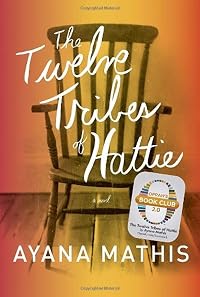
The Twelve Tribes of Hattie
by Ayana Mathis
On This Page
Description
The newest Oprah’s Book Club 2.0 selection.The arrival of a major new voice in contemporary fiction.
A debut of extraordinary distinction: Ayana Mathis tells the story of the children of the Great Migration through the trials of one unforgettable family.
In 1923, fifteen-year-old Hattie Shepherd flees Georgia and settles in Philadelphia, hoping for a chance at a better life. Instead, she marries a man who will bring her nothing but disappointment and watches helplessly as her show more firstborn twins succumb to an illness a few pennies could have prevented. Hattie gives birth to nine more children whom she raises with grit and mettle and not an ounce of the tenderness they crave. She vows to prepare them for the calamitous difficulty they are sure to face in their later lives, to meet a world that will not love them, a world that will not be kind. Captured here in twelve luminous narrative threads, their lives tell the story of a mother’s monumental courage and the journey of a nation.
Beautiful and devastating, Ayana Mathis’s The Twelve Tribes of Hattie is wondrous from first to last—glorious, harrowing, unexpectedly uplifting, and blazing with life. An emotionally transfixing novel, a searing portrait of striving in the face of insurmountable adversity, an indelible encounter with the resilience of the human spirit and the driving force of the American dream. show less
Tags
Recommendations




















Member Recommendations


by Othemts

Member Reviews
In 1923, fifteen-year-old Hattie Shepherd flees Georgia and settles in Philadelphia, hoping for a chance at a better life. Instead, she marries a man who will bring her nothing but disappointment and watches helplessly as her firstborn twins succumb to an illness a few pennies could have prevented. Hattie gives birth to nine more children whom she raises with grit and mettle and not an ounce of the tenderness they crave. She vows to prepare them for the calamitous difficulty they are sure to face in their later lives, to meet a world that will not love them, a world that will not be kind. Captured here in twelve luminous narrative threads, their lives tell the story of a mother’s monumental courage and the journey of a show more nation.
Beautiful and devastating, Ayana Mathis’s The Twelve Tribes of Hattie is wondrous from first to last—glorious, harrowing, unexpectedly uplifting, and blazing with life.
An emotionally transfixing page-turner, a searing portrait of striving in the face of insurmountable adversity, an indelible encounter with the resilience of the human spirit and the driving force of the American dream, Mathis’s first novel heralds the arrival of a major new voice in contemporary fiction show less
Beautiful and devastating, Ayana Mathis’s The Twelve Tribes of Hattie is wondrous from first to last—glorious, harrowing, unexpectedly uplifting, and blazing with life.
An emotionally transfixing page-turner, a searing portrait of striving in the face of insurmountable adversity, an indelible encounter with the resilience of the human spirit and the driving force of the American dream, Mathis’s first novel heralds the arrival of a major new voice in contemporary fiction show less
It is very likely that Ayana Mathis has already written one of the best books you’re likely to read this year. Covering the years from 1925 when she arrives in Philadelphia from Georgia to 1980, the first chapter of the novel reveals wound that drives Hattie to be so fierce with her children. At seventeen years old, “only a child herself, utterly inadequate to the task she’d been given,” Hattie quickly has to deal with August, her frequently roaming husband, and a houseful of children. She becomes almost the textbook definition of Tough Love, fierce, terrifying, single-minded in her determination that her children survive. Mathis' writing is so accomplished, her voice so strong and self-assured, it is hard to believe that this show more is a first novel. With The Twelve Tribes of Hattie she has created a near-perfect debut about an imperfect family. show less
Hattie’s story really begins in Georgia, when she is 15 and fleeing with her mother and sister. Her father’s blacksmith shop has been taken over by white men who have murdered him. They escape to Philadelphia where Hattie sees, for the first time, whites and blacks intermingling. It is there that she meets August and loses her head for one night, foretelling the rest of her life. She gives birth to twins named Philadelphia and Jubilee, names she believes are not part of the past, but part of the future. Both contract pneumonia in the days before penicillin and succumb to the disease.
For the next 56 years, until 1980, we walk through Hattie’s life through the lives of her progeny. Each of them seems to be born under some kind of a show more cloud or some failure they can’t overcome: racism, emotional and mental disorders, alcoholism, gambling, unfaithfulness are part and parcel of their daily lives. They must be subservient to a cruel class of whites who demand absolute obedience, and when successful, they in turn abuse their own servants. This atmosphere places a heavy burden upon all of them, sometimes too heavy to bear responsibly.
Hard as she tries, Hattie’s children fail to appreciate her efforts and see her as “the general”, lacking in tenderness, doing only what is necessary. Yet it is Hattie who holds this family together through all its trials, guides and comforts them in her own way, nurses them in sickness, provides them with food and shelter, managing the meager allowance she often is given by August.
The story tells a tale of racism, sexual abuse, poverty, faith, humiliation, illness, and adultery. Hattie’s courage and quiet guidance is often misunderstood for coldness. She too is prone to outbursts of anger and misguided ways as are many of her children. She too makes foolish decisions for which she repents. Her life is one of unappreciated sacrifice.
The reader is left to wonder if the travails visited upon the family are the results of their environment, the world they lived in or of their own personal failures and/or genetic inheritance. The lack of civil rights during most of her life, the lack of life saving drugs, the lack of equality, shaped all of them in different ways. They earned their livings in the only ways they could find acceptable and profitable. Some were more honorable than others. The humiliation they had to swallow as others swallow water was difficult to read about and difficult to put into the context of America. How in G-d’s name did such egregious behavior, against a particular group of people, continue to be acceptable for so long, in an enlightened world? How did they manage to submit to the mortification to which they were subjected? How did they conceal their shame and their fury? Some were unable and paid a heavy price.
It is through the brief lives of the twins, Philadelphia and Jubilee, Floyd, Hattie’s musician son, who is also gay, Six who is frail and scarred from a terrible accident, who is subject to uncontrollable fits of violence, who then becomes somewhat of a charlatan minister, her daughter Cassie, who hears voices telling her to do irrational things, Cassie’s daughter Sala, her grandchild who finally breaks through Hattie’s rigid persona, Alice who is often medicated by her husband because she is haunted by visions of Tom, a man who once abused her brother, Billips, who is described as somewhat limited in capability, Belle who has TB and who tries to commit suicide when her boyfriend Walter leaves her by discontinuing her medications and starving herself, who also engages in an affair with the same man, Lawrence, with whom Hattie had an affair and a child, causing an irreparable rift between them, Ruthie (known also as Margaret), who was the love child of Hattie and Lawrence, Ella who was a child Hattie couldn’t care for properly because August was out of work and so she gives her to her well-to-do sister Pearl, and Franklin, who is married to Sissy, who is father of Lucille, is stationed in Saigon, and whose drinking, gambling, and womanizing are the ruination of his life and his marriage. These are all common threads throughout the story.
It is a sad story about faith in the presence of hopelessness, conquest in the presence of enemies, bravery in the presence of danger on every front and incredibly foolish decisions often based on a lack of knowledge and/or self-control. In this book, as in many others today, the woman in the home seems to be the stronger influence, the more stabilizing factor, the one with the most responsibility for instilling values. The men often go far afield of expectations and often excuse their own stupid behavior, until there are dire consequences. show less
For the next 56 years, until 1980, we walk through Hattie’s life through the lives of her progeny. Each of them seems to be born under some kind of a show more cloud or some failure they can’t overcome: racism, emotional and mental disorders, alcoholism, gambling, unfaithfulness are part and parcel of their daily lives. They must be subservient to a cruel class of whites who demand absolute obedience, and when successful, they in turn abuse their own servants. This atmosphere places a heavy burden upon all of them, sometimes too heavy to bear responsibly.
Hard as she tries, Hattie’s children fail to appreciate her efforts and see her as “the general”, lacking in tenderness, doing only what is necessary. Yet it is Hattie who holds this family together through all its trials, guides and comforts them in her own way, nurses them in sickness, provides them with food and shelter, managing the meager allowance she often is given by August.
The story tells a tale of racism, sexual abuse, poverty, faith, humiliation, illness, and adultery. Hattie’s courage and quiet guidance is often misunderstood for coldness. She too is prone to outbursts of anger and misguided ways as are many of her children. She too makes foolish decisions for which she repents. Her life is one of unappreciated sacrifice.
The reader is left to wonder if the travails visited upon the family are the results of their environment, the world they lived in or of their own personal failures and/or genetic inheritance. The lack of civil rights during most of her life, the lack of life saving drugs, the lack of equality, shaped all of them in different ways. They earned their livings in the only ways they could find acceptable and profitable. Some were more honorable than others. The humiliation they had to swallow as others swallow water was difficult to read about and difficult to put into the context of America. How in G-d’s name did such egregious behavior, against a particular group of people, continue to be acceptable for so long, in an enlightened world? How did they manage to submit to the mortification to which they were subjected? How did they conceal their shame and their fury? Some were unable and paid a heavy price.
It is through the brief lives of the twins, Philadelphia and Jubilee, Floyd, Hattie’s musician son, who is also gay, Six who is frail and scarred from a terrible accident, who is subject to uncontrollable fits of violence, who then becomes somewhat of a charlatan minister, her daughter Cassie, who hears voices telling her to do irrational things, Cassie’s daughter Sala, her grandchild who finally breaks through Hattie’s rigid persona, Alice who is often medicated by her husband because she is haunted by visions of Tom, a man who once abused her brother, Billips, who is described as somewhat limited in capability, Belle who has TB and who tries to commit suicide when her boyfriend Walter leaves her by discontinuing her medications and starving herself, who also engages in an affair with the same man, Lawrence, with whom Hattie had an affair and a child, causing an irreparable rift between them, Ruthie (known also as Margaret), who was the love child of Hattie and Lawrence, Ella who was a child Hattie couldn’t care for properly because August was out of work and so she gives her to her well-to-do sister Pearl, and Franklin, who is married to Sissy, who is father of Lucille, is stationed in Saigon, and whose drinking, gambling, and womanizing are the ruination of his life and his marriage. These are all common threads throughout the story.
It is a sad story about faith in the presence of hopelessness, conquest in the presence of enemies, bravery in the presence of danger on every front and incredibly foolish decisions often based on a lack of knowledge and/or self-control. In this book, as in many others today, the woman in the home seems to be the stronger influence, the more stabilizing factor, the one with the most responsibility for instilling values. The men often go far afield of expectations and often excuse their own stupid behavior, until there are dire consequences. show less
I thoroughly enjoyed this novel, in fact I read it in a day.
Hattie is 16 when she marries 17 year old August. The novel opens when Hattie and August's first children, twins Philadelphia and Jubilee, are 6 months old. Both Hattie and August have emigrated, as part of the great migration, to the north.
Hattie comes from wealthier lighter skin blacks, her father owned the only 'Negro' business in town before he his death. August is from share cropping stock and Hattie at times reminds him of this.
The brutality and disappointment life serves over and over is explored in depth in this novel. What is the nature of love? Is it separate from tenderness? What does a lifetime of oppression do to the dreams of a mother? What does it mean to raise show more children you can't truly protect from the horrors of the world? Why does motherhood consume women and fatherhood is more of a pass time for fathers?
The colorism in the novel was pervasive. All of the men were seeking high yellow girls with small waists and big butts. Most of the women who were pov characters were described as light skin. It made me uncomfortable. I think colorism is important to explore and discuss I just would've liked to see a darker skin women as a major character or hell even described as desirable.
Pain and dysfunction are passed down in families like a disease. This accurately shows this process. From the best of intentions come further dysfunctional patterns.
I liked the authors treatment of Christianity and preachers in the novel. Christianity is so important in the black community and has been since slavery. Yet I agree with the author that it serves us not at all as a religion, more as a place to rest your soul. Don't get caught up too deep though as it doesn't bring the peace and happiness it promises. Ever.
In the end Hattie is a hard women to either know or love. She is fierce, strong and the iron rod of her family. I see in Hattie much I see in myself. show less
Hattie is 16 when she marries 17 year old August. The novel opens when Hattie and August's first children, twins Philadelphia and Jubilee, are 6 months old. Both Hattie and August have emigrated, as part of the great migration, to the north.
Hattie comes from wealthier lighter skin blacks, her father owned the only 'Negro' business in town before he his death. August is from share cropping stock and Hattie at times reminds him of this.
The brutality and disappointment life serves over and over is explored in depth in this novel. What is the nature of love? Is it separate from tenderness? What does a lifetime of oppression do to the dreams of a mother? What does it mean to raise show more children you can't truly protect from the horrors of the world? Why does motherhood consume women and fatherhood is more of a pass time for fathers?
The colorism in the novel was pervasive. All of the men were seeking high yellow girls with small waists and big butts. Most of the women who were pov characters were described as light skin. It made me uncomfortable. I think colorism is important to explore and discuss I just would've liked to see a darker skin women as a major character or hell even described as desirable.
Pain and dysfunction are passed down in families like a disease. This accurately shows this process. From the best of intentions come further dysfunctional patterns.
I liked the authors treatment of Christianity and preachers in the novel. Christianity is so important in the black community and has been since slavery. Yet I agree with the author that it serves us not at all as a religion, more as a place to rest your soul. Don't get caught up too deep though as it doesn't bring the peace and happiness it promises. Ever.
In the end Hattie is a hard women to either know or love. She is fierce, strong and the iron rod of her family. I see in Hattie much I see in myself. show less
The backstory: The debut novel of Ayana Mathis, The Twelve Tribes of Hattie, was one of the spring 2013 that excited me most. When Oprah picked it as her second Book Club 2.0 read and pushed up the book's release date, I moved it to the top of my queue.
The basics: The Twelve Tribes of Hattie is the life story of Hattie Shepherd. It spans from 1925 to 1980.When she fifteen, Hattie, her mother and sister moved from Georgia to Philadelphia. There she married soon after and gave birth to twins: the first of many, many children.
My thoughts: The first chapter of this novel is devastating and heart-wrenching and still somehow hopeful. Both of Hattie's twins are sick with pneumonia in the middle of the night. Mathis shifts from the current show more minutes to Hattie's memories beautifully. In the second chapter, however, the action shifts, both in time and narrator. Suddenly it's 1948, and Hattie's son Floyd is a musician traveling through the South. My understanding of this novel shifted, and I expected to read a chapter from the point of view of each of Hattie's children, thus coming to understand her as a mother and as a woman. In time, though, Mathis shifts back to Hattie.
One consequence of this narrative structure was it's disjointedness. I never truly got a feel for this novel as I was reading it, but upon further reflection, particularly of the stunning final chapter, I did. At times it felt like a collection of linked stories. While Hattie was a part of all of them, in each story the reader glimpsed into the life of one of her children, most of whom were only previously mentioned in passing. While Hattie weaved through all of the stories, her children did not.
While this novel is the story of Hattie's life, it's also a commentary on the Great Migration:
"He thought of the South as a single undifferentiated mass of states where the people talked too slow, like August, and left because of the whites, only to spend the rest of their lives being nostalgic for the most banal and backwoods things: paper shell pecans, sweet gum trees, gigantic peaches."
There's also an extreme sadness to this novel. As I read about more and more of Hattie's children, I couldn't help but think, "him too?" or "her too?" Can no one in this family catch a break in life? This darkness is crucial to Hattie and her views on life and religion:
"Hattie believed in God's might, but she didn't believe in his interventions. At best, he was indifferent. God wasn't any of her business, and she wasn't any of his. In church on Sundays she looked around the sanctuary and wondered if anyone else felt the way she did, if anyone else was there because they believed in the ritual and the hymn singing and good preaching more than they believed in a responsive, sympathetic God."
Favorite passage: "It seemed to him that every time he made one choice in his life, he said no to another. All of those things he could not do or be were huddled inside of him; they might spring up at any moment, and he would be hobbled with regret."
The verdict: The Twelve Tribes of Hattie is a difficult novel in many ways. As a novel of the Great Migration, it is hinged on a hope we know will fail, and taking the journey of a generation's disappointment is depressing. Still, Mathis is a bold and lyrical writer. The first and last chapters will stay with me for quite some time. show less
The basics: The Twelve Tribes of Hattie is the life story of Hattie Shepherd. It spans from 1925 to 1980.When she fifteen, Hattie, her mother and sister moved from Georgia to Philadelphia. There she married soon after and gave birth to twins: the first of many, many children.
My thoughts: The first chapter of this novel is devastating and heart-wrenching and still somehow hopeful. Both of Hattie's twins are sick with pneumonia in the middle of the night. Mathis shifts from the current show more minutes to Hattie's memories beautifully. In the second chapter, however, the action shifts, both in time and narrator. Suddenly it's 1948, and Hattie's son Floyd is a musician traveling through the South. My understanding of this novel shifted, and I expected to read a chapter from the point of view of each of Hattie's children, thus coming to understand her as a mother and as a woman. In time, though, Mathis shifts back to Hattie.
One consequence of this narrative structure was it's disjointedness. I never truly got a feel for this novel as I was reading it, but upon further reflection, particularly of the stunning final chapter, I did. At times it felt like a collection of linked stories. While Hattie was a part of all of them, in each story the reader glimpsed into the life of one of her children, most of whom were only previously mentioned in passing. While Hattie weaved through all of the stories, her children did not.
While this novel is the story of Hattie's life, it's also a commentary on the Great Migration:
"He thought of the South as a single undifferentiated mass of states where the people talked too slow, like August, and left because of the whites, only to spend the rest of their lives being nostalgic for the most banal and backwoods things: paper shell pecans, sweet gum trees, gigantic peaches."
There's also an extreme sadness to this novel. As I read about more and more of Hattie's children, I couldn't help but think, "him too?" or "her too?" Can no one in this family catch a break in life? This darkness is crucial to Hattie and her views on life and religion:
"Hattie believed in God's might, but she didn't believe in his interventions. At best, he was indifferent. God wasn't any of her business, and she wasn't any of his. In church on Sundays she looked around the sanctuary and wondered if anyone else felt the way she did, if anyone else was there because they believed in the ritual and the hymn singing and good preaching more than they believed in a responsive, sympathetic God."
Favorite passage: "It seemed to him that every time he made one choice in his life, he said no to another. All of those things he could not do or be were huddled inside of him; they might spring up at any moment, and he would be hobbled with regret."
The verdict: The Twelve Tribes of Hattie is a difficult novel in many ways. As a novel of the Great Migration, it is hinged on a hope we know will fail, and taking the journey of a generation's disappointment is depressing. Still, Mathis is a bold and lyrical writer. The first and last chapters will stay with me for quite some time. show less
This book is a family history of sorts. It begins with Hattie Shepherd leaving the Jim Crow South for a better life in Philadelphia. Hattie’s hope soon turns to despair after the loss of her firstborn children. Spanning the years 1925 to 1980, the book follows Hattie’s children and one grandchild, her twelve tribes. Each chapter concerns one or two of them as they strive to find a place for themselves in the world.
Though she is not the central character in all the chapters, Hattie’s influence is clearly evident throughout. It is her mothering, or lack thereof, that shapes each child. Saddled with a feckless husband, she must raise her children in crushing poverty. Devastated by her loss and faced with the relentless demands of show more caring for a growing number of children, she focuses only on providing their most basic needs of food, shelter, and clothing and preparing them for a world that she believes will not love them and will not be kind: “Hattie knew her children did not think her a kind woman – perhaps she wasn’t but there hadn’t been time for sentiment when they were young. She had failed them in vital ways, but what good would it have done to spend the days hugging and kissing if there hadn’t been anything to put in their bellies? They didn’t understand that all the love she had was taken up with feeding them and clothing them and preparing them to meet the world. The world would not love them; the world would not be kind” (236). Unfortunately, Hattie’s own spirit of hopelessness infects each child with the poverty of hopelessness as evidenced in the paths their lives take: one child is a closeted gay; another child becomes a fraudulent preacher; one son is sexually abused; another son becomes a gambler and a drunk; one daughter suffers from a mental disease; another daughter attempts suicide.
Despite Hattie’s failings as a mother, a discerning reader will find it impossible to hate her. As one of her daughters says, “Mother was never tender,” but “Mother has always done what’s necessary” (220). Whenever one of her children is in distress, she does come to their aid, even if that child has done something which hurt her more than she can find words to express (215) and which makes even the child believe she is undeserving of her mother’s forgiveness (190). Hattie too was a victim of circumstances: “Fate had plucked Hattie out of Georgia to birth eleven children and establish them in the North, but she was only a child herself, utterly inadequate to the task she’d been given” (236). Furthermore, she is not able to cultivate her inner life, as one of her daughter’s realizes: “Mother was a beautiful young woman; the house was too plain, too small to contain her. . . . I understood she had an inner life that didn’t have anything to do with me or my brothers and sisters” (221). When Hattie tries to escape and find some personal happiness, she is unsuccessful. One of her daughters observes, “She’d never seen any joy in her at all. Hattie had been stern and angry all of Bell’s life, and it occurred to her that her mother must have been unhappy most of the time” (201). Her husband perhaps best summaries Hattie’s life when he thinks, “There were too many disappointments to name and too much heartbreak” (106).
Hattie admits her shortcomings; she tells one of her daughters, “’I never did know what to do about my children’s spirits. I didn’t know how to help anybody in that way’”(215). Hattie’s sister gives the following description of Hattie: “Hattie had never been easy to love. She was too quiet, it was impossible to know what she was thinking. And she was angry all of the time and so disdainful when her high expectations weren’t met” (127). A daughter uses almost the same words: “How stoic and constant Mother was, how seething and unfathomable . . . secretive and quick-tempered” (201). In the end, Hattie admits, “She had been angry with her children, and with August, who’d brought her nothing but disappointment” (236) but suggests she is leaving that anger behind: “’But I’ve been mad all my life, and I finally figured out that I couldn’t keep carrying that with me. It’s too heavy and I’m tired’” (215). Anger “hadn’t served her when she was young and wouldn’t serve her now” (243). She may also have time to show tenderness: “she patted her granddaughter’s back roughly, unaccustomed as she was to tenderness” (243). It may have taken Hattie 55 years to change, but then human beings do not change easily, especially if they are as proud as Hattie.
I do not choose books because they are recommended by Oprah; in fact, I often choose not to read them if they appear on her lists. This time, however, I’m glad I overcame my initial reluctance. This is an excellent novel, especially considering it is a debut work. The story it tells of people “wounded and chastened” (111) can be bleak, but the book is beautifully written with a definite lyrical quality. The book may take the reader to dark places, but as Hattie says, “’Everybody’s been there’” (215), and we can learn from those visits. show less
Though she is not the central character in all the chapters, Hattie’s influence is clearly evident throughout. It is her mothering, or lack thereof, that shapes each child. Saddled with a feckless husband, she must raise her children in crushing poverty. Devastated by her loss and faced with the relentless demands of show more caring for a growing number of children, she focuses only on providing their most basic needs of food, shelter, and clothing and preparing them for a world that she believes will not love them and will not be kind: “Hattie knew her children did not think her a kind woman – perhaps she wasn’t but there hadn’t been time for sentiment when they were young. She had failed them in vital ways, but what good would it have done to spend the days hugging and kissing if there hadn’t been anything to put in their bellies? They didn’t understand that all the love she had was taken up with feeding them and clothing them and preparing them to meet the world. The world would not love them; the world would not be kind” (236). Unfortunately, Hattie’s own spirit of hopelessness infects each child with the poverty of hopelessness as evidenced in the paths their lives take: one child is a closeted gay; another child becomes a fraudulent preacher; one son is sexually abused; another son becomes a gambler and a drunk; one daughter suffers from a mental disease; another daughter attempts suicide.
Despite Hattie’s failings as a mother, a discerning reader will find it impossible to hate her. As one of her daughters says, “Mother was never tender,” but “Mother has always done what’s necessary” (220). Whenever one of her children is in distress, she does come to their aid, even if that child has done something which hurt her more than she can find words to express (215) and which makes even the child believe she is undeserving of her mother’s forgiveness (190). Hattie too was a victim of circumstances: “Fate had plucked Hattie out of Georgia to birth eleven children and establish them in the North, but she was only a child herself, utterly inadequate to the task she’d been given” (236). Furthermore, she is not able to cultivate her inner life, as one of her daughter’s realizes: “Mother was a beautiful young woman; the house was too plain, too small to contain her. . . . I understood she had an inner life that didn’t have anything to do with me or my brothers and sisters” (221). When Hattie tries to escape and find some personal happiness, she is unsuccessful. One of her daughters observes, “She’d never seen any joy in her at all. Hattie had been stern and angry all of Bell’s life, and it occurred to her that her mother must have been unhappy most of the time” (201). Her husband perhaps best summaries Hattie’s life when he thinks, “There were too many disappointments to name and too much heartbreak” (106).
Hattie admits her shortcomings; she tells one of her daughters, “’I never did know what to do about my children’s spirits. I didn’t know how to help anybody in that way’”(215). Hattie’s sister gives the following description of Hattie: “Hattie had never been easy to love. She was too quiet, it was impossible to know what she was thinking. And she was angry all of the time and so disdainful when her high expectations weren’t met” (127). A daughter uses almost the same words: “How stoic and constant Mother was, how seething and unfathomable . . . secretive and quick-tempered” (201). In the end, Hattie admits, “She had been angry with her children, and with August, who’d brought her nothing but disappointment” (236) but suggests she is leaving that anger behind: “’But I’ve been mad all my life, and I finally figured out that I couldn’t keep carrying that with me. It’s too heavy and I’m tired’” (215). Anger “hadn’t served her when she was young and wouldn’t serve her now” (243). She may also have time to show tenderness: “she patted her granddaughter’s back roughly, unaccustomed as she was to tenderness” (243). It may have taken Hattie 55 years to change, but then human beings do not change easily, especially if they are as proud as Hattie.
I do not choose books because they are recommended by Oprah; in fact, I often choose not to read them if they appear on her lists. This time, however, I’m glad I overcame my initial reluctance. This is an excellent novel, especially considering it is a debut work. The story it tells of people “wounded and chastened” (111) can be bleak, but the book is beautifully written with a definite lyrical quality. The book may take the reader to dark places, but as Hattie says, “’Everybody’s been there’” (215), and we can learn from those visits. show less
We meet Hattie Shepherd when she isn't more than a girl herself. Seventeen years old, she and her husband August have moved to Philadelphia with their twins Philadelphia and Jubilee. (Why are the babies named Philadelphia and Jubilee, you may wonder? Mathis tells us: "Hattie wanted to give her babies names that weren't already chiseled on a headstone in the family plots in Georgia, so she gave them names of promise and of home, reaching forward names, not looking back ones.) Away from her family, Hattie struggles to care for the babies when they get sick, and the picture that Mathis draws of Hattie sitting on the floor in a steaming bathroom, trying to help her babies breathe, is so vivid that it took me back to the times when I did the show more same with my babies. Mathis drops us right into Hattie's life, and this first chapter, like the other chapters that focus on her other children, is filled with emotion and heartbreak, hope and tragedy, real life. The chapters are connected only because each tells an episode from the life of one of Hattie's children, and it is through their lives that we come to know Hattie.
Hattie's life is not an easy one, but it is also not so different from many other lives of struggle. What sets this book apart is that Mathis is a sharp observer of Hattie's troubles and of the way that Hattie deals with them. In comparing her to the other women in her neighborhood, Mathis observes, "And of course the other women of Wayne Street had been wounded and chastened by the North, just as Hattie had been, but she was so insistent on the singularity of her disappointment she could not see she wasn't alone in her circumstance." Hattie's children often express frustration with Hattie, struggling to remember when she has shown them love. But as Hattie observes, "They didn't understand that all the love she had was taken up with feeding them and clothing them and preparing them to meet the world. The world would not love them; the world would not be kind."
I had put off reading this book after it got so much publicity from being selected for Oprah's Book Club. But Mathis is going to be at this year's Iowa City Book Festival, so that nudged me to read this now. And I am so glad that I did. Hattie is a strong and tough protagonist (reminiscent of Olive Kitteridge?), but it is Mathis's way of capturing Hattie's world that truly made this book stand out for me. One of my favorites of the year. show less
Hattie's life is not an easy one, but it is also not so different from many other lives of struggle. What sets this book apart is that Mathis is a sharp observer of Hattie's troubles and of the way that Hattie deals with them. In comparing her to the other women in her neighborhood, Mathis observes, "And of course the other women of Wayne Street had been wounded and chastened by the North, just as Hattie had been, but she was so insistent on the singularity of her disappointment she could not see she wasn't alone in her circumstance." Hattie's children often express frustration with Hattie, struggling to remember when she has shown them love. But as Hattie observes, "They didn't understand that all the love she had was taken up with feeding them and clothing them and preparing them to meet the world. The world would not love them; the world would not be kind."
I had put off reading this book after it got so much publicity from being selected for Oprah's Book Club. But Mathis is going to be at this year's Iowa City Book Festival, so that nudged me to read this now. And I am so glad that I did. Hattie is a strong and tough protagonist (reminiscent of Olive Kitteridge?), but it is Mathis's way of capturing Hattie's world that truly made this book stand out for me. One of my favorites of the year. show less
Members
- Recently Added By
Published Reviews
ThingScore 100
The Twelve Tribes of Hattie attempts to show the warping of the dreams of black Americans who hoped to find a better life in the urban North. This means not only must it bear the pressure of Ms. [Oprah] Winfrey's endorsement, but must also withstand comparisons to two of the epochoal works of American fiction, Ralph Ellison's Invisible Man and Toni Morrison's linked trilogy Beloved, Jazz and show more Paradise (to say nothing of William Attaway's equally brilliant but underappreciated Blood on the Forge). Few debuts could survive this kind of scrutiny, and Ms. [Ayana] Mathis's doesn't come close. The numerous strands of the plot only sporadically and arbitrarily connect to one another, and Ms. Mathis lacks the skills that a more seasoned author might have to impose a narrative authority on them. show less
added by sgump
...
Ms. Mathis has a remarkable ability, however, to inject the most agonizing events with a racking sense of verisimilitude. The chapter in which Hattie desperately tries to keep her ailing twins alive (staying up with them for three nights in a row, making mustard poultices, walking in circles with them in her arms in a steam-filled bathroom) and the one in which she makes the agonizing show more decision to let her well-to-do sister in Georgia adopt her last child, Ella, in order to give the baby a better life, have an excruciating intimacy that makes us feel we are reliving events in our own families’ lives.
... show less
Ms. Mathis has a remarkable ability, however, to inject the most agonizing events with a racking sense of verisimilitude. The chapter in which Hattie desperately tries to keep her ailing twins alive (staying up with them for three nights in a row, making mustard poultices, walking in circles with them in her arms in a steam-filled bathroom) and the one in which she makes the agonizing show more decision to let her well-to-do sister in Georgia adopt her last child, Ella, in order to give the baby a better life, have an excruciating intimacy that makes us feel we are reliving events in our own families’ lives.
... show less
added by marq
Lists

Oprah's Book Club (original and 2.0)
91 works; 21 members

Top Five Books of 2014
1,064 works; 398 members

Literature by People of Color
81 works; 9 members

SHOULD Read Books!
354 works; 9 members

IMPAC Dublin Literary Award 2014 longlist
150 works; 3 members

Books Read in 2013
1,630 works; 51 members
Author Information

3+ Works 2,015 Members
Some Editions
Awards and Honors
Awards
Distinctions
Notable Lists
Series
Belongs to Publisher Series
Les ales esteses (348)
Common Knowledge
- Canonical title
- The Twelve Tribes of Hattie
- Original title
- The Twelve Tribes of Hattie
- Alternate titles
- 12 Tribes of Hattie
- Original publication date
- 2012-12-06
- People/Characters
- Hattie Shepherd; August Shepherd; Floyd Shepherd; Six Shepherd; Alice Shepherd Royce; Billyup Shepherd (show all 12); Franklin Shepherd; Cassie Shepherd; Sala Shepherd; Ruthie Shepherd; Bell Shepherd; Ella Shepherd
- Important places
- Georgia, USA; Philadelphia, Pennsylvania, USA
- Epigraph
- All of you came to me and said, "let us send men ahead
of us to explore the land for us and bring back a report to
us regarding the route by which we should go up and the
cities we will come to."
&... (show all)nbsp; The plan seemed good to me, and I selected twelve of
you, one from each tribe.
-------------Deuteronomy 1:22-23
The house, shut up like a pocket watch,
those tight hearts breathing inside----
she could never invent them.
-------Rita Dove, "Obedience" - Dedication
- For my mother
and for Grandmom
and Grandpop - First words
- "Philadelphia and Jubilee!" August said when Hattie told him what she wanted to name their twins.
- Quotations
- I don't know what's wrong with me. It's not like I don't know I'm doing wrong or like I'm powerless to stop myself. I just do what I'm going to do, despite what it will cost me. After, I'm truly sorry. I regret almo... (show all)st everything I've ever done, but I don't suppose that makes any difference. ("Franklin," pp.171-172)
- Last words
- (Click to show. Warning: May contain spoilers.)Hattie put her arm around Sala and pulled her close; she patted her grandmother's back roughly, unaccustomed as she was to tenderness.
- Blurbers
- Robinson, Marilynne; Harding, Paul; Seaman, Donna
Classifications
Statistics
- Members
- 1,768
- Popularity
- 12,452
- Reviews
- 107
- Rating
- (3.54)
- Languages
- 12 — Czech, Danish, Dutch, English, Finnish, French, German, Italian, Norwegian (Bokmål), Portuguese, Spanish, Swedish
- Media
- Paper, Audiobook, Ebook
- ISBNs
- 54
- ASINs
- 16