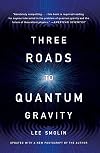
Three Roads to Quantum Gravity
by Lee Smolin
On This Page
Description
From one of the world's most distinguished scientists, the first popular book to present the controversial and exciting ideas behind quantum gravityTags
Recommendations



Member Reviews
(cross-posted on my blog: http://davenichols.net/three-roads-quantum-gravity-lee-smolin)
I just started Smolin's latest book, The Trouble With Physics, and had gotten about 50 pages into it when my copy of Three Roads to Quantum Gravity arrived, so I decided to dig into it before moving to Trouble. Three Roads is Smolin's excellent overview of the landscape and issues involved in the pursuit of a quantum theory of gravity. A very quick read, filled with useful diagrams, I was able to knock it out in a quick evening.
Rather than giving a hundred pages of history or dozens of 'nifty' side stories, Smolin hits a few brief points needed to understand the book and quickly moves into describing how black holes, loop quantum gravity, and string show more theory have appeared to lead the way in the search for the elusive gravitational theory.
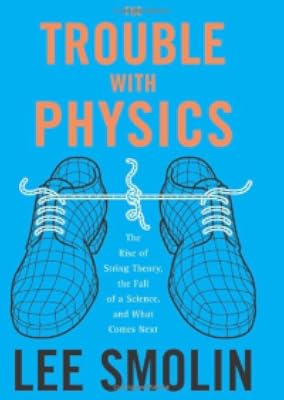
Smolin is one of the pioneers of loop quantum gravity, but is fairly rare in that he has also worked with string theory during his career. His perspective on the competition of the two theories offers some hope for progress by way of synergy (though of course, this was published in 2001 and the lack of a solid theory of quantum gravity, as well as the title of his latest book, The Trouble With Physics: The Rise of String Theory, the Fall of a Science, and What Comes Next, leads me to believe he has lost his rose-colored glasses).
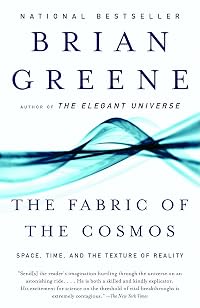
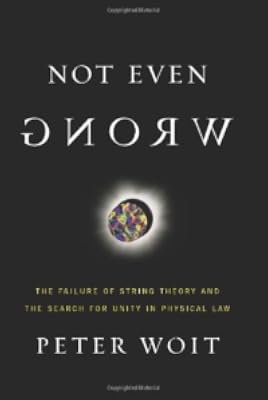
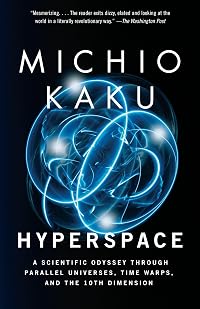
Unlike string theory books by Brian Greene, Michio Kaku and others, and especially unlike the bitter, sarcastic (and relatively boring) anti-string theory book by Peter Woit (titled Not Even Wrong), Smolin offers a very balanced, complimentary account of physics as it stood in 2001, much of which is still accurate and pertinent today.
The discussions of casuality, black hole horizons and entropy, and the implication that space is quantized offer some well-articulated additions to the discussion of popular physics. Smolin doesn't weigh down this book with math or complex discussions of symmetry (unlike Woit). However, this book is not dumbed down for the average reader. You need some strong interest in science, and a basic understanding of physics in order to enjoy this book, but again, it isn't overwhelming or overly complex.
Later chapters cover loop quantum gravity, string theory, M-Theory (which was still extremely new at the time of publication), the holographic principle, and some meta discussions on the subject of anthropic arguments. I hope to find a more detailed presentation of loop quantum gravity, whether from Smolin or another physicist, because the discussion of the 'knots, links, and kinks' offered here is a summary and skips most of the details in favor of brevity and clarity.
I look forward now to picking up Smolin's latest book (Trouble) again and charging into a more recent offering on the subject. I'm glad I read this one before getting too far into Trouble because it really establishes the dynamics of physics as seen through Smolin's eyes as well as setting Smolin's own mindset for comparison with the latter offering. Four and one-half stars and highly recommended to the science junkie. show less
I just started Smolin's latest book, The Trouble With Physics, and had gotten about 50 pages into it when my copy of Three Roads to Quantum Gravity arrived, so I decided to dig into it before moving to Trouble. Three Roads is Smolin's excellent overview of the landscape and issues involved in the pursuit of a quantum theory of gravity. A very quick read, filled with useful diagrams, I was able to knock it out in a quick evening.
Rather than giving a hundred pages of history or dozens of 'nifty' side stories, Smolin hits a few brief points needed to understand the book and quickly moves into describing how black holes, loop quantum gravity, and string show more theory have appeared to lead the way in the search for the elusive gravitational theory.
Smolin is one of the pioneers of loop quantum gravity, but is fairly rare in that he has also worked with string theory during his career. His perspective on the competition of the two theories offers some hope for progress by way of synergy (though of course, this was published in 2001 and the lack of a solid theory of quantum gravity, as well as the title of his latest book, The Trouble With Physics: The Rise of String Theory, the Fall of a Science, and What Comes Next, leads me to believe he has lost his rose-colored glasses).
Unlike string theory books by Brian Greene, Michio Kaku and others, and especially unlike the bitter, sarcastic (and relatively boring) anti-string theory book by Peter Woit (titled Not Even Wrong), Smolin offers a very balanced, complimentary account of physics as it stood in 2001, much of which is still accurate and pertinent today.
The discussions of casuality, black hole horizons and entropy, and the implication that space is quantized offer some well-articulated additions to the discussion of popular physics. Smolin doesn't weigh down this book with math or complex discussions of symmetry (unlike Woit). However, this book is not dumbed down for the average reader. You need some strong interest in science, and a basic understanding of physics in order to enjoy this book, but again, it isn't overwhelming or overly complex.
Later chapters cover loop quantum gravity, string theory, M-Theory (which was still extremely new at the time of publication), the holographic principle, and some meta discussions on the subject of anthropic arguments. I hope to find a more detailed presentation of loop quantum gravity, whether from Smolin or another physicist, because the discussion of the 'knots, links, and kinks' offered here is a summary and skips most of the details in favor of brevity and clarity.
I look forward now to picking up Smolin's latest book (Trouble) again and charging into a more recent offering on the subject. I'm glad I read this one before getting too far into Trouble because it really establishes the dynamics of physics as seen through Smolin's eyes as well as setting Smolin's own mindset for comparison with the latter offering. Four and one-half stars and highly recommended to the science junkie. show less
Lee Smolin is one of those physicists who can explain in lucid prose the motivation of his research. Having pioneered loop quantum gravity, he has written a book which is laid out logically and explains the need to rethink certain old ways of trying to do quantum gravity. He explains causal structure sans metric, and explains the need for preserving the (infinite-dimensional) symmetry of general relativity in attempting to quantize it. His techinal narrative is interspersed with amsuing anecdote, and one wishes for more books from heavyweight physicists like Smolin, as opposed to touchy-feely string theory popular books by other authors that hit the headliines and popular science stands.
This book provides an introduction to quantum gravity aimed at the general public. It provides three different approaches to quantum gravity, doing a decent job of discussing the strengths and weaknesses of each. The author discusses black holes and multiple universes in the journey.
His approach to each subject is historical, tracing development of key idea and briefly mentioning the people involved.
Overall the book is interesting and a rather light read. Although it is aimed at the general public, it is probably a little light for the people who would be interested in reading it.
His approach to each subject is historical, tracing development of key idea and briefly mentioning the people involved.
Overall the book is interesting and a rather light read. Although it is aimed at the general public, it is probably a little light for the people who would be interested in reading it.
Smolin neatly explains properties the theory of everything must have and the logical necessities of having the observer be a part of the system (Topos logic?). And this is the first thing in my (limited) reading stating that both time and space are quantized. Spin networks which describe spacetime as graphs is also worth digging into.
Not bad. This book talks about the possibilities of Quantum Gravity as a candidate to be the Unifying Theory of Physics, the Holy Grail if you will. Smolin speaks of his time as an undergraduate and as a postdoc and all of this other stuff of how the theory was developed. It borrows some things from Quantum Chromodynamics and all of that, but it isn't too bad.
I probably won't read it again, but maybe I will read more stuff by Lee Smolin.
I probably won't read it again, but maybe I will read more stuff by Lee Smolin.
I liked parts of this book, as it introduced some new ideas that I had not been exposed to. On the other hand, I miust not have been paying attention because he lost me at several crucial points and after those points, the ideas became just words on a page. I don't have the desire to re-read this to determine who was at fault.
A gentle description of a very tough enterprise -- formulating the ultimate physical theory that would subsume both general relativity and quantum theory. Black hole thermodynamics, string theory, loop quantum gravity -- all require that space and time have a discrete microstructure. Links can be found at www.qgravity.org.
Members
- Recently Added By
Lists

Books Read in 2023
5,547 works; 145 members
Author Information

11+ Works 3,678 Members
Lee Smolin is a theoretical physicist who is a founding and senior faculty member at the Perimeter Institute for Theoretical Physics. He is the author of five books, including The Trouble with Physics and Time Reborn.
Series
Belongs to Publisher Series
Common Knowledge
- Canonical title
- Three Roads to Quantum Gravity
- Original publication date
- 2000
- People/Characters
- Louis Crane
- Dedication
- To my parents Pauline and Michael
- First words
- This book is about the simplest of all questions to ask: 'What are time and space?'
- Last words
- (Click to show. Warning: May contain spoilers.)By the end of the twenty-first century, the quantum theory of gravity will be taught to high-school students all around the world.
Classifications
Statistics
- Members
- 791
- Popularity
- 35,143
- Reviews
- 9
- Rating
- (3.82)
- Languages
- 5 — English, Finnish, Portuguese, Romanian, Swedish
- Media
- Paper, Audiobook, Ebook
- ISBNs
- 17
- ASINs
- 4