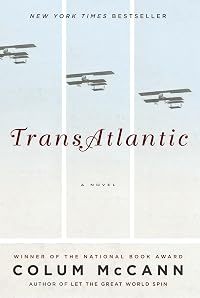
TransAtlantic
by Colum McCann 
On This Page
Description
NEW YORK TIMES BESTSELLER • LONGLISTED FOR THE MAN BOOKER PRIZE • NAMED ONE OF THE BEST BOOKS OF THE YEAR BY KIRKUS REVIEWS In the National Book Award–winning Let the Great World Spin, Colum McCann thrilled readers with a marvelous high-wire act of fiction that The New York Times Book Review called “an emotional tour de force.” Now McCann demonstrates once again why he is one of the most acclaimed and essential authors of his generation with a soaring novel that show more spans continents, leaps centuries, and unites a cast of deftly rendered characters, both real and imagined. Newfoundland, 1919. Two aviators—Jack Alcock and Arthur Brown—set course for Ireland as they attempt the first nonstop flight across the Atlantic Ocean, placing their trust in a modified bomber to heal the wounds of the Great War. Dublin, 1845 and ’46. On an international lecture tour in support of his subversive autobiography, Frederick Douglass finds the Irish people sympathetic to the abolitionist cause—despite the fact that, as famine ravages the countryside, the poor suffer from hardships that are astonishing even to an American slave. New York, 1998. Leaving behind a young wife and newborn child, Senator George Mitchell departs for Belfast, where it has fallen to him, the son of an Irish-American father and a Lebanese mother, to shepherd Northern Ireland’s notoriously bitter and volatile peace talks to an uncertain conclusion. These three iconic crossings are connected by a series of remarkable women whose personal stories are caught up in the swells of history. Beginning with Irish housemaid Lily Duggan, who crosses paths with Frederick Douglass, the novel follows her daughter and granddaughter, Emily and Lottie, and culminates in the present-day story of Hannah Carson, in whom all the hopes and failures of previous generations live on. From the loughs of Ireland to the flatlands of Missouri and the windswept coast of Newfoundland, their journeys mirror the progress and shape of history. They each learn that even the most unassuming moments of grace have a way of rippling through time, space, and memory. The most mature work yet from an incomparable storyteller, TransAtlantic is a profound meditation on identity and history in a wide world that grows somehow smaller and more wondrous with each passing year. Look for special features inside. Join the Random House Reader’s Circle for author chats and more. “A dazzlingly talented author’s latest high-wire act . . . Reminiscent of the finest work of Michael Ondaatje and Michael Cunningham, TransAtlantic is Colum McCann’s most penetrating novel yet.” — O: The Oprah Magazine “One of the greatest pleasures of TransAtlantic is how provisional it makes history feel, how intimate, and intensely real. . . . Here is the uncanny thing McCann finds again and again about the miraculous: that it is inseparable from the everyday.” — The Boston Globe “Ingenious . . . The intricate connections [McCann] has crafted between the stories of his women and our men [seem] written in air, in water, and—given that his subject is the confluence of Irish and American history—in blood.” — Esquire “Another sweeping, beautifully constructed tapestry of life . . . Reading McCann is a rare joy.” — The Seattle Times ... show lessTags
Recommendations






Member Recommendations
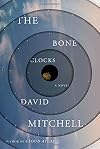
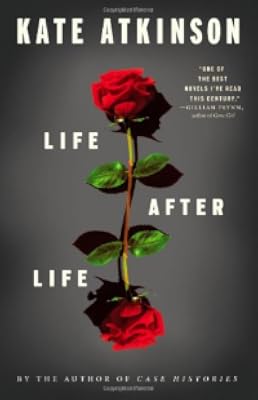
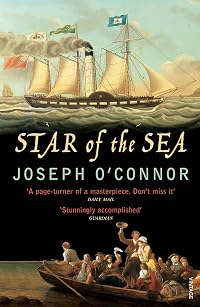
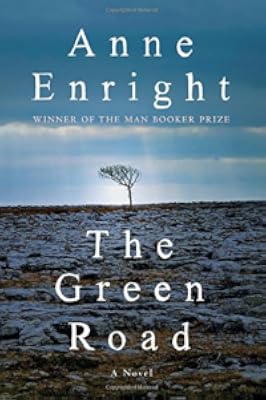
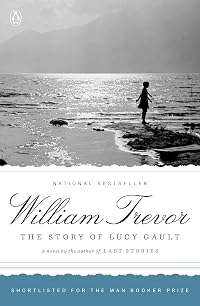
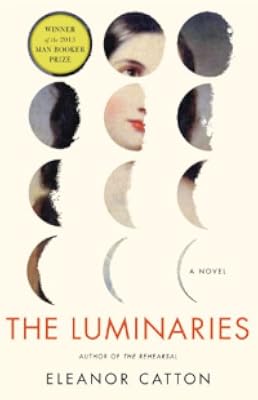
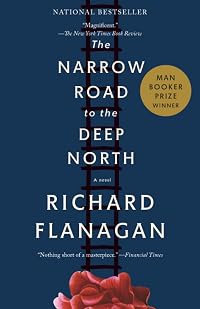
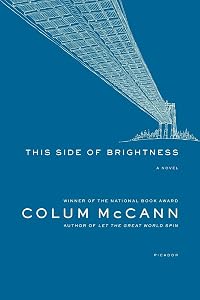
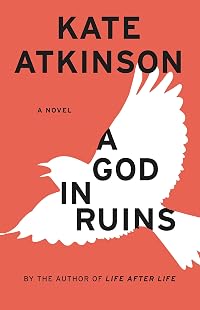
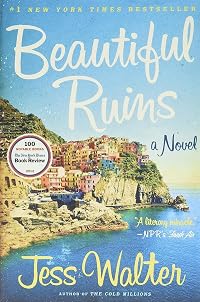
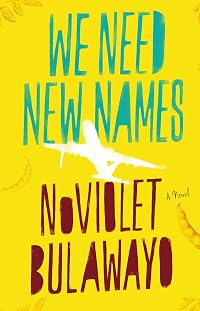
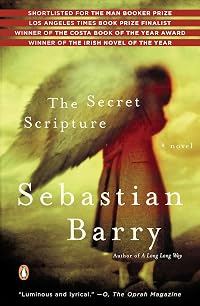
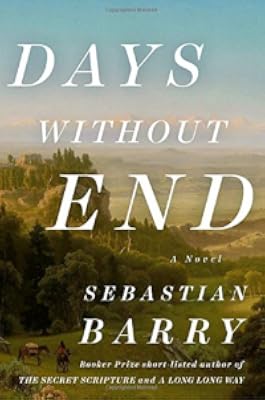
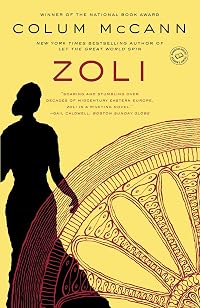
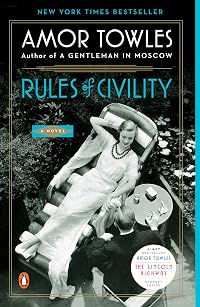
zhejw Both books explore human connections made across multiple generations and across oceans while ultimately concluding in Ireland.
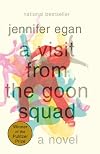
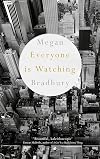
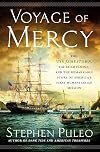
Voyage of Mercy: The USS Jamestown, the Irish Famine, and the Remarkable Story of America's First Humanitarian Mission by Stephen Puleo
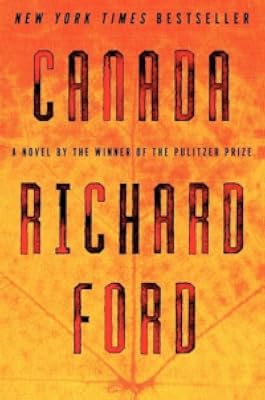
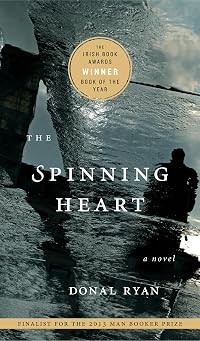
Othemts Both books focus on the relationships between the US and Ireland, with the visit of Frederick Douglass to Ireland a key feature of each book.
Member Reviews
I waited all too long to read Trans Atlantic, and when I finally did read it I realized why Colum McCann is so highly praised. His writing is lyrical, luminous, and somehow leaves spaces in all the right places. He's like Toni Morrison in his unerring ability to leave out what the reader doesn't need. The result is spare and nearly weightless prose that somehow manages to support all the big topics, like race, and gender, and love. Trans Atlantic is a deeply compassionate book that links separate stories that are tenuously connected across time and continents. The sections on Frederick Douglass and his stay in Ireland were the reason why I wanted to read the book in the first place, and they are beautifully done. But the book ends on a show more note of reconciliation I just couldn't have predicted. Gorgeous, gorgeous, gorgeous. show less
 This review was written for LibraryThing Early Reviewers.
Colum McCann is a consummate stylist. Of that, there’s little doubt. But he sometimes paints with prose the way a pointillist paints with oils – and this style can be exhausting if ingested in large chunks. When you come away from one of his portraits, you’re left with a distinct image of the character he’s describing – perhaps in exactly the same way you’re left with a distinct image after studying a pointillist’s painting up close and over a long period of time. You’re also exhausted.
Sentences are often short. Punctuation, sparse. Like this. With no waste of words. But sometimes, abrupt. Truncated – and idiosyncratically so. Not to mention dense.
And speaking of a “tangled skein of connections” (p. 260), the show more connective tissue between these chapters and books (since the novel is divided into three of the latter) is, at times, a tad difficult to decipher, given the apparent nonlinearity of the novel itself. A graphic family tree spanning the several generations might’ve helped me in my understanding of the various stories and their interconnectedness.
As for the occasional Oops! … we find on pp. 25 – 26 “(i)t is one of the many things that brings (sic!) a smile to Alcock’s lips…”. Then, on p. 252, “(t)here is no seal, no insignias, no discernible shape to what may lay (sic!) inside.” And am I wrong in suggesting that “him” is the wrong case in “(s)he used to say that she was younger than him…” on p. 261 and elsewhere in the book?
But for a larger critique – and I offer this one of an author as accomplished as Colum McCann clearly is with a great deal of hesitation – it seemed to me that there was often a tad too much ‘telling’ and not enough ‘showing.’ I’d like to think this impression was largely a function of my own faulty concentration rather than any shortcoming on McCann’s part – but for the time being, and until I read another one of his books, I’ll let it stand.
What I will say in favor of this novel is that McCann captures the peculiar sadness of the ‘Irish story’ perfectly and without that blast of pyrotechnics, sentimentality or even kitsch that too often colors everything from the Great Famine to the Troubles -- and right up through those present St. Patrick’s Day celebrations in Boston and New York that seem to drown in green beer, drunken antics and self-pity. For this, I’m even willing to overlook his one mention of ‘the gloaming.’
I’m sorry I can’t conjure up as much enthusiasm for TransAtlantic as I did for Let the Great World Spin, but we can’t all hit the bull’s eye all of the time. And maybe, just maybe, McCann's target was too refined for my once-sturdier powers of discernment, now in a state of inexorable atrophy.
On a parting note, I must say that a couple (Aoibheann and David Manyaki) introduced only at the very tail-end of the book is one of the most delightful I’ve ever found in literature – and that it's worth the whole ‘cost’ of the book just to meet them. While they may never be as memorable as some of Dickens’s more notable characters, they’re anything but caricaturesque. In fact, they’re very real. And present. And recognizable, however idealized.
RRB
11/23/14
Brooklyn, NY show less
Sentences are often short. Punctuation, sparse. Like this. With no waste of words. But sometimes, abrupt. Truncated – and idiosyncratically so. Not to mention dense.
And speaking of a “tangled skein of connections” (p. 260), the show more connective tissue between these chapters and books (since the novel is divided into three of the latter) is, at times, a tad difficult to decipher, given the apparent nonlinearity of the novel itself. A graphic family tree spanning the several generations might’ve helped me in my understanding of the various stories and their interconnectedness.
As for the occasional Oops! … we find on pp. 25 – 26 “(i)t is one of the many things that brings (sic!) a smile to Alcock’s lips…”. Then, on p. 252, “(t)here is no seal, no insignias, no discernible shape to what may lay (sic!) inside.” And am I wrong in suggesting that “him” is the wrong case in “(s)he used to say that she was younger than him…” on p. 261 and elsewhere in the book?
But for a larger critique – and I offer this one of an author as accomplished as Colum McCann clearly is with a great deal of hesitation – it seemed to me that there was often a tad too much ‘telling’ and not enough ‘showing.’ I’d like to think this impression was largely a function of my own faulty concentration rather than any shortcoming on McCann’s part – but for the time being, and until I read another one of his books, I’ll let it stand.
What I will say in favor of this novel is that McCann captures the peculiar sadness of the ‘Irish story’ perfectly and without that blast of pyrotechnics, sentimentality or even kitsch that too often colors everything from the Great Famine to the Troubles -- and right up through those present St. Patrick’s Day celebrations in Boston and New York that seem to drown in green beer, drunken antics and self-pity. For this, I’m even willing to overlook his one mention of ‘the gloaming.’
I’m sorry I can’t conjure up as much enthusiasm for TransAtlantic as I did for Let the Great World Spin, but we can’t all hit the bull’s eye all of the time. And maybe, just maybe, McCann's target was too refined for my once-sturdier powers of discernment, now in a state of inexorable atrophy.
On a parting note, I must say that a couple (Aoibheann and David Manyaki) introduced only at the very tail-end of the book is one of the most delightful I’ve ever found in literature – and that it's worth the whole ‘cost’ of the book just to meet them. While they may never be as memorable as some of Dickens’s more notable characters, they’re anything but caricaturesque. In fact, they’re very real. And present. And recognizable, however idealized.
RRB
11/23/14
Brooklyn, NY show less
If you're looking for a light read or a happy ending, turn back! This is most definitely an Irish book, which means you need to prepare yourself in advance for perverse twists of fate, bleak humor, and tragedy. So why do I keep reading Irish books? Because Irish authors tend to be brilliant storytellers, creating vivid tales full of heartbreaking humanity and lyric beauty. I wish I could say that that's what happened here, but I can't.
I simply couldn't find any emotional resonance in the story arcs of the characters in this novel. Perhaps because of the story's scope and episodic nature, readers aren't given a lot of time to get to know each of the characters before we're whisked away to another time, another country, another show more generation. (To be clear, McCann gives us plenty of backstory; just not a lot of emotional depth to go with it.) Horrible things happen to each character that I know *should* have evoked sympathy (trigger warning: the children in this tale are particularly prone to ghastly ends), but mostly they just evoked horror because I never felt like these events were happening to real people. (With one exception: there's this bit with a woman and a baby on a road that will haunt me for a while.) Which is ironic, because at least two of the characters in this novel - Frederick Douglass, the great abolitionist, and Senator George Mitchell, the politician who helped bring to an end Ireland's ghastly Troubles - are, of course, actual historic personages. But 300 pages later, I can't say I feel like this tale deepened my understanding of either.
Which is not to say that this book lacks literary merit - especially McCann's affecting exploration the nature of slavery in all its manifestations: literal slavery (Frederick Douglass), political slavery (Ireland under English rule), social slavery (England's class system), economic slavery (the desperate plight of Irish peasants), cultural oppression, gender oppression, even the emotional slavery of grief. Some of the most memorable moments in the tale are when Frederick Douglass, touring through Ireland to raise support for the abolitionist cause, comes to realize just how many forms of slavery and oppression there are in this world.
I've read a number of reviews talking about how the vignettes in this novel are bound together by generations of Irish women, but I'd argue the real glue that binds this together is the eponymous transatlantic journey that McCann recounts in the first chapter. Because, in the end, I feel like this novel is very much about the lessons that the pilots learn in the course of their perilous passage from Newfoundland to Ireland: that sometimes in life you're going to have to navigate by dead reckoning; that the only way to survive a spin is to maintain speed and ride it out; and that sometimes winning is about enduring adversity rather than triumphing over it. Valid life lessons to be sure, but in this instance, not enough to capture my empathy or imagination. show less
I simply couldn't find any emotional resonance in the story arcs of the characters in this novel. Perhaps because of the story's scope and episodic nature, readers aren't given a lot of time to get to know each of the characters before we're whisked away to another time, another country, another show more generation. (To be clear, McCann gives us plenty of backstory; just not a lot of emotional depth to go with it.) Horrible things happen to each character that I know *should* have evoked sympathy (trigger warning: the children in this tale are particularly prone to ghastly ends), but mostly they just evoked horror because I never felt like these events were happening to real people. (With one exception: there's this bit with a woman and a baby on a road that will haunt me for a while.) Which is ironic, because at least two of the characters in this novel - Frederick Douglass, the great abolitionist, and Senator George Mitchell, the politician who helped bring to an end Ireland's ghastly Troubles - are, of course, actual historic personages. But 300 pages later, I can't say I feel like this tale deepened my understanding of either.
Which is not to say that this book lacks literary merit - especially McCann's affecting exploration the nature of slavery in all its manifestations: literal slavery (Frederick Douglass), political slavery (Ireland under English rule), social slavery (England's class system), economic slavery (the desperate plight of Irish peasants), cultural oppression, gender oppression, even the emotional slavery of grief. Some of the most memorable moments in the tale are when Frederick Douglass, touring through Ireland to raise support for the abolitionist cause, comes to realize just how many forms of slavery and oppression there are in this world.
I've read a number of reviews talking about how the vignettes in this novel are bound together by generations of Irish women, but I'd argue the real glue that binds this together is the eponymous transatlantic journey that McCann recounts in the first chapter. Because, in the end, I feel like this novel is very much about the lessons that the pilots learn in the course of their perilous passage from Newfoundland to Ireland: that sometimes in life you're going to have to navigate by dead reckoning; that the only way to survive a spin is to maintain speed and ride it out; and that sometimes winning is about enduring adversity rather than triumphing over it. Valid life lessons to be sure, but in this instance, not enough to capture my empathy or imagination. show less
What to say that hasn't already been said? There is so much going on in this book from both a technical and creative standpoint. I loved how McCann chose to structure the book, and I loved his writing and the story he was telling. It may be broken into several distinct parts, but it is one story essentially. And I think you could ask ten different people who have read the book what that story was and you would get ten different answers. Some might find that infuriating, but I find it fascinating and think it speaks volumes about McCann's talent. This was my first book by him, and I am eager to get to the others on my shelf.
But back to the story. What was the story I read? Essentially, it was about the small moments in life that don't show more get noticed or recorded or written about but which have an impact, though perhaps unseen for many years. It was about history writ small. McCann gives us three "big" moments in the tangled relationship between Ireland and America and then shows us what those things actually meant beyond the novelty or news headlines. I really enjoyed untangling the threads and making connections; at one point I found myself scrawling down names and stories and arrows to keep it straight and to make sense of it all. It's a complex and fascinating book that rewards a patient and careful reader. I may bump my rating up to 5 stars given the way I am still thinking about it several days after finishing. show less
But back to the story. What was the story I read? Essentially, it was about the small moments in life that don't show more get noticed or recorded or written about but which have an impact, though perhaps unseen for many years. It was about history writ small. McCann gives us three "big" moments in the tangled relationship between Ireland and America and then shows us what those things actually meant beyond the novelty or news headlines. I really enjoyed untangling the threads and making connections; at one point I found myself scrawling down names and stories and arrows to keep it straight and to make sense of it all. It's a complex and fascinating book that rewards a patient and careful reader. I may bump my rating up to 5 stars given the way I am still thinking about it several days after finishing. show less
This review was written for LibraryThing Early Reviewers.I loved Let the Great World Spin, so I was excited to get McCann's latest book, which goes on sale June 4, from the Early Reviewer program. From the book's description, I could tell that Transatlantic was an ambitious undertaking. McCann borrows from history, sharing the stories of Frederick Douglass (1845), Jack Alcock and Teddy Brown (1919), and George Mitchell (1998). Their stories are linked by four generations of women, beginning with Lily Duggan, who observe these historical moments and live lives deserving of notice as well. Given the scope of the story, I expected an epic novel, sweeping across the years. But McCann delivers something that is much different, first offering snapshots of brief moments in history and then show more revisiting each era to shift the spotlight from the historical figures to the women of Lily Duggan's family. At first, I found the structure of the novel (and McCann's strings of short sentences) jarring, pulling me out of the story with each shift. But I came to appreciate the layers that McCann places, one by one, until the story is built.
This novel was also a pleasure to read because the writing at the sentence level is beautiful - almost poetic. Here's just one example, describing the struggles of a writer:
"The elaborate search for a word, like the turning of a chain handle on a well. Dropping the bucket down the mineshaft of the mind. Taking up empty bucket after empty bucket until, finally, at an unexpected moment, it caught hard and had a sudden weight and she raised the word, then delved down into the emptiness once more" (p. 165).
Highly recommended! show less
This novel was also a pleasure to read because the writing at the sentence level is beautiful - almost poetic. Here's just one example, describing the struggles of a writer:
"The elaborate search for a word, like the turning of a chain handle on a well. Dropping the bucket down the mineshaft of the mind. Taking up empty bucket after empty bucket until, finally, at an unexpected moment, it caught hard and had a sudden weight and she raised the word, then delved down into the emptiness once more" (p. 165).
Highly recommended! show less
This review was written for LibraryThing Early Reviewers.Rating: 4.85* of five
The Book Description: National Book Award-winning novelist Colum McCann delivers his most ambitious and beautiful novel yet, tying together a series of narratives that span 150 years and two continents in an outstanding act of literary bravura.
In 1845 a black American slave lands in Ireland to champion ideas of democracy and freedom, only to find a famine unfurling at his feet. In 1919, two brave young airmen emerge from the carnage of World War One to pilot the very first transatlantic flight from Newfoundland to the west of Ireland. And in 1998 an American senator criss-crosses the ocean in search of a lasting Irish peace. Bearing witness to these history-making moments of Frederick Douglass, John Alcock and show more "Teddy" Brown, and George Mitchell, and braiding the story together into one epic tale, are four generations of women from a matriarchal clan, beginning with Irish housemaid Lily Duggan. In this story of dark and light, men and women, history and past, fiction and fact, National Book Award-winning novelist Colum McCann delivers a tour de force that is his most spectacular achievement to date.
My Review: This is an ambitious book indeed. McCann refines storytelling techniques he used in [Let the Great World Spin], and layers in more complexity than he created in that National Book Award-winner. For that reason alone, I'd give him high marks.
But as a work of social commentary on Ireland, on its colonial past and its enraged present, the book comes alive. Without ever leaving his focus on the personal lives of people, he limns the results of the struggle of his homeland to be its ownself. Frederick Douglass, an escaped slave, is in Ireland to raise money for Abolition in the USA. Isn't that a nice cause for turn-about, with the IRA raising money in the USA for its militancy?
The water, the recurring use of the water, the wind off the water, being in the water, all of it the Atlantic, all of it marking transformation and immersion in the moment of transformation for each character...that's lovely.
The toughness and surivorhood of Ireland's women is a major part of the story. So is the deep-seated need of the Irish to Be Irish.
So is the quixotic character of men, pushing boundaries that separate them (in their minds) from Glory. (The transAtlantic flight of the title...so very male in its pointless bravado, and in its gauntlet-flinging results of commonplace transAtlantic air travel.)
That's plain old-fashioned beautiful phrase-making.
But in the end, the story large and small is about the strength of women to carry on. The struggles of men against the futility of their existence, a mere accident of evolution's need to stir the pot to keep the soup of life boiling merrily instead of burning irretrievably, are as ever and as always propped up, supported, allowed to exist, by women, evolution's one essential ingredient, carriers of whatever life the planet holds and makers of whatever future the men leave alone in their ceaseless tinkering.
Worry for the present...nostalgia for the past...awareness of the short horizon of the future. She will bear it all. He will be borne to his bourn-side bier on the shoulders of this woman.
And the wonder of it is...it goes on. show less
The Book Description: National Book Award-winning novelist Colum McCann delivers his most ambitious and beautiful novel yet, tying together a series of narratives that span 150 years and two continents in an outstanding act of literary bravura.
In 1845 a black American slave lands in Ireland to champion ideas of democracy and freedom, only to find a famine unfurling at his feet. In 1919, two brave young airmen emerge from the carnage of World War One to pilot the very first transatlantic flight from Newfoundland to the west of Ireland. And in 1998 an American senator criss-crosses the ocean in search of a lasting Irish peace. Bearing witness to these history-making moments of Frederick Douglass, John Alcock and show more "Teddy" Brown, and George Mitchell, and braiding the story together into one epic tale, are four generations of women from a matriarchal clan, beginning with Irish housemaid Lily Duggan. In this story of dark and light, men and women, history and past, fiction and fact, National Book Award-winning novelist Colum McCann delivers a tour de force that is his most spectacular achievement to date.
My Review: This is an ambitious book indeed. McCann refines storytelling techniques he used in [Let the Great World Spin], and layers in more complexity than he created in that National Book Award-winner. For that reason alone, I'd give him high marks.
But as a work of social commentary on Ireland, on its colonial past and its enraged present, the book comes alive. Without ever leaving his focus on the personal lives of people, he limns the results of the struggle of his homeland to be its ownself. Frederick Douglass, an escaped slave, is in Ireland to raise money for Abolition in the USA. Isn't that a nice cause for turn-about, with the IRA raising money in the USA for its militancy?
Webb took him out onto the verandah by the elbow and said: But Frederick, you cannot bite the hand that feeds.
The stars collandered the Wexford night. He knew Webb was right. There would always be an alignment. There were so many sides to every horizon. He could only choose one. No single mind could hold it all at once. Truth, justice, reality, contradiction. Misunderstandings could arise. He had one cause only. He must cleave to it.
He paced the verandah. A cold wind whipped off the water.
The water, the recurring use of the water, the wind off the water, being in the water, all of it the Atlantic, all of it marking transformation and immersion in the moment of transformation for each character...that's lovely.
The toughness and surivorhood of Ireland's women is a major part of the story. So is the deep-seated need of the Irish to Be Irish.
She stood at the window. It was her one hundred twenty-eighth day of watching men die. They came down the road in wagons pulled by horses. She had never seen such a bath of killing before. The wheels screeched. The line of wagons stretched down the path, into the trees. The trees themselves stretched off into the war.
She came down the stairs, through the open doors, into the wide heat...The men had exhausted their shouts. They were left with small whimperings, tiny gasps of pain...One soldier wore sergeant's stripes on his sleeve, and a gold harp stitched on his lapel. An Irishman. She had tended to so many of them.
So is the quixotic character of men, pushing boundaries that separate them (in their minds) from Glory. (The transAtlantic flight of the title...so very male in its pointless bravado, and in its gauntlet-flinging results of commonplace transAtlantic air travel.)
It was that time of the century when the idea of a gentleman had almost become a myth. The Great War had concussed the world. The unbearable news of sixteen million deaths rolled off the great metal drums of the newspapers. Europe was a crucible of bones.
That's plain old-fashioned beautiful phrase-making.
But in the end, the story large and small is about the strength of women to carry on. The struggles of men against the futility of their existence, a mere accident of evolution's need to stir the pot to keep the soup of life boiling merrily instead of burning irretrievably, are as ever and as always propped up, supported, allowed to exist, by women, evolution's one essential ingredient, carriers of whatever life the planet holds and makers of whatever future the men leave alone in their ceaseless tinkering.
The tap of his cane on the floor. The clank of the water pipes. She is wary of making too much of a fuss. Doesn't want to embarrass him, but he's certainly slowing up these weathers. What she dreads is a thump on the floor, or a falling against the banisters, or worse still a tumble down the stairs. She climbs the stairs before {he} emerges from the bathroom. A quick wrench of worry when there is no sound, but he emerges with a slightly bewildered look on his face. He has left a little shaving foam on the side of his chin, and his shirt is haphazardly buttoned.
...The ancient days of the Grand Opera House, the Hippodrome, the Curzon, the Albert Memorial Clock. The two of them out tripping the light fantastic. So young then. The smell of his tweeds. The Turkish tobacco he used to favor. The charity balls in Belfast, her gown rustling on the steps, {her husband} beside her, bow-tied, brilliantined, tipsy.
Worry for the present...nostalgia for the past...awareness of the short horizon of the future. She will bear it all. He will be borne to his bourn-side bier on the shoulders of this woman.
And the wonder of it is...it goes on. show less
After the first hundred pages or so, I could not put this book down. McCann's language was economical at times, expansive at others, and consistently beautiful. I was a Celtic Studies major during undergrad, and I have read my fair share of Irish literature. I felt that this novel, (especially the chapter dealing with the Troubles), was elegant and informed- Certainly Irish in tone and content, and yet universal in McCann's treatment of narrative and characters. A very moving text, and, so far, my favorite book of 2013.
This review was written for LibraryThing Early Reviewers.Members
- Recently Added By
Published Reviews
ThingScore 88
"But a book as ambitious and wide-ranging as this is bound to be a little inconsistent, and its strengths far outweigh its weaknesses."
added by bookfitz
"His new novel, TransAtlantic, likewise dramatises Irish-American encounters, and once again features elements of nonfiction, and a gravity-defying central metaphor."
added by bookfitz
Amazon Best Book of the Month, June 2013: McCann’s stunning sixth novel is a brilliant tribute to his loamy, lyrical and complicated Irish homeland, and an ode to the ties that, across time and space, bind Ireland and America. The book begins with three transatlantic crossings, each a novella within a novel: Frederick Douglas’s 1845 visit to Ireland; the 1919 flight of British aviators show more Alcock and Brown; and former US senator George Mitchell’s 1998 attempt to mediate peace in Northern Ireland. ... The language is lush, urgent, chiseled and precise; sometimes languid, sometimes kinetic. At times, it reads like poetry, or a dream. Choppy sentences. Two-word declaratives. Arranged into stunning, jagged tableaux. Bleak, yet hopeful. ... The finale is a melancholy set piece that ties it all together... McCann reminds us that life is hard, and it is a wonder, and there is hope. --Neal Thompson show less
added by private library
Lists

Top Five Books of 2013
1,562 works; 715 members

Recommend the 20 best books you've read in the last five years
2,168 works; 602 members

Best 21st Century Books (So Far)
670 works; 86 members

Booker Prize
491 works; 62 members

Historical Fiction
889 works; 90 members
Favourite Books
1,819 works; 309 members

Top Five Books of 2015
811 works; 240 members

Top Five Books of 2018
802 works; 264 members

Top Five Books of 2014
1,064 works; 398 members

Man Booker Prize Longlist 2013
13 works; 3 members
International IMPAC Dublin Literary Award
179 works; 6 members

Best family sagas
244 works; 33 members

Irish writers
87 works; 17 members
Top Five Books of 2016
795 works; 229 members

Five star books
1,757 works; 107 members

BBC Radio 4 Bookclub
340 works; 13 members

Kirkus Reviews Best Fiction of 2013
99 works; 6 members

To Read
617 works; 7 members

History in the long view
55 works; 3 members
Author Information

23+ Works 14,388 Members
Irish writer Colum McCann was born near Dublin in 1965 and graduated from the University of Texas with a B.A. degree. He has worked as a newspaper journalist in Ireland and written several short stories and bestselling novels. The short film of Everything in this Country Must was nominated for an Academy Award in 2005. McCann's work has appeared show more in publications including The New York Times, The Atlantic Monthly, GQ, The Irish Times, La Repubblica, Die Zeit, Paris Match, the Guardian, and the Independent. He has won numerous awards, such as a Pushcart Prize, the Rooney Prize, the Irish Novel of the Year Award, and the 2002 Ireland Fund of Monaco Princess Grace Memorial Literary Award. In 2009 McCann was inducted into the Irish arts association Aosdana. He teaches in the Master of Fine Arts Creative Writing program at New York's Hunter College. (Bowker Author Biography) show less
Colum McCann is a LibraryThing Author, an author who lists their personal library on LibraryThing.
Awards and Honors
Awards
Series
Belongs to Publisher Series
rororo (25748)
Common Knowledge
- Canonical title
- TransAtlantic
- Original title
- TransAtlantic
- Original publication date
- 2013
- People/Characters
- Teddy Brown; John Alcock; Frederick Douglass; George Mitchell; Arthur Brown; Lily Duggan (show all 7); Hannah Carson
- Important places
- St. John's, Newfoundland, Canada; Clifden, County Galway, Ireland; Belfast, Northern Ireland, UK; New York, New York, USA
- Important events
- TransAtlantic flight of Alcock & Brown (1919); Northern Ireland peace process; Good Friday Agreement
- Epigraph
- No history is mute. No matter howmuch they own
it, break it, and lie about it, human history refuses to
shut its mouth. Despite deafness and ignorance, the
time that was continues to tick inside the time that i... (show all)s.
-Eduardo Galeano - Dedication
- This novel is dedicated to Loretta Brennan Glucksman.
For Allison, and Isabella too.
And, of course, for Brendan Bourke. - First words
- The cottage sat at the edge of the lough.
- Last words
- (Click to show. Warning: May contain spoilers.)We have to admire the world for not ending on us.
- Original language
- English
Classifications
Statistics
- Members
- 1,995
- Popularity
- 10,546
- Reviews
- 173
- Rating
- (3.97)
- Languages
- 9 — Danish, Dutch, English, French, German, Italian, Norwegian (Bokmål), Croatian, Spanish
- Media
- Paper, Audiobook, Ebook
- ISBNs
- 43
- ASINs
- 17
