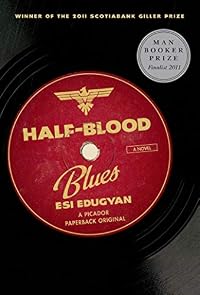
Half Blood Blues
by Esi Edugyan
On This Page
Description
Winner of the Scotiabank Giller PrizeMan Booker Prize Finalist 2011
An Oprah Magazine Best Book of the Year
Shortlisted for the Governor General's Literary Award for Fiction
Berlin, 1939. The Hot Time Swingers, a popular jazz band, has been forbidden to play by the Nazis. Their young trumpet-player Hieronymus Falk, declared a musical genius by none other than Louis Armstrong, is arrested in a Paris café. He is never heard from again. He was twenty years old, a German citizen. And he was show more black.
Berlin, 1952. Falk is a jazz legend. Hot Time Swingers band members Sid Griffiths and Chip Jones, both African Americans from Baltimore, have appeared in a documentary about Falk. When they are invited to attend the film's premier, Sid's role in Falk's fate will be questioned and the two old musicians set off on a surprising and strange journey.
From the smoky bars of pre-war Berlin to the salons of Paris, Sid leads the reader through a fascinating, little-known world as he describes the friendships, love affairs and treacheries that led to Falk's incarceration in Sachsenhausen. Esi Edugyan's Half-Blood Blues is a story about music and race, love and loyalty, and the sacrifices we ask of ourselves, and demand of others, in the name of art.
. show less
Tags
Recommendations























Member Recommendations
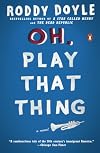
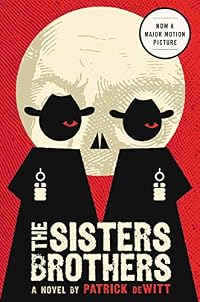
bsiemens Taken at face value, both books are about the jazz subculture during the early 20th century: 'Half Blood Blues' is set in France during the 1930s & 'Oh, Play That Thing' is set in America during the 1920s. The writing style is also quite similar.
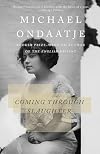
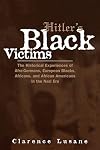
Hitler's Black Victims: The Historical Experiences of European Blacks, Africans, and African Americans During the Nazi Era by Clarence Lusane
dsstukes Non-fiction work to complement Edugyan's novel
Member Reviews
A beautifully compelling story that weaves together two parallel timelines in the life of Sid Griffiths, a biracial American-born jazz musician who spent much of his young adulthood living in Europe. Half of the tale is set in Germany in 1939 as Sid and the other men in his band struggle to get out of the country, which has become increasingly unsafe for a group of Black men who play jazz. However, once they get into France the threat of the Nazis continues to loom. The other half of the novel follows Sid in 1992 as he travels with his former bandmate, Chip, to Berlin for a festival screening a documentary celebrating the life Hieronymous Falk, another of their former bandmates. However, Chip has a surprise for Sid that will force Sid show more to once again grapple with a decision he made in 1940 that had disastrous consequences.
It took me a bit to settle into the novel as Edugyan writes it in an historical version of African-American Vernacular English, awash with slang of the 1930s jazz scene. However, once I was accustomed to Sid's voice I was drawn completely into his life in both the early days of the war and in the 90s as he struggles with the choices he made in the past. Edugyan effortlessly weaves in her research about the lives of Black folk in Europe in the 30s and also manages to include real jazz figures in the story, including an appearance by Louis Armstrong. A gorgeous tale of friendship, jazz, and the impossible decisions that were made in the face of war. Recommended. show less
It took me a bit to settle into the novel as Edugyan writes it in an historical version of African-American Vernacular English, awash with slang of the 1930s jazz scene. However, once I was accustomed to Sid's voice I was drawn completely into his life in both the early days of the war and in the 90s as he struggles with the choices he made in the past. Edugyan effortlessly weaves in her research about the lives of Black folk in Europe in the 30s and also manages to include real jazz figures in the story, including an appearance by Louis Armstrong. A gorgeous tale of friendship, jazz, and the impossible decisions that were made in the face of war. Recommended. show less
This book is a deserving winner of the 2011 Giller Prize. It is a book that is beautifully written with lyrical prose, wonderful characters and a subject that isn't well-known by the ordinary reader. The book is set in Europe in 1939 and 1940 before the Second World War. And we also visit 1992 when the three main characters are in their eighties and looking back on their life. The three main characters are three men who make up a portion of an early Jazz combo who are playing and cutting records in Berlin when the war overtakes them. Ms. Edugyan has created characters that reach out and grab you. We see all the camaraderie, the treacheries and above all the friendships that are spawned by this turbulent time in world history. There is a show more dreadful intimacy here as we explore the world through Syd's eyes. The flawed genius of Hiero and his heart-wrenching trumpet playing, the bluster of Chip, the drummer and the sadness of Ernst. He is the combo's manager as well as the clarinet player of the group who sacrifices himself in order to save the three remaining players left after the Gestapo have taken one and one has left on his own after selling out to the Nazi's. I could go on, but won't because this book must be read in order to capture the essence of what Ms. Edugyan is saying. Of course it helps that I am a long-time fan of jazz and of louis Armstrong who also appears in the book. show less
Until now, with this book, I've never read a book that itself moves and works like a blues song. But that's changed with Half-Blood Blues. Edugyan's gorgeous novel is, in every way, a carefully crafted blues that is also an artfully told story and thoughtful examination of personal identity. In moving between 1939 and 1992--and at the same time between America, Germany, France, and Poland--it reveals the life of a jazz musician whose personal story is irrevocably tied to others' stories and identities as they were lived in 1939, and as they echo over him even fifty years later.
Edugyan's Half-Blood Blues might well display the most artful use of personal voice and dialect I've ever seen in a novel, and the way in which her rhythms and show more structure evoke a blues is something to behold. Even in the tone of the beginning and ending, this book is experienced like a blues, and it is masterful.
Absolutely, I recommend it. show less
Edugyan's Half-Blood Blues might well display the most artful use of personal voice and dialect I've ever seen in a novel, and the way in which her rhythms and show more structure evoke a blues is something to behold. Even in the tone of the beginning and ending, this book is experienced like a blues, and it is masterful.
Absolutely, I recommend it. show less
I was intrigued by this book ever since the Giller Prize longlist came out. I put a library hold on it right away and, as luck would have it, the day after it was announced that Half-Blood Blues had won the 2011 Giller Prize I was notified by the library that the book was waiting for me.
Sid and Chip grew up in Baltimore a few blocks from each other. Chip started playing drums at an early age and Sid learned to play stand-up bass. The two of them ended up playing in a jazz band in Berlin and it was a pretty good life before the Nazis decided jazz was decadent. Their trumpeter was Hiero Falk, a young black German. Hiero (or the Kid) is brilliant. He could be the next Louis Armstrong. In fact, Louis Armstrong sent his assistant, Delilah, show more to Berlin to ask the band to come to Paris to play with him. As we learn right at the beginning of the book Hiero and Sid did make it to Paris but one morning Hiero got picked up by the Nazis. He was sent to a concentration camp and was never heard from again. Until, that is, a filmmaker decided to make a documentary about Hiero and premiered it in Berlin. Then Chip got a letter from Hiero and he asked Chip to come to his home in Poland.
That's the bare bones of the story but the book is so much more. We live through the time the band has to hide in a jazz club because the Nazis were looking for them. My heart was in my mouth when they crossed the border into France. The description of the crowds streaming out of Paris as the Germans entered put me right there in that mass of humanity. I felt like the bus trip across Poland would never end because I so much wanted to know what awaited them at the end. And yet, I deliberately slowed down my reading of the last 20 pages because I really didn't want the book to end. Edugyan writes so beautifully and powerfully. I know she is not old enough to have lived through the times in the book but she writes like she did.
The book truly deserves all the attention it has received. I think I may be buying a copy for a Christmas present. show less
Sid and Chip grew up in Baltimore a few blocks from each other. Chip started playing drums at an early age and Sid learned to play stand-up bass. The two of them ended up playing in a jazz band in Berlin and it was a pretty good life before the Nazis decided jazz was decadent. Their trumpeter was Hiero Falk, a young black German. Hiero (or the Kid) is brilliant. He could be the next Louis Armstrong. In fact, Louis Armstrong sent his assistant, Delilah, show more to Berlin to ask the band to come to Paris to play with him. As we learn right at the beginning of the book Hiero and Sid did make it to Paris but one morning Hiero got picked up by the Nazis. He was sent to a concentration camp and was never heard from again. Until, that is, a filmmaker decided to make a documentary about Hiero and premiered it in Berlin. Then Chip got a letter from Hiero and he asked Chip to come to his home in Poland.
That's the bare bones of the story but the book is so much more. We live through the time the band has to hide in a jazz club because the Nazis were looking for them. My heart was in my mouth when they crossed the border into France. The description of the crowds streaming out of Paris as the Germans entered put me right there in that mass of humanity. I felt like the bus trip across Poland would never end because I so much wanted to know what awaited them at the end. And yet, I deliberately slowed down my reading of the last 20 pages because I really didn't want the book to end. Edugyan writes so beautifully and powerfully. I know she is not old enough to have lived through the times in the book but she writes like she did.
The book truly deserves all the attention it has received. I think I may be buying a copy for a Christmas present. show less
Half Blood Blues is a little like a cross between Christopher Isherwood's Berlin stories and Suite Francaise. The story kicks off with a group of jazz musicians cutting a record in wartime Paris. Shortly afterwards one of them, a black German considered the next Louis Armstrong, is captured by the Nazis.
The story cuts between the war years in Berlin and Paris, and 1992, when the central characters have grown old. The narrator is Sam, the bass player, who comes from Baltimore with Chip the drummer. The jazz scene in Weimar Berlin sought out black American players and gives them great opportunity. They hook up with a Jewish pianist and a couple of Aryan Germans, as well as Hiero, the trumpet genius.
Hiero and Sam are rivals for the show more attentions of singer Delilah, who is a confidante of Armstrong's. This rivalry intensifies as the band members finds themselves outcasts when the Nazis take action against Jews, blacks and jazz musicians, affecting them all. They flee to Paris, only to have the Nazis follow them. There, the rivalry between Sam and Hiero turns bitter.
In 1992, Chip and Sam are invited to Europe to the opening of a documentary about Hiero, which surfaces feelings long suppressed. An invitation to a meeting in Poland adds to the mystery.
Edugyan has created a set of terrific characters with an argot that feels authentic. Jam sessions and Hiero's playing are described in a way that makes you feel the music and get what makes Hiero great. It is a terrific account of professional and personal jealousy in a context of shared fears that work to both pull the characters together and drive them apart at the same time. show less
The story cuts between the war years in Berlin and Paris, and 1992, when the central characters have grown old. The narrator is Sam, the bass player, who comes from Baltimore with Chip the drummer. The jazz scene in Weimar Berlin sought out black American players and gives them great opportunity. They hook up with a Jewish pianist and a couple of Aryan Germans, as well as Hiero, the trumpet genius.
Hiero and Sam are rivals for the show more attentions of singer Delilah, who is a confidante of Armstrong's. This rivalry intensifies as the band members finds themselves outcasts when the Nazis take action against Jews, blacks and jazz musicians, affecting them all. They flee to Paris, only to have the Nazis follow them. There, the rivalry between Sam and Hiero turns bitter.
In 1992, Chip and Sam are invited to Europe to the opening of a documentary about Hiero, which surfaces feelings long suppressed. An invitation to a meeting in Poland adds to the mystery.
Edugyan has created a set of terrific characters with an argot that feels authentic. Jam sessions and Hiero's playing are described in a way that makes you feel the music and get what makes Hiero great. It is a terrific account of professional and personal jealousy in a context of shared fears that work to both pull the characters together and drive them apart at the same time. show less
The language alone in this book transports the reader to another time and culture. Told through the words of Sid, this story brings us to the Jazz Era at the onset of the war. I learned about a piece of history which, in itself is invaluable to me, but it's the characters with their complex emotions and multifaceted personalities that grabbed my attention. Is Sid vicious or kind? Chip mercenary or loyal to a fault? Hiero helpless or all-knowing? There's always an element of surprise, a subtle shift, to keep the story moving.
More than anything, it's Edugyan's ability to describe music that had me hooked - I could see and hear the notes intertwining, transporting me at the heart of the Jazz Age, A mesmerizing book!
More than anything, it's Edugyan's ability to describe music that had me hooked - I could see and hear the notes intertwining, transporting me at the heart of the Jazz Age, A mesmerizing book!
This is a novel that deftly explores a lesser-known aspect of the Holocaust: the persecution of Blacks and German “Mischlings” in Germany during World War II. It’s set against the backdrop of the jazz age, which has been effectively shut down in Berlin because the music is seen as “degenerate.” The tale is narrated by Sid, and moves back and forth in time to unfold the story of a talented band and its young trumpet player, Hieronymus Falk. The musicians must struggle against the growing danger of Nazism, and each experiences varying degrees of safety in Europe based on their background and citizenship. One of the most endangered is Hiero, a German of mixed race, who is taken by the Nazis one night and never returns. Sid show more witnesses this, and a major focus of the novel is Sid’s guilt as he grapples with what he did, and did not do, on that night.
The novel gracefully swerves from Paris, to Berlin, to present-day United States, as Sid tells the story both from an immediate perspective, and from the future, looking back. It’s written in a rhythmic, lyrical jazz slang that reads almost like poetry. The prose is at times sharp and laugh-out-loud witty, and at other times raw and chilling. After about 30 pages, I was so hooked on the story I found it difficult to put the book down.
Esi Edugyan has that special something that allows the reader to live in the historical context she’s created, right along with her wonderfully human, flawed characters. She shines a light on what it would be like to live in a world turned upside-down by hate, and explores what the average person would do when caught in an impossible situation in which death could be around every corner. Through it all the musicians continue to cling to their music, the one thing that still makes sense when nothing else does.
This is not a novel where everything is wrapped up tidy and neat. It leaves you wondering, thinking, and somewhat haunted by the characters and their story. Edugyan is an extraordinarily gifted writer with a very unique style and voice. Very highly recommended. show less
The novel gracefully swerves from Paris, to Berlin, to present-day United States, as Sid tells the story both from an immediate perspective, and from the future, looking back. It’s written in a rhythmic, lyrical jazz slang that reads almost like poetry. The prose is at times sharp and laugh-out-loud witty, and at other times raw and chilling. After about 30 pages, I was so hooked on the story I found it difficult to put the book down.
Esi Edugyan has that special something that allows the reader to live in the historical context she’s created, right along with her wonderfully human, flawed characters. She shines a light on what it would be like to live in a world turned upside-down by hate, and explores what the average person would do when caught in an impossible situation in which death could be around every corner. Through it all the musicians continue to cling to their music, the one thing that still makes sense when nothing else does.
This is not a novel where everything is wrapped up tidy and neat. It leaves you wondering, thinking, and somewhat haunted by the characters and their story. Edugyan is an extraordinarily gifted writer with a very unique style and voice. Very highly recommended. show less
Members
- Recently Added By
Published Reviews
ThingScore 79
Though Half-Blood Blues may generally have been overrated by critics, it delivers an undeniably potent, soul-searching examination of friendship and trust. This may be a novel about beautiful music in an ugly and terrifying place, all those mellifluous strands of jazz amid the jingoism and cacophony of Nazism. But major historical and literary themes of the 20th century weave through show more too—racism and the plight of the outsider. The book also probes timeless and universal dilemmas: Should one invest in the notion that art can transcend socially constructed barriers? Should friendship be manipulated or even sacrificed on the altar of professional ambition? show less
added by geocroc
Though "Half-Blood Blues" is a jazz book, its greatest strength lies more in the rhythms of its conversations and Griffiths' pitch-perfect voice than in any musical exchanges. ...[H]is dazed account of a band of weary survivors coalescing around Hiero's "Half-Blood Blues" is intoxicating enough to send you crate-digging through a record store's back room for anything like it.
added by geocroc
The novel is truly extraordinary in its evocation of time and place, its shimmering jazz vernacular, its pitch-perfect male banter and its period slang. Edugyan never stumbles with her storytelling, not over one sentence. The few weaknesses in the plot, such as they are, simply don't matter.
added by geocroc
Lists

Favourite books from the 2012 Orange Prize for fiction longlist
20 works; 15 members

Favourite Women's Prize for Fiction, Orange & Bailey's Prize contenders
132 works; 52 members

The Best of Canadian Literature
235 works; 32 members
CBC Books - Canada's 100 (+ bonus 10): Which have you read?
110 works; 23 members

Recommend the 20 best books you've read in the last five years
2,167 works; 601 members
Favourite Booker Prize contenders
73 works; 21 members
Booker Prize
491 works; 62 members

Giller Prize Winners
32 works; 6 members

2013 Notable Books for Adults
26 works; 5 members

Female Author
1,235 works; 67 members
Booker Prize Shortlist: Titles Read
103 works; 10 members

Canada Reads Winners and Nominees
129 works; 9 members

Literature by People of Color
81 works; 9 members

CBC's Great Canadian Reading List
149 works; 5 members

Books about World War II
241 works; 22 members

Man Booker Prize Longlist 2011
13 works; 2 members

5 Best 5 Years
71 works; 4 members
Walter Scott Prize Winners and Shortlist
66 works; 6 members

Global Reads: Books Set in Western Europe
186 works; 10 members

Books with Colourful Titles
171 works; 8 members

Books With Body Parts in the Title
153 works; 9 members
Talk Discussions
Past Discussions
Half Blood Blues by Esi Edugyan in Booker Prize (September 2011)
Author Information

9+ Works 4,665 Members
Some Editions
Awards and Honors
Awards
Distinctions
Series
Belongs to Publisher Series
BBC Book at Bedtime (2011)
Common Knowledge
- Canonical title
- Half Blood Blues
- Original title
- Half Blood Blues
- Original publication date
- 2011
- People/Characters
- Sidney "Sid" Griffiths; Charles C. "Chip" Jones; Hieronymus "Hiero" Falk; Delilah Brown; Ernst von Haselberg; Paul Butterstein (show all 7); Louis Armstrong
- Important places
- Berlin, Germany; Paris, France; Poland
- Important events
- World War II
- Dedication
- for Steve
- First words
- Chip told us not to go out.
- Quotations
- What is luck but something made to run out.
As a car passed in the street, I lifted up my eyes, seen pigeons scattering like blown paper in the abandoned square.
Hope eats at you like a cancer, I guess. If we just left Berlin sooner, I was thinking, if we just tried harder for old Ernst, for Paul. If we just been better men.
The steep streets was quiet and I wasn't able to shake my feeling of being in the wrong city. There was crowds gathering in the cafes now, haunting the doorways of shops. All of them reading newspapers, muttering among themse... (show all)lves.
"What's goin on?" said Hiero, nervous.
Hearing him speak, a man look up, watch him with cold eyes. We gone on past, drifting toward the buildings, away from the open streets.
"Almost like being back in Berlin," said Chip.
It ain't been but a week and a half, but she seemed a complete stranger. The stress of these last days, the grief—twenty years might have passed.
We was silent then. I felt scoured out, gutted.
But Chip, he just looked round, give a little grunt like he changing dials on the wireless.
But it seemed all Paris was waiting too. Anxiety hung over the streets like clothes on a line. When we walked them cobblestones, we seen families huddled in their apartments, crouched over the wireless. Waiters was bent over ... (show all)counters, listening to static. Hell, in those first tender days it seem like everyone was just hunched on up over some radio somewhere, it ain't mattered where, staying put, like if they moved they might miss the war.
We grown lean as greyhounds, our bodies all hope and bone.
But a jack just worry and worry and worry, then it dies out in him. Guilt don't enter into it. I guess folk just ain't built to be faithful to nothing, not even to pain. Not even when it their own.
I wished to god I'd just go to sleep and wake up in another reality.
I don't know, I guess mercy is a muscle like any other. You got to exercise it, or it just cramp right up.
Geniuses ain't made, brother, they just is. And I just was not.
I looked at him as if to say, There is just too many kinds of stupid. He just shook his damn head. Delilah, she was looking real tired, like she ain't known rest in a lifetime. Just seeing it made me sad.
"Don't, Sid," she said. "That's done. That's over."
I blushed. "Aw, Lilah, I wasn't tryin to ... I mean, that ain't—" But then I just gone silent. I felt damn foolish. Cause it was true, somewhere in me I was still think... (show all)ing it. A thing like we had, it don't just cease.
But seeing her, then, without no anger in her, just this enormous sadness, I known for real whatever we had once was just ash and dust now.
We went on, past the boarded up bistros, past the shuttered pharmacies and cafes, the blue sky overhead awful in its emptiness.
I stared at him, those eyes so pale they might've witnessed the ruin of a world, the ruin and rebirth of a world. - Last words
- (Click to show. Warning: May contain spoilers.)Play it again.
- Blurbers
- Hill, Lawrence; Clarke, Austin; Chariandy, David; Locke, Attica
- Original language
- English
Classifications
Statistics
- Members
- 1,592
- Popularity
- 14,157
- Reviews
- 89
- Rating
- (3.69)
- Languages
- 8 — Dutch, English, French, German, Italian, Portuguese, Spanish, Swedish
- Media
- Paper, Audiobook, Ebook
- ISBNs
- 37
- ASINs
- 11