On This Page
Description
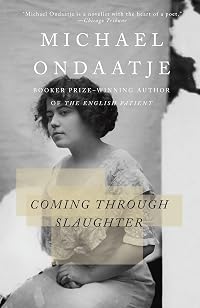
Buddy Bolden, a New Orleans barber, cornet player, and full-time editor of a gossip sheet, disappears for two years, and when he returns, he goes berserk and spends his final years in the East Louisiana state hospital.Tags
Recommendations









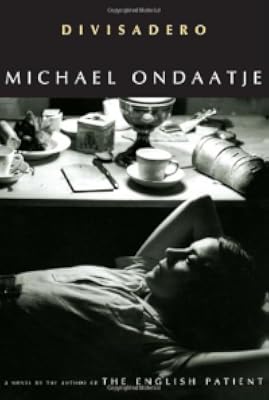







Member Recommendations
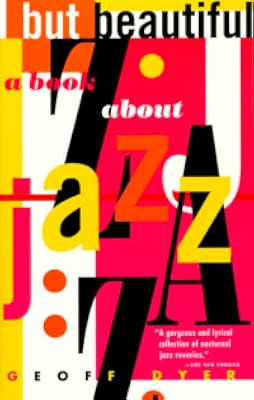
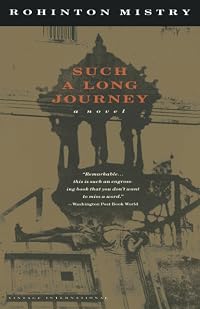
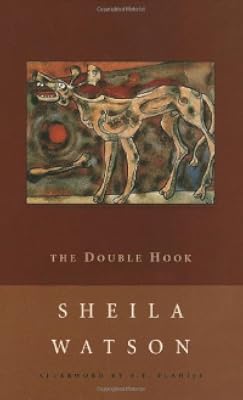
whitewavedarling Both these novels are built from poetic prose and intoxicating atmospheres of jazz, New Orleans, mystery, and emotion. Maistros' work is of a darker material and allows the supernatural a large part in its' path, but both works are eerily tangible and fascinating once you allow yourself to get sucked in, and the atmospheres are strangely similar, however different the stories are.
Polaris- Both sensitively explore the imagined possibilities behind what facts are known. Their authors both manage to convey an essence of jazz - the agony and the ecstasy.
Member Reviews
This is a hypnotizing book written in prose that alternately sounds like poetry and feels like a soft blues song. It is dirty, sweet, heartbreaking, and candid all at once. Ondaatje has masterfully woven a reality of his own around the few bare facts known about the jazz player Buddy Bolden, creating fiction that feels like nonfiction that reads like fiction. In the end, this a book about life and about art, and what both can mean separately or taken together. It's not a traditional novel, and it's got more than its share of darkness, so it isn't for everyone, but if you're looking for a book that brings on a New Orleans atmosphere and explores the world of an unknown artist who lives with each moment, this is a phenomenal read that show more effectively takes you back in time with graceful playful language. Truly, this is also by far the most sensuous novel I've ever read---Ondaatje is here aware of all five senses on every page, and he commits to writing each of them, subtly, so that this is sure to reach any reader with its language if not with its character. I recommend this work whole-heartedly. show less
Beautifully captures the essence, the vitality and death, of New Orleans, of Jazz. Ondaatje's prose style is perfect for his subject, Buddy Bolden. The way Ondaatje loves to play with time, narrative, and memory makes an ideal bedfellow to both the depiction of madness and the improvisational techniques of Jazz. Ondaatje fills negative space with his poetry the same way that Jazz legends have filled that space with their sound for more than a century now. Not only did CTS evoke and bring me the same joy, the same pleasure in devouring each sentence, as did Let the Great World Spin, it also led me to the realization that Ondaatje and Colum McCann are literary birds of a feather - none can make pain so beautiful, and beauty so painful, in show more the way that these two can. I love both dearly.
I digress. With nothing more than a ghost left behind for a legacy - as well as the pioneering/creation of America's greatest musical contribution - Coming Through Slaughter is the next best thing we'll ever have to honor Buddy Bolden. show less
I digress. With nothing more than a ghost left behind for a legacy - as well as the pioneering/creation of America's greatest musical contribution - Coming Through Slaughter is the next best thing we'll ever have to honor Buddy Bolden. show less
Michael Ondaatje was already well established as a poet when he published this, a poet's first novel if ever there was one. It's an attempt to recreate the inner life of Buddy Bolden, a cornet player and pioneer of the new kind of American music that would soon become known as jass or jazz. No recordings exist of Bolden's playing, and very little is known of his life beyond the fact that he had a breakdown during a Mardi Gras parade, died years later in a Louisiana asylum, and was thought of by Louis Armstrong and his generation as having started their artistic tradition.
Into this creative vacuum Ondaatje pours his allusive, fluid prose, which darts about between internal monologue, interview snippets, quick conversation scenes, and show more modern-day investigative reportage. He paints a vivid picture of late-nineteenth-century New Orleans, around the legendary red-light district of Storyville, where ‘2000 prostitutes were working regularly,’ there were ‘at least 70 professional gamblers’ and ‘30 piano players took in several thousand each in weekly tips’. ‘Here the famous whore Bricktop Jackson carried a 15 inch knife,’ Ondaatje tells us, a tour guide asking us to look to our left, ‘and her lover John Miller had no left arm and wore a chain with an iron ball on the end to replace it.’
Like good jazz, the writing is rhythmic and improvisational, transposing viewpoints and images like key changes – and, sometimes, a little self-indulgent. But when Ondaatje is inhabiting Bolden's mind, he is very convincing, building up a detailed life and mental state from a rush of sensory impressions:
He collected and was filled by every noise as if luscious poison entering the ear like a lady's tongue thickening it and blocking it until he couldn't be entered anymore. A fat full king. The hawk its locked claws full of salmon going under greedy with it for the final time. Nicotine form the small smokes he found burning into his nails, the socks thick with dry sweat, the nose blowing out the day's dirt into a newspaper. Asking for a glass of water and pouring in the free ketchup to make soup. Sank through the pavement into the music of the town of Shell Beach.
Bolden's life is built up above all by the people around him: his wife, his lover, the customers in his barber's shop, bandmembers, an old friend who has become a policeman. An especially powerful subplot revolves around the photographer EJ Bellocq, whose revealing and touching portraits of Storyville prostitutes were found after his death.
Not the least prominent supporting character is Ondaatje himself, who is constantly interrogating his own thoughts as he writes and researches the book.
The thin sheaf of information. Why did my senses stop at you? There was the sentence, ‘Buddy Bolden who became a legend when he went berserk in a parade…’ What was there in that, before I knew your nation your colour your age, that made me push my arm forward and spill it through the front of your mirror and clutch myself?
One wants to write about this novel as though it were music – in terms of its solos, its tone, its timbre. Experimental and poetic, it's a mostly-successful attempt to get inside one exhausted, creative life within an exhausted, creative city. show less
Into this creative vacuum Ondaatje pours his allusive, fluid prose, which darts about between internal monologue, interview snippets, quick conversation scenes, and show more modern-day investigative reportage. He paints a vivid picture of late-nineteenth-century New Orleans, around the legendary red-light district of Storyville, where ‘2000 prostitutes were working regularly,’ there were ‘at least 70 professional gamblers’ and ‘30 piano players took in several thousand each in weekly tips’. ‘Here the famous whore Bricktop Jackson carried a 15 inch knife,’ Ondaatje tells us, a tour guide asking us to look to our left, ‘and her lover John Miller had no left arm and wore a chain with an iron ball on the end to replace it.’
Like good jazz, the writing is rhythmic and improvisational, transposing viewpoints and images like key changes – and, sometimes, a little self-indulgent. But when Ondaatje is inhabiting Bolden's mind, he is very convincing, building up a detailed life and mental state from a rush of sensory impressions:
He collected and was filled by every noise as if luscious poison entering the ear like a lady's tongue thickening it and blocking it until he couldn't be entered anymore. A fat full king. The hawk its locked claws full of salmon going under greedy with it for the final time. Nicotine form the small smokes he found burning into his nails, the socks thick with dry sweat, the nose blowing out the day's dirt into a newspaper. Asking for a glass of water and pouring in the free ketchup to make soup. Sank through the pavement into the music of the town of Shell Beach.
Bolden's life is built up above all by the people around him: his wife, his lover, the customers in his barber's shop, bandmembers, an old friend who has become a policeman. An especially powerful subplot revolves around the photographer EJ Bellocq, whose revealing and touching portraits of Storyville prostitutes were found after his death.
Not the least prominent supporting character is Ondaatje himself, who is constantly interrogating his own thoughts as he writes and researches the book.
The thin sheaf of information. Why did my senses stop at you? There was the sentence, ‘Buddy Bolden who became a legend when he went berserk in a parade…’ What was there in that, before I knew your nation your colour your age, that made me push my arm forward and spill it through the front of your mirror and clutch myself?
One wants to write about this novel as though it were music – in terms of its solos, its tone, its timbre. Experimental and poetic, it's a mostly-successful attempt to get inside one exhausted, creative life within an exhausted, creative city. show less
The story of Buddy Bolden is one that can only be cobbled together through myth and music. No recordings exist of his music, and there are so many tall tales about the man, no one can really say where the hyperbole ends and the real Buddy begins.
"Coming Through Slaughter" embraces this dilemma and rises above it, with a unique use of rather abstract language and phrasing - as well as shifting narrative - that are jarring at times, but ultimately work.
You don't have to love jazz to enjoy "Slaughter", but it does help.
"Coming Through Slaughter" embraces this dilemma and rises above it, with a unique use of rather abstract language and phrasing - as well as shifting narrative - that are jarring at times, but ultimately work.
You don't have to love jazz to enjoy "Slaughter", but it does help.
Fragmented “experimental” novel published in 1976 that explores the (fictional) life of Buddy Bolden, a legendary jazz musician from New Orleans at the turn of the 20th century. Ondaatje presents an impressionistic portrait of Bolden using a nonlinear in structure, which (I presume) is intended to mirror the improvisational nature of jazz music. It is written using multiple perspectives, documentary-style interludes, and a stream of consciousness style. The novel examines the thin line between artistic genius and mental instability. Buddy Bolden is portrayed as brilliant but deeply troubled. My main issue with this one lies in its depiction of the few women characters as sex objects or prostitutes. It is a little too “macho” for show more my taste. I am reading through Michael Ondaatje’s back catalogue since I have very much enjoyed many of his books, but this one ranks at the bottom of my list. show less
A study on how style can effectively dominate narration. Ondaatje moves the story not with plot but with a keen sense of emotional description, as if you are watching a montage or viewing an expressionist painting. The music of this story comes from the interplay between art and life, history and myth, and genius and madness in the mind of Buddy Bolden. The various love arcs (especially Nora and Buddy, Buddy as cuckold, and Bellocq and the prostitutes) give the novel its only real narrative frames, besides Buddy's swift flow into madness.
Published in 1976, this novel, Ondaatje's debut, I believe, is a fictionalized look at Buddy Bolden, a pioneering New Orleans trumpet player, circa 1900. He is considered to be one of the first to play "modern" jazz. He also suffered from mental issues and had a severe breakdown while performing and spend the rest of his life in a sanatorium. The writing style is experimental, presented in a jazz style- fragmented, and syncopated. It may not suit all readers but I found it intriguing and beautifully done.
Members
- Recently Added By
Published Reviews
Durch mehrere Instanzen wird die Geschichte Boldens rekonstruiert. Da ist zum einen der Erzähler oder Biograph, der sich zeitlich sehr nahe an Ondaatje selbst befindet und der mit den heute noch zugänglichen Fakten arbeitet. Außerdem gibt es Webb, einen Polizisten und alten Freund von Bolden, der sich Jahre nach seinem plötzlichen Verschwinden aufmacht, ihn wieder zu finden. Und zuletzt show more stellen sich immer wieder Erinnerungsfetzen der einzelnen Beteiligten ein. All das fügt sich zu einem sperrigen Profil dieses Mannes, zu einem Profil, das ehrlich genug ist, nicht den Anspruch der Vollkommenheit zu erheben. show less
added by Indy133
Lists

Books Read in Library
21 works; 1 member

AP Lit
363 works; 6 members
Author Information

67+ Works 34,801 Members
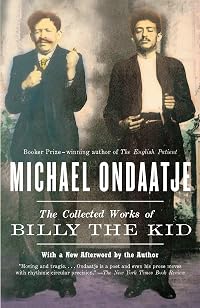
Michael Ondaatje was born in Ceylon (now Sri Lanka) on September 12, 1943. He moved to Canada in 1962 and became a Canadian citizen. He received a B.A. from the University of Toronto and a M.A. from Queen's University, Kingston, and taught English at York University. He has written several volumes of poetry, novels, and other works including show more There's a Trick with a Knife I'm Learning to Do, The Dainty Monsters, Rat Jelly, Coming through Slaughter, Running in the Family, In the Skin of a Lion, Anil's Ghost, and The Cat's Table. His title, Warlight, made the bestseller list in 2018. Ondaatje has won numerous awards including the Canadian Governor General's Award in 1971 for The Collected Works of Billy the Kid and the Booker Prize in Fiction for The English Patient, which was adapted into a film in 1996. (Bowker Author Biography) Michael Ondaatje was born in Sri Lanka. He now lives in Toronto. (Publisher Provided) show less
Awards and Honors
Distinctions
Notable Lists
Series

Common Knowledge
- Canonical title*
- Buddy Boldens Blues
- Original title
- Coming Through Slaughter
- Alternate titles
- Buddy Bolden's Blues
- Original publication date
- 1976
- People/Characters
- Buddy Bolden; Robin Brewitt; Jaelin Brewitt; Nora; Bellocq; Webb (show all 11); Jimmy Johnson; Willy Cornish; Willy Warner; Brack Mumford; Frank Lewis
- Important places
- New Orleans, Louisiana, USA
- Dedication
- For Quintin and Griffin. For Stephen, Skyler, Tory and North. And in memory of John Thompson.
- First words
- His geography.
- Last words
- (Click to show. Warning: May contain spoilers.)There are no prizes.
- Original language*
- Englisch
*Some information comes from Common Knowledge in other languages. Click "Edit" for more information.
Classifications
- Genres
- Fiction and Literature, General Fiction, Historical Fiction
- DDC/MDS
- 813.54 — Literature & rhetoric American literature in English American fiction in English 1900-1999 1945-1999
- LCC
- PR9199.3 .O5 .C65 — Language and Literature English English Literature English literature: Provincial, local, etc.
- BISAC
Statistics
- Members
- 1,589
- Popularity
- 14,289
- Reviews
- 24
- Rating
- (3.75)
- Languages
- 9 — Dutch, English, French, German, Italian, Portuguese, Croatian, Spanish, Swedish
- Media
- Paper, Audiobook, Ebook
- ISBNs
- 38
- ASINs
- 11