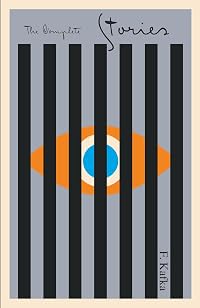
The Complete Stories
by Franz Kafka 
On This Page
Description
"The Complete Stories "brings together all of Kafka s stories, from the classic tales such as The Metamorphosis, In the Penal Colony, and A Hunger Artist to shorter pieces and fragments that Max Brod, Kafka s literary executor, released after Kafka s death. With the exception of his three novels, the whole of Kafka s narrative work is included in this volume. "Tags
Recommendations






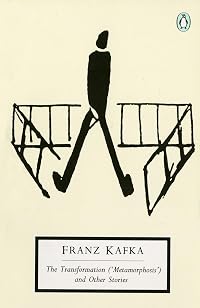



Member Recommendations

leigonj Kafka had Swift's book in his library and there are definite commonalities between their two writings; I'd be surprised if one had not influenced the other. (Also The Trial).
Member Reviews
A transcendent and sublime collection. Kafka was the philosopher martyr of the age to come, the age of anxiety, of dread, of emptiness, and ultimately, the age of modernity. Not enough good can be said about his writing, his panoramic vision, and the heart breaking beauty that was his art and that is what he had to say about what it is to be human, that is to say, cursed with the ability to think.
I consider the central fact of Kafka's stories to be his effort to illustrate something familiar (at least to him) through unfamiliar scenarios. That these scenarios create an effect of alienation, a sense of the absurd, or perhaps horror is significant but not the main thing. (I think this description applies to Expressionism, generally.) And these unfamiliar scenes are in fact rooted in the familiar: certainly there is the impression of another era (customs, business, automation) moving into a recognisably modern society. And generally the tales do not seem specific to Europe or even the German-speaking cultures, but broadly applicable to 20c civilisation. Again, the unfamiliar seems a way of drawing the reader's attention, but is not show more itself the point.
I've heard interpretations of stories such as "Die Verwandlung", and the theories seem clever and insightful at first: that it's autobiographical, say, Kafka feeling an alien or vermin for wanting to be a writer, in a family rejecting that role. But while there's something to that idea, it's soon clear it falls quite short. There's a moment in "Die Verwandlung", when the story doesn't end after the confrontation with his family, rather Gregor is left alone in his room and his family attempts to move on. At that point, it's clear there are too many contradictions, too many details which don't fit the first reading at all. And so it goes with the other stories: a moment or scene stitching together two very different tales, though featuring the same setting and characters. "Der Heizer" (originally the opening chapter of Amerika) in which the character unaccountably meets his Senator uncle amid an onboard trial between two steamship employees; "Das Urteil" in which a well-meaning young man's behaviour is revealed to be less than benevolent, though again it's not quite clear why. Always a twist that is unexpected, evidently meaningful, but ultimately elusive.
Example of how Kafka confounds the expectations set up by the oddity of his establishing scenario: "In der Strafkolonie", when the executioner (der Offizier) fails to persuade the visitor of the merits of the torture device, and so ... straps himself to it, as though taking desperate measures to win the argument. If horror or weirdness were the point, that would be the climax and indeed the point, but here the key does not appear to be related to the conflict between characters, but occurs later. The tension in the story points to the protective stance adopted by the visitor toward the executioner, and his distancing from a subordinate soldier and the executioner's prisoner. Not the narrative arc expected given the opposition between the principal characters, nor that hinted at by the action, either. Clearly, Kafka is getting at something, but what?
And that's just it. When I attempt to "figure out" a Kafka story, understand the strange predicament at its core, for the most part I fail. Interestingly, this failure is not disappointing, and in fact I've come to see the result as a primary source of what draws me to Kafka's work. For I'm left with the abiding strangeness, coupled with the conviction it's not done for its own sake, and though I'm not able to puzzle out the meaning, still I'm convinced there is something more than an effect underlying the story. I may never figure out the story, but I don't lose the pleasure of reading it. This reading experience isn't found anywhere else.
//
Read in 2011 primarily in effort to keep up my German. Kafka's prose is straightforward in vocabulary, but not as simple as I once thought. He relies comfortably on the convoluted sentence structure and nested dependent clauses characteristic of German. The language fits the stories as much as does the narrative itself. show less
I've heard interpretations of stories such as "Die Verwandlung", and the theories seem clever and insightful at first: that it's autobiographical, say, Kafka feeling an alien or vermin for wanting to be a writer, in a family rejecting that role. But while there's something to that idea, it's soon clear it falls quite short. There's a moment in "Die Verwandlung", when the story doesn't end after the confrontation with his family, rather Gregor is left alone in his room and his family attempts to move on. At that point, it's clear there are too many contradictions, too many details which don't fit the first reading at all. And so it goes with the other stories: a moment or scene stitching together two very different tales, though featuring the same setting and characters. "Der Heizer" (originally the opening chapter of Amerika) in which the character unaccountably meets his Senator uncle amid an onboard trial between two steamship employees; "Das Urteil" in which a well-meaning young man's behaviour is revealed to be less than benevolent, though again it's not quite clear why. Always a twist that is unexpected, evidently meaningful, but ultimately elusive.
Example of how Kafka confounds the expectations set up by the oddity of his establishing scenario: "In der Strafkolonie", when the executioner (der Offizier) fails to persuade the visitor of the merits of the torture device, and so ... straps himself to it, as though taking desperate measures to win the argument. If horror or weirdness were the point, that would be the climax and indeed the point, but here the key does not appear to be related to the conflict between characters, but occurs later. The tension in the story points to the protective stance adopted by the visitor toward the executioner, and his distancing from a subordinate soldier and the executioner's prisoner. Not the narrative arc expected given the opposition between the principal characters, nor that hinted at by the action, either. Clearly, Kafka is getting at something, but what?
And that's just it. When I attempt to "figure out" a Kafka story, understand the strange predicament at its core, for the most part I fail. Interestingly, this failure is not disappointing, and in fact I've come to see the result as a primary source of what draws me to Kafka's work. For I'm left with the abiding strangeness, coupled with the conviction it's not done for its own sake, and though I'm not able to puzzle out the meaning, still I'm convinced there is something more than an effect underlying the story. I may never figure out the story, but I don't lose the pleasure of reading it. This reading experience isn't found anywhere else.
//
Read in 2011 primarily in effort to keep up my German. Kafka's prose is straightforward in vocabulary, but not as simple as I once thought. He relies comfortably on the convoluted sentence structure and nested dependent clauses characteristic of German. The language fits the stories as much as does the narrative itself. show less
Every story is different, but each one takes you to a different world, or an alternative view of one we are in (and perhaps wish we weren't). Some are funny, some sad and many are both. Some are so short they are more like prose poems. Great for dipping into and getting a taste of Kafka before (and during and after) tackling his larger works.
See my Kafka-related bookshelf for other works by and about Kafka: HERE.
See my Kafka-related bookshelf for other works by and about Kafka: HERE.
Kafka is one of the writers that got me reading as a teenager in the first place. Eerily familiar, hilariously sad, Kafka's uncanny stories will have you unsure whether you should laugh or cry. For lovers of Murakami's short stories, Kafka, an obvious inspiration for Murakami, will be a treasure trove of the absurd and the familiar, wrapped up in laconic prose. (And vice-versa: if you like Kafka, you'll certainly enjoy the perhaps more approachable Murakami)
And, need I say it? These stories aren't to be so much "understood" (as reviewers seem to fear) as experienced. You cannot dominate these stories intellectually. They will slip and slide through the wet fingers of your animal mind! So drop your existential philosophy primer and just show more let Kafka crawl over you like a cockroach! show less
And, need I say it? These stories aren't to be so much "understood" (as reviewers seem to fear) as experienced. You cannot dominate these stories intellectually. They will slip and slide through the wet fingers of your animal mind! So drop your existential philosophy primer and just show more let Kafka crawl over you like a cockroach! show less
Review of The Metamorphosis:
What a freaking sad, sad story (or novella, if you will). Even though I read this once in high school and twice in college I wanted to refresh my memory about the details. From my previous readings I remember Gregor woke up one morning to find he had transformed into a bug. Instead of being concerned about the multiple legs, hard shell and the fact he couldn't turn himself over, Gregor was more upset about sleeping late, missing the train and being late to work as a traveling salesman. This was a key point in the story. I also remember his parents and sister not being all that supportive of his transformation. This also was a huge point in the story. His family was repulsed by his appearance and refused to show more consider him part of the family. Their neglect of him gets worse and worse until dirty and broken, he succumbs to starvation and the injuries sustained when his father threw an apple at him. What I didn't remember was the nitty-gritty psychology of it all. Gregor's resentment about being the bread winner for the family, how underneath it all he felt like a bug even before the metamorphosis, and ultimately his family's complete exclusion of Gregor as an insect. The other detail I had completely forgotten was how freeing Gregor's death was to the family. They moved on without a single regret. show less
What a freaking sad, sad story (or novella, if you will). Even though I read this once in high school and twice in college I wanted to refresh my memory about the details. From my previous readings I remember Gregor woke up one morning to find he had transformed into a bug. Instead of being concerned about the multiple legs, hard shell and the fact he couldn't turn himself over, Gregor was more upset about sleeping late, missing the train and being late to work as a traveling salesman. This was a key point in the story. I also remember his parents and sister not being all that supportive of his transformation. This also was a huge point in the story. His family was repulsed by his appearance and refused to show more consider him part of the family. Their neglect of him gets worse and worse until dirty and broken, he succumbs to starvation and the injuries sustained when his father threw an apple at him. What I didn't remember was the nitty-gritty psychology of it all. Gregor's resentment about being the bread winner for the family, how underneath it all he felt like a bug even before the metamorphosis, and ultimately his family's complete exclusion of Gregor as an insect. The other detail I had completely forgotten was how freeing Gregor's death was to the family. They moved on without a single regret. show less
這短篇小說情節非常簡單,為方便大家知道我所說的是什麼,請看以下簡介: The narrator, speaking before a scientific conference, describes his former life as an ape. His story begins in a West African jungle, in which a hunting expedition shoots and captures him. Caged on a ship for his voyage to Europe, he finds himself for the first time without the freedom to move as he will. Needing to escape from this situation, he studies the habits of the crew, and imitates them with surprising ease; he reports encountering particular difficulty only in learning to drink alcohol. Throughout the story, the narrator reiterates that he learned his human behavior not out of any desire to be human, but only to provide show more himself with a means of escape from his cage. Upon arriving in Europe, the ape realizes that he is faced with a choice between "the Zoological Garden or the Music Hall," and devotes himself to becoming so human that he can gain his "way out" by performing. He accomplishes this, with the help of many teachers, and reports to the academy that his transformation is so complete that he can no longer properly describe his emotions and experiences as an ape. In concluding, the ape expresses a degree of satisfaction with his lot. 可能看過這簡介後,你不禁會想,這豈不是 The Metamorphosis 的相反版本嗎?情節上可能有這種效果,不過看時就沒有這感覺,沒有看 The Metamorphosis 所感到的異化。我所看到的反而是在信仰上的掙扎。 為什麼小說中的猿猴,一再強調他要的不是自由,而是一個出路?他為什麼會嘲笑馬戲班的空中飛人,說:「如此炫耀自己而不顧他人的運動居然也稱得上是人類的自由?」我想,因為他沒有為自己存活下去提出什麼理由,他要存活下去,只是為了存活下去本身。 任何一個人,只要他聽過福音,他就開始每時每刻作出抉擇,不論是否有意識,他也要決定是否接受福音,還是繼續拒絕福音。只要一日不接受福音,他就像被囚的猿猴一樣,trapped了在這命題中﹝同樣道理,也可以說接受了褔音,也會時刻省察為什麼不離棄福音﹞。有幾多信徒,接受福音,是因為接受福音是唯一的出路呢?而不是希望得到福音所帶來真正的自由。有幾多人又或者信徒會說:「如此禁絕人類的本性,還稱得上為自由嗎?」﹝例如不賭錢比能賭錢更自由嗎?不吸煙比能吸煙更自由嗎?不看翻版影碟比能看翻版影碟更自由嗎?﹞ 接受福音,在某些人眼中,就正正是一個「便宜」的出路,就像故事人的猿猴,多麼容易,就模仿到人類的行為。而這些行為,在猿猴眼中,都是莫名奇妙的。人們福音是接受了,行為是做到了,但得到自由嗎?小說中,猿猴學習到吸煙、喝酒、吐痰。我不太以為這些是「惡」的行為。有些行為當然是惡的,例如經上禁止的殺人或行淫。但吸煙、喝酒、吐痰呢?猿猴對這些行為的唯一負面評價,就是他不喜歡酒的氣味,沒有說過些海員的任何其他問題。我想,小說就正正將這些行為當作某些純粹的符號,表示猿猴要獲得人類認同的先決條件。 換句話,如果禱告、唱詩、讀經就正正是某些純粹的符號,明確表示我們是信徒,這樣的信徒,豈不跟學習了吸煙、喝酒、吐痰這些行為的猿猴一樣?所以我想,關鍵不是這些行為本身,而是這些行為的意義。在故事中當然是社會意義,在我們的信仰,就是宗教意義。 「當我深更半夜從宴會、學術團體、或是愉快的聚會回到家裏時,總有一只半馴化的小母猩猩在等着我,我又如猿猴一般在她身邊獲得舒心的快樂。白天我可不願見她,因為從她眼睛裏流露出一種半馴化野獸特有的不知所措的凶光,這只有我才看得出來,對此我無法忍受。」 如果我們決定相信的信仰跟猿猴要成為人類抱著相同的理由,我們在深更半夜的時候,面對自己,豈不是一樣流露我們天然人的本性,而對這本性卻又有無法忍受的感覺嗎? 問題來了,這樣的閱讀,反映了我的什麼想法呢?讀出我的什麼來呢?我當然不是一個害怕反省的人,只是有時會不會想得太多呢?不過,我想,如果我一直也不曾懷疑信仰﹝不論有或無﹞是一樣異常嚴肅的事,這短篇故事叫我想到,我夠真正地嚴肅對待我的信仰嗎? show less
As writers go, Franz Kafka may not be the most accessible, but his works are always of interest. His uncanny ability to draw readers to his stories with such immediacy, often a sentence or less, is perhaps one of the greater claims to his literary talent. It is unfortunate he did not live longer, so that more of his work could reach completion, or so that he could have put to paper stories we can only imagine. As a writer myself, reading Kafka is like a discertation in character development and narrative immersion. And while I may be inclined to agree in part with some other reviewers that Kafka's work can be hard to follow at times, it is the quality of his prose alone that can entertain. He is a master of 'the waking dream', that show more style of narrative that thrusts a reader into realities that may or may not be entirely 'real'. It is true that many of his stories are quite short, but it is not to be forgotten that even with such brevity he often manages to develop character, setting, and some type of impetus to propel the narrative. Not an easy task by any means, and perhaps what has helped contribute to his work enduring with such high regard. For those interested in unusual stories, and for those who simply love to absorb the artwork of masterful prose, Kafka is not to be missed, and this volume offers an abundance of his material, including his most popular stories. show less
Members
- Recently Added By
Lists

The 100 Best Books of All Time by Norwegian Book Club (World Library)
104 works; 21 members

German Literature
518 works; 55 members

Magic Realism
371 works; 51 members

20th Century Literature
1,161 works; 55 members
The Top Ten: Writers Pick Their Favorite Books
240 works; 31 members

Short Story Collections and Anthologies
261 works; 42 members

Unread books
1,063 works; 86 members

Harold Bloom - The Western Canon: D. The Chaotic Age
833 works; 24 members

Modernism
140 works; 8 members

Five star books
1,755 works; 108 members

Fake Top 100 Fiction
81 works; 4 members

Existentialism
90 works; 9 members

Books Read in 2022
5,166 works; 114 members
Bibliografia essenziale
86 works; 2 members

Mustich's 1000 Books to Read Before You Die: A Life Changing List
1,001 works; 19 members

Books recommended by Calgary Public Library staff
1,588 works; 4 members

The 150 Greatest Novels of All Time
150 works; 6 members

Favourite Books
1,819 works; 308 members
.
396 works; 1 member

Books Cited in Wasteland by W. Scott Poole
120 works; 1 member
Author Information

1,502+ Works 103,643 Members
Franz Kafka -- July 3, 1883 - June 3, 1924 Franz Kafka was born to middle-class Jewish parents in Prague, Czechoslovakia on July 3, 1883. He received a law degree at the University of Prague. After performing an obligatory year of unpaid service as law clerk for the civil and criminal courts, he obtained a position in the workman's compensation show more division of the Austrian government. Always neurotic, insecure, and filled with a sense of inadequacy, his writing is a search for personal fulfillment and understanding. He wrote very slowly and deliberately, publishing very little in his lifetime. At his death he asked a close friend to burn his remaining manuscripts, but the friend refused the request. Instead the friend arranged for publication Kafka's longer stories, which have since brought him worldwide fame and have influenced many contemporary writers. His works include The Metamorphosis, The Castle, The Trial, and Amerika. Kafka was diagnosed with tuberculosis (TB) in August 1917. As his disease progressed, his throat became affected by the TB and he could not eat regularly because it was painful. He died from starvation in a sanatorium in Kierling, near Vienna, after admitting himself for treatment there on April 10, 1924. He died on June 3 at the age of 40. (Bowker Author Biography) show less
Franz Kafka has a Legacy Library. Legacy libraries are the personal libraries of famous readers, entered by LibraryThing members from the Legacy Libraries group.
All Editions
Some Editions
Awards and Honors
Notable Lists
Series
Belongs to Publisher Series
Work Relationships
Is contained in
Has as a student's study guide
Common Knowledge
- Canonical title
- The Complete Stories
- Original title
- Sämtliche Erzählungen
- Original publication date
- 1971
- Important places*
- Tsjechië
- First words
- Before the law stands a doorkeeper.
- Last words
- (Click to show. Warning: May contain spoilers.)But all remained unchanged.
- Blurbers
- Auden, W. H.; Gide, André; Hesse, Hermann; Broyard, Anatole
- Original language
- German
*Some information comes from Common Knowledge in other languages. Click "Edit" for more information.
Classifications
- Genres
- Fiction and Literature, General Fiction
- DDC/MDS
- 833.912 — Literature & rhetoric German & related literatures German fiction 1900- 1900-1990 1900-1945
- LCC
- PT2621 .A26 .A2 — Language and Literature German, Dutch and Scandinavian literatures German literature Individual authors or works 1860/70-1960
- BISAC
Statistics
- Members
- 6,352
- Popularity
- 1,936
- Reviews
- 32
- Rating
- (4.31)
- Languages
- 7 — English, Finnish, German, Hebrew, Italian, Portuguese, Spanish
- Media
- Paper, Ebook
- ISBNs
- 44
- UPCs
- 1
- ASINs
- 57