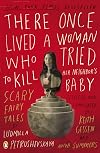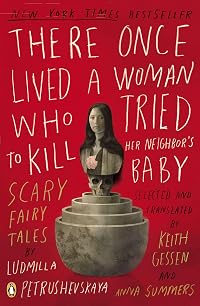
There Once Lived a Woman Who Tried to Kill Her Neighbor's Baby: Scary Fairy Tales
by Lyudmila Petrushevskaya
On This Page
Description
Masterworks of economy and acuity, these brief, trenchant tales by Russian author and playwright Petrushevskaya, selected from her wide-ranging but little translated oeuvre over the past 30 years, offer an enticement to English readers to seek out more of her writing. The tales explore the inexplicable workings of fate, the supernatural, grief and madness, and range from adroit, straightforward narratives to bleak fantasy. Frequently on display are the decrepit values of the Soviet system, show more as in The New Family Robinson, where a family tries to outsmart everyone by relocating to a ramshackle cabin in the country. Domestic problems get powerful and tender treatment; in My Love, a long-suffering wife and mother triumphs over her husband's desire for another woman. Darker material dominates the last section of the book, with tortuous stories, heavy symbolism and outright weirdness leading to strange and unexpected places. Petrushevskaya's bold, no-nonsense portrayals find fresh, arresting expression in this excellent translation. show lessTags
Recommendations
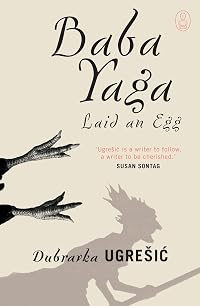
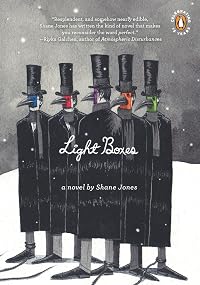
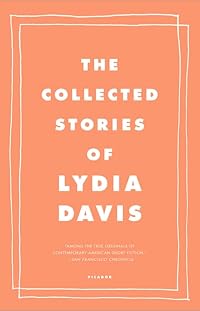
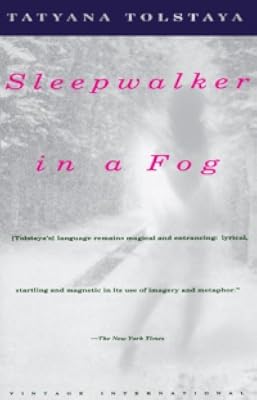

Member Recommendations

Member Reviews
Like those of a dark, bleak, surreal O. Henry, most of these stories end with a twist, but they aren’t exactly linear up to that point in any case. They are very dream-like, or nightmarish, starting at one point that’s soon forgotten after taking a 90-degree turn to somewhere unexpected, settings and plots suddenly metamorphosing into something else with the logic of dreams. Most of the stories could be said to be about how dismal life was in the Soviet Union: Characters full of paranoia, suspicion, and selfishness. Stories of betrayal, abandonment, poverty, illness, and death. Fortunately, the last section offers stories with some hope or redemption, but until then what a long, strange, grim trip it’s been.
Take equal parts Edgar Allan Poe and The Brothers Grimm, throw in a good helping of classic urban legends, and add a light dusting of the bleakness of One Day in the Life of Ivan Denisovich and you'll come up with something close to Ludmilla Petrushevskaya's There Once Lived a Woman Who Tried to Kill Her Neighbour's Baby.
The book is divided into four sections: "Songs of the Eastern Slavs", "Allegories", "Requims", and "Fairy Tales". I didn't much care for the stories in the first section, which seemed kind of abrupt and unfinished to me, but the stories of the remaining three sections were nearly all very good. Some of the standouts were "The New Robinson Crusoes", about a family trying to survive in the country, "The Miracle", wherein show more a mother considers how far she is willing to go to help her son, "The Father", concerning a man who finds his family in a most peculiar fashion, and "The Old Monk's Testament", a tale about a monk that I’m not quite sure how to summarize.
This is a strange collection that I won't read cover-to-cover again, but I wouldn't mind revisiting some of the stories in the future. show less
The book is divided into four sections: "Songs of the Eastern Slavs", "Allegories", "Requims", and "Fairy Tales". I didn't much care for the stories in the first section, which seemed kind of abrupt and unfinished to me, but the stories of the remaining three sections were nearly all very good. Some of the standouts were "The New Robinson Crusoes", about a family trying to survive in the country, "The Miracle", wherein show more a mother considers how far she is willing to go to help her son, "The Father", concerning a man who finds his family in a most peculiar fashion, and "The Old Monk's Testament", a tale about a monk that I’m not quite sure how to summarize.
This is a strange collection that I won't read cover-to-cover again, but I wouldn't mind revisiting some of the stories in the future. show less
I'd love to do theory on these stories. I really loved this book despite my prejudice against the short story. Petrushevskaya is as bleak and troubling as the title of this collection suggests, but since her work is so firmly rooted in soviet history and culture she never seemed gratuitously grim. I couldn't put this one down, and I really hope more of her work will be translated--if what comes next is as good she'll be an auto-read.
This was interesting to read so soon after reading "Feeling Very Strange: The Slipstream Anthology," since this collection's stories would have been right at home in that volume. "Slipstream," to anyone not familiar with the term, isn't the most readily defined of genres, but it generally describes stories that may combine elements of genres, or not fit any genre, and/or are simply "strange." Vague, I know. But that would pretty well describe the stories in "There Once Lived a Woman Who Tried to Kill Her Neighbor's Baby." Some of the tales in the volume are a lot like ghost stories, others seem like realistic fiction until the strangeness begins to creep in, and others contain elements of the paranormal and fantastic. In any case, I show more enjoyed this, and though many of the stories did have a similar "feel" to them, they didn't seem repetitive. Surreality mixed with pure reality, affording some insights no less true for their odd surroundings. show less
Ludmilla Petrushevskaya's There Once Lived a Woman Who Tried to Kill Her Neighbor's Baby was good but I liked her previous and equally tongue-tying title about a woman's sister's husband who hanged himself. I feel with this novel either I didn't get the symbolism, something got lost in translation, or both. There were some stories that I found really great, creepy but boring, or just boring.
The really great stories were Marilena's Secret and The Black Coat. Marilena's Secret was about two dancers named Maria and Lena whom are cursed by wizard to become an overweight person. I will always have sympathy for an overweight character who is being used and abused because they're overweight. The Black Coat was about some girl's eerie and show more existential descent into some very mean streets to escape her life. This was a doozy but very good. The perfect blend of symbolism, realism, and creepiness.
I would like for more of Petrushevskaya's work to be translated. She has a real knack for imagery for depicting the less than stellar life in Russia. She does have a handle on the Creep factor. show less
The really great stories were Marilena's Secret and The Black Coat. Marilena's Secret was about two dancers named Maria and Lena whom are cursed by wizard to become an overweight person. I will always have sympathy for an overweight character who is being used and abused because they're overweight. The Black Coat was about some girl's eerie and show more existential descent into some very mean streets to escape her life. This was a doozy but very good. The perfect blend of symbolism, realism, and creepiness.
I would like for more of Petrushevskaya's work to be translated. She has a real knack for imagery for depicting the less than stellar life in Russia. She does have a handle on the Creep factor. show less
Imagine Angela Carter’s dark, surrealistic stories are even darker than they are. Got it? Now, go even darker. Now you’ve got the tone of Petrushevskaya’s short tales. Set in Soviet era Russia, these stories explore extremes of poverty and despair. This is a world where there is never enough to eat, where if you have even a little bit you are at once a prime target for theft, where sons rob their mothers and neighbors plot murder.
These are surreal, magical tales. A number take place in that liminal place between life and death, and love can beat death. Some characters find themselves in strange places or even strange bodies. Are these events real, or are they illusions brought on by stress? Are the characters alive or dead? The show more author leaves us to decide for ourselves. Human relationships are more important than physical reality. Highly recommended. show less
These are surreal, magical tales. A number take place in that liminal place between life and death, and love can beat death. Some characters find themselves in strange places or even strange bodies. Are these events real, or are they illusions brought on by stress? Are the characters alive or dead? The show more author leaves us to decide for ourselves. Human relationships are more important than physical reality. Highly recommended. show less
I loved this book. The tales are beautifully strange, modern fairy tales with a slightly creepy edge. Immensely readable. Even when the subject of the story is horrifying, such as suicide or a woman who wants to kill her friend's baby, the author manages to make the tales wondrous and realistic at the same moment. Her stories take place in a world like our own, but far more magical, where the unusual is usual.
Members
- Recently Added By
Lists

75 Books Challenge Halloween Read "Official" Selections
71 works; 7 members

75 Books Challenge 2015 Halloween Read long list
45 works; 4 members

Speculative Fiction from around the World
610 works; 18 members

Books Read in 2016
4,666 works; 199 members

O, those Russians (as Boney M sang)
16 works; 1 member
Books Read in 2015
3,299 works; 129 members

Read These Too
458 works; 9 members

Russian Literature
184 works; 35 members

To Read (Prospector)
86 works; 1 member

Books Read in 2025
4,128 works; 98 members
Author Information

68+ Works 1,970 Members
Some Editions
Awards and Honors
Common Knowledge
- Alternate titles*
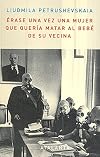
- Érase una vez una mujer que quería matar al bebé de su vecina
- Original publication date
- 2009; 2011 (English translation) (English translation)
- First words
- The Arm
During the war, a colonel received a letter from his wife. - Original language
- Russian
*Some information comes from Common Knowledge in other languages. Click "Edit" for more information.
Classifications
- Genres
- Fiction and Literature, General Fiction, Horror, Fantasy
- DDC/MDS
- 891.7344 — Literature & rhetoric Literatures of other languages East Indo-European and Celtic literatures Russian and East Slavic languages Russian fiction USSR 1917–1991 Late 20th century 1917–1991
- LCC
- PG3485 .E724 .A613 — Language and Literature Slavic languages and literatures. Baltic languages. Albanian language Slavic. Baltic. Albanian Russian literature Individual authors and works 1961-2000
- BISAC
Statistics
- Members
- 861
- Popularity
- 31,687
- Reviews
- 29
- Rating
- (3.63)
- Languages
- 9 — Danish, Dutch, English, Estonian, Italian, Norwegian (Bokmål), Portuguese (Portugal), Russian, Spanish
- Media
- Paper, Ebook
- ISBNs
- 13
- ASINs
- 3