On This Page
Description
The second Studer mystery. Set in an insane asylum, the director murdered. A European classic.Tags
Recommendations







































Member Recommendations



Member Reviews
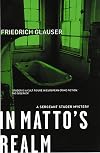
In Matto's Realm takes place in a psychiatric hospital. The deputy director has called in Studer because both the director and a convicted child killer are missing. Matto's realm is the realm of madness, which affects the staff as well as the patients, and everyone connected with them. A foreign voice on the radio says, "Two hundred thousand men and women are gathered here to cheer me. Two hundred thousand men and women have come as representatives of the whole nation, which is behind me. Foreign states dare to accuse me of breaking a treaty. When I seized power this land lay desolate, ravaged, sick...I have made it great, I have made others respect it.."
The deputy director tells Studer, "The man who was talking just now was lucky. Had show more he had a psychiatric examination at the beginning of his career, perhaps the world might look a little different today. As I said before, contact with the mentally ill is contagious. And there are people who are particularly susceptible - whole nations can be susceptible. I once said something in a lecture to which people objected. Certain so-called revolutions, I said are basically nothing more than the vengeance of psychopaths."
Glauser is writing in 1936 so the psychopath is Hitler, but the tone is familiar. It was the background - the politics, the corruption, Studer's sympathy for the poverty-stricken working people, the world of the mental asylum with its warders and its experiments on the patients - that held my interest, more so than the plot. In fact, the plot was confusing, as befits a crime in an asylum.
Well worth reading. show less
The deputy director tells Studer, "The man who was talking just now was lucky. Had show more he had a psychiatric examination at the beginning of his career, perhaps the world might look a little different today. As I said before, contact with the mentally ill is contagious. And there are people who are particularly susceptible - whole nations can be susceptible. I once said something in a lecture to which people objected. Certain so-called revolutions, I said are basically nothing more than the vengeance of psychopaths."
Glauser is writing in 1936 so the psychopath is Hitler, but the tone is familiar. It was the background - the politics, the corruption, Studer's sympathy for the poverty-stricken working people, the world of the mental asylum with its warders and its experiments on the patients - that held my interest, more so than the plot. In fact, the plot was confusing, as befits a crime in an asylum.
Well worth reading. show less
Pues mucho mejor de lo que me esperaba.
Es un caso policiaco muy raro, con un inspector que parece cualquier cosa menos un policía; un montón de personajes de un hospital psiquiátrico que dan la falsa sensación de ser una familia; un misterio detrás de otro y soluciones que van desenredando una madeja de interrelaciones humanas en las que casi nada es lo que parece.
Mucha reflexión filosófica detrás de cada paso que avanza la novela, mucha soledad de fondo en cada personaje. Y cuestionamientos constantes sobre el funcionamiento de la sociedad del momento, y de las relaciones sociales en general.
Es un caso policiaco muy raro, con un inspector que parece cualquier cosa menos un policía; un montón de personajes de un hospital psiquiátrico que dan la falsa sensación de ser una familia; un misterio detrás de otro y soluciones que van desenredando una madeja de interrelaciones humanas en las que casi nada es lo que parece.
Mucha reflexión filosófica detrás de cada paso que avanza la novela, mucha soledad de fondo en cada personaje. Y cuestionamientos constantes sobre el funcionamiento de la sociedad del momento, y de las relaciones sociales en general.
Friedrich Glauser is a German writer who spent much of his life in psychiatric hospitals before dying at the age of 42. Glauser is also a classic crime novelist and Germany's crime fiction award is called the Glauser Prize.
In Matto's Realm is part of a series involving Detective Studer, this installment taking place in a Swiss psychiatric hospital. The director and a patient have gone missing and Studer, who has been demoted and disgraced, has been sent there to discretely make inquiries. The acting director has requested him personally. What Studer walks into is a complicated web of close, but not always friendly, relationships, with each person hiding something, none more than the enigmatic acting director, a psychiatrist who show more alternates between seemingly sincere friendship and a smiling mask.
First published in 1936, In Matto's Realm shows the living and working conditions in a supposedly modern institution. Glauser also says quite a lot about the difficulty the ordinary working man had in just making ends meet, and how that was often an insurmountable task. He has great sympathy for ordinary men broken by circumstance. In this, the book is interesting and an important memory of the past. On the other hand, the mystery itself was convoluted and required a lengthy explanation at the end of the book, which is where most of the action occurs.
This is a worthwhile book if you're interested in Europe during the interwar years or in the history of the German mystery novel. Nonetheless, as a crime novel it falls short, although there are a few intriguing characters and Glauser writes with real empathy for the people at the bottom of society. show less
In Matto's Realm is part of a series involving Detective Studer, this installment taking place in a Swiss psychiatric hospital. The director and a patient have gone missing and Studer, who has been demoted and disgraced, has been sent there to discretely make inquiries. The acting director has requested him personally. What Studer walks into is a complicated web of close, but not always friendly, relationships, with each person hiding something, none more than the enigmatic acting director, a psychiatrist who show more alternates between seemingly sincere friendship and a smiling mask.
First published in 1936, In Matto's Realm shows the living and working conditions in a supposedly modern institution. Glauser also says quite a lot about the difficulty the ordinary working man had in just making ends meet, and how that was often an insurmountable task. He has great sympathy for ordinary men broken by circumstance. In this, the book is interesting and an important memory of the past. On the other hand, the mystery itself was convoluted and required a lengthy explanation at the end of the book, which is where most of the action occurs.
This is a worthwhile book if you're interested in Europe during the interwar years or in the history of the German mystery novel. Nonetheless, as a crime novel it falls short, although there are a few intriguing characters and Glauser writes with real empathy for the people at the bottom of society. show less
Brought out by Friedrich Glauser in Germany in 1936, “In Matto’s Realm” contains the story of Herr Studer, at one time a chief inspector, but now simply a detective sergeant, brought in to discover what happened to the missing director of an insane asylum. Told at a time when modernizing changes were coming to homes where the mentally ill and incapacitated were kept, this book straddles eras, and brings us a very human, flawed hero.
“Matto” is the spirit of mayhem, or madness, as imagined by one of the inmates of the institution. This inmate ascribes to “Matto” multi-colored webs of war and fate and red bouncing balls of revolution in a malicious global campaign. Given the events here, the inmate is surely onto something. show more Detective Sergeant Studer has been called in by the rather un-forthcoming acting director of a Swiss mental institution when the Director goes missing. The mystery has its requisite violence, hidden motives, and suspicious characters, but this is clearly the story of Studer and Laduner, the new director-presumptive. They joust over psychology and motivation, over how to treat people including each other, over the new ideas of “analysis” and “therapy.” Though the jousting is fairly low-key for such high stakes – three people die during the story. They keep secrets from each other, alternately support and undermine each other, and certain misunderstandings last beyond the end of the book.
Herr Glauser’s meat consists of his treatment of Studer as the détective manqué: Laduner has kept so many secrets that he makes it impossible for Studer to do his job. His understanding of how the minds of schizophrenics and neurotics grows, but he does become compelled eventually, by the mythos of Matto, the demon who makes all consciousness and life miserable. At one point, Dr. Laduner obliquely supports the demon’s existence when he says the success of radical political movements is really the revenge of the psychotic.
The real characters of “In Matto’s Realm” get off fairly easy, Studer included, since one young man dies virtually in custody. I didn’t quite get the neat conclusions we like to see in murder mysteries, although that’s probably partly me and partly the translation (by Mike Mitchell). It’s a well-paced mystery, with a touch of modern forensics; its treatment of psychological disorders seems logical and straightforward; but its conclusion left me non-plussed. Does Detective Studer accept or even believe Dr. Laduner’s explanation of events? Is the doctor ever called to account for obstruction? Does the doctor ever come to realize the true service Studer has rendered him? I feel tepid about this book but respectful of its author, a onetime inmate of mental institutions himself.
http://bassoprofundo1.blogspot.com/2011/05/in-mattos-realm-by-friedrich-glauser.... show less
“Matto” is the spirit of mayhem, or madness, as imagined by one of the inmates of the institution. This inmate ascribes to “Matto” multi-colored webs of war and fate and red bouncing balls of revolution in a malicious global campaign. Given the events here, the inmate is surely onto something. show more Detective Sergeant Studer has been called in by the rather un-forthcoming acting director of a Swiss mental institution when the Director goes missing. The mystery has its requisite violence, hidden motives, and suspicious characters, but this is clearly the story of Studer and Laduner, the new director-presumptive. They joust over psychology and motivation, over how to treat people including each other, over the new ideas of “analysis” and “therapy.” Though the jousting is fairly low-key for such high stakes – three people die during the story. They keep secrets from each other, alternately support and undermine each other, and certain misunderstandings last beyond the end of the book.
Herr Glauser’s meat consists of his treatment of Studer as the détective manqué: Laduner has kept so many secrets that he makes it impossible for Studer to do his job. His understanding of how the minds of schizophrenics and neurotics grows, but he does become compelled eventually, by the mythos of Matto, the demon who makes all consciousness and life miserable. At one point, Dr. Laduner obliquely supports the demon’s existence when he says the success of radical political movements is really the revenge of the psychotic.
The real characters of “In Matto’s Realm” get off fairly easy, Studer included, since one young man dies virtually in custody. I didn’t quite get the neat conclusions we like to see in murder mysteries, although that’s probably partly me and partly the translation (by Mike Mitchell). It’s a well-paced mystery, with a touch of modern forensics; its treatment of psychological disorders seems logical and straightforward; but its conclusion left me non-plussed. Does Detective Studer accept or even believe Dr. Laduner’s explanation of events? Is the doctor ever called to account for obstruction? Does the doctor ever come to realize the true service Studer has rendered him? I feel tepid about this book but respectful of its author, a onetime inmate of mental institutions himself.
http://bassoprofundo1.blogspot.com/2011/05/in-mattos-realm-by-friedrich-glauser.... show less
Questo romanzo “giallo” di Glauser è quello che amo di più e a parer mio il più esaustivo nell’elaborare quelle tematiche che tanto erano importanti per lui perché erano parte del suo vivere e sentire:
la società svizzera e la sua ipocrisia;
la critica alle istituzioni, ospedali psichiatrici, centri assistenziali, riformatori, (tutti da lui lungamente frequentati), il governo e i suoi rappresentanti;
la malattia mentale;
Essendo ambientato in un ospedale psichiatrico la critica si accentra su tale istituzione. Sui trattamenti irrispettosi della dignità umana praticati dal vecchio direttore dell’istituto, sulla mancanza di conoscenze e formazione di coloro che vi lavorano, sulle terapie applicate…
Nel romanzo spicca la figura show more del medico psichiatra Laduner, è lui che chiama Studer, l’investigatore, al fine di indagare sulla fuga di un paziente e sulla scomparsa del direttore dell’ospedale.
Laduner è della scuola moderna della psichiatria, pratica anche la psicanalisi con un giovane paziente, ha portato colori e libertà agli ammalati, esige il rispetto della dignità dei pazienti e della loro malattia.
Glauser con un anticipo sui tempi impressionanti, (ricordo che questo romanzo è stato scritto nel 1936! I primi psicofarmaci, la contenzione chimica, Largactil e Nozinam arriveranno quasi 20 anni dopo) tramite il personaggio Laduner veicola le sue opinioni rispetto alla:
“- schizofrenia…- mormorò Studer. – Cosa significa?
“… Significa spaccatura, scissione, - disse Laduner.-
Una questione geologica. Pensi a una montagna, tranquilla, compatta, si erge sulla pianura, respira le nuvole e prepara la pioggia, si copre d’erba e di alberi carichi di germogli.
Ed ecco un terremoto. Una crepa attraversa la montagna, si spalanca un abisso, è spaccata in due parti, non sembra più tranquilla, compatta, è orrenda; se ne vede l’interno, sì, l’interno si è rovesciato all’esterno…
Pensi a una catastrofe del genere nella mente… E come un geologo parla con precisione delle cause che hanno scisso una montagna, così noi parliamo con precisione dei meccanismi psichici che hanno scisso una mente. Ma noi siamo cauti, caro Studer, e quanto dico “noi” penso a quei pochi del nostro mestiere che non credono di poter risolvere l’enigma della psiche umana con qualche infelice mistione linguistica di greco e latino…”
(pg. 104-105 op.cit.).
Rispetto a coloro che lavorano con i matti e a quelli “fuori” quelli “normali”:
“- Ha riflettuto sul fatto che non si può avere a che fare troppo tempo coi matti restando illesi, Studer? Che il contatto è contagioso? A volte mi sono chiesto se non sia vero il contrario: che nei manicomi vanno a lavorare come medici, come infermieri solo quelli che hanno già una rotella fuori posto, per usare un’espressione popolare. Con la differenza che chi avverte l’impulso di entrare nel regno di Matto sa di avere in sé qualcosa che non va, a livello inconscio, io credo, eppure lo sa.
E’ una fuga… Gli altri, fuori, a volte sono quelli che hanno più rotelle fuori posto, ma non lo sanno, neppure a livello inconscio…”. (pg. 207-08 op.cit.).
Uno psichiatra “illuminato”, umano e rispettoso del malato e della malattia, chissà se Glauser ebbe la fortuna di incontrarne uno così nella realtà dei suoi giorni manicomiali?.
E il giallo si dipana, quasi in secondo piano, e pare solo come pretesto, necessario alle considerazioni di Glauser sul "Regno di Matto" ed i suoi abitanti.. show less
la società svizzera e la sua ipocrisia;
la critica alle istituzioni, ospedali psichiatrici, centri assistenziali, riformatori, (tutti da lui lungamente frequentati), il governo e i suoi rappresentanti;
la malattia mentale;
Essendo ambientato in un ospedale psichiatrico la critica si accentra su tale istituzione. Sui trattamenti irrispettosi della dignità umana praticati dal vecchio direttore dell’istituto, sulla mancanza di conoscenze e formazione di coloro che vi lavorano, sulle terapie applicate…
Nel romanzo spicca la figura show more del medico psichiatra Laduner, è lui che chiama Studer, l’investigatore, al fine di indagare sulla fuga di un paziente e sulla scomparsa del direttore dell’ospedale.
Laduner è della scuola moderna della psichiatria, pratica anche la psicanalisi con un giovane paziente, ha portato colori e libertà agli ammalati, esige il rispetto della dignità dei pazienti e della loro malattia.
Glauser con un anticipo sui tempi impressionanti, (ricordo che questo romanzo è stato scritto nel 1936! I primi psicofarmaci, la contenzione chimica, Largactil e Nozinam arriveranno quasi 20 anni dopo) tramite il personaggio Laduner veicola le sue opinioni rispetto alla:
“- schizofrenia…- mormorò Studer. – Cosa significa?
“… Significa spaccatura, scissione, - disse Laduner.-
Una questione geologica. Pensi a una montagna, tranquilla, compatta, si erge sulla pianura, respira le nuvole e prepara la pioggia, si copre d’erba e di alberi carichi di germogli.
Ed ecco un terremoto. Una crepa attraversa la montagna, si spalanca un abisso, è spaccata in due parti, non sembra più tranquilla, compatta, è orrenda; se ne vede l’interno, sì, l’interno si è rovesciato all’esterno…
Pensi a una catastrofe del genere nella mente… E come un geologo parla con precisione delle cause che hanno scisso una montagna, così noi parliamo con precisione dei meccanismi psichici che hanno scisso una mente. Ma noi siamo cauti, caro Studer, e quanto dico “noi” penso a quei pochi del nostro mestiere che non credono di poter risolvere l’enigma della psiche umana con qualche infelice mistione linguistica di greco e latino…”
(pg. 104-105 op.cit.).
Rispetto a coloro che lavorano con i matti e a quelli “fuori” quelli “normali”:
“- Ha riflettuto sul fatto che non si può avere a che fare troppo tempo coi matti restando illesi, Studer? Che il contatto è contagioso? A volte mi sono chiesto se non sia vero il contrario: che nei manicomi vanno a lavorare come medici, come infermieri solo quelli che hanno già una rotella fuori posto, per usare un’espressione popolare. Con la differenza che chi avverte l’impulso di entrare nel regno di Matto sa di avere in sé qualcosa che non va, a livello inconscio, io credo, eppure lo sa.
E’ una fuga… Gli altri, fuori, a volte sono quelli che hanno più rotelle fuori posto, ma non lo sanno, neppure a livello inconscio…”. (pg. 207-08 op.cit.).
Uno psichiatra “illuminato”, umano e rispettoso del malato e della malattia, chissà se Glauser ebbe la fortuna di incontrarne uno così nella realtà dei suoi giorni manicomiali?.
E il giallo si dipana, quasi in secondo piano, e pare solo come pretesto, necessario alle considerazioni di Glauser sul "Regno di Matto" ed i suoi abitanti.. show less
Nov 8, 2008Italian
L'opinione di Friedrich Glauser sul romanzo poliziesco era di un " mezzo per diffondere idee ragionevoli". Quali siano nel "Regno di Matto" le idee ragionevoli pare meno sfumato, meno consegnato a un'atmosfera generale, che in altri racconti dello scrittore svizzero. Forse per il premere dei ricordi personali (Glauser fu internato in manicomio, ebbe esperienza di riformatori, conobbe il tormento di un padre burocrate e tiranno), forse per l'assedio, in quegli anni, della follia collettiva (nel '43 questo romanzo fu censurato di ogni riferimento a Hitler e il nazismo), di tali idee ne sono esplicite alcune: la pazzia come condizione più complessa della mera anormalità e amoralità, la psicoanalisi come terapia in sé inquietante e show more eversiva, la convinzione di una follia di massa accanto a quella individuale. E sono idee la cui ragione è oggi più o meno diffusa, diversamente che ai tempi di Glauser. Ma il mezzo per diffonderle, questo racconto, è audace e enigmatico già nella scelta dell'intreccio, non ortodossa nel campo del racconto poliziesco. Il sergente Studer indaga su delitti avvenuti nel regno di Matto, dove cioè per assioma giuridico vige l'incapacità d'intendere e volere, cause e moventi sono ridotti a questa incapacità e il mistero è apparentemente assorbito: "dove cessa il regno di Matto, Studer?".
Friedrich Glauser, scrittore austriaco (Wien 1896-Nervi, Genova, 1938). Ebbe una vita turbolenta, passando tre anni in riformatorio dopo altrettanti anni di ginnasio a Vienna. Si iscrisse poi a un collegio di Ginevra per finire gli studi, ma venne espulso. Si diplomò a Zurigo, fuggì da casa e dal 1921 al 1923
militò nella Legione Straniera. Come morfinomane venne più volte arrestato e internato. Prosatore ispirato al Maigret di G. Simenon, la sua produzione principale si lega alla figura del Wachtmeister Studer(1936; Il sergente Studer), presente anche nei successivi romanzi, la maggior parte dei quali postuma: Matto regiert (1936; Il regno di Matto), Die Fieberkurve(1938; Il
grafico della febbre), Der Chinese(1939; Il cinese), Krock ) Co(1941). Un'opera che si distanzia un po' dalle altre, pur mantenendo le stesse caratteristiche di mistero e indagine, è Der Tee der drei alten Damen(1940; Il tè delle tre vecchie signore), dove a elementi presi dal mondo del paranormale si mescolano cenni autobiografici, quale l'ambientazione ginevrina e il morfinismo di uno dei personaggi. Nel 1976 è uscito il libro di ricordi Dada, Ascona, cui ha fatto seguito nel 1980 l'autobiografia Morphium(Morfina). show less
Friedrich Glauser, scrittore austriaco (Wien 1896-Nervi, Genova, 1938). Ebbe una vita turbolenta, passando tre anni in riformatorio dopo altrettanti anni di ginnasio a Vienna. Si iscrisse poi a un collegio di Ginevra per finire gli studi, ma venne espulso. Si diplomò a Zurigo, fuggì da casa e dal 1921 al 1923
militò nella Legione Straniera. Come morfinomane venne più volte arrestato e internato. Prosatore ispirato al Maigret di G. Simenon, la sua produzione principale si lega alla figura del Wachtmeister Studer(1936; Il sergente Studer), presente anche nei successivi romanzi, la maggior parte dei quali postuma: Matto regiert (1936; Il regno di Matto), Die Fieberkurve(1938; Il
grafico della febbre), Der Chinese(1939; Il cinese), Krock ) Co(1941). Un'opera che si distanzia un po' dalle altre, pur mantenendo le stesse caratteristiche di mistero e indagine, è Der Tee der drei alten Damen(1940; Il tè delle tre vecchie signore), dove a elementi presi dal mondo del paranormale si mescolano cenni autobiografici, quale l'ambientazione ginevrina e il morfinismo di uno dei personaggi. Nel 1976 è uscito il libro di ricordi Dada, Ascona, cui ha fatto seguito nel 1980 l'autobiografia Morphium(Morfina). show less
Mar 10, 2006Italian
Ratings
Members
- Recently Added By
Lists

Cheesy pleasures and odd lots!
119 works; 7 members

Global Mysteries
90 works; 6 members

CH-Autoren (Swiss Authors)
265 works; 9 members

Die besten Werke der deutschsprachigen Erzählliteratur von 1924 bis 2024
100 works; 2 members
Author Information

76+ Works 1,415 Members
Friedrich Glauser is a legendary figure in Continental crime writing. He was a morphine and opium addict much of his life and began writing Thumbprint while at the Waldau asylum
Awards and Honors
Series

Work Relationships
Common Knowledge
- Canonical title
- In Matto's Realm
- Original title
- Matto regiert
- Original publication date
- 1936 (original German) (original German); 2005 (English: Mitchell) (English: Mitchell)
- People/Characters*
- Wachtmeister Studer; Ernst Laduner; Peter Pieterlen
- Important places*
- Anstalt Randlingen, Bern, Bern, Schweiz
- Related movies*
- Matto regiert (1947 | IMDb); Matto regiert (1980 | IMDb); Studers erster Fall (2001 | IMDb)
- Epigraph*
- … und daher können Dichter wohl Romane über die Gespräche schreiben, die die Insassen geschlossener Anstalten miteinander führen, während die Reden der Beschäftigten eher dazu da sind, Gedanken zu verbergen und Lebens... (show all)zwecke zu fördern … (Arnold Zweig, Erziehung von Verdun)
- First words*
- Da wurde man am Morgen um fünf Uhr, zu nachtschlafender Zeit also, durch das Schrillen des Telephons geweckt.
- Last words*
- (Click to show. Warning: May contain spoilers.)Dann war es sehr still im Zimmer.
- Original language
- German
*Some information comes from Common Knowledge in other languages. Click "Edit" for more information.
Classifications
Statistics
- Members
- 243
- Popularity
- 133,866
- Reviews
- 6
- Rating
- (3.99)
- Languages
- 9 — Catalan, Czech, Danish, English, Finnish, German, Italian, Polish, Spanish
- Media
- Paper, Audiobook, Ebook
- ISBNs
- 24
- ASINs
- 7