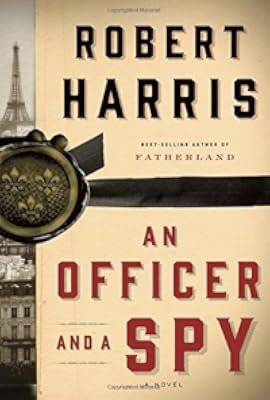
An Officer and a Spy
by Robert Harris
On This Page
Description
"Robert Harris returns to the thrilling historical fiction he has so brilliantly made his own. This is the story of the infamous Dreyfus affair told as a chillingly dark, hard-edged novel of conspiracy and espionage. Paris in 1895. Alfred Dreyfus, a young Jewish officer, has just been convicted of treason, sentenced to life imprisonment at Devil's Island, and stripped of his rank in front of a baying crowd of twenty-thousand. Among the witnesses to his humiliation is Georges Picquart, the show more ambitious, intellectual, recently promoted head of the counterespionage agency that "proved" Dreyfus had passed secrets to the Germans. At first, Picquart firmly believes in Dreyfus's guilt. But it is not long after Dreyfus is delivered to his desolate prison that Picquart stumbles on information that leads him to suspect that there is still a spy at large in the French military. As evidence of the most malignant deceit mounts and spirals inexorably toward the uppermost levels of government, Picquart is compelled to question not only the case against Dreyfus but also his most deeply held beliefs about his country, and about himself. Bringing to life the scandal that mesmerized the world at the turn of the twentieth century, Robert Harris tells a tale of uncanny timeliness--a witch hunt, secret tribunals, out-of-control intelligence agencies, the fate of a whistle-blower--richly dramatized with the singular storytelling mastery that has marked all of his internationally best-selling novels"-- show lessTags
Recommendations
















Member Recommendations
anonymous user Tuchman devotes a section of her book to l'affaire Dreyfus.


Member Reviews
This past week+ I have been carefully reading (and sometimes re-reading whole sections) this novel about "The Dreyfus Affair". Let me confess here and now that prior to opening the book I had zero knowledge of the Affair and had only heard the term as a historical reference to some scandal in France before the first world war. An Officer and a Spy is one of those rare historical novels that behaves like a time machine with a conscience. It doesn’t just recreate the Dreyfus Affair, it invites you to live inside it.
The author tells us that although this is a fictional novel, it is also an entirely true story. It is very rare for me to become entirely, I'm not sure what words describe it, but to become immersed in a time and place I was show more unfamiliar with - Paris and individuals from about 1894 and some years that follow. I have heard of Devil's Island, probably from the film Papillon. Dreyfus is sent there. I vaguely thought it was in the South Atlantic, but looking it up as I did more than a few things while reading this, I discovered it to be just off the coast of South America, French Guiana.
The story is dense with military procedure, coded memos, and the slow drip of revelation. Harris trusts the reader to keep up, but he also rewards that effort by gradually tightening the screws. The result is immersion that feels earned rather than handed over.
One of the novel’s most effective choices is its focus on Georges Picquart, the officer who uncovers the miscarriage of justice. Through him, the book becomes a study of conscience under pressure. Picquart isn’t initially heroic; in fact, he shares some of the prejudices of his milieu. Watching him evolve—slowly, reluctantly—makes the moral stakes feel real rather than staged.
If there’s a critique to make, some readers (myself included) will find the pacing heavy in the middle sections, where documents and counter-documents pile up. But even that density mirrors the suffocating machinery Picquart is trying to navigate.
There is one very brief moment when I wish I could have travelled back in time for ten minutes to 1890s Paris, to the scene: "Duty done, I ran out into the rue Saint-Dominique and managed, by the skin of my teeth, to hail a taxi. By eight-thirty I was slipping into my seat beside Blanche de Comminges at the Salle d'Harcourt. I looked around for Debussy but couldn't see him. The conductor tapped his baton, the flautist raised his instrument to his lips, and those first few exquisite, plangent bars - which some say are the birth of modern music - washed Dreyfus clean from my mind."
That would be "Prélude à l'Après-midi d'un faune"
This is a political scandal and tragedy that is brought to life. I am very glad to have read this. show less
The author tells us that although this is a fictional novel, it is also an entirely true story. It is very rare for me to become entirely, I'm not sure what words describe it, but to become immersed in a time and place I was show more unfamiliar with - Paris and individuals from about 1894 and some years that follow. I have heard of Devil's Island, probably from the film Papillon. Dreyfus is sent there. I vaguely thought it was in the South Atlantic, but looking it up as I did more than a few things while reading this, I discovered it to be just off the coast of South America, French Guiana.
The story is dense with military procedure, coded memos, and the slow drip of revelation. Harris trusts the reader to keep up, but he also rewards that effort by gradually tightening the screws. The result is immersion that feels earned rather than handed over.
One of the novel’s most effective choices is its focus on Georges Picquart, the officer who uncovers the miscarriage of justice. Through him, the book becomes a study of conscience under pressure. Picquart isn’t initially heroic; in fact, he shares some of the prejudices of his milieu. Watching him evolve—slowly, reluctantly—makes the moral stakes feel real rather than staged.
If there’s a critique to make, some readers (myself included) will find the pacing heavy in the middle sections, where documents and counter-documents pile up. But even that density mirrors the suffocating machinery Picquart is trying to navigate.
There is one very brief moment when I wish I could have travelled back in time for ten minutes to 1890s Paris, to the scene: "Duty done, I ran out into the rue Saint-Dominique and managed, by the skin of my teeth, to hail a taxi. By eight-thirty I was slipping into my seat beside Blanche de Comminges at the Salle d'Harcourt. I looked around for Debussy but couldn't see him. The conductor tapped his baton, the flautist raised his instrument to his lips, and those first few exquisite, plangent bars - which some say are the birth of modern music - washed Dreyfus clean from my mind."
That would be "Prélude à l'Après-midi d'un faune"
This is a political scandal and tragedy that is brought to life. I am very glad to have read this. show less
An Officer and a Spy is an outstanding historical fiction/ thriller. It provides a historically accurate account of the Dreyfus Affair, the espionage case that ripped apart fin de siecle France. Author Robert Harris selected Lieutenant Colonel George Piquart as his protagonist and chronicled the events which led to his altering his belief in Alfred Dreyfus' guilt.
On October 15, 1894, 35-year-old Alfred Dreyfus, an artillery officer in the French army, was arrested for high treason, spying, and passing on classified information to the Germans. He was tried and convicted on very flimsy evidence and sentenced to life in solitary confinement on Devil's Island, a remote outpost off the coast of Venezuela.
Dreyfus was Jewish and the first show more "outsider" to rise in the ranks of the French military. According to New York Times reviewer Louis Begley, the military had just introduced merit-based appointments a few years earlier, and many of the anti-semitic general staff were less than pleased to have Dreyfus among them. So when evidence emerged that there was a traitor passing secrets to the Germans, they suspected Dreyfus.
The top generals saw Picquart as a good old boy who shared their prejudices. He initially believed in Dreyfus's guilt and received a promotion to the head of army counter-intelligence as a reward for his role in Dreyfus's court-martial. Ironically, this promotion placed him in the position to learn that the wrong man had been tried and convicted. Yet, despite his prejudices, Piquart was an honorable man who felt that it was his duty to free the innocent Dreyfus and put the real spy Officer Esterhazy in prison.
Robert Harris is a master storyteller. He gradually builds tension and subtly shows Piquart's growing disillusionment, adding evidence and depicting the harrowing events that led the military command to harass and prosecute Piquart and defend the honor of the real spy.
Harris captures the polarization within French society and the rabid anti-Semitism of those who clung to their belief in Dreyfus's guilt, despite all evidence to the contrary.
An Officer and a Spy takes the reader on a suspenseful roller coaster ride that is all the more powerful because it is true. I highly recommend it. show less
On October 15, 1894, 35-year-old Alfred Dreyfus, an artillery officer in the French army, was arrested for high treason, spying, and passing on classified information to the Germans. He was tried and convicted on very flimsy evidence and sentenced to life in solitary confinement on Devil's Island, a remote outpost off the coast of Venezuela.
Dreyfus was Jewish and the first show more "outsider" to rise in the ranks of the French military. According to New York Times reviewer Louis Begley, the military had just introduced merit-based appointments a few years earlier, and many of the anti-semitic general staff were less than pleased to have Dreyfus among them. So when evidence emerged that there was a traitor passing secrets to the Germans, they suspected Dreyfus.
The top generals saw Picquart as a good old boy who shared their prejudices. He initially believed in Dreyfus's guilt and received a promotion to the head of army counter-intelligence as a reward for his role in Dreyfus's court-martial. Ironically, this promotion placed him in the position to learn that the wrong man had been tried and convicted. Yet, despite his prejudices, Piquart was an honorable man who felt that it was his duty to free the innocent Dreyfus and put the real spy Officer Esterhazy in prison.
Robert Harris is a master storyteller. He gradually builds tension and subtly shows Piquart's growing disillusionment, adding evidence and depicting the harrowing events that led the military command to harass and prosecute Piquart and defend the honor of the real spy.
Harris captures the polarization within French society and the rabid anti-Semitism of those who clung to their belief in Dreyfus's guilt, despite all evidence to the contrary.
An Officer and a Spy takes the reader on a suspenseful roller coaster ride that is all the more powerful because it is true. I highly recommend it. show less
This is a superb novel, in my view the author's best since Fatherland. It is a lightly fictionalised story of the notorious affaire Dreyfus, when Alfred Dreyfus, a captain in the French army in 1894, was falsely convicted of passing military secrets to Germany, as a result of which he was sentenced to the notorious Devil's Island prison off the coast of south America. The fact of Dreyfus being Jewish enflamed the passions of anti-semitism rampant in France (and elsewhere) at the time and prevented any chance of the truth being recognised for years. The novel centres around the efforts by Colonel Picquart, the head of the misleadingly named Statistics Section (but really an intelligence unit), to uncover the flimsiness of the evidence show more against Dreyfus and uncover the real culprit, Major Esterhazy. In doing so, Picquart has to defy the attempts not only by his superior Generals and the Minister of War, but also by his brother officers and junior staff, to cover up the miscarriage of justice, including by forging evidence against Dreyfus. In many ways the whole tragic saga is a textbook example of how an Establishment, in this case the French Army, can close ranks, not in this case to protect an individual, but in order to ensure that its reputation is not tarnished by having to admit that Dreyfus was innocent. In the end, of course, the exposure of the tragically farcical lengths to which the French Army has gone, backed by many politicians and a hysterical anti-semitic press campaign, subjects leading generals and the Army's own reputation to far greater ignominy than would have been the case otherwise. Dreyfus was pardoned in 1900 and fully exonerated in 1906, but the case sharply divided French society, and it is arguable that the ease with which anti-semitism revived itself in France in the late 1930s and under the Occupation owed a lot to the desire of the extreme anti-Dreyfusards to exact revenge. A great page turning novel, almost the only fictionalisations being the inclusion of a romantic interest for Picquart and the inevitable telescoping of some events and minor characters. show less
An Officer and a Spy begins in1896 shortly after Captain Alfred Dreyfus’ first Court Martial when he is publicly stripped of his rank in front of a huge crowd among shouts of ‘Death to the Jews!’ Dreyfus had first been arrested in 1894, accused of passing documents to the Germans. The evidence given at the Court martial seemed flimsy until secret documents were produced. These documents , which were purported to prove beyond a shadow of a doubt Dreyfus’ guilt, were not shown to the Defence. After his humiliation, he was sent to Devil’s Island where he will be kept in solitary confinement, where he is not allowed to speak to anyone including his guards.
The story is told in the first person by another officer, Georges Picquart show more and this is as much his story as Dreyfus'. Picquart played a minor role carrying news of Dreyfus’ public humiliation to the Minister of War. Although convinced of Dreyfus’ guilt, Picquart is disturbed by the fact that, even under the most humiliating of circumstances, Dreyfus continues to declare his innocence.
When Picquart is made head of the Statistical Section of the General Staff, the section responsible for Dreyfus’ arrest, he discovers evidence that Dreyfus was innocent and uncovers the officer who is actually responsible for the crimes for which Dreyfus has been convicted. When Picquart relays this evidence to those in charge, he is sent to Tunisia and even given a mission which would most likely end in his death. When this fails, he is imprisoned and is even charged with falsifying the evidence against the real spy. The country has been divided by the Dreyfus case and now with the Picquart’s evidence, Dreyfus’ supporters feel it is time to speak out. This includes Emile Zola’s famous editorial, J’Accuse in 1898.
Eventually, the military was forced to bring Dreyfus back for a second court martial where he is again found guilty. Then he was tried by a civilian court and, although they also find him guilty, he was given a pardon. He had spent four years on Devil’s Island. The Supreme Court of France would finally declare him innocent in 1906.
An Officer and a Spy is based on the Dreyfus Affair but it is fiction and, as such, as author Robert Harris points out some things have been changed, for example, Picquart never wrote a secret account of the Dreyfus Affair, and, of course, the dialogue is all down to Harris. However, he has maintained all the essential facts of the case. It is hard to imagine how an author can turn what is probably the most infamous miscarriage of justice in history into one heck of a good thriller. After all, even if we don’t know all the details, we all pretty much know how it will turn out. Yet, somehow, with this novel, author Robert Harris has done just that. show less
The story is told in the first person by another officer, Georges Picquart show more and this is as much his story as Dreyfus'. Picquart played a minor role carrying news of Dreyfus’ public humiliation to the Minister of War. Although convinced of Dreyfus’ guilt, Picquart is disturbed by the fact that, even under the most humiliating of circumstances, Dreyfus continues to declare his innocence.
When Picquart is made head of the Statistical Section of the General Staff, the section responsible for Dreyfus’ arrest, he discovers evidence that Dreyfus was innocent and uncovers the officer who is actually responsible for the crimes for which Dreyfus has been convicted. When Picquart relays this evidence to those in charge, he is sent to Tunisia and even given a mission which would most likely end in his death. When this fails, he is imprisoned and is even charged with falsifying the evidence against the real spy. The country has been divided by the Dreyfus case and now with the Picquart’s evidence, Dreyfus’ supporters feel it is time to speak out. This includes Emile Zola’s famous editorial, J’Accuse in 1898.
Eventually, the military was forced to bring Dreyfus back for a second court martial where he is again found guilty. Then he was tried by a civilian court and, although they also find him guilty, he was given a pardon. He had spent four years on Devil’s Island. The Supreme Court of France would finally declare him innocent in 1906.
An Officer and a Spy is based on the Dreyfus Affair but it is fiction and, as such, as author Robert Harris points out some things have been changed, for example, Picquart never wrote a secret account of the Dreyfus Affair, and, of course, the dialogue is all down to Harris. However, he has maintained all the essential facts of the case. It is hard to imagine how an author can turn what is probably the most infamous miscarriage of justice in history into one heck of a good thriller. After all, even if we don’t know all the details, we all pretty much know how it will turn out. Yet, somehow, with this novel, author Robert Harris has done just that. show less
This is fine historical fiction on the Dreyfus affair. Harris successfully evokes turn-of-the-century France and the elite military class that existed then. The first person narration lends a thriller flavor to the tale, in spite of this being a very well documented historical event. The primary focus of the novel is not Dreyfus, but Picquart. This is important because it explores some key whistleblower questions —unfortunately still unresolved today. Are these people heroes or traitors? What type of person does it take to defy immense political power and social isolation? Are there ever moments of doubt? Is redemption possible? How important are supporters? Harris uses the intricate details surrounding the Dreyfus affair to expound show more on all of these issues in his excellent novel. Some reviewers felt that this approach limited Harris’ ability to describe the important issues of the time that impacted the affair, but that is ground that has been heavily trod. Instead, if one views this novel as a portrait of one whistleblower, it it takes on considerable contemporary significance because it resonates well with today’s headlines and a tendency to want to “kill the messenger” that seems to be quite prevalent in the world today. show less
I knew very little about the infamous Dreyfus Affair until recently when I was reminded of it while reading Margaret MacMillan’s new WWI history The War That Ended Peace: The Road to 1914. Fortuitously, I heard rumblings of a great new spy novel by Robert Harris and picked up An Officer and a Spy a few days ago, not actually realizing that Harris had published a fictional retelling of the notorious French military incident. And what a magnificent retelling it is.
Alfred Dreyfus was a Jewish officer in the French Army in 1894 when he is arrested and charged with treason for delivering French military secrets to the enemy, Germany. In spite of scant evidence, he is convicted and sentenced to life in prison, to be served on the French show more penal colony, Devil’s Island, off the coast of Guiana. Harris’ chilling portrayal of an Army and justice system run amok had me up until the wee hours, devouring his suspenseful narrative that screeched and halted through time at the behest of both fictional and real historical characters.
As the story opens, the narrator, Col. Georges Picquart, has just witnessed Dreyfus being stripped of his rank before thousands of gleeful, cheering Parisians. Picquart has also just been promoted, the youngest colonel in French military history and the new head of the counterespionage agency that just “proved” Dreyfus’ guilt. While in this role, Picquart goes on to discover that the evidence that convicted Dreyfus has not really proved his guilt at all and, as a matter of fact, it indicates a different man’s guilt altogether. As he tries to convince the men under him as well as his commanding officers that an innocent man has been convicted, Picquart discovers that a web of deceit and conspiracy that reaches to the highest levels of government and the military, has been carried out and that proving his theory will not be easy.
In addition to the heart pounding narrative that carries the reader along at breakneck speed, the inclusion of historically accurate documents and characters (including Zola, Proust, the Russian Tsar and the Clemenceau brothers) and the prevalence of anti-Semitism, nationalism, and public opinion all contribute to an atmosphere of social mores gone berserk.
But it’s Harris’ masterful storytelling that really carries the day and makes the narrative fairly sing: crisp dialogue and the positioning of his rogues gallery of forgers, spies, modest mistresses, half-hearted soldiers as well as the dramatic courtroom scenes combine to deliver a knockout thriller. Don’t miss it. show less
Alfred Dreyfus was a Jewish officer in the French Army in 1894 when he is arrested and charged with treason for delivering French military secrets to the enemy, Germany. In spite of scant evidence, he is convicted and sentenced to life in prison, to be served on the French show more penal colony, Devil’s Island, off the coast of Guiana. Harris’ chilling portrayal of an Army and justice system run amok had me up until the wee hours, devouring his suspenseful narrative that screeched and halted through time at the behest of both fictional and real historical characters.
As the story opens, the narrator, Col. Georges Picquart, has just witnessed Dreyfus being stripped of his rank before thousands of gleeful, cheering Parisians. Picquart has also just been promoted, the youngest colonel in French military history and the new head of the counterespionage agency that just “proved” Dreyfus’ guilt. While in this role, Picquart goes on to discover that the evidence that convicted Dreyfus has not really proved his guilt at all and, as a matter of fact, it indicates a different man’s guilt altogether. As he tries to convince the men under him as well as his commanding officers that an innocent man has been convicted, Picquart discovers that a web of deceit and conspiracy that reaches to the highest levels of government and the military, has been carried out and that proving his theory will not be easy.
In addition to the heart pounding narrative that carries the reader along at breakneck speed, the inclusion of historically accurate documents and characters (including Zola, Proust, the Russian Tsar and the Clemenceau brothers) and the prevalence of anti-Semitism, nationalism, and public opinion all contribute to an atmosphere of social mores gone berserk.
But it’s Harris’ masterful storytelling that really carries the day and makes the narrative fairly sing: crisp dialogue and the positioning of his rogues gallery of forgers, spies, modest mistresses, half-hearted soldiers as well as the dramatic courtroom scenes combine to deliver a knockout thriller. Don’t miss it. show less
I wonder if there is anything more frightening than the misuse of great power against someone who is helpless to defend himself. If you have even been close to such a circumstance, it is harrowing. To have it done to you on such a great scale as experienced by Alfred Dreyfus is almost unthinkable. Add in a generous sprinkling of antisemitism, and you have more than the persecution of an individual, you have the precursor of things to come. For that reason, The Dreyfus Affair, as this episode of French history has come to be known, still figures, not only as a shameful part of French history, but as a major historic event.
This tale, however, is not the tale of Alfred Dreyfus alone. It is more importantly the tale of Colonel Georges show more Picquart, a man whose honor and sense of justice would not allow him to look the other way and whose involvement was thrust upon him by circumstances beyond his control. Although most of us who have any familiarity with The Dreyfus Affair at all are aware of Emile Zola’s involvement, the name of Col. Picquart was completely new and unknown to me. I am so pleased to have heard this man’s story, because I consider it the hardest of all things to stand for what is right when everyone around you turns the other way and encourages you to do the same. Harder still when you have so much to lose and nothing to gain. Difficult to do when you are in defense of someone you love and admire; nearly impossible when the other individual is not your intimate and in many ways unappealing to you even as a friend or associate.
If you believe in Karma, this book is fraught with it. Knowing that it is based on factual events makes it all the more compelling. As a bonus, Robert Harris has a marvelous writing style and sets the story in motion with mystery and spy craft and intrigue that is captivating. I enjoyed every moment and will not hesitate to read Mr. Harris again. show less
This tale, however, is not the tale of Alfred Dreyfus alone. It is more importantly the tale of Colonel Georges show more Picquart, a man whose honor and sense of justice would not allow him to look the other way and whose involvement was thrust upon him by circumstances beyond his control. Although most of us who have any familiarity with The Dreyfus Affair at all are aware of Emile Zola’s involvement, the name of Col. Picquart was completely new and unknown to me. I am so pleased to have heard this man’s story, because I consider it the hardest of all things to stand for what is right when everyone around you turns the other way and encourages you to do the same. Harder still when you have so much to lose and nothing to gain. Difficult to do when you are in defense of someone you love and admire; nearly impossible when the other individual is not your intimate and in many ways unappealing to you even as a friend or associate.
If you believe in Karma, this book is fraught with it. Knowing that it is based on factual events makes it all the more compelling. As a bonus, Robert Harris has a marvelous writing style and sets the story in motion with mystery and spy craft and intrigue that is captivating. I enjoyed every moment and will not hesitate to read Mr. Harris again. show less
Members
- Recently Added By
Published Reviews
ThingScore 50
What Mr. Harris cannot do, because of this book’s small-bore details and his obvious need to be comprehensive, is offer an overall sense of what other forces contributed to this outcome of the case. The Dreyfus affair prompted an outpouring of angry voices, but Mr. Harris has filtered all that passion through the eyes of one exceptionally dispassionate and distant man, according Picquart the show more crucial stature of whistle-blower show less
added by ozzer
Lists

Best Historical Fiction
620 works; 261 members

Recommend the 20 best books you've read in the last five years
2,168 works; 606 members

Top Five Books of 2014
1,064 works; 397 members

Best 21st Century Books (So Far)
675 works; 86 members

Historical Fiction
889 works; 90 members

Books Read in 2016
4,666 works; 199 members
Books Read in 2015
3,299 works; 129 members

Global Reads: Books Set in Western Europe
186 works; 10 members

Walter Scott Prize Winners and Shortlist
66 works; 6 members

To Read
617 works; 7 members

Books recommended in the history category on FiveBooks.com
329 works; 4 members

Top Five Books of 2023
767 works; 317 members
Author Information

38+ Works 37,766 Members
Author Robert Harris was born in Nottingham, England in 1957. He attended King Edward VII College and Selwyn College. He has worked as a BBC journalist, the Political Editor of the Observer, and a columnist for The Sunday Times and Daily Telegraph. He was named Columnist of the Year by the British Press in 2003. He has written both fiction and show more nonfiction books and currently lives in Berkshire, England. His works of fiction include; An Officer and a Spy, The Fear Index, Pompeii, Enigma, Fatherland, Dictator, and Conclave. (Bowker Author Biography) show less
Some Editions
Awards and Honors
Awards
Distinctions
Common Knowledge
- Canonical title
- An Officer and a Spy
- Original title
- An Officer and a Spy
- Original publication date
- 2013
- People/Characters
- Georges Picquart; Alfred Dreyfus; Raoul Le Mouton de Boisdeffre; Auguste Mercier; Jean Sandherr; Charles Lebrun-Renault (show all 19); Paul Darras; Joseph Henry; Armand du Paty de Clam; Sarah Bernhardt; Charles-Arthur Gonse; Jules Guérin; Edmond Gast; Louis Leblois; Pablo Casals; Georges Clemenceau; Émile Zola; Etienne Bozeries; Rochebouet
- Important places
- Paris, France; Versailles, Île-de-France, France
- Important events
- Dreyfus Affair
- Dedication
- To Gill
- First words
- 'Major Picquart to see the Minister of War....'
- Last words
- (Click to show. Warning: May contain spoilers.)"No, my General," says Dreyfus, "you attained it because you did your duty."
- Original language
- English UK
Classifications
Statistics
- Members
- 2,030
- Popularity
- 10,323
- Reviews
- 109
- Rating
- (4.17)
- Languages
- 11 — Dutch, English, Finnish, French, German, Hebrew, Hungarian, Italian, Polish, Portuguese, Swedish
- Media
- Paper, Audiobook, Ebook
- ISBNs
- 54
- ASINs
- 14