On This Page
Description
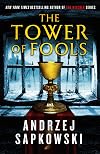
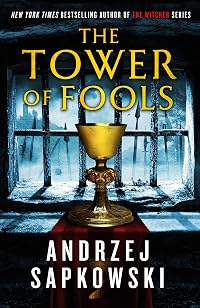
"Reinmar of Bielawa, sometimes known as Reynevan, is a healer, a magician, and according to some, a charlatan. When a thoughtless indiscretion forces him to flee his home, he finds himself pursued not only by brothers bent on vengeance but by the Holy Inquisition. In a time when tensions between Hussite and Catholic countries are threatening to turn into war and mystical forces are gathering in the shadows, Reynevan's journey will lead him to the Narrenturm -- the Tower of Fools"--Tags
Recommendations




















Member Recommendations




Member Reviews
Book provided via Netgalley for review.
I think this is a classic case of "it's not you, it's me." I do not think this book is bad at all, I just couldn't get into it. This was a lot more historical fiction than I was expecting and I do feel a little misled by the summary and title. The group ends up in the Tower of Fools in chapter 27. There are 29 chapters in this book. Most of the book is completely separate from that and it just didn't hook me. It had a really absurd tone that was really interesting but not enough to invest me. This reads like a series of separate vignettes to me which could have been interesting but everything felt so laden with detail and exposition that it felt hard to wade through. I think a lot of people will show more enjoy this book and I know some of my Goodreads friends DO like this book but this just wasn't for me and I don't see myself continuing with this series. show less
I think this is a classic case of "it's not you, it's me." I do not think this book is bad at all, I just couldn't get into it. This was a lot more historical fiction than I was expecting and I do feel a little misled by the summary and title. The group ends up in the Tower of Fools in chapter 27. There are 29 chapters in this book. Most of the book is completely separate from that and it just didn't hook me. It had a really absurd tone that was really interesting but not enough to invest me. This reads like a series of separate vignettes to me which could have been interesting but everything felt so laden with detail and exposition that it felt hard to wade through. I think a lot of people will show more enjoy this book and I know some of my Goodreads friends DO like this book but this just wasn't for me and I don't see myself continuing with this series. show less
Reynavan is a doctor, an alchemist, an arcanist, and a lover who gets in and out of scrapes starting with offending the deadly in-laws of his current lover, a married woman. For the most part, he's accompanied by Sharley and Samson as he is embroiled in the current religious wars, witches' sabbats, robberies, and various incarcerations. This is all set against the background of Eastern Europe in the 15th century.
The writing is excellent and the story arc is much better than what I found in the first few Witcher books (I understand the later books are superior). While there's some fantasy in the form of sorcerers, demons, witches, wallcreepers, and other monsters, the real story is the religious wars between the followers of Jan Huss show more and the Catholic church laid out against the backdrop of the Reformation. As a lover of history, I appreciated the references to historical personages and places though I admit my knowledge of Eastern European history is lacking.
Reynavan is a Jaskier type of character in that while he gets into frequent trouble, he always seems to come out a little the worse for wear. He's surrounded by great characters, some humorous, some dangerous. I look forward to seeing where his adventures take him next. show less
The writing is excellent and the story arc is much better than what I found in the first few Witcher books (I understand the later books are superior). While there's some fantasy in the form of sorcerers, demons, witches, wallcreepers, and other monsters, the real story is the religious wars between the followers of Jan Huss show more and the Catholic church laid out against the backdrop of the Reformation. As a lover of history, I appreciated the references to historical personages and places though I admit my knowledge of Eastern European history is lacking.
Reynavan is a Jaskier type of character in that while he gets into frequent trouble, he always seems to come out a little the worse for wear. He's surrounded by great characters, some humorous, some dangerous. I look forward to seeing where his adventures take him next. show less
Jos Foucaultin Heiluri ja muu salatiedesoppa on sydäntäsi lähellä, ja olet joko äärimmäisen lukenut ihminen tai sitten et säikähdä jos joka hetki et ymmärrä ihan kaikkea, Narrenturm kannattaa testata. Meininki on reipas veijaritarina, Tapani Kärkkäisen käännös jälleen kerran hurmaavaa, ja kaupan päälisiksi saat hyvän oppitunnin länsislaavilaista keskiajan historiaa. (Ja samalla Witcher-pelisarjan ystävät myös saavat selville mistä pelistudio on löytänyt inspiraatiota kys. kirjasarjan ulkopuolisiin juonikuvioihin.) Itselläni on vain alueen maantieteen ja historian lyhyet alkeet hallussa, joten Puolan- ja Tsekinkielisten ihmisten- ja paikannimien on pakko antaa huuhtoa pään ylitse kuin lämpimän show more borssikeiton. Se maistuu kuitenkin hyvältä, ja paranee koko ajan käydessään, kun ainekset käyvät tutuiksi.
Tämä saa jälleen kerran miettimään, mitä me (historiallisen) fantasian ystävät menetämmekään jos keskitymme vain anglosfäärin tuottamaan fiktioon. Sarjan suomentaminen on todellinen kulttuuriteko ja toivottavasti näyttää tietä muillekin kotimaisille kustantamoille suunnata katsetta vaikkapa itään. show less
Tämä saa jälleen kerran miettimään, mitä me (historiallisen) fantasian ystävät menetämmekään jos keskitymme vain anglosfäärin tuottamaan fiktioon. Sarjan suomentaminen on todellinen kulttuuriteko ja toivottavasti näyttää tietä muillekin kotimaisille kustantamoille suunnata katsetta vaikkapa itään. show less
This is an historical fantasy set in central Europe circa 15th century where the magic and myth unfold against a backdrop of a Church struggling to suppress growing heresies. The majority of people and place names are transliterated from Polish, so they tend to have an over abundance of consonants that make it a little difficult for this native English speaker to read quickly. Hidden within this forest of letters are quite a few obscure [archaic] English words that I had never encountered before ... and which reading on the Kindle app made them fun little Easter Eggs that I could easily look them up. All of this reinforces the 'Twilight Zone' feeling that the world where all of this happens is in another time and place, vaguely familiar show more and at the same time weirdly different. The dialog was also held nuance and euphemisms to beat the band and the verbal sparring just as amusing as the rest. I don't think that I have had as much fun with the English language in quite sometime.
The MC is one Reinmar of Bielawa, a young physician caught in a rather indelicate position and force to flee for his life. Being a well educated man, he quickly comes to the attention of the wrong people (aka inquisition) as such are know to cavort with heretics and sorcerers (There are so few of them and they must stick together). Perhaps even he dabbles in the forbidden arts. As the cast of characters quickly expands, it becomes ever more difficult to figure out who the good guys are ... and Andrzej skillfully weaves in references to historical events that would make a punmeister blush (and had me laughing out loud) ... because Gutenberg's innovation would never be allowed to succeed and Luther is the name of 'cheeky cat' who likes to spread out on tables. Of course Reynevan is a young fool ... worthy of the Tower of Fools if not for his companions. It is precisely because of his brash naivete that gives the reader one misadventure after another, slowing introducing more of the hidden mystery of the world (where maybe there are not so few of them after all). Alas ... at the end we have not resolved much else out three main characters are still living and ready for part 2. I would have preferred some closure on something; but it was not to be.
I was given this free advance reader copy (ARC) ebook at my request and have voluntarily left this review.
#TheTowerOfFools #NetGalley show less
The MC is one Reinmar of Bielawa, a young physician caught in a rather indelicate position and force to flee for his life. Being a well educated man, he quickly comes to the attention of the wrong people (aka inquisition) as such are know to cavort with heretics and sorcerers (There are so few of them and they must stick together). Perhaps even he dabbles in the forbidden arts. As the cast of characters quickly expands, it becomes ever more difficult to figure out who the good guys are ... and Andrzej skillfully weaves in references to historical events that would make a punmeister blush (and had me laughing out loud) ... because Gutenberg's innovation would never be allowed to succeed and Luther is the name of 'cheeky cat' who likes to spread out on tables. Of course Reynevan is a young fool ... worthy of the Tower of Fools if not for his companions. It is precisely because of his brash naivete that gives the reader one misadventure after another, slowing introducing more of the hidden mystery of the world (where maybe there are not so few of them after all). Alas ... at the end we have not resolved much else out three main characters are still living and ready for part 2. I would have preferred some closure on something; but it was not to be.
I was given this free advance reader copy (ARC) ebook at my request and have voluntarily left this review.
#TheTowerOfFools #NetGalley show less
For more reviews and Bookish posts visit: https://www.ManOfLaBook.com
The Tower of Fools by Andrzej Sapkowski (translated by David French) is a historical fantasy story taking place in the early 1500s, Poland. This novel is the first one in the Hussite Trilogy, and the first one translated to English, 20 years after initial publication.
The story revolves around Reynevan of Bielawa, also known as Reinmar who fancies himself a doctor, magician (some say charlatan), and a ladies man. Due to his indiscretions, Reynevan finds himself the target of a powerful family, nobles, who force him to escape to his home.
The times are dangerous and Reynevan finds the risks and hazards are found everywhere. There are magical forces in the shadows who show more pursue him along with the nobility he offended, and the Inquisition. Reynevan finds himself at an insane asylum called Narrenturm, the Tower of Fools, housing not only the mentally insane, but those who dare challenge authority.
The Tower of Fools by Andrzej Sapkowski is a book out of my comfort zone, which is one of the reasons I wanted to read it. I also have read previous books by the author, mainly from The Witcher series, so I kind of knew what I was in for.
In the first chapters of the book we are introduced to the Reynevan of Bielawa, the protagonist of the book that seems to have a talent for antagonizing almost every one he meets. Many characters are introduced in the opening chapters, they are difficult to keep track of and it seems all of them have some sort of disagreement with Reynevan who spends much of the novel running from them, sometimes fighting as well but mostly trying to stay alive, unharmed, and uncastrated. Along the way Reynevan meets friends, friends of friends, people who help him because of his noble birth, and university acquaintances.
As lead character, Reynevan is very interesting. He makes decision foolishly, he’s good looking, charming, smart, knows how to fight (somewhat) and talks his way out of situations, as well as an amateur magician. He also talks too much, and many times about subjects he completely misunderstands or knows nothing about.
He would have loved the Internet.
There are many supporting characters in this book, all of them are colorful and mostly fleshed out. Each of them can have his, or hers, novel written about them. I usually don’t enjoy books with too large of a cast, but this one was certainly an exception.
This book was written with a keen eye on history, culture of Poland, the names might be difficult but its part of the experience. The author does a fine job balancing dark humor with scenes of intense fighting, a bit of torture, horrible deaths, and dark intents (mostly by the religious zealots). I’m looking forward to reading the rest of the series when it becomes available. show less
The Tower of Fools by Andrzej Sapkowski (translated by David French) is a historical fantasy story taking place in the early 1500s, Poland. This novel is the first one in the Hussite Trilogy, and the first one translated to English, 20 years after initial publication.
The story revolves around Reynevan of Bielawa, also known as Reinmar who fancies himself a doctor, magician (some say charlatan), and a ladies man. Due to his indiscretions, Reynevan finds himself the target of a powerful family, nobles, who force him to escape to his home.
The times are dangerous and Reynevan finds the risks and hazards are found everywhere. There are magical forces in the shadows who show more pursue him along with the nobility he offended, and the Inquisition. Reynevan finds himself at an insane asylum called Narrenturm, the Tower of Fools, housing not only the mentally insane, but those who dare challenge authority.
The Tower of Fools by Andrzej Sapkowski is a book out of my comfort zone, which is one of the reasons I wanted to read it. I also have read previous books by the author, mainly from The Witcher series, so I kind of knew what I was in for.
In the first chapters of the book we are introduced to the Reynevan of Bielawa, the protagonist of the book that seems to have a talent for antagonizing almost every one he meets. Many characters are introduced in the opening chapters, they are difficult to keep track of and it seems all of them have some sort of disagreement with Reynevan who spends much of the novel running from them, sometimes fighting as well but mostly trying to stay alive, unharmed, and uncastrated. Along the way Reynevan meets friends, friends of friends, people who help him because of his noble birth, and university acquaintances.
As lead character, Reynevan is very interesting. He makes decision foolishly, he’s good looking, charming, smart, knows how to fight (somewhat) and talks his way out of situations, as well as an amateur magician. He also talks too much, and many times about subjects he completely misunderstands or knows nothing about.
He would have loved the Internet.
There are many supporting characters in this book, all of them are colorful and mostly fleshed out. Each of them can have his, or hers, novel written about them. I usually don’t enjoy books with too large of a cast, but this one was certainly an exception.
This book was written with a keen eye on history, culture of Poland, the names might be difficult but its part of the experience. The author does a fine job balancing dark humor with scenes of intense fighting, a bit of torture, horrible deaths, and dark intents (mostly by the religious zealots). I’m looking forward to reading the rest of the series when it becomes available. show less
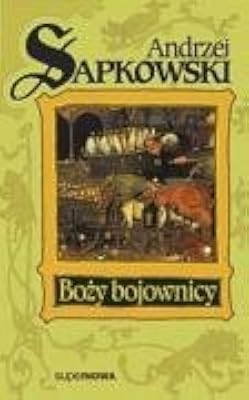
Having just finished reading Narrenturm, I'm slightly disappointed with the book and especially the fact that it's just not as good as the books from The Witcher series. All in all a good read, with interesting story line, some very funny moments and intriguing characters. But also a bit dragging and over-narrative at times, it made it sometimes hard to fully enjoy this book, especially the fist hundred+ pages. Got a lot more interesting and filled with action towards the end. Made me look forward to reading the second book from the series, Bozy Bojownicy, which must be a good sign. 3.5 stars from me for now!
Der Roman verhieß, mein Interesse zu fangen und das tat er auch in gewisser Weise: die schlesische Kultur und der Einblick in das Leben damals war durchaus interessant, durchzogen von mysteriöser Magie, die in der Hintergrund blieb und damit das Milieu perfekt ergänzte.
Doch das ganze Name-dropping und Politik ärgerte mir zunehmend im Laufe des Lesens. Einen, der sich mit der schlesichen Geschichte auskennt, mag es nicht stören aber es konnte doch nicht zu schwer für den Autor gewesen sein, erklärende Fußnoten oder Anmerkungen für Uneingeweihte hinzuzufügen.
Doch das ganze Name-dropping und Politik ärgerte mir zunehmend im Laufe des Lesens. Einen, der sich mit der schlesichen Geschichte auskennt, mag es nicht stören aber es konnte doch nicht zu schwer für den Autor gewesen sein, erklärende Fußnoten oder Anmerkungen für Uneingeweihte hinzuzufügen.
Members
- Recently Added By
Lists

Picaresque Novels
22 works; 9 members

Library Fantasy/Science Fiction
162 works; 2 members

Top Five Books of 2025
954 works; 303 members
Author Information

132+ Works 43,759 Members
Andrzej Sapkowski is a fantasy writer, economist, and translator, he wrote the best-selling book series The Witcher and recently wrote the best-selling book, Lady of the Lake. In 2018 his title, Season of Storms, made the bestseller list. (Bowker Author Biography)
Some Editions
Awards and Honors
Series

Work Relationships
Common Knowledge
- Canonical title
- The Tower of Fools
- Original title
- Narrenturm
- Original publication date
- 2002
- People/Characters
- Reinmar of Bielawa, “Reynevan” aka Reinmar of Hagenau aka Aucassin aka Toledo; Samson Honey-Eater; Scharley; Urban Horn/Bernhard Roth; Otto Beess, Canon and Provost of St. John the Baptist's in Strzelin; Adèle of Stercza née “of Beauvoisin” (show all 37); Gelfrad of Stercza; Apeczko of Stercza, Lord of Ledna; Kunz Aulock, “Kyrie-eleison"; Walter of Barby; Sybek of Kobylagłowa; Stork of Gorgowice; Konrad IV the Older, Duke of Oleśnica, Bishop of Wrocław; Konrad V Kanter, Duke of Oleśnica; Kuno of Wittram; Brázda of Klinštejn, from the Ronovic family; Oldřich Halada; Ambrož, Brother Ambrož; Piotr of Bielawa, "Peterlin"; Zawisza the Black of Garbów, Sir Zawisza; Hans Mein Igel; Nicolette, aka Fair Nicolette, real name Katarzyna Biberstein; Hiram ben Eliezer from Brzeg; Dorota Faber; Filip Granciszek of Oława; Henryk of Reideburg, Starosta of Strzelin; Dzierżka of Wirsing aka Dzierżka Zbylut; Grzegorz Hejncze; Birkart, Lord Grellenort; Jan, Duke of Ziẹbece, “Jasiek”; Euphemia, Dowager Countess of Oettingen; Bolko Wołoszek, Lord of Głogówek; Buko of Krossig; Formosa of Krossig; Tybald Raabe; Huon of Sagar; Velek Chrastický
- Important places
- Ziebice; Silesia
- First words*
- Die düsteren Prophezeihungen der Chiliasten, die den Weltuntergang ziemlich präzise - nämlich für das Jahr 1420, den Monat Februar und den Montag, der auf den Festtag der heiligen Scholastica folgte - angekündigt hatten,... (show all) erfüllten sich nicht.
- Last words*
- (Click to show. Warning: May contain spoilers.)Er deckte die Spuren zu. ENDE DES ERSTEN BANDES
- Original language
- Polish
- Canonical DDC/MDS
- 891.8538
- Canonical LCC
- PG7178.A65
*Some information comes from Common Knowledge in other languages. Click "Edit" for more information.
Classifications
- Genres
- Fiction and Literature, Fantasy, Historical Fiction
- DDC/MDS
- 891.8538 — Literature & rhetoric Literatures of other languages East Indo-European and Celtic literatures West and South Slavic languages (Bulgarian, Slovene, Polish, Czech, Slovak, Serbo-Croatian, and Macedonian) Polish Polish fiction 1989–
- LCC
- PG7178 .A65 — Language and Literature Slavic languages and literatures. Baltic languages. Albanian language Slavic. Baltic. Albanian Slavic Polish
- BISAC
Statistics
- Members
- 752
- Popularity
- 37,600
- Reviews
- 14
- Rating
- (3.88)
- Languages
- 15 — Bulgarian, Czech, English, Finnish, French, German, Hungarian, Polish, Portuguese (Brazil), Portuguese (Portugal), Romanian, Russian, Serbian, Slovak, Spanish
- Media
- Paper, Audiobook, Ebook
- ISBNs
- 40
- ASINs
- 12