On This Page
Description
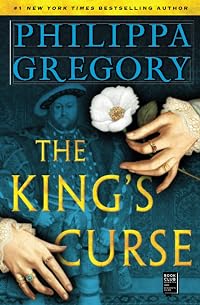
"From the #1 New York Times bestselling author behind the Starz original series The White Queen comes the story of lady-in-waiting Margaret Pole and her unique view of King Henry VIII's stratospheric rise to power in Tudor England. Regarded as yet another threat to the volatile King Henry VII's claim to the throne, Margaret Pole, cousin to Elizabeth of York (known as the White Princess) and daughter of George, Duke of Clarence, is married off to a steady and kind Lancaster supporter--Sir show more Richard Pole. For his loyalty, Sir Richard is entrusted with the governorship of Wales, but Margaret's contented daily life is changed forever with the arrival of Arthur, the young Prince of Wales, and his beautiful bride, Katherine of Aragon. Margaret soon becomes a trusted advisor and friend to the honeymooning couple, hiding her own royal connections in service to the Tudors. After the sudden death of Prince Arthur, Katherine leaves for London a widow, and fulfills her deathbed promise to her husband by marrying his brother, Henry VIII. Margaret's world is turned upside down by the surprising summons to court, where she becomes the chief lady-in-waiting to Queen Katherine. But this charmed life of the wealthiest and "holiest" woman in England lasts only until the rise of Anne Boleyn, and the dramatic deterioration of the Tudor court. Margaret has to choose whether her allegiance is to the increasingly tyrannical king, or to her beloved queen; to the religion she loves or the theology which serves the new masters. Caught between the old world and the new, Margaret Pole has to find her own way as she carries the knowledge of an old curse on all the Tudors"-- show lessTags
Recommendations
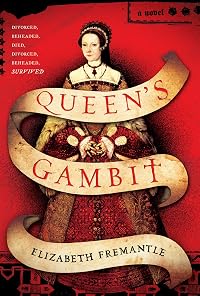
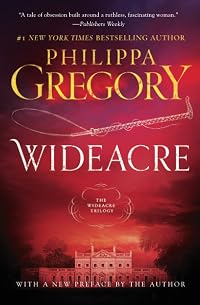
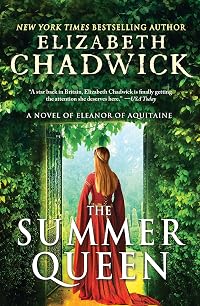
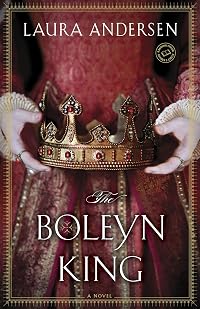
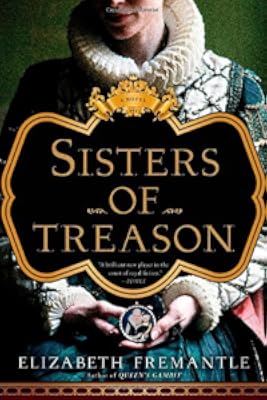
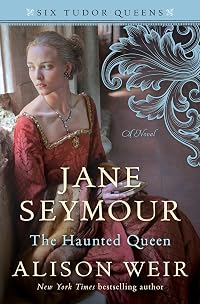
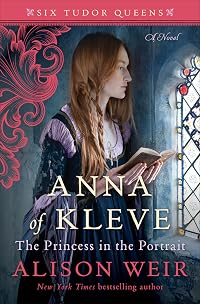
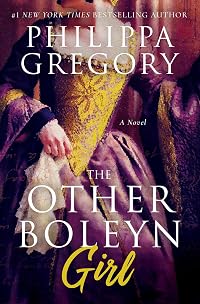



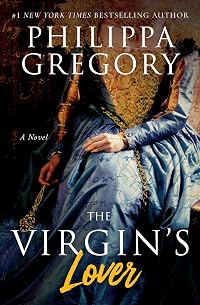
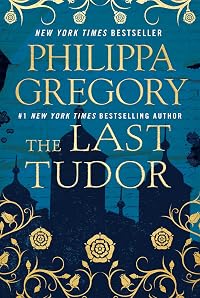
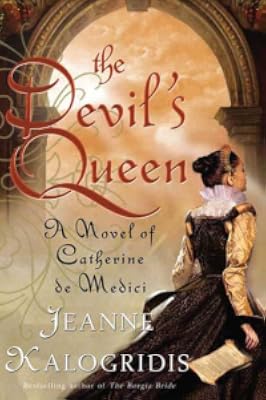
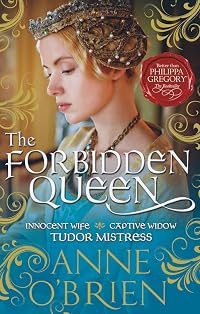

Member Recommendations

Member Reviews
As a fan of both historical fiction and Philippa Gregory, I expected to like this book. I did NOT expect to like it as much as I did. Because this book actually surprised me!
I've read many versions of the story of Henry VIII and his six wives. But these have been consistently from the perspective of either Henry or one of his wives. In THE KING'S CURSE you'll find a different perspective.
The main character is Margaret Pole, a first cousin of Henry's mother and a members of the royal family that preceded the Tudors. Because of her royal blood, Margaret naturally plays an important role in the Tudor court, assigned various roles that bring her close to Henry's older brother Arthur, to his wife Catherine of Aragon, and to his firstborn show more daughter Mary.
But in the telling of Margaret's 40 year story, the author skillfully presents the unfolding events of Henry's reign, as they must have appeared to those outside the royal family, to people who had no idea how it would all turn out. Just think how many "firsts" Henry is responsible for? Questioning the sacrament of marriage, putting a sitting queen on trial, taking on the Catholic Church, enacting multiple new laws about the succession -- just to name a few.
Gregory provides rich details about how Henry's decisions impacted the everyday lives of the English and she also offers some believable speculation on how contemporaries might have processed Henry's edicts. For example, she imagines courtiers contemplating questions like,
• Can anyone question the legitimacy of a marriage and if so, who could rightfully decide such an issue?
• Why is the King assuming greater power over the church and nobility and would we be right to challenge him?
• What will happen to travel and who will care for the sick and poor if the monasteries are closed?
It's all fascinating to consider and I applaud the author's ability to present this remarkable sequence of dramatic events in England's history and show how each might have been seen at the time. show less
I've read many versions of the story of Henry VIII and his six wives. But these have been consistently from the perspective of either Henry or one of his wives. In THE KING'S CURSE you'll find a different perspective.
The main character is Margaret Pole, a first cousin of Henry's mother and a members of the royal family that preceded the Tudors. Because of her royal blood, Margaret naturally plays an important role in the Tudor court, assigned various roles that bring her close to Henry's older brother Arthur, to his wife Catherine of Aragon, and to his firstborn show more daughter Mary.
But in the telling of Margaret's 40 year story, the author skillfully presents the unfolding events of Henry's reign, as they must have appeared to those outside the royal family, to people who had no idea how it would all turn out. Just think how many "firsts" Henry is responsible for? Questioning the sacrament of marriage, putting a sitting queen on trial, taking on the Catholic Church, enacting multiple new laws about the succession -- just to name a few.
Gregory provides rich details about how Henry's decisions impacted the everyday lives of the English and she also offers some believable speculation on how contemporaries might have processed Henry's edicts. For example, she imagines courtiers contemplating questions like,
• Can anyone question the legitimacy of a marriage and if so, who could rightfully decide such an issue?
• Why is the King assuming greater power over the church and nobility and would we be right to challenge him?
• What will happen to travel and who will care for the sick and poor if the monasteries are closed?
It's all fascinating to consider and I applaud the author's ability to present this remarkable sequence of dramatic events in England's history and show how each might have been seen at the time. show less
As a fan of both historical fiction and Philippa Gregory, I expected to like this book. I did NOT expect to like it as much as I did. Because this book actually surprised me!
I've read many versions of the story of Henry VIII and his six wives. But these have been consistently from the perspective of either Henry or one of his wives. In THE KING'S CURSE you'll find a different perspective.
The main character is Margaret Pole, a first cousin of Henry's mother and a members of the royal family that preceded the Tudors. Because of her royal blood, Margaret naturally plays an important role in the Tudor court, assigned various roles that bring her close to Henry's older brother Arthur, to his wife Catherine of Aragon, and to his firstborn show more daughter Mary.
But in the telling of Margaret's 40 year story, the author skillfully presents the unfolding events of Henry's reign, as they must have appeared to those outside the royal family, to people who had no idea how it would all turn out. Just think how many "firsts" Henry is responsible for? Questioning the sacrament of marriage, putting a sitting queen on trial, taking on the Catholic Church, enacting multiple new laws about the succession -- just to name a few.
Gregory provides rich details about how Henry's decisions impacted the everyday lives of the English and she also offers some believable speculation on how contemporaries might have processed Henry's edicts. For example, she imagines courtiers contemplating questions like,
• Can anyone question the legitimacy of a marriage and if so, who could rightfully decide such an issue?
• Why is the King assuming greater power over the church and nobility and would we be right to challenge him?
• What will happen to travel and who will care for the sick and poor if the monasteries are closed?
It's all fascinating to consider and I applaud the author's ability to present this remarkable sequence of dramatic events in England's history and show how each might have been seen at the time. show less
I've read many versions of the story of Henry VIII and his six wives. But these have been consistently from the perspective of either Henry or one of his wives. In THE KING'S CURSE you'll find a different perspective.
The main character is Margaret Pole, a first cousin of Henry's mother and a members of the royal family that preceded the Tudors. Because of her royal blood, Margaret naturally plays an important role in the Tudor court, assigned various roles that bring her close to Henry's older brother Arthur, to his wife Catherine of Aragon, and to his firstborn show more daughter Mary.
But in the telling of Margaret's 40 year story, the author skillfully presents the unfolding events of Henry's reign, as they must have appeared to those outside the royal family, to people who had no idea how it would all turn out. Just think how many "firsts" Henry is responsible for? Questioning the sacrament of marriage, putting a sitting queen on trial, taking on the Catholic Church, enacting multiple new laws about the succession -- just to name a few.
Gregory provides rich details about how Henry's decisions impacted the everyday lives of the English and she also offers some believable speculation on how contemporaries might have processed Henry's edicts. For example, she imagines courtiers contemplating questions like,
• Can anyone question the legitimacy of a marriage and if so, who could rightfully decide such an issue?
• Why is the King assuming greater power over the church and nobility and would we be right to challenge him?
• What will happen to travel and who will care for the sick and poor if the monasteries are closed?
It's all fascinating to consider and I applaud the author's ability to present this remarkable sequence of dramatic events in England's history and show how each might have been seen at the time. show less
In The King’s Curse, Ms. Gregory makes it extremely obvious that she is no fan of the Tudor family. In her ongoing version of the Cousins’ War, there is a good side and a bad side, and the Tudor family is most definitely the bad side. Her sympathy for the remaining Plantegenets, especially Margaret Pole, around whom the entire novel revolves, is not only obvious but also mentioned repeatedly. History is never as unequivocally black and white as Ms. Gregory makes it appear, which makes her portrayal of Henry VIII’s reign disturbing in its bias.
Then again, does anyone expect otherwise from a Ms. Gregory novel? She may pick fascinating subjects, but her storytelling does not bring history alive so much as it beats it to death with a show more blunt object. She has a way of driving home her point that is anything but subtle. Readers know they can skim the story or even skip entire sections without missing anything because she repeats herself so often.
She also tends to overdo the sympathy. Margaret Pole is on of the highest-born Plantagnents remaining in England. Having seen her brother executed as a threat to the Crown under Henry VII, she never forgets how perilous her situation is in the Tudor realm. Yet, Margaret is anything but humble and quiet. She is arrogant and smug. She prides herself on her lineage and detests anything that lowers her image in the eyes of the people. She may hate the king, and in many ways she does for what his family has done to hers and what he does to his wife and daughter, but she cannot stand to be away from court and outside of the king’s sphere of influence. She is about as unsympathetic as it gets given her propensity to worry over her material goods and her lineage more than anything else.
While Ms. Gregory’s novels always feature strong women who managed to dictate the terms in which they lived in spite of society being male-dominated, one gets the impression that there was not as much to Margaret Pole’s story as there was with some of her other characters. Yes, she was present at several key moments in history and rose up to become one of the wealthiest people, let alone women, in all of England. However, she does not do much other than dictate her sons’ actions. Much of the action occurs offstage because her sons are the ones doing all of the work. She boasts often of her ability to rule her lands, but even there, as a lady and owner of multiple estates, she is not doing any of the work but ordering others. Her lack of direct presence in most of the key proceedings makes for a rather dull story. It is difficult to feel her fear and confusion in this modern era, especially among readers for whom the idea of a monarchial rule is anathema to the society in which s/he was raised. In addition, since one sees little of the action directly but only as one of her sons is telling her what occurred, it is even more difficult to get caught up in her plight. Adding to the destructive mix is Margaret’s refusal to take action against the king. Much of the novel is her railing against Henry’s proclamations and rulings but doing nothing else. She is one of the first ones to capitulate and swear her allegiance over and over again. This lack of a backbone is unusual in a Gregory heroine and bothersome because in every other aspect of her life she is quite formidable.
Upon finishing The King’s Curse, one will not help but wonder if Ms. Gregory is finally ready to put the entire Plantagenent and Tudor line to rest. The stories have come full circle now as she ends much as she began, with Henry VIII and his quest for a male heir. In fact, most of The King’s Curse feels much like a rehashing of her earlier novels simply told from someone else’s point of view. Given how poorly written the story is and how unsympathetic Margaret Pole is throughout most of the novel, readers will not just wonder but hope that Ms. Gregory moves on to some other period in history. It is long past time to do so. show less
Then again, does anyone expect otherwise from a Ms. Gregory novel? She may pick fascinating subjects, but her storytelling does not bring history alive so much as it beats it to death with a show more blunt object. She has a way of driving home her point that is anything but subtle. Readers know they can skim the story or even skip entire sections without missing anything because she repeats herself so often.
She also tends to overdo the sympathy. Margaret Pole is on of the highest-born Plantagnents remaining in England. Having seen her brother executed as a threat to the Crown under Henry VII, she never forgets how perilous her situation is in the Tudor realm. Yet, Margaret is anything but humble and quiet. She is arrogant and smug. She prides herself on her lineage and detests anything that lowers her image in the eyes of the people. She may hate the king, and in many ways she does for what his family has done to hers and what he does to his wife and daughter, but she cannot stand to be away from court and outside of the king’s sphere of influence. She is about as unsympathetic as it gets given her propensity to worry over her material goods and her lineage more than anything else.
While Ms. Gregory’s novels always feature strong women who managed to dictate the terms in which they lived in spite of society being male-dominated, one gets the impression that there was not as much to Margaret Pole’s story as there was with some of her other characters. Yes, she was present at several key moments in history and rose up to become one of the wealthiest people, let alone women, in all of England. However, she does not do much other than dictate her sons’ actions. Much of the action occurs offstage because her sons are the ones doing all of the work. She boasts often of her ability to rule her lands, but even there, as a lady and owner of multiple estates, she is not doing any of the work but ordering others. Her lack of direct presence in most of the key proceedings makes for a rather dull story. It is difficult to feel her fear and confusion in this modern era, especially among readers for whom the idea of a monarchial rule is anathema to the society in which s/he was raised. In addition, since one sees little of the action directly but only as one of her sons is telling her what occurred, it is even more difficult to get caught up in her plight. Adding to the destructive mix is Margaret’s refusal to take action against the king. Much of the novel is her railing against Henry’s proclamations and rulings but doing nothing else. She is one of the first ones to capitulate and swear her allegiance over and over again. This lack of a backbone is unusual in a Gregory heroine and bothersome because in every other aspect of her life she is quite formidable.
Upon finishing The King’s Curse, one will not help but wonder if Ms. Gregory is finally ready to put the entire Plantagenent and Tudor line to rest. The stories have come full circle now as she ends much as she began, with Henry VIII and his quest for a male heir. In fact, most of The King’s Curse feels much like a rehashing of her earlier novels simply told from someone else’s point of view. Given how poorly written the story is and how unsympathetic Margaret Pole is throughout most of the novel, readers will not just wonder but hope that Ms. Gregory moves on to some other period in history. It is long past time to do so. show less
My hat is always off to Philippa Gregory and the way she can make English history come alive. She has told the same story dozens of times now, with a different perspective each time and without flinching from the truth.
This tale belongs to Margaret Pole, Henry VIII's oldest Tower victim and a direct descendant of the Plantagenet line. Because she was present for so much of what occurred in Henry's reign and because her life was long enough to witness both beginnings and ends, she is a great narrator. From any perspective, life during the time of Henry was hard and uncertain. It hardly mattered who you were, you would be on top or on the bottom in a blink of an eye, subject to the whims of a maniacal ruler.
I found this book show more particularly interesting, since I have recently read Wolf Hall and found myself confronted with a completely different view of Thomas Cromwell than the one found there. Of course, most of the histories I have read paint Cromwell as a monster, but having just looked at this world from his point of view, it was interesting to see how he would most certainly have been viewed by someone in Margaret Pole's postion. In the end, the horror always comes back to Henry, doesn't it.
I have loved all of Gregory's novels, but some are stand-outs, and this is one of those. Margaret Pole is a gripping and defiant woman, with strength and endurance enough to stand in situations where most would fall. Gregory is particularly wonderful at portraying women as part of the strength and power of this era and helping us to see them as full-blown and strong (which they must have been to survive these times) and never as pawns in the service of men.
I hope to read all of the novels in this series that I have not yet gotten to. If I could do anything different, I would read them in order...but that is not possible for me and I do not think they suffer from being read out of order, since each stands beautifully alone. show less
This tale belongs to Margaret Pole, Henry VIII's oldest Tower victim and a direct descendant of the Plantagenet line. Because she was present for so much of what occurred in Henry's reign and because her life was long enough to witness both beginnings and ends, she is a great narrator. From any perspective, life during the time of Henry was hard and uncertain. It hardly mattered who you were, you would be on top or on the bottom in a blink of an eye, subject to the whims of a maniacal ruler.
I found this book show more particularly interesting, since I have recently read Wolf Hall and found myself confronted with a completely different view of Thomas Cromwell than the one found there. Of course, most of the histories I have read paint Cromwell as a monster, but having just looked at this world from his point of view, it was interesting to see how he would most certainly have been viewed by someone in Margaret Pole's postion. In the end, the horror always comes back to Henry, doesn't it.
I have loved all of Gregory's novels, but some are stand-outs, and this is one of those. Margaret Pole is a gripping and defiant woman, with strength and endurance enough to stand in situations where most would fall. Gregory is particularly wonderful at portraying women as part of the strength and power of this era and helping us to see them as full-blown and strong (which they must have been to survive these times) and never as pawns in the service of men.
I hope to read all of the novels in this series that I have not yet gotten to. If I could do anything different, I would read them in order...but that is not possible for me and I do not think they suffer from being read out of order, since each stands beautifully alone. show less
I totally was not out to get sucked into another series or sail through them all in a very few short months. But this one grabbed me as something different. Yes, the history through a wife's eyes has been done and is growing in popularity, it's here to stay. That is how this series started out, but it's so much more, even from book one. It's the Tudors and Plantagnents. It's the Rivers. Its The Elizabeths you never heard of. And this one! It's a stand alone (but if you can take the time, read them all).
I've been fascinated with the king who divorced or beheaded 6 wives since I first heard of him as a young girl. (Please tell me you have been, too!) It took me a much longer time to understand the destruction of the Catholic Church in show more England. But this book, told from the POV of disregarded Margaret Pole, had me realizing a whole different facet. What Henry VIII did to his country, to his men, to his cousins, shows a whole other tyrant. A madman.
But what is more interesting to me is that people don't speak up. They think it will stop at each narcissistic act. Appease the monster and he'll leave us alone. But he doesn't, as is shown by history time and time and time again, and soon the narcissist turns into a tyrant, a fascist, a demigod whose tide swallows us whole, even on a whim.
I kept wondering how Gregory would write the (well documented historical) ending. Bravo to you! You wowed me and got it oh so right. show less
I've been fascinated with the king who divorced or beheaded 6 wives since I first heard of him as a young girl. (Please tell me you have been, too!) It took me a much longer time to understand the destruction of the Catholic Church in show more England. But this book, told from the POV of disregarded Margaret Pole, had me realizing a whole different facet. What Henry VIII did to his country, to his men, to his cousins, shows a whole other tyrant. A madman.
But what is more interesting to me is that people don't speak up. They think it will stop at each narcissistic act. Appease the monster and he'll leave us alone. But he doesn't, as is shown by history time and time and time again, and soon the narcissist turns into a tyrant, a fascist, a demigod whose tide swallows us whole, even on a whim.
I kept wondering how Gregory would write the (well documented historical) ending. Bravo to you! You wowed me and got it oh so right. show less
I have enjoyed the whole series, but this was the best yet. The portrayal of Henry VIII's psychology is brilliantly done, and the developing sense of paranoia and menace is chilling. Some years ago I read Simon Sebag Montefiore's 'The Court of the Red Czar'. Reading 'The King's Curse' brought back the experience of reading that brilliantly written but deeply upsetting book, and the parallels with Stalin became stronger page by page. Some have complained of the abruptness of the book's ending, but when written in the first person how else could it have ended? This simply brought home to me the sheer waste of human life and energy.
I will say that I liked this book better than the Constant Princess, and this book focuses on one of the characters that is less-known in the Tudor stories. I found this refreshing after reading the 'voice' of several prominent women in history (and in Tudor fiction) like Catherine of Aragon, Elizabeth of York, Anne Boleyn, or Elizabeth I.
I liked how history was woven into fiction, but feel that the book could have been edited down some as some parts could get pretty repetitive. Still, the story itself was pretty entertaining.
I liked how history was woven into fiction, but feel that the book could have been edited down some as some parts could get pretty repetitive. Still, the story itself was pretty entertaining.
Members
- Recently Added By
Author Information

127+ Works 86,677 Members
Philippa Gregory was born in Nairobi, Kenya on January 9, 1954. She received a B.A. in history at Sussex University in 1982 and a Ph.D. in 18th-century literature from the University of Edinburgh in 1984. She has taught at numerous universities and was made a fellow of Kingston University in 1994. Her historical novels include: Wideacre, The show more Queen's Fool, The Virgin's Lover, The Constant Princess, The Boleyn Inheritance, The Other Queen, The White Queen, The Red Queen, The Lady of the Rivers and The White Princess. She has also written several contemporary fiction works including Perfectly Correct, The Little House and Zelda's Cut. She adapted her novel A Respectable Trade, about the slave trade in England, into a four-part series for BBC television. Her script won an award from the Committee for Racial Equality. She won the Feminist Book Fortnight Award in 1990 and the Romantic Novelist of the Year Award in 2002. Her book, The Other Boleyn Girl, won the Parker Romantic Novel of the Year award and was adapted into a major feature film in 2008 starring Natalie Portman and Scarlett Johansson. The White Queen was adapted into an original cable series on the Starz nertwork in 2013 starring Max Irons and Rebecca Ferguson. Her title The Kings Curse made the New York Times bestseller list in 2014. Her title, The Taming of the Queen, made the New York Times bestseller list in 2015. Her latest bestseller is Three Sisters, Three Queens. Gregory also writes children's books, is a regular contributor to newspapers and magazines, a frequent broadcaster for radio and television, and runs a small charity that builds wells in schoolyards in Gambia. (Bowker Author Biography) show less
Awards and Honors
Series


Work Relationships
Common Knowledge
- Canonical title
- The King's Curse
- Original title
- The King's Curse
- Alternate titles
- The Last Rose (working title) (working title)
- Original publication date
- 2014
- People/Characters
- Margaret Pole, Countess of Salisbury; Elizabeth of York; Henry VII, King of England; Arthur, Prince of Wales; Catherine of Aragon; Henry VIII, King of England (show all 11); Reginald Pole, Archbishop of Canterbury; Mary I, Queen of England; Bessie Blount; Henry Pole; Lady Margaret Beaufort
- Important places
- Greenwich Palace, London, England, UK; Richmond Palace, Surrey, England, UK; Tower of London, London, England, UK
- Important events
- Tudor Era (1485 | 1603); English Reformation
- First words
- In the moment of waking I am innocent, my conscience clear of any wrongdoing.
- Quotations
- The king will not even receive letters from the City for fear of the disease. Cardinal Wolsey writes to him on special paper from Richmond Palace and is living there, ruling like a king himself.
Prior Richard comes to me in my records room at the manor. I am seated at a great round table, with each drawer labelled with a letter. Every tenant's deeds are in a drawer labelled with the right letter, and the table can sp... (show all)in from A to Z so that I can draw out, in a moment, the document that I need.
Classifications
Statistics
- Members
- 1,613
- Popularity
- 14,111
- Reviews
- 41
- Rating
- (3.81)
- Languages
- 6 — English, French, German, Italian, Romanian, Portuguese (Portugal)
- Media
- Paper, Audiobook, Ebook
- ISBNs
- 35
- ASINs
- 10