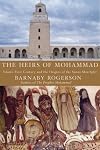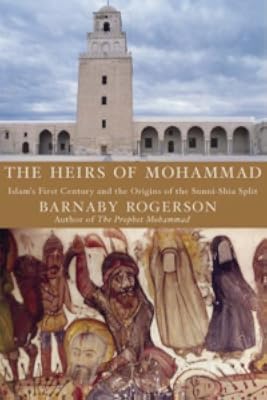
The Heirs of Muhammad: Islam's First Century and the Origins of the Sunni-Shia Split
by Barnaby Rogerson
On This Page
Description
[In this book, the author] recounts the lives of the handful of individuals - the first four Caliphs, the Prophet's widows and the conquering generals - who led and influenced Islam after the death of Muhammad. Within this fifty-year span of conquest and empire-building, [the author] identifies the seeds of discord and civil war that destroyed the unity of Islam and traces the roots of the schism between Sunni and Shia Muslims to the rivalry of the two people who best knew and loved the show more Prophet: his cousin and son-in-law Ali and his wife Aisha. -Dust jacket. show lessTags
Recommendations


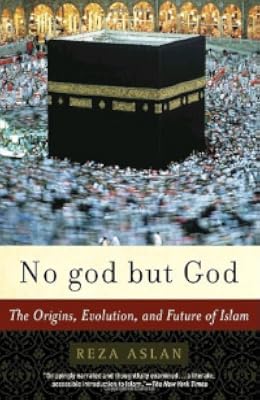
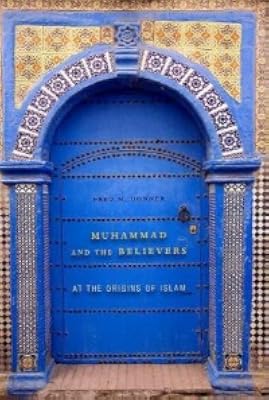
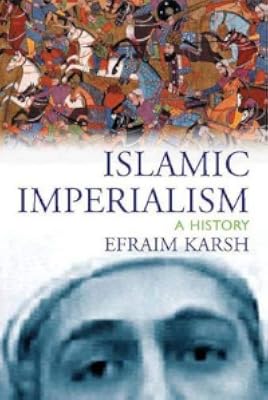
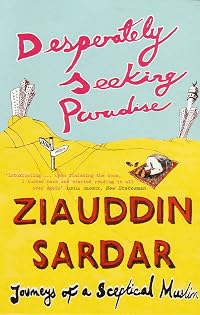


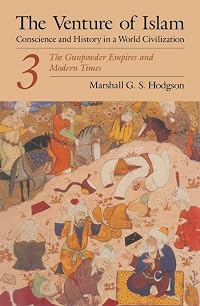



Member Recommendations

Member Reviews
This is one of the few biographies of Prophet Muhammad and the Rightly Caliphs that I found to be a real page-turner. It is the first bio that I have ever read that starts out with a physical description of Medina (rural garden-oasis) to Mecca (barren desert city) and how the geographic circumstances contributed to tribal world views.
The bios of Abu Bakr, Omer, Uthman, Ali, Muawiya, Hasan, wives of the Prophet, and many others are eye-opening. I'm not sure how accurate all of it is, and Rogerson himself acknowledges the historical vagaries, but it paints a very human portrait of everyone. I had a completely different idea of Ali and his sons (much more positive) after reading this book. It also clarified, for me, why the Medina clans show more invited Muhammad to come to their city in the first place.
I also like Rogerson's method of dispelling myths. At one point he says the image of a Muslim soldier with a sword in one hand and the Quran in the other is completely false. First of all, Qurans would have been too expensive for the average soldier. Second of all, a Muslim would never hold a Quran in his left hand (unclean), so that would mean he would be holding his sword in his left hand and how can you fight properly? OR was there a special squad of left-handed proselytizing warriors? Heh he.
An excellent book for anyone interested in the fifty years following the death of Prophet Muhammad. show less
The bios of Abu Bakr, Omer, Uthman, Ali, Muawiya, Hasan, wives of the Prophet, and many others are eye-opening. I'm not sure how accurate all of it is, and Rogerson himself acknowledges the historical vagaries, but it paints a very human portrait of everyone. I had a completely different idea of Ali and his sons (much more positive) after reading this book. It also clarified, for me, why the Medina clans show more invited Muhammad to come to their city in the first place.
I also like Rogerson's method of dispelling myths. At one point he says the image of a Muslim soldier with a sword in one hand and the Quran in the other is completely false. First of all, Qurans would have been too expensive for the average soldier. Second of all, a Muslim would never hold a Quran in his left hand (unclean), so that would mean he would be holding his sword in his left hand and how can you fight properly? OR was there a special squad of left-handed proselytizing warriors? Heh he.
An excellent book for anyone interested in the fifty years following the death of Prophet Muhammad. show less
The internal battles and struggles of the first Muslim communities right after the death of Muhammad onwards make for a fascinating historical episode, especially since, defining the Shia-Sunni split, such events still resonate in today's world. I had familiarised myself with a rough overview of it all with After the Prophet: The Epic Story of the Shia-Sunni Split in Islam by Leslie Hazleton, an entertaining and epic read, informative although clearly pro-Shia. I decided then to pick this book, more academic, in depth, and, I thought, more balanced, so as to try and further my appreciation of the era. I was a bit disappointed, though I learnt a lot.
Sure, it's difficult to approach Muhammad's succession without being biased. Was it all show more fair? Was Ali shamefully deprived of his role to be? Barnaby Rogerson tries really hard to don't take side, yet it's quite clear he favours Sunni over Shia. Indeed, there is no reference to the Paper and Pen Episode nor to the attack on Ali and Fatima's house (let alone on Fatima's fate at this point!). The reason behind the 'Prophet' quick burial are speedily brushed aside with sensitive excuses. The idea of an interested pact between Abu Bakr and Omar is dismissed as, maybe having just 'a grain of truth', but nothing more than mere friendship between two fathers in law. Abu Bakr himself is compared to great historical figures such as Garibaldi, Lincoln, and Cato; while Ali is compared to no one (although he is being acknowledged as an unquestionably dignified man, give him that...). In a word, the whole affair of the succession itself is labelled as being just, wait for it... 'an accidental coup'! You've got to love the euphemism!
Now, of course, there is nothing wrong in leaning on one side or the other! Frankly, I personally believe that it's impossible to be objective with such centuries old hotly debated topic. I just found that, if it's quite amusing to see him wiggle around to try and don't stir controversies with issues that are everything but non-controversial, it sadly leads him to completely ignore some Shia stances and arguments. I'd rather had him challenging them with a bias, than flying over them like a breeze, when not mentioning them at all. As it is, this does not much to understand the split between both sects.
Having said that, what I found engrossing is that he is all about events over personalities. Yes, he certainly does recognise Aisha as being the key detonator in all the divisions that would follow:
'Without her impassionated (sic) stance, it is quite probable that there would have been no united opposition to Ali's succession among the Meccans.'
But the book is less about clashes between people as it is about an analysis of the facts that led to Islam exploding out of Arabia, and up to the rise of the Umayyads. It's heavy on military history and cunny diplomacy, but this is exactly what makes it a particularly relevant and fascinating read. The author, painstakingly, tries and explain the baffling: how come the Arabs, who 'were worse equipped, less numerous, knew nothing of siege craft and had no new technical inventions or tactical manoeuvres to spring on their enemies' managed to conquer the then two super powers sandwiching Arabia, the Byzantine and Persian Empires? Muslims obviously have been keen to put such conquests down to the righteousness of Islam and so the hand of their God. It was about time a non-Muslim tackle the issue from a military and statesmanship's perspective!
Greatly welcome, by the way, is his debunking of the ongoing prejudice that Islam thus imposed itself by the sword. It didn't, but the point needed to be nailed bluntly:
'Despite the enduringly popular image of the Arab conquerors arriving with the sword in one hand and the Koran in the other, this was only true as a metaphor during the Ridda wars. It was most emphatically not the case with the conquest of Syria and Palestine. There was no attempt to convert the Peoples of the Book, who right from the start were valued as a taxable resource and to be kept apart from the Muslims.'
All in all then, this read left me with a mixed feeling. I was disappointed with the first part. It could have delved more into Muhammad's death and the highly controversial events that followed up. Indeed, his attempt at not stirring controversies but staying as neutral as can be, as far as I am concerned, just backfire badly against him: where are the crucial debates surrounding Ghadir Khumm? Fatima and Ali's fate? Their son Mushin? Contrary to what it says on the front cover, such approach doesn't illuminate how the Sunni-Shia split fully came into fruition. Fortunately, the author picks himself up in the second part, telling of the Conquest and ultimate triumph of Islam in a clear narrative where politics and military history all come together to shape an informative perspective. It can be an heavy read, with all the battles and intrigues and complex intricacies unfolding like a game of chess, but it's enlightening enough to be of interest. Here's not your easy go-to type of introduction, but nevertheless a likeable book. show less
Sure, it's difficult to approach Muhammad's succession without being biased. Was it all show more fair? Was Ali shamefully deprived of his role to be? Barnaby Rogerson tries really hard to don't take side, yet it's quite clear he favours Sunni over Shia. Indeed, there is no reference to the Paper and Pen Episode nor to the attack on Ali and Fatima's house (let alone on Fatima's fate at this point!). The reason behind the 'Prophet' quick burial are speedily brushed aside with sensitive excuses. The idea of an interested pact between Abu Bakr and Omar is dismissed as, maybe having just 'a grain of truth', but nothing more than mere friendship between two fathers in law. Abu Bakr himself is compared to great historical figures such as Garibaldi, Lincoln, and Cato; while Ali is compared to no one (although he is being acknowledged as an unquestionably dignified man, give him that...). In a word, the whole affair of the succession itself is labelled as being just, wait for it... 'an accidental coup'! You've got to love the euphemism!
Now, of course, there is nothing wrong in leaning on one side or the other! Frankly, I personally believe that it's impossible to be objective with such centuries old hotly debated topic. I just found that, if it's quite amusing to see him wiggle around to try and don't stir controversies with issues that are everything but non-controversial, it sadly leads him to completely ignore some Shia stances and arguments. I'd rather had him challenging them with a bias, than flying over them like a breeze, when not mentioning them at all. As it is, this does not much to understand the split between both sects.
Having said that, what I found engrossing is that he is all about events over personalities. Yes, he certainly does recognise Aisha as being the key detonator in all the divisions that would follow:
'Without her impassionated (sic) stance, it is quite probable that there would have been no united opposition to Ali's succession among the Meccans.'
But the book is less about clashes between people as it is about an analysis of the facts that led to Islam exploding out of Arabia, and up to the rise of the Umayyads. It's heavy on military history and cunny diplomacy, but this is exactly what makes it a particularly relevant and fascinating read. The author, painstakingly, tries and explain the baffling: how come the Arabs, who 'were worse equipped, less numerous, knew nothing of siege craft and had no new technical inventions or tactical manoeuvres to spring on their enemies' managed to conquer the then two super powers sandwiching Arabia, the Byzantine and Persian Empires? Muslims obviously have been keen to put such conquests down to the righteousness of Islam and so the hand of their God. It was about time a non-Muslim tackle the issue from a military and statesmanship's perspective!
Greatly welcome, by the way, is his debunking of the ongoing prejudice that Islam thus imposed itself by the sword. It didn't, but the point needed to be nailed bluntly:
'Despite the enduringly popular image of the Arab conquerors arriving with the sword in one hand and the Koran in the other, this was only true as a metaphor during the Ridda wars. It was most emphatically not the case with the conquest of Syria and Palestine. There was no attempt to convert the Peoples of the Book, who right from the start were valued as a taxable resource and to be kept apart from the Muslims.'
All in all then, this read left me with a mixed feeling. I was disappointed with the first part. It could have delved more into Muhammad's death and the highly controversial events that followed up. Indeed, his attempt at not stirring controversies but staying as neutral as can be, as far as I am concerned, just backfire badly against him: where are the crucial debates surrounding Ghadir Khumm? Fatima and Ali's fate? Their son Mushin? Contrary to what it says on the front cover, such approach doesn't illuminate how the Sunni-Shia split fully came into fruition. Fortunately, the author picks himself up in the second part, telling of the Conquest and ultimate triumph of Islam in a clear narrative where politics and military history all come together to shape an informative perspective. It can be an heavy read, with all the battles and intrigues and complex intricacies unfolding like a game of chess, but it's enlightening enough to be of interest. Here's not your easy go-to type of introduction, but nevertheless a likeable book. show less
http://nhw.livejournal.com/932939.html
A breezily written, enthusiastic book about the early decades of Islam. Rogerson spends a good third of the book getting to the starting point, recapitulating his earlier biography of the Prophet.
Rogerson is clearly a sympathiser, and this means that the book cannot be considered particularly neutral. But that's perhaps not such a bad thing; I am more interested in finding out what the Prophet's followers believe than in getting the historical "facts", whatever they are.
His narrative is complete enough that I did find myself taken aback at some points. His enthusiasm in the face of the facts is almost endearing. While the first two caliphs, Abu Bakr and Omar, seem to have indeed been gifted leaders show more - it was under Omar that the really big military conquests took place, culminating with Persia, the Holy Land and Egypt - the caliphate collapsed under the leadership of Uthman and Ali, and Rogerson's attempts to exalt Ali's reputation (as indeed it is exalted in both Shia and Sunni tradition) are difficult to sustain given his failure to keep his own regime together.
However. This was a very interesting read for me, filling in a significant gap in my knowledge which I had previously only really read in much detail in chapters L and LI of Gibbon; who is also entertaining and partisan, of course (and truth be told somewhat better written). show less
A breezily written, enthusiastic book about the early decades of Islam. Rogerson spends a good third of the book getting to the starting point, recapitulating his earlier biography of the Prophet.
Rogerson is clearly a sympathiser, and this means that the book cannot be considered particularly neutral. But that's perhaps not such a bad thing; I am more interested in finding out what the Prophet's followers believe than in getting the historical "facts", whatever they are.
His narrative is complete enough that I did find myself taken aback at some points. His enthusiasm in the face of the facts is almost endearing. While the first two caliphs, Abu Bakr and Omar, seem to have indeed been gifted leaders show more - it was under Omar that the really big military conquests took place, culminating with Persia, the Holy Land and Egypt - the caliphate collapsed under the leadership of Uthman and Ali, and Rogerson's attempts to exalt Ali's reputation (as indeed it is exalted in both Shia and Sunni tradition) are difficult to sustain given his failure to keep his own regime together.
However. This was a very interesting read for me, filling in a significant gap in my knowledge which I had previously only really read in much detail in chapters L and LI of Gibbon; who is also entertaining and partisan, of course (and truth be told somewhat better written). show less
An informative but rather one-sided book; this is more a hagiography than a history. The author admits up front that the records from that period are created by partisans and likely to be exaggerated, but he chooses only one side to report, leaving this as a warm and fuzzy extremely pro-Islam piece. It is difficult to believe that people were so incredibly noble as the ones portrayed here, and often laid up against villains. Still, there is a lot of information as long as you are willing to maintain a somewhat skeptical frame of mind. It is also true that what he represents as integrity and nobility may not appear that way to many readers. His frequent snarking at Westerners who don't understand is unneeded. And he loses half a star for show more his constant phrasing of sentence fragments that stand out like a sore thumb. This is also probably at least partially the fault of the editor, but an author should be able to proofread their own work and see those fragments. Overall, a decent work but with some serious flaws. show less
A fascinating book that has a wonderful appendix covering important issues in and around the life of Aisha and other key and influential women in Medina during a foundational period of Islamic history. I worried about possible bias from the author, but it doesn't seem to affect this work much, but I need time to read it more carefully in conjunction with his other works.
Story of Prophet Muhammad and the leaders that came after him--explains the Shiaa, Sunni origins and divide. At
Ratings
Members
- Recently Added By
Lists

Unread books
1,063 works; 83 members
Author Information

29+ Works 947 Members
Barnaby Rogerson is the author of more than a dozen books, including The Heirs of Muhammad: Islam's First Century and the Origins of the Sunni-Shia Schism, The Prophet Muhammad: A Biography, and A History of North Africa. He has lived and worked in many parts of the Arab world, and currently lives in London, where he has a day job as Publisher at show more Eland Books. show less
Common Knowledge
- People/Characters
- Muhammad, son of Abdullah, of the tribe of Qureysh; Abu Bakr As Siddiq, first Muslim Caliph; Umar Ibn Al-Khattab, second Muslim Caliph; Uthman ibn Affan, third Muslim Caliph; Ali ibn Abi Talib, fourth Muslim Caliph and first Imam of Shia Islam; Muawiyah Ibn Abu Sufyan (Muawiyah I) (show all 23); Hasan ibn Ali ibn Abi Talib, second Imam of Shia Islam; Husayn ibn Ali ibn Abi Talib, third Imam of Shia Islam; Yazid Ibn Muawiya Ibn Abu Sufyan (Yazid I); Abu Lahab; Abu Sufyan Ibn Harb; Khadija Bint Khuwaylid; Aisha Bint Abu Bakr; Fatima Zahra; Amr Ibn Al-As; Zubayr Ibn Al-Awam; Talha ibn Ubaydullah; Mughira Ibn Shuba; Khalid Ibn Al-Walid; Zayd ibn Harithah; Yazid Ibn Abu Sufyan; Shurahbil Ibn Hassana; Abdullah ibn Saad
- Important places
- Mecca, Saudi Arabia; Medina, Saudi Arabia; Fustat (Cairo), Egypt (Cairo); Kairouan, Tunisia; Alexandria, Egypt; Basra, Iraq (show all 10); Kufa, Iraq; Kerbala, Iraq; Jerusalem; Damascus, Syria
Classifications
Statistics
- Members
- 191
- Popularity
- 172,081
- Reviews
- 6
- Rating
- (3.92)
- Languages
- English
- Media
- Paper, Ebook
- ISBNs
- 4
- ASINs
- 3