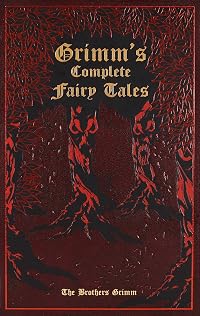
The Complete Fairy Tales of the Brothers Grimm
by Jacob Grimm (Author), Wilhelm Grimm (Author)
On This Page
Description
More than 200 tales by the Brothers Grimm.Tags
Recommendations
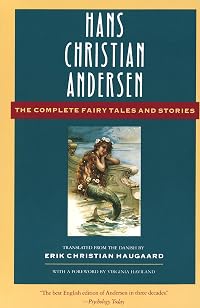
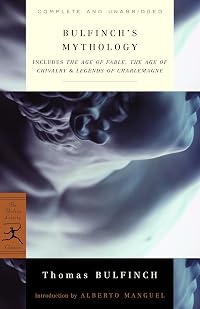
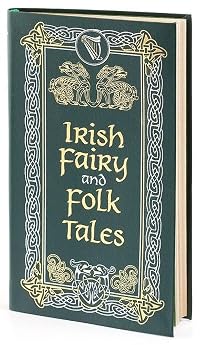
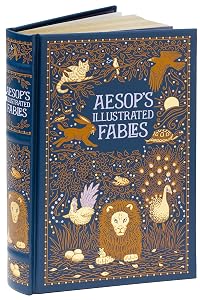





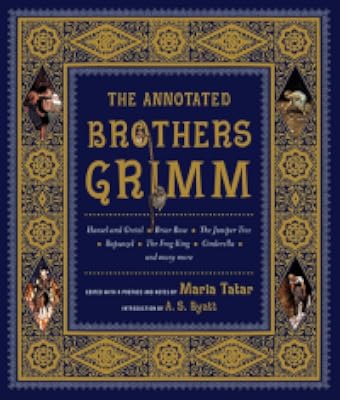

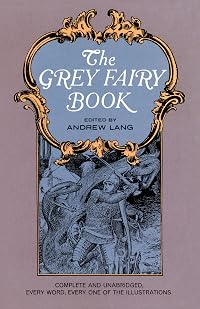
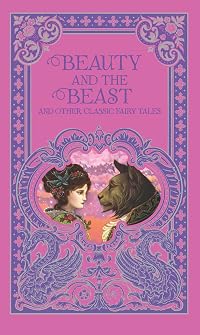
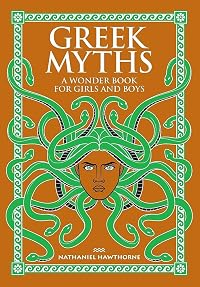

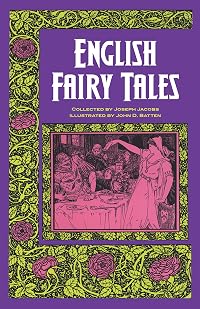
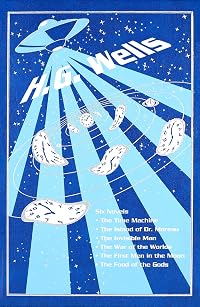

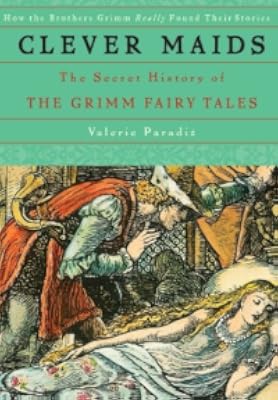
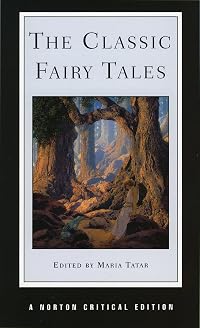
Member Recommendations
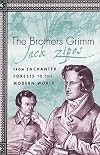
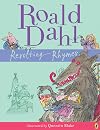
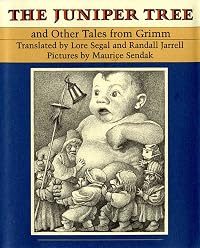
sturlington Dahl based his poems on Grimms' tales
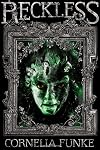
ed.pendragon Funke's Mirrorworld is imbued with the themes and atmosphere of the Grimm tales, even though the modern world is encroaching.
Member Reviews
The message in this book is mixed. The farmer wants to take his dog out back and shoot him the next day as the dog (Sultan) has become old and lost his teeth. Overhearing this, Sultan is of course sad, and laments his fate to his friend, the wolf. Wolf comes up with a plan, and the farmer deems that Sultan indeed does have a purpose and takes good care of his dog.
However, this is a wolf we're talking about, and when the wolf says he wants one of the farmer's sheep, and suggests that Sultan turn a blind eye to this, Sultan refuses to as he is loyal to the farmer (the same ass who wanted to take him out back and shoot him) so the wolf turns on him.
However, through luck and determination, good old Sultan perseveres and overcomes adversity. show more But this story, looked at critically, does caution against blind loyalty and trust. show less
However, this is a wolf we're talking about, and when the wolf says he wants one of the farmer's sheep, and suggests that Sultan turn a blind eye to this, Sultan refuses to as he is loyal to the farmer (the same ass who wanted to take him out back and shoot him) so the wolf turns on him.
However, through luck and determination, good old Sultan perseveres and overcomes adversity. show more But this story, looked at critically, does caution against blind loyalty and trust. show less
As a child, I loved to read fairy tales more than anything else. My grandmother had a collection of Grimms’ fairy tales and Andersen’s fairy tales, and I grabbed one or the other off of her bookshelf at the first opportunity on each visit. I had never read anything like Ralph Manheim’s translation of Grimms’ fairy tales. It reads like exactly what it is – a transcription of oral stories and legends, with the voice of the teller unobscured by an editor. Some stories have multiple variations with slight differences between them. This collection makes it clear that the stories had a social purpose and were used to encourage positive character traits and discourage negative character traits. Manheim’s translation belongs in the show more libraries of all readers with more than a casual interest in fairy tales and legends. show less
For the longest time, this old, beat up copy of Grimm’s fairytales was just sitting around and my dad finally decided to get rid of it. I intercepted him in horror and said that I would keep it instead. I was like 12 years old and didn’t really know anything about it, but I would not stand for what was obviously such a special book to be trashed so disrespectfully.
I still remember how attached I was to that thing. I read it on the stairs, under the covers, and my most prominent memory is reading it laying on the floor of my living room while my entire family was visiting for Christmas Eve. I could not go to my room, but I could bring my book with me.
I read every single demented story and I loved it. I think my mom didn’t really show more know what I was reading and might have been slightly horrified to find out, but that’s besides the point: I was enchanted. That battered copy still sits on my bookshelf to this day and I will never get rid of it. show less
I still remember how attached I was to that thing. I read it on the stairs, under the covers, and my most prominent memory is reading it laying on the floor of my living room while my entire family was visiting for Christmas Eve. I could not go to my room, but I could bring my book with me.
I read every single demented story and I loved it. I think my mom didn’t really show more know what I was reading and might have been slightly horrified to find out, but that’s besides the point: I was enchanted. That battered copy still sits on my bookshelf to this day and I will never get rid of it. show less
I notice in a fair amount of these Grimm stories, a princess is offered as the prize for whatever task the hero is supposed to perform. I know these are just folk/fairy tales but seeing it pop up again and again is just eye-rolling.
And then in this particular tale, a older brother murders his younger brother so that he can take credit for the task his little brother completed (killing a boar) and gets away with it so far as to actually marry the princess.
And the younger brother remains dead, never to enjoy the fruit of his labors, alas. His bones sang their sad tale all too late.
And then in this particular tale, a older brother murders his younger brother so that he can take credit for the task his little brother completed (killing a boar) and gets away with it so far as to actually marry the princess.
And the younger brother remains dead, never to enjoy the fruit of his labors, alas. His bones sang their sad tale all too late.
Absolutely bloody fantastic. In the early 1800's, a couple of linguists put together this collection of fairy tales and folklore, and in doing so, they gave the Western world a huge book. Collecting various tales, these stories remain classic even centuries later, immortalized in Disney movies, novelizations and modern-day retellings, graphic novels, plays, television shows, etc etc.
If you're into collecting classics or are a fantasy enthusiast, this is a wonderful book for your collection.
If you're into collecting classics or are a fantasy enthusiast, this is a wonderful book for your collection.
211 wicked stories that are purely awesome.
I was very surprised at the content. Mostly, the good guys won, but not always. The organization was great. Similar stories are found together and that makes it easier to navigate. I was surprised at how many stories with clear religious messages were there, though it does make sense when you think of the time that it was written in. Also, there were many tales that surprised me. From every other character being named Hans to dresses coming from walnuts, it was hard to guess what would come next.
I was surprised to find a new favourite fairytale. While I still adore Anderson's The Snow Queen, Grimm's The Juniper now has a place in my heart. I love how similar it is to Snow White and how newer show more adaptations have taken elements from it, but them how drastically different it is.
I never knew that it was the Grimm Brothers who wrote the story about the couple who did it greet their old father with respect and made him eat out of a little plate until they found their son whittling a little wooden plate so that they may eat out of it when they grew old. I've heard many people recount it but I never knew where it came from until I read this. show less
I was very surprised at the content. Mostly, the good guys won, but not always. The organization was great. Similar stories are found together and that makes it easier to navigate. I was surprised at how many stories with clear religious messages were there, though it does make sense when you think of the time that it was written in. Also, there were many tales that surprised me. From every other character being named Hans to dresses coming from walnuts, it was hard to guess what would come next.
I was surprised to find a new favourite fairytale. While I still adore Anderson's The Snow Queen, Grimm's The Juniper now has a place in my heart. I love how similar it is to Snow White and how newer show more adaptations have taken elements from it, but them how drastically different it is.
I never knew that it was the Grimm Brothers who wrote the story about the couple who did it greet their old father with respect and made him eat out of a little plate until they found their son whittling a little wooden plate so that they may eat out of it when they grew old. I've heard many people recount it but I never knew where it came from until I read this. show less
Ok, so this was partially a nostalgia-inducing read. Can't believe so many of the stories I had encountered in my childhood are from the Grimm Brothers' collection. This compilation has many popular favourites in their original complete form. Some of the stories are absolutely beautiful while others are really gruesome. I had heard that the cruelty and violence in original versions of some of the tales led to the Grimms eventually sanitising them. So this book really made me wonder how much darker or gorier the original folk tales would have been.
Of course, the stories are really imaginative and do hold your attention. For a collection that is more than 200 years old, it's a big achievement to be remembered and read even when the world show more has changed so much since its original publication.
Then again, the problem with the stories remains the same today as it was originally: most of the stories are chauvinistic. The female characters hardly ever have a voice of their own, their only purpose in life is to be married off, and those women who do speak their mind are evil witches or vamps. So this isn't a collection that has adapted to the mentality of the 21st century.
Read it only for a glimpse back into your childhood and nothing else. This is a just-for-fun nostalgic experience, no morals or life lessons to be found here.
***********************
Join me on the Facebook group, Readers Forever!, for more reviews, book-related discussions and fun.
Follow me on Instagram: RoshReviews show less
Of course, the stories are really imaginative and do hold your attention. For a collection that is more than 200 years old, it's a big achievement to be remembered and read even when the world show more has changed so much since its original publication.
Then again, the problem with the stories remains the same today as it was originally: most of the stories are chauvinistic. The female characters hardly ever have a voice of their own, their only purpose in life is to be married off, and those women who do speak their mind are evil witches or vamps. So this isn't a collection that has adapted to the mentality of the 21st century.
Read it only for a glimpse back into your childhood and nothing else. This is a just-for-fun nostalgic experience, no morals or life lessons to be found here.
***********************
Join me on the Facebook group, Readers Forever!, for more reviews, book-related discussions and fun.
Follow me on Instagram: RoshReviews show less
Members
- Recently Added By
Lists

Publisher's Weekly Bestsellers Prior to 1895 in Chronological Order
95 works; 6 members

Favorite Short Fiction
228 works; 99 members

Mythical Monsters of the World
199 works; 79 members

Five star books
1,767 works; 109 members

Mustich's 1000 Books to Read Before You Die: A Life Changing List
1,001 works; 19 members

Books Read in 2016
4,666 works; 197 members

The Story of the World: Activity Book Three: Early Modern Times
191 works; 3 members

Favorite Books in Translation
320 works; 133 members

Books We Loved As Children
603 works; 252 members

𓐩hought Daughter ♱♰✟✞✝︎☨†˚₊‧꒰ა ♱ ໒꒱ ‧
38 works; 1 member

Favorite Fairy Tales
269 works; 103 members

1001 Children's Books You Must Read Before You Grow Up
774 works; 101 members
Author Information

Jacob W. Grimm (1785-1863) and his brother Wilhelm K. Grimm (1786-1859) pioneered the study of German philosophy, law, mythology and folklore, but they are best known for their collection of fairy tales. These include such popular stories as Red Riding Hood, Sleeping Beauty and The Frog Prince. Commonly referred to now as Grimm's Fairy Tales, show more their collection was published as Kinder-und-Hausmarchen (Children's and Household Tales, 1812-15). The brothers were born thirteen months apart in the German province of Hesse, and were inseparable from childhood. Throughout their lives they showed a marked lack of sibling rivalry. Most of their works were written together, a practice begun in childhood when they shared a desk and sustained throughout their adult lives. Since their lives and work were so collaborative, it is difficult now to differentiate between them, but of course there were differences.- Jacob, who studied for a time in Paris, was fascinated with variant spellings of older words. He articulated "Grimm's Law," the rules of which are still used today to determine correspondences between the consonants of German and languages in the Indo-European family. Jacob was bolder and more experimental than Wilhelm, and was rumored to be a lively dancer. Throughout his life, Jacob kept rigidly to schedule and could be extremely focused on work that demanded close attention to detail. He never married, but was a loving uncle to Wilhelm's children. Jacob and Wilhelm Grimm are buried side by side in Berlin. (Bowker Author Biography) show less

Some Editions
Awards and Honors
Awards
Distinctions
Notable Lists
Series
Belongs to Publisher Series
Goldmann (412)
Winkler Weltliteratur Dünndruckausgabe (Brüder Grimm)
Work Relationships
Is contained in
Contains
Is retold in
Has the adaptation
Is abridged in
Inspired
Has as a reference guide/companion
Has as a commentary on the text
Has as a student's study guide
Common Knowledge
- Canonical title
- The Complete Fairy Tales of the Brothers Grimm
- Original title
- Kinder- und Hausmärchen
- Alternate titles*
- Die Märchen der Gebrüder Grimm; Grimms Märchen
- Original publication date
- 1812: "Children's and Household Tales, Volume 1"; 1815: "Children's and Household Tales, Volume 2"
- People/Characters
- The Frog Prince; Cat; Mouse; Youngest Son; Wolf; Trusty John (show all 56); Fox; Hare; Woodsman; Sexton; King; Queen; Sister; Mother-In-Law; Stepmother; Witch; Stepsister; Dame Gothel; Rapunzel; Rapunzel's Mother; Rapunzel's Father; Rapunzel's Prince; Hansel; Gretel; Cinderella; Mother Hulda; Little Red Riding Hood; Clever Hans; Tom Thumb; Mrs. Fox; Clever Elsie; Herr Korbes; Frau Trude; Sleeping Beauty (Briar Rose); King Thrushbeard; Snow White; Rumpelstiltskin; Sweetheart Roland; Frederick; Catherine; Jorinde; Joringel; Brother Lustig; Old Hildrebrand; Doctor Know-all; Ferdinand, the Faithful; Ferdinand, the Unfaithful; One-Eye; Two-Eyes; Three-Eyes; Iron John; Rose Red; Lean Lisa; Master Pfreim; Eve; Maid Maleen
- Important places
- Germany
- Important events
- Romanticism
- Related movies
- Die goldene Gans (1964 | IMDb); Frau Holle (1953 | IMDb); Das tapfere Schneiderlein (1956 | IMDb); Das singende, klingende Bäumchen (1957 | IMDb); Jorinde und Joringel (1958 | IMDb); Sechse kommen durch die ganze Welt (1959 | IMDb) (show all 39); Vom mutigen Hans (1959 | IMDb); Das hölzerne Kälbchen (1960 | IMDb); Das Zaubermännchen (1960 | IMDb); Das tapfere Schneiderlein (1960 | IMDb); Schneewittchen (1961 | IMDb); Von einem der auszog, das Gruseln zu lernen (1963 | IMDb); Frau Holle (1963 | IMDb); Das tapfere Schneiderlein (1964 | IMDb); König Drosselbart (1965 | IMDb); Tischlein, deck dich... (1966 | IMDb); Die Geschichte vom tapferen Schneiderlein (1968 | IMDb); Wie heiratet man einen König (1969 | IMDb); Der Nachtigallenwald (1969 | IMDb); Dornröschen (1971 | IMDb); Der arme Müllerbursch und das Kätzchen (1971 | IMDb); König Drosselbart (1972 | IMDb); Sechse kommen durch die Welt (1972 | IMDb); Hänsel und Gretel (1976 | IMDb); Der Teufel mit den drei goldenen Haaren (1977 | IMDb); Die zertanzten Schuhe (1977 | IMDb); Der Wolf und die sieben Geißlein (1977 | IMDb); Der Meisterdieb (1978 | IMDb); Die Bremer Stadtmusikanten (1979 | IMDb); Schneeweißchen und Rosenrot (1979 | IMDb); Dornröschen (1980 | IMDb); Gevatter Tod (1980 | IMDb); Der Prinz hinter den sieben Meeren (1982 | IMDb); Das tapfere Schneiderlein (1981 | IMDb); Der Hase und der Igel (1982 | IMDb); Der Bärenhäuter (1986 | IMDb); Die Geschichte von der Gänseprinzessin und ihrem treuen Pferd Falada (1988 | IMDb); Froschkönig (1988 | IMDb); Harenberg Buch der 1000 Bücher
- Epigraph*
- Sage vergeht nie ganz, die verbreitete,
welche der Völker redende Lippe umschwebt:
denn sie ist unsterbliche Göttin (Hesiod, 763) - Dedication*
- An die Frau Bettina von Arnim
- First words
- In olden times, when wishing still helped, there lived a king whose daughters were all beautiful, but the youngest was so beautiful that the sun itself, which had seen so many things, was always filled with amazement each tim... (show all)e it cast its rays upon her face. [The Frog-King]
Long ago, when wishes often came true, there lived a King whose daughters were all handsome, but the youngest was so beautiful that the sun himself, who has seen everything, was bemused every time he shone over her because of... (show all) her beauty. [The Frog-King]
A certain king had a beautiful garden, and in the garden stood a tree which bore golden apples.
EVERYMAN'S LIBRARY OF CHILDREN'S CLASSICS Edition - Last words
- (Click to show. Warning: May contain spoilers.)If the little fur had been longer, then this tale would have been longer, too.
(Click to show. Warning: May contain spoilers.)Then all the people saw it likewise, and chased her away with ridicule and laughter.
(Click to show. Warning: May contain spoilers.)She took the two rose-trees with her, and they stood before her window, and every year bore the most beautiful roses, white and red.
EVERYMAN'S LIBRARY OF CHILDREN'S CLASSICS Edition - Original language
- German
- Canonical DDC/MDS
- 398.210943; 398.2
- Canonical LCC
- PZ8.G882
*Some information comes from Common Knowledge in other languages. Click "Edit" for more information.
Classifications
Statistics
- Members
- 17,488
- Popularity
- 376
- Reviews
- 135
- Rating
- (4.17)
- Languages
- 15 — Afrikaans, Catalan, Danish, Dutch, English, French, German, Galician, Hebrew, Italian, Korean, Norwegian (Bokmål), Norwegian, Portuguese, Spanish
- Media
- Paper, Audiobook, Ebook
- ISBNs
- 389
- UPCs
- 4
- ASINs
- 197