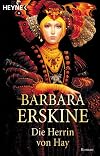
Lady of Hay
by Barbara Erskine
On This Page
Description
A story spanning centuries. A long awaited revenge. In London, journalist Jo Clifford plans to debunk the belief in past-lives in a hard-hitting magazine piece. But her scepticism is shaken when a hypnotist forces her to relive the experiences of Matilda, Lady of Hay, a noblewoman during the reign of King John. She learns of Matilda's unhappy marriage, her love for the handsome Richard de Clare, and the brutal death threats handed out by King John, before it becomes clear that Jo's past and show more present are inevitably entwined. She realises that eight hundred years on, Matilda's story of secret passion and unspeakable treachery is about to repeat itself... Barbara Erskine's iconic debut novel still delights generations of readers thirty years after its first publication. show lessTags
Recommendations


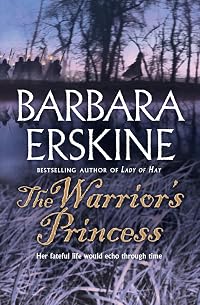
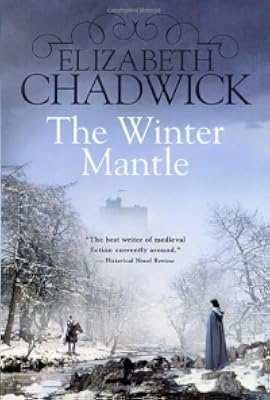
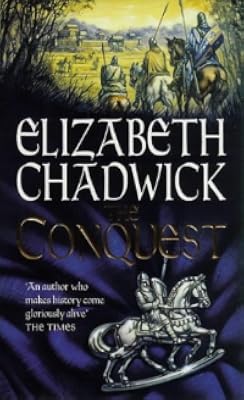
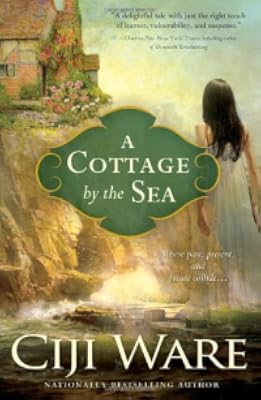

Member Recommendations

Member Reviews
Where I got the book: bought retail. Full price. Seriously, sometimes I do that just for laughs.
I read this book back in 1985 when it came out. I was 25. I cannot imagine this. I thought this book was AMAZING back then. I was hoping to recapture the moment...
Sigh.
You can never go back.
Plot: beautiful, talented journalist Jo (STRIKE ONE) appears to have no other purpose than to be hypnotized back into a previous life. Because absolutely EVERYONE she meets can do this. Really? I could count the number of regression hypnotists I've met on one.... hair follicle. Minus one. But when it comes to Jo, NOOOOO everyone can wave a hand and send her back to the Middle Ages, where she's a beautiful, willowy (STRIKE TWO) Lady of Hay called variously show more Matilda, Matilde, Maud or Moll. If nobody else is around to hypnotize her, Jo self-hypnotizes, boom, back in time before you can reach for the Scotch.
And they DO reach for the Scotch, oh yes they do, when they're not reaching for the coffee. In the contemporary parts of the novel intensely-blue-eyed (STRIKE THREE) ex-boyfriend Nick, sinister ex-boyfriend-brother-who-may-or-may-not-have-blue-eyes-but-who-cares? Sam, wimpy wannabe-boyfriend Tim and slightly-slutty-ex-boyfriend's-girlfriend Judy narrow their eyes a lot, drink much Scotch and much coffee, sleep with each other and gaze at each other with intensely blue eyes.Most of them are reincarnated, natch. Because it's PERFECTLY NORMAL to find reincarnated royalty/nobility who happen to have cassette tapes of the EXACT SAME flute music from the Middle Ages in London in 1985.
But thank heaven for the reincarnations, say I. The Middle Ages plot is the only plot in the novel, the contemporary parts being nothing but the aforesaid Scotch drinkings and eye narrowings, with a bit of driving around foggy damp Welsh hills and the occasional punch-up thrown in. The Middle Ages characters do all sorts of exciting activities, either on horseback or at swordpoint or, I was going to say in bed but the sex is pretty perfunctory, his eyes narrowed and next minute they were smoking a cigarette or drinking a post-coital Scotch kind of thing. Oh no, wait, I was in the Middle Ages so perhaps no Scotch. Damned if I know.
This is the anniversary edition, so there's a sequel short story which is over-the-top silly with lots! of! exclamation! points! Interestingly, Erskine seems at times to refute the New Age beliefs which evidently gave rise to this idea that you could simply hypnotize yourself back into the past. Or fly, depending on which drugs you were taking. The 70s were awesome.
You know, if you just stuck to the Middle Ages story you'd have a great tale of love, loss, dynastic power-mongering, rogue kings and towering castles. I only felt like screaming every time we landed back in the 1980s. Of course, if you remember the 1980s you'll sympathize with that.
Verdict: a novel that is past its prime. A humungous hit in its day, but it doesn't travel well. show less
I read this book back in 1985 when it came out. I was 25. I cannot imagine this. I thought this book was AMAZING back then. I was hoping to recapture the moment...
Sigh.
You can never go back.
Plot: beautiful, talented journalist Jo (STRIKE ONE) appears to have no other purpose than to be hypnotized back into a previous life. Because absolutely EVERYONE she meets can do this. Really? I could count the number of regression hypnotists I've met on one.... hair follicle. Minus one. But when it comes to Jo, NOOOOO everyone can wave a hand and send her back to the Middle Ages, where she's a beautiful, willowy (STRIKE TWO) Lady of Hay called variously show more Matilda, Matilde, Maud or Moll. If nobody else is around to hypnotize her, Jo self-hypnotizes, boom, back in time before you can reach for the Scotch.
And they DO reach for the Scotch, oh yes they do, when they're not reaching for the coffee. In the contemporary parts of the novel intensely-blue-eyed (STRIKE THREE) ex-boyfriend Nick, sinister ex-boyfriend-brother-who-may-or-may-not-have-blue-eyes-but-who-cares? Sam, wimpy wannabe-boyfriend Tim and slightly-slutty-ex-boyfriend's-girlfriend Judy narrow their eyes a lot, drink much Scotch and much coffee, sleep with each other and gaze at each other with intensely blue eyes.
But thank heaven for the reincarnations, say I. The Middle Ages plot is the only plot in the novel, the contemporary parts being nothing but the aforesaid Scotch drinkings and eye narrowings, with a bit of driving around foggy damp Welsh hills and the occasional punch-up thrown in. The Middle Ages characters do all sorts of exciting activities, either on horseback or at swordpoint or, I was going to say in bed but the sex is pretty perfunctory, his eyes narrowed and next minute they were smoking a cigarette or drinking a post-coital Scotch kind of thing. Oh no, wait, I was in the Middle Ages so perhaps no Scotch. Damned if I know.
This is the anniversary edition, so there's a sequel short story which is over-the-top silly with lots! of! exclamation! points! Interestingly, Erskine seems at times to refute the New Age beliefs which evidently gave rise to this idea that you could simply hypnotize yourself back into the past. Or fly, depending on which drugs you were taking. The 70s were awesome.
You know, if you just stuck to the Middle Ages story you'd have a great tale of love, loss, dynastic power-mongering, rogue kings and towering castles. I only felt like screaming every time we landed back in the 1980s. Of course, if you remember the 1980s you'll sympathize with that.
Verdict: a novel that is past its prime. A humungous hit in its day, but it doesn't travel well. show less
Joanna, a London journalist, is researching a piece on hypnotic regression in which individuals under hypnosis find themselves suddenly inhabiting the mind and body of people from the past. Curious, Joanna opts to undergo such an experiment herself, but when she is thrust into the life of Matilda de Braose, a young noblewoman who lived 800 years prior, she experiences a number of horrifyingly unforgettable situations. You and I, under such circumstances, would likely avoid a second session of hypnosis, but Joanna chooses to go under again. And again.
Over 500 pages, this was a sort of interesting though surprisingly violent tale, and it takes some rather uncomfortable and dark turns -- so definitely not for everyone. There are also a show more fair number of scenes in which characters "poke at" mouth-wateringly delicious but ultimately unfinished meals, which is agonizingly unsatisfying to the reader! Overall, no recommendation from me. show less
Over 500 pages, this was a sort of interesting though surprisingly violent tale, and it takes some rather uncomfortable and dark turns -- so definitely not for everyone. There are also a show more fair number of scenes in which characters "poke at" mouth-wateringly delicious but ultimately unfinished meals, which is agonizingly unsatisfying to the reader! Overall, no recommendation from me. show less
Lady of Hay - Erskine
3 stars
On a clear day you can see forever; possibly. During a thunderstorm you may regress to a previous life. During a thunderstorm, or under hypnosis with an ethical therapist, or with an evil therapist, or with your abusive boyfriend or….. whenever and wherever you are, if you are the 20th century journalist, Jo Clifford; formerly known as Matilda de Braose. Jo starts with the intention of debunking the practice of past life regression, until she and all of her male admirers become trapped with the consequences of their 12th century behavior.
Matilda de Braose, Lady of Hay, was married to the abusive, 12th century Welsh Baron, William de Braose. Historically, she is also known to have taunted King John show more concerning the murder of Arthur of Brittany. King John was not a good man * to cross. Barbara Erskine adds to John’s lack of appeal by giving him a sexually dominant role in Matilda’s life. And, just to make things more complicated, she adds a star crossed lover, Richard de Clare.
Extreme suspension of disbelief is required. Maybe my personal supplies of credibility are running low. I could accept time travel by past life regression. I enjoyed the historical sections of this book, although I disliked how disjointed the historical timeline became. Jo Clifford’s regressions into Matilda’s life jump through the decades from her girlhood, to her marriage and child rearing, and finally to her tragic death. In the meantime, Jo experiences just a few, very disturbing months of the 20th century. The behavior of the contemporary characters just didn’t make sense to me. It was suspenseful, but it didn’t make sense. I couldn’t get past the unlikely and unethical behavior of a therapist sharing confidential information with the potentially dangerous friends of a client. I find it too unbelievable and very distasteful that a character who has been raped will describe the perpetrator as ‘not like himself’ and continue to trust this person in future encounters. The more I thought about this book the more I found myself disliking it. Sexual violence against women is certainly a part of the past and the present. But this book made it seem too commonplace and far too easily ignored by the contemporary characters.There’s even the suggestion that ‘our Jo’ really does like it rough. And ……… well, my biggest objection is a huge spoiler……………
…………………………………………………………………………………………………………………………………...
I would not, could not, believe that Jo, who clearly remembers that King John threw her into a pit to starve to death with her oldest son, could ever allow her contemporary self to fall in love with John’s contemporary recreation. Not. Ever.
………….end of spoiler ………………...
*King John was not a good man —
He had his little ways.
A. A. Milne - King John’s Christmas
show less
Recently re-read this in the updated 25th anniversary version with the added 'What happened next' short story. It's an epic story charting the dual lives of Jo Clifford and Matilda de Braose centred around regression. Whilst you cannot fault the story telling abilities of Erskine some of the characterisation rankles. *spoiler* I'm not certain how many modern women who had been beaten/raped by their ex would be willing to let them back into their lives, but this is what happens to Jo. It doesn't ring true and that is the major thing that annoys me about the book.*/spoiler* That aside it is an interesting tale with great historic detail. For me, the added short story adds nothing to the overall storyline.
Barbara Erskine is a wondrous storyteller. I recently discovered her gifted talent when I became her prisoner of print as I read Lady of Hay. How this brilliant historical novel slipped by me twenty five years ago when it was first released I will never know. Fortunately, I didn’t miss it this time. Surrounded by a network of book loving bloggers, Lady of Hay, came highly recommended and I was anxious to pick it up to read. I was told that despite the length of 571 pages, it was definitely a must read. Shortly after that, I was offered this book by Sourcebooks as an Advanced Reader Copy. As I also believe in divine alignment, I quickly accepted this book as a selection.
Lady of Hay is one of the richest historical novels I have read show more this year. I was consumed by the story of Joanna and her tortuous journey to unravel her past. I was captivated by the characters who surround Joanna in this life and what they meant to her when she regresses back and experiences life through Matilda. What was so hard about reading this novel was the frustration of wanting to find out what happened next, yet not wanting the story to end. I could very easily read this book again, it is a rare pleasure to experience. I know I will be choosing another novel by Barbara Erskine to read very soon.
© [Wisteria Leigh] and [Bookworm's Dinner], [2010]. show less
Lady of Hay is one of the richest historical novels I have read show more this year. I was consumed by the story of Joanna and her tortuous journey to unravel her past. I was captivated by the characters who surround Joanna in this life and what they meant to her when she regresses back and experiences life through Matilda. What was so hard about reading this novel was the frustration of wanting to find out what happened next, yet not wanting the story to end. I could very easily read this book again, it is a rare pleasure to experience. I know I will be choosing another novel by Barbara Erskine to read very soon.
© [Wisteria Leigh] and [Bookworm's Dinner], [2010]. show less
Have had this book on my shelves for a long time, having picked it up in a charity shop at some point. I knew it was a huge bestseller in the 1980s which I think launched the author's career. On the face of it, it is a 'timeslip' story which alternates constantly between the 12th century and 1980s England through the medium of the female protagonist, Joanna. Initially, she is hypnotised as part of an experiment in pastlife regression and proves very susceptible. Eventually she becomes so adept that she self-hypnotises even when she doesn't want to immerse herself in the life of her 12th century alter-ego Matilda.
I hadn't read a great deal of the book before I discovered that it must be the 1980s equivalent of Three Shades of Grey. There show more is a huge amount of sexual and other abuse of women in which the women are compliant, even at times slightly turned on, whether that is in the past or the present. Joanna remains in love with the chief male protagonist, Nick, even though he has raped her at least once - I lost track in the end - and sliced her arm up on a broken vase or whatever and all sorts of other abuse. He also 'loves' her despite his behaviour. His evil brother Sam (and why Sam has a longstanding hatred of Nick is never explained) hypnotises Nick to convince him he is the reincarnation of Prince, later King John, of Magna Carta fame. In history, John condemned Matilda to a terrible death and Sam tells him he must kill her again, seemingly as part of a plot to have Nick certified as dangerously insane. By a vast coincidence it seems that Nick really is the reincarnation of John. His first - very brutal - rape of Joanna occurs before he is hypnotised. In keeping with the twisted attitudes displayed in this book, it transpires that John fancied Matilda like mad despite also hating her, and in fact still "loves" her 800 years later.
Amazingly Sam is the reincarnation of Matilda's abusive husband. He also inflicts various abuse on Joanna under hypnosis, and tries to manipulate the historical story although there is some doubt thrown on whether such encounters were truly part of it - at one point, Joanna finds the tape of flute music he had used as a background while abusing her and reflects that it would be anachronistic for the period when Matilda lived. But in his twisted way, Sam it seems also 'loves' Joanna and is certainly obsessed with her and her previous incarnation. Likewise, the man with whom he identifies is an unfeeling brute. To stretch the reader's credulity further, there is yet a third man who is another character from Matilda's story. Weak and ineffectual, he is the reincarnation of the man whom she really loved in the 12th century. At least the sex she has with him is consensual, which makes a nice change.
As if all this wasn't bad enough, the writing standard is poor. Huge numbers of sentences begin with the present tense with the character doing something, then continue with a whole series of actions which they can't possibly carry out while still doing the first action. This is a tic of the author's that jumped out at me all the time and was really annoying. You can't, for example, start a sentence with "Parking the car ...." then have the character climb out and walk off somewhere else - they would be doing this while still parking the car. Or they are brushing their hair while taking clothes out of a wardrobe, getting dressed and walking downstairs. There were masses of such instances. And on just about every page set in the 1980s, the characters are making and/or drinking coffee. On the ones where they aren't, they are knocking back scotch. No one even drinks tea for a bit of variety - something the British were well known for at the time. The modern day characters were all cliches out of 1980s soap operas, especially the London based 'professional' ones who drive the main pivot of the action of the framing story. We are constantly told that Joanna is a no-nonsense hard-hitting journalist, while in reality she is a wimp who is so pathetic she doesn't even get her locks changed when her ex-boyfriend and his brother keep letting themselves into her apartment. The two people on the smallholding who try to help Joanna are more sympathetic, but have a tiny part in the story and are probably based on the main characters in BBC's "The Good Life" programme which was very popular at the time.
I read on to find out how Matilda comes to her grisly end - we had been told at the beginning about the tragedy affecting her and her eldest son - and to see if the book was really as awful as it initially seemed. The historical parts are much more interesting than the multiple 'love' triangle/bed hopping, 1980s framework, which has a lot of repetitive driving around, booking into pubs and bed and breakfast places, and visiting castles. By itself, the 12th century material could have worked as an historical novel. However, my recollection is that at the time publishers were not receptive to the genre. The only such novels available were library copies of Jean Plaidy, Dorothy Dunnett and other such writers, because publishers believed there was 'no market' for such a genre and created a self-fulfilling prophecy by not publishing it.
The historical genre finally made a come-back thanks to the pioneering efforts of Edith Pargeter under the name "Ellis Peters" - her Cadfael murder mysteries set in medieval times were hugely popular, helped by the very good TV series, and created a whole subgenre of historical crime, with more and more publishers rushing to get onto the bandwaggon. I think maybe they still didn't think there was a market for actual historical or historical romance novels when 'Lady of Hay' was published but thought they would try something hybrid like this, and so it found an audience among a readership crying out for new historical fiction. That would account for its huge success at the time. Unfortunately there is just too much misogyny for the modern reader to overlook. So I can only give it a one star rating, and it earns that mainly on the slightly more interesting material about Matilda and a quite attractive cover. show less
I hadn't read a great deal of the book before I discovered that it must be the 1980s equivalent of Three Shades of Grey. There show more is a huge amount of sexual and other abuse of women in which the women are compliant, even at times slightly turned on, whether that is in the past or the present. Joanna remains in love with the chief male protagonist, Nick, even though he has raped her at least once - I lost track in the end - and sliced her arm up on a broken vase or whatever and all sorts of other abuse. He also 'loves' her despite his behaviour. His evil brother Sam (and why Sam has a longstanding hatred of Nick is never explained) hypnotises Nick to convince him he is the reincarnation of Prince, later King John, of Magna Carta fame. In history, John condemned Matilda to a terrible death and Sam tells him he must kill her again, seemingly as part of a plot to have Nick certified as dangerously insane. By a vast coincidence it seems that Nick really is the reincarnation of John. His first - very brutal - rape of Joanna occurs before he is hypnotised. In keeping with the twisted attitudes displayed in this book, it transpires that John fancied Matilda like mad despite also hating her, and in fact still "loves" her 800 years later.
Amazingly Sam is the reincarnation of Matilda's abusive husband. He also inflicts various abuse on Joanna under hypnosis, and tries to manipulate the historical story although there is some doubt thrown on whether such encounters were truly part of it - at one point, Joanna finds the tape of flute music he had used as a background while abusing her and reflects that it would be anachronistic for the period when Matilda lived. But in his twisted way, Sam it seems also 'loves' Joanna and is certainly obsessed with her and her previous incarnation. Likewise, the man with whom he identifies is an unfeeling brute. To stretch the reader's credulity further, there is yet a third man who is another character from Matilda's story. Weak and ineffectual, he is the reincarnation of the man whom she really loved in the 12th century. At least the sex she has with him is consensual, which makes a nice change.
As if all this wasn't bad enough, the writing standard is poor. Huge numbers of sentences begin with the present tense with the character doing something, then continue with a whole series of actions which they can't possibly carry out while still doing the first action. This is a tic of the author's that jumped out at me all the time and was really annoying. You can't, for example, start a sentence with "Parking the car ...." then have the character climb out and walk off somewhere else - they would be doing this while still parking the car. Or they are brushing their hair while taking clothes out of a wardrobe, getting dressed and walking downstairs. There were masses of such instances. And on just about every page set in the 1980s, the characters are making and/or drinking coffee. On the ones where they aren't, they are knocking back scotch. No one even drinks tea for a bit of variety - something the British were well known for at the time. The modern day characters were all cliches out of 1980s soap operas, especially the London based 'professional' ones who drive the main pivot of the action of the framing story. We are constantly told that Joanna is a no-nonsense hard-hitting journalist, while in reality she is a wimp who is so pathetic she doesn't even get her locks changed when her ex-boyfriend and his brother keep letting themselves into her apartment. The two people on the smallholding who try to help Joanna are more sympathetic, but have a tiny part in the story and are probably based on the main characters in BBC's "The Good Life" programme which was very popular at the time.
I read on to find out how Matilda comes to her grisly end - we had been told at the beginning about the tragedy affecting her and her eldest son - and to see if the book was really as awful as it initially seemed. The historical parts are much more interesting than the multiple 'love' triangle/bed hopping, 1980s framework, which has a lot of repetitive driving around, booking into pubs and bed and breakfast places, and visiting castles. By itself, the 12th century material could have worked as an historical novel. However, my recollection is that at the time publishers were not receptive to the genre. The only such novels available were library copies of Jean Plaidy, Dorothy Dunnett and other such writers, because publishers believed there was 'no market' for such a genre and created a self-fulfilling prophecy by not publishing it.
The historical genre finally made a come-back thanks to the pioneering efforts of Edith Pargeter under the name "Ellis Peters" - her Cadfael murder mysteries set in medieval times were hugely popular, helped by the very good TV series, and created a whole subgenre of historical crime, with more and more publishers rushing to get onto the bandwaggon. I think maybe they still didn't think there was a market for actual historical or historical romance novels when 'Lady of Hay' was published but thought they would try something hybrid like this, and so it found an audience among a readership crying out for new historical fiction. That would account for its huge success at the time. Unfortunately there is just too much misogyny for the modern reader to overlook. So I can only give it a one star rating, and it earns that mainly on the slightly more interesting material about Matilda and a quite attractive cover. show less
This is a rather convoluted story given that you must keep track of both past and present story lines for multiple characters. The characters are compelling by themselves, but when placed into this particular story they become entrancing.
Ms. Erskine was very thorough in researching the material for this book, and the descriptive details were wonderfully enchanting. The only place I feel she slipped a bit was in the way the historical characters spoke, occasionally using the word "hey," which was not introduced into common language until several hundred years after the historical portion of the story took place. And for all that Lady de Baorse was a trailblazer, I still found it a bit challenging to reconcile her attitude and how on the show more one hand she spoke to men - particularly the king - as if they were equals, and on the other hand she would talk about the duties of women being to submit to their husbands and acknowledging that they were owned by their husbands just like a horse or an item of clothing. But much of that can be forgiven and understood since the Lady de Baorse was being channeled by a modern-day woman who wouldn't be afraid of men as women of the 1200's would be, since women were chattel and only used to gain necessary alliances and such.
That hiccup aside, the story is riveting. All the main characters are strong forces on their own and combined together they become a volatile mix. Even the secondary characters have a surprising depth not often seen in a character that may only be in two or three scenes in the entire book. Just when you feel that the story arc is beginning to drag, you are whisked back in time to relive the extraordinary life of Matilda, otherwise known as the Lady de Baorse. However for the majority of the book the story moves right along at a lovely clip.
If you have an issue with wanton alcohol consumption be forewarned, as I'm not sure if there is a single scene in which either alcohol or coffee is not consumed - and often the coffee contains alcohol. Also, Jo comes across as having a rather loose moral code when it comes to sex, but I much of that is driven by the historical portions of the book oddly enough.
This book is perfect for those who enjoyed such books as 'The Other Boleyn Girl,' 'The Virgin's Lover,' and other books that take historical periods and their more well-known people and try to recreate what their lives might have been like. While that may sound like a simple romance novel it is clear the hundreds of hours of research that goes into the creation of the top-shelf books of this genre. And there is no doubt in my mind that this book belongs up near the top-shelf with the others, though it is not in the same league as the Diana Gabaldon's "Outlander" series. Definitely a challenge to put the book down and get anything else done until I finished reading it. Thankfully it is a fairly quick read, regardless of its size. show less
Ms. Erskine was very thorough in researching the material for this book, and the descriptive details were wonderfully enchanting. The only place I feel she slipped a bit was in the way the historical characters spoke, occasionally using the word "hey," which was not introduced into common language until several hundred years after the historical portion of the story took place. And for all that Lady de Baorse was a trailblazer, I still found it a bit challenging to reconcile her attitude and how on the show more one hand she spoke to men - particularly the king - as if they were equals, and on the other hand she would talk about the duties of women being to submit to their husbands and acknowledging that they were owned by their husbands just like a horse or an item of clothing. But much of that can be forgiven and understood since the Lady de Baorse was being channeled by a modern-day woman who wouldn't be afraid of men as women of the 1200's would be, since women were chattel and only used to gain necessary alliances and such.
That hiccup aside, the story is riveting. All the main characters are strong forces on their own and combined together they become a volatile mix. Even the secondary characters have a surprising depth not often seen in a character that may only be in two or three scenes in the entire book. Just when you feel that the story arc is beginning to drag, you are whisked back in time to relive the extraordinary life of Matilda, otherwise known as the Lady de Baorse. However for the majority of the book the story moves right along at a lovely clip.
If you have an issue with wanton alcohol consumption be forewarned, as I'm not sure if there is a single scene in which either alcohol or coffee is not consumed - and often the coffee contains alcohol. Also, Jo comes across as having a rather loose moral code when it comes to sex, but I much of that is driven by the historical portions of the book oddly enough.
This book is perfect for those who enjoyed such books as 'The Other Boleyn Girl,' 'The Virgin's Lover,' and other books that take historical periods and their more well-known people and try to recreate what their lives might have been like. While that may sound like a simple romance novel it is clear the hundreds of hours of research that goes into the creation of the top-shelf books of this genre. And there is no doubt in my mind that this book belongs up near the top-shelf with the others, though it is not in the same league as the Diana Gabaldon's "Outlander" series. Definitely a challenge to put the book down and get anything else done until I finished reading it. Thankfully it is a fairly quick read, regardless of its size. show less
Members
- Recently Added By
Author Information

35+ Works 5,069 Members
Awards and Honors
Notable Lists
Series
Belongs to Publisher Series
Heyne Allgemeine Reihe (7854)
Common Knowledge
- Canonical title*
- Die Herrin von Hay
- Original title
- Lady of Hay
- Original publication date
- 1986
- People/Characters
- Jo Clifford; Matilda de Braose (Lady of Hay); Richard de Clare; John, King of England
- Important places
- Hay Castle, Hay-on-Wye, Powys, Wales, UK
- Dedication*
- Für Michael
- First words
- "Basically I like the idea," Bet Gunning leaned across the table, her eyes, as they focused on Jo's face, intense behind the large square lenses of her glasses.
- Last words*
- (Click to show. Warning: May contain spoilers.)"Na, trinken wir auf Jo. Auf ihre problemlose Niederkunft und auf die absolute Diskretion der Presse!"
- Original language
- English
*Some information comes from Common Knowledge in other languages. Click "Edit" for more information.
Classifications
Statistics
- Members
- 896
- Popularity
- 30,028
- Reviews
- 33
- Rating
- (3.87)
- Languages
- 11 — Czech, Danish, Dutch, English, Estonian, French, German, Italian, Norwegian, Portuguese, Swedish
- Media
- Paper, Audiobook, Ebook
- ISBNs
- 45
- UPCs
- 1
- ASINs
- 12