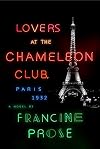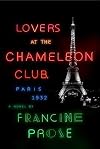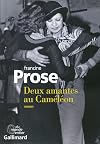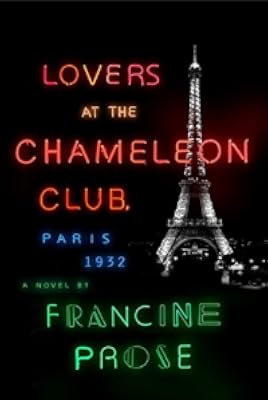
Lovers at the Chameleon Club, Paris 1932
by Francine Prose
On This Page
Description
A richly imagined and stunningly inventive literary masterpiece of love, art, and betrayal, exploring the genesis of evil, the unforeseen consequences of love, and the ultimate unreliability of storytelling itself.Paris in the 1920s shimmers with excitement, dissipation, and freedom. It is a place of intoxicating ambition, passion, art, and discontent, where louche jazz venues like the Chameleon Club draw expats, artists, libertines, and parvenus looking to indulge their true selves. It is show more at the Chameleon where the striking Lou Villars, an extraordinary athlete and scandalous cross-dressing lesbian, finds refuge among the club's loyal denizens, including the rising Hungarian photographer Gabor Tsenyi, the socialite and art patron Baroness Lily de Rossignol; and the caustic American writer Lionel Maine.
As the years pass, their fortunes—and the world itself—evolve. Lou falls desperately in love and finds success as a race car driver. Gabor builds his reputation with startlingly vivid and imaginative photographs, including a haunting portrait of Lou and her lover, which will resonate through all their lives. As the exuberant twenties give way to darker times, Lou experiences another metamorphosis—sparked by tumultuous events—that will warp her earnest desire for love and approval into something far more.
. show less
Tags
Recommendations
















Member Recommendations

Member Reviews
When someone describes what I'm doing as "ambitious" I groan inwardly. I've fallen short of my goal. But I've also learned it's rarely meant cruelly and is often, in its own way, a compliment. [Lovers at the Chameleon Club] is ambitious and comes close. Although imperfect, it is very much worth reading, both for the story and for the way Prose puts the story together. I can see exactly what drew Prose to write about Lou, the ultimate anti-heroine; it's the question of what it is that draws a person into committing acts of evil? That is the great mystery that historians especially struggle with. Evil-doers aren't all sociopaths. Prose is imagining a person who, by the accident of family, of difference, of unusual gifts, alienated and show more rejected and unloved. But Lou is also a person of somewhat average (or less?) intelligence and curiosity and is therefore unable to see the difference between real love and being used as a means to an end, vulnerable to flattery and unable to look deeper into herself to question her own motives or think about larger consequences. It crossed my mind at some point, that it could be, in some ways, a portrait of Hitler himself, just reduced to a bit part. So why doesn't it work? Well, parts of it do. Prose chooses to tell the story from a number of different viewpoints, mostly the memoirs of people who knew Lou and a biographer. Some of those voices work and feel reasonably authentic, some of them waver a bit, and some of them don't really work at all. The other piece, for me, is that ultimately I don't feel Prose herself quite believes her story of Lou. I use the word "feel" carefully because it's just that, a feeling. What works is the setting and atmosphere, the photographer, Tsenyi and his friend Lionel. Prose shows how desperately everyone clung to the idea that the war wasn't going to happen, especially in Paris, even when they knew it was inevitable and thus the car racing and life as usual. Because Prose writes so well, too, it isn't difficult to read. I did miss her customary humor, though, so much a part of her other novels. There is one dinner, in Berlin, just before the Olympic games open, which really was in its ghastly way, surreal and almost comical, almost what I would have to say is Pynchon-y when Lou finds herself sitting beside Hitler at dinner. Anyhow, the Mitford sisters are in attendance, a great touch. Worth reading? Yes. And I do think it is a book different kinds of readers might absorb differently. ***1/2 show less
When I was about a third of the way through this book, I read some of the blurbs on the back of my copy and noticed that one of the reviewers referred to this as a mystery. That was very surprising to me, because it was reading like a historical novel. From that point on, I was on the alert of what aspect of this story, set in Paris from the 1920’s to just after World War II, could make it a mystery.
The novel is set up as a combination of letters, biographies and autobiographies of the main characters. This mix of point of views, voices and writing styles holds the reader’s interest and allows for a multi-faceted picture of the events described as Paris transitions from the ex-pat era of the 20’s to the Nazi occupation. It’s show more also interesting to see how some of the characters get to speak in their own voice, and some are spoken for. The format in which the characters are portrayed ends up playing almost a bigger role than the characters themselves.
One of the best aspects of the book was the way that Francine Prose, while describing a very unique and transformative time in history, still manages to create characters most readers have met – ones who are instantly recognizable despite the huge differences of time, place or nationality.
“And everyone has, at some point, met a man like Chanac: those lucky individuals who continually fail upward, who are fired for incompetence or for some abuse of power and instantly find a better job. We ordinary mortals would have wound up in jail or on the street! But these chosen ones rise higher – in politics, business, or even at a sleepy provincial high school. And so this pattern repeats itself: promotion, crime, exposure, failure, bigger crime, bigger failure, bigger promotion.”
This story of love and war and betrayal, good and evil, uses as one of its main characters a woman named Lou Villars. The reader is told from the beginning that she betrayed her country and helped the Nazis, and then step by step, is led down the path from her childhood to adulthood – with significant events highlighted along the way. Her biographer (who entitles her book “The Devil Drives”) points out each and every event that might have sculpted Lou – led to her views and actions.
“Looking into the sources of evil, as I have in writing this book, I have developed a profound respect (if respect is the word) for the power of resentment, the corrosive acid produced by the conviction that a person has been overlooked, cheated, or betrayed.”
The other characters surrounding Lou tell their stories as well – their tales of the city they love, their reasons for the choices they made and the actions they took. Especially in the lead up to and beginnings of the war, their stories become more introspective. “Later, when such stories could be told, everyone had a story about the moment they decided to do the right thing.”
These stories that circle around and intersect with that of Lou Villars start to fit together, piece by piece – to create her portrait. “Was it wrong to make one person suffer to prevent harm to many? When Lou pondered that, when she tried not to, it gave her a headache. She’d leave those questions to the philosophers and do what she did best.”
Only at the VERY end of the book, did I understand the mystery of it. As I finished the book, I thought back on so much of what I had read, so many things I had accepted without questioning. I looked back on a quote from earlier in the book - “Everyone who has ever written a biography, everyone who has ever lived, will have notices how often a dark thread runs through the weave and weft of a life.”
And I understood then that this book was not what I thought it was about at all. While it is about people and how they react in certain circumstances, how they cope and adapt to that which life throws at them, it just wasn’t about the people I’d thought it had been. Mystery revealed. show less
The novel is set up as a combination of letters, biographies and autobiographies of the main characters. This mix of point of views, voices and writing styles holds the reader’s interest and allows for a multi-faceted picture of the events described as Paris transitions from the ex-pat era of the 20’s to the Nazi occupation. It’s show more also interesting to see how some of the characters get to speak in their own voice, and some are spoken for. The format in which the characters are portrayed ends up playing almost a bigger role than the characters themselves.
One of the best aspects of the book was the way that Francine Prose, while describing a very unique and transformative time in history, still manages to create characters most readers have met – ones who are instantly recognizable despite the huge differences of time, place or nationality.
“And everyone has, at some point, met a man like Chanac: those lucky individuals who continually fail upward, who are fired for incompetence or for some abuse of power and instantly find a better job. We ordinary mortals would have wound up in jail or on the street! But these chosen ones rise higher – in politics, business, or even at a sleepy provincial high school. And so this pattern repeats itself: promotion, crime, exposure, failure, bigger crime, bigger failure, bigger promotion.”
This story of love and war and betrayal, good and evil, uses as one of its main characters a woman named Lou Villars. The reader is told from the beginning that she betrayed her country and helped the Nazis, and then step by step, is led down the path from her childhood to adulthood – with significant events highlighted along the way. Her biographer (who entitles her book “The Devil Drives”) points out each and every event that might have sculpted Lou – led to her views and actions.
“Looking into the sources of evil, as I have in writing this book, I have developed a profound respect (if respect is the word) for the power of resentment, the corrosive acid produced by the conviction that a person has been overlooked, cheated, or betrayed.”
The other characters surrounding Lou tell their stories as well – their tales of the city they love, their reasons for the choices they made and the actions they took. Especially in the lead up to and beginnings of the war, their stories become more introspective. “Later, when such stories could be told, everyone had a story about the moment they decided to do the right thing.”
These stories that circle around and intersect with that of Lou Villars start to fit together, piece by piece – to create her portrait. “Was it wrong to make one person suffer to prevent harm to many? When Lou pondered that, when she tried not to, it gave her a headache. She’d leave those questions to the philosophers and do what she did best.”
Only at the VERY end of the book, did I understand the mystery of it. As I finished the book, I thought back on so much of what I had read, so many things I had accepted without questioning. I looked back on a quote from earlier in the book - “Everyone who has ever written a biography, everyone who has ever lived, will have notices how often a dark thread runs through the weave and weft of a life.”
And I understood then that this book was not what I thought it was about at all. While it is about people and how they react in certain circumstances, how they cope and adapt to that which life throws at them, it just wasn’t about the people I’d thought it had been. Mystery revealed. show less
This is not a comfortable novel to read at the present time. Despite the cover and title, it isn’t a romance at all. It is, in fact, a depiction of the creeping menace of fascism and how it encroaches on people’s lives. The structure of the narrative is interesting, as it consists of various documents in which each writer tells their own version of a single story. This story centres on Lou Villars, who is not given her own voice in the narrative. As the author’s afterword states, she is based quite closely on a real person who had the same extraordinary life experiences that are recounted here. Lou is an athlete as a teenager, then becomes a cross-dressing nightclub dancer, then a racing driver, then a mechanic, then an informant, show more then a gestapo torturer. Also she's a lesbian. Although most of the book’s narrators speculate about her motives, the absence of her point of view really emphasises the difficulties of historical interpretation. Somewhat surprisingly, though, I did not find Lou the most interesting part of the book. Perhaps because everything she did was so heavily foreshadowed and warned about. The real strength of the novel, I thought, was the reactions of the Parisian narrators to the instability of France and looming threat of Hitler in the 1930s. There were some chilling passages, for example:
The current rise of neo-nazi rhetoric in the political mainstream makes this kind of novel seem very relevant. ‘Lovers at the Chameleon Club, Paris 1932’ offers no easy answers, but there are some moments of beauty as well as dread and horror. This is a novel about judging your own and others' actions in retrospect, reflecting on behaviour during a time of extremity. It’s not the easiest book to get into, but is thoughtfully and elegantly written so repays persistence. show less
That was how we heard what was happening to the French Jews. In the middle of nowhere, we heard what was going on, so those who say they didn’t know must have never gone outside or had one conversation with another person. I know this is not a popular view. No French citizen wants to hear it. It is one of the reasons I have repeatedly changed my mind about whether I want my memoirs destroyed after I am dead.
[...]
Our problems seemed trivial compared to those of the Jews. No matter how our hearts ached for them, we were relieved when they left, not only because we hoped they would be safe but because of our guilt. Being unable to help them increased the strain on our nerves.
The current rise of neo-nazi rhetoric in the political mainstream makes this kind of novel seem very relevant. ‘Lovers at the Chameleon Club, Paris 1932’ offers no easy answers, but there are some moments of beauty as well as dread and horror. This is a novel about judging your own and others' actions in retrospect, reflecting on behaviour during a time of extremity. It’s not the easiest book to get into, but is thoughtfully and elegantly written so repays persistence. show less
It's really hard to describe this book... artists and lesbians in inter-war Paris, a club for transvestites, female athletes and racecar drivers. It sounds sordid and sensationalist, and it is, but it is also vivid, convincing, and utterly absorbing.
The novel comprises several letters, memoirs, and biographies, all interspersed to tell a story based on true facts about a lesbian athlete and Nazi sympathizer. The story focuses around a few photographs taken by one of the main characters - the photographs actually exist, and are easy to find online.
I couldn't put this down. The characters were interesting and vivid. The multiple viewpoints were very interesting, particularly when different characters described the same event. Paris in show more the '30s and '40s is a fascinating setting, and Prose evoked it very effectively (after reading the book, I found a bunch of the photographs the book was based on, and they all looked exactly how I imagined they would from reading the book).
There is depth here too - the book raises questions about the nature of good and evil. Why do some people do good things, and others do bad things? Is personal history responsible for whether people do good or bad? Love and relationships seem closely intertwined with good and evil, but that is also a chicken and egg question.
A thoroughly enjoyable read! show less
The novel comprises several letters, memoirs, and biographies, all interspersed to tell a story based on true facts about a lesbian athlete and Nazi sympathizer. The story focuses around a few photographs taken by one of the main characters - the photographs actually exist, and are easy to find online.
I couldn't put this down. The characters were interesting and vivid. The multiple viewpoints were very interesting, particularly when different characters described the same event. Paris in show more the '30s and '40s is a fascinating setting, and Prose evoked it very effectively (after reading the book, I found a bunch of the photographs the book was based on, and they all looked exactly how I imagined they would from reading the book).
There is depth here too - the book raises questions about the nature of good and evil. Why do some people do good things, and others do bad things? Is personal history responsible for whether people do good or bad? Love and relationships seem closely intertwined with good and evil, but that is also a chicken and egg question.
A thoroughly enjoyable read! show less
I have tried to describe this book to several people now and it always comes across as sounding very strange indeed. I'm not sure they believe me when I say that it all fits beautifully within the context of the story and that it is a fascinating tale based, at least in part, on real people. I mean, who is going to believe that a novel about a lesbian, cross-dressing, French, race car driving woman who despite being a patriot became a spy and then a torturer for the Nazis in Occupied France? Crazy focus for a novel, right? And yet, it not only works, but Prose's newest novel, Lovers at the Chameleon Club, Paris 1932, comes together as a marvelous tale about love, desire, art, betrayal, and the seeds of evil.
Paris in the years leading show more up to WWII had a giddy, frenetic feel to it and that sense of grabbing life around the neck was nowhere more evident than at The Chameleon Club, where men dressed as women and women dressed as men. People came to the club to listen to the owner, Yvonne, croon about her long dead sailor and to let their hair down, free to be themselves as they could nowhere else. And the club is the place that the narrative circles back to again and again, a place that all the characters have been too and that some know intimately.
Narrated by multiple characters in multiple ways (letters, essays from the time, published and unpublished memoirs written later, and a biography written in the present), the novel swirls around the person of Lou Villars. Although Lou is not always the central character in the narrations, her presence and her ultimate war crimes, which are made clear in the very beginning of the novel, are the threads that connect all the players together. Lionel Main is an American writer who is searching for fame as he writes (and embellishes or even makes up out of whole cloth) about a decadent Paris for readers at home. Gabor Tsenyi is the Hungarian photographer who snaps an iconic picture of Lou in a tuxedo with her lover Arlette in a fancy party dress while sitting at the Chameleon's bar. Suzanne Dunois Tsenyi is Gabor's ever tolerant girlfriend and ultimately his wife. Baroness Lily de Rossignol is a frigid but wealthy woman who bankrolls Gabor's photography and employs Lou as a race car driver for her gay husband and his brother's brand of French cars. And finally Nathalie Dunois is a teacher in the present who is writing a biography of Lou Villars called The Devil Drives, humanizing and even identifying with this woman who has been so demonized for her role in Nazi Occupied France that her life is rarely, if ever, spoken of.
Telling the story of Lou's life from childhood through her impressive athletic displays as a young woman and on into the disappointments and betrayals of her adulthood, this novel seeks to understand the genesis of evil. Does Lou become an informer and torturer because of her upbringing? Does she become open to evil because of the way that life and the people in it maltreat and take advantage of her? Or is it something else, the seed of which has always been in her? How could a French patriot who venerated Joan of Arc willingly collaborate with the Nazis? Lou never narrates her own story and so despite all the evidence, we cannot fully know. The other characters, who do narrate, explain not only what they knew of Lou but also their own lives in that increasingly ominous time before the war and the decisions that led them to their roles during the war. All of the narrators are contemporaneous with Lou except for Nathalie Dunois, her biographer, who becomes less and less reliable as the book progresses.
Each of the different modes of narration and the different narrators widen the tale with their overlapping observations, making this an incredibly nuanced read. The beginning of the novel, as the reader is meeting each of the characters in the story, and there are many beyond just the narrators, can be a bit overwhelming but once they are all in place, the story starts to race along to the inevitable conclusion, and one that the reader knows from the outset. The journey to that end is definitely worth the ride as the stories tell and retell, expanding on each other as Lou's decisions, desires, and even sometimes her naivety push her ever closer to the wrongheaded justifications she will use to excuse her participation in evil. Prose is a masterful writer and she manages to keep all her balls in the air with this complicated and unusual novel. show less
Paris in the years leading show more up to WWII had a giddy, frenetic feel to it and that sense of grabbing life around the neck was nowhere more evident than at The Chameleon Club, where men dressed as women and women dressed as men. People came to the club to listen to the owner, Yvonne, croon about her long dead sailor and to let their hair down, free to be themselves as they could nowhere else. And the club is the place that the narrative circles back to again and again, a place that all the characters have been too and that some know intimately.
Narrated by multiple characters in multiple ways (letters, essays from the time, published and unpublished memoirs written later, and a biography written in the present), the novel swirls around the person of Lou Villars. Although Lou is not always the central character in the narrations, her presence and her ultimate war crimes, which are made clear in the very beginning of the novel, are the threads that connect all the players together. Lionel Main is an American writer who is searching for fame as he writes (and embellishes or even makes up out of whole cloth) about a decadent Paris for readers at home. Gabor Tsenyi is the Hungarian photographer who snaps an iconic picture of Lou in a tuxedo with her lover Arlette in a fancy party dress while sitting at the Chameleon's bar. Suzanne Dunois Tsenyi is Gabor's ever tolerant girlfriend and ultimately his wife. Baroness Lily de Rossignol is a frigid but wealthy woman who bankrolls Gabor's photography and employs Lou as a race car driver for her gay husband and his brother's brand of French cars. And finally Nathalie Dunois is a teacher in the present who is writing a biography of Lou Villars called The Devil Drives, humanizing and even identifying with this woman who has been so demonized for her role in Nazi Occupied France that her life is rarely, if ever, spoken of.
Telling the story of Lou's life from childhood through her impressive athletic displays as a young woman and on into the disappointments and betrayals of her adulthood, this novel seeks to understand the genesis of evil. Does Lou become an informer and torturer because of her upbringing? Does she become open to evil because of the way that life and the people in it maltreat and take advantage of her? Or is it something else, the seed of which has always been in her? How could a French patriot who venerated Joan of Arc willingly collaborate with the Nazis? Lou never narrates her own story and so despite all the evidence, we cannot fully know. The other characters, who do narrate, explain not only what they knew of Lou but also their own lives in that increasingly ominous time before the war and the decisions that led them to their roles during the war. All of the narrators are contemporaneous with Lou except for Nathalie Dunois, her biographer, who becomes less and less reliable as the book progresses.
Each of the different modes of narration and the different narrators widen the tale with their overlapping observations, making this an incredibly nuanced read. The beginning of the novel, as the reader is meeting each of the characters in the story, and there are many beyond just the narrators, can be a bit overwhelming but once they are all in place, the story starts to race along to the inevitable conclusion, and one that the reader knows from the outset. The journey to that end is definitely worth the ride as the stories tell and retell, expanding on each other as Lou's decisions, desires, and even sometimes her naivety push her ever closer to the wrongheaded justifications she will use to excuse her participation in evil. Prose is a masterful writer and she manages to keep all her balls in the air with this complicated and unusual novel. show less
How does one begin to describe this book?
Some stories are easy to summarize. This one not so much. Perhaps the best way to describe it is:
It is a little bit of everything and then a little bit more.
Francine Prose takes on a daring task in this book, a fictional examination of the life of a real-life character, Violette Morris (renamed in the book as Lou Villars). And what a character she was.
An athlete. A race car driver. A cross-dressing lesbian. A traitor to her country. One invited by Hitler to attend the 1936 Berlin Olympics. A spy for the Nazis.
And to complicate matters further, Prose takes the reader through a whirlwind of sources.
There is the photographer Gabor Tsenyi who writes to his parents in Hungary. American Lionel Maine, show more Gabor’s friend, writing a memoir of his Parisian life. Another memoir by a baroness, Gabor’s patron. And one by Gabor’s wife. Then a biography of Lou Villars by the neurotic Nathalie Dunois who says she is distantly related to Gabor’s wife. So with a use of published and unpublished material, letters and memoirs, some reflecting on past events, others talking about what just recently occurred to them. Who do we believe? Selective memory. Unreliable narrators.
Very clever.
Prose was inspired to write about the life of Violette Morris after she saw the photograph in which she is featured: “Lesbian Couple at Le Monocle, 1932″ by Brassai. I love knowing that. To think that the mere viewing of a photograph at a museum show, wondering who this woman was, could lead to Prose researching Morris’ vibrant, vicious life, and eventually create this awe-inspiring, extraordinary book.
Prose’s eye for the details never fails to impress. The terrarium of a chameleon (the club owner’s pet of course) isn’t complete without the tiny Greek statues and topiary (her previous chameleon had a Persian garden). The auto racer doesn’t just test-drive cars, he does so only at night, in women’s nighties. The highly vile prefect of police gets an “aggressively waxed” mustache.
And she doesn’t just bring 1930s Paris to life, she takes the reader straight into the club, the back lanes, the cafes, the seedy hotels, and we choke on all the smoke and the sweat, get drunk on the alcohol fumes, are dazzled by the lights, gasp at the Chameleon Show, and fall head over heels for this eccentric crew, their unique stories, unconventionally told.
An unforgettable story.
Originally posted at http://olduvaireads.wordpress.com/2014/05/16/tlc-book-tours-lovers-at-the-chamel... show less
Some stories are easy to summarize. This one not so much. Perhaps the best way to describe it is:
It is a little bit of everything and then a little bit more.
Francine Prose takes on a daring task in this book, a fictional examination of the life of a real-life character, Violette Morris (renamed in the book as Lou Villars). And what a character she was.
An athlete. A race car driver. A cross-dressing lesbian. A traitor to her country. One invited by Hitler to attend the 1936 Berlin Olympics. A spy for the Nazis.
And to complicate matters further, Prose takes the reader through a whirlwind of sources.
There is the photographer Gabor Tsenyi who writes to his parents in Hungary. American Lionel Maine, show more Gabor’s friend, writing a memoir of his Parisian life. Another memoir by a baroness, Gabor’s patron. And one by Gabor’s wife. Then a biography of Lou Villars by the neurotic Nathalie Dunois who says she is distantly related to Gabor’s wife. So with a use of published and unpublished material, letters and memoirs, some reflecting on past events, others talking about what just recently occurred to them. Who do we believe? Selective memory. Unreliable narrators.
Very clever.
Prose was inspired to write about the life of Violette Morris after she saw the photograph in which she is featured: “Lesbian Couple at Le Monocle, 1932″ by Brassai. I love knowing that. To think that the mere viewing of a photograph at a museum show, wondering who this woman was, could lead to Prose researching Morris’ vibrant, vicious life, and eventually create this awe-inspiring, extraordinary book.
Prose’s eye for the details never fails to impress. The terrarium of a chameleon (the club owner’s pet of course) isn’t complete without the tiny Greek statues and topiary (her previous chameleon had a Persian garden). The auto racer doesn’t just test-drive cars, he does so only at night, in women’s nighties. The highly vile prefect of police gets an “aggressively waxed” mustache.
And she doesn’t just bring 1930s Paris to life, she takes the reader straight into the club, the back lanes, the cafes, the seedy hotels, and we choke on all the smoke and the sweat, get drunk on the alcohol fumes, are dazzled by the lights, gasp at the Chameleon Show, and fall head over heels for this eccentric crew, their unique stories, unconventionally told.
An unforgettable story.
Originally posted at http://olduvaireads.wordpress.com/2014/05/16/tlc-book-tours-lovers-at-the-chamel... show less
Prolific author Prose has written a complex and stirring historical novel based on real events and people. She weaves together six narrative strands to make a complete picture of not just the main subject of the story- Lou Villars, athlete, auto racer, mechanic, lesbian, Gestapo spy and informant- but of the people, rich and poor, around her and Paris itself just prior to the German occupation and during it. The characters and the city come alive in her tale of a French patriot- maltreated by her own country and seduced by false promises from Hitler- who, by leaking the location of the end of the Maginot line, quite possibly, single handedly, made the occupation of France possible.
Lou Villars is based on Violette Morris, who did all show more the things that Lou does in the story, including having an elective double mastectomy that made it easier for her to steer a race car. She lived openly as gay and dressed in male clothing. She could have gone down in history as a great athlete instead of as the torturing monster she became. Why did someone who claimed to love France betray her country? Prose has come up with a pretty convincing possibility. Many of the other characters, artists and writers, are based on real people as well.
The story is not just a fictionalized biography, though. The scope is wide and includes love, art, courage, and how the truth is seen from different perspectives. The writing is excellent and, despite the grim subjects, very engaging. I stayed up late trying to finish it and got up again in the middle of the night because I couldn’t sleep without knowing how it would end. It was worth being sleepy today. show less
Lou Villars is based on Violette Morris, who did all show more the things that Lou does in the story, including having an elective double mastectomy that made it easier for her to steer a race car. She lived openly as gay and dressed in male clothing. She could have gone down in history as a great athlete instead of as the torturing monster she became. Why did someone who claimed to love France betray her country? Prose has come up with a pretty convincing possibility. Many of the other characters, artists and writers, are based on real people as well.
The story is not just a fictionalized biography, though. The scope is wide and includes love, art, courage, and how the truth is seen from different perspectives. The writing is excellent and, despite the grim subjects, very engaging. I stayed up late trying to finish it and got up again in the middle of the night because I couldn’t sleep without knowing how it would end. It was worth being sleepy today. show less
Members
- Recently Added By
Published Reviews
ThingScore 75
The breadth, nerve and intricacy of Francine Prose’s big new novel should surprise even her most regular readers. A bona fide page turner, “Lovers at the Chameleon Club, Paris 1932” unfolds over 20 years, across an increasingly ominous Europe, among thugs and artists and poseurs who share only the danger that threatens to cramp their partying style.
added by ozzer
Lists

Recommend the 20 best books you've read in the last five years
2,168 works; 601 members

Books Read in 2016
4,666 works; 197 members

Kirkus Reviews Best Fiction of 2014
100 works; 7 members

HarperCollins Publishers
144 works; 3 members
Author Information

63+ Works 13,008 Members
Francine Prose was born on April 1, 1947. She graduated from Radcliffe College in 1968. She received the PEN Translation Prize in 1988 and received a Guggenheim fellowship in 1991. Francine Prose novel The Glorious Ones, has been adapted into a musical with the same title by Lynn Ahrens and Stephen Flaherty. It ran at the Mitzi E. Newhouse Theater show more at Lincoln Center in New York City in the fall of 2007. Prose has served as president of PEN American Center, a New York City based literary society of writers, editors, and translators that works to advance literature in 2007 and 2008. Prose novel, Blue Angel, a satire about sexual harassment on college campuses, was a finalist for the National Book Award. One of her novels, Household Saints, was adapted for a movie by Nancy Savoca. In 2014 her title Lovers at the Chameleon Club - Paris 1932, made The New York Times Best Seller List. (Bowker Author Biography) show less
Some Editions
Awards and Honors
Awards
Distinctions
Notable Lists
Common Knowledge
- Canonical title
- Lovers at the Chameleon Club, Paris 1932
- Original publication date
- 2014-04-22
- People/Characters
- Lou Villars; Gabor Tsenyi; Suzanne; Lionel Maine; Baroness Lily de Rossignol; Yvonne (show all 8); Arlette; Nathalie Dunois
- Important places
- Paris, France
- Epigraph
- Between the wolf in the tall grass and the wolf in the tall story there is a shimmering go-between. -- Vladimir Nabokov
- Dedication
- For Howie
- First words
- Paris, May 14, 1924
Dear Parents, Last night I visited a club in Montparnasse where the men dress as women and the women as men. - Last words
- (Click to show. Warning: May contain spoilers.)Years later, I can still close my eyes and see Grandpa's harem gathered around his bed, poring over a photograph of a snake eating a frong, while my grandfather watched a bloody arm rise again and again from the grave, just when we in the audience are thinking that the murderous girl is dead and that the danger is over.
- Blurbers
- Ferris, Joshua; Russell, Karen; Shteyngart, Gary; Egan, Jennifer; Johnson, Diane
- Original language
- English
- Canonical DDC/MDS
- 813.54
- Canonical LCC
- PS3566.R68
Classifications
Statistics
- Members
- 576
- Popularity
- 51,237
- Reviews
- 25
- Rating
- (3.46)
- Languages
- English, French, German
- Media
- Paper, Audiobook, Ebook
- ISBNs
- 11
- ASINs
- 6