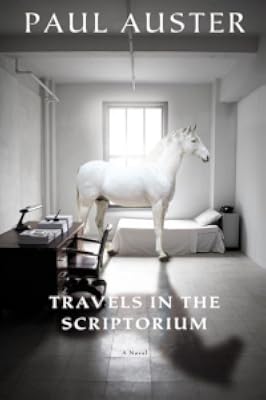
Travels in the Scriptorium
by Paul Auster
On This Page
Description
An old man awakens, disoriented, in an unfamiliar chamber. With no memory of who he is or how he has arrived there, he pores over the relics on the desk, examining the circumstances of his confinement and searching his own hazy mind for clues.Determining that he is locked in, the man-identified only as Mr. Blank-begins reading a manuscript he finds on the desk, the story of another prisoner, set in an alternate world the man doesn't recognize. Nevertheless, the pages seem to have been left show more for him, along with a haunting set of photographs. As the day passes, various characters call on the man in his cell-vaguely familiar people, some who seem to resent him for crimes he can't remember-and each brings frustrating hints of his identity and his past. All the while an overhead camera clicks and clicks, recording his movements, and a microphone records every sound in the room. Someone is watching.Both chilling and poignant, Travels in the Scriptorium is vintage Paul Auster: mysterious texts, fluid identities, a hidden past, and, somewhere, an obscure tormentor. And yet, as we discover during one day in the life of Mr. Blank, his world is not so different from our own. show lessTags
Recommendations











Member Recommendations
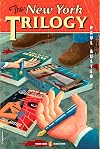
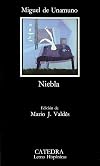
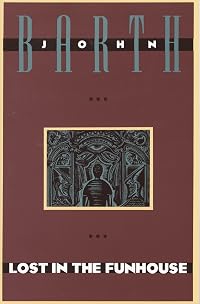
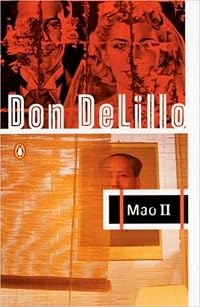
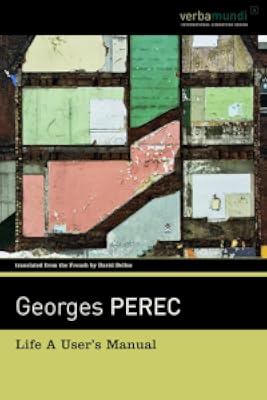
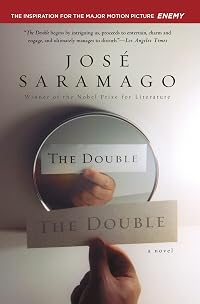
bluepiano Another book, from 1914, in which an author is confronted by his characters. A different sort of book altogether: Humourous, thought-provoking, and devoid of egotism.
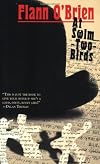
CGlanovsky Fictional characters exacting revenge on their creator. Story within a story.
02
Member Reviews
Part puzzle, part mystery, and part postmodern commentary, I loved how this book kept me guessing until the very end when my head spun around so fast I had to go to the chiropractor. It's not your everyday straightforward narrative, but it's also not so esoteric that you start to snooze just from reading the jacket flap. It would make a great group read, because it's a book begging to be discussed.
"Interrupt all you like. We're involved in a complicated story here, and not everything is quite what it seems to be."
An old man wakes up to find himself alone in a small room with complete amnesia. The only clues are stickers conveniently labeling "wall", "lamp", "desk"; and a pile of photographs and several manuscripts on the desk.
"He can't show more remember how long he has been here or the nature of the circumstances that precipitated his removal to this place. Perhaps he has always been here; perhaps this is where he has lived since the day he was born. What he knows is that his heart is filled with an implacable sense of guilt. At the same time, he can't escape the feeling that he is the victim of a terrible injustice."
In an existential kind of way, the old man begins to explore his physical and psychological boundaries. I don't want to give away too much, so I'll just say it's a fun read. show less
"Interrupt all you like. We're involved in a complicated story here, and not everything is quite what it seems to be."
An old man wakes up to find himself alone in a small room with complete amnesia. The only clues are stickers conveniently labeling "wall", "lamp", "desk"; and a pile of photographs and several manuscripts on the desk.
"He can't show more remember how long he has been here or the nature of the circumstances that precipitated his removal to this place. Perhaps he has always been here; perhaps this is where he has lived since the day he was born. What he knows is that his heart is filled with an implacable sense of guilt. At the same time, he can't escape the feeling that he is the victim of a terrible injustice."
In an existential kind of way, the old man begins to explore his physical and psychological boundaries. I don't want to give away too much, so I'll just say it's a fun read. show less
Honestly, I'm torn.
On the one hand, this is typically beautiful austere... sorry, Auster prose. In a lot of ways, it's indeed a return to his earlier work; not just in style, echoing the high-contrast black and white of The New York Trilogy, the locked room, the trapped characters, the self-references: Paul Auster sits in a room in his apartment writing a novel about a writer who writes a novel about a man (Mr Blank) who sits in a room reading a novel about a man who sits in a room writing an account of his life to be used against him. Every now and then Mr Blank is interrupted by characters from earlier Auster novels, who apparently have been hired - and signed on all too willingly - to make his life hell, since that's what he did to show more them. (Not unlike what happens to "Bret Easton Ellis" in Lunar Park, only without social commentary, excitement or, well, much of a story.)
That's the other hand: in a lot of ways, this feels like "strictly for fans". If you're only a casual Auster reader you'll miss half of what happens over these 144 pages, and you'll probably be asking yourself what makes this anything but second-rate Beckett. Nothing wrong with that, I suppose, I wouldn't want Auster to pander to the general public, but... this might be a very clever novel about the process of writing, the fear of not being heard, the power of fiction to create. Or it might just be Auster jerking off in front of a first edition of The Locked Room as he desperately tries to come up with a story worth telling (as evidenced by the bland Brooklyn Follies). And I really don't know which. Dress for the ambiguity: show less
On the one hand, this is typically beautiful austere... sorry, Auster prose. In a lot of ways, it's indeed a return to his earlier work; not just in style, echoing the high-contrast black and white of The New York Trilogy, the locked room, the trapped characters, the self-references: Paul Auster sits in a room in his apartment writing a novel about a writer who writes a novel about a man (Mr Blank) who sits in a room reading a novel about a man who sits in a room writing an account of his life to be used against him. Every now and then Mr Blank is interrupted by characters from earlier Auster novels, who apparently have been hired - and signed on all too willingly - to make his life hell, since that's what he did to show more them. (Not unlike what happens to "Bret Easton Ellis" in Lunar Park, only without social commentary, excitement or, well, much of a story.)
That's the other hand: in a lot of ways, this feels like "strictly for fans". If you're only a casual Auster reader you'll miss half of what happens over these 144 pages, and you'll probably be asking yourself what makes this anything but second-rate Beckett. Nothing wrong with that, I suppose, I wouldn't want Auster to pander to the general public, but... this might be a very clever novel about the process of writing, the fear of not being heard, the power of fiction to create. Or it might just be Auster jerking off in front of a first edition of The Locked Room as he desperately tries to come up with a story worth telling (as evidenced by the bland Brooklyn Follies). And I really don't know which. Dress for the ambiguity: show less
This is a tricky book to talk about for those who haven't read it. On the one hand, I think it's the sort of thing where it's probably best if you go into it knowing as little about it as possible. On the other hand, I think it's also the sort of thing where if you approach it with the wrong expectations, the result might be really frustrating. So, well, I'll say this: it opens with an old man sitting in a white room without knowing where he is or how he got there or even quite who he is. And I'll also say that if, based on that, you're expecting a plot or a puzzle to solve, you're likely to be disappointed. Because what this book is doing is something much more... abstract.
I'll also say that the conceit, which I twigged to gratifyingly show more early on, is one that appealed to me, and that in the end the whole thing worked for me, in its own strange way. Whether it should have worked quite that well, I'm not at all sure. As soon as I finished it, I started thinking back on specific details, wondering exactly what they might mean or if they actually meant anything at all.
Basically, it's an odd little literary experiment of a book, but an interesting and I think a worthwhile one. And it's short enough that it can (and probably should) be read in one sitting. show less
I'll also say that the conceit, which I twigged to gratifyingly show more early on, is one that appealed to me, and that in the end the whole thing worked for me, in its own strange way. Whether it should have worked quite that well, I'm not at all sure. As soon as I finished it, I started thinking back on specific details, wondering exactly what they might mean or if they actually meant anything at all.
Basically, it's an odd little literary experiment of a book, but an interesting and I think a worthwhile one. And it's short enough that it can (and probably should) be read in one sitting. show less
This book is described as something of a puzzle; fortunately, the secret being easy to figure out doesn't detract from its enjoyment. The way the narration doles out pieces of the old man bit by bit, especially at the very beginning, is a pleasure to behold, and what the novella has to say about aging, memory, and the twofold power and danger of stories is magnificent.
If you’ve ever seen the television program called “The Twilight Zone”, you’ll have an idea of what an eerie read this book is. The feeling it gave me was the same.
As the story begins, we encounter an unidentified man, whom we shall call Mr. Blank, waking up in a room containing the bed on which he’s lying, a desk with piles of papers on it, and a chair. Mr. Blank has no idea where he is or even who he is. There are several things within the room which are labeled with a single word. He is not sure if he is a prisoner in this room or if he can get out. The window shade is down so he has no idea of what “out” would even be like. There are people who occasionally come into his room and then later leave. Mr. Blank thinks he show more might know them, but is not sure.
As the story progresses, we readers, along with Mr. Blank himself, attempt to discover his identity and the context of the environment in which he finds himself. He peruses the contents of the typewritten pages on the desk for clues to his own history or where he might be.
If this sounds intriguing to you, then grab this quick and engrossing read. If postmodern fiction is not your thing, you might want to skip it. For me, the bizarre ending of this book has me very much wanting to read more of Paul Auster’s works. show less
As the story begins, we encounter an unidentified man, whom we shall call Mr. Blank, waking up in a room containing the bed on which he’s lying, a desk with piles of papers on it, and a chair. Mr. Blank has no idea where he is or even who he is. There are several things within the room which are labeled with a single word. He is not sure if he is a prisoner in this room or if he can get out. The window shade is down so he has no idea of what “out” would even be like. There are people who occasionally come into his room and then later leave. Mr. Blank thinks he show more might know them, but is not sure.
As the story progresses, we readers, along with Mr. Blank himself, attempt to discover his identity and the context of the environment in which he finds himself. He peruses the contents of the typewritten pages on the desk for clues to his own history or where he might be.
If this sounds intriguing to you, then grab this quick and engrossing read. If postmodern fiction is not your thing, you might want to skip it. For me, the bizarre ending of this book has me very much wanting to read more of Paul Auster’s works. show less
between 1 and 1.5 stars. i haven't read much auster and nothing that i can remember in a long while. what i do remember from before, though, is not really understanding him, and that still holds. i don't get this. it helps to know that, from other reviews, apparently all of the people that feature in this book - well, maybe not mr blank? - are from his other books, and that even the title of this book is from something within another book of his. i don't know if knowing that helps to understand what he's doing or saying here, or if knowing those characters in other books helps to know them here. (because we don't really know anything here, in this book. it's all a mystery and a question of what is happening/who are these people and what show more are they doing/where are they/why/why/why.)
i don't know if we're supposed to be puzzling out who mr blank is and what he may have done. if we're supposed to suspect that he is the author trause. or if that even matters. maybe what auster is saying is more about what story and writing mean? (i'm not sure what he's saying they mean, but i think that's what he's getting at.) maybe also about who story belongs to? if mr blank isn't also trause, then can they both write the story? can anyone write the story?
i don't know. i don't get auster, i think. but at least this was mildly entertaining, in a perplexing but not frustrating way, and a quick read at that. it did, though, until close to the end, feel quite a bit like this was literary fiction for the sake of itself, and i didn't like that feeling. show less
i don't know if we're supposed to be puzzling out who mr blank is and what he may have done. if we're supposed to suspect that he is the author trause. or if that even matters. maybe what auster is saying is more about what story and writing mean? (i'm not sure what he's saying they mean, but i think that's what he's getting at.) maybe also about who story belongs to? if mr blank isn't also trause, then can they both write the story? can anyone write the story?
i don't know. i don't get auster, i think. but at least this was mildly entertaining, in a perplexing but not frustrating way, and a quick read at that. it did, though, until close to the end, feel quite a bit like this was literary fiction for the sake of itself, and i didn't like that feeling. show less
Like some of Auster's other work, there isn't any fixed narrative framework to rely on (lines are blurred between author [both Auster and authors within the book:] characters and you, the reader) which is a risky thing to do but somehow very satisfying. The narrative does unexpected things, stories detach themselves from the storyline and become the author's reflections on what to do with his characters. Somehow it's not the point to have the story end traditionally with all questions answered, and experienced Auster readers don't expect this. The point is the prose, which is in itself all one needs to have enjoyed the book, and the text's unexpected transformations, flexibility and playfulness.
Members
- Recently Added By
Lists

Metafiction
84 works; 22 members

Best 21st Century Books (So Far)
670 works; 86 members

Significant works of postmodern fiction
86 works; 23 members

Story Within a Story
65 works; 17 members

Writers as Characters in Fiction
120 works; 19 members

Top 10 Dodgy Lawyers in Literature
10 works; 2 members

Books Read in 2007
326 works; 8 members

Llibres que he llegit el 2021
54 works; 1 member

American Lit for Eng 11 Research Project
368 works; 6 members

Books Read in 2025
4,091 works; 97 members
Author Information

102+ Works 64,905 Members
Paul Auster was born on February 3, 1947, in Newark, New Jersey. He received a B.A. and a M.A. in English and Comparative Literature from Columbia University. In addition to his career as a writer, Auster has been a census taker, tutor, merchant seaman, little-league baseball coach, and a telephone operator. He started his writing career as a show more translator. He soon gained popularity for the detective novels that make up his New York Trilogy. His other works include The Invention of Solitude; Leviathan; Moon Palace; Facing the Music; In the Country of Last Things; The Music of Chance; Mr. Vertigo; and The Brooklyn Follies. His latest novels are entitled, Invisible and Sunset Park. In addition to his novels, Auster has written screenplays and directed several films. He is the recipient of a fellowship from the National Endowment for the Arts and a French Prix Medicis for Foreign Literature. (Bowker Author Biography) show less
Some Editions
Awards and Honors
Awards
Series
Belongs to Publisher Series
Work Relationships
Is contained in
Common Knowledge
- Canonical title
- Travels in the Scriptorium
- Original title
- Travels in the Scriptorium
- Original publication date
- 2006
- People/Characters
- Mr. Blank; Anna Blume; Daniel Quinn; Mr. Flood; Mr. Fanshawe; Sophie (show all 7); Marco Fogg
- Important places
- A white room
- Dedication
- for Lloyd Hustvedt (in memory)
- First words
- The old man sits on the edge of the narrow bed, palms spread out on his knees, head down, staring at the floor.
- Last words
- (Click to show. Warning: May contain spoilers.)Lights out.
- Original language
- English
Classifications
Statistics
- Members
- 2,204
- Popularity
- 9,176
- Reviews
- 68
- Rating
- (3.17)
- Languages
- 20 — Arabic, Basque, Catalan, Czech, Danish, Dutch, English, French, German, Galician, Hebrew, Italian, Korean, Norwegian (Bokmål), Farsi/Persian, Polish, Portuguese, Spanish, Swedish, Turkish
- Media
- Paper, Audiobook, Ebook
- ISBNs
- 55
- ASINs
- 17