On This Page
Description
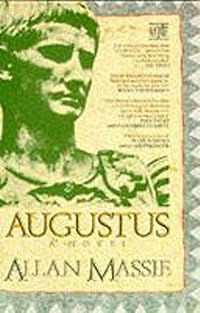
Augustus was the founder of the Roman Empire, adopted son of Julius Caesar, friend and later foe of Mark Antony, patron of Horace and Virgil. Frank and forceful, this putative autobiography tells his story from the assassination of Caesar, through his military, political and personal struggles to his final days as Emperor in everything but name.Tags
Recommendations







Member Reviews
Another interesting and for the most part very enjoyable instalment in Alan Massie's series. Dragged in one or two parts only and a sad last few chapters left a moving overall impression. A great series. Why hasn't he covered Claudius?
We know that Augustus, the first Roman emperor, did write an autobiography but it has not survived. Allan Massie gives a fictional account of what its contents might have been from the future Augustus's reaction to the assassination of Julius Caesar down to the end of his life. The book is divided into two parts, each of which is introduced by the fictional scholar, Aeneas Fraser-Graham. The first half takes us down to the victory over Antony and Cleopatra and their subsequent suicides, while the second half reflects on the personal tragedies which Augustus later suffered.
Aeneas Fraser-Graham's introductions, though only taking about 10 pages altogether, were very funny. The first half of the "autobiography", written for Augustus's show more grandsons, was full of action and gave an exciting picture of Augustus as a young man. The second half, supposedly written over the last five years or so of his life, persuade us to see the first half in a different light, while the unconscious self-revelation in this part suggests a third view.
A thoroughly enjoyable read on many levels. show less
Aeneas Fraser-Graham's introductions, though only taking about 10 pages altogether, were very funny. The first half of the "autobiography", written for Augustus's show more grandsons, was full of action and gave an exciting picture of Augustus as a young man. The second half, supposedly written over the last five years or so of his life, persuade us to see the first half in a different light, while the unconscious self-revelation in this part suggests a third view.
A thoroughly enjoyable read on many levels. show less
I struggled to enjoy this book. I have no problems with Massie's knowledge of Augustus and the era, and no doubt that his fictionalised account is soundly based in fact. But the writing seemed patchy.
The book starts with Augustus speaking asides to his grandsons as the structure of the "autobiography". The content in this section is roughly chronological. But after 180 pages, we get Book 2, written with no stage whispers and jumping around in time. I felt as if Massie had got bored with his initial structure, or that his editor had told him to liven it up. Funnily, I wasn't bored, and would have been quite happy to continue in the original format. I found the chronological leaps a bit clumsy, not well referenced to time, and more than a show more little artificial.
But, as I reflected toward the end of the book, my problem was that the characters did not come to life. Augustus is good - the self justifying arrogance seems true to character, but none else seemed to be painted as deeply. Livia, Tiberius, Agrippa and Maecenas all seemed to be one dimensional - Maecenas as excessively camp, Agrippa as the gruff no-nonsense military man, and so on.
Read June 2015. show less
The book starts with Augustus speaking asides to his grandsons as the structure of the "autobiography". The content in this section is roughly chronological. But after 180 pages, we get Book 2, written with no stage whispers and jumping around in time. I felt as if Massie had got bored with his initial structure, or that his editor had told him to liven it up. Funnily, I wasn't bored, and would have been quite happy to continue in the original format. I found the chronological leaps a bit clumsy, not well referenced to time, and more than a show more little artificial.
But, as I reflected toward the end of the book, my problem was that the characters did not come to life. Augustus is good - the self justifying arrogance seems true to character, but none else seemed to be painted as deeply. Livia, Tiberius, Agrippa and Maecenas all seemed to be one dimensional - Maecenas as excessively camp, Agrippa as the gruff no-nonsense military man, and so on.
Read June 2015. show less
This book is a total waste of time.
I did not realise it was a novel, untill I had already bought it (second hand, so I didn't waste too much money). I only got half way through, by then I was so sick of Massie's awful prose style, I just could not bring myself to waste more precious time with it.
I did not realise it was a novel, untill I had already bought it (second hand, so I didn't waste too much money). I only got half way through, by then I was so sick of Massie's awful prose style, I just could not bring myself to waste more precious time with it.
Ratings
Members
- Recently Added By
Author Information

Awards and Honors
Series

Common Knowledge
- Canonical title
- Augustus
- Original publication date
- 1986
- People/Characters
- Augustus Caesar; Marcus Vipsanius Agrippa; Livia Drusilla; Tiberius Caesar, Roman Emperor; Marcus Antonius; Gaius Cilnius Maecenas (show all 11); Julia; Octavia Minor; Marcellus; Marcus Tullius Cicero; Marcus Aemilius Lepidus
- Important places
- Ancient Rome; Rome, Roman Empire
- Dedication
- For Alison
Classifications
Statistics
- Members
- 337
- Popularity
- 93,724
- Reviews
- 4
- Rating
- (3.47)
- Languages
- 9 — Czech, Danish, English, French, German, Hungarian, Italian, Portuguese (Portugal), Spanish
- Media
- Paper, Ebook
- ISBNs
- 23
- ASINs
- 9