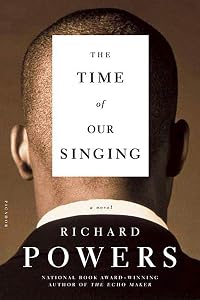
The Time of Our Singing: A Novel
by Richard Powers
On This Page
Description
A magnificent, multifaceted novel about a supremely gifted -- and divided -- family, set against the backdrop of postwar America On Easter day, 1939, at Marian Anderson's epochal concert on the Washington Mall, David Strom, a German Jewish emigre scientist, meets Delia Daley, a young Philadelphia Negro studying to be a singer. Their mutual love of music draws them together, and--against all odds and better judgment--they marry. They vow to raise their children beyond time, beyond identity, show more steeped in song. But their three children must survive America's brutal here and now. Jonah, Joseph, and Ruth grow up during the Civil Rights era, come of age in the violent 1960s, and live out adulthood in the racially retrenched late century. Jonah, the eldest, "whose voice could make heads of state repent," follows a life in his parents' beloved classical music. Ruth, the youngest, chooses a militant activism and repudiates the white culture her brother represents. Joseph, the middle child and the narrator of this generational tale, struggles to remain connected to them both. The Time of Our Singing is a story of self-invention, allegiance, race, cultural ownership, the compromised power of music, and the tangled loops of time that rewrite all belonging. show lessTags
Recommendations

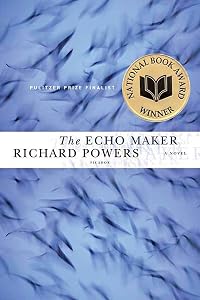
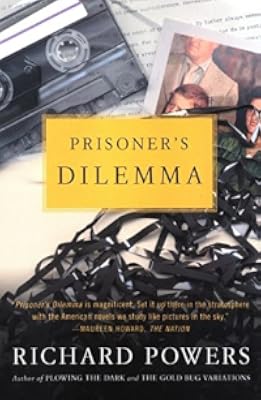

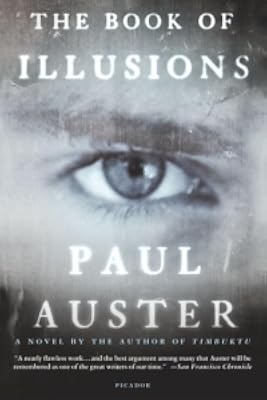
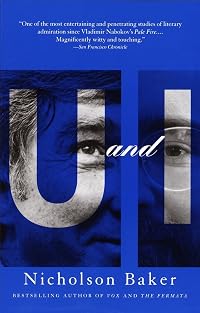
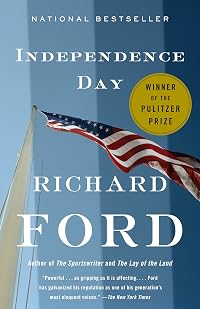
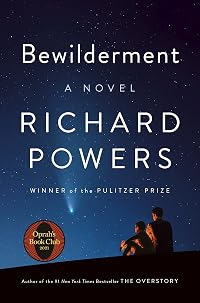


Member Recommendations
Member Reviews
This is family saga about music, race, and time. Delia Daley, a black music student, and David Strom, a Jewish German physicist, meet at the Marian Anderson concert on the steps of the Lincoln Memorial in 1939. David and Delia marry. Their children are musically gifted but cannot achieve the full measure of their talent due to the racism of 20th century America. They decide to rear their children outside the confines of race, and this decision forms the primary conflict in the story. Other characters believe this decision is naïve and will only hurt their children. A major rift develops between David and his father-in-law. The story is narrated by the middle child, Joseph, who acts as a bridge between elder brother, Jonah, who follows show more a path of classical music, and younger sister Ruth, who pursues a path of social activism.
At 650 pages and covering a period of over fifty years, this book has the feel of an epic saga. Powers takes his time in developing the primary characters, particularly Delia, David, Jonah, and Joseph. Ruth plays a lesser role initially, but her story takes center stage in later chapters. At least one character is present during significant racial confrontations and milestones of the period. The idea of being “beyond race” turns out to be impossible in a country where their children are automatically labelled at birth.
Detailed discussions of music are present throughout, and classical music aficionados will appreciate the power of these descriptions. The referenced operas lend additional flavor to the story for those familiar with these works. It is one of the best books I have read involving musical discourse. Physics and the properties of time are also a core element in the story. David, a proponent of Einstein’s theory of the space-time continuum, plays a peripheral role in the Manhattan project, and eventually becomes obsessed with proving his theories about the circularity of time (and challenging the notion of time as a linear flow). If so inclined, the reader will enjoy piecing together the individual elements to shed additional light on the story in its entirety.
As you can tell by the length of this review, this book is not easily described in a few sentences. It offers perspectives on a number of complex issues concerning, time, memory, and change, while challenging the of the idea of race. It may be even more relevant in the current sociopolitical environment than in 2003, when it was initially published. show less
At 650 pages and covering a period of over fifty years, this book has the feel of an epic saga. Powers takes his time in developing the primary characters, particularly Delia, David, Jonah, and Joseph. Ruth plays a lesser role initially, but her story takes center stage in later chapters. At least one character is present during significant racial confrontations and milestones of the period. The idea of being “beyond race” turns out to be impossible in a country where their children are automatically labelled at birth.
Detailed discussions of music are present throughout, and classical music aficionados will appreciate the power of these descriptions. The referenced operas lend additional flavor to the story for those familiar with these works. It is one of the best books I have read involving musical discourse. Physics and the properties of time are also a core element in the story. David, a proponent of Einstein’s theory of the space-time continuum, plays a peripheral role in the Manhattan project, and eventually becomes obsessed with proving his theories about the circularity of time (and challenging the notion of time as a linear flow). If so inclined, the reader will enjoy piecing together the individual elements to shed additional light on the story in its entirety.
As you can tell by the length of this review, this book is not easily described in a few sentences. It offers perspectives on a number of complex issues concerning, time, memory, and change, while challenging the of the idea of race. It may be even more relevant in the current sociopolitical environment than in 2003, when it was initially published. show less
In 1939 at Marion Anderson's great protest concert in Washington, a German-Jewish emigre physicist and a young black contralto are brought together by concern over a lost child. They eventually marry and have three children, bringing them up in a hot-house atmosphere of music and maths, hoping to raise them to have no awareness of race as an issue in their lives. All three are musically talented, but they cannot be protected from the world for long. Jonah becomes a successful young tenor, but the world of opera can only accept him as a 'brilliant Negro singer'; Joseph, our narrator, becomes a pianist and devotes his talents to the service of his brother's; Ruth turns her back on classical music ('white music') and disappears, on the run show more with her black husband under suspicion of being a Black Panther. Powers brilliantly and devastatingly delineates the tragedy of race in America, as it unfolds from the Civil Rights movement to Rodney King and Louis Farrakhan, through the lives and choices of one family, caught on the cusp of identities. This is a hugely ambitious - and brilliantly achieved - novel, as brilliantly clever as Powers' previous novels, but also deeply political and deeply moving. show less
One of the blurbs at the end of my edition says "The best black novel since Beloved has just been written, and the author is white".
This more or less sums up my feelings about this book. I read the whole thing assuming that the author was black. I was, and am still, very enthusiastic about it. Through a series of back and forth between two generations, this book explores a variety of experiences of being an outsider in America, from the post-war years to the contemporary. The basic premise is to follow two brothers, born in the 60s from a former German Jewish physicist and an African-American woman, united by a common love – and practice – of music and the project to raise post-race children in a still heavily racist society.
Now, show more I feel a bit embarrassed about this. Is what I read a good account of the kind of ostracism and discrimination black people faced and still face, or a white person's reconstruction of it which happens to fit my own representation of a situation I never experienced (I am a white person in Europe)? I actually looked up for instance of cultural appropriation criticism about this book, but did not find anything.
This aside, it is an extremely rich book and a fantastic travel through these years, both for American society and the music world. It is also one of the very few books where I would have welcomed a companion. It should definitely have a playlist, to get a glimpse of the extraordinary musical universe which defines most of the protagonists. A more usual companion would also be useful, since the book very often alludes to people and events that are landmarks in US black history, but may be difficult to piece out for a European like me. Names I can look up on Wikipedia, but I was able to understand a mention to the Attica Prison riot only because I happen to have read Paul Auster's 1, 2, 3, 4. I am sure I missed many other events which have an influence on the story. show less
This more or less sums up my feelings about this book. I read the whole thing assuming that the author was black. I was, and am still, very enthusiastic about it. Through a series of back and forth between two generations, this book explores a variety of experiences of being an outsider in America, from the post-war years to the contemporary. The basic premise is to follow two brothers, born in the 60s from a former German Jewish physicist and an African-American woman, united by a common love – and practice – of music and the project to raise post-race children in a still heavily racist society.
Now, show more I feel a bit embarrassed about this. Is what I read a good account of the kind of ostracism and discrimination black people faced and still face, or a white person's reconstruction of it which happens to fit my own representation of a situation I never experienced (I am a white person in Europe)? I actually looked up for instance of cultural appropriation criticism about this book, but did not find anything.
This aside, it is an extremely rich book and a fantastic travel through these years, both for American society and the music world. It is also one of the very few books where I would have welcomed a companion. It should definitely have a playlist, to get a glimpse of the extraordinary musical universe which defines most of the protagonists. A more usual companion would also be useful, since the book very often alludes to people and events that are landmarks in US black history, but may be difficult to piece out for a European like me. Names I can look up on Wikipedia, but I was able to understand a mention to the Attica Prison riot only because I happen to have read Paul Auster's 1, 2, 3, 4. I am sure I missed many other events which have an influence on the story. show less
The Time of Our Singing
Richard Powers
FSG 2003
This is only my second outing with Powers but it's left me wanting to go on a binge. The first, 'The Gold Bug Variations', I read entirely by happenstance. It was a gift from my librarything secret santa whose name I've forgotten but to whom I'm deeply grateful. In that novel he used one of the story elements, Bach's Goldberg Variations, to structure the entire novel. He does the same thing in this novel telling the story of three generations of Daleys' (and Stroms') struggle to come to terms with family, race and identity, by twisting time, the specialist of physicist David Strom, into a labyrinth.
The novel is narrated from the family's center, by Joseph, the middle child of the middle show more generation and ripples out in time from him. Joseph is the child of David Strom, a German Jew who has barely escaped Nazi Germany, and Delia Delaney, a child of the Black upper class. These two, bound together by music and hope for a color blind future, try to raise their children, Jonah, Joseph and Ruth, for that future by raising them beyond race, by forcing them to take no identity but the one each chooses for him(her) self. Though the children don't see it, it's a powerful gift from their parents. Mankind has long recognized that to name a thing is to have power over it. Adam named creation and was given dominion over it, Calaph gifted Turnandot with his name and in doing so gave her the power of life and death over him, Rumpelstiltskin was vanquished by his name. Delia and David recognize what will take their children decades to see, that naming one's own self is the ultimate power.
All three children, like their first and best teacher, their mother, are musically gifted, the eldest and perhaps the youngest, are prodigies. Jonah has the most success at carving out an identity for himself and is constantly revising and recreating that self. To be honest, he reminds me of Madonna, but with substantially more substance. Ruth, the youngest, seems more intent on vehemently denying that any part of her is white (technically she's more white than black) than on getting any true sense of self, going so far as to join the Black Panthers. Joseph, the narrator, defines himself as brother to his siblings. The outside pressure on them is tremendous, from both family, Delia's family and Ruth herself, and friends and colleagues, to define themselves as Black and behave accordingly. (Though the novel is set in the post WWII era, I couldn't help but recall all the debate early in the Obama campaign about whether he was 'Black' enough or too 'Black' to be elected and wonder what Powers made of that debate). Added to this pressure is the need to reconcile themselves to the tremendous grief caused by the early death of their mother.
Opposite the sibling triptych is their father David, a physicist who has been set adrift in time. My only major peeve with the novel is the fact that we don't get to see more of him. I'd trade David for 20 Ruths any day. His family (most of it) has been wiped out during the Holocaust and he himself has suffered tremendous prejudice both in Europe and the US, but we learn very little about it. Yet in spite of this he maintains a heartbreaking innocence and humanity, this is a man who still converses with his dead wife going so far as to pour coffee for her. David is the only truly color blind character, he sees only time twisting itself in knots, each person traveling through at his own speed. It is his obsession with sending messages down the strands that ties all themes of this dense and complex novel together.
Powers manages all this gracefully while at the same time producing some truly moving prose (and some not so much, to be honest.) Definitely worth reading. show less
Richard Powers
FSG 2003
This is only my second outing with Powers but it's left me wanting to go on a binge. The first, 'The Gold Bug Variations', I read entirely by happenstance. It was a gift from my librarything secret santa whose name I've forgotten but to whom I'm deeply grateful. In that novel he used one of the story elements, Bach's Goldberg Variations, to structure the entire novel. He does the same thing in this novel telling the story of three generations of Daleys' (and Stroms') struggle to come to terms with family, race and identity, by twisting time, the specialist of physicist David Strom, into a labyrinth.
The novel is narrated from the family's center, by Joseph, the middle child of the middle show more generation and ripples out in time from him. Joseph is the child of David Strom, a German Jew who has barely escaped Nazi Germany, and Delia Delaney, a child of the Black upper class. These two, bound together by music and hope for a color blind future, try to raise their children, Jonah, Joseph and Ruth, for that future by raising them beyond race, by forcing them to take no identity but the one each chooses for him(her) self. Though the children don't see it, it's a powerful gift from their parents. Mankind has long recognized that to name a thing is to have power over it. Adam named creation and was given dominion over it, Calaph gifted Turnandot with his name and in doing so gave her the power of life and death over him, Rumpelstiltskin was vanquished by his name. Delia and David recognize what will take their children decades to see, that naming one's own self is the ultimate power.
All three children, like their first and best teacher, their mother, are musically gifted, the eldest and perhaps the youngest, are prodigies. Jonah has the most success at carving out an identity for himself and is constantly revising and recreating that self. To be honest, he reminds me of Madonna, but with substantially more substance. Ruth, the youngest, seems more intent on vehemently denying that any part of her is white (technically she's more white than black) than on getting any true sense of self, going so far as to join the Black Panthers. Joseph, the narrator, defines himself as brother to his siblings. The outside pressure on them is tremendous, from both family, Delia's family and Ruth herself, and friends and colleagues, to define themselves as Black and behave accordingly. (Though the novel is set in the post WWII era, I couldn't help but recall all the debate early in the Obama campaign about whether he was 'Black' enough or too 'Black' to be elected and wonder what Powers made of that debate). Added to this pressure is the need to reconcile themselves to the tremendous grief caused by the early death of their mother.
Opposite the sibling triptych is their father David, a physicist who has been set adrift in time. My only major peeve with the novel is the fact that we don't get to see more of him. I'd trade David for 20 Ruths any day. His family (most of it) has been wiped out during the Holocaust and he himself has suffered tremendous prejudice both in Europe and the US, but we learn very little about it. Yet in spite of this he maintains a heartbreaking innocence and humanity, this is a man who still converses with his dead wife going so far as to pour coffee for her. David is the only truly color blind character, he sees only time twisting itself in knots, each person traveling through at his own speed. It is his obsession with sending messages down the strands that ties all themes of this dense and complex novel together.
Powers manages all this gracefully while at the same time producing some truly moving prose (and some not so much, to be honest.) Definitely worth reading. show less
Writing a review for this book was difficult considering our current national climate. Is it fair to bring a child into this world, knowing full well his or her life will be an uphill, hurtful, and potentially lethal journey? With Roe V. Wade being overturned, this is a burning question for me. In The Time of Our Singing it is 1939 and David Strom, a German Jewish white man meets and falls in love with an African American young lady from Philadelphia. Should they have an interfaith relationship? Could they succeed in a biracial marriage? What hardships would their children have in a world consumed with the hate and segregation and World War II? Is it blind faith to assume their offspring will thrive beyond race with the help of music? show more So many questions that kept me reading all 600+ pages to the very end. Time of Our Singing also tells the story of David and Delia's children. Jonah, Joseph, and Ruth come of age during the early Civil Rights movement and the turmoil of racial unrest follows them through adulthood. Jonah and Joseph go the route of music and fame, while Ruth veers violently in the opposite direction. Over time, they cannot ignore their color or where they came from. Through music comes recognition and redemption.
What I liked the most was the clever writing in that there are hints of a disaster: a photograph that has escaped being burned. What a black boy from Chicago doesn't know about deep south segregation. How hatred can burn like an inferno until it explodes in disaster. show less
What I liked the most was the clever writing in that there are hints of a disaster: a photograph that has escaped being burned. What a black boy from Chicago doesn't know about deep south segregation. How hatred can burn like an inferno until it explodes in disaster. show less
I'm afraid to review this book. I loved it so much, I don't want to recommend it to people I like because I'm afraid they might not love it as much and I'd think less of them for it.
It took me three months to read this book. Not because I'm a slow reader but because I didn't want it to end. I was so thoroughly caught up in the characters and their story, I wanted them to stay part of my life as long as possible.
I loved this book because the author really gets music and can write about what it does to you like no one I've ever read before. I don't want to say the words sing, because that's not really it. But the words make me hear the music. Good heavens. It's hard to explain.
I also loved it because it's about race and prejudice and show more how far we sometimes think we've come, but how far we still have to go. Not in a preachy way, but in a "this is what life is like and this is what it could be" way.
I totally suck at writing this review. I can't do it justice. Let me just say that I would definitely read this book again, and I now want to read everything else the author has ever written. It's really brilliant. And I didn't even mention the cool physics that run through the story! Just freaking brilliant.
But if you don't love it, please don't tell me. I don't want to know. show less
It took me three months to read this book. Not because I'm a slow reader but because I didn't want it to end. I was so thoroughly caught up in the characters and their story, I wanted them to stay part of my life as long as possible.
I loved this book because the author really gets music and can write about what it does to you like no one I've ever read before. I don't want to say the words sing, because that's not really it. But the words make me hear the music. Good heavens. It's hard to explain.
I also loved it because it's about race and prejudice and show more how far we sometimes think we've come, but how far we still have to go. Not in a preachy way, but in a "this is what life is like and this is what it could be" way.
I totally suck at writing this review. I can't do it justice. Let me just say that I would definitely read this book again, and I now want to read everything else the author has ever written. It's really brilliant. And I didn't even mention the cool physics that run through the story! Just freaking brilliant.
But if you don't love it, please don't tell me. I don't want to know. show less
One of the most beautiful books I've ever read. An intricate interweaving of music, physics, and history; race, science, and religion. Time beyond time. Family stories written outside of time wrapping around and about and into themselves. Follow the music. Sing your song. Listen/look for all the frequencies wherever you point your telescope.
I only wish I could ask each of the Daley-Strom family members what they think of President Barack Obama.
I also wish the book came with a soundtrack CD.
Amazing.
I only wish I could ask each of the Daley-Strom family members what they think of President Barack Obama.
I also wish the book came with a soundtrack CD.
Amazing.
Members
- Recently Added By
Lists

Best Contemporary Literary Fiction (Around the Last 30 Years)
400 works; 124 members

Recommend the 20 best books you've read in the last five years
2,168 works; 607 members

Vulture's 100 Best Books of the 21st Century (So Far)
98 works; 9 members

music to my eyes
86 works; 12 members

Books Read in 2022
5,226 works; 115 members

Top Five Books of 2023
767 works; 317 members
Author Information

21+ Works 22,459 Members
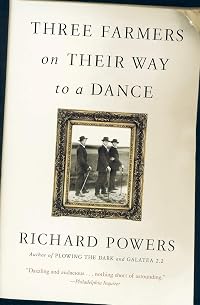
Richard Powers was born on June 18, 1957 in Evanston, Illinois. He received bachelor's and master's degrees in English from the University of Illinois at Urbana-Champaign. After graduation, he moved to Boston, Massachusetts and worked as a computer programmer and freelance data processor. One day he saw August Sander's 1914 black-and-white show more photograph of three Westerwald farm boys heading to a dance at the Museum of Fine Arts. This photograph inspired Powers to quit his job and try writing a novel. Three Farmers on Their Way to a Dance was published in 1985. His other works include Prisoner's Dilemma, The Gold Bug Variations, Operation Wandering Soul, Galatea 2.2, Plowing the Dark, The Time of Our Singing, and Generosity: An Enhancement. He received numerous awards including the James Fenimore Cooper Prize for Best Historical Fiction for Gain, the National Book Award for The Echo Maker, and Pulitzer Prize in fiction for The Overstory: A Novel. (Bowker Author Biography) show less
Some Editions
Awards and Honors
Awards
Distinctions
Series
Belongs to Publisher Series
Fischer Taschenbuch (15971)
Common Knowledge
- Canonical title*
- Der Klang der Zeit
- Original title
- The Time of Our Singing
- Original publication date
- 2003
- People/Characters
- Marian Anderson; Emmett Till
- Important places
- New York, New York, USA
- First words
- In some empty hall, my brother is still singing.
- Original language
- English
*Some information comes from Common Knowledge in other languages. Click "Edit" for more information.
Classifications
Statistics
- Members
- 1,482
- Popularity
- 15,759
- Reviews
- 39
- Rating
- (4.22)
- Languages
- 10 — Danish, Dutch, English, Finnish, French, German, Italian, Norwegian (Bokmål), Spanish, Swedish
- Media
- Paper, Audiobook, Ebook
- ISBNs
- 39
- ASINs
- 8