On This Page
Description
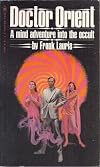
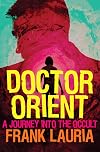
The spellbinding novel of a war for the soul of a young girl . . . A coven of witches and warlocks--among them some of New York's most prominent celebrities--toying with sexual perversion, black magic, and human sacrifice . . . A hot downtown discotheque where an incredibly beautiful sixteen‑year‑old seduces young men into the service of Satan . . . A defrocked priest whose all-consuming ambition and awesome occult powers make him famous enough to lure a capacity crowd to Yankee Stadium show more to witness a dark "miracle'--the cure of the vice‑president's daughter . . . Doctor Owen Orient, psychiatrist, physician, psychic adept--and his team of telepaths--stake their lives against the ravening evil known as . . . Susej. The book that launched the Doctor Orient series. show lessTags
Recommendations























Member Reviews
I read Doctor Orient hoping for pretty much what I got: The Devil Rides Out with discotheques. The title character Dr. Owen Orient has something of a Doctor Strange background, with some vague past training in Tibetan occultism, but the focus of his abilities is on telepathy, and he prefers a parapsychological idiom to an occultist one. I don't much favor the hyperspace gobbledygook that Orient and author Lauria use to describe parapsychological phenomena, so it was a relief that the book's events are trained on the occult as a result of the Satanist villain (who goes by "Susej"!) and Orient's exorcistic ally the Roman Catholic Bishop Redson.
The fourth chapter (out of twenty-five) features a Satanic initiation straight out of the pages show more of Dennis Wheatley's 1960 novel The Satanist, except with better fashion sense, and with more language from Aleister Crowley's Gnostic Mass. In addition to using Thelema as a model for his fictional Satanism, Lauria seems also to draw on Scientology, with the devotional focus of the Satanists being the "Clear Power."
Much of the novel is told (in the third person) from the perspective of Orient or his fellow psychics, which creates some rather incoherently impressionistic passages, to the point where I wondered once if there had been editing errors disrupting the continuity. But this technique works pretty well in the book's climax, with a hallucinatory confrontation between Orient and Susej.
There are references throughout to a larger drama including Orient's earlier incarnations and relationships in that context, with special reference to the goddess Urvashi, but these remain fairly unexplained even at the end of the novel. I understand that Lauria went on to write several sequels, so I imagine that these features get explored further there. (Better that than the parapsychology!) I'm not scrambling to get my hands on the rest of the series, but if the next one falls in my lap, I'll read it. show less
The fourth chapter (out of twenty-five) features a Satanic initiation straight out of the pages show more of Dennis Wheatley's 1960 novel The Satanist, except with better fashion sense, and with more language from Aleister Crowley's Gnostic Mass. In addition to using Thelema as a model for his fictional Satanism, Lauria seems also to draw on Scientology, with the devotional focus of the Satanists being the "Clear Power."
Much of the novel is told (in the third person) from the perspective of Orient or his fellow psychics, which creates some rather incoherently impressionistic passages, to the point where I wondered once if there had been editing errors disrupting the continuity. But this technique works pretty well in the book's climax, with a hallucinatory confrontation between Orient and Susej.
There are references throughout to a larger drama including Orient's earlier incarnations and relationships in that context, with special reference to the goddess Urvashi, but these remain fairly unexplained even at the end of the novel. I understand that Lauria went on to write several sequels, so I imagine that these features get explored further there. (Better that than the parapsychology!) I'm not scrambling to get my hands on the rest of the series, but if the next one falls in my lap, I'll read it. show less
Ratings
Members
- Recently Added By
Lists

Guilty Pleasures
223 works; 86 members
Author Information

23+ Works 637 Members
Series

Common Knowledge
- Original publication date
- 1970-09
- Dedication
- For Margareta,
who supplied the magic ... - First words
- The call reached Doctor Orient at his club.
- Last words
- (Click to show. Warning: May contain spoilers.)Orient waited until the swarm of men at the arena entrance had swallowed the stretcher and closed it off from sight before getting up and moving to the stairs.
When he reached the street he found the rain had slackened to a drizzle. - Original language
- English
Classifications
Statistics
- Members
- 47
- Popularity
- 636,775
- Reviews
- 1
- Rating
- (3.20)
- Languages
- English
- Media
- Paper, Ebook
- ISBNs
- 6
- ASINs
- 5