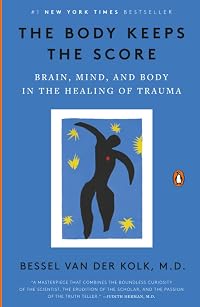
The Body Keeps the Score: Brain, Mind, and Body in the Healing of Trauma
by Bessel van der Kolk
On This Page
Description
An expert on traumatic stress outlines an approach to healing, explaining how traumatic stress affects brain processes and how to use innovative treatments to reactivate the mind's abilities to trust, engage others, and experience pleasure. --Publisher's description.Tags
Recommendations
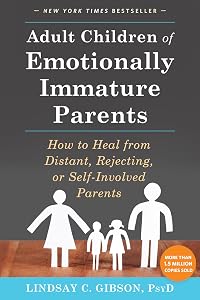
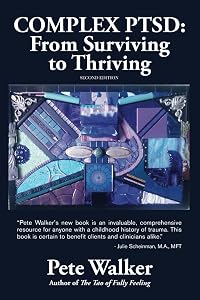
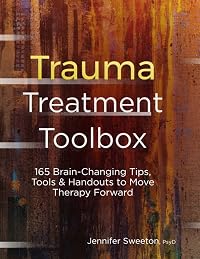
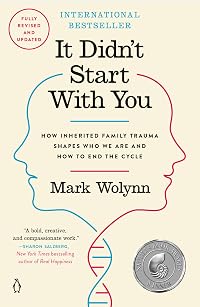
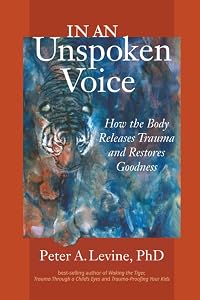
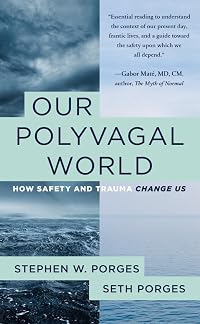
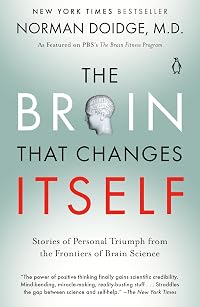
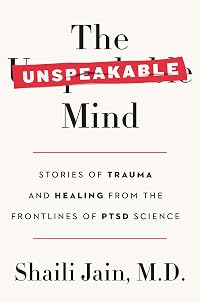
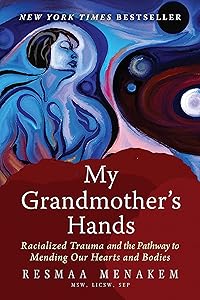
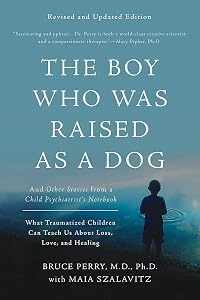
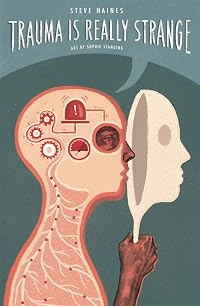
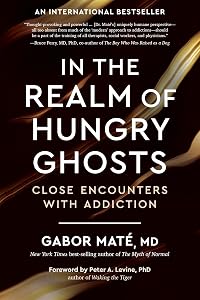


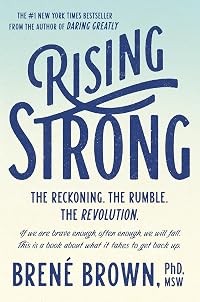
Member Recommendations
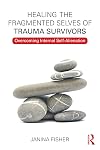
Healing the Fragmented Selves of Trauma Survivors: Overcoming Internal Self-Alienation by Janina Fisher
Tos Janina Fisher, PhD is a licensed Clinical Psychologist and Instructor at the Trauma Center, an outpatient clinic and research center founded by Bessel van der Kolk.
10

andbirds There are many parallels regarding family trauma. Hulls references The Body Keeps the Score in her book as well.
Member Reviews
I’ve had The Body Keeps the Score by Bessel van der Kolk, M.D. on my shelves (both analog and audio) for quite a few months. I suppose I put it off because trauma is such a heavy subject. However, I unexpectedly found the tone to be comfortable and almost conversational. Perhaps that’s the talent of audiobook narrator Sean Pratt and van der Kolk’s evident compassion.
The reason I picked up this book at this time was because I recently finished Hunger by Roxane Gay. As Gay told her story of gang rape at 12, along with subsequent disordered eating behavior, I wanted to understand more about how trauma affects people. Choosing The Body Keeps the Score was a perfect follow up.
Van der Kolk began his journey by working with Vietnam War show more veterans, and he references veterans repeatedly throughout the book. But he also tells the story of many other patients, individually and as research groups. It’s hard to hear the traumatic experiences, but each time van der Kolk infuses the telling with hope and positive change.
I appreciated the personal stories from the author as well. You can see why he’s been driven to help people with post-traumatic stress disorder and it’s related disorders. Van der Kolk’s advocacy for the PTSD diagnosis, as well as Complex PTSD and Developmental Trauma Disorder is groundbreaking and important.
The Body Keeps the Score covers how trauma affects our brains, how it changes children, and how traumatic memories can be hidden as well as revealed later. The science was clear and relatable, while also detailed and fascinating. I can imagine myself rereading part or all of this book in the future to revisit concepts.
For me, the most interesting part of the book was the final third. This section covers a variety of treatment methods including therapeutic theater, yoga, and eye movement desensitization and reprocessing (EMDR). I found myself wishing for more information, and also feeling curious about exploring some methods I’ve not tried.
As I said, this is a book to read and reread. I’ll use it as reference in the future, since I sometimes work with trauma survivors in my massage therapy practice. I highly recommend it to professionals and lay people. show less
The reason I picked up this book at this time was because I recently finished Hunger by Roxane Gay. As Gay told her story of gang rape at 12, along with subsequent disordered eating behavior, I wanted to understand more about how trauma affects people. Choosing The Body Keeps the Score was a perfect follow up.
Van der Kolk began his journey by working with Vietnam War show more veterans, and he references veterans repeatedly throughout the book. But he also tells the story of many other patients, individually and as research groups. It’s hard to hear the traumatic experiences, but each time van der Kolk infuses the telling with hope and positive change.
I appreciated the personal stories from the author as well. You can see why he’s been driven to help people with post-traumatic stress disorder and it’s related disorders. Van der Kolk’s advocacy for the PTSD diagnosis, as well as Complex PTSD and Developmental Trauma Disorder is groundbreaking and important.
The Body Keeps the Score covers how trauma affects our brains, how it changes children, and how traumatic memories can be hidden as well as revealed later. The science was clear and relatable, while also detailed and fascinating. I can imagine myself rereading part or all of this book in the future to revisit concepts.
For me, the most interesting part of the book was the final third. This section covers a variety of treatment methods including therapeutic theater, yoga, and eye movement desensitization and reprocessing (EMDR). I found myself wishing for more information, and also feeling curious about exploring some methods I’ve not tried.
As I said, this is a book to read and reread. I’ll use it as reference in the future, since I sometimes work with trauma survivors in my massage therapy practice. I highly recommend it to professionals and lay people. show less
This is the Bible for medical gaslighters. Do not recommend. This needs to come out of curriculums as it contains dangerous concepts with little to no evidence-based research backing it up. It is regarded as scripture and should not be.
I keep thinking about this book and I read it 8 years ago. I continue seeing it in healthcare offices and it infuriates me. I read this book during a time I had chronic pain and other issues. I was diagnosed years later with a painful and pervasive condition that I had been living with my whole life. I let healthcare people tell me shit was in my head for a decade partly because of this book and its concepts. At one point, I even convinced myself it was in my head. Then, I got an accurate medical show more diagnosis explaining literally all of my medical problems. I subsequently developed cPTSD from people saying shits in my head my whole life. I continue to struggle with this mind fuckery because people would rather read and listen to books like this than learn about rare diseases. It’s much easier to diagnose someone with mental illness.
Until this happened, I thought the book was ok. Now I just hate it, but what I hate more is that people are educating to this book. Let’s teach people about rare diseases instead and leave this one on the shelf thank you show less
I keep thinking about this book and I read it 8 years ago. I continue seeing it in healthcare offices and it infuriates me. I read this book during a time I had chronic pain and other issues. I was diagnosed years later with a painful and pervasive condition that I had been living with my whole life. I let healthcare people tell me shit was in my head for a decade partly because of this book and its concepts. At one point, I even convinced myself it was in my head. Then, I got an accurate medical show more diagnosis explaining literally all of my medical problems. I subsequently developed cPTSD from people saying shits in my head my whole life. I continue to struggle with this mind fuckery because people would rather read and listen to books like this than learn about rare diseases. It’s much easier to diagnose someone with mental illness.
Until this happened, I thought the book was ok. Now I just hate it, but what I hate more is that people are educating to this book. Let’s teach people about rare diseases instead and leave this one on the shelf thank you show less
Fascinating and eyeopening book on the physiological/neurological effects of trauma, particularly childhood trauma. The book tracks how trauma affects the functioning of the brain in lasting ways, breaking down the normal coping and processing functions. The author is especially critical of current psychological diagnostic and treatment practice for those suffering in the wake of trauma, saving his most ardent criticism for pharmaceutical reliance which only mask symptoms. He spends the last few chapters on treatments more focused on addressing trauma in unique ways that allow the sufferer to slowly begin processing things normally again. While the book is incredibly detailed, the author never overplays the science - it's an incredibly show more readable book.
5 bones!!!!!
Highly recommended!!!!! show less
5 bones!!!!!
Highly recommended!!!!! show less
A classic place to start if you're hearing the word "trauma" for the first time. Very big book and at times pretty dense - but overall still a good foundational anchorpoint to say "people are more than the sum of their parts, and trauma really does impact more than just the brain". Major content warning - descriptions of war, violence, sexual trauma, injuries, and just about any other traumatic experience. Descriptions are VERY detailed and some people even consider it to fall into the "trauma p0rn" category wherein the details might just be there for shock value. If you're recommending to a client, choose specific segments instead of suggesting they read the whole thing. -Morgan
The Body Keeps the Score is an absolutely magisterial examination of the role of trauma in mental health, and the necessity of healing both body and mind. Van der Kolk has had a fascinating career, getting started in psychiatry treating Vietnam veterans with PTSD in the late 1970s, and then moving through the great pharmacological and neuro-imaging transformations of the following decades into advocacy of unconventional treatments for complex PTSD.
In van der Kolk's theory, being faced with annihilation creates longstanding neurological changes that trap a person in the moment of trauma, a permanently elevated stress response that has innumerable health and social consequences. The signs of trauma are many, and range from patterns of show more fMRI that indicate issues with speech and memory, to signature low levels of heart rate variability, to sunken body language.
There are many kinds of traumatic events: combat, violent accidents, but van der Kolk focuses mostly on domestic violence and sexual assault. Children are utterly dependent on their caregivers, and a shockingly high percentage, perhaps 10%-25%, are simply unfit for the role, disinterested to outright abusive. Without having a healthy relationship to pattern onto, childhood victims of trauma are set up for a life of bad consequences. Adverse childhood events are strongly associated with everything from addiction, to depression, to criminal activity as both victim and perpetrator.
There are ways through trauma. While van der Kolk does not discount traditional talk therapy, including its more stressful exposure therapy variations, or psychotropic medication, he argues that trauma is basically a pattern of activity encoded in the body, and that the somatic signs of trauma have to be met head on. Victims of trauma have to be taught to breath and feel their own bodies before they can face their memories and rebuild trust.
Reading some other reviews, I can see that van der Kolk has garnered a fair deal of criticism, especially for arguing in favor of repressed memories in court, and for pushing some treatments without a great deal of peer-reviewed evidence, including EMDR, emotional family systems, and theater-based therapies. Repressed memories are a complex subject. The converse, that victims of trauma accurately recall details of happened to them, is definitely not true. Emotional memories focus on some sensations, and leave context and sequence in disarray. Yet, how can we do justice when it is the word of a victim decades later against an alleged abuser? Even if van der Kolk has served as an expert witness, that judgement is outside of the scope of this book.
But I am firmly in agreement, as someone with a PhD in the social aspects of mental health, that psychopharmacology and the DSM are simply not living up to the requirement of reducing suffering. I'm not sure trauma is the be all, but there are a lot of damaged people walking around. And van der Kolk is persuasive in his argument, that historically from Freud forward, trauma-infused psychiatry was always slapped down when it asked the awkward question of "So who exactly is hurting these kids?" show less
In van der Kolk's theory, being faced with annihilation creates longstanding neurological changes that trap a person in the moment of trauma, a permanently elevated stress response that has innumerable health and social consequences. The signs of trauma are many, and range from patterns of show more fMRI that indicate issues with speech and memory, to signature low levels of heart rate variability, to sunken body language.
There are many kinds of traumatic events: combat, violent accidents, but van der Kolk focuses mostly on domestic violence and sexual assault. Children are utterly dependent on their caregivers, and a shockingly high percentage, perhaps 10%-25%, are simply unfit for the role, disinterested to outright abusive. Without having a healthy relationship to pattern onto, childhood victims of trauma are set up for a life of bad consequences. Adverse childhood events are strongly associated with everything from addiction, to depression, to criminal activity as both victim and perpetrator.
There are ways through trauma. While van der Kolk does not discount traditional talk therapy, including its more stressful exposure therapy variations, or psychotropic medication, he argues that trauma is basically a pattern of activity encoded in the body, and that the somatic signs of trauma have to be met head on. Victims of trauma have to be taught to breath and feel their own bodies before they can face their memories and rebuild trust.
Reading some other reviews, I can see that van der Kolk has garnered a fair deal of criticism, especially for arguing in favor of repressed memories in court, and for pushing some treatments without a great deal of peer-reviewed evidence, including EMDR, emotional family systems, and theater-based therapies. Repressed memories are a complex subject. The converse, that victims of trauma accurately recall details of happened to them, is definitely not true. Emotional memories focus on some sensations, and leave context and sequence in disarray. Yet, how can we do justice when it is the word of a victim decades later against an alleged abuser? Even if van der Kolk has served as an expert witness, that judgement is outside of the scope of this book.
But I am firmly in agreement, as someone with a PhD in the social aspects of mental health, that psychopharmacology and the DSM are simply not living up to the requirement of reducing suffering. I'm not sure trauma is the be all, but there are a lot of damaged people walking around. And van der Kolk is persuasive in his argument, that historically from Freud forward, trauma-infused psychiatry was always slapped down when it asked the awkward question of "So who exactly is hurting these kids?" show less
I started this book with the hope of finding more insight into how trauma affects the mind and body and I was not disappointed. Decades after growing up with violent—and often sadistic—physical and emotional abuse, I continue to struggle with bouts of depression and anxiety. We all know that the mind and body are inextricably connected, but The Body Keeps the Score taught me precisely how trauma affects mental and physical health at a deeper level. It opened my eyes to new treatments for overcoming toxic stress and trauma-based fears that are far beyond psychiatry’s “assembly line” practice of doling out pills to every patient.
Using a combination of neuroscience, empathy, and compassion, Bessel van der Kolk presents methods show more for becoming attuned to our minds and bodies through such methods as EMDR (eye movement desensitization and reprocessing), neurofeedback, mindfulness, use of language (speech and writing), honing our self-regulation and emotional intelligence, and enhancing our social connections. Further, van der Kolk's voice and writing style are captivating, turning what could otherwise have been a dry, stultifying academic textbook into an engaging and enlightening read. show less
Using a combination of neuroscience, empathy, and compassion, Bessel van der Kolk presents methods show more for becoming attuned to our minds and bodies through such methods as EMDR (eye movement desensitization and reprocessing), neurofeedback, mindfulness, use of language (speech and writing), honing our self-regulation and emotional intelligence, and enhancing our social connections. Further, van der Kolk's voice and writing style are captivating, turning what could otherwise have been a dry, stultifying academic textbook into an engaging and enlightening read. show less
So much to say about this powerful book. It took me more time to finish this book than any other I've read. I carried it with me to and from school - unread but never left behind for months in Poughkeepsie - back home on my desk. Sometimes I'd read thirty pages in a day. Sometimes weeks would pass and I didn't read a word of it. Eventually, finally, I pushed through and finished it. This book has taught me as much about myself as some of my favorite novels, probably more. It's painful, illuminating, potent, and mystifying. It makes the traumatized brain accessible.
If this book was written by a queer femme (of color), it would be my Bible. I still want everyone in my life to read it.
If this book was written by a queer femme (of color), it would be my Bible. I still want everyone in my life to read it.
Members
- Recently Added By
Published Reviews
ThingScore 100
Packed with science and human stories, the book is an intense read that can get technical. Stay with it, though: van der Kolk has a lot to say, and the struggle and resilience of his patients is very moving.
added by melmore
Lists

Books That Changed Me
158 works; 47 members

Trauma and Dissociation
4 works; 1 member

Epigenetics (Michelle TBR)
4 works; 1 member

How Humans Work
18 works; 1 member

Globe and Mail | Canadian Non-Fiction: Nov. 20, 2021
10 works; 1 member

Men's healing resources
747 works; 1 member

Psychology
6 works; 1 member

el
1,139 works; 1 member

Nervous system
43 works; 1 member

trauma
38 works; 1 member

Psychology: Abuse, Grief, Self-Help
189 works; 1 member

Healing resources for women
587 works; 1 member

Healing resources
124 works; 1 member

Story/Myth Reading List
25 works; 1 member

To Read
140 works; 1 member

Books Read in 2024
4,623 works; 126 members

Mo's Reading List (Abridged)
75 works; 1 member

Mo's Reading List
218 works; 1 member

Books Read in 2018
4,360 works; 110 members

Books Read in 2022
5,168 works; 114 members

Efemeridades e Possibilidades futuras (Personal wishlist)
24 works; 1 member
Phoebe Bridgers
29 works; 1 member

Books Read in 2019
4,052 works; 110 members

If Books Could Kill Podcast
52 works; 1 member
Author Information

20+ Works 8,662 Members
Bessel van der Kolk M.D. has been active as a clinician, researcher and teacher in the area of posttraumatic stress and related phenomena since the 1970s. He was co-principal investigator of the DSM IV Field Trials for Post-Traumatic Stress Disorder. His current research is on how trauma affects memory processes and brain imaging studies of PTSD. show more He has written or co-written several books including Psychological Trauma, Traumatic Stress: The Effects of Overwhelming Experience on Mind, Body, and Society, and The Body Keeps the Score: Brain, Mind, and Body in the Healing of Trauma. (Bowker Author Biography) show less
Some Editions
Awards and Honors
Work Relationships
Is contained in
Has as a commentary on the text
Has as a student's study guide
Common Knowledge
- Original publication date
- 2014
- First words
- One does not have to be a combat soldier, or visit a refugee camp in Syria or the Congo to encounter trauma.
- Quotations
- All of us, but especially children, need such confidence - confidence that others will know, affirm, and cherish us. Without that we can't develop a sense of agency that will enable us to assert: "This is what I believe in; t... (show all)his is what I stand for; this is what I will devote myself to." As long as we feel safely held in the hearts and minds of the people who love us, we will climb mountains and cross deserts and stay up all night to finish projects. Children and adults will do anything for people they trust and whose opinion they value.
- Last words
- (Click to show. Warning: May contain spoilers.)The choice is ours to act on what we know.
- Blurbers
- Herman, Judith Lewis; Bhattacharya, Shaoni; Linschoten, Henry Strick van; Felitti, Vincent J.; Yehuda, Rachel; Levine, Peter A. (show all 22); Porges, Stephen W.; McFarlane, Alexander; Kabat-Zinn, Jon; Schwartz, Richard; Doidge, Norman; Cope, Stephen; Hart, Onno van der; Stern, Jessica; Saxe, Glenn N.; Shapiro, Francine; Tronick, Ed; Lanius, Ruth A.; Siegel, Daniel J.; Ogden, Pat; Kornfield, Jack; Liberman, Alicia
- Canonical DDC/MDS
- 616.8521206
- Canonical LCC
- RC552.P67
Classifications
- Genres
- General Nonfiction, Nonfiction, Science & Nature
- DDC/MDS
- 616.8521206 — Applied science & technology Medicine & health Diseases, Allergies, Skin Conditions Nervous Disorders: Autism, Anorexia, OCD Miscellaneous Neuroses PTSD
- LCC
- RC552 .P67 — Medicine Internal medicine Internal medicine Neurosciences. Biological psychiatry. Neuropsychiatry Psychiatry Psychopathology Neuroses
- BISAC
Statistics
- Members
- 8,420
- Popularity
- 1,311
- Reviews
- 105
- Rating
- (4.23)
- Languages
- 19 — Czech, Danish, Dutch, English, Estonian, Finnish, French, German, Icelandic, Italian, Korean, Lithuanian, Polish, Portuguese, Romanian, Spanish, Swedish, Turkish, Ukrainian
- Media
- Paper, Audiobook, Ebook
- ISBNs
- 50
- UPCs
- 1
- ASINs
- 20