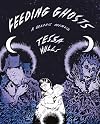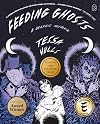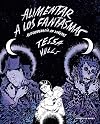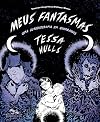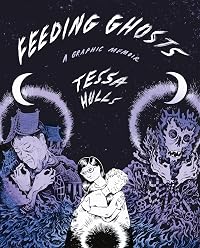
Feeding Ghosts: A Graphic Memoir
by Tessa Hulls
On This Page
Description
"Tessa Hulls delves into her own family history and the intergenerational trauma caused by mental illness and political strife"--Tags
Recommendations





Member Recommendations
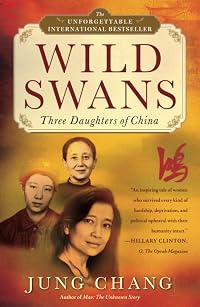
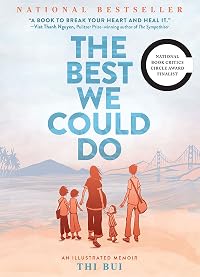
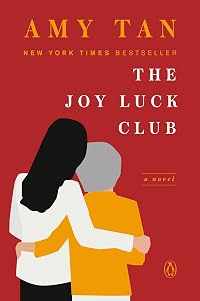
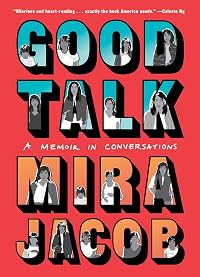
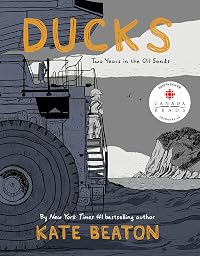
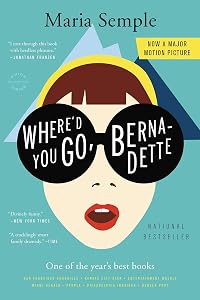
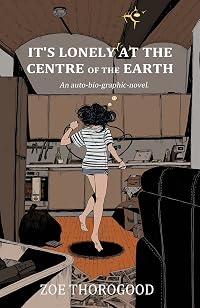
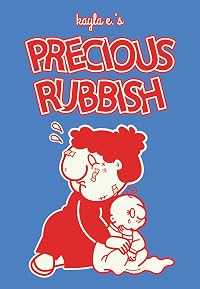
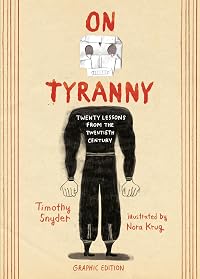
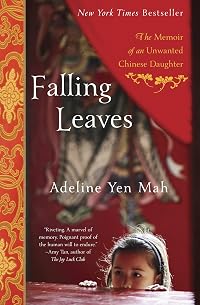
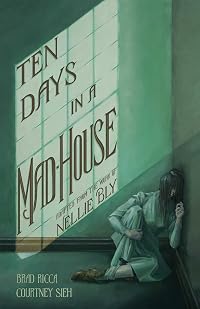
andbirds There are many parallels in both books regarding family trauma. Hulls references The Body Keeps the Score in her book as well.
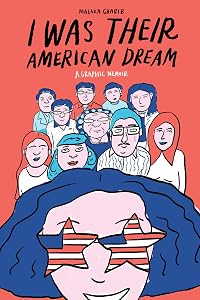
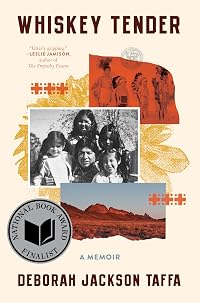
andbirds Both books (memoirs) explore multigenerational trauma, tied to a particular ethnic upbringing of both authors.

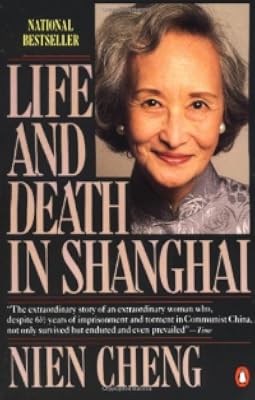
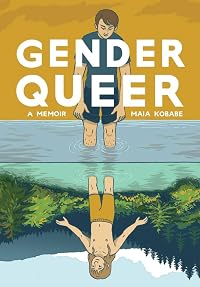
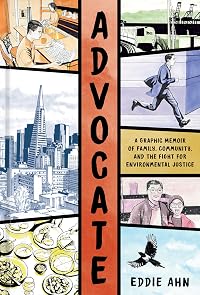
andbirds Both books deal with trauma within the family.
Member Reviews
Tessa Hull’s luminous book is a deep dive into three generations of women in her family: her grandmother Sun Yi, her mother Rose, and herself. Reminiscent of Educated, Persepolis and What My Bones Know, Feeding Ghosts explores the lifelong effects of intergenerational trauma. During the 1950s in China, Sun-Yi had written a memoir that was both well received and quite scandalous. Sometime thereafter, she suffered from a mental breakdown from which she never recovered. Rose moved to the US after receiving a scholarship to an American university, and she and her mother made the journey from China to California. Here, Rose met Tessa’s father (who was Caucasian), who eventually abandoned the family. The book explores these events, with show more Tessa’s clear-eyed vision of familial truths (and lies), and her need to acknowledge the ghosts who have haunted her family for decades, and her own need to figure out who she is. Basically, Tessa is left with the responsibility of unraveling her family’s history, to make sense of it – if that’s even possible – of her mother’s and grandmother’s deeply entrenched traumas and emotional pain. She looks with unflinching honesty even when it causes her intense emotional pain.
Feeding Ghosts is such a consummate account of Tessa’s journey – beautifully illustrated and wisely narrated – that I falter while trying to write a review that will capture the essence of Tessa’s book. Instead of trying to attempt that, I’m just going to relay some quotes that will speak much more loudly and succinctly than anything I could write.
“Sometimes I think it would’ve been easier if she (Tessa’s grandmother) had died. With death, you only have to say goodbye once. With mental illness, it’s goodbye over and over and over again.”
“Writing this book unraveled my understanding of my family even as it brought me – for the first time – to a narrative in which all the contradictions make sense: my mom’s China was my “cowboy”, an illusory talisman of survival adopted through sheer force of need.”
“The barrage of mental health practitioners went on for years… Not a single one of those professionals ever entertained the notion that the disease lay not within me, but within the family system I inhabited.”
"My family's past was a broken bone that had never been set. And it meant we could never fully heal."
“My mother could not see into the world I’d created, so she felt justified in asserting her reality. She could only see my walls, not the garden they were protecting.”
“Would it be different if we’d had the ability to see ourselves as pawns stuck in a loop of a trauma that did not belong to us?”
“Sealing myself within a cowboy had broken my web of human connection. While cowboys see more sunsets than most anyone – they almost always watch them alone.”
“Creativity and mental illness are deeply linked, both drawing the mind to wild frontiers.”
“It’s much easier to call someone crazy than it is to truly face the magnitude of how they were wounded in the past.”
“These long years of chasing my family’s ghosts showed me how deeply we’d misunderstood their hunger. They never wanted to devour us, they just wanted to be known. To have their story heard. But we were too damaged to know how to listen, and in their pain they took what nourishment they could. For all their terrifying power, our ghosts could not carry themselves out of the dark. For that, they needed me to feed them by bearing witness. By releasing us all into the light.” show less
Feeding Ghosts is such a consummate account of Tessa’s journey – beautifully illustrated and wisely narrated – that I falter while trying to write a review that will capture the essence of Tessa’s book. Instead of trying to attempt that, I’m just going to relay some quotes that will speak much more loudly and succinctly than anything I could write.
“Sometimes I think it would’ve been easier if she (Tessa’s grandmother) had died. With death, you only have to say goodbye once. With mental illness, it’s goodbye over and over and over again.”
“Writing this book unraveled my understanding of my family even as it brought me – for the first time – to a narrative in which all the contradictions make sense: my mom’s China was my “cowboy”, an illusory talisman of survival adopted through sheer force of need.”
“The barrage of mental health practitioners went on for years… Not a single one of those professionals ever entertained the notion that the disease lay not within me, but within the family system I inhabited.”
"My family's past was a broken bone that had never been set. And it meant we could never fully heal."
“My mother could not see into the world I’d created, so she felt justified in asserting her reality. She could only see my walls, not the garden they were protecting.”
“Would it be different if we’d had the ability to see ourselves as pawns stuck in a loop of a trauma that did not belong to us?”
“Sealing myself within a cowboy had broken my web of human connection. While cowboys see more sunsets than most anyone – they almost always watch them alone.”
“Creativity and mental illness are deeply linked, both drawing the mind to wild frontiers.”
“It’s much easier to call someone crazy than it is to truly face the magnitude of how they were wounded in the past.”
“These long years of chasing my family’s ghosts showed me how deeply we’d misunderstood their hunger. They never wanted to devour us, they just wanted to be known. To have their story heard. But we were too damaged to know how to listen, and in their pain they took what nourishment they could. For all their terrifying power, our ghosts could not carry themselves out of the dark. For that, they needed me to feed them by bearing witness. By releasing us all into the light.” show less
A memoir of generational trauma told through the recurring damage of mother daughter relationships. Hulls explores the immigrant experience and Chinese-American cultural and political relations.
Hulls work is deeply literate, and she crowds her bildungsroman with epigraphs and quotations. From The Art of War to the Woman Warrior, Hulls shows her work as defense and as context. While I found the references distracting in an already densely told story that regularly shifted time and place, they also served to establish Tessa's character so that her third act examination of how she spent her twenties served more as confirmation than revelation.
In claustrophobic black ink, Hulls anchors herself to the canon of graphic novels, from Maus to show more Eisner's Dropsie Ave trilogy. At the same time, she builds on the frame breaking innovations of McCloud and Bechdel to move her memoir from a conversation with herself, to one with her audience, ultimately, to a heart rending appeal directly to her mother. This shift from catalogue to catharsis had me in tears.
We're lucky that she shared it with us. show less
Hulls work is deeply literate, and she crowds her bildungsroman with epigraphs and quotations. From The Art of War to the Woman Warrior, Hulls shows her work as defense and as context. While I found the references distracting in an already densely told story that regularly shifted time and place, they also served to establish Tessa's character so that her third act examination of how she spent her twenties served more as confirmation than revelation.
In claustrophobic black ink, Hulls anchors herself to the canon of graphic novels, from Maus to show more Eisner's Dropsie Ave trilogy. At the same time, she builds on the frame breaking innovations of McCloud and Bechdel to move her memoir from a conversation with herself, to one with her audience, ultimately, to a heart rending appeal directly to her mother. This shift from catalogue to catharsis had me in tears.
We're lucky that she shared it with us. show less
(Full disclosure: I received a free e-ARC for review through Netgalley. Content warning for violence including murder, assassination, and sexual assault, as well as generational and interpersonal trauma and mental illness.)
So I was originally approved to review this title on NetGalley waaaay back in October 2023, but after slogging through the first few pages, I quickly gave up: the text was too small and pixelated to read without getting a massive headache. (Note to publishers: please do better!) That alone was almost enough to turn me off of FEEDING GHOSTS, but I'm so thankful that I picked up a physical copy when it finally turned up at my local library, some eight months later. FEEDING GHOSTS is likely one of my favorite graphic show more novels of 2024, and THE single best graphic novel memoir I've ever read.
Author Tessa Hulls is a second generation immigrant; her mother came to America from Hong Kong as a college student, eventually settling down in a small rural town in California. Seven years later, Rose brought her own mother, Sun Yi, to join her. A former journalist who faced persecution in China, Sun Yi's struggle with mental illness seemingly began after she published her 1958 memoir, EIGHT YEARS IN RED CHINA, which became an instant bestseller (although Sun Yi only saw proceeds from the books' first print run). She hung on just long enough to get herself and her young daughter to safety - fleeing China for Hong Kong - and then slowly slipped into psychosis. (Aside from later dementia, Hulls doesn't elaborate on Sun Yi's specific diagnoses.)
As a child, Tessa only knew her grandmother as a vaguely defined shadow. Sun Yi and Tessa did not share a common language and, even if they did, Sun Yi remained glued to her desk most of the day, obsessively (re)writing the story of her life. Yet the relationship between Sun Yi and Rose - not as mother and daughter, but dependent and caregiver - cast a shadow on Tessa's own relationship with her mother, who saw her as another broken thing to be fixed.
After college, Tessa left home in pursuit of the freedom that only the wild frontier could provide a cowboy like herself: bicycling solo from California to Maine; taking on seasonal work in Alaska and Antarctica. But after the death of Sun Yi, Hulls begins to question the efficacy of her "no strings attached" lifestyle. She spends six months holed up in a cabin, drafting the outline of this book. She gets a grant to have Sun Yi's memoir translated into English, and another to travel to Hong Kong and China in pursuit of her matrilineal history. (Hulls's father is British; her mother's father, Swedish.)
The result is FEEDING GHOSTS, an absolutely epic story that adeptly demonstrates how the personal is political, and vice versa. Hulls excavates several generations of trauma, showing how political violence and repression fractures communities, families, and minds - including those of the survivors' descendants, born decades after the fact. The women in this story are complex, multi-layered individuals, who sometimes do the 'wrong' thing despite having the best of intentions. Hulls weaves the stories of her mother's and grandmother's lives with the history of China, resulting in a rich tapestry that's often painful to behold.
I guess my only complaint is Hulls's harsh judgment of her grandmother as a "gold digger" (although she does revise this somewhat towards the end of the narrative). Whether Sun Yi used her beauty to ensure the safety of herself and Rose is really immaterial, imho; the problem lies in social structures that value women for these attributes, such that their very survival depends on it. And what of the men who willingly participated in these transactions? Hulls seems to view them as dupes rather than active participants. Idk, the very term seems painfully outdated to this Gen X-er, and I've got a good decade on the author. show less
So I was originally approved to review this title on NetGalley waaaay back in October 2023, but after slogging through the first few pages, I quickly gave up: the text was too small and pixelated to read without getting a massive headache. (Note to publishers: please do better!) That alone was almost enough to turn me off of FEEDING GHOSTS, but I'm so thankful that I picked up a physical copy when it finally turned up at my local library, some eight months later. FEEDING GHOSTS is likely one of my favorite graphic show more novels of 2024, and THE single best graphic novel memoir I've ever read.
Author Tessa Hulls is a second generation immigrant; her mother came to America from Hong Kong as a college student, eventually settling down in a small rural town in California. Seven years later, Rose brought her own mother, Sun Yi, to join her. A former journalist who faced persecution in China, Sun Yi's struggle with mental illness seemingly began after she published her 1958 memoir, EIGHT YEARS IN RED CHINA, which became an instant bestseller (although Sun Yi only saw proceeds from the books' first print run). She hung on just long enough to get herself and her young daughter to safety - fleeing China for Hong Kong - and then slowly slipped into psychosis. (Aside from later dementia, Hulls doesn't elaborate on Sun Yi's specific diagnoses.)
As a child, Tessa only knew her grandmother as a vaguely defined shadow. Sun Yi and Tessa did not share a common language and, even if they did, Sun Yi remained glued to her desk most of the day, obsessively (re)writing the story of her life. Yet the relationship between Sun Yi and Rose - not as mother and daughter, but dependent and caregiver - cast a shadow on Tessa's own relationship with her mother, who saw her as another broken thing to be fixed.
After college, Tessa left home in pursuit of the freedom that only the wild frontier could provide a cowboy like herself: bicycling solo from California to Maine; taking on seasonal work in Alaska and Antarctica. But after the death of Sun Yi, Hulls begins to question the efficacy of her "no strings attached" lifestyle. She spends six months holed up in a cabin, drafting the outline of this book. She gets a grant to have Sun Yi's memoir translated into English, and another to travel to Hong Kong and China in pursuit of her matrilineal history. (Hulls's father is British; her mother's father, Swedish.)
The result is FEEDING GHOSTS, an absolutely epic story that adeptly demonstrates how the personal is political, and vice versa. Hulls excavates several generations of trauma, showing how political violence and repression fractures communities, families, and minds - including those of the survivors' descendants, born decades after the fact. The women in this story are complex, multi-layered individuals, who sometimes do the 'wrong' thing despite having the best of intentions. Hulls weaves the stories of her mother's and grandmother's lives with the history of China, resulting in a rich tapestry that's often painful to behold.
I guess my only complaint is Hulls's harsh judgment of her grandmother as a "gold digger" (although she does revise this somewhat towards the end of the narrative). Whether Sun Yi used her beauty to ensure the safety of herself and Rose is really immaterial, imho; the problem lies in social structures that value women for these attributes, such that their very survival depends on it. And what of the men who willingly participated in these transactions? Hulls seems to view them as dupes rather than active participants. Idk, the very term seems painfully outdated to this Gen X-er, and I've got a good decade on the author. show less
I can't say enough good things about this graphic memoir of three generations of Chinese women (grandmother, mother, and daughter...the author) during the Chinese Communist Revolution, then later the Cultural Revolution. The grandmother was an anticommunist journalist in Shanghai who was persecuted, and eventually fled to Hong Kong with her illegitimate mixed race daughter. Once in Hong Kong the grandmother suffered a psychotic break leaving the 10 year old in the Diocesen Girls School sponsored by wealthy Eurasians. The 10 year old eventually graduates and wins a scholarship to Macalester U. in Minnesota. She ends up emigrating, bringing her mother to the US from Hong Kong, and has Tessa, the author. This is the author's first book and show more first drawing. She did an amazing amount of research including finding the banned memoir written by her grandmother in the 1950's and having it translated. It explores how politics can become personal, mental illness, class issues, and the effects of colonialism. There's a lot to think about and the artwork gives the reader time and space to process some of this. show less
Wow. This graphic memoir really packs a wallop. Tessa Hulls explores mental illness, communist China under Mao, colonialism, multigenerational trauma, and identity through the lens of being multiracial and the child of immigrants. It is a surprisingly dense read for a graphic novel, so it took over a week to read, but gosh, what a gripping and emotional story. I really respect Hulls’s bravery to write so openly about her experiences, and I’m in awe of her growth as she grappled with these topics as she wrote the book and made efforts to heal her relationship with her mother.
An interesting, if overlong, graphic memoir about generational trauma passed from grandmother to mother to daughter. Tessa Hulls uncovers the details of her mother and grandmother's difficult lives in China and how all that shaped the antagonistic and estranged relationship she has had with her mother while growing up in northern California.
Hulls starts her family history near the end of World War II with her grandmother, Sun Yi, being hounded by Mao Zedong's minions for being an outspoken journalist and single mother of a multiracial child. Sun Yi escapes the Cultural Revolution by fleeing with her daughter to British-controlled Hong Kong, where she starts life anew but is soon lost to disabling mental illness for the majority of her show more remaining life, leaving her daughter Rose to grow up with an absent father and a dependent mother. Still, Rose is able to emigrate to the United States, start a family, and bring her mother over from Hong Kong to provide at-home care that lasted for decades.
Hulls wrestles with how her mother's experiences and Chinese upbringing set expectations for their mother/daughter relationship that conflict with Hulls' assimilation into American culture, desire for independence, and search for her own identity as a multiracial person. The act of writing this book serves as a tool to attempt healing the breach that grew between them.
The execution of the book suffers a bit from repetition and an overabundance of visual and textual metaphors -- trains, boats, cowboys, ghosts, sparrows, etc., etc. -- for the author's emotions and relationships.
I found it a bit odd that Hulls' brother and father barely show up in the background. Pops gets a pass? And bro's experience growing up in the same environment is irrelevent? This seems a rather large omission in a book that otherwise goes overboard in detail.
Side note: In a nice bit of synchronicity, my wife and I read G. Neri's My Antarctica: True Adventures in the Land of Mummified Seals, Space Robots, and So Much More just a week prior and wondered for a moment what sort of person would travel to the frozen continent to be a janitor or a cook and if our daughter should consider giving it a go. And then this book has a chapter about how the author did go there to be a cook as part of her quest for independence and distance from her mother.
(Best of 2024 Project: I'm reading all the graphic novels that made it onto one or more of these lists:
• Washington Post 10 Best Graphic Novels of 2024
• Publishers Weekly 2024 Graphic Novel Critics Poll
• NPR's Books We Love 2024: Favorite Comics and Graphic Novels
This book made the PW and NPR lists.) show less
Hulls starts her family history near the end of World War II with her grandmother, Sun Yi, being hounded by Mao Zedong's minions for being an outspoken journalist and single mother of a multiracial child. Sun Yi escapes the Cultural Revolution by fleeing with her daughter to British-controlled Hong Kong, where she starts life anew but is soon lost to disabling mental illness for the majority of her show more remaining life, leaving her daughter Rose to grow up with an absent father and a dependent mother. Still, Rose is able to emigrate to the United States, start a family, and bring her mother over from Hong Kong to provide at-home care that lasted for decades.
Hulls wrestles with how her mother's experiences and Chinese upbringing set expectations for their mother/daughter relationship that conflict with Hulls' assimilation into American culture, desire for independence, and search for her own identity as a multiracial person. The act of writing this book serves as a tool to attempt healing the breach that grew between them.
The execution of the book suffers a bit from repetition and an overabundance of visual and textual metaphors -- trains, boats, cowboys, ghosts, sparrows, etc., etc. -- for the author's emotions and relationships.
I found it a bit odd that Hulls' brother and father barely show up in the background. Pops gets a pass? And bro's experience growing up in the same environment is irrelevent? This seems a rather large omission in a book that otherwise goes overboard in detail.
Side note: In a nice bit of synchronicity, my wife and I read G. Neri's My Antarctica: True Adventures in the Land of Mummified Seals, Space Robots, and So Much More just a week prior and wondered for a moment what sort of person would travel to the frozen continent to be a janitor or a cook and if our daughter should consider giving it a go. And then this book has a chapter about how the author did go there to be a cook as part of her quest for independence and distance from her mother.
(Best of 2024 Project: I'm reading all the graphic novels that made it onto one or more of these lists:
• Washington Post 10 Best Graphic Novels of 2024
• Publishers Weekly 2024 Graphic Novel Critics Poll
• NPR's Books We Love 2024: Favorite Comics and Graphic Novels
This book made the PW and NPR lists.) show less
I was fascinated by Tessa's retelling of her mother and grandmother escaping from China and heading to the United States. She explains that there was inter-generational trauma that affected her. How she was raised and her relationships with her family was based upon her mother and grandmother's stunted emotions. Tessa inherited this. When she traveled to China with her mother, her mother was freed from her trauma and acted like she was at home. Mom was at peace from seeing the family she left behind. I wondered whether it would have been better to have stayed behind in Maoist China.
The story is told in black and white comic strip panels. The dialogue is densely packed into the strips so it is a slow read. However, it's well worth show more reading. With over 400 pages the book is definitely a chunkster. show less
The story is told in black and white comic strip panels. The dialogue is densely packed into the strips so it is a slow read. However, it's well worth show more reading. With over 400 pages the book is definitely a chunkster. show less
Members
- Recently Added By
Lists

Violette's Top 5 Comics 2025
5 works; 1 member

Top Five Books of 2025
954 works; 303 members

History: Asia
103 works; 1 member
Author Information

All Editions
Awards and Honors
Awards
Distinctions
Common Knowledge
- Canonical title
- Feeding Ghosts: A Graphic Memoir
- Original publication date
- 2024-03-05
- People/Characters
- Tessa Hulls; Rose Hulls (mother of Tessa Hulls); Sun Yi (mother of Rose Hulls); Chris Hulls (brother of Tessa Hulls); Mao Zedong; Willi Kappeler (father of Rose Hulls, doctor) (show all 7); Tessa Hulls' father
- Important places
- China; California, USA; Hong Kong; Antarctica; Shanghai, China; Suzhou, Jiangsu, China
- Epigraph
- My mother was my first country. The first place I ever lived. - Nayyirah Waheed, "lands"
So we beat on, boats against the current, borne back ceaselessly into the past. - F. Scott Fitzgerald, The Great Gatsby
All water has a perfect memory and is forever trying to get back to where it was. - Toni Morrison - Dedication
- For my mother and her mother
- First words
- On a night train in China, 2016. If you had told me five years ago that my mother and I would find ourselves here, traveling back into th epast in the hopes of building a bridge between us, the sheer impossibility would have ... (show all)caught in my throat like a bone. [Prologue]
- Last words
- (Click to show. Warning: May contain spoilers.)Three women who have crossed so many oceans, trying to carry each other home.
My mother, her mother, and me: America, 2021 - Blurbers
- Ma, Ling; Bui, Thi; Chow, Kat; Thompson, Craig; Lutes, Jason; Ford, Jamie (show all 9); Zia, Helen; Martin, Manjula; Reang, Putsata
- Original language
- English
Classifications
Statistics
- Members
- 214
- Popularity
- 152,996
- Reviews
- 11
- Rating
- (4.17)
- Languages
- English, Spanish
- Media
- Paper, Ebook
- ISBNs
- 6
- ASINs
- 1