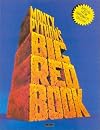
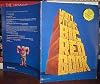
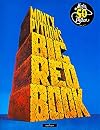
Monty Python's Big Red Book
by Graham Chapman (Author), John Cleese (Author), Terry Gilliam (Author), Eric Idle (Author), Terry Jones (Author), Michael Palin (Author)
Monty Python
On This Page
Description
Embodying all of the silliness of the Monty Python team, the Big Red Book contains many of their classic sketches.Tags
Recommendations





















Member Recommendations

Member Reviews
A companion book of some sort to Monty Python's Flying Circus, published in 1971. There's a lot of familiar stuff in here: the Upper-Class Twit of the Year competition, silly walks (in the form of a series of still photos), Dinsdale and his hedgehog, etc. There are also lots of very silly ads, naughty pictures, a bunch of forewords consisting entirely of people complaining about not being invited to write the foreword... Basically lot of the kind of silliness you expect from Python. The result is random, surreal, and ridiculous. So, pretty much exactly like the experience of watching an episode of the show, only without having the actual Pythons to watch, so not quite as good.
Still. I paid 50 cents for this at my local library sale, and show more I got at least a dollar's worth of laughs out of it, so I'm happy. show less
Still. I paid 50 cents for this at my local library sale, and show more I got at least a dollar's worth of laughs out of it, so I'm happy. show less
When seeing Monty Python’s big red book, it is clear that the book is blue with yellow letting. No red in sight. My version is a paperback but the book states that it is the “special new hardback edition” and in the text we find that the “softbound” edition (translate that hardback) was issued previously. When I finally opened the book, the first pages dealt with the foreward written by ITNs Reginald Bosanquet in outrageously Monty Python style. And it’s downhill from there. Some of the favorite skits from Monty Python are represented such as a set of photos of John Cleese and the Ministry of Silly Walks; the twit race, the lumberjack song; the Batley Ladies Townswomen’s Guild and their annual productions; and many more. show more There are advertisements, the results of the Song for Europe contest, drawings from the talented pen of Terry Gilliam, a do-it-yourself story, more poems of Ewen McTeagle, and many others. “Why accountancy is not boring” was a treasure.
The humor is quirky and very British. And a warning: some of the sketches and ads may be offensive to some readers. This book is no substitute for getting DVDs of the television series and watching the skits. But it does give a flavor for why Monty Python’s humor is still fresh after all these years. show less
The humor is quirky and very British. And a warning: some of the sketches and ads may be offensive to some readers. This book is no substitute for getting DVDs of the television series and watching the skits. But it does give a flavor for why Monty Python’s humor is still fresh after all these years. show less
Ratings
Members
- Recently Added By
Author Information


John Cleese, October 27, 1939 - John Cleese was born on October 27, 1939 in Weston-Super-Mare, Somerset, England to Reginald Cleese, and insurance salesman, and Muriel Cross. He attended Cambridge University beginning in 1960 and joined the Footlights Club in his second term. In 1963, a Footlights production called "A Clump of Plinths" became so show more popular that the production spawned Cambridge Circus and ran in London's West End. He eventually earned his law degree from Cambridge. In 1964, the show traveled first to New Zealand and then to America for 24 performances on Broadway. By the late 60's, Cleese was established as an actor and a writer. In 1969, the BBC, looking for a new show to fill an empty time slot, coupled Cleese and pal Graham Chapman with three graduates from Oxford, Eric Idle, Terry Jones and Michael Palin, as well as Terry Gilliam to create Monty Python's Flying Circus. The BBC produced 45 episodes which have been run and rerun over 30 years. Flying Circus became a cult classic and spawned yet another television show, "Fawlty Towers" as well as books and feature films such as "Monty Python's Life of Brian" and "Monty Python and the Holy Grail." Cleese then came down with a debilitating flu-like illness which his doctor suggested might be psychosomatic. After working with a therapist, Cleese returned with no signs of the illness and even joined the doctor in writing two books, "Families and How to Survive Them" and "Life and How to Survive It." He went on to create training films for corporations through his company called Video Arts. These videos enabled training to be fun as well as informative. Through all of this, Cleese has demonstrated his ability to perform in all walks of life and has made a name for himself doing what he loves best. (Bowker Author Biography) show less


Terry Jones was born in Colwyn Bay, Wales on February 1, 1942. He was a writer for such BBC programs as The Frost Report and Do Not Adjust Your Set, before joining with Graham Chapman, John Cleese, Eric Idle, and Michael Palin to form the Monty Python comedy troupe. Best remembered as the nude organist, Jones co-directed Monty Python and the Holy show more Grail (1975), and directed Life of Brian (1979) and Monty Python's The Meaning of Life (1983). Along with many Python-related books, screenplays, and records, he has written several non-fiction works including Chaucer's Knight: The Portrait of a Medieval Mercenary, Who Murdered Chaucer?: A Medieval Mystery, and Terry Jones's War on the War on Terror. He also wrote numerous children's books including The Saga of Erik the Viking, which won the Children's Book Award in 1984, Fantastic Stories, The Beast with a Thousand Teeth, The Curse of the Vampire Socks, and Bedtime Stories. (Bowker Author Biography) show less

Series

Common Knowledge
- Original publication date
- 1971
Classifications
Statistics
- Members
- 379
- Popularity
- 82,978
- Reviews
- 2
- Rating
- (4.05)
- Languages
- English
- Media
- Paper
- ISBNs
- 8
- ASINs
- 2