
On This Page
Description
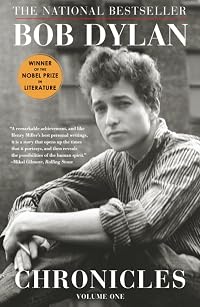
"I'd come from a long ways off and had started a long ways down. But now destiny was about to manifest itself. I felt like it was looking right at me and nobody else." So writes Bob Dylan in Chronicles: Volume One, his remarkable book exploring critical junctures in his life and career. Through Dylan's eyes and open mind, we see Greenwich Village, circa 1961, when he first arrives in Manhattan. Dylan's New York is a magical city of possibilities--smoky, nightlong parties; literary show more awakenings; transient loves and unbreakable friendships. Elegiac observations are punctuated by jabs of memories, penetrating and tough. With the book's side trips to New Orleans, Woodstock, Minnesota and points west, Chronicles: Volume One is an intimate and intensely personal recollection of extraordinary times. By turns revealing, poetical, passionate and witty, Chronicles: Volume One is a mesmerizing window on Bob Dylan's thoughts and influences. Dylan's voice is distinctively American: generous of spirit, engaged, fanciful and rhythmic. Utilizing his unparalleled gifts of storytelling and the exquisite expressiveness that are the hallmarks of his music, Bob Dylan turns Chronicles: Volume One into a poignant reflection on life, and the people and places that helped shape the man and the art [Publisher description]. show lessTags
Recommendations






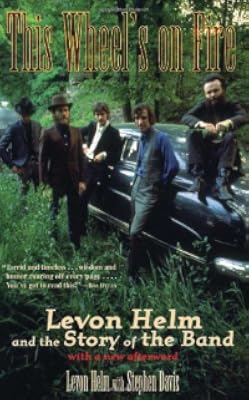
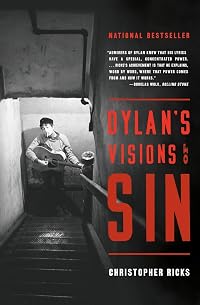
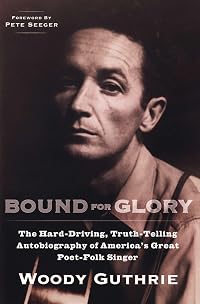

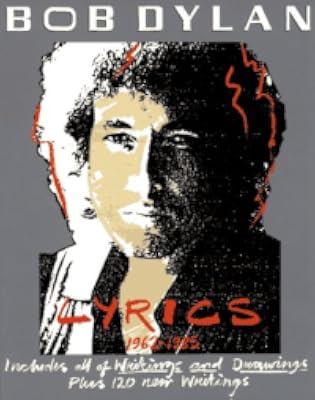

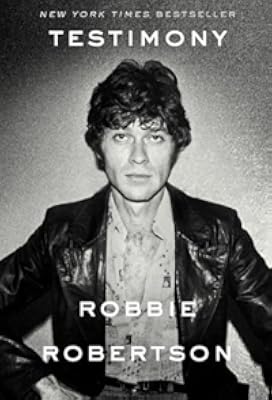

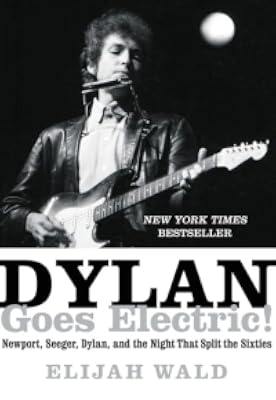
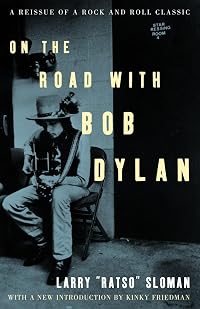






Member Recommendations


Member Reviews
A lot of folks complained that this wasn't a straight bio/memoir from Dylan, but has Bob ever 'aimed to please'? No, he does his thing. In this case, he vents a bit about being turned into a counterculture icon, when all he wanted to do was write and sing songs. His dedication to being with his family and raising his son at what might've been the height of his career is admirable.
Most enjoyable was a passage about New Orleans that is as brilliant as any of his lyrical writing. The book-on-CD is read by Sean Penn, and to hear him read this section, in particular, is pretty exhilarating.
I still don't have any insight into how Bob writes his songs, or what he thinks of most of his musical peers, but I got to see a side of him never show more exposed onstage or in film. For that, this book is worth picking up, at least if Dylan fascinates you as he does me. show less
Most enjoyable was a passage about New Orleans that is as brilliant as any of his lyrical writing. The book-on-CD is read by Sean Penn, and to hear him read this section, in particular, is pretty exhilarating.
I still don't have any insight into how Bob writes his songs, or what he thinks of most of his musical peers, but I got to see a side of him never show more exposed onstage or in film. For that, this book is worth picking up, at least if Dylan fascinates you as he does me. show less
"I know that he wanted to understand me more as we went along, but you can't do that, not unless you like to do puzzles. I think in the end, he gave up on that." (pg. 218)
One of the few artists of the 20th century who truly stands apart, it is difficult to pin Bob Dylan down and drag him back to the more regulated cultural strata where we can understand and quantify him. This is the case even when he is speaking directly and disarmingly, as he is here, in the first (and, to date, only) volume of Chronicles, his autobiography. Like the producer Daniel Lanois, whom Dylan is referring to in the lines I've quoted above, eventually we give up. We cede the ground and, without irritation, just let this singular artist do his own show more thing.
Chronicles: Volume One is an unconventional memoir. Its five chapters deal with three different periods of Dylan's long career: the first two with 1961, before he became famous; the third in 1970, during a fallow period; a fourth in 1989, as he tries to engineer a new sound; and then finally a fifth back in 1961-2, with Dylan on the cusp of his unique fame. The content and sequence betray in part the origins of the book (it started with Dylan writing liner notes for re-issues of the relevant albums – Bob Dylan in 1962, New Morning in 1970 and Oh Mercy in 1989), but you also get the feeling that Dylan wouldn't have it any other way. We get nothing on the insane run of creativity from 1963-66, or on the Blood on the Tracks album, but he does briefly discuss his time rapping with Kurtis Blow in the Eighties, of all the things (pg. 219). Like Lanois, you want to understand him more as you go along, but you do have to puzzle it out.
Nevertheless, Dylan manages to cover an astonishing variety even within these peculiar parameters. I first read Chronicles about ten years ago and, thinking back on it, I seemed to remember a powerful piece of writing about Dylan's encounter with Harry Belafonte; that barely struck me this time around. In contrast, I had all but forgotten that Dylan discussed his tour with Tom Petty (even though I was then, and remain, a huge Heartbreakers fan); this time around I found that discussion fascinating. Dylan manages to touch upon, at natural points in the narrative, various personalities he met over the years, whether trifling encounters with the likes of Jack Dempsey, Robert Graves or John Wayne, or with those who had a deeper influence on him, like John Hammond, Dave Van Ronk and Woody Guthrie.
Dylan is particularly good at explaining the influence of various musicians on his own creative outlook; Guthrie especially, though Chronicles also ends with an energizing one-two punch combo about Ramblin' Jack Elliott and Robert Johnson. He's less good at explaining his own creativity, particularly as it appears so feverish (a passage in the chapter on Oh Mercy, where Dylan tries to explain the new songs and vocal techniques he is developing, is clearly reaching for something ineffable but struggles to reach the reader). I've long been trying to formulate an adage that the difference between great writers and average writers is that average writers are trying to explain simple things in a complex way (through big words, fancy techniques, etc.) whereas great writers are trying to explain complex things as simply as possible. I felt something similar in reading Dylan as he tried to express his creative direction: normal artists are trying to be special, whereas Dylan, feverishly atop the strange artistic hierarchy, is a special one trying to be normal.
Certainly, one of the most striking aspects of Chronicles, and Dylan's personality in general, is his determination to be normal and conventional. In conversation, I often use 'catch rainbow trout', a lyric from 'Sign on the Window', one of his New Morning era songs, as a byword for the sort of domestic contentment Dylan is striving for. He wants out of the "rat race" (pg. 114) but is also "fantasizing about… a nine-to-five existence, a house on a tree-lined block with a white picket fence, pink roses in the backyard… That was my deepest dream" (pg. 117). In the Eighties, he buys 'World's Greatest Grandpa' mugs (pg. 209). He never wanted to be a countercultural icon in the Sixties – "I had no ambitions to stir things up. I just thought of mainstream culture as lame as hell and a big trick" (pg. 35) – and bristles at the attempts to get him to lead a movement (pg. 119). By 1970, he's completely fed up with the hippies and gatecrashers: "I wanted to set fire to these people" (pg. 117). While never a reactionary or a get-off-my-lawn type, he's also not the rebel agitator, "the Big Bubba of Rebellion, High Priest of Protest"; "whatever the counterculture was, I'd seen enough of it" (pg. 120). He stands astride the divide, while also hoping people with dirty feet don't use him as a bridge – or set fire to said bridge.
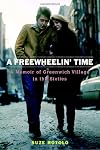
For someone with such a strange position in our culture, and who remains so enigmatic even as he carries us across the pages of a dedicated autobiography, Dylan is remarkably self-aware. He says it's "nice to be known as a legend, and people will pay to see one, but for most people, once is enough" (pg. 147). It says a lot that, even on a second read, his legend takes on new and ever more inscrutable dimensions – most 'legends' don't even stand up to a single glance. Chronicles can sound like a performance at times ("The last time I'd seen her, she was heading West" (pg. 60)), but when this happens it never appears to be out of conceit, a desire to wow the audience with stream-of-consciousness verbosity. Instead, whenever he eludes discussion of more conventional memoir topics like his family (his wife is mentioned but never named) or his relationship with Suze Rotolo (the lady on the cover of the Freewheelin' album), it has the appearance of practiced shields and well-oiled countermeasures. He's been throwing up these puzzles and magic signs to bamboozle interlopers for a long time now.
And why not? The interest in Dylan ought not to be in his Minnesotan hometown or his children, but in his unique creative take on things. The literary quality of Chronicles is rarely overt (an exception being "sometimes all it takes is a wink or a nod from some unexpected place to vary the tedium of a baffling existence" on page 43), but it takes technical skill to establish this voice and maintain it during a non-linear narrative. To do so with some occasional genuine insight, and maintaining the reader's interest, is impressive. When someone comes into writing from a different artistic realm – music having its own unique language – and proves capable of writing well, it's always an experience to be grateful for. When the world's most renowned songwriter describes songs as "like strange countries that you have to enter" (pg. 165), you sit up and pay attention. When he describes his legendary image as "a fictitious head of state from a place nobody knows" (pg. 147), you realise he's been to so many of those strange countries which nobody knows, and has been crowned there. Our enduring fascination with his remarkable far-off conquests is never puzzling – how could we not be fascinated? – even if, partly by design, the man behind the legend remains so. show less
One of the few artists of the 20th century who truly stands apart, it is difficult to pin Bob Dylan down and drag him back to the more regulated cultural strata where we can understand and quantify him. This is the case even when he is speaking directly and disarmingly, as he is here, in the first (and, to date, only) volume of Chronicles, his autobiography. Like the producer Daniel Lanois, whom Dylan is referring to in the lines I've quoted above, eventually we give up. We cede the ground and, without irritation, just let this singular artist do his own show more thing.
Chronicles: Volume One is an unconventional memoir. Its five chapters deal with three different periods of Dylan's long career: the first two with 1961, before he became famous; the third in 1970, during a fallow period; a fourth in 1989, as he tries to engineer a new sound; and then finally a fifth back in 1961-2, with Dylan on the cusp of his unique fame. The content and sequence betray in part the origins of the book (it started with Dylan writing liner notes for re-issues of the relevant albums – Bob Dylan in 1962, New Morning in 1970 and Oh Mercy in 1989), but you also get the feeling that Dylan wouldn't have it any other way. We get nothing on the insane run of creativity from 1963-66, or on the Blood on the Tracks album, but he does briefly discuss his time rapping with Kurtis Blow in the Eighties, of all the things (pg. 219). Like Lanois, you want to understand him more as you go along, but you do have to puzzle it out.
Nevertheless, Dylan manages to cover an astonishing variety even within these peculiar parameters. I first read Chronicles about ten years ago and, thinking back on it, I seemed to remember a powerful piece of writing about Dylan's encounter with Harry Belafonte; that barely struck me this time around. In contrast, I had all but forgotten that Dylan discussed his tour with Tom Petty (even though I was then, and remain, a huge Heartbreakers fan); this time around I found that discussion fascinating. Dylan manages to touch upon, at natural points in the narrative, various personalities he met over the years, whether trifling encounters with the likes of Jack Dempsey, Robert Graves or John Wayne, or with those who had a deeper influence on him, like John Hammond, Dave Van Ronk and Woody Guthrie.
Dylan is particularly good at explaining the influence of various musicians on his own creative outlook; Guthrie especially, though Chronicles also ends with an energizing one-two punch combo about Ramblin' Jack Elliott and Robert Johnson. He's less good at explaining his own creativity, particularly as it appears so feverish (a passage in the chapter on Oh Mercy, where Dylan tries to explain the new songs and vocal techniques he is developing, is clearly reaching for something ineffable but struggles to reach the reader). I've long been trying to formulate an adage that the difference between great writers and average writers is that average writers are trying to explain simple things in a complex way (through big words, fancy techniques, etc.) whereas great writers are trying to explain complex things as simply as possible. I felt something similar in reading Dylan as he tried to express his creative direction: normal artists are trying to be special, whereas Dylan, feverishly atop the strange artistic hierarchy, is a special one trying to be normal.
Certainly, one of the most striking aspects of Chronicles, and Dylan's personality in general, is his determination to be normal and conventional. In conversation, I often use 'catch rainbow trout', a lyric from 'Sign on the Window', one of his New Morning era songs, as a byword for the sort of domestic contentment Dylan is striving for. He wants out of the "rat race" (pg. 114) but is also "fantasizing about… a nine-to-five existence, a house on a tree-lined block with a white picket fence, pink roses in the backyard… That was my deepest dream" (pg. 117). In the Eighties, he buys 'World's Greatest Grandpa' mugs (pg. 209). He never wanted to be a countercultural icon in the Sixties – "I had no ambitions to stir things up. I just thought of mainstream culture as lame as hell and a big trick" (pg. 35) – and bristles at the attempts to get him to lead a movement (pg. 119). By 1970, he's completely fed up with the hippies and gatecrashers: "I wanted to set fire to these people" (pg. 117). While never a reactionary or a get-off-my-lawn type, he's also not the rebel agitator, "the Big Bubba of Rebellion, High Priest of Protest"; "whatever the counterculture was, I'd seen enough of it" (pg. 120). He stands astride the divide, while also hoping people with dirty feet don't use him as a bridge – or set fire to said bridge.
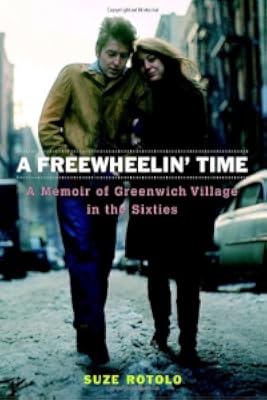
For someone with such a strange position in our culture, and who remains so enigmatic even as he carries us across the pages of a dedicated autobiography, Dylan is remarkably self-aware. He says it's "nice to be known as a legend, and people will pay to see one, but for most people, once is enough" (pg. 147). It says a lot that, even on a second read, his legend takes on new and ever more inscrutable dimensions – most 'legends' don't even stand up to a single glance. Chronicles can sound like a performance at times ("The last time I'd seen her, she was heading West" (pg. 60)), but when this happens it never appears to be out of conceit, a desire to wow the audience with stream-of-consciousness verbosity. Instead, whenever he eludes discussion of more conventional memoir topics like his family (his wife is mentioned but never named) or his relationship with Suze Rotolo (the lady on the cover of the Freewheelin' album), it has the appearance of practiced shields and well-oiled countermeasures. He's been throwing up these puzzles and magic signs to bamboozle interlopers for a long time now.
And why not? The interest in Dylan ought not to be in his Minnesotan hometown or his children, but in his unique creative take on things. The literary quality of Chronicles is rarely overt (an exception being "sometimes all it takes is a wink or a nod from some unexpected place to vary the tedium of a baffling existence" on page 43), but it takes technical skill to establish this voice and maintain it during a non-linear narrative. To do so with some occasional genuine insight, and maintaining the reader's interest, is impressive. When someone comes into writing from a different artistic realm – music having its own unique language – and proves capable of writing well, it's always an experience to be grateful for. When the world's most renowned songwriter describes songs as "like strange countries that you have to enter" (pg. 165), you sit up and pay attention. When he describes his legendary image as "a fictitious head of state from a place nobody knows" (pg. 147), you realise he's been to so many of those strange countries which nobody knows, and has been crowned there. Our enduring fascination with his remarkable far-off conquests is never puzzling – how could we not be fascinated? – even if, partly by design, the man behind the legend remains so. show less
As interesting for its omissions as what Dylan does decide to include. The most interesting part of the book is how Dylan recalls his arrival in New York City and entry to the folk music scene. A long chapter on recording with Daniel Lanois is almost insufferable.
"I thought of mainstream culture as lame as hell and a big trick."
This book is fantastic. I'm ready for Volume Two now.
As nearly as possible, Bob Dylan gives us a glimpse into his creative process and evolution as an artist and a man; not that any of these things can ever be understood in a linear way or accurately and specifically communicated, narrowed down, labeled and classified, but if anyone is up to meeting this task square-on, it's Robert Zimmerman, Bob Dylan, Elston Gunn.
Dylan spills right into his meeting with Lou Levy, a guy who helped make him realize his dream through a record contract. With gorgeous descriptions, Dylan shares a pragmatic and sumptuous snapshot of his life as a young man in the early 60s in Greenwich show more Village.
"When I arrived, it was dead-on winter. The cold was brutal and every artery of the city was snowpacked, but I'd started out from the frostbitten North Country, a little corner of the earth where the dark frozen woods and icy roads didn't faze me. I could transcend the limitations. It wasn't money or love that I was looking for. I had a heightened sense of awareness, was set in my ways, impractical and a visionary to boot. My mind was strong like a trap and I didn't need any guarantee of validity. I didn't know a single soul in this dark freezing metropolis but that was all about to change - and quick."
Regardless of who wrote this, I would want to devour every word this author every committed to paper, but the fact that it’s Dylan telling his story and sharing this breadth of musical knowledge is stunning.
Chronicles weaves in and out of the decades, like a fish following the currents, naturally and effortlessly. Dylan brings us to the paradise of folk music: He hops around from the 1987 recording in New Orleans of "Oh Mercy," (he deliciously describes the process of discovery that went into producing the album) and his warped time in Woodstock to listening to "Pirate Jenny," with Suze Rotolo, who turned him onto drawing spontaneously. He introduces us to an old jazz singer in a bar in San Rafael, from whom he remembered how to sing. The visits to see Woody Guthrie at the hospital, “an asylum with no spiritual hope of any kind,” reverberated with me for weeks after reading because I have visited people in such places, and he nails it.
I read the first fifty or so pages at a snail's pace because I stopped to look up every new character, location, event, and song. I didn’t want to miss a thing. I decided to push on through with his passionate narrative - one which synthesizes an absolute joy of discovery including the whole heaping of humanity via literature from Balzac and Byron, as well as his keen-eyed version of global events, ethics, and artistic expression.
Dylan sauters together words to paint his creative process, his name changes, and the friends who influenced and informed him, (and gave him a couch to sleep on), including Dave Van Ronk, Ray Gooch, and cool kitten Chloe Kiel; each person is so vibrant through Bob's words - every life deserves their own life story to be penned.
He agonized about making a record and explains, "There was nothing easygoing about the folk songs I sang. They weren't friendly or ripe with mellowness. They didn't come gently to the shore."
He tells of driving with his obstreperous friend, David Crosby, (whom seemed like the perfect companion on this trip to Princeton University in 1971), to receive an honorary degree. The speaker who introduced him said, "Though he is known to millions, he shuns publicity and organizing preferring the solidarity of his family and isolation from the world, and though he is approaching the perilous age of thirty, he remains the authentic expression of the disturbed and concerned conscience of Young America."
Dylan wrote "...he could have emphasized a few things about my music. When he said to the crowd that I preferred isolation form the world, it was like he told them that I preferred being in an iron tomb with my food shoved in on a tray."
With painful precision, he writes about how public and press anointed and misunderstood him, called him a Prophet, propped him up, tore him down, invaded his privacy and his home, and asked those inane interview questions; he writes about the effects of this distortion had on him and his family. How can one feel free when being constantly misquoted and stuffed in a fishbowl? For a period of time his Muse was muted.
I recently watched a video of Bob Dylan on The Steve Allen Show at the beginning of his public path. Steve called him a genius; even as he gushed, he acknowledged how uncomfortable being in that position must be. Chronicles solidified my impressions; Dylan has it in him innately, and he worked for it: a self-schooled student of musicology who deserved that doctorate from Princeton and an introduction that honored his path.
Early on in the book when he lit upon the story of Joseph Hillström, the martyred Union Organizer and Troubadour, I was captivated. I've been a bit obsessed by ‘Joe Hill’ all my life. "I Dreamed I Saw Joe Hill Last Night" was the first song I learned on piano; Hill’s life story is so profound, in a sense it shaped mine. As I learn about the details of the frame up of Hill and his response to it, the more committed I am that his life be remembered. Dylan wrote that he fantasized writing a song about Joe Hill called, “Scatter My Ashes Anyplace But Utah.” The moment I read this, the idea of writing a poem gripped me. This spilled out:
SCATTER MY ASHES ANYPLACE BUT UTAH
She shrieked into the darkness of the blackness of the night,
It was a wail of playful pleasure, not a caterwaul of fright.
He gently covered her lips while heaving an efficacious sigh,
"Let us be silent with our cries, or we may both soon die."
Rangy Joseph Hillström was a Swedish gentleman:
Agitator, educator, he did not, would not, live in sin.
In 1902 Joe sailed from Sweden to the U.S. but there he was held down;
Worked hard as he could, yet was castigated into the ground.
"Boy, we upped your load and lopped your pay,
But your revolutionary ways you can save.
We rule by compliance, not labor alliance,
So behave, you slave, or mumble 'Hej' to an early grave."
At high noon many days, under the blistering union sun
Hill persuaded hoi polloi to strike before day was done.
Handsome Joe sang out and rallied the belittled human masses,
Browbeat by giant egos of mob bosses, sycophants, and asses.
Enter golden-honey haired Hilda, peach cheeks, green-hazel eyes,
She strummed his back like a harp as he heaved a soulful sigh.
The niece of Joe's compatriot from Belfast, a true and loyal friend,
Their fierce fondness for each other did Otto Appelquist offend.
Labor organizer, songwriter, dock walloper, worker for hire,
Faced with apocryphal execution bullets, Joe yelled out, "Fire."
"Shoot you cowards, youse sadistic yellow-bellied liars,"
Hildy hissed as she reminisced of Hägglund kisses in the year prior.
Troubadour, adored leader of the Industrial Workers of the World,
A target from back in San Diego where his reputation unfurled,
Joe, Joseph, Joel was set up, falsely accused and shamefully blamed.
He was willing to die for the movement, though he was unjustly framed.
For the murder of grocer Morrison, there was a suspect; Wilson was his name.
He had on him a bloody handkerchief; being a career criminal was his game.
But the filthy politicians set up Joe because insurgents had to go.
The revolutionary faction was one the Mormons could not keep in tow.
Joe's wages were low, his intellect high and his morals even higher.
A symbol for the working-class, he ignored that his plight was dire.
The Laureate of Labor kept his keen humor, did not hold a grudge.
Prosecution showed no proof or motive, jurors were appointed by the judge.
Helen Keller, The Rebel Girl, and the Swedish Ambassador called for justice in Joe’s case.
Hillström would not accept a pardon; he stood strong, a pillar in his place.
A pardon would not cut it; he insisted on a just trial fair and square,
But could not get that in Utah with the cooper bosses running things there.
Principled to recklessness, he lived as an artist and died like one too.
The little red songbook rang with his songs that strikers sang on cue.
After he was murdered, people marched and mourned in many states;
Foreigners and natives had a hard time seeing how America was great.
Before his last breath, Hill penned his last will and testament.
He made clear his remains would not rest on vile firmament.
"Scatter my ashes anyplace but Utah, brother.
This was but my one life; I don't expect another.”
Scatter my ashes anyplace but Utah,
Scatter them wildly and set me free.
There’s the pie in the sky when you die, (that’s a lie);
when loose from this earthily noose,
I’ll know nothingness, I will BE.
I die like a true blue rebel - don't waste any time in mourning.
Please arrange to have my body hauled to the state line by morning.
Educate, agitate, organize, and don’t give them any fair warning.
It’s in their eyes, dishonorable brains don’t theorize,
they will kill you Bill, without any stalling.
Scatter my ashes anyplace but Utah,
Scatter my ashes anyplace but Utah,
Scatter them wildly and set me free.
I gave it my all, worked for the betterment of humankind.
Labored, sang, stood up to devils, the worst a man could find."
She shrieked into the darkness of the blackness of the night
And cried aloud for the laborer with whom she shared such delight.
Scatter my ashes anyplace but Utah,
Scatter them wildly and set me free. show less
This book is fantastic. I'm ready for Volume Two now.
As nearly as possible, Bob Dylan gives us a glimpse into his creative process and evolution as an artist and a man; not that any of these things can ever be understood in a linear way or accurately and specifically communicated, narrowed down, labeled and classified, but if anyone is up to meeting this task square-on, it's Robert Zimmerman, Bob Dylan, Elston Gunn.
Dylan spills right into his meeting with Lou Levy, a guy who helped make him realize his dream through a record contract. With gorgeous descriptions, Dylan shares a pragmatic and sumptuous snapshot of his life as a young man in the early 60s in Greenwich show more Village.
"When I arrived, it was dead-on winter. The cold was brutal and every artery of the city was snowpacked, but I'd started out from the frostbitten North Country, a little corner of the earth where the dark frozen woods and icy roads didn't faze me. I could transcend the limitations. It wasn't money or love that I was looking for. I had a heightened sense of awareness, was set in my ways, impractical and a visionary to boot. My mind was strong like a trap and I didn't need any guarantee of validity. I didn't know a single soul in this dark freezing metropolis but that was all about to change - and quick."
Regardless of who wrote this, I would want to devour every word this author every committed to paper, but the fact that it’s Dylan telling his story and sharing this breadth of musical knowledge is stunning.
Chronicles weaves in and out of the decades, like a fish following the currents, naturally and effortlessly. Dylan brings us to the paradise of folk music: He hops around from the 1987 recording in New Orleans of "Oh Mercy," (he deliciously describes the process of discovery that went into producing the album) and his warped time in Woodstock to listening to "Pirate Jenny," with Suze Rotolo, who turned him onto drawing spontaneously. He introduces us to an old jazz singer in a bar in San Rafael, from whom he remembered how to sing. The visits to see Woody Guthrie at the hospital, “an asylum with no spiritual hope of any kind,” reverberated with me for weeks after reading because I have visited people in such places, and he nails it.
I read the first fifty or so pages at a snail's pace because I stopped to look up every new character, location, event, and song. I didn’t want to miss a thing. I decided to push on through with his passionate narrative - one which synthesizes an absolute joy of discovery including the whole heaping of humanity via literature from Balzac and Byron, as well as his keen-eyed version of global events, ethics, and artistic expression.
Dylan sauters together words to paint his creative process, his name changes, and the friends who influenced and informed him, (and gave him a couch to sleep on), including Dave Van Ronk, Ray Gooch, and cool kitten Chloe Kiel; each person is so vibrant through Bob's words - every life deserves their own life story to be penned.
He agonized about making a record and explains, "There was nothing easygoing about the folk songs I sang. They weren't friendly or ripe with mellowness. They didn't come gently to the shore."
He tells of driving with his obstreperous friend, David Crosby, (whom seemed like the perfect companion on this trip to Princeton University in 1971), to receive an honorary degree. The speaker who introduced him said, "Though he is known to millions, he shuns publicity and organizing preferring the solidarity of his family and isolation from the world, and though he is approaching the perilous age of thirty, he remains the authentic expression of the disturbed and concerned conscience of Young America."
Dylan wrote "...he could have emphasized a few things about my music. When he said to the crowd that I preferred isolation form the world, it was like he told them that I preferred being in an iron tomb with my food shoved in on a tray."
With painful precision, he writes about how public and press anointed and misunderstood him, called him a Prophet, propped him up, tore him down, invaded his privacy and his home, and asked those inane interview questions; he writes about the effects of this distortion had on him and his family. How can one feel free when being constantly misquoted and stuffed in a fishbowl? For a period of time his Muse was muted.
I recently watched a video of Bob Dylan on The Steve Allen Show at the beginning of his public path. Steve called him a genius; even as he gushed, he acknowledged how uncomfortable being in that position must be. Chronicles solidified my impressions; Dylan has it in him innately, and he worked for it: a self-schooled student of musicology who deserved that doctorate from Princeton and an introduction that honored his path.
Early on in the book when he lit upon the story of Joseph Hillström, the martyred Union Organizer and Troubadour, I was captivated. I've been a bit obsessed by ‘Joe Hill’ all my life. "I Dreamed I Saw Joe Hill Last Night" was the first song I learned on piano; Hill’s life story is so profound, in a sense it shaped mine. As I learn about the details of the frame up of Hill and his response to it, the more committed I am that his life be remembered. Dylan wrote that he fantasized writing a song about Joe Hill called, “Scatter My Ashes Anyplace But Utah.” The moment I read this, the idea of writing a poem gripped me. This spilled out:
SCATTER MY ASHES ANYPLACE BUT UTAH
She shrieked into the darkness of the blackness of the night,
It was a wail of playful pleasure, not a caterwaul of fright.
He gently covered her lips while heaving an efficacious sigh,
"Let us be silent with our cries, or we may both soon die."
Rangy Joseph Hillström was a Swedish gentleman:
Agitator, educator, he did not, would not, live in sin.
In 1902 Joe sailed from Sweden to the U.S. but there he was held down;
Worked hard as he could, yet was castigated into the ground.
"Boy, we upped your load and lopped your pay,
But your revolutionary ways you can save.
We rule by compliance, not labor alliance,
So behave, you slave, or mumble 'Hej' to an early grave."
At high noon many days, under the blistering union sun
Hill persuaded hoi polloi to strike before day was done.
Handsome Joe sang out and rallied the belittled human masses,
Browbeat by giant egos of mob bosses, sycophants, and asses.
Enter golden-honey haired Hilda, peach cheeks, green-hazel eyes,
She strummed his back like a harp as he heaved a soulful sigh.
The niece of Joe's compatriot from Belfast, a true and loyal friend,
Their fierce fondness for each other did Otto Appelquist offend.
Labor organizer, songwriter, dock walloper, worker for hire,
Faced with apocryphal execution bullets, Joe yelled out, "Fire."
"Shoot you cowards, youse sadistic yellow-bellied liars,"
Hildy hissed as she reminisced of Hägglund kisses in the year prior.
Troubadour, adored leader of the Industrial Workers of the World,
A target from back in San Diego where his reputation unfurled,
Joe, Joseph, Joel was set up, falsely accused and shamefully blamed.
He was willing to die for the movement, though he was unjustly framed.
For the murder of grocer Morrison, there was a suspect; Wilson was his name.
He had on him a bloody handkerchief; being a career criminal was his game.
But the filthy politicians set up Joe because insurgents had to go.
The revolutionary faction was one the Mormons could not keep in tow.
Joe's wages were low, his intellect high and his morals even higher.
A symbol for the working-class, he ignored that his plight was dire.
The Laureate of Labor kept his keen humor, did not hold a grudge.
Prosecution showed no proof or motive, jurors were appointed by the judge.
Helen Keller, The Rebel Girl, and the Swedish Ambassador called for justice in Joe’s case.
Hillström would not accept a pardon; he stood strong, a pillar in his place.
A pardon would not cut it; he insisted on a just trial fair and square,
But could not get that in Utah with the cooper bosses running things there.
Principled to recklessness, he lived as an artist and died like one too.
The little red songbook rang with his songs that strikers sang on cue.
After he was murdered, people marched and mourned in many states;
Foreigners and natives had a hard time seeing how America was great.
Before his last breath, Hill penned his last will and testament.
He made clear his remains would not rest on vile firmament.
"Scatter my ashes anyplace but Utah, brother.
This was but my one life; I don't expect another.”
Scatter my ashes anyplace but Utah,
Scatter them wildly and set me free.
There’s the pie in the sky when you die, (that’s a lie);
when loose from this earthily noose,
I’ll know nothingness, I will BE.
I die like a true blue rebel - don't waste any time in mourning.
Please arrange to have my body hauled to the state line by morning.
Educate, agitate, organize, and don’t give them any fair warning.
It’s in their eyes, dishonorable brains don’t theorize,
they will kill you Bill, without any stalling.
Scatter my ashes anyplace but Utah,
Scatter my ashes anyplace but Utah,
Scatter them wildly and set me free.
I gave it my all, worked for the betterment of humankind.
Labored, sang, stood up to devils, the worst a man could find."
She shrieked into the darkness of the blackness of the night
And cried aloud for the laborer with whom she shared such delight.
Scatter my ashes anyplace but Utah,
Scatter them wildly and set me free. show less
Well, I waited nearly twenty years to read Bob Dylan's so-called memoir, CHRONICLES: VOLUME ONE. (Was there ever a Volume Two?). I picked it up used at a Good Will store. Turns out I didn't miss anything, because he doesn't really tell you all that much that's very personal. Instead he gives you endless pages of (sometimes ungrammatical) purple prose filled with famous names he's met along the way. Indeed, it seems he has met nearly everyone who is anyone. And I have a pet peeve about the proper use of "lie" vs. "lay," and he consistently gets it wrong every time. I probably shouldn't be surprised, since one of his best songs, back around 1969 was "Lay Lady Lay" (and where are the commas?) from the NASHVILLE SKYLINE album. Turns out I show more don't mind poor grammar in a song lyric, but in a book? Like nails on a chalkboard.
Here's the thing. I've been a Dylan fan for nearly sixty years, ever since my brother brought home his first LP. I have loved most of his many albums. Played BLONDE ON BLONDE nearly to death. So I was vastly disappointed by his recent coffee table book, THE PHILOSOPHY OF MODERN SONG, which seemed to me little more than a money-grubbing ripoff. CHRONICLES was, I believe, a more serious attempt at autobiography, but it's still pretty thin, and often exasperating. Here's a sample -
"There was a missing person inside of myself and I needed to find him. Now and again I did try a few times, tried hard to force it. In nature there's a remedy for everything and that's where I'd usually go hunting for it. I'd find myself on a houseboat, a floating mobile home, hoping to hear a voice - crawling at slow speed - nosed up on a protective beach at night in the wilderness - moose, deer, bear around - the elusive timber wo!f not so far off, calm summer evenings listening to the call of the loon ... "
I mean, huh? I'm sorry, Bob, but this is just awful stuff that gets quickly tiresome and left me skimming whole pages looking for something of real substance. Oddly, it wasn't until the final section, "River of Ice," that Dylan finally opened up just a little about his boyhood and beginnings as an unknown singer in New York City, and even gives a brief nod to his first girlfriend there, Suze Rotolo, who appeared with him on the cover of his FREEWHEELIN' album (and wrote her own memoir covering those years, which was, by the way, a much better book than this one).
Dylan admits that he struggled in school, was not a very good student. I'm not surprised. Again, while I am a longtime admirer and fan of Bob Dylan as a singer-songwriter, as an 'author' he just does not shine. The Nobel Prize people should be embarrassed. Then again, maybe it's just me. After all, CHRONICLES was a monster bestseller and called "one of the best books of 2004" by numerous sources. Alas, for me, it was "just okay." (Sigh.)
- Tim Bazzett, author of the memoir, BOOKLOVER show less
Here's the thing. I've been a Dylan fan for nearly sixty years, ever since my brother brought home his first LP. I have loved most of his many albums. Played BLONDE ON BLONDE nearly to death. So I was vastly disappointed by his recent coffee table book, THE PHILOSOPHY OF MODERN SONG, which seemed to me little more than a money-grubbing ripoff. CHRONICLES was, I believe, a more serious attempt at autobiography, but it's still pretty thin, and often exasperating. Here's a sample -
"There was a missing person inside of myself and I needed to find him. Now and again I did try a few times, tried hard to force it. In nature there's a remedy for everything and that's where I'd usually go hunting for it. I'd find myself on a houseboat, a floating mobile home, hoping to hear a voice - crawling at slow speed - nosed up on a protective beach at night in the wilderness - moose, deer, bear around - the elusive timber wo!f not so far off, calm summer evenings listening to the call of the loon ... "
I mean, huh? I'm sorry, Bob, but this is just awful stuff that gets quickly tiresome and left me skimming whole pages looking for something of real substance. Oddly, it wasn't until the final section, "River of Ice," that Dylan finally opened up just a little about his boyhood and beginnings as an unknown singer in New York City, and even gives a brief nod to his first girlfriend there, Suze Rotolo, who appeared with him on the cover of his FREEWHEELIN' album (and wrote her own memoir covering those years, which was, by the way, a much better book than this one).
Dylan admits that he struggled in school, was not a very good student. I'm not surprised. Again, while I am a longtime admirer and fan of Bob Dylan as a singer-songwriter, as an 'author' he just does not shine. The Nobel Prize people should be embarrassed. Then again, maybe it's just me. After all, CHRONICLES was a monster bestseller and called "one of the best books of 2004" by numerous sources. Alas, for me, it was "just okay." (Sigh.)
- Tim Bazzett, author of the memoir, BOOKLOVER show less
Chronicles: Volume One outlines the growth of Dylan's artistic conscience. Writing in a language in the accessible language of a street poet, he lingers not on moments of success and celebrity, but on the crises of his intellectual development. But, Dylan's career and his brilliance, have often been attributed to how he reacted to success. And Dylan paints a vivid picture of how this success was defined by himself and likewise, by the media throughout.
Just when we get to where he is making it big - we skip to the famous motorcycle accident. He skips the years of his greatest records (one could argue)! Perhaps saving those years for the second volume of his chronicle, Dylan recalls the times when he was sick of his public persona and show more made more lackluster (?) albums like "Self-Portrait" and "New Morning." He then skips again to his comeback work with producer Daniel Lanois in the late 1980s. Dylan ends, where he begins, with discovering Woody Guthrie, hitching a ride to New York, and signing to Columbia Records. And the rest is history.
This memoir is insightful, vague, obtuse, profound, disordered, and fascinating - much like Dylan himself. Don't expect a complete picture of the man you thought you knew and don't completely expect linear storytelling. Settle in for the journey of a man, trying to find the creative spark at each and every turn. show less
Just when we get to where he is making it big - we skip to the famous motorcycle accident. He skips the years of his greatest records (one could argue)! Perhaps saving those years for the second volume of his chronicle, Dylan recalls the times when he was sick of his public persona and show more made more lackluster (?) albums like "Self-Portrait" and "New Morning." He then skips again to his comeback work with producer Daniel Lanois in the late 1980s. Dylan ends, where he begins, with discovering Woody Guthrie, hitching a ride to New York, and signing to Columbia Records. And the rest is history.
This memoir is insightful, vague, obtuse, profound, disordered, and fascinating - much like Dylan himself. Don't expect a complete picture of the man you thought you knew and don't completely expect linear storytelling. Settle in for the journey of a man, trying to find the creative spark at each and every turn. show less
I should have DNF’d this. Within minutes, I could tell it wasn’t for me. The combination of Bob Dylan’s meandering prose and Sean Penn’s painfully flat narration dried me all the way up. I enjoy some of Dylan’s music, but I wouldn’t call myself a fan, and this book felt like it demanded a level of devotion I simply don’t have. Rather than offering insight or a compelling narrative, it’s like a scattered reflection on influences and moments, without any clear through-line or emotional payoff. I kept hoping for something that would draw me in, but it never came. Where is the storytelling Dylan is known for? Unless you're already a die-hard fan, I wouldn’t recommend this one. And if you are, chances are you’ve read it show more already. For me, it was a dull and frustrating experience, beyond boring. Whatever bright spots it may have had were lost in the monotony. show less
Members
- Recently Added By
Lists

100 Biographies & Memoirs to Read in a Lifetime
42 works; 18 members

The Guardian's 100 best books of the 21st century
100 works; 21 members

100 Biographies and Memoirs to Read in a (Single) Lifetime
98 works; 12 members

Top Five Books of 2020
982 works; 348 members

Music
89 works; 1 member

Top Five Books of 2014
1,064 works; 397 members

Blue Pyramid 1,276 Best Books of All Time
1,248 works; 32 members

Recommend the 20 best books you've read in the last five years
2,168 works; 601 members

Non-Fiction Worth Reading
1,015 works; 261 members

04
34 works; 1 member
Author Information

670+ Works 15,898 Members
Bob Dylan was born Robert Allen Zimmerman on May 24, 1941 in Duluth, Minnesota. He is a singer-songwriter and artist. He emerged on the New York music scene in 1961. He has recorded 38 studio albums including Bringing It All Back Home, Highway 61 Revisited, Blonde on Blonde, Blood on the Tracks, Oh Mercy, Time Out Of Mind, Love and Theft, and show more Modern Times. His songs include Blowin' in the Wind, The Times They Are a-Changin', and Like a Rolling Stone. He has published poetry and prose including a collection entitled Tarantula in 1971, a memoir entitled Chronicles: Volume One in 2004, and The Lyrics: 1961-2012 in 2016. He has received numerous awards including eleven Grammy Awards, a Golden Globe Award, and an Academy Award. In 1988, he was inducted into the Rock and Roll Hall of Fame. In 2008, the Pulitzer Prize jury awarded him a special citation for "his profound impact on popular music and American culture, marked by lyrical compositions of extraordinary poetic power." In 2012, he received the Presidential Medal of Freedom from President Barack Obama. In 2016, Dylan received the Nobel Prize in Literature "for having created new poetic expressions within the great American song tradition." (Bowker Author Biography) show less
Some Editions
Awards and Honors
Awards
Distinctions
Series

Belongs to Publisher Series
Common Knowledge
- Canonical title
- Chronicles: Volume One
- Original title
- Chronicles
- Original publication date
- 2004
- People/Characters
- Bob Dylan
- First words
- Lou Levy, top man of Leeds Music Publishing company, took me up in a taxi to the Pythian Temple on West 70th Street to show me the pocket sized recording studio where Bill Haley and His Comets had recorded "Rock Around the Cl... (show all)ock"—then down to Jack Dempsey's restaurant on 58th and Broadway, where we sat down in a red leather upholstered booth facing the front window.
- Quotations
- He asked me about my family. I told him about my grandma on my mom's side who lived with us. She was filled with nobility and goodness, told me once that happiness isn't on the road to anything. That happiness is the road. Ha... (show all)d also instructed me to be kind because everyone you'll ever meet is fighting a hard battle.
As far as I knew, I didn't belong to anybody then or now. I had a wife and children whom I loved more than anything else in the world. I was trying to provide for them, keep out of trouble, but the big bugs in the press kept ... (show all)promoting me as the mouthpiece, spokesman, or even conscience of a generation. That was funny. All I'd ever done was sing songs that were dead straight and expressed powerful new realities. I had very little in common with and knew even less about a generation that I was supposed to be the voice of.
…Once in the midsummer madness I was riding in a car with Robbie Robertson, the guitar player in what was later to be called The Band. I felt like I might as well have been living in another part of the solar system.
He says to me, "Where do you think you're gonna take it?"
I said, "Take what?"
"You know, the whole music scene."
The whole music scene! The car window was rolled down about an inch. I rolled it down the rest of the way, felt a gust of wind blow into my face and waited for what he said to die away—it was like dealing with a conspiracy. No place was far enough away. I don't know what everybody else was fantasizing about, but what I was fantasizing about was a nine-to-five existence, a house on a tree-lined block with a white picket fence, pink roses in the backyard.
"You a prayin' man, huh? What do you pray for? You pray for the world?"
(Dylan) I never thought about praying for the world. I said, "I pray that I can be a kinde... (show all)r person." - Last words
- (Click to show. Warning: May contain spoilers.)One thing for sure, not only was it not run by God, but it wasn't run by the devil either.
- Original language*
- Anglais
*Some information comes from Common Knowledge in other languages. Click "Edit" for more information.
Classifications
- Genres
- Music, Biography & Memoir, Nonfiction
- DDC/MDS
- 782.42164092 — Arts & recreation Music Vocal Music, Singing Secular forms of vocal music Songs General principles and musical forms Traditions of secular songs {genres} Western popular songs
- LCC
- ML420 .D98 .A3 — Music Literature on music Literature on music History and criticism Biography
- BISAC
Statistics
- Members
- 4,889
- Popularity
- 2,867
- Reviews
- 78
- Rating
- (3.90)
- Languages
- 19 — Catalan, Czech, Danish, Dutch, English, Finnish, French, German, Hungarian, Italian, Latvian, Norwegian (Bokmål), Polish, Portuguese, Romanian, Russian, Spanish, Swedish, Turkish
- Media
- Paper, Audiobook, Ebook
- ISBNs
- 77
- ASINs
- 24