
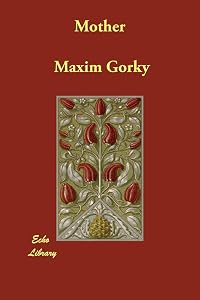
The Mother
by Maxim Gorki
On This Page
Description
Widely regarded as Russian writer Maxim Gorky's masterpiece, the novel Mother is a gripping account of a mother and a son whose converging paths in life lead them to a deep understanding the unique plight of workers. Eventually, the pair stand up for their beliefs and face punishment from the powers that be..
Tags
Recommendations



















Member Reviews
This reads like a cross between Dr Zhivago and the last part of The Jungle. It’s packed full of characters who, in true Russian fashion, each have seven names they use interchangeably, and it makes Germinal look tame in its socialist evangelism. Definitely a book of its time.
And for that, it’s important. Gorky wrote it while out of Russia licking the collective wounds of the proletariat incurred during the failed 1905 first revolution attempt. Had the subsequent replay in 1917 not gone the way of the people, the novel would probably have been laughed into obscurity, much as the last part of the aforementioned Jungle.
But 1917 did happen and the socialist dream became areality nightmare. It wasn’t just a problem for generations of show more Russians, Gorky himself found what he’d been working hard to transmit in his writing didn’t quite translate to the Soviet. Falling out with Lenin and then Stalin wasn’t conducive to a life of ease. By dying under house arrest in the mid 30s, he saved Stalin the almost inevitable job of killing him off.
The book follows the eponymous mother as she metaphorically moves from illiteracy and subjugation to her past and class to the socialistically enlightened distributor of literature. The catalyst for this is the increasing zeal of her son for the cause leading to his eventual imprisonment. The novel ends, as befits a hagiography, quite predictably.
It drags a bit with the first half spent almost entirely in the mother and son’s small dwelling. That Gorky wrote plays is belied by the fact that for the longest part, this reads like a one act, one set play where every minor character takes turns coming in and going out the hovel’s only door.
But just when tedium has made you think you might not bother continuing, there’s a kerfuffle and various people get into hot water with the authorities. The pace picks up a little, but it’s not a page-turner by any means.
Read it for what it is: an appetiser for a Revolution that caused more misery than the likes of Gorky could have envisaged despite the good intentions of those, like him, who wanted to emancipate his people from suffering.
For more reviews and the 1001 Books Spreadsheet, visit http://arukiyomi.com show less
And for that, it’s important. Gorky wrote it while out of Russia licking the collective wounds of the proletariat incurred during the failed 1905 first revolution attempt. Had the subsequent replay in 1917 not gone the way of the people, the novel would probably have been laughed into obscurity, much as the last part of the aforementioned Jungle.
But 1917 did happen and the socialist dream became a
The book follows the eponymous mother as she metaphorically moves from illiteracy and subjugation to her past and class to the socialistically enlightened distributor of literature. The catalyst for this is the increasing zeal of her son for the cause leading to his eventual imprisonment. The novel ends, as befits a hagiography, quite predictably.
It drags a bit with the first half spent almost entirely in the mother and son’s small dwelling. That Gorky wrote plays is belied by the fact that for the longest part, this reads like a one act, one set play where every minor character takes turns coming in and going out the hovel’s only door.
But just when tedium has made you think you might not bother continuing, there’s a kerfuffle and various people get into hot water with the authorities. The pace picks up a little, but it’s not a page-turner by any means.
Read it for what it is: an appetiser for a Revolution that caused more misery than the likes of Gorky could have envisaged despite the good intentions of those, like him, who wanted to emancipate his people from suffering.
For more reviews and the 1001 Books Spreadsheet, visit http://arukiyomi.com show less
Ne sarebbe venuto fuori un ottimo cartone Disney old style.
La Passione rivoluzionaria.
La Mitezza.
L'Amore materno.
Tutti con gli occhioni di Bambi.
[Per dire che è tutto talmente ingenuo e puro da sembrare posticcio, quasi - ma non in modo sgradevole. Leggermente inattuale in quest'epoca di disillusioni]
La Passione rivoluzionaria.
La Mitezza.
L'Amore materno.
Tutti con gli occhioni di Bambi.
[Per dire che è tutto talmente ingenuo e puro da sembrare posticcio, quasi - ma non in modo sgradevole. Leggermente inattuale in quest'epoca di disillusioni]
I quite like the book, because of the way in which he writes about the events of the small town, and how The Mother gets drawn into the revolution, and spreading pamphlets on the truth, as they call it.
While some may cavil at the fact that it is unlikely that a mother would follow in her son's footsteps in this manner, what is really interesting is how he detailed the manner in which she was drawn. She got drawn in because of her son, and without really knowing what she was being drawn into. This is true of most revolutionaries. They are drawn in, and never really understand the real issues.
The growth of the mother as a person is subtly captured.
The storyline did get a bit confusing at times, but I suppose that it does also reflect show more the confusion of the events of that time. show less
While some may cavil at the fact that it is unlikely that a mother would follow in her son's footsteps in this manner, what is really interesting is how he detailed the manner in which she was drawn. She got drawn in because of her son, and without really knowing what she was being drawn into. This is true of most revolutionaries. They are drawn in, and never really understand the real issues.
The growth of the mother as a person is subtly captured.
The storyline did get a bit confusing at times, but I suppose that it does also reflect show more the confusion of the events of that time. show less
Jah, teie silmad ei peta teid. Ma lugesin tõepoolest esimest korda elus Gorki "Ema". Üllatuslikult hea raamat. Ausalt. Kummaline, kuidas mingid asjad tulevad õigel ajal su juurde.
Selle raamatu sai mu ema oma pinginaabrilt kingituseks siis, kui ta oli sama vana kui mu laps praegu. Veider oli kujutleda oma patsiga ema haigutades otsimas raamatust tsitaate kirjandi jaoks, mille teemaks võis allakriipsutatud katkendite järgi olla näiteks "Ema kujunemine sotsialistliku revolutsiooni taustal" vms.
Mulle kangesti meeldis ja mõjus ka originaalsena, et tegevus oli kujutatud just ema vaatenurgast. Taaskord minu jaoks aktuaalne teema. Kuidas meie üleolek laste suhtes muutub vähehaaval hämmeldusest austuseks. Kui normaalsed inimesed oleme show more me neist kasvatanud ja kuigi me alati ei mõista, miks nad elavad just nii nagu nad elavad, siis hea on näha neid õnnelike ja edukatena.
Loe edasi
http://indigoaalane.blogspot.com/2010/01/mgorki-ema.html show less
Selle raamatu sai mu ema oma pinginaabrilt kingituseks siis, kui ta oli sama vana kui mu laps praegu. Veider oli kujutleda oma patsiga ema haigutades otsimas raamatust tsitaate kirjandi jaoks, mille teemaks võis allakriipsutatud katkendite järgi olla näiteks "Ema kujunemine sotsialistliku revolutsiooni taustal" vms.
Mulle kangesti meeldis ja mõjus ka originaalsena, et tegevus oli kujutatud just ema vaatenurgast. Taaskord minu jaoks aktuaalne teema. Kuidas meie üleolek laste suhtes muutub vähehaaval hämmeldusest austuseks. Kui normaalsed inimesed oleme show more me neist kasvatanud ja kuigi me alati ei mõista, miks nad elavad just nii nagu nad elavad, siis hea on näha neid õnnelike ja edukatena.
Loe edasi
http://indigoaalane.blogspot.com/2010/01/mgorki-ema.html show less
This has the distinction of being the only major Russian literary work written in the USA, being written when the author was in exile there in 1906. It is a tale of the purity of the revolutionary soul opposed to the infinitely corrupt and historically wrong soul of the capitalist oppressor. As such, it is populated by characters who are really ciphers who don't come across as real, living, breathing people, except (up to a point) the eponymous mother. The benefit of the hindsight of the Soviet experience also sharply reduces the impact of this novel. That said, it flows mostly very smoothly and is a easy read for a Russian novel.
A wonderful story. sort of a Russian Grapes of Wrath, except it portrays people a little bit higher than laborers, a little bit higher than people who work in the soil. These people can read and write. They distribute pamphlets. They read books and they teach others.
The Mother in the novel is a loving, old Russian mother who you cheer for when she begins to understand the fire that burns within her children, and how uniting this fire brings about a flame large enough to burn hypocrisy.
“If I get presented with a bit of happiness I won’t refuse it, but I’ll not go begging for it.”
“Yes, a little happiness doesn’t harm anyone,” said Nikolai softly. “But no one is satisfied with a little, and when there’s a lot it show more becomes cheap.” show less
The Mother in the novel is a loving, old Russian mother who you cheer for when she begins to understand the fire that burns within her children, and how uniting this fire brings about a flame large enough to burn hypocrisy.
“If I get presented with a bit of happiness I won’t refuse it, but I’ll not go begging for it.”
“Yes, a little happiness doesn’t harm anyone,” said Nikolai softly. “But no one is satisfied with a little, and when there’s a lot it show more becomes cheap.” show less
Read in Slovene under the title of Mati.
A world literature classic, Gorki's Mother tells of the struggle of the working class against the cruel oppression of the capitalist oligarchy which keeps the workers in a near-slavery state to grow rich on their backs. A central figure is the uneducated, unenlightened mother of one working-class activist who is slowly realizing what the fight is about, thereby highlighting the problems the intellectuals had with explaining the cause to those most oppressed and least educated.
A world literature classic, Gorki's Mother tells of the struggle of the working class against the cruel oppression of the capitalist oligarchy which keeps the workers in a near-slavery state to grow rich on their backs. A central figure is the uneducated, unenlightened mother of one working-class activist who is slowly realizing what the fight is about, thereby highlighting the problems the intellectuals had with explaining the cause to those most oppressed and least educated.
Members
- Recently Added By
Lists

1001 Books You Must Read Before You Die
1,448 works; 1,131 members

The Guardian's 1000 Novels Everyone Must Read
1,005 works; 547 members

Best of World Literature
431 works; 51 members

Russian Literature
184 works; 32 members

Recommend the 20 best books you've read in the last five years
2,168 works; 606 members

Literature About Social Class
134 works; 19 members

Canon de la narrativa universal del siglo XX
254 works; 6 members

1900s (Decade, not century)
73 works; 17 members

Western World's Greatest Books - Project Gutenberg
295 works; 15 members

1,001 BYMRBYD Concensus
723 works; 27 members

Llibres que he llegit el 2010
35 works; 1 member

Books Read in 2017
4,249 works; 130 members

Novels featuring Mothers
64 works; 8 members

My TBR
371 works; 3 members

Books Read in 2024
4,623 works; 126 members
Canon de la narrativa universal del s. XX (cicutadry)
499 works; 3 members
Author Information

Alexei Maximovich Peshkov, better known as Maxim (Maksim) Gorky, was born on March 28th, 1968. Until the recent collapse of the Soviet state, Gorky was officially viewed as the greatest Russian writer of the twentieth century---an evaluation far above the true measure of his nevertheless considerable talent. Proclaimed the founder of socialist show more realism, he significantly influenced many Soviet writers, as well as others in Europe and in the developing world, and his works were for decades part of the Soviet school curriculum. His formal education was minimal. From the age of 11, he fended for himself with a variety of jobs. Self-taught, he published his first story, "Makar Chudra," in 1892. His first collection, Sketches and Stories (1898), is a romantic celebration of society's strong outcasts---the hobos and the drifters---and helped to popularize such literary protagonists. Foma Gordeyev (1899), Gorky's first novel, depicts generational conflict within the Russian bourgeoisie. A popular public figure on the left, Gorky was often in trouble with the tsarist government. During the 1900s, he was the central figure in the Znanie publishing house, which produced realist prose with a social conscience. Some of his own works were extremely successful. The play The Lower Depths (1902), set in a poorhouse and a strong indictment of social injustice, was not only a staple of Soviet theater but also influential in the United States. Eugene O'Neill's The Iceman Cometh was influenced by it. The propagandistic, extraordinarily influential novel Mother (1906) presents an iconic working-class woman who is transformed into a saint of the Revolution; its optimism in the ultimate triumph of the cause made it a prototype of socialist-realist fiction. During the years prior to 1917, Gorky published a number of autobiographical stories: All Over Russia (1912--18) (also Through Russia) and his memoirs; My Childhood (1913--14), My Apprenticeship (1915--16), and My Universities (1923). This trilogy shows his art at its best and includes some very lively reminiscences of such writers as Tolstoy and Chekhov. Although a Bolshevik party member since 1905, Gorky strongly criticized the new regime after the October Revolution: His collected articles from 1917-18, Untimely Thoughts, remained unpublished in the Soviet Union until recently. A cultural activist, he helped to save the lives of many writers, artists, and scholars during the cold and hungry years of the civil war. In 1921 he left Russia for Italy but returned permanently a decade later, recognized as the grand old man of Soviet literature. He then worked for Stalin's economic policies and presided over the institutionalization of socialist realism. At his death, he left unfinished a major novel of considerable interest, The Life of Klim Samgin, which he had been working on since 1925. (Bowker Author Biography) show less
Some Editions
Awards and Honors
Notable Lists
Series
Belongs to Publisher Series
世界の革命文学 (3)
Work Relationships
Is contained in
Contains
Common Knowledge
- Canonical title
- The Mother
- Original title
- Мать
- Alternate titles
- Mother
- Original publication date
- 1907 (original Russian) (original Russian); 2000 (English: Wettlin) (English: Wettlin)
- People/Characters
- Pelageya Nilovna Vlasova; Pavel Mikhailovich Vlasov; Natasha Vasilyevna; Andrei Nakhodka; Nikolai Vesovshchikov; Nikolai Ivanovich (show all 8); Sashenka; Rybin
- Important events*
- ロシア社会主義革命
- Epigraph*
- I lavoratori le fecero eco con un grido di ribellione.
- First words
- Every day the factory whistle shrieked tremulously in the grimy, greasy air above the workers' settlement.
- Last words
- (Click to show. Warning: May contain spoilers.)Someone answered her with a loud sob.
- Original language
- Russian
*Some information comes from Common Knowledge in other languages. Click "Edit" for more information.
Classifications
- Genres
- General Fiction, Fiction and Literature
- DDC/MDS
- 813 — Literature & rhetoric American literature in English American fiction in English
- LCC
- PG3464 .M3 .S5 — Language and Literature Slavic languages and literatures. Baltic languages. Albanian language Slavic. Baltic. Albanian Russian literature Individual authors and works 1870-1917 Gorky
- BISAC
Statistics
- Members
- 1,487
- Popularity
- 15,566
- Reviews
- 37
- Rating
- (3.63)
- Languages
- 27 — Arabic, Catalan, Chinese, Danish, Dutch, English, Estonian, Finnish, French, German, Greek, Hebrew, Hindi, Icelandic, Italian, Japanese, Nauru, Norwegian (Bokmål), Polish, Portuguese, Romanian, Russian, Slovak, Spanish, Swedish, Thai, Turkish
- Media
- Paper, Audiobook, Ebook
- ISBNs
- 188
- ASINs
- 65