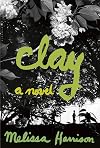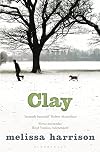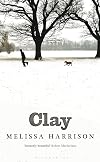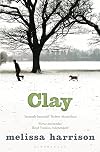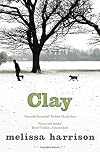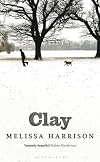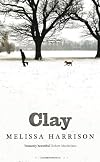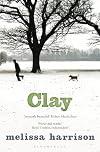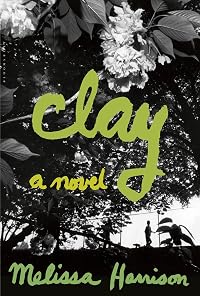
Clay
by Melissa Harrison
On This Page
Description
A boy creeps down from a high-rise block in the half-light of dawn to see the neat prints left by a fox on the frosty grass. He is TC, eight years old and skipping school to spend his time exploring the city's waste ground and long-forgotten wild corners. At school and at home he is barely missed. Sophia, seventy-eight and a half and still wearing her dear dead husband's shoes, looks out through her kitchen window at the little city park outside her flat, its grassy acres grimy and show more litter-blown, but to her eyes beautiful. She is writing her weekly letter to her granddaughter Daisy, whose privileged upbringing means she exists in a different world to that of TC, even though they live less than a mile apart. Jozef spends his days clearing houses and works night shifts at the local takeaway, but he is unable to forget the farm he left behind in Poland, the woods and fields he grew up with still a part of him, although he is a thousand miles away. When he meets TC in the little park one night he finds a kindred spirit, despite the forty years between them: both lonely, both looking for something, both lost. A lyrical debut novel about innocence and experience, class and consumerism, 'Clay' captures the delicate balance of life in the city, between young and old, between nature and development, between recklessness and caution. show lessTags
Recommendations










Member Recommendations
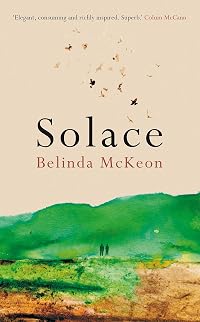
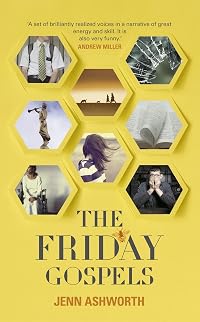
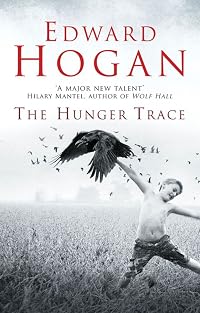
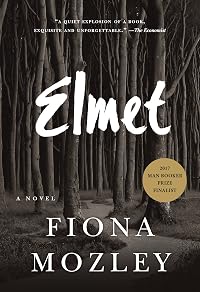
tangledthread There is a similar feel to the book and the cast of characters in the two books.
Member Reviews
I enjoyed [Clay: a novel] by [Melissa Harrison], an ER book. This story covers a calendar year in the lives of several people and one dog in urban London. What they all have in common is use of and a relationship to a small natural area. (As far as I can figure out, some of it is formally what we in Atlanta refer to as a park, and some is just area that hasn’t been formally developed or claimed by human beings). The three main human characters are lonely – their relationships to other people aren’t enough – and they have a conscious need for action in /preservation of / relationship with the natural world. It’s not clear to me if this relationship to the natural world is in addition to their human relationships or simply meets show more needs those human relationships don’t fill. The reader is allowed inside each person’s head for parts of the story; the dog’s actions are described from the perspective of two of the people.
I liked all of the characters in the story: Znajda the dog, Jozef, the immigrant from a farm lost to the changes of CE Poland, TC, the adolescent boy with an absent father and mother, Sophia, missing her dead husband, torn between her relationship with her nine-year-old granddaughter Daisy and the possibility of a closer relationship with her daughter Linda, and the relationships that develop among these individuals and others. It’s a comment, in part, I think, on the loneliness of the human condition and how we seek to ameliorate that loneliness.
Intriguingly, each chapter was titled with a different holiday or holy day, many of which I had a passing familiarity with (Michelmas, Candlemas, May Day, etc.), and many of which I had to look up (Plough Monday, Hock Tide, Oak Day). The story started and ended with chapters set on St. Bartholomew’s day (Aug. 23rd, the eve of the feast of St. Bartholomew the Apostle, commemorates the assassination of a number of prominent Protestants in Paris in 1572 and the ensuing Huguenot massacres), so it was clear from the beginning that this story would not have a happy ending. And yet I hoped for one! Though perhaps the point wasn’t a happy ending, but the ongoing web of relationships we weave as we try to take care of ourselves and sometimes others.
I’m also intrigued by the author’s blog and photos at Tales of the City. show less
I liked all of the characters in the story: Znajda the dog, Jozef, the immigrant from a farm lost to the changes of CE Poland, TC, the adolescent boy with an absent father and mother, Sophia, missing her dead husband, torn between her relationship with her nine-year-old granddaughter Daisy and the possibility of a closer relationship with her daughter Linda, and the relationships that develop among these individuals and others. It’s a comment, in part, I think, on the loneliness of the human condition and how we seek to ameliorate that loneliness.
Intriguingly, each chapter was titled with a different holiday or holy day, many of which I had a passing familiarity with (Michelmas, Candlemas, May Day, etc.), and many of which I had to look up (Plough Monday, Hock Tide, Oak Day). The story started and ended with chapters set on St. Bartholomew’s day (Aug. 23rd, the eve of the feast of St. Bartholomew the Apostle, commemorates the assassination of a number of prominent Protestants in Paris in 1572 and the ensuing Huguenot massacres), so it was clear from the beginning that this story would not have a happy ending. And yet I hoped for one! Though perhaps the point wasn’t a happy ending, but the ongoing web of relationships we weave as we try to take care of ourselves and sometimes others.
I’m also intrigued by the author’s blog and photos at Tales of the City. show less
 This review was written for LibraryThing Early Reviewers.
The tiny city park is a hub and a focus for many of the local residents. Sophia sees its beauty even through the litter as it is blown around in the wind. A nine year old boy, TC, is discovering the joy that nature can bring as he plays truant from school to explore and discover. Sophia’s granddaughter Daisy who lives round the corner just sees it as a place to play. And there is Jozef, a farmer from Poland, he is now clearing homes and serving at a takeaway, but still has that yearning for the forests and fields of his homeland.
These four people are brought together like those small whirlwinds that lift the leaves up in the air. TC and Jozef hit it off together immediately with their common love of the natural world, and Jozef takes show more an interest in his life and the pain TC has from his father leaving. Sophia is trying to spark an interest in nature and the wider world with her granddaughter, but her daughter has other ideas as to what her Daisy should and should not be doing. TC and Daisy occasionally climb trees and play together, but their worlds are so different. Events drift slowly on until someone watching draws the wrong conclusion about an event.
Harrison writes lyrically in this book on the urban space, but all the way through it is infused with melancholy. There is not just the sadness of the four characters as they go about their daily lives and deal with their own trials and tribulations, but she has picked up on the ambiance of class and consumerism that permeates modern London these days. Her keen eyes write about the smallest details; the unfurling of leaves, the glisten of a stag beetle shell, the tiny channels left by voles, and these all bring alive the natural world of the park. It is a hauntingly beautiful book; not happy by any means, but effortless to read. show less
These four people are brought together like those small whirlwinds that lift the leaves up in the air. TC and Jozef hit it off together immediately with their common love of the natural world, and Jozef takes show more an interest in his life and the pain TC has from his father leaving. Sophia is trying to spark an interest in nature and the wider world with her granddaughter, but her daughter has other ideas as to what her Daisy should and should not be doing. TC and Daisy occasionally climb trees and play together, but their worlds are so different. Events drift slowly on until someone watching draws the wrong conclusion about an event.
Harrison writes lyrically in this book on the urban space, but all the way through it is infused with melancholy. There is not just the sadness of the four characters as they go about their daily lives and deal with their own trials and tribulations, but she has picked up on the ambiance of class and consumerism that permeates modern London these days. Her keen eyes write about the smallest details; the unfurling of leaves, the glisten of a stag beetle shell, the tiny channels left by voles, and these all bring alive the natural world of the park. It is a hauntingly beautiful book; not happy by any means, but effortless to read. show less
Harrison writes the natural world and how some city dwellers interact with it. Beyond that, her plot involves the strained relationships in the separate lives of those people. In summary, I'd have to say that the book certainly gave me material for pondering, despite my dissatisfaction with its quality. The message I most appreciated can be found in 2 quotes "...a life without land was not enough." (p.162) "We are made of the same stuff as the earth...It's in our blood and our bones" (185-6). The relationship between Linda & her mother Sophia as shown late in the book, made me think of the struggles my daughter has with being a different parent from her mother.
This review based on an Early Reviewer copy. Hopefully more editing will show more eliminate some of the rough edges.
Harrison's prose at times nicely describes the burgeoning life in city parks and byways "To walk Znajda in the warm, golden light was to pass from one blackbird's demesne to another's, their songs a carillon calling him" (p.158), but at times seems a bit strained, as when the road Linda travels is given an historical geography (p.47-8) or when the view from a plane is described even tho no characters are in it (p.211). These are not Linda's thoughts, & are awkward here. As much as she would like us to relate to the world, it is a British world, not my Midwestern one, & I was constantly trying to translate the lime trees, great tits, and willowherb into plants I am familiar with (isn't that Linden trees, Ovenbirds, and Spiraea?)
It's hard to give a full review without some mention of outcomes. Everyone is sad, and in this tragedy there is an unhappy ending. Reaching out to the natural world is not enough to save the city dwellers. The young mothers in this story were not likeable, both seeming very self-centered. TC's mother is particularly inarticulate, using "F---" as her generic explanation for why she doesn't do better. At the end, I could see that we are to understand that one of the problems with the world today is the lack of loving attention children receive from their moms, but we aren't given enough to sympathize with them. It also begs the question of why the fathers aren't involved. Daisy's father is just a cardboard stand-in, as is Jamal.
I really liked Jozef, his woodcarvings, his concern about TC, how he misses belonging to the land where his family had farmed for generations.
One sentence sticks out, when Harrison gives a "Little did he know..." warning (p.148) which is completely unnecessary & spoils the picture of Eden TC imagines. There is plenty of foreshadowing in Jozef's uncertainties that we don't need this awkward sentence. show less
This review based on an Early Reviewer copy. Hopefully more editing will show more eliminate some of the rough edges.
Harrison's prose at times nicely describes the burgeoning life in city parks and byways "To walk Znajda in the warm, golden light was to pass from one blackbird's demesne to another's, their songs a carillon calling him" (p.158), but at times seems a bit strained, as when the road Linda travels is given an historical geography (p.47-8) or when the view from a plane is described even tho no characters are in it (p.211). These are not Linda's thoughts, & are awkward here. As much as she would like us to relate to the world, it is a British world, not my Midwestern one, & I was constantly trying to translate the lime trees, great tits, and willowherb into plants I am familiar with (isn't that Linden trees, Ovenbirds, and Spiraea?)
It's hard to give a full review without some mention of outcomes.
I really liked Jozef, his woodcarvings, his concern about TC, how he misses belonging to the land where his family had farmed for generations.
One sentence sticks out, when Harrison gives a "Little did he know..." warning (p.148) which is completely unnecessary & spoils the picture of Eden TC imagines. There is plenty of foreshadowing in Jozef's uncertainties that we don't need this awkward sentence. show less
This review was written for LibraryThing Early Reviewers.An intimate and captivating portrait of four people struggling with the concrete confines of city life by first-time novelist Melissa Harrison. A lyrical debut novel about innocence and experience, class and consumerism, Clay captures the delicate balance of life in the city, between young and old, between nature and development, between recklessness and caution. http://www.bloomsbury.com/uk/clay-9781408826027
At first I thought of Melissa Harrison as a 21st century E.B. White, replacing the agricultural setting and middle-class characters with a South London park used mostly (abused?) by low-income inner city types, writing for young adults instead of children. More about the “young adult” label later.
Now I envision her as a show more modern-day John Clare, one of England’s most famous nature poets. If Clare lived now, a career as a full time poet would hardly be an option; in all likelihood he would need to move to the city, get a day job and write in his spare time. During these free hours, I think Clare would, as Ms Harrison does in her blog mel-talesofthecity.blogspot.ca, record his detailed observations of the intertwined lives of humans and the natural world—the clay—around them. Although, Ms Harrison suggests that we humans are clay too. One of the novel’s characters says:
We are the clay that grew tall.
A statement like that dismantles an “us/them” mindset and reveals an ineffable, undeniable unity in everything.
Ms Harrison truly owns the power of observing. Lucky for us readers, she also owns the literary talent to enable us to see and hear and feel and smell as she does. When she lends us her heightened senses, we have her ability to see and understand the connections among everything that exists.
I hope I haven’t made Clay sound like a save-the-world appeal disguised as a novel. For me it was more like “look at what we still have, even in the middle of the city, look at us all living together”.
The four main characters are real people. I found myself continually wondering how a 30something woman could write such a convincing older woman, Sophia, caught between pleasing her daughter and enjoying her granddaughter! An 8 year old boy known as “TC” is a chronic truant who spends his days exploring the local park.
TC loved this time of year. Like most children, he was on intimate terms with the earth. The under-tens deal in little sticks and pebbles; they are artisans of holes, experts in the types and properties of stones; they appreciate the many qualities of mud and its summer corollary, dust.
And then they grow up and the ground is just whatever’s underfoot.
Sophia’s granddaughter,9 year old Daisy meets TC in the park and forms a sort of friendship. Her consumerism and spoiled ways are more typical of that age group than TC’s. His is a single-parent family living in a flat; his young mother often does not have the money for TC to buy lunch at school. She has kicked TC’s dad out—for spousal abuse—and the young boy who only saw Dad’s good side misses him deeply.
Jozef, a Polish farmer whose outdated agricultural practices did not jibe with European Union megafarms, emigrated to England where he subsists on minimum-wage jobs such as serving in a chicken takeaway shop. His family had tended the farm and its land for generations; he seeks out the trampled bits of nature to be enjoyed in the crowded, concrete city and after he repeatedly notices TC in the park when he should be at school, Jozef cautiously befriends him.
We are permitted into their lives for one year, from St. Bartholomew’s Day (August 24) to St. Bartholomew’s day. We live the seasons of the park, of these people, of the clay. The chapter titles recall England’s former agricultural rhythm: Lammas (wheat festival), Martinmas (harvest/preparation for winter), Plough Monday (start of the agricultural year) and my favourite, Dog Whipping Day (October 18). (Have fun looking that one up!) These titles remind the reader that as most of us are untethered to any land, we derive our rhythms from machines.
Clay is fully contemporary, urban, austere. I find a unparalleled purity in Ms Harrison’s writing: each word exact, every description pared to its essence but containing a fullness, the way one short line of poetry can convey a complete experience. I absolutely loved it!
I received this book as an advanced reading copy.
9.5 out of 10 Strongly recommended to readers who enjoy literary fiction and to all those city dwellers looking for life in the urban landscape. Dr. Who fans will recognize two references: daleks and petrichor. show less
At first I thought of Melissa Harrison as a 21st century E.B. White, replacing the agricultural setting and middle-class characters with a South London park used mostly (abused?) by low-income inner city types, writing for young adults instead of children. More about the “young adult” label later.
Now I envision her as a show more modern-day John Clare, one of England’s most famous nature poets. If Clare lived now, a career as a full time poet would hardly be an option; in all likelihood he would need to move to the city, get a day job and write in his spare time. During these free hours, I think Clare would, as Ms Harrison does in her blog mel-talesofthecity.blogspot.ca, record his detailed observations of the intertwined lives of humans and the natural world—the clay—around them. Although, Ms Harrison suggests that we humans are clay too. One of the novel’s characters says:
We are the clay that grew tall.
A statement like that dismantles an “us/them” mindset and reveals an ineffable, undeniable unity in everything.
Ms Harrison truly owns the power of observing. Lucky for us readers, she also owns the literary talent to enable us to see and hear and feel and smell as she does. When she lends us her heightened senses, we have her ability to see and understand the connections among everything that exists.
I hope I haven’t made Clay sound like a save-the-world appeal disguised as a novel. For me it was more like “look at what we still have, even in the middle of the city, look at us all living together”.
The four main characters are real people. I found myself continually wondering how a 30something woman could write such a convincing older woman, Sophia, caught between pleasing her daughter and enjoying her granddaughter! An 8 year old boy known as “TC” is a chronic truant who spends his days exploring the local park.
TC loved this time of year. Like most children, he was on intimate terms with the earth. The under-tens deal in little sticks and pebbles; they are artisans of holes, experts in the types and properties of stones; they appreciate the many qualities of mud and its summer corollary, dust.
And then they grow up and the ground is just whatever’s underfoot.
Sophia’s granddaughter,9 year old Daisy meets TC in the park and forms a sort of friendship. Her consumerism and spoiled ways are more typical of that age group than TC’s. His is a single-parent family living in a flat; his young mother often does not have the money for TC to buy lunch at school. She has kicked TC’s dad out—for spousal abuse—and the young boy who only saw Dad’s good side misses him deeply.
Jozef, a Polish farmer whose outdated agricultural practices did not jibe with European Union megafarms, emigrated to England where he subsists on minimum-wage jobs such as serving in a chicken takeaway shop. His family had tended the farm and its land for generations; he seeks out the trampled bits of nature to be enjoyed in the crowded, concrete city and after he repeatedly notices TC in the park when he should be at school, Jozef cautiously befriends him.
We are permitted into their lives for one year, from St. Bartholomew’s Day (August 24) to St. Bartholomew’s day. We live the seasons of the park, of these people, of the clay. The chapter titles recall England’s former agricultural rhythm: Lammas (wheat festival), Martinmas (harvest/preparation for winter), Plough Monday (start of the agricultural year) and my favourite, Dog Whipping Day (October 18). (Have fun looking that one up!) These titles remind the reader that as most of us are untethered to any land, we derive our rhythms from machines.
Clay is fully contemporary, urban, austere. I find a unparalleled purity in Ms Harrison’s writing: each word exact, every description pared to its essence but containing a fullness, the way one short line of poetry can convey a complete experience. I absolutely loved it!
I received this book as an advanced reading copy.
9.5 out of 10 Strongly recommended to readers who enjoy literary fiction and to all those city dwellers looking for life in the urban landscape. Dr. Who fans will recognize two references: daleks and petrichor. show less
This review was written for LibraryThing Early Reviewers.This is a little gem of a book. The characters tug at your heartstrings as you get to know them through their thoughts and their relationship to the little park and bit of wild area near where they live. Sophia is an elderly widow whose life is winding down, but who takes pleasure in closing observing the park near her home in all seasons, and in little acts of subversion. For example, she watches park employees plant daffodils in regimented rows, and when they leave at the end of their shift, she comes back in the dark to rearrange the bulbs in a random and joyous fashion. TC is a 10-year-old boy whose father has just left, and whose mother pays him little attention. He claims the park as his own personal territory, reveling in its show more small creatures and hidden life. Jozef is a polish immigrant who lost his farm in Poland to "progress" and now does low-paying jobs he hates. He too feels a connection to the land and observes the small boy alone in the park and becomes a much-needed friend to TC. In Clay, we come to care very deeply for these three characters, and wish them happiness. It's disturbing and sad when everything changes, although we can see how and why it happens.
I share the author's love of the land and I too observe a wild area in the middle of a city, its flowers, trees, plants, birds, animals and insects, in all kinds of weather and as it changes through the seasons, feeling lucky to have such a place for my daily walk. Since I live in Canada, not England, I was unfamiliar with many of the terms the author uses, but have enjoyed looking them up and making new discoveries. I do enjoy books where you can learn something new. Also the author has a nature blog called Tales of the City, with gorgeous photographs, that I am enjoying.
The story is one that stays with you when you turn the last page, and hopefully makes you notice more of the small, insignificant things in the natural world that surrounds us. Highly recommended. show less
I share the author's love of the land and I too observe a wild area in the middle of a city, its flowers, trees, plants, birds, animals and insects, in all kinds of weather and as it changes through the seasons, feeling lucky to have such a place for my daily walk. Since I live in Canada, not England, I was unfamiliar with many of the terms the author uses, but have enjoyed looking them up and making new discoveries. I do enjoy books where you can learn something new. Also the author has a nature blog called Tales of the City, with gorgeous photographs, that I am enjoying.
The story is one that stays with you when you turn the last page, and hopefully makes you notice more of the small, insignificant things in the natural world that surrounds us. Highly recommended. show less
This review was written for LibraryThing Early Reviewers.Melissa Harrison's debut novel is a brilliant hybrid of fiction and nature writing centred on semi-wild spaces in a London suburb. The events of the book cover a year, broken into seasonal chapters that mix descriptions of the natural world with a cast of characters whose relationship with nature is at the heart of the story.
Its structure could be seen as a precursor to [b:Reservoir 13|34146665|Reservoir 13|Jon McGregor|https://i.gr-assets.com/images/S/compressed.photo.goodreads.com/books/1501517176l/34146665._SX50_.jpg|44007812], but concentrated into a smaller area and smaller time-span, without the mystery, and suburban, with a more definite conclusion.
The human characters are TC, a boy whose single mother largely ignores him and show more who is ostracised at school for being different, who seeks escape by skipping school to explore and watch the plants and animals around him. Jozef is a migrant worker who lost his small family farm in Poland to the cost of meeting EU regulations, who befriends a fighting dog owned by his employer, a shady operator specialising in house clearances. Then there is Sophia, a widow who takes a keen interest in nature, who forms a bond with her impressionable granddaughter Daisy that complicates her more distant relationship with her daughter Linda (Daisy's mother).
The human stories weave in and out of the nature writing, and the conclusion is dramatic, if a little inevitable. show less
Its structure could be seen as a precursor to [b:Reservoir 13|34146665|Reservoir 13|Jon McGregor|https://i.gr-assets.com/images/S/compressed.photo.goodreads.com/books/1501517176l/34146665._SX50_.jpg|44007812], but concentrated into a smaller area and smaller time-span, without the mystery, and suburban, with a more definite conclusion.
The human characters are TC, a boy whose single mother largely ignores him and show more who is ostracised at school for being different, who seeks escape by skipping school to explore and watch the plants and animals around him. Jozef is a migrant worker who lost his small family farm in Poland to the cost of meeting EU regulations, who befriends a fighting dog owned by his employer, a shady operator specialising in house clearances. Then there is Sophia, a widow who takes a keen interest in nature, who forms a bond with her impressionable granddaughter Daisy that complicates her more distant relationship with her daughter Linda (Daisy's mother).
The human stories weave in and out of the nature writing, and the conclusion is dramatic, if a little inevitable. show less
Clay is a captivating novel. It centres around three finely developed characters: TC, a 9-year-old boy whose parents have just divorced; Jozef, a Polish immigrant who has lost his family farm; and Sophia, an elderly widow trying to connect with her daughter and granddaughter. Each of these characters has a strong connection to nature, and this connection draws them together.
In addition to the well drawn characters, the setting in a small urban park as we move from autumn to the following summer allows nature to act as a character; the changing seasons reflect the subtle shiftings in the lives of TC, Sophia and Jozef.
Clay tells a good story about trying to belong; to matter to someone. It is a story of friendship, and how our intentions show more can be so easily misunderstood. show less
In addition to the well drawn characters, the setting in a small urban park as we move from autumn to the following summer allows nature to act as a character; the changing seasons reflect the subtle shiftings in the lives of TC, Sophia and Jozef.
Clay tells a good story about trying to belong; to matter to someone. It is a story of friendship, and how our intentions show more can be so easily misunderstood. show less
This review was written for LibraryThing Early Reviewers.Members
- Recently Added By
Author Information

13+ Works 1,046 Members
Common Knowledge
- Canonical title
- Clay
- Original publication date
- 2013
- People/Characters
- TC; Jozef; Sophia; Daisy
- Important places
- Poland
- Dedication
- For Anthony
- First words
- The little wedge-shaped city park was as beautiful and as unremarkable as a thousand others across the country, and despite the changing seasons many of the people who lived near it barely even knew that it was there -- altho... (show all)ugh that was certainly not true of all.
- Last words
- (Click to show. Warning: May contain spoilers.)A drop pelted the windscreen, a dozen, a hundred; and then, from the vast and desolate darkness above, the weather broke.
- Blurbers
- Macdonald, Helen; Wilson, A N; Smith, Ali; Smiley, Jane
Classifications
Statistics
- Members
- 82
- Popularity
- 383,595
- Reviews
- 15
- Rating
- (3.92)
- Languages
- English
- Media
- Paper, Audiobook, Ebook
- ISBNs
- 12
- ASINs
- 4