On This Page
Description
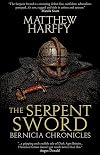
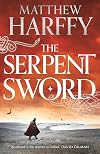
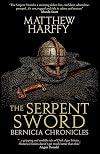
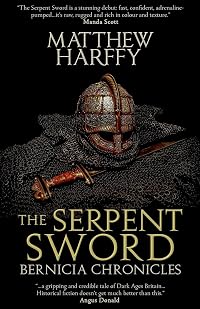
AD 633. Beobrand is a young man with a shadowy past. As an outsider in the kingdom of Bernicia, he is compelled to join his brother, Octa, as a warrior in the household of King Edwin. He must learn to fight with sword and shield to defend the war-ravaged kingdoms of Northumbria. In a period of great upheaval for Dark Age Britain, all he finds is death and war. Men and women strive to seize control of their destinies in a time of despair, and the land is rife with danger as warlords vie for show more supremacy and dominion. Amongst the blood and the betrayals, Beobrand learns of his brother's near-certain murder. Inexperienced but ruthless, Beobrand must form his own allegiances and learn to fight as a warrior with sword and shield. Driven by a desire for vengeance and a relentless pursuit of his enemies, he faces challenges which transform him from a boy to a man who stands strong in the clamour and gore of the shieldwall. As he closes in on his kin's slayer, can Beobrand mete out the retribution he craves without sacrificing his honour... or even his soul? show lessTags
Recommendations












Member Reviews
This is the first in a series of novels set in early 7th century Anglo-Saxon England. Beobrand is a young warrior from Kent who, seeking to avenge his murdered brother, now finds himself in the north of the country in the kingdom of Bernicia (the northern half of what would later be Northumbria). This is a time of struggle between the Saxons and the "Waelisc", or Celts, and between emerging Christianity and the old Celtic and Saxon gods. The atmosphere in this feels a lot like Bernard Cornwell's Uhtred series, though that is set some three centuries later. While I have got slightly tired of the latter series over the years due to the endless setpiece battle scenes, The Serpent Sword feels like a more plot-driven book and Beobrand is a show more more sympathetic central character (after an initial morally dubious sequence and a horrible murder and rape incident in which he is peripherally involved and fails to prevent). I will pursue this series. show less
“The Serpent Sword” features a blend of quality battles, tense encounters, and an engaging ‘boy-meets-girl’ storyline.
I liked it in the most part, but like with many historical novels, the author puts so much effort into getting the history elements correct that essential creative writing skills are neglected. Main problem being too much ‘telling’ and not enough ‘showing’.
Adverb overuse is another evil, and the biggest problem with adverbs is that they ‘tell’. For example, with ‘walked determinedly’ you have a weak verb coupled with a ‘telling’ adverb. There’s always a stronger verb than ‘walked’. In this case, ‘strode’ or ‘marched’ would’ve ‘shown’ the determined walk.
Adverbs are at show more their most superfluous with this kind of thing: “More slowly”, “more quickly”, “more brightly”, when ‘slower’, ‘quicker’, and ‘brighter’ convey the meaning in one concise verb.
Two style issues that irritated me are the overuse of ‘then’ (to state what happens next), and ‘had’ (past perfect).
To keep using ‘then’ is lazy and unimaginative. It’s fine in children’s books, but for gritty historical fiction I expect more imagination. Most can be cut, the rest replaced. It's sometimes natural for a character to say 'then', but this word should be purged from any third-person narrative.
The frequent use of ‘had’ in the past perfect tense is something all authors should avoid, as it reports on the scene rather than taking the reader into the action as it unfolds. The odd one is inevitable, but in this book it’s consistent, even though it would've been easy to cut them out.
For one thing, this narrative is in the past tense, so ‘had’ should only be used if a sentence sounds odd without it. For example, ‘He had said’ works as ‘he said’ because ‘said’ is in the past tense. ‘She had sat down’ flows better as ‘She sat down’ because ‘sat’ is past tense making 'had' superfluous. If a scene that’s past is being recalled, all that’s needed is to inform the reader that it has already happened, after which the frequent use of ‘had’ is unnecessary.
On the plus side, this author uses some excellent similes. I was impressed with his creativity in this department.
So, despite the criticisms, I liked this novel well enough to read the next in the series. show less
I liked it in the most part, but like with many historical novels, the author puts so much effort into getting the history elements correct that essential creative writing skills are neglected. Main problem being too much ‘telling’ and not enough ‘showing’.
Adverb overuse is another evil, and the biggest problem with adverbs is that they ‘tell’. For example, with ‘walked determinedly’ you have a weak verb coupled with a ‘telling’ adverb. There’s always a stronger verb than ‘walked’. In this case, ‘strode’ or ‘marched’ would’ve ‘shown’ the determined walk.
Adverbs are at show more their most superfluous with this kind of thing: “More slowly”, “more quickly”, “more brightly”, when ‘slower’, ‘quicker’, and ‘brighter’ convey the meaning in one concise verb.
Two style issues that irritated me are the overuse of ‘then’ (to state what happens next), and ‘had’ (past perfect).
To keep using ‘then’ is lazy and unimaginative. It’s fine in children’s books, but for gritty historical fiction I expect more imagination. Most can be cut, the rest replaced. It's sometimes natural for a character to say 'then', but this word should be purged from any third-person narrative.
The frequent use of ‘had’ in the past perfect tense is something all authors should avoid, as it reports on the scene rather than taking the reader into the action as it unfolds. The odd one is inevitable, but in this book it’s consistent, even though it would've been easy to cut them out.
For one thing, this narrative is in the past tense, so ‘had’ should only be used if a sentence sounds odd without it. For example, ‘He had said’ works as ‘he said’ because ‘said’ is in the past tense. ‘She had sat down’ flows better as ‘She sat down’ because ‘sat’ is past tense making 'had' superfluous. If a scene that’s past is being recalled, all that’s needed is to inform the reader that it has already happened, after which the frequent use of ‘had’ is unnecessary.
On the plus side, this author uses some excellent similes. I was impressed with his creativity in this department.
So, despite the criticisms, I liked this novel well enough to read the next in the series. show less
Good story-telling, and the characters are decently drawn, but I didn't like the writing mechanics here, which felt clumsy and made this book feel less interesting than it could've been. Probably still worth a look for those interested in this very early time period in English history (AD 600's).
Rise of the main character from naïve farm boy to warrior. Action-packed. Others may think this a pale reflection of the Cornwell series, but I personally enjoyed it much more.
Well written and researched, atmospheric descriptive. Riveting from first to last page, with superb characters throughout. I was fortunate in one way to receive the latest book in the series from NetGalley, but enjoyed it so much I had to start back at the beginning, which could prove expensive, but based on this excellent read worth it. The action and there is plenty of it leaves little to the imagination, an absolute quality page turner.
Completely recommended.
Completely recommended.
This is the story of Beobrand, a young man from Cantware ( Kent) who goes North so he can join his brother ( who has been murdered). Set against the historical background of 7th century Albion, a time when the death of Edwin, High King of Britain, plunges the country in darkness.Albion is more than divided. Several kingdoms are battling for supremacy over their neighbours, bands of warriors are on the loose and the power relations between pagan beliefs and budding Christianity are changing. But this is in the first place an adventure story but also a story about revenge, betrayal, psychopathic warriors ( yeah, even then....),loyalty, camaraderie and friendship. A fabulous story.
Great book! Historical fiction at its finest. Tales of love, honor, battle, and revenge woven deeply into the construct of the factual time period. I am looking forward to the rest of the series!
Members
- Recently Added By
Lists

al.vick-wishlist-historical fiction
128 works; 1 member

infjsarah's wishlist
408 works; 2 members

Library Historical Fiction
160 works; 1 member
Author Information

21 Works 486 Members
Awards and Honors
Distinctions
Series

Work Relationships
Is contained in
Common Knowledge
- Canonical title
- The Serpent Sword
Classifications
Statistics
- Members
- 107
- Popularity
- 303,741
- Reviews
- 8
- Rating
- (4.08)
- Languages
- English
- Media
- Paper, Audiobook, Ebook
- ISBNs
- 5
- ASINs
- 3