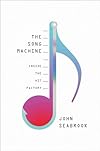
The Song Machine: Inside the Hit Factory
by John Seabrook
On This Page
Description
There's a reason hit songs offer such guilty pleasure--they're designed that way. Over the last two decades a new type of hit song has emerged, one that is almost inescapably catchy. Pop songs have always had a "hook," but today's songs bristle with them: a hook every seven seconds is the rule. Painstakingly crafted to tweak the brain's delight in melody, rhythm, and repetition, these songs are highly processed products. Like snack-food engineers, modern songwriters have discovered the show more musical "bliss point." And just like junk food, the bliss point leaves you wanting more. In The Song Machine, longtime New Yorker staff writer John Seabrook tells the story of the massive cultural upheaval that produced these new, super-strength hits. Seabrook takes us into a strange and surprising world, full of unexpected and vivid characters, as he traces the growth of this new approach to hit-making from its obscure origins in early 1990s Sweden to its dominance of today's Billboard charts. Going beyond music to discuss money, business, marketing, and technology, The Song Machine explores what the new hits may be doing to our brains and listening habits, especially as services like Spotify and Apple Music use streaming data to gather music into new genres invented by algorithms based on listener behavior. Revelatory and original, this book will change the way you listen to music.--Adapted from book jacket. show lessTags
Recommendations












Member Reviews
Don't Believe Everyone Who Says They Write Their Own Songs
John Seabrook does a great job pulling the veil back on the music industry and how hits get made. It's astonishing to read that today's hit songs are produced, written, and created by teams of people and that the "factories" have their hands on 90% of the hits out there.
You'll never look at an artist or listen to music the same way after reading this book.
John Seabrook does a great job pulling the veil back on the music industry and how hits get made. It's astonishing to read that today's hit songs are produced, written, and created by teams of people and that the "factories" have their hands on 90% of the hits out there.
You'll never look at an artist or listen to music the same way after reading this book.
A straightforward and fairly interesting look at what goes on behind the scenes of the modern pop song. This book held my interest and I breezed through it in two days, but after finishing I can't help but feel there was something missing. It was breezy and vaguely informative in that New Yorker profile sort of way (Seabrook is a staff writer there and a few chapters first appeared there), but like many of those types of pieces, when it comes time for the author to make some sort of conclusion or fashion a story arc, nothing really happens. Still, it's not a bad book at all, and I wouldn't hesitate to recommend it, as long as you know you're essentially getting a long New Yorker article.
The Song Machine is a fairly well written history of the deterioration of the pop song, the record industry, and the decline of artistry in all of it. I realize that I detest the music to the extent that it probably clouded my appreciation of the book a bit, but it is difficult to take serious an entire range of songs largely cloned (sampled is the clever word they came up with to hide their thievery) from every song that came before it, singers whose voices are so computer-enhanced that they sound more like alien robots than vocalists, and a stable of "producers" all going by silly, made-up names who largely serve more as experts at some software program (including Pro Tools) than as song-people. In the meantime, record companies show more continue to bite the dust, front-men (the "singers") are so interchangeable that no one can really tell them apart or even much care, and The Song dies a little more every day. show less
This is an interesting look at several of the major players who manufacture hits for Rihanna, Katy Perry, etc. I was expecting a more comprehensive overview of the current Top 40 music industry and instead came away with a sense of just a few of the pieces. It's amazing to me how scientifically and clinically a hit is created, more like a factory widget than a meaningful expression of the songwriter's feelings. It's Tin Pan Alley and the Brill Building taken to the next, chilling, almost robotic level. Left me wanting to know more and wishing the book had been more substantial.
Four stars is probably a bit too high but I do feel like I learned a lot from this book. I'm not a big music person, in that I don't really listen to a ton of music. But what I do listen to is mostly pop and I do have somewhat of an interest in how stuff like film scoring works. This book was an interesting look at that industry.
I thought there were good parts and bad parts to this book. I don't want to just repeat but other reviewers have said but there are gender (and age) imbalances in this industry that Seabrook never really dives into. Sometimes, I didn't have as much of a problem with it. I think that style is really just a holdover from his New Yorker stuff. This sort of presentation journalism is very common in their long-form show more stories. All sides are laid out and interviewed and quoted from and the reader is left to decide what they think about the story. So rather than describing a scene where there is sexism and then having the narrator point it out, the sexism is described and then the reader has to notice it or not. Your mileage may very on how well you think this works. I thought it failed a little in the Kesha and Dr. Luke but worked fine in other places. I guess what I'm saying is that not diving deeper into the sexism in this industry seemed to me to be less about Seabrook's ignorance and more of a journalistic style choice.
There isn't always clear through-line for all these parts. There are kind of two things going on with this book: an examination of Swedish hit creators and their ilk and the rise of streaming services and the fall of album sales. Obviously, there is some overlap there but I felt like all the stuff about Spotify could have been cut. I thought the K-pop chapter was interesting because I know nothing about that and I don't listen to it but it was not connected to anything else. I think there would maybe be more to write about K-pop now considering that there has been an emerging western market but within this book the chapter is mostly useless. I think I liked the beginning of this book the most where there is an examination of the start of boy bands like the Backstreet Boys. After then first section, it did fall off a bit.
I would recommend this book for people interested in pop. It's not perfect but it's interesting and it does give you a glimpse at what the process of creating a hit can look like. There's no music theory in here, no real examination of the songs and why they work musically but it is an interesting look at the people responsible for those hits. show less
I thought there were good parts and bad parts to this book. I don't want to just repeat but other reviewers have said but there are gender (and age) imbalances in this industry that Seabrook never really dives into. Sometimes, I didn't have as much of a problem with it. I think that style is really just a holdover from his New Yorker stuff. This sort of presentation journalism is very common in their long-form show more stories. All sides are laid out and interviewed and quoted from and the reader is left to decide what they think about the story. So rather than describing a scene where there is sexism and then having the narrator point it out, the sexism is described and then the reader has to notice it or not. Your mileage may very on how well you think this works. I thought it failed a little in the Kesha and Dr. Luke but worked fine in other places. I guess what I'm saying is that not diving deeper into the sexism in this industry seemed to me to be less about Seabrook's ignorance and more of a journalistic style choice.
There isn't always clear through-line for all these parts. There are kind of two things going on with this book: an examination of Swedish hit creators and their ilk and the rise of streaming services and the fall of album sales. Obviously, there is some overlap there but I felt like all the stuff about Spotify could have been cut. I thought the K-pop chapter was interesting because I know nothing about that and I don't listen to it but it was not connected to anything else. I think there would maybe be more to write about K-pop now considering that there has been an emerging western market but within this book the chapter is mostly useless. I think I liked the beginning of this book the most where there is an examination of the start of boy bands like the Backstreet Boys. After then first section, it did fall off a bit.
I would recommend this book for people interested in pop. It's not perfect but it's interesting and it does give you a glimpse at what the process of creating a hit can look like. There's no music theory in here, no real examination of the songs and why they work musically but it is an interesting look at the people responsible for those hits. show less
I'm not into pop music at all, and really could care less about the latest Rihanna or Britney Spears hits. Yet somehow this book was oddly compelling. It takes an in-depth look into the entire process of how hit music (read: vapid pop) is made. From straight-up songwriters to people who only provide rhythms, to those who only do melodies, to those who only remix what the previous 3 people do (yes, it's surprisingly complicated), all kinds of hidden aspects of creating pop music are created. I loathed hearing the Backstreet Boys on the radio all the time back in the late 90's, but it was quite interesting to hear how they came to be "a thing". Recommended for all people who enjoy ilstening to any sort of modern music.
The music industry is a strange beast. Not only is it fickle and flighty, but it has changed dramatically from even twenty years ago. Gone are the A&R men finding that individual with the perfect voice that they can sign and promote with the hope of getting the hits. Now we have a machine that can almost produce hits to order, almost being the key word… There are producers out there who have the ability to write songs that have what they describe as ‘hooks’, those little parts of a track that are so catchy, so addictive, that they stick in your head. These men, and it still is almost exclusively men, are still rare, but that ability to turn a song from one that would have only sold thousands to one that sells millions makes them show more worth a fortune.
Earworm: a catchy song or tune that runs continually through someone's mind.
Seabrook has written an interesting book, smearing away some of the gloss and glamour from the music industry, to reveal details of its inner workings. He describes just how these talented individuals pull together a song, finding those hook’s that make people want to listen more and the bridge moment when they divert from the original melody and rhythm and slot something else in. I have known that they manufactured music in the same way that they create groups, for ages, but I didn’t realise quite how strong the Swedish influence was in the global music industry. There were some interesting chapters on how Napster wreaked havoc with the business model of the music industry, how streaming has changed how they operate, how they use topliners and that the only way that a star can now make any money is to be continually touring because of the grip that the music industry has on them. It was an interesting book overall on a global industry that has as many secrets as glitterballs. show less
Earworm: a catchy song or tune that runs continually through someone's mind.
Seabrook has written an interesting book, smearing away some of the gloss and glamour from the music industry, to reveal details of its inner workings. He describes just how these talented individuals pull together a song, finding those hook’s that make people want to listen more and the bridge moment when they divert from the original melody and rhythm and slot something else in. I have known that they manufactured music in the same way that they create groups, for ages, but I didn’t realise quite how strong the Swedish influence was in the global music industry. There were some interesting chapters on how Napster wreaked havoc with the business model of the music industry, how streaming has changed how they operate, how they use topliners and that the only way that a star can now make any money is to be continually touring because of the grip that the music industry has on them. It was an interesting book overall on a global industry that has as many secrets as glitterballs. show less
Members
- Recently Added By
Lists

Music Journalism and Biography
56 works; 1 member
Author Information

9+ Works 853 Members
Some Editions
Awards and Honors
Awards
Distinctions
Common Knowledge
- Alternate titles
- The Song Machine: How to Make a Hit
- Original publication date
- 2015
- People/Characters
- Max Martin; Denniz PoP; Dr. Luke; Louis Jay Pearlman; The Backstreet Boys; Britney Spears (show all 14); Katy Perry; Rihanna; Ace of Base; Kelly Clarkson; New Kids on the Block; N Sync; Clive Davis; Clive Calder
- Important places
- Stockholm, Sweden; New York, New York, USA; Los Angeles, California, USA
- Canonical DDC/MDS
- 781.6409051
- Canonical LCC
- ML3790.S382
Classifications
- Genres
- Music, Nonfiction, General Nonfiction, Business
- DDC/MDS
- 781.6409051 — Arts & recreation Music General principles and musical forms Traditions of music Western popular music {equally instrumental and vocal} Biography And History By Period
- LCC
- ML3790 .S382 — Music Literature on music Literature on music Music trade
- BISAC
Statistics
- Members
- 318
- Popularity
- 99,741
- Reviews
- 14
- Rating
- (3.65)
- Languages
- English, Spanish, Swedish
- Media
- Paper, Audiobook, Ebook
- ISBNs
- 14
- ASINs
- 3