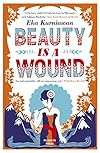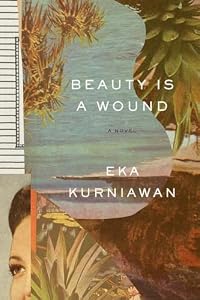
Beauty is a Wound
by Eka Kurniawan
On This Page
Description
"The English-language debut of Indonesia's greatest young novelist, Eka Kurniawan: "without a doubt the most original, imaginatively profound, and elegant writer of fiction in Indonesia today: its brightest and most unexpected meteorite" (Benedict Anderson). One afternoon on a weekend in May, Dewi Ayu rose from her grave after being dead for twenty-one years. So begins Beauty Is a Wound, an epic, sweeping, compulsively readable novel, combining history, satire, family tragedy, legend, humor, show more and romance in a sweeping polyphony. It is also a highly political book. Revolving around the beautiful Indo prostitute Dewi Ayu and her four daughters, various plotlines incorporate incest, murder, bestiality rape, insanity, monstrosity, and the often vengeful undead. Kurniawan's gleefully grotesque hyperbole functions as a scathing critique of his young nation's troubled past. The rapacious offhand greed of colonialism; the chaotic struggle for independence; the 1965 mass murders of perhaps a million "Communists," and the three decades of Suharto's despotic rule that followed. The bravura resilience on display here makes Beauty Is a Wound a luscious yet astringent product of the art blossoming since the fall of Suharto. Kurniawan's distinctive West Javanese voice will be entirely new to American readers, and its local sources (the all night shadow puppet plays, with their bawdy wit and epic scope; the famous local folk tales) will astonish, but Kurniawan draws as well on his favorite world writers, Melville, Gogol, Hamsun, and Marquez"-- show lessTags
Recommendations

























Member Recommendations
Member Reviews
Membaca Cantik Itu Luka bagaikan membaca kisah yang dekat dengan kepribadian bangsa sejalan dengan rincian sejarah yang apik. Novel ini memiliki konflik berlapis-lapis dalam rentang waktu sejak masa kolonial Belanda sampai Indonesia merdeka di Halimunda yang terletak di pinggiran pantai. Inilah kecerdasan Eka Kurniawan yang pertama: memunculkan sebuah daerah administrasi baru secara fantasi tapi berhasil memasukkannya dalam rincian sejarah Indonesia tanpa harus 'melukai' sejarah itu sendiri.
Kecerdasan penulis yang kedua menurut saya adalah bagaimana dia menceritakan bahwa: 1.) Sejarah akan terulang. 2.) Mental primitif sejak zaman kolonial tidak berhasil dihapus walaupun negara sudah merdeka dan Halimunda ikut merdeka. Bahwa kekerasan show more dan seks masih bahasa utama mengalahkan kecerdasan, diskusi yang baik dan keinginan untuk maju. Sejarah terulang kembali karena kolonial Belanda memporak porandakan Halimunda dengan kekerasan, kemudian terulang kembali ketika Jepang datang, lantas terulang kembali ketika perjuangan kemerdekaan, terus masih terulang ketika pemberantasan komunisme di Halimunda, dan akhirnya terulang ketika pembalasan dendam yang dilakukan oleh begundal-begundal Halimunda dipimpin Maman Gendeng, dibalas oleh Shodancho yang telah hidup melewati semua lintas kekerasan tersebut.
Seks terulang karena di zaman kolonial gundik menjadi komoditas, sedangkan di zaman Jepang pelacur dipakai untuk membuat tentara Jepang bersemangat, dan perpelacuran dipertahankan sampai Indonesia merdeka bahkan seakan-akan menjadi identitas Halimunda sendiri.
Tokoh-tokoh cerita ini bagaikan kekontrasan satu sama lain: 1.) Kamerad Kliwon, tampan dan pemberani bahkan jadi tokoh Partai Komunis terkemuka, diceritakan sebagai pemuda penakluk wanita dan akhirnya mati konyol setelah tak bisa setia dengan istrinya. 2.) Shodancho, sosok berpangkat militer yang lebih menyukai perang daripada masa damai sampai-sampai menaklukkan istrinya dengan cara serupa dengan perang. Pun akhirnya mati secara ironis oleh peliharaan-peliharaannya. 3.) Maman Gendeng, sosok bebal, preman yang semata-mata hanya menginginkan keluarga dan memang berniat insyaf, sekali lagi mudah menelusuri masa lalunya untuk membalaskan dendam meskipun akhirnya pergi dari dunia dengan cara lebih bermartabat daripada dua lelaki kuat lainnya. 4.) Alamanda, tahu betul kecantikan adalah senjata utama wanita, menggunakannya untuk mempermainkan pria dan akhirnya ia sendiri yang menderita akibat permainannya. Ironisnya lagi, ia menyembunyikan hal paling hina dari adiknya yang menyayanginya. 5.) Adinda, menyia-nyiakan kecantikannya untuk mencintai pria yang tidak mencintainya, akhirnya menderita karena suaminya meninggalkannya dan anaknya jadi lebih gila dari suaminya. 6.) Maya Dewi, anak terakhir pelacur Dewi Ayu yang begitu polos dan lugu, setelah berhasil menjinakkan begundal paling berbahaya di Halimunda justru melahirkan dan membesarkan anak yang sedemikian cantik tapi bodoh dan lupa memberikannya nasihat untuk melindungi diri. 7.) Ai, jatuh cinta kepada pria tapi gengsi dan akhirnya mencelakai diri sendiri. 8.) Krisan, tampan dan pemberani seperti ayahnya, tapi tak pernah belajar kesalahan ayahnya dan justru seperti mengulanginya semacam komedi amatir. 9.) Rengganis si Cantik, begitu cantik, polos dan disayangi ayah ibunya, tapi kecantikannya ternyata dibayar mahal dengan logika dan cara berpikirnya yang akhirnya membawanya pada celakanya sendiri. 10.) Dewi Ayu, hidup tanpa cinta dan harus mengandung rasa sakit sepanjang hidupnya, setelah mati pun masih harus melawan kutukan yang menghantui keluarganya.
Seperti sejarah, kutukan juga pada akhirnya akan terulang lagi dan lagi. show less
Kecerdasan penulis yang kedua menurut saya adalah bagaimana dia menceritakan bahwa: 1.) Sejarah akan terulang. 2.) Mental primitif sejak zaman kolonial tidak berhasil dihapus walaupun negara sudah merdeka dan Halimunda ikut merdeka. Bahwa kekerasan show more dan seks masih bahasa utama mengalahkan kecerdasan, diskusi yang baik dan keinginan untuk maju. Sejarah terulang kembali karena kolonial Belanda memporak porandakan Halimunda dengan kekerasan, kemudian terulang kembali ketika Jepang datang, lantas terulang kembali ketika perjuangan kemerdekaan, terus masih terulang ketika pemberantasan komunisme di Halimunda, dan akhirnya terulang ketika pembalasan dendam yang dilakukan oleh begundal-begundal Halimunda dipimpin Maman Gendeng, dibalas oleh Shodancho yang telah hidup melewati semua lintas kekerasan tersebut.
Seks terulang karena di zaman kolonial gundik menjadi komoditas, sedangkan di zaman Jepang pelacur dipakai untuk membuat tentara Jepang bersemangat, dan perpelacuran dipertahankan sampai Indonesia merdeka bahkan seakan-akan menjadi identitas Halimunda sendiri.
Tokoh-tokoh cerita ini bagaikan kekontrasan satu sama lain: 1.) Kamerad Kliwon, tampan dan pemberani bahkan jadi tokoh Partai Komunis terkemuka, diceritakan sebagai pemuda penakluk wanita dan akhirnya mati konyol setelah tak bisa setia dengan istrinya. 2.) Shodancho, sosok berpangkat militer yang lebih menyukai perang daripada masa damai sampai-sampai menaklukkan istrinya dengan cara serupa dengan perang. Pun akhirnya mati secara ironis oleh peliharaan-peliharaannya. 3.) Maman Gendeng, sosok bebal, preman yang semata-mata hanya menginginkan keluarga dan memang berniat insyaf, sekali lagi mudah menelusuri masa lalunya untuk membalaskan dendam meskipun akhirnya pergi dari dunia dengan cara lebih bermartabat daripada dua lelaki kuat lainnya. 4.) Alamanda, tahu betul kecantikan adalah senjata utama wanita, menggunakannya untuk mempermainkan pria dan akhirnya ia sendiri yang menderita akibat permainannya. Ironisnya lagi, ia menyembunyikan hal paling hina dari adiknya yang menyayanginya. 5.) Adinda, menyia-nyiakan kecantikannya untuk mencintai pria yang tidak mencintainya, akhirnya menderita karena suaminya meninggalkannya dan anaknya jadi lebih gila dari suaminya. 6.) Maya Dewi, anak terakhir pelacur Dewi Ayu yang begitu polos dan lugu, setelah berhasil menjinakkan begundal paling berbahaya di Halimunda justru melahirkan dan membesarkan anak yang sedemikian cantik tapi bodoh dan lupa memberikannya nasihat untuk melindungi diri. 7.) Ai, jatuh cinta kepada pria tapi gengsi dan akhirnya mencelakai diri sendiri. 8.) Krisan, tampan dan pemberani seperti ayahnya, tapi tak pernah belajar kesalahan ayahnya dan justru seperti mengulanginya semacam komedi amatir. 9.) Rengganis si Cantik, begitu cantik, polos dan disayangi ayah ibunya, tapi kecantikannya ternyata dibayar mahal dengan logika dan cara berpikirnya yang akhirnya membawanya pada celakanya sendiri. 10.) Dewi Ayu, hidup tanpa cinta dan harus mengandung rasa sakit sepanjang hidupnya, setelah mati pun masih harus melawan kutukan yang menghantui keluarganya.
Seperti sejarah, kutukan juga pada akhirnya akan terulang lagi dan lagi. show less
Se non fosse per un solo elemento, sarei qui a scrivere bene di questo romanzo: ha il sapore della grande saga familiare intrisa di realismo magico e, se vi piace il genere, Kurniawan è sicuramente un autore da tenere presente. Peccato per la massiccia e sgradevole presenza di stupri: non è un’esagerazione dire che quasi tutte le donne che compaiono in questo romanzo vengano violentate, alcune più di una volta. Capisco che faccia parte del racconto del colonialismo olandese e della sua violenza, ma non è l’impressione che ne ho ricavato io. A me è sembrato che Kurniawan minimizzasse la devastazione provocata dallo stupro e che per lui non sia niente più di un espediente letterario per portare avanti la trama.
Di certo non ha show more aiutato il fatto che la violenza venga romanticizzata, rendendola conseguenza “naturale” per donne molto belle, soprattutto se mostrano la loro bellezza senza pudore. Come se non bastasse, a questo si aggiunge una certa morbosità nella descrizione degli stupri che definire rivoltante è usare un eufemismo.
Se anche tutto questo volesse mettere in luce il passato coloniale e violento dell’Indonesia, secondo me fallisce nel suo intento perché come contraltare alla violenza non c’è una caratterizzazione delle donne che vada oltre all’importanza che hanno per i personaggi maschili. Anche quando Kurniawan porta avanti la storia dal punto di vista di una di loro sembra che gli uomini siano l’unico senso delle loro vite. Alla lunga, oltre a essere fastidioso, risulta anche noioso e ripetitivo: le donne di questa storia non se lo meritavano proprio. show less
Di certo non ha show more aiutato il fatto che la violenza venga romanticizzata, rendendola conseguenza “naturale” per donne molto belle, soprattutto se mostrano la loro bellezza senza pudore. Come se non bastasse, a questo si aggiunge una certa morbosità nella descrizione degli stupri che definire rivoltante è usare un eufemismo.
Se anche tutto questo volesse mettere in luce il passato coloniale e violento dell’Indonesia, secondo me fallisce nel suo intento perché come contraltare alla violenza non c’è una caratterizzazione delle donne che vada oltre all’importanza che hanno per i personaggi maschili. Anche quando Kurniawan porta avanti la storia dal punto di vista di una di loro sembra che gli uomini siano l’unico senso delle loro vite. Alla lunga, oltre a essere fastidioso, risulta anche noioso e ripetitivo: le donne di questa storia non se lo meritavano proprio. show less
A gorgeous book and beautifully translated. There are so many striking turns of phrase or images. This is firmly in the genre of magical realism since it starts with Dewi Ayu rising from the grave after being buried for 21 years. Anyone interested in Indonesia and its history would find this fascinating; anyone interested in beautiful writing would be entranced, at least for a time. Despite the beauty, I found my attention wandering as the story started to veer off into a hundred little detours. I think it's more me than the book, since right now I'm craving strong plots. It's well worth dipping into on a rainy day to see if it appeals...
Before I start, imagine you are near a beautiful ocean and enjoying the sunset. the play of wind, clouds and ochre sun beams and the sun in all its splendour.
All of a sudden the wind and clouds decide to go away, the sun is a giant blob in the horizon receding towards listless ocean.
All the beauty and magic is gone.
The book behaves like that, full of magic and beauty and all of sudden it is in rush, to finish various the strands of the story. It feels like sheer waste of all the beauty. All the strands and the stories seems to be in a hurry to be closed as soon as possible.
It surely reflects the age of author who was 26 when he wrote this (impatience of a youth who is bored by his own creations). This book leaves you satiated at the show more same time dissatisfied and empty.
The book definitely is to be read and author to be followed. At 26 he created such an achingly, evocative and magical book and I am sure when he matures he would be simply irresistible. It is a must read, for the sheer joy of discovering such a beautiful voice.
Personally for me it was a great read as Indonesia seemed so familiar. The mythology and characters are all known to me. There is huge influence of Hindu Mythology in Indonesia and i could easily relate to it. Do read this book and discover the history of Indonesia right from the Colonial time of Dutch to Japanese Invasion (WW) to Revolution and there on. Read about Love and hatred, love mercilessly torn apart and its revenge and realization that Beauty is a Wound. Traverse the story with myriad ghosts who rises up in the very first line of the book and its various characters who are driven by love, lust and hate and ego. show less
All of a sudden the wind and clouds decide to go away, the sun is a giant blob in the horizon receding towards listless ocean.
All the beauty and magic is gone.
The book behaves like that, full of magic and beauty and all of sudden it is in rush, to finish various the strands of the story. It feels like sheer waste of all the beauty. All the strands and the stories seems to be in a hurry to be closed as soon as possible.
It surely reflects the age of author who was 26 when he wrote this (impatience of a youth who is bored by his own creations). This book leaves you satiated at the show more same time dissatisfied and empty.
The book definitely is to be read and author to be followed. At 26 he created such an achingly, evocative and magical book and I am sure when he matures he would be simply irresistible. It is a must read, for the sheer joy of discovering such a beautiful voice.
Personally for me it was a great read as Indonesia seemed so familiar. The mythology and characters are all known to me. There is huge influence of Hindu Mythology in Indonesia and i could easily relate to it. Do read this book and discover the history of Indonesia right from the Colonial time of Dutch to Japanese Invasion (WW) to Revolution and there on. Read about Love and hatred, love mercilessly torn apart and its revenge and realization that Beauty is a Wound. Traverse the story with myriad ghosts who rises up in the very first line of the book and its various characters who are driven by love, lust and hate and ego. show less
This contemporary Indonesian novel depicts the history of the nation from World War II to the 1990s through a fictional port city as it goes through Japanese occupation, revolution against Dutch colonialism, Communist uprisings, massacres, and civil war. While it's a well-written and engaging novel, it's hard to keep reading through the depictions of rape, torture, and cruelty. Balancing these grim realities is a magical realism element which includes ghosts, curses, and reincarnation.
The book centers on Dewi Ayu, the beautiful and pragmatic prostitute, and her daughters. Three of her daughters, beautiful like their mother, end up married to local military commander, a mob boss, and a communist revolutionary. The last daughter, named show more Beauty, is cursed by her mother to be ugly to protect her from the suffering of her other daughters. And yet, all of these women, and their children, and the numerous other townspeople introduced in various tangential stories suffer and keep on suffering. It's almost too much to bear.
Favorite Passages:
The book centers on Dewi Ayu, the beautiful and pragmatic prostitute, and her daughters. Three of her daughters, beautiful like their mother, end up married to local military commander, a mob boss, and a communist revolutionary. The last daughter, named show more Beauty, is cursed by her mother to be ugly to protect her from the suffering of her other daughters. And yet, all of these women, and their children, and the numerous other townspeople introduced in various tangential stories suffer and keep on suffering. It's almost too much to bear.
Favorite Passages:
“What does it feel like to be dead?” asked Kyai Jahro. “Actually, it’s pretty fun. That’s the main reason why, out of everyone who dies, not one person chooses to come back to life again.” “But you came back to life,” said the kyai. “I came back just so I could tell you that.”show less
“Have you become a communist?” asked his mother, almost in despair. “Only a communist would be so gloomy.” “I’m in love,” said Kliwon to his mother. “That’s even worse!” She sat next to Kliwon and stroked his hair that was curly and growing long. “Well, go play your guitar under her bedroom window like you always do.”
This is a book that I never would have read if not for the Book Riot Read Harder challenge -- this one was for the "read a book by a Southeast Asian author" category.
This book was profane and magical and tragic and funny, but mostly tragic. Be forewarned that there is a lot of rape in this book. Not salaciously, but very matter-of-fact, which is its own kind of disturbing. But it's far from the only way people are horrible to each other in this story. This is an epic tale of revenge and revolution, curses and corruption, warriors and unrequited lovers. It is the story of a single family in a single town, even as it tells the modern history of Indonesia. It is infuriating and enthralling at the same time. It is masterfully written.
I hope show more that we see more English translations of Kurniawan's work. He clearly has a gift. show less
This book was profane and magical and tragic and funny, but mostly tragic. Be forewarned that there is a lot of rape in this book. Not salaciously, but very matter-of-fact, which is its own kind of disturbing. But it's far from the only way people are horrible to each other in this story. This is an epic tale of revenge and revolution, curses and corruption, warriors and unrequited lovers. It is the story of a single family in a single town, even as it tells the modern history of Indonesia. It is infuriating and enthralling at the same time. It is masterfully written.
I hope show more that we see more English translations of Kurniawan's work. He clearly has a gift. show less
The first book I have read in years that fits the description "compulsively readable." I truly could not put it down. It's a cosmic family story that also records a modern national history, belonging on the shelf with One Years of Solitude, Midnight's Children, or any of William Faulkner's dynastic novels. But it may be the saddest of any of those, in spite of its jokey, breezy narrative tone. As a reader you're not even given the satisfaction of an apocalyptic culmination at the novel's end, rather you're left with the idea that human life is inextinguishable but will always be the same: sex, brutal violence, and death, world without end. Since it is a cosmic history of a nation that remains in a state of suppressed horror because it show more has not reckoned with its recent past, that's an understandable takeaway. show less
Members
- Recently Added By
Published Reviews
ThingScore 50
Beauty is a Wound appears as a variegated beast: yes, like ‘great’ works of world literature; also vulgar; and low brow; and funny; and unconventional; and artfully unsettling; and too illogical; and too meandering; and too undisciplined; and too long.
added by rasdhar
"Female characters are almost always described in terms of their looks. We get a lot of tedious, unrealistic beauty that drives men insane or makes them homicidal or suicidal or all three. A lot of ugly old men end up married to a lot of lovely teenage virgins. Also I didn't much care for all the rape scenes, but maybe that's just me. Those things aside, this is an impressive, accomplished show more book. Gracefully translated by Annie Tucker, the writing is evocative and muscular, with particularly spicy descriptions and some wry humour." show less
added by rasdhar
Lists

Speculative Fiction from around the World
610 works; 17 members

Kirkus Starred Fiction Reviews of Books Published in 2015
310 works; 6 members

Kirkus Reviews Best Fiction of 2015
98 works; 6 members

Books Referenced by Montague's 1312: Among the Ultras
29 works; 1 member

Not the NYT list of top 100 21st century books
100 works; 6 members
Author Information

14 Works 1,107 Members
Eka Kurniawan was born on November 28, 1975 in Tasikmalaya, West Java, Indonesia. He studied philosophy at Gadjah Mada University, Yogyakarta. He writes novels, short stories, movie scripts and essays. His novels in English include, Beauty is a Wound and Man Tiger which won the 2016 Emerging Voices award for best novel. He also works as a show more journalist and designer. (Bowker Author Biography) show less
Some Editions
Awards and Honors
Awards
Distinctions
Series
Belongs to Publisher Series
Gallimard, Folio (6644)
Common Knowledge
- Canonical title
- Beauty is a Wound
- Original title
- Cantik Itu Luka
- Original publication date
- 2015 (English) (English); 2002
- People/Characters
- Dewi Ayu
- Important places
- Halimunda, Java, Indonesia
- Important events
- Dutch Colonialism; World War II; Japanese Occupation; Indonesian killings of 1965–66
- Epigraph
- Having cleaned his armor and made a full helmet out of a simple headpiece, and having given a name to his horse and decided on one for himself, he realized that the only thing left for him to do was to find a lady to love, fo... (show all)r the knight errant without a lady-love was a tree without leaves or fruit, a body without a soul. -Miguel de Cervantes, Don Quixote
- First words
- One afternoon on a weekend in March, Dewi Ayu rose from her grave after being dead for twenty-one years. A shepherd boy, awakened from his nap under a frangipani tree, peed in his shorts and screamed, and his four sheep ran o... (show all)ff haphazardly in between stones and wooden grave markers as if a tiger had been thrown in their midst. It all started with a noise coming from an old gravesite with an unmarked tombstone, covered in knee-high grass, but everybody knew it was Dewi Ayu's grave. She had passed away at fifty-two, rose again after being dead for twenty-ne years, and from that point forward nobody knew exactly how to calculate her age. -Chapter 1
- Original language
- Indonesian
- Canonical DDC/MDS
- 899.22132
- Canonical LCC
- PL5089.K78 C3613
Classifications
- Genres
- General Fiction, Fiction and Literature, Fantasy
- DDC/MDS
- 899.22132 — Literature & rhetoric Literatures of other languages Literatures of non-Austronesian languages of Oceania, of Austronesian languages, of miscellaneous languages Malay and Austronesian languages Indonesian languages Indonesian (Bahasa Indonesia) Indonesian fiction 1900–2000
- LCC
- PL5089 .K78 .C3613 — Language and Literature Languages and literatures of Eastern Asia, Africa, Oceania Languages of Eastern Asia, Africa, Oceania Languages of Oceania Malayan (Indonesian) languages
- BISAC
Statistics
- Members
- 607
- Popularity
- 47,860
- Reviews
- 17
- Rating
- (3.60)
- Languages
- 12 — Catalan, Czech, Dutch, English, Finnish, French, German, Indonesian, Italian, Portuguese (Portugal), Russian, Spanish
- Media
- Paper, Audiobook, Ebook
- ISBNs
- 35
- ASINs
- 4