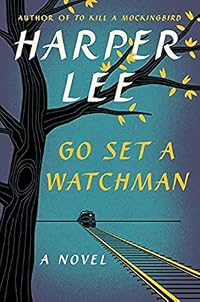
On This Page
Description
Performed by Reese Witherspoon#1 New York Times Bestseller
"Go Set a Watchman is such an important book, perhaps the most important novel on race to come out of the white South in decades." — New York Times
A landmark novel by Harper Lee, set two decades after her beloved Pulitzer Prize–winning masterpiece, To Kill a Mockingbird.
Twenty-six-year-old Jean Louise Finch—"Scout"—returns home to Maycomb, Alabama from New York City to visit her aging father, Atticus. Set against the show more backdrop of the civil rights tensions and political turmoil that were transforming the South, Jean Louise's homecoming turns bittersweet when she learns disturbing truths about her close-knit family, the town, and the people dearest to her. Memories from her childhood flood back, and her values and assumptions are thrown into doubt. Featuring many of the iconic characters from To Kill a Mockingbird, Go Set a Watchman perfectly captures a young woman, and a world, in painful yet necessary transition out of the illusions of the past—a journey that can only be guided by one's own conscience.
Written in the mid-1950s, Go Set a Watchman imparts a fuller, richer understanding and appreciation of the late Harper Lee. Here is an unforgettable novel of wisdom, humanity, passion, humor, and effortless precision—a profoundly affecting work of art that is both wonderfully evocative of another era and relevant to our own times. It not only confirms the enduring brilliance of To Kill a Mockingbird, but also serves as its essential companion, adding depth, context, and new meaning to an American classic.
. show less
Tags
Recommendations


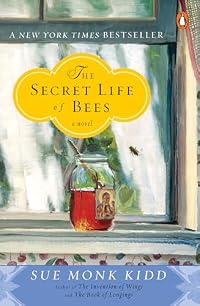
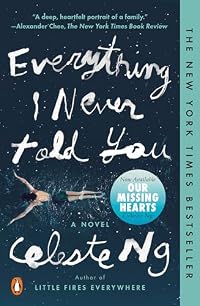
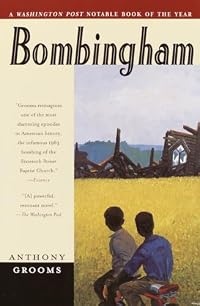
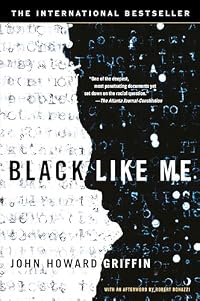
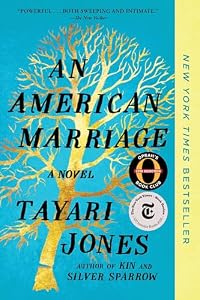
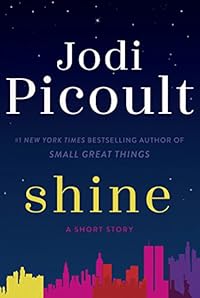
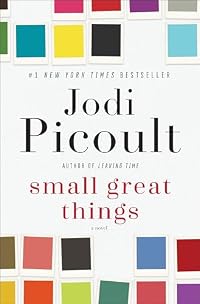
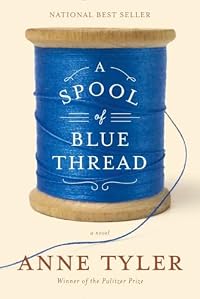
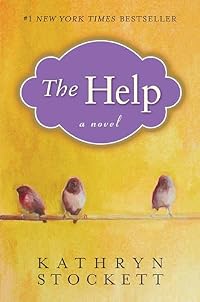
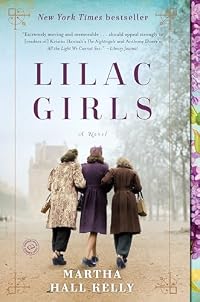
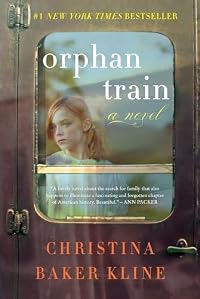
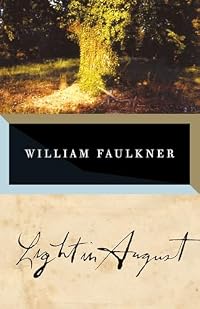


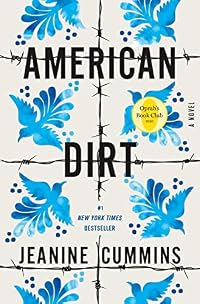
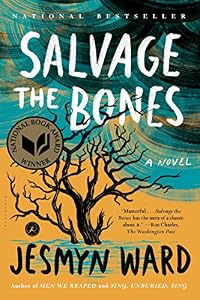
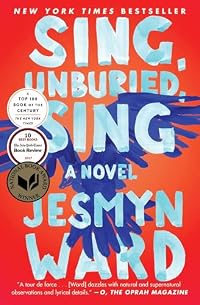
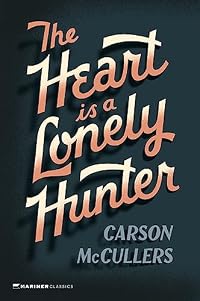
Member Recommendations
JuliaMaria Harper Lee hat nur zwei Bücher veröffentlicht. Das zweite - "Gehe hin, stelle einen Wächter" - erst mit 90 Jahren - auch wenn es schon früher geschrieben wurde. Es war die literarische Sensation des Jahres 2015.
KayCliff Go Set a Watchman is the sequel to To Kill a Mocking Bird
132
Cecrow Another story of the south by an author with similar background.
52
BookshelfMonstrosity Moving and bittersweet, these Southern Gothic novels portray women pushed to their emotional limits as they return home and re-establish old relationships. Both are literary and character-driven, with a thoughtful style that also references mid-twentieth-century events and attitudes.
20
BookshelfMonstrosity Although Go Set a Watchman takes a more humorous approach than Four Spirits, both novels, set in the mid-twentieth-century South, spotlight the effects of the Civil Rights Movement on individuals. They are captivating, character-driven cameos representing society as a whole.
andrewcorser Further insight into the Southern States
vwinsloe Southern values shortly before the civil rights era
Member Reviews
Two days ago, I was standing in the bookstore, and I literally picked up and put down this book at least three times before I finally decided to purchase and read it. I was that nervous.
And, if I'm completely honest, I dove into this novel fully expecting to hate it.
Instead, I fell in love with Harper Lee all over again.
I've read a lot about the concerns that Lee didn't write it, or that she didn't want it published, or that it shouldn't have been published. But just a few sentences in, and I was swept up into the town of Maycomb all over again.
All the characters are here, but now they're grown, though we get some beautiful remembrances of them in their youth.
And then there's the point when Lee first mentions the events that are show more detailed in To Kill a Mockingbird and I remember thinking, okay, this is where she kills that gorgeous novel of my youth.
And in a way, she did, but mostly, she did not. No, instead, she added a whole different, and nuanced layer over it. It's a layer that tends to rough up the gloss of that earlier novel a bit, but when the story of Watchman kicks in, it's simply fascinating to watch it unfold and, at the end, without giving away any spoilers, I feel Lee ultimately gave us a better, more realistic, and yet still very hopeful ending to Jean Louise "Scout" Finch moving into adulthood.
Along the way, Lee treats the reader to some absolutely beautiful, sometimes haunting writing. This novel is eminently quotable, but the line that I think resonated with me the most was the one I found in the last few pages. "The time your friends need you is when they're wrong, Jean Louise. They don't need you when they're right."
In the end, instead of being profoundly disappointed by this novel as I expected to be, I find myself profoundly disappointed that we will never get another story from Harper Lee. show less
And, if I'm completely honest, I dove into this novel fully expecting to hate it.
Instead, I fell in love with Harper Lee all over again.
I've read a lot about the concerns that Lee didn't write it, or that she didn't want it published, or that it shouldn't have been published. But just a few sentences in, and I was swept up into the town of Maycomb all over again.
All the characters are here, but now they're grown, though we get some beautiful remembrances of them in their youth.
And then there's the point when Lee first mentions the events that are show more detailed in To Kill a Mockingbird and I remember thinking, okay, this is where she kills that gorgeous novel of my youth.
And in a way, she did, but mostly, she did not. No, instead, she added a whole different, and nuanced layer over it. It's a layer that tends to rough up the gloss of that earlier novel a bit, but when the story of Watchman kicks in, it's simply fascinating to watch it unfold and, at the end, without giving away any spoilers, I feel Lee ultimately gave us a better, more realistic, and yet still very hopeful ending to Jean Louise "Scout" Finch moving into adulthood.
Along the way, Lee treats the reader to some absolutely beautiful, sometimes haunting writing. This novel is eminently quotable, but the line that I think resonated with me the most was the one I found in the last few pages. "The time your friends need you is when they're wrong, Jean Louise. They don't need you when they're right."
In the end, instead of being profoundly disappointed by this novel as I expected to be, I find myself profoundly disappointed that we will never get another story from Harper Lee. show less
I'm going to preface this with a disclaimer: it's been years since I last read To Kill a Mockingbird. Probably was some time in high school, so at least eight years (since I did almost no free reading in junior or senior year).
The most important thing to know is that, yes, it's a sequel. Somehow that fact slipped by me--or maybe it was reading a New York Times article that mentioned Harper Lee's original TKAM manuscript that muddled me. It's hard to imagine the crucial plot twist making much sense if you haven't read TKAM, but I do think there's just enough exposition about past events to let someone who only roughly knows TKAM's second act to enjoy this book. Anywho, now that the obvious is done...
I am torn in two directions.
On the show more one hand, I really liked the style of it--I enjoyed the writing, the easy transitions from casual Maycomb history to wry external commentary to close personal experiences to first person thoughts. No real demarcation of those divisions. The abrupt switches to first person would normally drive me nuts, but I adapted so quickly that I barely noticed.
The humor was spot-on. I'm a complete fool for the so-softly-sarcastic-you-might-think-it's-serious style of writing. The absolute highlights, for me, were the flashbacks to Scout's childhood, though that's probably my love of TKAM showing. They were hilarious and well-placed to reflect on the present action only when you thought about it--otherwise, they could easily seem like random asides.
One odd note: I have a strong memory of there being two "parts" in TKAM. I don't know if this is accurate, but it's something I've remembered/thought I remembered for years...which makes it interesting that GSAW is divided into at least a half dozen "parts". Admittedly, I didn't pay enough attention to each part's beginning to draw conclusions about their importance, though the endings did seem to consistently land with a punch.
I honestly have no memory of Henry Clinton (sort of explained by the fact that he worked all summer) or Uncle Jack, and very little of Aunt Alexandra from TKAM. Nevertheless, I loved how these characters were presented and built in the book.
Now the plot, on the other hand...
First of all, no matter how much space I take up explaining the "bad", this didn't anywhere near keep me from enjoying the romp through an old familiar world. So bear that in mind!
Let's start with the fact that the major "raison d'etre", the key problem, doesn't show up until halfway through the book. Odd, but not bad, especially considering how much I loved the explorations and elaborations of the Maycomb we met in TKAM.
Next, we have heavy-handedness. Jean Louise's/Scout's life changing discovery about Atticus happens not only in the same building, but in the same exact place that she sat to watch him defend Tom in TKAM. The "life lessons" are laid on pretty thick at the end, in large part because they take place in a conversation--fortunately the setup and strong personalities help take some of the sting out of the lecture.
(I'm putting a spoiler tag here, but if you've been reading reviews, you probably know the major plot twist.)
I'm sure you expect my chief complaint to be the retconing of Atticus's character. It's not. In fact, I don't even consider it reconing. I would not find it at all unbelievable that an older white man of considerable privilege in the 1950s South would be racist. I don't even find it unbelievable that this particular character is racist--it's explained in a way that makes sense (though obviously I'll want to reread TKAM to confirm whether it's accurate).
Let me put it this way: I used my Ravenclaw bookmark for this book on a whim and I found it utterly appropriate. The way I see it, in raw thought after a first reading, Atticus is the kind of Ravenclaw that could go bad if JKR wrote Harry Potter today: so focused on the higher-order intellectual ideals of the Constitution and the immediate overwhelming odds the "Negros" face that he neglects the humanity involved. People are so much more complicated than ideas, especially when you try to lump them into as huge a group as a "race". To steal a comparison from an author I'm signing up, Atticus and many Ravenclaws are Apollonian, pursuing order and reason, while a group of people is by its very nature Dionysian: chaotic, changeable, difficult to define. A good piece of art, says Nietzsche, is a balance of the two, and the idea can be applied to a character.
Which brings me to my biggest beef with the book: Jean Louise's "color blindness". I loved her character to bits (despite a few feminist critiques like her lack of life outside Maycomb), but this was a major speed bump. For those of you who don't yet know, colorblindness doesn't exist. It's an ideal invented by privileged white people (most of them probably kind and good-intentioned) that is so far from being attainable in our society right now that it's frankly insulting to insist that you've reached it.
The attitudes that go into racism are so pervasive and pernicious that there's just no way to avoid them. Even if we take it as fact that Jean Louise/Scout ignored everything said about black people by anyone accept her father, his racism still would have bled through to her. Yes, he was equally kind to everyone--but you can be equally kind without behaving equally. The difference would have been subtle, but it would have been enough for an (apparently selectively) impressionable young child: the difference between the way Atticus handled the case of a "white trash" person who he believed had the potential to better themselves in their lifetime and a black person who he believed could only encounter a ceiling, regardless of circumstance, is subtle but real. Any oppressed group can tell you this--even if you don't have your token black friend, you undoubtedly know at least one woman. Heck, just look at the differences in the way Atticus treats Jean Louise and Henry!
Jean Louise is, herself, as much of an Apollonian as her father. Lee goes so far to make this point that she strays right past the suspension of disbelief just so Uncle Jack can point out all the ways that Jean Louise is also as much of a bigot as her father. Which, incidentally, makes me a bigot as well. So be it. My bigotry, if spread, could help save lives.
That's what it all comes down to: This is not a book for our time. The cover flap states that it was written in the 50s, and the book's message is something you wouldn't be surprised to find in a time capsule. But today it's just too raw. We watch the ongoing genocide of black Americans on the news. So what if Atticus himself would never pull the trigger? So what if most people wouldn't? The church shooting in Charleston showed us exactly what that insidiously "innocent" brand of bigotry sows: if no one protests the casual and/or deliberate dehumanization of a large portion of the population, how can you be surprised when one person decides it's okay to treat that group worse than most people would treat animals?
Jean Louise's colorblindness is impossible. Her loud and public rage against the casual acceptance of racism is not. If only Lee's message wasn't one of leveling extremes into acceptance--if only the revelation of Atticus's racism was not so overdone, Jean Louise's wake-up was her realization that she's not colorblind, the moral was not accepting inequality but balancing true equality between Apollonian and Dionysian ideals--this might have been a powerful book for our time. Instead, it's a well-written and engaging sequel that depends on its readers' Atticus- and Jean Louise-like passivity and desire for a neatly ordered ending to deliver its lukewarm moral.
show less
The most important thing to know is that, yes, it's a sequel. Somehow that fact slipped by me--or maybe it was reading a New York Times article that mentioned Harper Lee's original TKAM manuscript that muddled me. It's hard to imagine the crucial plot twist making much sense if you haven't read TKAM, but I do think there's just enough exposition about past events to let someone who only roughly knows TKAM's second act to enjoy this book. Anywho, now that the obvious is done...
I am torn in two directions.
On the show more one hand, I really liked the style of it--I enjoyed the writing, the easy transitions from casual Maycomb history to wry external commentary to close personal experiences to first person thoughts. No real demarcation of those divisions. The abrupt switches to first person would normally drive me nuts, but I adapted so quickly that I barely noticed.
The humor was spot-on. I'm a complete fool for the so-softly-sarcastic-you-might-think-it's-serious style of writing. The absolute highlights, for me, were the flashbacks to Scout's childhood, though that's probably my love of TKAM showing. They were hilarious and well-placed to reflect on the present action only when you thought about it--otherwise, they could easily seem like random asides.
One odd note: I have a strong memory of there being two "parts" in TKAM. I don't know if this is accurate, but it's something I've remembered/thought I remembered for years...which makes it interesting that GSAW is divided into at least a half dozen "parts". Admittedly, I didn't pay enough attention to each part's beginning to draw conclusions about their importance, though the endings did seem to consistently land with a punch.
I honestly have no memory of Henry Clinton (sort of explained by the fact that he worked all summer) or Uncle Jack, and very little of Aunt Alexandra from TKAM. Nevertheless, I loved how these characters were presented and built in the book.
Now the plot, on the other hand...
First of all, no matter how much space I take up explaining the "bad", this didn't anywhere near keep me from enjoying the romp through an old familiar world. So bear that in mind!
Let's start with the fact that the major "raison d'etre", the key problem, doesn't show up until halfway through the book. Odd, but not bad, especially considering how much I loved the explorations and elaborations of the Maycomb we met in TKAM.
Next, we have heavy-handedness. Jean Louise's/Scout's life changing discovery about Atticus happens not only in the same building, but in the same exact place that she sat to watch him defend Tom in TKAM. The "life lessons" are laid on pretty thick at the end, in large part because they take place in a conversation--fortunately the setup and strong personalities help take some of the sting out of the lecture.
(I'm putting a spoiler tag here, but if you've been reading reviews, you probably know the major plot twist.)
Let me put it this way: I used my Ravenclaw bookmark for this book on a whim and I found it utterly appropriate. The way I see it, in raw thought after a first reading, Atticus is the kind of Ravenclaw that could go bad if JKR wrote Harry Potter today: so focused on the higher-order intellectual ideals of the Constitution and the immediate overwhelming odds the "Negros" face that he neglects the humanity involved. People are so much more complicated than ideas, especially when you try to lump them into as huge a group as a "race". To steal a comparison from an author I'm signing up, Atticus and many Ravenclaws are Apollonian, pursuing order and reason, while a group of people is by its very nature Dionysian: chaotic, changeable, difficult to define. A good piece of art, says Nietzsche, is a balance of the two, and the idea can be applied to a character.
Which brings me to my biggest beef with the book: Jean Louise's "color blindness". I loved her character to bits (despite a few feminist critiques like her lack of life outside Maycomb), but this was a major speed bump. For those of you who don't yet know, colorblindness doesn't exist. It's an ideal invented by privileged white people (most of them probably kind and good-intentioned) that is so far from being attainable in our society right now that it's frankly insulting to insist that you've reached it.
The attitudes that go into racism are so pervasive and pernicious that there's just no way to avoid them. Even if we take it as fact that Jean Louise/Scout ignored everything said about black people by anyone accept her father, his racism still would have bled through to her. Yes, he was equally kind to everyone--but you can be equally kind without behaving equally. The difference would have been subtle, but it would have been enough for an (apparently selectively) impressionable young child: the difference between the way Atticus handled the case of a "white trash" person who he believed had the potential to better themselves in their lifetime and a black person who he believed could only encounter a ceiling, regardless of circumstance, is subtle but real. Any oppressed group can tell you this--even if you don't have your token black friend, you undoubtedly know at least one woman. Heck, just look at the differences in the way Atticus treats Jean Louise and Henry!
Jean Louise is, herself, as much of an Apollonian as her father. Lee goes so far to make this point that she strays right past the suspension of disbelief just so Uncle Jack can point out all the ways that Jean Louise is also as much of a bigot as her father. Which, incidentally, makes me a bigot as well. So be it. My bigotry, if spread, could help save lives.
That's what it all comes down to: This is not a book for our time. The cover flap states that it was written in the 50s, and the book's message is something you wouldn't be surprised to find in a time capsule. But today it's just too raw. We watch the ongoing genocide of black Americans on the news. So what if Atticus himself would never pull the trigger? So what if most people wouldn't? The church shooting in Charleston showed us exactly what that insidiously "innocent" brand of bigotry sows: if no one protests the casual and/or deliberate dehumanization of a large portion of the population, how can you be surprised when one person decides it's okay to treat that group worse than most people would treat animals?
Jean Louise's colorblindness is impossible. Her loud and public rage against the casual acceptance of racism is not. If only Lee's message wasn't one of leveling extremes into acceptance--if only the revelation of Atticus's racism was not so overdone, Jean Louise's wake-up was her realization that she's not colorblind, the moral was not accepting inequality but balancing true equality between Apollonian and Dionysian ideals--this might have been a powerful book for our time. Instead, it's a well-written and engaging sequel that depends on its readers' Atticus- and Jean Louise-like passivity and desire for a neatly ordered ending to deliver its lukewarm moral.
The time your friends need you is when they’re wrong.
In 1957 Tay Hohoff, literary editor, judged this book to be unfit for publication as it was "more a series of anecdotes than a fully conceived novel". If the book in any way resembled what was published last year she couldn't have been more wrong. There are no superfluous lines or chapters or stories in this book, and every separate anecdote connects directly with what came before and after it, as well as everything else in the book. It is hilariously funny in places. It is beautiful. It is poignant. It is eye-opening.
I am glad they didn't rush to publish it, because it means we got To Kill a Mocking Bird out of it, but it was a crime against the entire world that they discouraged show more her from finishing it and publishing it as Go Set a Watchman first day. It is an amazing book in its own right, just because something isn't best-seller material doesn't mean it isn't fit to be published. It would have had exactly the type of small but far-reaching success that she wanted.
The book needed a couple of little things, the parts that repeat or contradict To Kill a Mocking Bird needed to be fixed, and Jean Louise's views on race could be more well developed. For example, racism, the central theme in To Kill a Mocking bird, ends up being almost a McGuffin here. She concedes points she does not need to concede. The fact that some of these things are destroyed later does not stop people who were too angry to read on quoting them out of context and using them to attack the book.
So it's unfinished. But unfinished? Unfinished like The Trial is "unfinished".
I learned a lot from this book. Most importantly I learned the dictionary definition of bigot, that I am a turnip-sized one. We are living in a time when people passionately ignore opposing views, and assume anyone with them is pure evil. Few are willing to quietly and calmly, over time, help their friends to see the truth.
[spoiler]
.
.
.
People are upset with this book because they can't deal with the cognitive dissonance that Jean Louise has to deal with. Good people can be wrong and have loathsome views, including you, and me, and Jean Louise and Atticus. If you can't accept that you are exactly who this book was trying to reach. If you find it difficult to deal with it, and you want help, this book gives you some tools to deal with it.
Jean Louise's own ambivalence is tearing her apart. She loves Henry, but her family say he is of a lower order of human being. She could live with that, but could she live in Maycomb, surrounded by people who don't think like her? A lot of the vitriol spewed at this book comes from people interpreting the ending as Jean Louise acquiescing and deciding that prejudice isn't so bad after all. There is nothing to suggest this. Her uncle does not say she needs to come round to everyone else's way of thinking, he says she isn't alone and the people who think like her need allies.
Scout, all grown up, loses her real mother (Cal) and her father (Atticus) to racism, and she is shown the way to get them back.
[/spoiler] show less
In 1957 Tay Hohoff, literary editor, judged this book to be unfit for publication as it was "more a series of anecdotes than a fully conceived novel". If the book in any way resembled what was published last year she couldn't have been more wrong. There are no superfluous lines or chapters or stories in this book, and every separate anecdote connects directly with what came before and after it, as well as everything else in the book. It is hilariously funny in places. It is beautiful. It is poignant. It is eye-opening.
I am glad they didn't rush to publish it, because it means we got To Kill a Mocking Bird out of it, but it was a crime against the entire world that they discouraged show more her from finishing it and publishing it as Go Set a Watchman first day. It is an amazing book in its own right, just because something isn't best-seller material doesn't mean it isn't fit to be published. It would have had exactly the type of small but far-reaching success that she wanted.
The book needed a couple of little things, the parts that repeat or contradict To Kill a Mocking Bird needed to be fixed, and Jean Louise's views on race could be more well developed. For example, racism, the central theme in To Kill a Mocking bird, ends up being almost a McGuffin here. She concedes points she does not need to concede. The fact that some of these things are destroyed later does not stop people who were too angry to read on quoting them out of context and using them to attack the book.
So it's unfinished. But unfinished? Unfinished like The Trial is "unfinished".
I learned a lot from this book. Most importantly I learned the dictionary definition of bigot, that I am a turnip-sized one. We are living in a time when people passionately ignore opposing views, and assume anyone with them is pure evil. Few are willing to quietly and calmly, over time, help their friends to see the truth.
[spoiler]
.
.
.
People are upset with this book because they can't deal with the cognitive dissonance that Jean Louise has to deal with. Good people can be wrong and have loathsome views, including you, and me, and Jean Louise and Atticus. If you can't accept that you are exactly who this book was trying to reach. If you find it difficult to deal with it, and you want help, this book gives you some tools to deal with it.
Jean Louise's own ambivalence is tearing her apart. She loves Henry, but her family say he is of a lower order of human being. She could live with that, but could she live in Maycomb, surrounded by people who don't think like her? A lot of the vitriol spewed at this book comes from people interpreting the ending as Jean Louise acquiescing and deciding that prejudice isn't so bad after all. There is nothing to suggest this. Her uncle does not say she needs to come round to everyone else's way of thinking, he says she isn't alone and the people who think like her need allies.
Scout, all grown up, loses her real mother (Cal) and her father (Atticus) to racism, and she is shown the way to get them back.
[/spoiler] show less
Please allow me to begin with a disclaimer. To Kill A Mockingbird is my favorite book. I read it for the first time, like many of us, in high school literature. I was in the honors class that term reading alongside the more well-to-do, predominantly white students of the school (class divides society in many ways that are often unquestioned), and I suddenly understood writing as a living substance extraordinarily exquisite. It is beauty that comes from themes, questions, risk, hurt, laughter, awareness, politics, faith, reality, hate, and love. I realized a book can raise one's consciousness to ideas and ideals never yet considered. For the first time I understood as a reader one struggles, rejoices, questions, decides, embraces, show more fights, agrees, and disputes. To Kill A Mockingbird touched my soul, cliché as it may sound, in a way that knocked me hard and laid me flat on the floor. I have never recovered. Every book I read, every book I rate, is placed in comparison to To Kill A Mockingbird. Following my reviews on Goodreads reveals that no book has made five stars in my ratings. That rating is reserved for To Kill A Mockingbird. I await the day when another book touches me as much.
Go Set A Watchman did not touch me as did To Kill A Mockingbird. However, I do not want anyone to read my comment only to jump on the disappointed bandwagon of woeful reviews that have garnered media space about the book. This book is beautiful. I am going to say this again. This book is beautiful. It is Ms. Lee's completion of the story of Scout Finch that needed to have its audience.
By now, everyone who follows the world of books knows Go Set A Watchman reveals Atticus Finch is a racist. Most reviews focus on this point and lament the loss of their icon...of their God. One reviewer I heard yesterday on NPR's The Takeaway stated how he felt incomplete with the ending because he wanted Atticus to say that all that was revealed was to purpose rather than a personal truth − that a happy ending was indeed secured with the reviewer's dear Atticus intact. I wonder if such reviewers cannot see the book except as a reflection of To Kill A Mockingbird. Have they placed upon its shoulders too much expectation and pressure? Now that I have read the book, I feel concentrating on this lamented loss is selfish of reviewers and, I believe, misses Ms. Lee's bigger point. The two Atticus Finch’s, the racist and the man who lives his life by justice, can co-exist. Fairness and equality do not necessarily co-habitate easily or cleanly in someone’s belief system. There exists justice and justice, right and right.
To read Go Set A Watchman requires us to reflect on ourselves. How exactly did we see our families when we are young? Was your dad your hero and God, as Atticus was Scout's? How many have experienced a wave of skeletons tumbling out of closets once the matriarch and/or patriarch of the family had died? All of a sudden, everything thought known about those who raised us is put into question. Did we accurately see what we witnessed? Did we see what we wanted to see? The truth is often hard to accept instead leaving us dazed, confused, and very often, angry. Do we cut off our family, or do we still love them when the truth is revealed and our heroes and Gods become human?
We must remember that no matter who Atticus was, and he appears to be a very complicated character (as complicated as any man or woman in existence), the way Scout experienced and witnessed Atticus developed her into the person she was — someone who did not run and who believed in equality. Should Atticus be chastised or applauded for Scout’s development? I think that is as difficult a question as the racial question in America itself. But, I believe in this book Harper Lee did what she needed to do. She made Atticus Finch human and birthed the rest of us into our own person to stand on our own two feet − and it was a bloody, violent, painful risk, but a risk needed. show less
Go Set A Watchman did not touch me as did To Kill A Mockingbird. However, I do not want anyone to read my comment only to jump on the disappointed bandwagon of woeful reviews that have garnered media space about the book. This book is beautiful. I am going to say this again. This book is beautiful. It is Ms. Lee's completion of the story of Scout Finch that needed to have its audience.
By now, everyone who follows the world of books knows Go Set A Watchman reveals Atticus Finch is a racist. Most reviews focus on this point and lament the loss of their icon...of their God. One reviewer I heard yesterday on NPR's The Takeaway stated how he felt incomplete with the ending because he wanted Atticus to say that all that was revealed was to purpose rather than a personal truth − that a happy ending was indeed secured with the reviewer's dear Atticus intact. I wonder if such reviewers cannot see the book except as a reflection of To Kill A Mockingbird. Have they placed upon its shoulders too much expectation and pressure? Now that I have read the book, I feel concentrating on this lamented loss is selfish of reviewers and, I believe, misses Ms. Lee's bigger point. The two Atticus Finch’s, the racist and the man who lives his life by justice, can co-exist. Fairness and equality do not necessarily co-habitate easily or cleanly in someone’s belief system. There exists justice and justice, right and right.
To read Go Set A Watchman requires us to reflect on ourselves. How exactly did we see our families when we are young? Was your dad your hero and God, as Atticus was Scout's? How many have experienced a wave of skeletons tumbling out of closets once the matriarch and/or patriarch of the family had died? All of a sudden, everything thought known about those who raised us is put into question. Did we accurately see what we witnessed? Did we see what we wanted to see? The truth is often hard to accept instead leaving us dazed, confused, and very often, angry. Do we cut off our family, or do we still love them when the truth is revealed and our heroes and Gods become human?
We must remember that no matter who Atticus was, and he appears to be a very complicated character (as complicated as any man or woman in existence), the way Scout experienced and witnessed Atticus developed her into the person she was — someone who did not run and who believed in equality. Should Atticus be chastised or applauded for Scout’s development? I think that is as difficult a question as the racial question in America itself. But, I believe in this book Harper Lee did what she needed to do. She made Atticus Finch human and birthed the rest of us into our own person to stand on our own two feet − and it was a bloody, violent, painful risk, but a risk needed. show less
Regardless of all the hoopla and sense of betrayal felt by many fans of To Kill a Mockingbird, this novel stands well on its own. Actually, the betrayal felt by Scout when she returns home as an adult and realizes that her father, her best friend, and her beloved community are not what she thought mirrors the reaction of readers who don't want their image of Atticus Finch destroyed. The ambiguities portrayed, combined with Scout's coming-of-age story (even though she's an adult), have universal meaning and provide much food for thought. Lee's writing is beautiful in parts, and unfortunately somewhat didactic in other places, but on the whole this is a strong novel.
This is a very fine debut novel, written by a woman in her late twenties. It would have been a very fine second or third novel too. It doesn't feel like a debut. It is intelligent and perceptive, and has maturity. 'To Kill A Mockingbird' had it been published after this book, would still likely have trumped it, but I suspect ultimately, both novels will sit in the Literary cannon on reasonably equal terms for different reasons.
This novel is not only a novel about race, but a novel about growth into adulthood, and the difficult lessons it requires.
The reason this novel was not accepted for publication is probably because it held too truthful a mirror up to the face of the society it evolved out of.
As a Brit, perhaps I am not as steeped show more in 'To Kill A Mockingbird', though I have read it three times, so can separate myself from it perhaps. I was put off by all the brouhaha on the discovery of 'Watchman' and only picked it up after a couple of friends assured me it was safe. Of course, Gregory Peck remained my Atticus, even in his broader guise.
Lee always said that Mockingbird was the only novel she had in her, the unearthing of this novel proves otherwise. I hope that she has been deceiving us in saying she has written nothing more. I for one would love to spend more time with Dr Finch. And what did Jean Louise do next? Not to mention meeting new characters altogether. Well, a gal can dream. show less
This novel is not only a novel about race, but a novel about growth into adulthood, and the difficult lessons it requires.
The reason this novel was not accepted for publication is probably because it held too truthful a mirror up to the face of the society it evolved out of.
As a Brit, perhaps I am not as steeped show more in 'To Kill A Mockingbird', though I have read it three times, so can separate myself from it perhaps. I was put off by all the brouhaha on the discovery of 'Watchman' and only picked it up after a couple of friends assured me it was safe. Of course, Gregory Peck remained my Atticus, even in his broader guise.
Lee always said that Mockingbird was the only novel she had in her, the unearthing of this novel proves otherwise. I hope that she has been deceiving us in saying she has written nothing more. I for one would love to spend more time with Dr Finch. And what did Jean Louise do next? Not to mention meeting new characters altogether. Well, a gal can dream. show less
Initial reaction: what in the blue fuck did i just read.
TL,DR: sometimes some racist people are more racist than other racist people.
Also, the above.
This was just a hot mess. For about the first 120-130 pages it trundled along sort-of pleasantly. Fortunately, I'd been spoiled for what was coming. Now - I don't usually hold with spoilers. However, in this situation, I'm glad I was well prepared. There are some below, ish, so don't read on if you want to go in blind.
Like I said, the first almost-half is fine. The writing is shaky, but I expected that. After all, it had never been properly edited. I liked the way the relationship between Henry and Scout (Jean show more Louise is way too much of a mouthful [handful?] to type) was built up, and though it was meandering, I was happy to putter along at a glacial pace. It was what I expected, and that was fine. And I mean, I am always here for the "going-back-to-your-small-hometown" story. I live it once a year, every year. This wasn't a particularly interesting example of the genre, but I put that more down to the lack of editing than anything else.
Then, stuff started happening, and I didn't like it.
I've been spending some time trying to think about the best way to articulate my problem with the part of the book that deals with the differences between Scout and the rest of Maycomb (well, those people portrayed directly in the book) with respect to their views on race. It's a thorny issue, and one I don't have direct experience of in this particular context as both a white person and a non-American. If I'm wrong in anything I say following this, please do point it out to me.
One of the biggest problems in the second half of the book is the dialogue. Characters speechify alarmingly, taking paragraphs and paragraphs to go into great detail about everything that is wrong with black people. This just feels utterly unnecessary. I got the point that everyone is incredibly racist after about a page of this, but it goes on - and on - and on. I fully understand that this was "lightly" edited, but I don't understand a. why Harper Lee chose to write it this way in the first place and b. why a light editing couldn't have removed some of this repetitious bile. It actually only serves to deaden the horror of the things that these people are saying.
Secondly, I had a big problem with the characterisation. After the first half's light touch in terms of character-drawing, I was anticipating a little more clear-cut depictions towards the end of the book. What I got was Not Good. The virtue of this version of Atticus is entirely informed by Scout. Hardly at all from his deeds, words, and actions in this book would you be able to discern Atticus's supposed moral superiority. Instead, Scout tells us "no, honest! He was awesome back in the day!" and then he goes into a racist screed of frankly disturbing length. It serves to undermine the reader's immersion (apart from being almost impossibly horrible to read) as what we're being told by Scout, and what we actually see and hear of the character are often totally at odds. I think it could have been done far better - despite that this is a draft.
Thirdly, everything is so rushed towards the end. Are we really supposed to buy Scout quietly acquiescing? She isn't above racism herself - which is entirely believable - and I'm not saying that it's somehow unforgivable to tolerate a close relative whose views you find abhorrent. It's something that a lot of people make their peace with, however hard, in order to maintain particular relationships. However, the reasons for which she succumbs - namely, that she has some "sense" literally slapped into her by a relative - seemed at odds with the Scout we see in this novel. I can see her bridging the gap in her own way, in her own time, but not like this.
There are a thousand and one other things I could say about this book. It's not entirely without merit. Lee clearly has talent, and there are some beautiful and moving passages in the book, particularly in that first half. But even as a first draft, it is a disappointing and often egregiously offensive mess, not because it discusses racism, but because of the way she chooses to deal with it. It hasn't ruined or altered my view of TKAM at all, as it's a completely different beast to that book. I wouldn't say don't read it - but I would say proceed with caution! show less
TL,DR: sometimes some racist people are more racist than other racist people.
Bless Harper Lee's editor.— Amanda Nelson (@ImAmandaNelson) July 15, 2015
Also, the above.
This was just a hot mess. For about the first 120-130 pages it trundled along sort-of pleasantly. Fortunately, I'd been spoiled for what was coming. Now - I don't usually hold with spoilers. However, in this situation, I'm glad I was well prepared. There are some below, ish, so don't read on if you want to go in blind.
Like I said, the first almost-half is fine. The writing is shaky, but I expected that. After all, it had never been properly edited. I liked the way the relationship between Henry and Scout (Jean show more Louise is way too much of a mouthful [handful?] to type) was built up, and though it was meandering, I was happy to putter along at a glacial pace. It was what I expected, and that was fine. And I mean, I am always here for the "going-back-to-your-small-hometown" story. I live it once a year, every year. This wasn't a particularly interesting example of the genre, but I put that more down to the lack of editing than anything else.
Then, stuff started happening, and I didn't like it.
I've been spending some time trying to think about the best way to articulate my problem with the part of the book that deals with the differences between Scout and the rest of Maycomb (well, those people portrayed directly in the book) with respect to their views on race. It's a thorny issue, and one I don't have direct experience of in this particular context as both a white person and a non-American. If I'm wrong in anything I say following this, please do point it out to me.
One of the biggest problems in the second half of the book is the dialogue. Characters speechify alarmingly, taking paragraphs and paragraphs to go into great detail about everything that is wrong with black people. This just feels utterly unnecessary. I got the point that everyone is incredibly racist after about a page of this, but it goes on - and on - and on. I fully understand that this was "lightly" edited, but I don't understand a. why Harper Lee chose to write it this way in the first place and b. why a light editing couldn't have removed some of this repetitious bile. It actually only serves to deaden the horror of the things that these people are saying.
Secondly, I had a big problem with the characterisation. After the first half's light touch in terms of character-drawing, I was anticipating a little more clear-cut depictions towards the end of the book. What I got was Not Good. The virtue of this version of Atticus is entirely informed by Scout. Hardly at all from his deeds, words, and actions in this book would you be able to discern Atticus's supposed moral superiority. Instead, Scout tells us "no, honest! He was awesome back in the day!" and then he goes into a racist screed of frankly disturbing length. It serves to undermine the reader's immersion (apart from being almost impossibly horrible to read) as what we're being told by Scout, and what we actually see and hear of the character are often totally at odds. I think it could have been done far better - despite that this is a draft.
Thirdly, everything is so rushed towards the end. Are we really supposed to buy Scout quietly acquiescing? She isn't above racism herself - which is entirely believable - and I'm not saying that it's somehow unforgivable to tolerate a close relative whose views you find abhorrent. It's something that a lot of people make their peace with, however hard, in order to maintain particular relationships. However, the reasons for which she succumbs - namely, that she has some "sense" literally slapped into her by a relative - seemed at odds with the Scout we see in this novel. I can see her bridging the gap in her own way, in her own time, but not like this.
There are a thousand and one other things I could say about this book. It's not entirely without merit. Lee clearly has talent, and there are some beautiful and moving passages in the book, particularly in that first half. But even as a first draft, it is a disappointing and often egregiously offensive mess, not because it discusses racism, but because of the way she chooses to deal with it. It hasn't ruined or altered my view of TKAM at all, as it's a completely different beast to that book. I wouldn't say don't read it - but I would say proceed with caution! show less
Members
- Recently Added By
Published Reviews
ThingScore 43
Shockingly, in Ms. Lee’s long-awaited novel, “Go Set a Watchman” (due out Tuesday), Atticus is a racist who once attended a Klan meeting, who says things like “The Negroes down here are still in their childhood as a people.” Or asks his daughter: “Do you want Negroes by the carload in our schools and churches and theaters? Do you want them in our world?” The depiction of show more Atticus in “Watchman” makes for disturbing reading, and for “Mockingbird” fans, it’s especially disorienting. Scout is shocked to find, during her trip home, that her beloved father, who taught her everything she knows about fairness and compassion, has been affiliating with raving anti-integration, anti-black crazies, and the reader shares her horror and confusion. “Mockingbird” suggested that we should have compassion for outsiders like Boo and Tom Robinson, while “Watchman” asks us to have understanding for a bigot named Atticus. show less
added by rybie2
And so beneath Atticus’s style of enlightenment is a kind of bigotry that could not recognize itself as such at the time. The historical and human fallacies of the Agrarian ideology hardly need to be rehearsed now, but it should be said that these views were not regarded as ridiculous by intellectuals at the time. Indeed, Jean Louise/Lee herself, though passionately opposed to what her uncle show more and her father are saying, nevertheless accepts the general terms of the debate as the right ones. show less
added by danielx
Would it have been better for this earlier novel to have remained unpublished? Though it does not represent Harper Lee’s best work, it does reveal more starkly the complexity of Atticus Finch, her most admired character. “Go Set a Watchman” demands that its readers abandon the immature sentimentality ingrained by middle school lessons about the nobility of the white savior and the show more mesmerizing performance of Gregory Peck in the film adaptation of “To Kill a Mockingbird.” show less
added by rybie2
Lists

Historical Fiction
889 works; 91 members
Southern Fiction
212 works; 51 members

Female Author
1,235 works; 67 members

Recommend the 20 best books you've read in the last five years
2,167 works; 601 members

Unread books
1,063 works; 87 members

Top Five Books of 2015
811 works; 241 members

Bitter Southerner Summer Reading Roundup
198 works; 8 members

Books Read in 2015
3,298 works; 126 members

Books Read in 2023
5,547 works; 145 members

Phi Beta Kappa reading list
260 works; 8 members

Five star books
1,755 works; 107 members

Books Featured on Readers' Review of the Diane Rehm Show
161 works; 8 members

2016 Book Club Choices
52 works; 7 members
New Arrivals
3 works; 1 member

Books Read in 2016
6 works; 1 member

SHOULD Read Books!
354 works; 9 members
Books Read in 2016
4,666 works; 199 members
Overdue Podcast
803 works; 9 members
Books Set in Small Towns and Villages
278 works; 16 members

le donne raccontano
116 works; 1 member

Books With Complete Sentence Titles
374 works; 15 members

Historical Fiction Books
99 works; 5 members
Books Tagged Small Town
58 works; 1 member

Nov. 2015 new books
38 works; 1 member

The Worst Bestsellers Podcast
293 works; 5 members

Books Read in 2018
4,360 works; 110 members

Elaina's
183 works; 1 member

Books Read in 2026
1,667 works; 62 members

Books We Resisted Reading
175 works; 104 members

Best 21st Century Books (So Far)
670 works; 86 members
Talk Discussions
Past Discussions
Book that's like To Kill A Mockingbird but isn't that in Name that Book (April 2024)
Harper Lee's new release- Will you read it? in Girlybooks (February 2016)
Go Set a Watchman release day in Book talk (July 2015)
Recommendations on Go Set a Watchman? in Talk about LibraryThing (July 2015)
Author Information

56+ Works 103,546 Members
Nelle Harper Lee was born in Monroeville, Alabama on April 28, 1926. She studied law at the University of Alabama from 1945 to 1949, and spent a year as an exchange student in Oxford University, Wellington Square. She moved to New York where she worked as an airlines reservations clerk while pursuing a literary career. In 1959, she accompanied show more Truman Capote to Holcombe, Kansas, as a research assistant for Capote's novel In Cold Blood. Her first book, To Kill a Mockingbird, was published in 1960 and won the Pulitzer Prize for Fiction in 1961. The book was adapted as a feature film in 1962 and a London stage play in 1987. Her second book, Go Set a Watchman, was published in 2015. She died on February 19, 2016 at the age of 89. (Bowker Author Biography) show less
Some Editions
Awards and Honors
Awards
Distinctions
Notable Lists
Series
Belongs to Publisher Series
Work Relationships
Is contained in
Common Knowledge
- Canonical title
- Go Set a Watchman
- Original title
- Go Set a Watchman
- Original publication date
- 2015-07-14
- People/Characters
- Jean Louise "Scout" Finch; Atticus Finch; Henry Clinton (Hank); Alexandra Finch Hancock (Zandra); Calpurnia [in To Kill a Mockingbird]; Dr. John Hale Finch (Jack)
- Important places
- Maycomb, Alabama, USA
- Important events
- Civil Rights Movement, USA; Brown v. Board of Education of Topeka Kansas
- Dedication
- In memory of Mr. Lee and Alice
- First words
- Since Atlanta, she had looked out the dining-car window with a delight almost physical.
- Quotations
- "Every man's island, Jean Louise, every man's watchman, is his conscience." "There is no such thing as a collective conscious".
"Aunty," she said, cordially, "why don't you go pee in your hat?"
I need a watchman to lead me around and declare what he seeth every hour on the hour. I need a watchman to tell me this is what a man says but this is what he means, to draw a line down the middle and say here is this j... (show all)ustice and there is that justice and make me understand the difference. I need a watchman to go forth and proclaim to them all that twenty-six years is too long to play a joke on anybody, no matter how funny it is.
I was taught never to take advantage of anybody who was less fortunate than myself, whether he be less fortunate in brains, wealth, or social position; it meant anybody, not just Negroes. I was given to understand that the re... (show all)verse was to be despised. That is the way I was raised, by a black woman and a white man.
I detest the sound of it as much as its matter
A man can appear to be a part of something not-so-good on its face, but don't take it upon yourself to judge him unless you know his motives as well. A man can be boiling inside, but he knows a mild answer works better than s... (show all)howing his rage. A man can condemn his enemies, but it's wiser to know them.
It's bearable, Jean Louise, because you are your own person now.
... Mr. Stone rose and walked to the pulpit with Bible in hand. He opened it and said, "My text for today is taken from the twenty-first chapter of Isaiah, verse six: For thus hath the Lord said unto me, Go, set a watchma... (show all)n, let him declare what he seeth." Pg 95 - Last words
- (Click to show. Warning: May contain spoilers.)She went around the car, and as she slipped under the steering wheel, this time she was careful not to bump her head.
- Original language
- English
- Disambiguation notice
- This is a first draft of To Kill a Mockingbird that was published after Lee's death. The two books do not constitute a series nor is one a sequel to the other.
Classifications
Statistics
- Members
- 12,396
- Popularity
- 674
- Reviews
- 484
- Rating
- (3.34)
- Languages
- 27 — Arabic, Bosnian, Catalan, Chinese, Czech, Danish, Dutch, English, Estonian, Finnish, French, German, Hebrew, Italian, Korean, Lithuanian, Marathi, Norwegian (Bokmål), Norwegian, Polish, Portuguese, Romanian, Serbian, Slovenian, Spanish, Swedish, Turkish
- Media
- Paper, Audiobook, Ebook
- ISBNs
- 101
- ASINs
- 29