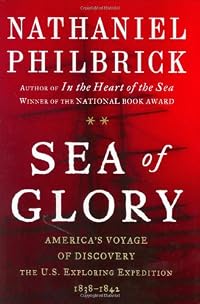
Sea of Glory: America's Voyage of Discovery, The U.S. Exploring Expedition, 1838-1842
by Nathaniel Philbrick
On This Page
Description
In 1838, the U.S. government launched the largest discovery voyage the Western world had ever seen-6 sailing vessels and 346 men bound for the waters of the Pacific Ocean. Four years later, the U.S. Exploring Expedition returned with an astounding array of accomplishments and discoveries: 87,000 miles logged, 280 Pacific islands surveyed, 4,000 zoological specimens collected, including 2,000 new species, and the discovery of the continent of Antarctica. And yet at a human level, the project show more was a disaster-not only had 28 men died and 2 ships been lost, but a series of sensational courts-martial had also ensued that pitted the expedition's controversial leader, Lieutenant Charles Wilkes, against almost every officer under his command. Though comparable in importance and breadth of success to the Lewis and Clark Expedition, the Ex. Ex. has been largely forgotten. Now, Nathaniel Philbrick re-creates this chapter of American maritime history in all its triumph and scandal. Sea of glory combines meticulous history with spellbinding human drama as it circles the globe from the palm-fringed beaches of the South Pacific to the treacherous waters off Antarctica and to the stunning beauty of the Pacific Northwest, and, finally, to a court-martial aboard a ship of the line anchored off New York City. show lessTags
Recommendations















Member Recommendations
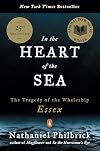

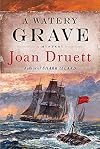
anonymous user A fictional mystery story series set on the US Exploratory Expedition

by anonymous user

by anonymous user
Member Reviews
In Sea of Glory Nathaniel Philbrick details for us the full story of America's ambitious and highly consequential voyage of exploration in the Pacific; an amazing accomplishment for its time. After all, the United States was not yet even a century old during the span of the voyage: 1838 to 1842. The expedition was known as the U.S. Exploring Expedition, given the nickname of Ex Ex. The vast amount of territory explored and charted by the expedition is truly mindboggling. It is one of the greatest feats of American Exploration in U.S. history, akin to Lewis and Clark and few others. However, it has been relegated to the shadows of history and few of us have now heard of it or are in the least bit familiar with it. In fact, by the time of show more the death of the expedition's leader, Lieutenant Charles Wilkes, it had already been largely forgotten as the nation turned their attention towards the new fascination--exploration of the Arctic.
The expedition was responsible for much scientific progress and important theories including plate tectonics and the formation of volcanic island chains. The amount of specimens collected and returned are considered the largest such haul ever. In fact, the specimens from the U.S. Exploring Expedition were the founding collection of America's museum--The Smithsonian Museum of Natural History. Wilkes and his crew surveyed thousands of miles of coastline from Antarctica to Fiji to the Pacfic Northwest, charting nearly 300 Pacific islands, creating 180 charts; invaluable information to the young United States, and indeed, the world. Wilkes is credited with confirming the existence of the continent of Antarctica. The writings and journals produced from the crew of the 4 year voyage are priceless for their scientific observations and record of the events that transpired on the journey. One of the most invaluable scientific contributions was a linguistic study of an indigenous population in the U.S. Pacific Northwest. Fascinating stuff indeed. A travesty that these accomplishments have been largely unknown and unheralded by the vast majority of the U.S. population.
Much of the reason for the voyage's obscurity in the annals of history has to do with the outrageous and vile behavior and actions of Charles Wilkes, the leader of the expedition. He was a Lieutenant with no naval experience and extremely unqualified for the job of Commander of an expedition. Through politics and connections, he was chosen; and the men under the command of his leadership suffered dearly for it. Along with that he did not receive the promotion that would have given him seniority over those he was to govern, dooming the relationships among leader and crew from the very beginning.
Lieutenant Wilkes became a man possessed with illusions of grandeur and driven by rage and bitterness at the denial of those in power to bestow the proper advancement in rank upon him that would give him seniority to some of the other crew members who outranked him. He determined to punish those innocent men relentlessly for this. The physical and mental abuse they suffered at his hands is hard to listen to and I cannot even imagine how those men bore it on this four year journey through personal hell. Lashings were ordered for no reason at all and far beyond the legal limit that existed. The list of atrocities perpetrated seemed endless. Charles Wilkes' actions were truly those of an insane man frequently during this voyage, including immediately donning decorations and hoisting the banners of a much higher rank, "pretending" that he was indeed now an admiral and ordering the crew to address him as such. If they refused, they were dealt harsh punishment and abused for the rest of the voyage. Ultimately, he alienated all of the other officers, many of whom became his bitter enemies.
It is an action of his on a remote Fiji island that stands out as his most heinous crime. In revenge for the death of two sailors (one of them his nephew), Wilkes was responsible for a genocidal attack on the entire population of the particular island this had occurred on. There the crew killed every man, woman and child they came across and committed the most unspeakable atrocities. Astoundingly, though the crew was at odds with Wilkes on most every other point; on this one they were in agreement with him and were not sorry for it.
Despite his crippling personality disorders, Wilkes was a brilliant man with many talents and an obsessive compulsion that drove him to overwork both himself and the rest of the crew. The surveying jobs they did were remarkable as were his charts and most other things he was responsible for. His accomplishments were multidinous and varied. I believe the man was a veritable genius, with extreme personality disorders. show less
The expedition was responsible for much scientific progress and important theories including plate tectonics and the formation of volcanic island chains. The amount of specimens collected and returned are considered the largest such haul ever. In fact, the specimens from the U.S. Exploring Expedition were the founding collection of America's museum--The Smithsonian Museum of Natural History. Wilkes and his crew surveyed thousands of miles of coastline from Antarctica to Fiji to the Pacfic Northwest, charting nearly 300 Pacific islands, creating 180 charts; invaluable information to the young United States, and indeed, the world. Wilkes is credited with confirming the existence of the continent of Antarctica. The writings and journals produced from the crew of the 4 year voyage are priceless for their scientific observations and record of the events that transpired on the journey. One of the most invaluable scientific contributions was a linguistic study of an indigenous population in the U.S. Pacific Northwest. Fascinating stuff indeed. A travesty that these accomplishments have been largely unknown and unheralded by the vast majority of the U.S. population.
Much of the reason for the voyage's obscurity in the annals of history has to do with the outrageous and vile behavior and actions of Charles Wilkes, the leader of the expedition. He was a Lieutenant with no naval experience and extremely unqualified for the job of Commander of an expedition. Through politics and connections, he was chosen; and the men under the command of his leadership suffered dearly for it. Along with that he did not receive the promotion that would have given him seniority over those he was to govern, dooming the relationships among leader and crew from the very beginning.
Lieutenant Wilkes became a man possessed with illusions of grandeur and driven by rage and bitterness at the denial of those in power to bestow the proper advancement in rank upon him that would give him seniority to some of the other crew members who outranked him. He determined to punish those innocent men relentlessly for this. The physical and mental abuse they suffered at his hands is hard to listen to and I cannot even imagine how those men bore it on this four year journey through personal hell. Lashings were ordered for no reason at all and far beyond the legal limit that existed. The list of atrocities perpetrated seemed endless. Charles Wilkes' actions were truly those of an insane man frequently during this voyage, including immediately donning decorations and hoisting the banners of a much higher rank, "pretending" that he was indeed now an admiral and ordering the crew to address him as such. If they refused, they were dealt harsh punishment and abused for the rest of the voyage. Ultimately, he alienated all of the other officers, many of whom became his bitter enemies.
It is an action of his on a remote Fiji island that stands out as his most heinous crime. In revenge for the death of two sailors (one of them his nephew), Wilkes was responsible for a genocidal attack on the entire population of the particular island this had occurred on. There the crew killed every man, woman and child they came across and committed the most unspeakable atrocities. Astoundingly, though the crew was at odds with Wilkes on most every other point; on this one they were in agreement with him and were not sorry for it.
Despite his crippling personality disorders, Wilkes was a brilliant man with many talents and an obsessive compulsion that drove him to overwork both himself and the rest of the crew. The surveying jobs they did were remarkable as were his charts and most other things he was responsible for. His accomplishments were multidinous and varied. I believe the man was a veritable genius, with extreme personality disorders. show less
Philbrick tells the true story of the US Exploring Expedition (1838-1842) led by Lieutenant Charles Wilkes. Six ships set off to explore three target areas of the Pacific Ocean: Antarctica, the Fiji Islands, and the region around the Columbia River. While it was not an official military expedition, it was run according to military discipline. The crew comprised Naval officers, seamen, and scientists. The author explores both the successes and failures of this largely forgotten expedition and the reasons it does not occupy a more prominent place in history.
It starts off with a long recounting of how the expedition was formed. It took a long while to get all the required approvals. Charles Wilkes starts out as someone that could inspire show more empathy, however, during the journey he became a martinet, clashed with fellow officers, and brought controversy with him upon his return, which resulted in numerous courts martial and negative publicity. It is well-written and based largely upon primary sources – letters, journals, and court records. Philbrick provides a vivid account of the personalities involved as well as their experiences during the trip, everything from the loss of ships to cultural clashes with indigenous tribes.
It is an example of the consequences of failure in leadership, which is partially responsible for the mission ending in turmoil and later obscurity. It occasionally feels a bit dry, primarily in the opening sections, but once it gets to the expedition itself it is an engrossing adventure. I always seem to enjoy these tales of exploration and admit to not being familiar with this one beforehand. It illuminates colonial-related origins of conflicts that have carried forward to today’s world. show less
It starts off with a long recounting of how the expedition was formed. It took a long while to get all the required approvals. Charles Wilkes starts out as someone that could inspire show more empathy, however, during the journey he became a martinet, clashed with fellow officers, and brought controversy with him upon his return, which resulted in numerous courts martial and negative publicity. It is well-written and based largely upon primary sources – letters, journals, and court records. Philbrick provides a vivid account of the personalities involved as well as their experiences during the trip, everything from the loss of ships to cultural clashes with indigenous tribes.
It is an example of the consequences of failure in leadership, which is partially responsible for the mission ending in turmoil and later obscurity. It occasionally feels a bit dry, primarily in the opening sections, but once it gets to the expedition itself it is an engrossing adventure. I always seem to enjoy these tales of exploration and admit to not being familiar with this one beforehand. It illuminates colonial-related origins of conflicts that have carried forward to today’s world. show less
Well, if nothing else, Philbrick sure makes the entire U.S. Ex. Ex. seem like one giant rat's nest of infighting, backbiting, and complete and utter unpleasantness. This is a detailed study of the four-year expedition, focusing in large part on the outfit's commanding officer and his constant feuds with those around him.
This is an absolute gem of a book - a non-fiction tale that has all the page turning suspense of a novel.
It tells the story of the US Navy's 1838 Exploring Expedition which explored the southern ocean, sighted Antarctica and then charted many Pacific Islands and then did the same in the Pacific North-west of the (future) US.
The expedition was very big in its time, but was quickly forgotten. This amnesia was largely self-inflicted, with the expedition leader being a seriously flawed character and martinet who clashed with almost all of his senior crew, even sending some home during the cruise, and leading to a series of courts-martial on arrival home. This nasty business, and the revelations of poor behaviour and lack of judgement meant show more that the real achievements of the four-year cruise were largely overlooked at the time and dropped quickly from sight afterwards.
Philbrick tells the story well. The foibles of Wilkes (expedition leader) are well exposed, without being overdone. The reader becomes aware quite early that the cruise ends badly, and knows that senior officers, including the leader, face courts-martial on return to the US, but we don't know until the very end who is nominated as the "baddy".
Great stuff.
Read Aug 2014. show less
It tells the story of the US Navy's 1838 Exploring Expedition which explored the southern ocean, sighted Antarctica and then charted many Pacific Islands and then did the same in the Pacific North-west of the (future) US.
The expedition was very big in its time, but was quickly forgotten. This amnesia was largely self-inflicted, with the expedition leader being a seriously flawed character and martinet who clashed with almost all of his senior crew, even sending some home during the cruise, and leading to a series of courts-martial on arrival home. This nasty business, and the revelations of poor behaviour and lack of judgement meant show more that the real achievements of the four-year cruise were largely overlooked at the time and dropped quickly from sight afterwards.
Philbrick tells the story well. The foibles of Wilkes (expedition leader) are well exposed, without being overdone. The reader becomes aware quite early that the cruise ends badly, and knows that senior officers, including the leader, face courts-martial on return to the US, but we don't know until the very end who is nominated as the "baddy".
Great stuff.
Read Aug 2014. show less
The achievements of the US South Pacific Exploration Expedition were spectacular. During its four years at sea between 1838 and 1842, it logged 87,000 miles; surveyed 280 Pacific Islands; created 180 charts (some of which were in use as late as World War Two); and mapped 800 miles of coastline in the Pacific Northwest and 1,500 miles of the Antarctic coastline. The collection of specimens and artifacts the Expedition’s scientists amassed became the foundation for the Smithsonian’s scientific collections, and the US Botanic Garden, the National Herbarium, the US Hydrographic Office, and the Naval Observatory all owe their existence to the Expedition.
So why has no one heard of it? I would say the main reason the Expedition is not more show more well-known was a catastrophic failure in leadership; among its many consequences was that its commander Charles Wilkes irreversibly alienated everyone who could have helped him salvage both his own and the Expedition’s reputation and more successfully preserve its memory. A series of courts-martial and mutual recriminations followed the Expedition’s return to the United States, and although the commander was ultimately found not guilty on most of the charges, it was too late to repair the damage. The partisan political climate at the time of the Expedition’s return, as well as some delicate international negotiations, also made it inexpedient to trumpet its achievements at the time.
The Expedition’s broader legacy, though, shines undimmed. One of the greatest was the formation of the Smithsonian itself. The Expedition had returned with a vast array of ethnographic artifacts – the total of four thousand was more than Cook had collected during all three of his voyages. Tens of thousands of geological, botanical, and zoological specimens had also been collected. Then there were the charts and voluminous meteorological, astronomical, magnetic, and oceanographic data. Assembling and analyzing all the data and caring for and displaying the vast collections would have taxed the combined resources of the most scientifically advanced countries in the world at the time – Germany, France, and England – let alone those of a relatively young United States that at the time was considered little more than a scientific backwater. Fortunately for the United States, a representative from the estate of James Smithson had arrived in 1838 with over half a million dollars – equivalent to eleven million today – with instructions that it be used to establish an institution for the “increase and diffusion of knowledge.” Until the Expedition returned in 1842, no one could agree on the exact nature of that institution, and Smithson’s bequest might not have ever been used for a museum if the Expedition had not taken place. Wilkes himself took on protecting the entire collection, and if it hadn’t been for him the US Botanic Garden might not exist at all. And although he had initially made it difficult for the scientists to work effectively during the voyage, he backed them to the hilt afterwards. He successfully lobbied Congress for decades to obtain the necessary funds for publishing all the scientific reports that would flow from the Expedition’s vast quantities of data, and as a result the reputation of the United States as a leader in international science skyrocketed.
Wilkes’s lobbying also had the effect of convincing Congress that the pursuit of scientific knowledge was essential to the country’s progress. As the United States expanded westward, Congress repeatedly funded sophisticated exploring and surveying expeditions, and all of them included at least one scientist. Between 1840 and 1860, Congress subsidized the publication of sixty works associated with the exploration of the West and funded fifteen naval expeditions around the world. The financial outlay would be enormous – between a quarter and a third of the annual federal budget – and never quite matched at any other time in US history, not even during the Space Race. All of this set an important precedent, and if the billions in grant money flowing from the NIH and NSF is any indication, the commitment remains. This commitment to funding scientific research and advancing knowledge may be the Expedition’s greatest legacy of all.
The Expedition also left a little-known literary legacy, because traces of it repeatedly appear in the pages of Moby-Dick. Herman Melville carefully studied the Expedition’s records as part of the research for his masterpiece, the novel itself contains references to the Expedition and its findings, and it is believed Charles Wilkes was the model for Captain Ahab.
I highly recommend this book as providing new information and insight into an obscure part of US history that should be much better-known than it is.
Favorite Quotes:
“As the Ex. Ex. was proving, exploration was as much about discovering what did not exist as it was about finding something new.” (page 77).
Best description of an island I have read in a long time: “Macquarie Island, a wave-washed, penguin-infested pile of rocks 2,100 miles to the south [of Australia].” (page 154) show less
So why has no one heard of it? I would say the main reason the Expedition is not more show more well-known was a catastrophic failure in leadership; among its many consequences was that its commander Charles Wilkes irreversibly alienated everyone who could have helped him salvage both his own and the Expedition’s reputation and more successfully preserve its memory. A series of courts-martial and mutual recriminations followed the Expedition’s return to the United States, and although the commander was ultimately found not guilty on most of the charges, it was too late to repair the damage. The partisan political climate at the time of the Expedition’s return, as well as some delicate international negotiations, also made it inexpedient to trumpet its achievements at the time.
The Expedition’s broader legacy, though, shines undimmed. One of the greatest was the formation of the Smithsonian itself. The Expedition had returned with a vast array of ethnographic artifacts – the total of four thousand was more than Cook had collected during all three of his voyages. Tens of thousands of geological, botanical, and zoological specimens had also been collected. Then there were the charts and voluminous meteorological, astronomical, magnetic, and oceanographic data. Assembling and analyzing all the data and caring for and displaying the vast collections would have taxed the combined resources of the most scientifically advanced countries in the world at the time – Germany, France, and England – let alone those of a relatively young United States that at the time was considered little more than a scientific backwater. Fortunately for the United States, a representative from the estate of James Smithson had arrived in 1838 with over half a million dollars – equivalent to eleven million today – with instructions that it be used to establish an institution for the “increase and diffusion of knowledge.” Until the Expedition returned in 1842, no one could agree on the exact nature of that institution, and Smithson’s bequest might not have ever been used for a museum if the Expedition had not taken place. Wilkes himself took on protecting the entire collection, and if it hadn’t been for him the US Botanic Garden might not exist at all. And although he had initially made it difficult for the scientists to work effectively during the voyage, he backed them to the hilt afterwards. He successfully lobbied Congress for decades to obtain the necessary funds for publishing all the scientific reports that would flow from the Expedition’s vast quantities of data, and as a result the reputation of the United States as a leader in international science skyrocketed.
Wilkes’s lobbying also had the effect of convincing Congress that the pursuit of scientific knowledge was essential to the country’s progress. As the United States expanded westward, Congress repeatedly funded sophisticated exploring and surveying expeditions, and all of them included at least one scientist. Between 1840 and 1860, Congress subsidized the publication of sixty works associated with the exploration of the West and funded fifteen naval expeditions around the world. The financial outlay would be enormous – between a quarter and a third of the annual federal budget – and never quite matched at any other time in US history, not even during the Space Race. All of this set an important precedent, and if the billions in grant money flowing from the NIH and NSF is any indication, the commitment remains. This commitment to funding scientific research and advancing knowledge may be the Expedition’s greatest legacy of all.
The Expedition also left a little-known literary legacy, because traces of it repeatedly appear in the pages of Moby-Dick. Herman Melville carefully studied the Expedition’s records as part of the research for his masterpiece, the novel itself contains references to the Expedition and its findings, and it is believed Charles Wilkes was the model for Captain Ahab.
I highly recommend this book as providing new information and insight into an obscure part of US history that should be much better-known than it is.
Favorite Quotes:
“As the Ex. Ex. was proving, exploration was as much about discovering what did not exist as it was about finding something new.” (page 77).
Best description of an island I have read in a long time: “Macquarie Island, a wave-washed, penguin-infested pile of rocks 2,100 miles to the south [of Australia].” (page 154) show less
The achievements of the US South Pacific Exploration Expedition were spectacular. During its four years at sea between 1838 and 1842, it logged 87,000 miles; surveyed 280 Pacific Islands; created 180 charts (some of which were in use as late as World War Two); and mapped 800 miles of coastline in the Pacific Northwest and 1,500 miles of the Antarctic coastline. The collection of specimens and artifacts the Expedition’s scientists amassed became the foundation for the Smithsonian’s scientific collections, and the US Botanic Garden, the National Herbarium, the US Hydrographic Office, and the Naval Observatory all owe their existence to the Expedition.
So why has no one heard of it? I would say the main reason the Expedition is not more show more well-known was a catastrophic failure in leadership; among its many consequences was that its commander Charles Wilkes irreversibly alienated everyone who could have helped him salvage both his own and the Expedition’s reputation and more successfully preserve its memory. A series of courts-martial and mutual recriminations followed the Expedition’s return to the United States, and although the commander was ultimately found not guilty on most of the charges, it was too late to repair the damage. The partisan political climate at the time of the Expedition’s return, as well as some delicate international negotiations, also made it inexpedient to trumpet its achievements at the time.
The Expedition’s broader legacy, though, shines undimmed. One of the greatest was the formation of the Smithsonian itself. The Expedition had returned with a vast array of ethnographic artifacts – the total of four thousand was more than Cook had collected during all three of his voyages. Tens of thousands of geological, botanical, and zoological specimens had also been collected. Then there were the charts and voluminous meteorological, astronomical, magnetic, and oceanographic data. Assembling and analyzing all the data and caring for and displaying the vast collections would have taxed the combined resources of the most scientifically advanced countries in the world at the time – Germany, France, and England – let alone those of a relatively young United States that at the time was considered little more than a scientific backwater. Fortunately for the United States, a representative from the estate of James Smithson had arrived in 1838 with over half a million dollars – equivalent to eleven million today – with instructions that it be used to establish an institution for the “increase and diffusion of knowledge.” Until the Expedition returned in 1842, no one could agree on the exact nature of that institution, and Smithson’s bequest might not have ever been used for a museum if the Expedition had not taken place. Wilkes himself took on protecting the entire collection, and if it hadn’t been for him the US Botanic Garden might not exist at all. And although he had initially made it difficult for the scientists to work effectively during the voyage, he backed them to the hilt afterwards. He successfully lobbied Congress for decades to obtain the necessary funds for publishing all the scientific reports that would flow from the Expedition’s vast quantities of data, and as a result the reputation of the United States as a leader in international science skyrocketed.
Wilkes’s lobbying also had the effect of convincing Congress that the pursuit of scientific knowledge was essential to the country’s progress. As the United States expanded westward, Congress repeatedly funded sophisticated exploring and surveying expeditions, and all of them included at least one scientist. Between 1840 and 1860, Congress subsidized the publication of sixty works associated with the exploration of the West and funded fifteen naval expeditions around the world. The financial outlay would be enormous – between a quarter and a third of the annual federal budget – and never quite matched at any other time in US history, not even during the Space Race. All of this set an important precedent, and if the billions in grant money flowing from the NIH and NSF is any indication, the commitment remains. This commitment to funding scientific research and advancing knowledge may be the Expedition’s greatest legacy of all.
The Expedition also left a little-known literary legacy, because traces of it repeatedly appear in the pages of Moby-Dick. Herman Melville carefully studied the Expedition’s records as part of the research for his masterpiece, the novel itself contains references to the Expedition and its findings, and it is believed Charles Wilkes was the model for Captain Ahab.
I highly recommend this book as providing new information and insight into an obscure part of US history that should be much better-known than it is.
Favorite Quotes:
“As the Ex. Ex. was proving, exploration was as much about discovering what did not exist as it was about finding something new.” (page 77).
Best description of an island I have read in a long time: “Macquarie Island, a wave-washed, penguin-infested pile of rocks 2,100 miles to the south [of Australia].” (page 154) show less
So why has no one heard of it? I would say the main reason the Expedition is not more show more well-known was a catastrophic failure in leadership; among its many consequences was that its commander Charles Wilkes irreversibly alienated everyone who could have helped him salvage both his own and the Expedition’s reputation and more successfully preserve its memory. A series of courts-martial and mutual recriminations followed the Expedition’s return to the United States, and although the commander was ultimately found not guilty on most of the charges, it was too late to repair the damage. The partisan political climate at the time of the Expedition’s return, as well as some delicate international negotiations, also made it inexpedient to trumpet its achievements at the time.
The Expedition’s broader legacy, though, shines undimmed. One of the greatest was the formation of the Smithsonian itself. The Expedition had returned with a vast array of ethnographic artifacts – the total of four thousand was more than Cook had collected during all three of his voyages. Tens of thousands of geological, botanical, and zoological specimens had also been collected. Then there were the charts and voluminous meteorological, astronomical, magnetic, and oceanographic data. Assembling and analyzing all the data and caring for and displaying the vast collections would have taxed the combined resources of the most scientifically advanced countries in the world at the time – Germany, France, and England – let alone those of a relatively young United States that at the time was considered little more than a scientific backwater. Fortunately for the United States, a representative from the estate of James Smithson had arrived in 1838 with over half a million dollars – equivalent to eleven million today – with instructions that it be used to establish an institution for the “increase and diffusion of knowledge.” Until the Expedition returned in 1842, no one could agree on the exact nature of that institution, and Smithson’s bequest might not have ever been used for a museum if the Expedition had not taken place. Wilkes himself took on protecting the entire collection, and if it hadn’t been for him the US Botanic Garden might not exist at all. And although he had initially made it difficult for the scientists to work effectively during the voyage, he backed them to the hilt afterwards. He successfully lobbied Congress for decades to obtain the necessary funds for publishing all the scientific reports that would flow from the Expedition’s vast quantities of data, and as a result the reputation of the United States as a leader in international science skyrocketed.
Wilkes’s lobbying also had the effect of convincing Congress that the pursuit of scientific knowledge was essential to the country’s progress. As the United States expanded westward, Congress repeatedly funded sophisticated exploring and surveying expeditions, and all of them included at least one scientist. Between 1840 and 1860, Congress subsidized the publication of sixty works associated with the exploration of the West and funded fifteen naval expeditions around the world. The financial outlay would be enormous – between a quarter and a third of the annual federal budget – and never quite matched at any other time in US history, not even during the Space Race. All of this set an important precedent, and if the billions in grant money flowing from the NIH and NSF is any indication, the commitment remains. This commitment to funding scientific research and advancing knowledge may be the Expedition’s greatest legacy of all.
The Expedition also left a little-known literary legacy, because traces of it repeatedly appear in the pages of Moby-Dick. Herman Melville carefully studied the Expedition’s records as part of the research for his masterpiece, the novel itself contains references to the Expedition and its findings, and it is believed Charles Wilkes was the model for Captain Ahab.
I highly recommend this book as providing new information and insight into an obscure part of US history that should be much better-known than it is.
Favorite Quotes:
“As the Ex. Ex. was proving, exploration was as much about discovering what did not exist as it was about finding something new.” (page 77).
Best description of an island I have read in a long time: “Macquarie Island, a wave-washed, penguin-infested pile of rocks 2,100 miles to the south [of Australia].” (page 154) show less
More great beach reading from Nathaniel Philbrick. This time he tackles a now mostly forgotten expedition known as the United States Exploring Expedition (or US. Ex. Ex.) which took place between 1838 and 1842. Led by Lieutenant Charles Wilkes the expedition consisted of six ships whose charge was to explore and survey the Pacific Ocean. Consisting of Navy officers and seaman, and a corps of scientists, the expedition was one of the most successful in terms of discovery, in American history. Among its many accomplishments are included the charting the shore of Antarctica for the first time, becoming the first expedition to reach and map the Fiji islands, charting the area surrounding the Columbia River in Oregon whose ownership was a show more matter of dispute between Great Britain and the United States, climbing both the Mauna Kea and Mauna Loa volcanoes in Hawaii, and by providing the first accurate explanations for the formation of the coral atolls that dot the South Pacific. They encountered numerous indigenous peoples throughout their journey, and cataloged and took samples of enough flora and fauna to fill a museum, and indeed it was one of the first collections added to the new Smithsonian Institution. Despite this enviable record of success however the expedition is all but forgotten now.
Philbrick’s purpose for the book is twofold; first to bring the accomplishments of this expedition back into the U.S. canon of human exploration, and second, to provide a narrative that explains why it’s accomplishments have been so overlooked. The expedition itself had adventures worthy of anything one might find in a Jules Verne, Rudyard Kipling or Daniel Defoe novel – including angry cannibals. All of this is expertly dealt with by Philbrick whose writing is always clear and compelling. He brings something else to this work though, something that I thought was a bit lacking in his other books, and that is a real talent for illuminating the personalities of those involved in the events he describes. This is fortuitous as it was these personalities that were at the root of the expeditions later obscurity. I’m not going to go further than that because I don’t want to accidentally reveal any spoilers, for while this is primarily a book of history, it reads like a great adventure!
Highly Recommended! show less
Philbrick’s purpose for the book is twofold; first to bring the accomplishments of this expedition back into the U.S. canon of human exploration, and second, to provide a narrative that explains why it’s accomplishments have been so overlooked. The expedition itself had adventures worthy of anything one might find in a Jules Verne, Rudyard Kipling or Daniel Defoe novel – including angry cannibals. All of this is expertly dealt with by Philbrick whose writing is always clear and compelling. He brings something else to this work though, something that I thought was a bit lacking in his other books, and that is a real talent for illuminating the personalities of those involved in the events he describes. This is fortuitous as it was these personalities that were at the root of the expeditions later obscurity. I’m not going to go further than that because I don’t want to accidentally reveal any spoilers, for while this is primarily a book of history, it reads like a great adventure!
Highly Recommended! show less
Members
- Recently Added By
Lists

Top Five Books of 2020
982 works; 348 members

Non-Fiction Worth Reading
1,015 works; 254 members

Polar exploration
54 works; 4 members

Books Read in 2015
3,299 works; 126 members
Author Information

26+ Works 23,126 Members
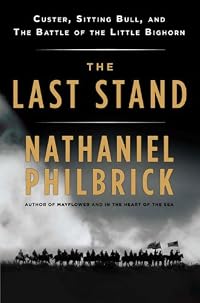
Nathaniel Philbrick was born in Boston Massachusetts on June 11, 1956. He received a bachelor's degree in English from Brown University and a master's degree in American literature from Duke University. In 1978, he was Brown University's first Intercollegiate All-American sailor and he won the Sunfish North Americans in Barrington, Rhode Island. show more After graduate school, he worked for four years at Sailing World magazine. Afterward, he worked as a freelancer for a number of years and wrote/edited several sailing books including Yachting: A Parody. After moving to Nantucket in 1986, he became interested in the history of the island and wrote Away Off Shore: Nantucket Island and Its People. In 2000 he published In the Heart of the Sea: The Tragedy of the Whaleship Essex. A motion picture of the book was released in December 2015. His other books include Sea of Glory: America's Voyage of Discovery, The U.S. Exploring Expedition; Mayflower: A Story of Courage, Community, and War; The Last Stand: Custer, Sitting Bull, and the Battle of the Little Bighorn; Bunker Hill: A City, A Siege, A Revolution; Valiant Ambition: George Washington, Benedict Arnold, and the Fate of the American Revolution, and In the Hurricane's Eye: The Genius of George Washington and the Victory at Yorktown. (Bowker Author Biography) show less
Awards and Honors
Common Knowledge
- Canonical title
- Sea of Glory: America's Voyage of Discovery, The U.S. Exploring Expedition, 1838-1842
- Original title
- Sea of Glory: America's Voyage of Discovery, The U.S. Exploring Expedition, 1838-1842
- Alternate titles
- Sea of glory : the epic South Seas Expedition 1838-42
- Original publication date
- 2003
- People/Characters
- Captain James Cook, RN, FRS; Charles Wilkes; Jane Renwick Wilkes; Joseph Underwood; Cadwalader Ringgold; William Reynolds (show all 20); Robert Pinkney; Charles Pickering; William May; Samuel Knox; Robert Johnson; Charles Erskine; George Emmons; Henry Eid; James Wight Dana; Overton Carr; William Brackenridge; James Alden; Veidovi; William Hudson
- Important places
- Antarctica; Hawai'i, USA; Pacific Ocean; Washington, D.C., USA; Mauna Loa, Hawaii, USA; Fiji Islands (show all 9); Columbia River, Pacific Northwest; Malolo, Fiji; Samoa
- Important events
- U.S. South Seas Exploring Expedition, 1838-1842; Massacre of Malolo, 1840
- Epigraph
- I have ventured . . .
This many summers in a sea of glory,
But far beyond my depth. . . .
--William Shakespeare
King Henry VIII 3.2 - Dedication
- To my father, Thomas Philbrick
- First words
- He was not yet forty-five, but he looked much older, his health broken by four years of hardship and danger.
- Last words
- (Click to show. Warning: May contain spoilers.)And so, on a rainy summer night on the Columbia River, as Wilkes and a jacketless Reynolds stood side-by-side on the deck of the Flying Fish, the United States Exploring Expedition began its long, sure slide into obscurity.
- Blurbers
- McCullough, David
- Original language
- English
Classifications
- Genres
- History, General Nonfiction, Nonfiction, Travel
- DDC/MDS
- 910.973 — History & geography Geography & travel modified standard subdivisions of Geography and travel Explorers & Travelers Discovery and exploration by North America United States
- LCC
- GN663 .P48 — Geography, Anthropology and Recreation Anthropology Anthropology Ethnology. Social and cultural anthropology Ethnic groups and races By region or country
- BISAC
Statistics
- Members
- 1,925
- Popularity
- 11,017
- Reviews
- 25
- Rating
- (3.86)
- Languages
- English, French, German, Portuguese
- Media
- Paper, Audiobook, Ebook
- ISBNs
- 27
- UPCs
- 1
- ASINs
- 12