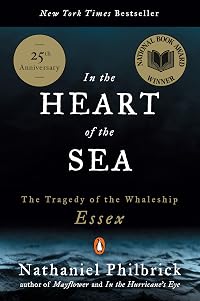
In the Heart of the Sea: The Tragedy of the Whaleship Essex
by Nathaniel Philbrick
On This Page
Description
Soon to be a major motion picture starring Chris Hemsworth, Cillian Murphy, Ben Wishaw, and Brendan Gleeson, and directed by Ron Howard.The ordeal of the whaleship Essex was an event as mythic in the nineteenth century as the sinking of the Titanic was in the twentieth. In 1819, the Essex left Nantucket for the South Pacific with twenty crew members aboard. In the middle of the South Pacific the ship was rammed and sunk by an angry sperm whale. The crew drifted for more than ninety days in show more three tiny whaleboats, succumbing to weather, hunger, disease, and ultimately turning to drastic measures in the fight for survival. Nathaniel Philbrick uses little-known documents-including a long-lost account written by the ship's cabin boy-and penetrating details about whaling and the Nantucket community to reveal the chilling events surrounding this epic maritime disaster. An intense and mesmerizing listen, In the Heart of the Sea is a monumental work of history forever placing the Essex tragedy in the American historical canon. show less
Tags
Recommendations


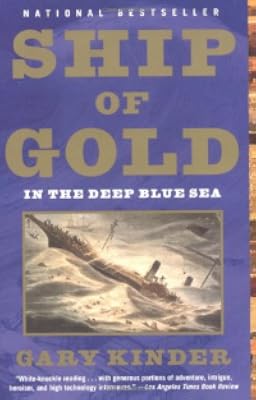
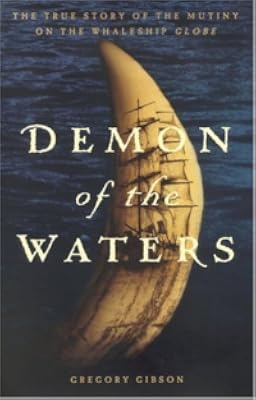

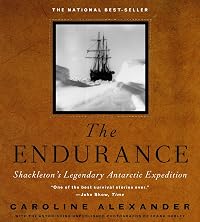
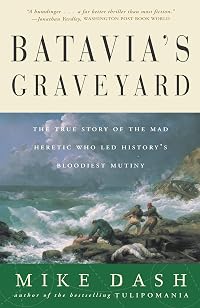


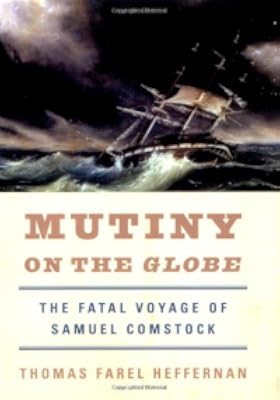

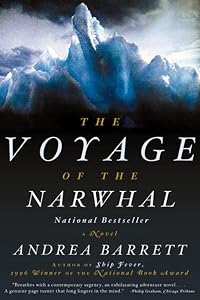
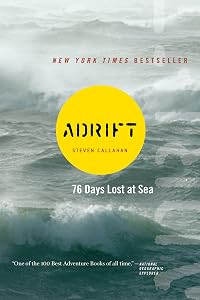

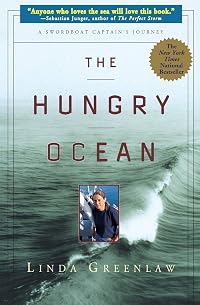



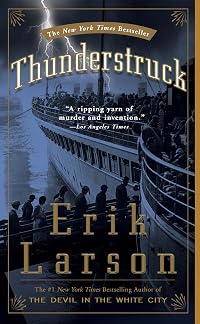






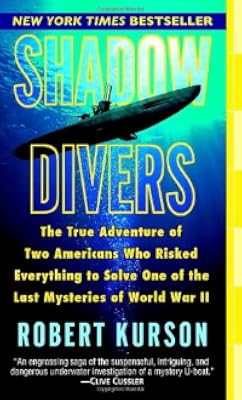
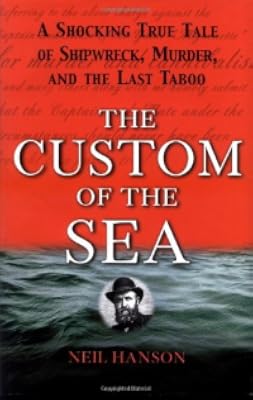
Member Recommendations
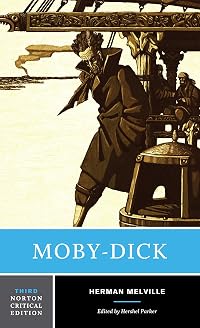
jseger9000 In the Heart of the Sea: The Tragedy of the Whaleship Essex tells the true story that inspired Melville to write Moby Dick.
Also recommended by aya.herron
60




ed.pendragon This children's fantasy is a gentle parody based on Moby-Dick and so ultimately on the fate of the Essex.



Member Reviews
In the Heart of the Sea is a history of a 19th-century whaling disaster told in novelistic style by Nathaniel Philbrick. In 1820, the whaleship Essex, sailing from Nantucket, was rammed and destroyed by a sperm whale in the Pacific Ocean. This incident influenced Herman Melville in writing Moby Dick. Only 8 of the 21 crew members survived the arduous journey on whale boats with the survivors resorting to cannibalizing those who died of starvation.
Philbrick does a great job at establishing the community of early 19th century Nantucket and how it's economy centered on the whaling industry. Ships were crewed by inexperienced sailors who learned on the job under the command of captains with only a few journeys under their belt. In this case show more it was the first-time captain George Pollard Jr. who Philbrick characterizes as hesitant and too willing to be influenced by his crew. This includes first mate Owen Chase, perhaps resentful that he had not been appointed captain, and very assertive of doing things his way. What we know of the Essex's journey are based on accounts by Chase and 14-year-old cabin boy cabin boy, Thomas Nickerson.
Race and social caste play their part in the whaleship. Native Nantucketers were considered the superior group and tended to socialize among themselves. Other groups included white sailors from the mainland who the Nantucketers considered green hands, as well as a group of free Black sailors. While Quaker Nantucket was known for abolitionist, the Black sailors were nonetheless discriminated against, and significantly almost all of the sailors to die from starvation and then cannibalized were Black men. Philbrick draws on other historical accounts and scientific research to viscerally describe starvation's effects on the human body and mind.
Philbrick's writing is engaging, and sometimes stomach turning, as a deep dive into a significant historical event that would become part of the American mythology.
Favorite Passages:
Philbrick does a great job at establishing the community of early 19th century Nantucket and how it's economy centered on the whaling industry. Ships were crewed by inexperienced sailors who learned on the job under the command of captains with only a few journeys under their belt. In this case show more it was the first-time captain George Pollard Jr. who Philbrick characterizes as hesitant and too willing to be influenced by his crew. This includes first mate Owen Chase, perhaps resentful that he had not been appointed captain, and very assertive of doing things his way. What we know of the Essex's journey are based on accounts by Chase and 14-year-old cabin boy cabin boy, Thomas Nickerson.
Race and social caste play their part in the whaleship. Native Nantucketers were considered the superior group and tended to socialize among themselves. Other groups included white sailors from the mainland who the Nantucketers considered green hands, as well as a group of free Black sailors. While Quaker Nantucket was known for abolitionist, the Black sailors were nonetheless discriminated against, and significantly almost all of the sailors to die from starvation and then cannibalized were Black men. Philbrick draws on other historical accounts and scientific research to viscerally describe starvation's effects on the human body and mind.
Philbrick's writing is engaging, and sometimes stomach turning, as a deep dive into a significant historical event that would become part of the American mythology.
Favorite Passages:
"But the rise of the Pacific sperm-whale fishery had an unfortunate side effect. Instead of voyages that had once averaged about nine months, two- and three-year voyages had become the norm. Never before had the division between Nantucket’s whalemen and their people been so great. Long gone were the days when Nantucketers could watch from shore as the men and boys of the island pursued the whale. Nantucket was now the whaling capital of the world, but there were more than a few islanders who had never even seen a whale."show less
"...the whalemen preferred to think of it as what one commentator called “a self-propelled tub of high-income lard.” Whales were described by the amount of oil they would produce (as in a fifty-barrel whale), and although the whalemen took careful note of the mammal’s habits, they made no attempt to regard it as anything more than a commodity whose constituent parts (head, blubber, ambergris, etc.) were of value to them. The rest of it—the tons of meat, bone, and guts—was simply thrown away, creating festering rafts of offal that attracted birds, fish, and, of course, sharks. Just as the skinned corpses of buffaloes would soon dot the prairies of the American West, so did the headless gray remains of sperm whales litter the Pacific Ocean in the early nineteenth century."
"Nantucketers were suspicious of anything beyond their immediate experience. Their far-reaching success in whaling was founded not on radical technological advances or bold gambles but on a profound conservatism. Gradually building on the achievements of the generations before them, they had expanded their whaling empire in a most deliberate and painstaking manner. If new information didn’t come to them from the lips of another Nantucketer, it was suspect."
"Shipowners hoped to combine a fishy, hard-driving captain with an approachable and steady mate. But in the labor-starved frenzy of Nantucket in 1819, the Essex had ended up with a captain who had the instincts and soul of a mate, and a mate who had the ambition and fire of a captain. Instead of giving an order and sticking with it, Pollard indulged his matelike tendency to listen to others. This provided Chase—who had no qualms about speaking up—with the opportunity to impose his own will. For better or worse, the men of the Essex were sailing toward a destiny that would be determined, in large part, not by their unassertive captain but by their forceful and fishy mate."
"But if the island’s inhabitants once ventured to the far corners of the world, today it seems as if the world has made its way to Nantucket. It is not whaling, of course, that brings the tourists to the island, but the romantic glorification of whaling—the same kind of myths that historically important places all across America have learned to shine and polish to their economic advantage. Yet, despite the circus (some have called it a theme park) that is modern Nantucket, the story of the Essex is too troubling, too complex to fit comfortably into a chamber of commerce brochure.”
"Like the Donner Party, the men of the Essex could have avoided disaster, but this does not diminish the extent of the men’s sufferings, or their bravery and extraordinary discipline."
In the Heart of the Sea is a stunning true story that inspired one of my most respected novels, Moby-Dick. But where Moby-Dick climaxes, with the destruction of the ship by the enraged white whale, the whale ship Essex's tragedy had only begun. Author Nathaniel Philbrick does an excellent job dissecting Nantucket and its hardy inhabitants, explaining the culture of whaling, and delving into the psyche of the stranded officers and crew. Wrecked thousands of miles from port, these men braved the open ocean in battered, leaky whaleboats on starvation rations. Where it really got intense, though, was when the cannibalism started. Eating shipmates who died is one thing (and awful enough), but the unthinkable scenario in one boat where the show more men drew lots for who would be killed to be eaten by the others — my mind just blanks at the horror of such an extremity. I try to imagine the experience and just can't. This was a truly gripping and unforgettable read. I look forward to seeing the recent film, though I'm sure they made some big changes. We'll see. Makes me want to pick up Mutiny on Board the H.M.S. Bounty. show less
I put off reading this book even though it gets great reviews because it is so sad and frustrating to read about the wholesale slaughter of any creature, but especially whales. In the 1990s I had my most profound experience with wildlife on a whale watch off the coast of Maine. The captain got on the loudspeaker and asked us if we wanted to sail a fairly far distance to see some northern right whales that another captain reported seeing. A cheer went up and we took off. There were three whales, two interacted with us continually while another kept its distance and, maybe, acted as lookout. They were amazing and humbling and I’m convinced fully conscious of us, their actions and our responses. They were joyous and displayed behavior show more rare in right whales; breaching, spy-hopping and flipper-flopping. We stayed with them until it was too dark to see. I think there was sadness on both sides when we parted company.
If the whalemen like the ones in this book had had their way, I’d have never had this experience at all. None of us would and we would have no understanding of these amazing creatures. The sheer bloodthirstiness was appalling and yes, I had to stop reading once because the savagery was too much. I also skimmed a good many parts about killing, butchery and waste. Humans never learn anything. We continue to push nature into a corner, decimating and exterminating things for our pleasure or convenience. Just this weekend I was talking to a neighbor about the much lower numbers of fish he and his buddy pull out of the same lake they’ve been fishing for decades. The days of 50 fish each are over. And they practically were in the time of this book. Vast sections of ocean were fished out and caused the Nantucketers to push further and further into the Pacific. For years and years I couldn’t figure out why it was called Cape Cod. There were no cod there. Hadn’t been for centuries. And people wonder why I think humans evolved to be an extinction trigger.
But let me get to the book. It is well-written with a great sense of drama and pacing. Information is interleaved with action and it balances well. I really liked how he set up the different elements that went into the Essex’s doom. You could see how if any one thing had changed the disaster might have been averted. I also like that it seems he went to some effort not to make the whalers into villains although I did cheer inside when the whale destroyed the ship. They were absolutely dismayed that nature could have “turned on them” and their “rightful prey” be less than placid. Imagine the temerity of a beleaguered creature actually defending itself. At the end Philbrick mentions several accounts of more whales attacking ships toward the end of whaling’s heyday. Good on them.
Life on the ship was hard enough, but damn when they were forced into those little boats it was unreal. Whenever I read a story like this I can’t believe that humans can survive it. Such work. So little food. If they’d had the right number of whale boats they could have brought more supplies with them and maybe survived. If they’d known more about the islands they were near to they might not have tried to get back to the South American mainland. If Chase had harpooned the whale when he had the chance it may not have turned and struck a second, and fatal, blow. If only if only. It was well-told and obviously well-researched. There are two main accounts of the debacle now instead of one and it seems they agree with and clarify each other. Oddly Captain Pollard never wrote his story despite compulsively telling anyone who got within earshot for several years after his return to civilization.
Those squeamish to bloodshed, starvation, animal slaughter, racism and cannibalism might want to avoid this one. Philbrick doesn’t pull any punches and the descriptions are lengthy and detailed. If I ever casually say that I’m starving, I’ll think of this book and realize how very far from it I am.
I was surprised to learn that the women of Nantucket had a good deal more autonomy than their mainland counterparts, even in other whaling towns. It was entirely due to necessity, but the ladies basically ran everything and kept up social and political alliances. No one seems to have been bothered by it in the least given that the men spent hardly any time there at all. They landed, impregnated women and left again. Of course if the women displeased them they were as high-handed and assholish as any man can be, but while they were gone the women had a taste of what it’s like to be fully human not just something else to be exploited by men. show less
If the whalemen like the ones in this book had had their way, I’d have never had this experience at all. None of us would and we would have no understanding of these amazing creatures. The sheer bloodthirstiness was appalling and yes, I had to stop reading once because the savagery was too much. I also skimmed a good many parts about killing, butchery and waste. Humans never learn anything. We continue to push nature into a corner, decimating and exterminating things for our pleasure or convenience. Just this weekend I was talking to a neighbor about the much lower numbers of fish he and his buddy pull out of the same lake they’ve been fishing for decades. The days of 50 fish each are over. And they practically were in the time of this book. Vast sections of ocean were fished out and caused the Nantucketers to push further and further into the Pacific. For years and years I couldn’t figure out why it was called Cape Cod. There were no cod there. Hadn’t been for centuries. And people wonder why I think humans evolved to be an extinction trigger.
But let me get to the book. It is well-written with a great sense of drama and pacing. Information is interleaved with action and it balances well. I really liked how he set up the different elements that went into the Essex’s doom. You could see how if any one thing had changed the disaster might have been averted. I also like that it seems he went to some effort not to make the whalers into villains although I did cheer inside when the whale destroyed the ship. They were absolutely dismayed that nature could have “turned on them” and their “rightful prey” be less than placid. Imagine the temerity of a beleaguered creature actually defending itself. At the end Philbrick mentions several accounts of more whales attacking ships toward the end of whaling’s heyday. Good on them.
Life on the ship was hard enough, but damn when they were forced into those little boats it was unreal. Whenever I read a story like this I can’t believe that humans can survive it. Such work. So little food. If they’d had the right number of whale boats they could have brought more supplies with them and maybe survived. If they’d known more about the islands they were near to they might not have tried to get back to the South American mainland. If Chase had harpooned the whale when he had the chance it may not have turned and struck a second, and fatal, blow. If only if only. It was well-told and obviously well-researched. There are two main accounts of the debacle now instead of one and it seems they agree with and clarify each other. Oddly Captain Pollard never wrote his story despite compulsively telling anyone who got within earshot for several years after his return to civilization.
Those squeamish to bloodshed, starvation, animal slaughter, racism and cannibalism might want to avoid this one. Philbrick doesn’t pull any punches and the descriptions are lengthy and detailed. If I ever casually say that I’m starving, I’ll think of this book and realize how very far from it I am.
I was surprised to learn that the women of Nantucket had a good deal more autonomy than their mainland counterparts, even in other whaling towns. It was entirely due to necessity, but the ladies basically ran everything and kept up social and political alliances. No one seems to have been bothered by it in the least given that the men spent hardly any time there at all. They landed, impregnated women and left again. Of course if the women displeased them they were as high-handed and assholish as any man can be, but while they were gone the women had a taste of what it’s like to be fully human not just something else to be exploited by men. show less
On August 12, 1819, the whaleship Essex left Nantucket with a crew of 21 men. Among them Capt. Pollard, Jr , first mate Chase, sailor Coffin and cabin boy Nickerson. The ship was old but tough, well traveled but still strong. Pollard and Chase had been crewmates on her before, and were veterans of the hunt. But after many months, and with little to show, they move into "Offshore Ground," an incredibly remote part of the northern Pacific. There, they find a healthy pod of sperm whales. Chase's boat is damaged in the process, and repairs are made on the spot. The innocent "tapping of a hammer" sounding eerily similar to the steady clicks of a male sperm whale...
What happened next was a first in Nantucket history. A bull sperm whale, 85 show more feet long, charges and rams the Essex "just forward of the forechains." It then moves out, turns around, and strikes again at "a speed of at least six knots." From underneath the 238-ton ship is then tilted and filled with water. Those on board flee to the extra whale boats. All this in the span of 10 minutes! The whale disappears, leaving the crew "just about as far from land as it was possible to be anywhere on earth."
I'm so glad I decided to give this one a re-read and it's as good as I remembered! Philbrick is never a dull read and the fear, determination, and dread will keep you glued to the page. To be attacked by a whale, suffer thirst, hunger, hypernatremia, nicotine withdrawal, AND fight off an orca, all within the first half?! I know folks always say "the book is better than the movie" but honestly this really is. Notably, In the Heart of the Sea was the first to incorporate Nickerson's perspective, whose journal had been discovered in 1960. It builds like a thriller novel, and at only 238 pages, I highly recommend it for folks who don't usually read nonfiction! show less
What happened next was a first in Nantucket history. A bull sperm whale, 85 show more feet long, charges and rams the Essex "just forward of the forechains." It then moves out, turns around, and strikes again at "a speed of at least six knots." From underneath the 238-ton ship is then tilted and filled with water. Those on board flee to the extra whale boats. All this in the span of 10 minutes! The whale disappears, leaving the crew "just about as far from land as it was possible to be anywhere on earth."
I'm so glad I decided to give this one a re-read and it's as good as I remembered! Philbrick is never a dull read and the fear, determination, and dread will keep you glued to the page. To be attacked by a whale, suffer thirst, hunger, hypernatremia, nicotine withdrawal, AND fight off an orca, all within the first half?! I know folks always say "the book is better than the movie" but honestly this really is. Notably, In the Heart of the Sea was the first to incorporate Nickerson's perspective, whose journal had been discovered in 1960. It builds like a thriller novel, and at only 238 pages, I highly recommend it for folks who don't usually read nonfiction! show less
In 1820 the whaleship Essex was rammed twice by a sperm whale. Such an attack had never been recorded at this time and the men of the Essex had to try their best to survive on three small whaleboats while in the middle of the Pacific Ocean. This story was the inspiration for the final attack in Herman Melville’s Moby-Dick and was a topic of conversation and curiosity for decades after the sinking.
Philbrick does an excellent job putting the reader right in the ship along with the whalers. We learn about the whaling industry and Nantucket particularly, all while he is relating the story of the Essex. There are several moments throughout the book where the reader just wants to take the captain or the mate by the shoulders and shake show more them, like why are you making such horrible decisions? So often they were doing the right thing, and yet they changed their minds and men died because of it. The story is an intense one, as all stories of survival against extreme odds are. Anyone interested in stories of peril at sea or survival stories in general will find something to enjoy here. Also, fans of Moby-Dick will likely enjoy learning the true story behind the classic novel. show less
Philbrick does an excellent job putting the reader right in the ship along with the whalers. We learn about the whaling industry and Nantucket particularly, all while he is relating the story of the Essex. There are several moments throughout the book where the reader just wants to take the captain or the mate by the shoulders and shake show more them, like why are you making such horrible decisions? So often they were doing the right thing, and yet they changed their minds and men died because of it. The story is an intense one, as all stories of survival against extreme odds are. Anyone interested in stories of peril at sea or survival stories in general will find something to enjoy here. Also, fans of Moby-Dick will likely enjoy learning the true story behind the classic novel. show less
Nathaniel Philbrick's well-researched account draws from diaries and other sources in the Nantucket Historical Society's museums and other locations to paint a picture of the tragic shipwreck of the Nantucket whaling vessel, the Essex, commanded by Captain Pollard. His first mate was Owen Chase. While many of the men were from the island, some crew members, particularly African Americans, were outsiders. A large sperm whale attacked the ship. By the time they abandoned the ship to the smaller vessels, some of their provisions were unusable. They spent 93 days at sea without adequate food or water. One week was spent on Henderson Island where they found a small spring and a few fishes, but nothing adequate enough to sustain them. Fear of show more cannibals kept them from sailing to easier ports, and in the end, they ended up eating their fellow crew members (mostly deceased ones although they did shoot one) to survive. The smaller vessels became separated, and three men chose to remain on Henderson Island. Finally the survivors were rescued, and the author brought us up to date on each of their lives as best as records permitted. I think this is the first audiobook to which I've listened where nearly two hours of footnotes were read. You might think they were boring, but I found them enjoyable as they were read in such a manner that added to the narrative. This story, of course, inspired Herman Melville to write Moby Dick, and Philbrick mentions Melville's reading of Chase's account and interview with Capt. Pollard who became the island's night watchman. The cannibalism parts lasted longer than I could tolerate in places, but otherwise, it was an excellent book. show less
There was a lot more included in this story than I anticipated, we kind of rushed through the actual whale incident and focused on the...cannibalism. If you like your shipwreck stories to have cannibalism in them, this one has so much marrow-sucking content for you.
I didn't realize this was the inspiration behind Moby Dick, so that's a nudge towards getting me to pick that one up soon.
I'd say I enjoyed The Wager more than this, as it honed in on the ship experience and conditions much more. I listened to this on audiobook, and unless my ears were playing tricks, he references "the blacks" quite a bit, which falls pretty badly on my 2023 ears.
I didn't realize this was the inspiration behind Moby Dick, so that's a nudge towards getting me to pick that one up soon.
I'd say I enjoyed The Wager more than this, as it honed in on the ship experience and conditions much more. I listened to this on audiobook, and unless my ears were playing tricks, he references "the blacks" quite a bit, which falls pretty badly on my 2023 ears.
Members
- Recently Added By
Lists

Non-Fiction Worth Reading
1,015 works; 255 members

Recommend the 20 best books you've read in the last five years
2,168 works; 606 members

r/AskHistorians' Recommended Books
1,068 works; 18 members

Top Five Books of 2020
982 works; 350 members

Top Five Books of 2015
811 works; 241 members

Top Five Books of 2017
757 works; 231 members

Favourite Non-Fiction
24 works; 1 member

Best Books on Fisheries, Fishing Fleets and Fish
42 works; 3 members

Days of yarrr
13 works; 1 member

Books Read in 2015
3,299 works; 126 members

National Book Award winners
65 works; 11 members

Book Riot Read Harder 2026
80 works; 1 member

Weirdo Nonfiction
138 works; 3 members

Books recommended by Calgary Public Library staff
1,588 works; 4 members

Works Cited in Kevin Wetmore's Eaters of the Dead
61 works; 1 member

Best Maritime Non Fiction
11 works; 4 members

Books With Water Words in the Title
186 works; 12 members

Books With Body Parts in the Title
153 works; 9 members

Ten Books About Disasters at Sea
10 works; 2 members
Books read in 2015
213 works; 5 members

Watched the Movie, Probably Won't Read the Book
185 works; 34 members

Books Read in 2014
2,343 works; 89 members

Alphabetical Books
211 works; 3 members

Allie's Wishlist
217 works; 2 members

Books Read in 2017
4,249 works; 130 members

Adult Books for YA Readers
194 works; 6 members

Page Turners
185 works; 11 members

Carole's List
445 works; 13 members
In Our Time books
4,934 works; 2 members
Author Information

27+ Works 23,258 Members
Nathaniel Philbrick was born in Boston Massachusetts on June 11, 1956. He received a bachelor's degree in English from Brown University and a master's degree in American literature from Duke University. In 1978, he was Brown University's first Intercollegiate All-American sailor and he won the Sunfish North Americans in Barrington, Rhode Island. show more After graduate school, he worked for four years at Sailing World magazine. Afterward, he worked as a freelancer for a number of years and wrote/edited several sailing books including Yachting: A Parody. After moving to Nantucket in 1986, he became interested in the history of the island and wrote Away Off Shore: Nantucket Island and Its People. In 2000 he published In the Heart of the Sea: The Tragedy of the Whaleship Essex. A motion picture of the book was released in December 2015. His other books include Sea of Glory: America's Voyage of Discovery, The U.S. Exploring Expedition; Mayflower: A Story of Courage, Community, and War; The Last Stand: Custer, Sitting Bull, and the Battle of the Little Bighorn; Bunker Hill: A City, A Siege, A Revolution; Valiant Ambition: George Washington, Benedict Arnold, and the Fate of the American Revolution, and In the Hurricane's Eye: The Genius of George Washington and the Victory at Yorktown. (Bowker Author Biography) show less
Some Editions
Awards and Honors
Awards
Distinctions
Series
Belongs to Publisher Series
A tot vent (625)
Work Relationships
Is contained in
Has the adaptation
Is a supplement to
Common Knowledge
- Canonical title
- In the Heart of the Sea: The Tragedy of the Whaleship Essex
- Original title
- In the Heart of the Sea: The Tragedy of the Whaleship Essex
- Original publication date
- 2000
- People/Characters
- Thomas Nickerson; Barzillai Ray; Owen Coffin; Charles Ramsdell; Daniel Russell; George Pollard, Jr. (show all 26); Ichabod Paddock; Gideon Folger; Paul Macy; Addison Pratt; Samuel Reed; Richard Peterson; Lawson Thomas; Charles Shorter; Isaiah Sheppard; William Bond; Henry De Witt; Benjamin Lawrence; Matthew Joy; Charles Goodwin Ridgely; Dr. Leonard Osborn; Thomas Chappel; Obed Hendricks; Seth Weeks; Joseph West; William Wright
- Important places
- Nantucket, Massachusetts, USA; Galápagos Islands, Ecuador; Offshore Ground, Northern Pacific Ocean; Henderson Island, Pitcairn Island Group, South Pacific Ocean; Maio, Cape Verde; Atacames, Esmeraldas, Ecuador
- Important events
- The Wreck of the Essex (1820-11-20); Great Comet of 1819
- Epigraph
- And in the greatness of thine excellency thou has over-
thrown them that rose up against thee: Thou sentest
forth thy wrath, which consumed them as stubble. And
with the blast of thy nostrils the waters were gathered... (show all) to-
gether, the floods stood upright as a heap, and the
depths were congealed in the heart of the sea.
-EXODUS 15:7-8
This is the end of the whaleroad and the whale
Who spewed Nantucket bones in the thrashed swell....
This is the end of running on the waves;
We are poured out like water. Who will dance
The mast-lashed masters of Leviathans
Up from this field of Quakers in their unstoned graves?
-ROBERT LOWELL,
"The Quaker Graveyard in Nantucket" - Dedication
- To Melissa
- First words
- Like a giant bird of prey, the whaleship moved lazily up the western coast of South America, zigging and zagging across a living sea of oil.
- Quotations
- Pacifist killers, plain-dressed millionaires, the whalemen of Nantucket were simply fulfilling the Lord's will.
Death to the living, / Long life to the killers, / Success to the sailors' wives / And greasy luck to whalers.
Crush'd as the moth beneath thy hand / We moulder to the dust / Our feeble powers can ne'er withstand / And all our beauty's lost.
This mortal life decays apace / How soon the bubble's broke / Adam and all his numerous race / Are Vanity and Smoke.
Then I'll haste to wed a sailor, and send him off to sea, / For a life of independence, the pleasant life for me. / But every now and then I shall like to see his face, / For it always seems to me to beam with manly grace, / ... (show all)With his brow so nobly open, and his dark and kindly eye, / Oh my heart beats fondly towards him whenever he is nigh. / But when he says "Goodbye my love, I'm off across the sea," / First I cry for his departure, then laugh because I'm free. - Last words
- (Click to show. Warning: May contain spoilers.)But, as the survivors of the Essex came to know, once the end has been reached and all hope, passion, and force of will have been expended, the bones may be all that are left.
- Blurbers
- Junger, Sebastian; Proulx, Annie; Benchley, Peter; Ellis, Richard
- Original language
- English
- Canonical DDC/MDS
- 910.9164
- Canonical LCC
- G530.E77
- Disambiguation notice
- Please do not combine with Revenge of the Whale which is an adaptation for younger readers of In the Heart of the Sea.
Classifications
- Genres
- History, General Nonfiction, Nonfiction
- DDC/MDS
- 910.9164 — History & geography Geography & travel modified standard subdivisions of Geography and travel Explorers & Travelers Geography of and travel in areas, regions, places in general Air And Water Pacific Ocean
- LCC
- G530 .E77 — Geography, Anthropology and Recreation Geography (General) Adventures, shipwrecks, buried treasure, etc.
- BISAC
Statistics
- Members
- 7,330
- Popularity
- 1,576
- Reviews
- 187
- Rating
- (4.16)
- Languages
- 14 — Chinese, Dutch, English, Finnish, French, German, Greek, Italian, Korean, Polish, Portuguese, Romanian, Spanish, Swedish
- Media
- Paper, Audiobook, Ebook
- ISBNs
- 87
- ASINs
- 29