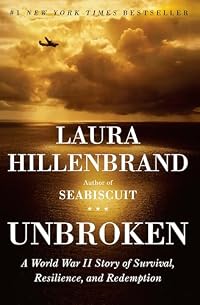
Unbroken: A World War II Story of Survival, Resilience, and Redemption
by Laura Hillenbrand
On This Page
Description
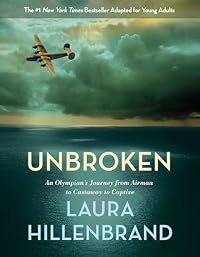
On a May afternoon in 1943, an Army Air Forces bomber crashed into the Pacific Ocean and disappeared, leaving only a spray of debris and a slick of oil, gasoline, and blood. Then, on the ocean surface, a face appeared--Lt. Louis Zamperini. Captured by the Japanese and driven to the limits of endurance, Zamperini would answer desperation with ingenuity; suffering with hope, resolve, and humor.Tags
Recommendations




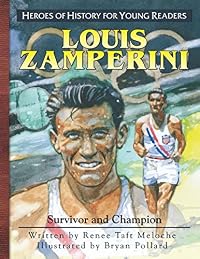


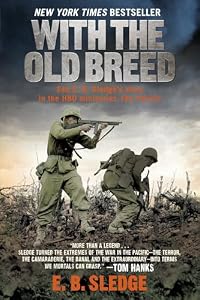

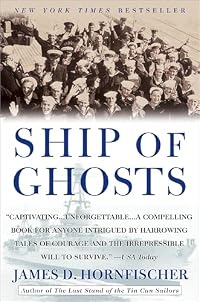

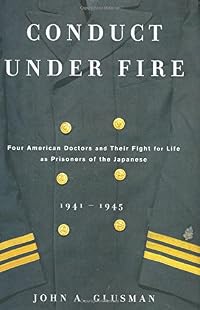














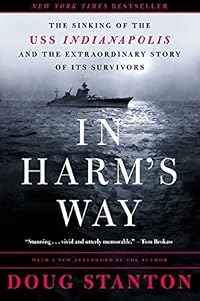






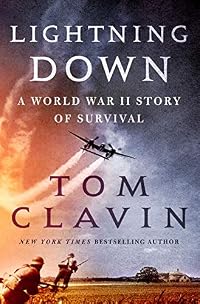
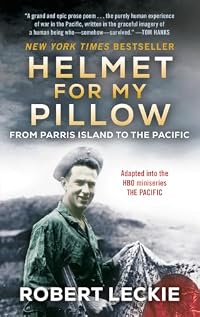
Member Recommendations
phm Nonfiction but reads like fiction and tells of a heroic plot by US Rangers to rescue Allied soldiers from a Japanese POW camp.
50
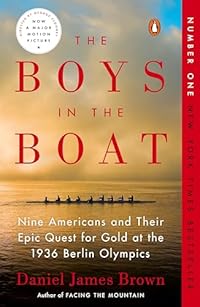
The Boys in the Boat: Nine Americans and Their Epic Quest for Gold at the 1936 Berlin Olympics by Daniel James Brown
terran Both books deal with participants in the 1936 Olympic Games in Berlin and with personal stories of individuals growing up in that time period. Both are incredible true stories that read like fiction.
30
TooBusyReading Another remarkable story about survival during WWII, about what humans can do to one another.
20
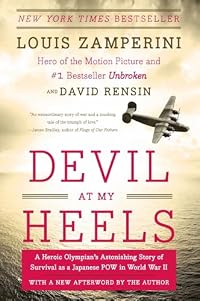
Stbalbach Louis Zamperini's autobiography published in 2003, with intro by John McCain.
whymaggiemay both examine prisoners of the Pacific islands
A Train in Winter: An Extraordinary Story of Women, Friendship, and Resistance in Occupied France by Caroline Moorehead
srdr A well-told story with similar themes…WW II survival, friendship under difficult conditions.
srdr Jan Baalsrud's incredible survival and escape from Nazi-occupied arctic Norway.

TooBusyReading Based on the author's experiences, starting with the Vietnam war. Gave me lots of insight into war and warriors.
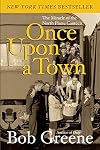
cransell An uplifting true story about World War II. Perhaps a good read after the harsh experiences in Unbroken.
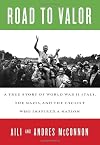
Road to Valor: A True Story of WWII Italy, the Nazis, and the Cyclist Who Inspired a Nation by Aili McConnon
sboyte Athletes and their experiences in the second World War.
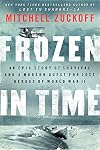
Frozen in Time: An Epic Story of Survival and a Modern Quest for Lost Heroes of World War II by Mitchell Zuckoff
srdr A gripping, non-fiction story of a WW II airplane crash on Greenland.
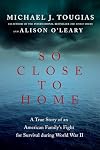
by anonymous user
Member Reviews
UNBROKEN by Laura Hillenbrand (author of SEABISCUIT) is nonfiction. I’m afraid many readers will miss this book for that reason. They think nonfiction is dull. But I promise, UNBROKEN is not dull. It’s a can’t-put-it-down book that will keep you up at night.
Louie Zamperini was a track star in the 1930s. He was good enough to go to the 1936 Olympics in Germany, and all expected, with more experience, he would be a medalist in the next Olympic games. Instead, World War II interfered, and Louie was drafted into the Army Air Corps.
Then Hillenbrand relates his life as a wartime flier. But Louie’s experiences, even compared with other fliers who saw combat, weren’t typical. Although “war is hell” is true for everyone involved, show more Louie’s hell was progressively worse. Just when I thought, this is more than a person can take, it got even more hideous.
Somehow, in part because Louie was so physically fit, he kept going. But he wouldn’t have if not for amazing mental strength as well.
If you expect a summary of what happens, I’m sorry. It would be unfair to you. I found the book un-put-downable just because I wasn’t familiar with Louie’s story. I would be doing you a disservice by summarizing the book’s various parts.
Do yourself a favor: don’t read the book flap or other reviews, either, until you’ve read the book yourself.
I can tell you this. UNBROKEN begins with a prologue. Louie and two other men are floating on a rubber raft in the ocean. They’re starving to death and weak when a jet flies low over them. Louie thinks it is American, and they are about to be saved. But it’s not. What happens on that ocean is really bad. But after the prologue and after the story begins with Louie’s early life to his experiences as a runner to the Olympics to the military, it then keeps getting worse.
Even so, I didn’t think this was a depressing book. I’ll admit, sometimes it was hard to read, and, if you’re like me, you may get so caught up in the story you’ll even get a headache at times (although I think mine may have been caused by heat and humidity). I wanted to keep reading because, even though bad kept happening, Louie kept overcoming.
Hillenbrand continues the story after Louie’s military service, and we see his (and others who were with him) ability and inability to cope. We see lives forever changed, often disastrously.
And we also see . . . . Well, I can’t continue without giving away what you should read and not anticipate because of something I said. But hint: I learned some unpleasant facts about Japanese civilians during World War II and after, even to present day.
Although I read slowly, I read a lot. I usually find one, maybe two, books a year that are so wonderful I can’t speak highly enough of them. This is one of those books. show less
Louie Zamperini was a track star in the 1930s. He was good enough to go to the 1936 Olympics in Germany, and all expected, with more experience, he would be a medalist in the next Olympic games. Instead, World War II interfered, and Louie was drafted into the Army Air Corps.
Then Hillenbrand relates his life as a wartime flier. But Louie’s experiences, even compared with other fliers who saw combat, weren’t typical. Although “war is hell” is true for everyone involved, show more Louie’s hell was progressively worse. Just when I thought, this is more than a person can take, it got even more hideous.
Somehow, in part because Louie was so physically fit, he kept going. But he wouldn’t have if not for amazing mental strength as well.
If you expect a summary of what happens, I’m sorry. It would be unfair to you. I found the book un-put-downable just because I wasn’t familiar with Louie’s story. I would be doing you a disservice by summarizing the book’s various parts.
Do yourself a favor: don’t read the book flap or other reviews, either, until you’ve read the book yourself.
I can tell you this. UNBROKEN begins with a prologue. Louie and two other men are floating on a rubber raft in the ocean. They’re starving to death and weak when a jet flies low over them. Louie thinks it is American, and they are about to be saved. But it’s not. What happens on that ocean is really bad. But after the prologue and after the story begins with Louie’s early life to his experiences as a runner to the Olympics to the military, it then keeps getting worse.
Even so, I didn’t think this was a depressing book. I’ll admit, sometimes it was hard to read, and, if you’re like me, you may get so caught up in the story you’ll even get a headache at times (although I think mine may have been caused by heat and humidity). I wanted to keep reading because, even though bad kept happening, Louie kept overcoming.
Hillenbrand continues the story after Louie’s military service, and we see his (and others who were with him) ability and inability to cope. We see lives forever changed, often disastrously.
And we also see . . . . Well, I can’t continue without giving away what you should read and not anticipate because of something I said. But hint: I learned some unpleasant facts about Japanese civilians during World War II and after, even to present day.
Although I read slowly, I read a lot. I usually find one, maybe two, books a year that are so wonderful I can’t speak highly enough of them. This is one of those books. show less
This book opens with bombardier, Louis Zamperini, lying on a raft in the Pacific on June 23, 1943. He and three other survivors of a plane crash are starving skeletons after 27 days at sea. Sharks are circling their leaking raft. Suddenly, a plane is spotted. They fire off a flare, only to discover the plane is a Japanese bomber, which begins a strafing run. While reading the first two pages it's impossible to believe this is a true story. Leaving us in stunned suspense, the author takes us back to the beginnings of Louis' life.
When we first meet young Louis he seems to be headed in the wrong direction. He spends his early days burglarizing homes, stealing cars, and jumping onto railroad boxcars. While speedily evading the cops, his show more brother tells him he should join the track team, which eventually leads him to the 1936 Berlin Olympics as the man most likely to break the four minute mile. After Pearl Harbor, Louis joins the Army Air Force, trains as an air bombardier, and flies 37 successful combat missions in a B-24 bomber in the Pacific War against Japan. Then he gets unlucky. Shot down by a Japanese Zero, Louis and his two surviving aircrew ditch amid thousands of miles of empty ocean.
Taken to a Japanese POW camp Louis is beaten and humiliated with appalling regularity by one particular guard, Mitsuhiro Watanabe, nicknamed "the Bird" by the prisoners. As sport he was made to race against Japanese runners. If he won, he was bludgeoned into unconsciousness. A constant round of beatings, abuse, starvation and torture reduces Louis and his companions to skeletal zombies. You will shudder as you read the details of the brutality these men endured. Upon release from the prison camp, Louis returns to home a broken man. His marriage falls apart and he becomes an alcoholic. He can't seem to cope with life, and who can blame him. One day he attends a revival conducted by Billy Graham and turns his life around. While the first and last parts were not as riveting as the POW sections, I am still giving this book 5 stars.
I listened to the audio book which was masterfully read by Edward Hermann. It wasn't an easy book to listen to. The beginning, especially the time stranded at sea, was quite dramatic and fascinating, but once the action switched to the prison camp I wished I had been able to skim over some of the more sadistic actions of the Japanese guards. But then I though that I owed it to Louis to keep listening. All I had to do was listen to his story, while he had to endure it for over two years. While incredibly painful, it's probably one of my very favorite non-fiction books. show less
When we first meet young Louis he seems to be headed in the wrong direction. He spends his early days burglarizing homes, stealing cars, and jumping onto railroad boxcars. While speedily evading the cops, his show more brother tells him he should join the track team, which eventually leads him to the 1936 Berlin Olympics as the man most likely to break the four minute mile. After Pearl Harbor, Louis joins the Army Air Force, trains as an air bombardier, and flies 37 successful combat missions in a B-24 bomber in the Pacific War against Japan. Then he gets unlucky. Shot down by a Japanese Zero, Louis and his two surviving aircrew ditch amid thousands of miles of empty ocean.
Taken to a Japanese POW camp Louis is beaten and humiliated with appalling regularity by one particular guard, Mitsuhiro Watanabe, nicknamed "the Bird" by the prisoners. As sport he was made to race against Japanese runners. If he won, he was bludgeoned into unconsciousness. A constant round of beatings, abuse, starvation and torture reduces Louis and his companions to skeletal zombies. You will shudder as you read the details of the brutality these men endured. Upon release from the prison camp, Louis returns to home a broken man. His marriage falls apart and he becomes an alcoholic. He can't seem to cope with life, and who can blame him. One day he attends a revival conducted by Billy Graham and turns his life around. While the first and last parts were not as riveting as the POW sections, I am still giving this book 5 stars.
I listened to the audio book which was masterfully read by Edward Hermann. It wasn't an easy book to listen to. The beginning, especially the time stranded at sea, was quite dramatic and fascinating, but once the action switched to the prison camp I wished I had been able to skim over some of the more sadistic actions of the Japanese guards. But then I though that I owed it to Louis to keep listening. All I had to do was listen to his story, while he had to endure it for over two years. While incredibly painful, it's probably one of my very favorite non-fiction books. show less
Louie Zamperini began life as a fleet-footed juvenile delinquent. After a healthy nudge from his older brother, he finds himself in high school track and is quickly smashing state records and suddenly qualifies for the 1936 Olympics. He performs honorably, with his sights firmly on the ‘40 Olympics and then World War II intrudes and Louie finds himself in the Air Corps. He becomes a bombardier and in ’43 his B-24 plane crashes into the Pacific, stranding him and two others, on a skimpy life-raft, for over forty days. Finally, rescue comes but from the Japanese Navy. Off to a hellish POW camp.
This amazing story finds Louie battling sharks, sadistic inhuman prison guards, starvation and later, alcoholism. Somehow this man continues to show more survive.
Hillenbrand came on the scene in 2002 ,with a little book called “Seabiscuit”, not only introducing us to a wonderful racehorse but giving the non-fiction world a real boost. She does it again here, with her irresistible narrative style and sharp eye for detail. Another winner all the way! show less
This amazing story finds Louie battling sharks, sadistic inhuman prison guards, starvation and later, alcoholism. Somehow this man continues to show more survive.
Hillenbrand came on the scene in 2002 ,with a little book called “Seabiscuit”, not only introducing us to a wonderful racehorse but giving the non-fiction world a real boost. She does it again here, with her irresistible narrative style and sharp eye for detail. Another winner all the way! show less
An excellent biography, honest and vivid. It is amazing the levels of cruelty human beings can inflict on each other, and this book certainly displays how the sick individual can exploit a systemic racism and national triumphalism to justify such cruelty. However, Hildebrand also shows how equally amazing is the ability of humans to withstand such cruelty, individually and in support of each other.
Here also though is a clear picture of the lasting effects of war and torture on people how have survived them. Zamperini's faith helps him find a way out of the hate and substance abuse that could have destroyed him. Not all are so able or so fortunate.
Here also though is a clear picture of the lasting effects of war and torture on people how have survived them. Zamperini's faith helps him find a way out of the hate and substance abuse that could have destroyed him. Not all are so able or so fortunate.
Based on positive reviews I had read for this NYT best-selling biography, I reserved the book-on-CD version. I was not disappointed. This is one of the most powerful biographies I've read in years. Following the life of Louis Zamperini from his troublesome childhood, through the sports fame of his youth, to his nightmarish experiences during World War II, and concluding with a brief section on his post-War years, Hillenbrand has crafted an incredible tale. Narrator Edward Herrman does a remarkable job, infusing only minimal emotion into his reading of Hillenbrand's detail-infused text. I initially didn't like Louis, based on his anti-social behavior as a kid. However, once he dedicates his life to his sport -- running -- and ends up at show more the 1936 Olympics in Berlin, I found myself intrigued by his story. But, it isn't until the narrative begins to chronicle Zamperini's experiences during WWII that the reader is fully sucked into the story. What follows, as we are told about his time adrift on a life raft after his plane is shot down, and then the horrors as he is moved from one Japanese P.O.W. facility to another, is truly gut-wrenching. Hillenbrand's matter-of-fact telling of these events helps to desensitize the reader to Zamperini's nightmare a bit, but I am still haunted by what he went through, weeks after finishing this book. This is an unforgettable tale, and one told with mastery by the author of Seabiscuit. I can't recomment it highly enough, and I particularly recommend the audiobook version with Herrman's narration. [If you enjoy this, you may also wish to try The Last Good War: The Faces and Voices of World War II is a 2010 coffee-table photography/biography collection, which combines contemporary shots of WWII vets (including Zamperini) with essays in which they share their experiences (available through InterLibrary Loan). Zamperini also wrote his own autobiography in 2003, Devil at My Heels, which covers much the same ground but has a totally different feel or tone to it.]
Originally reviewed for the staff recommendations page of my local library's website: http://www.lincolnlibraries.org/depts/bookguide/srec/staffrec11-03.htm show less
Originally reviewed for the staff recommendations page of my local library's website: http://www.lincolnlibraries.org/depts/bookguide/srec/staffrec11-03.htm show less
If this book had been a fiction story, I would have put it down - cliches! There is no way anyone could have lived through what our protagonist experienced! But the way Hillenbrand documented and retold Louie's story had me spellbound. The chapters on the raft were some of the most gripping storytelling I have ever read and the cruelty of the Japanese to the WWII POWs was stunning and unsettling to say the least.
This WWII survival tale is not an entertaining book. It’s not one that you read for a laugh or to pass the time on a rainy afternoon. It is intense and difficult to read, because it’s horrible to think of anyone going through these things. BUT, and that’s a big but, I think it’s important to read books like this. If we ignore the painful parts of our world’s history, we are doing a huge disservice to all of the people who lived during that time and whose actions created the world we live in today.
“If you don’t know history, then you don’t know anything. You are a leaf that doesn’t know it is part of a tree.” Michael Crichton
Louis Zamperini, an Olympic athlete and lieutenant in the Army Air Forces was in a bomber show more plane when it crashed into the ocean in May 1943. After more than a month a sea, facing unbelievable trials, he realizes he troubles have only begun.
SPOILERS
It was alarming to learn how little soldiers had in their emergency kits in the rafts if their planes crashed. They had almost no practical items and I can’t believe Louis managed to survive at sea for more than a month.
After surviving sharks, starvation and dehydration, Louis and his fellow raft mate are finally picked up by the Japanese only to be imprisoned as prisoners of war. The conditions of the prisons were horrendous and they were once again near death because of sickness and starvation.
The book also details the Rape of Nanking, one of the most disturbing things I’ve ever read about in the history of the world. It made me absolutely sick. There was also a Japanese prison guards, known as The Bird, whose sadistic, evil nature was shocking and really heartbreaking. It’s unbelievable what the prisoners went through.
I kept thinking about the families of the men who were lost at sea. I can’t imagine what they were going through, not knowing if their sons/husbands/fathers were alive or dead. They couldn’t grieve for their loss, because that would be giving up hope. It must have been a kind of torture of its own.
One aspect I was very glad the author discussed was Louis’ struggles after he returned home. The story doesn't just end because they make it out of the war. I can’t imagine anyone making it through something so awful and not developing some type of Post Traumatic Stress Disorder. Those men would undoubtedly struggle with those demons for the rest of their lives.
SPOILERS OVER
The different forms of torture and sickness described are pretty graphic. I can’t say I’d recommend it if you have a weak stomach. But, I also want to say that this isn’t gratuitous violence, it’s what actually happened to these men. If they could go through these appalling things to fight for our country, I think I can handle reading about it. There are dry parts in the book, but the journalist in me wants the whole story. Even if there are boring bits, I want to know who they are as a person so I can become invested in the story.
Louis’ story, and that of the other men, is a testament to what humans can endure, the strength that hope can give us and the atrocities of war. War is not an abstract idea, it’s real and it’s horrifying and we should never forget that. show less
“If you don’t know history, then you don’t know anything. You are a leaf that doesn’t know it is part of a tree.” Michael Crichton
Louis Zamperini, an Olympic athlete and lieutenant in the Army Air Forces was in a bomber show more plane when it crashed into the ocean in May 1943. After more than a month a sea, facing unbelievable trials, he realizes he troubles have only begun.
SPOILERS
It was alarming to learn how little soldiers had in their emergency kits in the rafts if their planes crashed. They had almost no practical items and I can’t believe Louis managed to survive at sea for more than a month.
After surviving sharks, starvation and dehydration, Louis and his fellow raft mate are finally picked up by the Japanese only to be imprisoned as prisoners of war. The conditions of the prisons were horrendous and they were once again near death because of sickness and starvation.
The book also details the Rape of Nanking, one of the most disturbing things I’ve ever read about in the history of the world. It made me absolutely sick. There was also a Japanese prison guards, known as The Bird, whose sadistic, evil nature was shocking and really heartbreaking. It’s unbelievable what the prisoners went through.
I kept thinking about the families of the men who were lost at sea. I can’t imagine what they were going through, not knowing if their sons/husbands/fathers were alive or dead. They couldn’t grieve for their loss, because that would be giving up hope. It must have been a kind of torture of its own.
One aspect I was very glad the author discussed was Louis’ struggles after he returned home. The story doesn't just end because they make it out of the war. I can’t imagine anyone making it through something so awful and not developing some type of Post Traumatic Stress Disorder. Those men would undoubtedly struggle with those demons for the rest of their lives.
SPOILERS OVER
The different forms of torture and sickness described are pretty graphic. I can’t say I’d recommend it if you have a weak stomach. But, I also want to say that this isn’t gratuitous violence, it’s what actually happened to these men. If they could go through these appalling things to fight for our country, I think I can handle reading about it. There are dry parts in the book, but the journalist in me wants the whole story. Even if there are boring bits, I want to know who they are as a person so I can become invested in the story.
Louis’ story, and that of the other men, is a testament to what humans can endure, the strength that hope can give us and the atrocities of war. War is not an abstract idea, it’s real and it’s horrifying and we should never forget that. show less
Members
- Recently Added By
Published Reviews
ThingScore 100
"Anyone who enjoyed Hillenbrand's previous book, Seabiscuit, will know that she has a fine line in compelling narrative. Unbroken is no different: meticulously researched and powerful. The reader, unlike the airmen, would rather the days adrift went on longer. They end, however, in grim style. Zamperini and fellow survivor are in sight of land when they are captured by Japanese forces. The Red show more Cross, however, is never informed and the two are declared dead." show less
added by Kayla1318
The ideal way to read “Unbroken” would be with absolutely no knowledge of how Mr. Zamperini’s life unfolded. Ms. Hillenbrand has written her book so breathlessly, and with such tight focus, that she makes it difficult to guess what will happen to him from one moment to the next, let alone how long he was able to survive under extreme duress...So “Unbroken” is a celebration of show more gargantuan fortitude, that of both Ms. Hillenbrand (whose prose shatters any hint of her debilitating fatigue) and Mr. Zamperini’s. It manages to be as exultant as “Seabiscuit” as it tells a much more harrowing, less heart-warming story. show less
added by vancouverdeb
Lists

Recommend the 20 best books you've read in the last five years
2,168 works; 606 members

Best Biographies, Autobiographies and Memoirs
464 works; 156 members

Top Five Books of 2013
1,562 works; 721 members

Top Five Books of 2014
1,064 works; 397 members

Best War Stories
87 works; 16 members
Books About World War II
102 works; 27 members

Non-Fiction Worth Reading
1,015 works; 260 members

Stories of War and Revolution
143 works; 54 members

100 books to read in a lifetime
102 works; 37 members
100 Biographies and Memoirs to Read in a (Single) Lifetime
98 works; 12 members

History can be Interesting (or Horrifying or Fun...)
14 works; 2 members

Olympians
8 works; 2 members
Books Set in Germany
74 works; 11 members

Books about World War II
241 works; 22 members

Perspectives Book Club Picks
49 works; 3 members

Mind Expanding Books by hackerkid
581 works; 8 members

To Read
133 works; 1 member

Books Read in 2025
4,090 works; 97 members
THE WAR ROOM
813 works; 24 members
Club Read's Recommended Nonfiction Written by Women
618 works; 30 members

Beautiful Feet Books
304 works; 7 members

Penguin Random House
458 works; 4 members

Memoir / Literary Nonfiction Summer Reading 23
5 works; 1 member

Best Survival Stories
97 works; 15 members

Pleasant Surprises: Books That Exceeded Our Expectations
418 works; 143 members

Books Tagged Abuse
152 works; 4 members

Carole's List
445 works; 13 members

Five star books
1,755 works; 108 members
Independent Reading Suggestions
69 works; 3 members
Indie Next Picks
196 works; 4 members

Books Read in 2014
2,341 works; 89 members

Books To Get From The Library
115 works; 5 members

Most Frequently Tagged "Read in 2015"
70 works; 1 member

Read the book and saw the movie
1,170 works; 195 members

Books Read in 2015
3,298 works; 126 members

Books Read in 2012
815 works; 34 members

Books for HS summer reading
21 works; 2 members

History: War & Terrorism
64 works; 1 member
Author Information

6+ Works 23,961 Members
Laura Hillenbrand was born in Fairfax, Virginia on May 15, 1967. She studied at Kenyon College in Gambier, Ohio, but was forced to leave before graduation because she contracted chronic fatigue syndrome. She has been writing about history and thoroughbred racing since 1988 and has been a contributing writer and editor at Equus magazine since 1989. show more Her work has appeared in many other publications including The New Yorker, American Heritage, ABC Sports Online, Thoroughbred Times, Talk, and The Backstretch. Her 1998 American Heritage article on Seabiscuit won her an Eclipse Award for outstanding feature article. In 2004, she won the National Magazine Award for the New Yorker article, A Sudden Illness. Her first book Seabiscuit: An American Legend won the Book Sense Nonfiction Book of the Year Award and the William Hill Sports Book of the Year in 2001. She served as a consultant on the Universal Pictures movie Seabiscuit, which was based on her book. Her second book, Unbroken: A World War II Story of Survival, Resilience, and Redemption, a biography of World War II hero Louis Zamperini, was also made into a movie. She was honored by the Turf Publicists of America for her contributions to the sport of thoroughbred racing with the 36th annual Big Sport of Turfdom award, making her just the fifth woman to win the award. (Bowker Author Biography) show less
Some Editions
Awards and Honors
Awards
Distinctions
Notable Lists
Work Relationships
Has the adaptation
Common Knowledge
- Canonical title
- Unbroken: A World War II Story of Survival, Resilience, and Redemption
- Original title
- Unbroken. A World War II Story of Survival, Resilience, and Redemption
- Original publication date
- 2010
- People/Characters
- Louis Zamperini; Louise Zamperini; Pete Zamperini; Sylvia Zamperini; Virginia Zamperini; Kunichi James "Jimmie" Sasaki (show all 14); Franklin Delano Roosevelt; Harold "Harry" Brooks; Stanley Pillsbury; Charleton Hugh Cuppernell; Russell Allen Phillips; Fred Garrett; The Bird; Billy Graham
- Important places
- Noetsu; Hawaiian Islands; Torrance, California, USA; Berlin, Germany; Madison Square Garden, New York, New York, USA; Sioux City, Iowa, USA (show all 12); Ephrata, Washington, USA; Pacific Ocean; Funafuti; Ofuna; Omori; Naoetsu Prison Camp
- Important events
- Olympic Games (1936); World War II (1939 | 1945); World War II, Pacific Theater (1941-12-07 | 1945-09-02)
- Related movies
- Unbroken (2014 | IMDb)
- Epigraph
- What stays with you latest and deepest? of curious panics,
Of hard-fought engagements or sieges tremendous what
deepest remains?
--Walt Whitman, "The Wound-Dresser" - Dedication
- For the wounded and the lost.
- First words
- [Preface] All he could see, in every direction, was water. It was June 22, 1943. Somewhere on the Pacific Ocean, American military airman and Olympic runner Louie Zamperini lay on a small raft, drifting.
In the predawn darkness of August 26, 1929, in the back bedroom of a small house in Torrance, California, a twelve-year-old boy sat up in bed, listening.
[Epilogue] On a June day in 1952, just off a winding road in California's San Gabriel Mountains, a mess of boys tumbled out of a truck and stood blinking in the sunshine. - Last words
- (Click to show. Warning: May contain spoilers.)[Epilogue] There was no trace of them here among the voices, the falling snow, and the old and joyful man, running.
(Click to show. Warning: May contain spoilers.)[Preface] The bent their bodies in the water and swam toward the man under the raft.
(Click to show. Warning: May contain spoilers.)In bewilderment, the men who had abused him watched him come to them, his hands extended, a radiant smile on his face. - Blurbers
- Skloot, Rebecca; McDougall, Christopher; Corrigan, Maureen
- Original language
- English
- Disambiguation notice
- Do not combine with Unbroken (The Young Adult Adaptation): An Olympian's Journey from Airman to Castaway to Captive.
Classifications
- Genres
- Biography & Memoir, General Nonfiction, History, Nonfiction, Sports and Leisure
- DDC/MDS
- 940.547252092 — History & geography History of Europe History of Europe 1918- Military history of World War II Prisoners of war; medical and social services Prisoner-of-War Camps
- LCC
- D805 .J3 .Z364 — History of Europe, Asia, Africa and Oceania History (General) World War II (1939-1945)
- BISAC
Statistics
- Members
- 14,304
- Popularity
- 511
- Reviews
- 617
- Rating
- (4.42)
- Languages
- 12 — Chinese, Danish, Dutch, English, French, German, Hungarian, Italian, Polish, Portuguese, Spanish, Swedish
- Media
- Paper, Audiobook, Ebook
- ISBNs
- 78
- UPCs
- 1
- ASINs
- 48