On This Page
Description
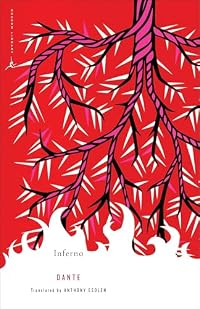
The Inferno is the first part of The Divine Comedy, Dante's epic poem describing man's progress from hell to paradise. In it, the author is lost in a dark wood, threatened by wild beasts and unable to find the right path to salvation. Notable for its nine circles of hell, the poem vividly illustrates the poetic justice of punishments faced by earthly sinners. The Inferno is perhaps the most popular of the three books of The Divine Comedy, which is widely considered the preeminent work in show more Italian literature. show lessTags
Recommendations





Member Recommendations

Member Reviews
Can I pick out a favorite canto? How about canto 14, the division of the blasphemers in circle 7. Some surprises here even as the reader has been growing accustomed to Dante's blending of Classical culture and Christianity. Capaneus, one of the seven mythological heroes who attacked the city of Thebes in support of Polynices, son of Oedipus, as told by Aeschylus in [b:The Seven Against Thebes|752713|The Seven Against Thebes (Dover Thrift Editions)|Aeschylus|https://i.gr-assets.com/images/S/compressed.photo.goodreads.com/books/1328866074l/752713._SY75_.jpg|2474147] and Statius in [b:The Thebaid: Seven Against Thebes|677893|The Thebaid Seven Against Thebes|Publius Papinius show more Statius|https://i.gr-assets.com/images/S/compressed.photo.goodreads.com/books/1348522460l/677893._SY75_.jpg|663891], is here for his blasphemy against Jupiter/Zeus. Dante thus treats blasphemy against a pagan god in mythology as equal to blasphemy against his Christian God! One might think that theologically you can't end up in the Christian Hell for defying a pagan god, but here you can, as Dante incorporates the Classical period into his Christian universe that takes in all of human history.
The idea that Hell is really a hell of one's own making is presented here as well. Capaneus continues to lash out at Jupiter: "let him hurl his bolts at me, no joy of satisfaction would I give him!" He is still the same person, unchanged, as he was in life, which is a condition of the shades in Hell: they will not ever change, their pride will never allow them to repent. Virgil speaks back to him that "no torment other than your rage itself could punish your gnawing pride more perfectly." This psychologically astute envisioning of Hell is not one I was expecting to encounter; I had been underestimating Dante.
In the second half of the canto we get a fascinatingly allegorical and resonant description of the Man of Crete. This is a colossus representing humankind that lies underneath Mt. Ida and whose tears, representing humanity's tears, are the source of Hell's rivers. Dante takes the idea of such a figure from the Book of Daniel, Nebuchadnezzar's dream, and combines it with Ovid's description of the fall of man from the Golden Age down through silver and bronze and finally to the Iron Age that he presents in [b:Metamorphoses|1715|Metamorphoses|Ovid|https://i.gr-assets.com/images/S/compressed.photo.goodreads.com/books/1622739150l/1715._SY75_.jpg|2870411]; the colossus is fashioned of gold at the head, silver at the chest, brass to his legs, and then iron - except for a right foot made of terra cotta that he places more weight on, which represents the modern Roman Church. Only the gold portion is unbroken, as the tears carve a fissure down the rest of him.
The idea of Hell's rivers being fed by human tears symbolically falling down a figure representing the fall and decay of man is a powerful poetic image. Also very interesting in that it shows how people in every age and every generation think that theirs is a uniquely bad time in history, going all the way back to Ovid! This is nothing new at all; likely in a thousand years people will think that their time is a uniquely bad time, as humanity continues on its way.
And then on a lighter note, we have the pilgrim, perhaps unconsciously, getting a little jab in at Virgil, who could not get them past the gates of the infernal city of Dis separating Upper from Lower Hell that was guarded by devils - Virgil can handle Classical monsters, but Christian devils are beyond his powers and they had to wait on an angel from Heaven to continue their journey. Here Dante most unnecessarily reminds Virgil of his past failure in introducing a question about their current position: "My master, you who overcome all opposition (except for those tough demons who came to meet us at the gate of Dis), who is that mighty one that seems unbothered...". Petty!
-------
Finally found a translation, Mark Musa’s, that I really get on with. Also watched and read the lectures and notes from Columbia University’s course on the Commedia alongside reading each canto, which are available for free at digitaldante.columbia.edu, an amazing gift. I would have understood a mere fraction of the context, richness, and literary techniques of this work without those. show less
The idea that Hell is really a hell of one's own making is presented here as well. Capaneus continues to lash out at Jupiter: "let him hurl his bolts at me, no joy of satisfaction would I give him!" He is still the same person, unchanged, as he was in life, which is a condition of the shades in Hell: they will not ever change, their pride will never allow them to repent. Virgil speaks back to him that "no torment other than your rage itself could punish your gnawing pride more perfectly." This psychologically astute envisioning of Hell is not one I was expecting to encounter; I had been underestimating Dante.
In the second half of the canto we get a fascinatingly allegorical and resonant description of the Man of Crete. This is a colossus representing humankind that lies underneath Mt. Ida and whose tears, representing humanity's tears, are the source of Hell's rivers. Dante takes the idea of such a figure from the Book of Daniel, Nebuchadnezzar's dream, and combines it with Ovid's description of the fall of man from the Golden Age down through silver and bronze and finally to the Iron Age that he presents in [b:Metamorphoses|1715|Metamorphoses|Ovid|https://i.gr-assets.com/images/S/compressed.photo.goodreads.com/books/1622739150l/1715._SY75_.jpg|2870411]; the colossus is fashioned of gold at the head, silver at the chest, brass to his legs, and then iron - except for a right foot made of terra cotta that he places more weight on, which represents the modern Roman Church. Only the gold portion is unbroken, as the tears carve a fissure down the rest of him.
The idea of Hell's rivers being fed by human tears symbolically falling down a figure representing the fall and decay of man is a powerful poetic image. Also very interesting in that it shows how people in every age and every generation think that theirs is a uniquely bad time in history, going all the way back to Ovid! This is nothing new at all; likely in a thousand years people will think that their time is a uniquely bad time, as humanity continues on its way.
And then on a lighter note, we have the pilgrim, perhaps unconsciously, getting a little jab in at Virgil, who could not get them past the gates of the infernal city of Dis separating Upper from Lower Hell that was guarded by devils - Virgil can handle Classical monsters, but Christian devils are beyond his powers and they had to wait on an angel from Heaven to continue their journey. Here Dante most unnecessarily reminds Virgil of his past failure in introducing a question about their current position: "My master, you who overcome all opposition (except for those tough demons who came to meet us at the gate of Dis), who is that mighty one that seems unbothered...". Petty!
-------
Finally found a translation, Mark Musa’s, that I really get on with. Also watched and read the lectures and notes from Columbia University’s course on the Commedia alongside reading each canto, which are available for free at digitaldante.columbia.edu, an amazing gift. I would have understood a mere fraction of the context, richness, and literary techniques of this work without those. show less
I'm just going to say that Dante is the greatest writer ever, and move on to review this edition.
This edition is great--not as great as Dante, but great. Kirkpatrick's translation is enjoyable, and more or less metrical; he's not afraid to leave in the difficulties and obscurities that you find in the Italian, and he's willing to occasionally just say screw it and throw in something unexpected and perhaps a little reckless. He also has a glorious vocabulary. He is to other Dante translators as Cormac McCarthy is to other American novelists, but Kirkpatrick's odd vocabulary is not limited to obscure concrete nouns.
Two things I took away from reading 'Inferno' via Kirkpatrick: first, Virgil is a genuine tragic figure, and can surely be show more read as a kind of apologetic fiction. Look at Virgil, Dante says, and consider what you--a far inferior human being on so many levels--are throwing away by not being a good Christian! Here is the greatest of poets, the most reasonable of writers, locked out of heaven simply because of his birthdate. Don't waste the unearned good fortune of being born after Christ's coming!
Second: I'm now pretty sure that Dante's dark wood was a suicide attempt. Read canto I, then read the canto of the suicides in Kirkpatrick's translation, and I suspect you'll decide the same. As well as aesthetic sense, it makes biographical sense. Don't bring your scholarship to bear on this, it's my interpretation and I'm sticking to it.
Kirkpatrick's also taken an interesting approach to notes and commentary. Rather than exhaustively annotating every line, he's written mini-essays on each canto, which allow you to get a good feel for what's coming/what you've just read, and then annotated episodes. Kirkpatrick's prose is, as you'd expect from the vocabulary of his translation, rather baroque. So if, like me, you enjoy that kind of thing, voila.
All that said, I suspect most readers will find Hollingdale or Carson (or Pinsky, if you like that kind of thing) a better introduction to Dante. This, however, is an ideal second read. My friends mock me for saying things like this, but: when you come to read Dante again, Kirkpatrick is the way to go. show less
This edition is great--not as great as Dante, but great. Kirkpatrick's translation is enjoyable, and more or less metrical; he's not afraid to leave in the difficulties and obscurities that you find in the Italian, and he's willing to occasionally just say screw it and throw in something unexpected and perhaps a little reckless. He also has a glorious vocabulary. He is to other Dante translators as Cormac McCarthy is to other American novelists, but Kirkpatrick's odd vocabulary is not limited to obscure concrete nouns.
Two things I took away from reading 'Inferno' via Kirkpatrick: first, Virgil is a genuine tragic figure, and can surely be show more read as a kind of apologetic fiction. Look at Virgil, Dante says, and consider what you--a far inferior human being on so many levels--are throwing away by not being a good Christian! Here is the greatest of poets, the most reasonable of writers, locked out of heaven simply because of his birthdate. Don't waste the unearned good fortune of being born after Christ's coming!
Second: I'm now pretty sure that Dante's dark wood was a suicide attempt. Read canto I, then read the canto of the suicides in Kirkpatrick's translation, and I suspect you'll decide the same. As well as aesthetic sense, it makes biographical sense. Don't bring your scholarship to bear on this, it's my interpretation and I'm sticking to it.
Kirkpatrick's also taken an interesting approach to notes and commentary. Rather than exhaustively annotating every line, he's written mini-essays on each canto, which allow you to get a good feel for what's coming/what you've just read, and then annotated episodes. Kirkpatrick's prose is, as you'd expect from the vocabulary of his translation, rather baroque. So if, like me, you enjoy that kind of thing, voila.
All that said, I suspect most readers will find Hollingdale or Carson (or Pinsky, if you like that kind of thing) a better introduction to Dante. This, however, is an ideal second read. My friends mock me for saying things like this, but: when you come to read Dante again, Kirkpatrick is the way to go. show less
"I came around and found myself now searching through a dark wood, the right way blurred and lost. How hard it is to say what that wood was, a wilderness, savage, brute, harsh and wild… My theme will be the good I found there…" (pg. 3)
In my belated quest to acquire, over the course of my adult life, an appreciation of culture that was once considered the responsibility of our education system – but long since abdicated – it pleases me to be able to say that I've now read Dante's Inferno. However, I must also say that, in contrast to my previous encounters with Homer, Milton, the scribes of the Bible and others, I rather struggled with this one and did not enjoy it.
This struggle was in part because of my Penguin Classics edition. show more These are usually dependable, readable editions accessible to the layman – that, in fact, was the imprint's initial raison d'être – but I found this edition of Dante's Inferno plodding. It begins with a dense, 100-page introduction that did more to get me lost in the weeds than bring me out of the forest, and it ends with another 130+ pages of commentaries and endnotes. I know that a reader isn't obliged to read these, of course, but I usually like a deep delve into the scholarly analysis. Here, it sapped my will.
This edition also disappointed in its translation by Robin Kirkpatrick, which is a technical feat, no doubt, but in my opinion a rather tasteless one. From what I understand, Dante's verse is particularly hard to translate – it seems like every word in Italian ends with a vowel, which makes it easier to rhyme than in English – and his austere, unlyrical style does a translator no favours ("his plain style and syntax," Kirkpatrick writes, almost ruefully, "has yet to be absorbed into the repertoire of English poetry" (pg. ciii)). But, even with these caveats, it's still disappointing when the most famous phrase of Dante – the inscription above the gates of Hell, "Abandon all hope, ye who enter here" – is delivered as the rather more flaccid "Surrender as you enter every hope you have" (pg. 21).
But, translators and editions aside, I also struggled with Dante himself. The narrative was often laborious; the descent into a literal Hell which Dante pursues was lacking in orientation. Many of the denizens of Dante's Hell are political and religious figures from his own time, and to understand the context of their role the reader must undergo a restless flicking backwards and forwards to the endnotes. I got lost in the procession of monstrous creatures, and the thread of narrative was slight. Dante has great ideas, as I shall come onto presently, but these are not easy to discover for yourself as you read. Just about every line, it seems, requires scholarly divination. That plain, unlyrical style I mentioned above was not only unexpected (I was anticipating an Italian Milton), but it meant that in the moments when I was adrift I didn't even have the benefit of a killer phrase to sustain me through a rough patch.
Nevertheless, after the inauspicious journey through the outer rings of Hell, I did start to get a tenuous grasp on what Dante had achieved. The deeper he goes through his infamous Seven Circles of Hell, the better it gets, and by the end my impression of the poem was a favourable one. The poet Dante – as opposed to the character Dante in his Inferno – was an exile from his native land, and his conception of Hell is a sort of mind map for the paths a human soul can find themselves on. Barred from his literal homeland, he navigates the "construct in his mind [of] an intellectual and spiritual homeland" (pg. xxiii).
Dante's journey is not crude religious iconography of brimstone and winged hellspawn, but instead a lucid meditation on the moral challenges people face in their lives. His Hell is not a place for irredeemable sinners, but instead a banal dwelling-place for those who have erred in their lives and have not sought remedy, whether through apathy, sin or ignorance. As Kirkpatrick's introduction puts it, "the sinners in Dante's Hell… have all in some way denied themselves a full realization of their human potentiality and fallen into an alliance with dullness and death" (pg. lxxv). With this orientation in mind, we recognise that Dante's poem is not a gleeful condemnation or vindictive settling of scores, not even when the people he meets in Hell are people he has known in real life. He is gripped by "great sorrow" when he comes across the tortured, bewildered souls, "for many persons of the greatest worth were held, I knew, suspended on this strip" (pg. 31).
Mistakes on these paths of life lead to spiritual and psychological Hell. Dante's construction is a forerunner of Milton's Hell – in Paradise Lost, it is a place you end up if you make bad decisions in your life (which is why Milton's Satan is the lord there – you can't conceive of a worse decision to make in your life than to scorn and rebel against God). Dante was perhaps even more committed to this conception of Hell than Milton. Whereas Milton's Lucifer is rather compelling – a representation of the seductive appeal of secular, or anti-God, reasoning – Dante's Satan, when he finally appears at the end, is without fanfare. He is nothing, a void, an anticlimactic and – were it not for his grossness – pitiable creature, more like a hairy, bovine slug than a threatening demon. Evil is, for Dante, not sin or violence but "sheer banality and tedium" (pg. lxxv), as the Introduction puts it; a void inside that results from false life choices carried to their end. His Hell is made of ice, not fire. It is a deadening bureaucracy, rigorously organised into ossified strata, not a chaotic pandemonium of licentiousness and sin. When Dante emerges into the light of the mortal world at the end of Inferno, representing the decision to pursue a fulfilling (Christian) life, the reader shares his relief. (Kirkpatrick's commentary notes this beautifully: once the banality and tedium of evil is witnessed firsthand, even sin becomes insignificant, and "correspondingly the enjoyment of light is the essential duty of any created being" (pg. 448).)
Dante (both the poet and the character) is, in traversing this landscape, undergoing a courageous meditation on how to live properly. This adventure is, the Introduction says, "an attempt to see what the human mind can achieve when… it anatomizes its own psyche and adjusts its own ethical apparatus to achieve a better performance" (pg. lxxix). That's less thrilling, perhaps, than a tumble into a turbulent, out-of-control, fire-and-mayhem inferno (just how did that word come to mean what it means today? Its popularisers must not have even read Dante). But the mechanics are profound, even if – to a modern English-speaking audience – the execution is not.
I found myself admiring Dante's storytelling choices, even when the poem itself was failing to capture me. To end the story with such an anticlimactic adversary – the banal Satan figure – is a decision that I don't think any writer would have the courage to make today. It's perfect for Dante's message in Inferno, but I suspect most writers would prefer to sabotage their own painstakingly-built philosophy rather than conclude with something so lacking in a crowd-pleasing element. I admired the conception of the Seven Circles of Hell – once I understood it – and the decision by Dante to have Virgil, the Roman (and therefore pagan) poet, as his literal guide through the Inferno – is perhaps one of the great magnanimous acts of any artist in history. Given Dante's influence, the central role of Virgil in his story advocates for the moral legitimacy of pagan, Classical tradition in a Christian world, leading to a harmony between classical and Christian thought. Dante's Inferno is, in this crucial respect, a foundation stone for the Renaissance and the Age of Reason.
I would like such a noble conclusion to be my dominant thought, and I am sure that in time my appreciation for Dante's Inferno and its foundational role in Western culture will be my enduring memory of the book. But, for the purposes of review, it is worth reiterating that I found the book and its translation an often unsatisfying trial. I apologise for being such a heretic, and I don't know which circle of Hell such a statement puts me in (I suspect the sixth), but it's my honest, immediate response to finishing the book. I hope – to return to the quote from Dante with which I opened this review – that my theme has been the good I found here, but I was more stimulated by the ideas when they were unpacked in the introduction and the endnotes, even though these were denser than they needed to be. Dante's conceptual genius seeded all this, of course, but it was hard for me to reap. show less
In my belated quest to acquire, over the course of my adult life, an appreciation of culture that was once considered the responsibility of our education system – but long since abdicated – it pleases me to be able to say that I've now read Dante's Inferno. However, I must also say that, in contrast to my previous encounters with Homer, Milton, the scribes of the Bible and others, I rather struggled with this one and did not enjoy it.
This struggle was in part because of my Penguin Classics edition. show more These are usually dependable, readable editions accessible to the layman – that, in fact, was the imprint's initial raison d'être – but I found this edition of Dante's Inferno plodding. It begins with a dense, 100-page introduction that did more to get me lost in the weeds than bring me out of the forest, and it ends with another 130+ pages of commentaries and endnotes. I know that a reader isn't obliged to read these, of course, but I usually like a deep delve into the scholarly analysis. Here, it sapped my will.
This edition also disappointed in its translation by Robin Kirkpatrick, which is a technical feat, no doubt, but in my opinion a rather tasteless one. From what I understand, Dante's verse is particularly hard to translate – it seems like every word in Italian ends with a vowel, which makes it easier to rhyme than in English – and his austere, unlyrical style does a translator no favours ("his plain style and syntax," Kirkpatrick writes, almost ruefully, "has yet to be absorbed into the repertoire of English poetry" (pg. ciii)). But, even with these caveats, it's still disappointing when the most famous phrase of Dante – the inscription above the gates of Hell, "Abandon all hope, ye who enter here" – is delivered as the rather more flaccid "Surrender as you enter every hope you have" (pg. 21).
But, translators and editions aside, I also struggled with Dante himself. The narrative was often laborious; the descent into a literal Hell which Dante pursues was lacking in orientation. Many of the denizens of Dante's Hell are political and religious figures from his own time, and to understand the context of their role the reader must undergo a restless flicking backwards and forwards to the endnotes. I got lost in the procession of monstrous creatures, and the thread of narrative was slight. Dante has great ideas, as I shall come onto presently, but these are not easy to discover for yourself as you read. Just about every line, it seems, requires scholarly divination. That plain, unlyrical style I mentioned above was not only unexpected (I was anticipating an Italian Milton), but it meant that in the moments when I was adrift I didn't even have the benefit of a killer phrase to sustain me through a rough patch.
Nevertheless, after the inauspicious journey through the outer rings of Hell, I did start to get a tenuous grasp on what Dante had achieved. The deeper he goes through his infamous Seven Circles of Hell, the better it gets, and by the end my impression of the poem was a favourable one. The poet Dante – as opposed to the character Dante in his Inferno – was an exile from his native land, and his conception of Hell is a sort of mind map for the paths a human soul can find themselves on. Barred from his literal homeland, he navigates the "construct in his mind [of] an intellectual and spiritual homeland" (pg. xxiii).
Dante's journey is not crude religious iconography of brimstone and winged hellspawn, but instead a lucid meditation on the moral challenges people face in their lives. His Hell is not a place for irredeemable sinners, but instead a banal dwelling-place for those who have erred in their lives and have not sought remedy, whether through apathy, sin or ignorance. As Kirkpatrick's introduction puts it, "the sinners in Dante's Hell… have all in some way denied themselves a full realization of their human potentiality and fallen into an alliance with dullness and death" (pg. lxxv). With this orientation in mind, we recognise that Dante's poem is not a gleeful condemnation or vindictive settling of scores, not even when the people he meets in Hell are people he has known in real life. He is gripped by "great sorrow" when he comes across the tortured, bewildered souls, "for many persons of the greatest worth were held, I knew, suspended on this strip" (pg. 31).
Mistakes on these paths of life lead to spiritual and psychological Hell. Dante's construction is a forerunner of Milton's Hell – in Paradise Lost, it is a place you end up if you make bad decisions in your life (which is why Milton's Satan is the lord there – you can't conceive of a worse decision to make in your life than to scorn and rebel against God). Dante was perhaps even more committed to this conception of Hell than Milton. Whereas Milton's Lucifer is rather compelling – a representation of the seductive appeal of secular, or anti-God, reasoning – Dante's Satan, when he finally appears at the end, is without fanfare. He is nothing, a void, an anticlimactic and – were it not for his grossness – pitiable creature, more like a hairy, bovine slug than a threatening demon. Evil is, for Dante, not sin or violence but "sheer banality and tedium" (pg. lxxv), as the Introduction puts it; a void inside that results from false life choices carried to their end. His Hell is made of ice, not fire. It is a deadening bureaucracy, rigorously organised into ossified strata, not a chaotic pandemonium of licentiousness and sin. When Dante emerges into the light of the mortal world at the end of Inferno, representing the decision to pursue a fulfilling (Christian) life, the reader shares his relief. (Kirkpatrick's commentary notes this beautifully: once the banality and tedium of evil is witnessed firsthand, even sin becomes insignificant, and "correspondingly the enjoyment of light is the essential duty of any created being" (pg. 448).)
Dante (both the poet and the character) is, in traversing this landscape, undergoing a courageous meditation on how to live properly. This adventure is, the Introduction says, "an attempt to see what the human mind can achieve when… it anatomizes its own psyche and adjusts its own ethical apparatus to achieve a better performance" (pg. lxxix). That's less thrilling, perhaps, than a tumble into a turbulent, out-of-control, fire-and-mayhem inferno (just how did that word come to mean what it means today? Its popularisers must not have even read Dante). But the mechanics are profound, even if – to a modern English-speaking audience – the execution is not.
I found myself admiring Dante's storytelling choices, even when the poem itself was failing to capture me. To end the story with such an anticlimactic adversary – the banal Satan figure – is a decision that I don't think any writer would have the courage to make today. It's perfect for Dante's message in Inferno, but I suspect most writers would prefer to sabotage their own painstakingly-built philosophy rather than conclude with something so lacking in a crowd-pleasing element. I admired the conception of the Seven Circles of Hell – once I understood it – and the decision by Dante to have Virgil, the Roman (and therefore pagan) poet, as his literal guide through the Inferno – is perhaps one of the great magnanimous acts of any artist in history. Given Dante's influence, the central role of Virgil in his story advocates for the moral legitimacy of pagan, Classical tradition in a Christian world, leading to a harmony between classical and Christian thought. Dante's Inferno is, in this crucial respect, a foundation stone for the Renaissance and the Age of Reason.
I would like such a noble conclusion to be my dominant thought, and I am sure that in time my appreciation for Dante's Inferno and its foundational role in Western culture will be my enduring memory of the book. But, for the purposes of review, it is worth reiterating that I found the book and its translation an often unsatisfying trial. I apologise for being such a heretic, and I don't know which circle of Hell such a statement puts me in (I suspect the sixth), but it's my honest, immediate response to finishing the book. I hope – to return to the quote from Dante with which I opened this review – that my theme has been the good I found here, but I was more stimulated by the ideas when they were unpacked in the introduction and the endnotes, even though these were denser than they needed to be. Dante's conceptual genius seeded all this, of course, but it was hard for me to reap. show less
Rating: 4* of five
The Publisher Says: This widely praised version of Dante's masterpiece, which won the Los Angeles Times Book Prize and the Harold Morton Landon Translation Award of the Academy of American Poets, is more idiomatic and approachable than its many predecessors. Former U.S. Poet Laureate Pinsky employs slant rhyme and near rhyme to preserve Dante's terza rima form without distorting the flow of English idiom. The result is a clear and vigorous translation that is also unique, student-friendly, and faithful to the original: "A brilliant success," as Bernard Knox wrote in The New York Review of Books.
My Review: The Doubleday UK meme, a book a day for July 2014, is the goad I'm using to get through my snit-based unwritten show more reviews. Today's prompt is the twenty-fourth, a book that reminds you of your English teacher.
Ninth grade, or freshman high school year, was The Odyssey, and tenth was The Inferno. We used, in 1974, the then-newish Ciardi translation, made in 1954; it was quite an event, since Ciardi (a poet of some renown) translated it as poetry instead of as Italian-to-English words.
Pinsky's translation attempts the damn-near impossible feat of preserving the terza rima (aba, bcb, cdc, etc.) rhyme scheme invented by Dante for this cycle of poems. The result is a noble experiment, one marked by many successes. There are some weird things like quotes flowing over multiple stanzas, and there are some...odd...rhymes. But hell, the man tried a damned near impossible feat! Italian is a language in which it's harder *not* to rhyme than otherwise, and English resists rhyme with all its might and main.
So what is any reviewer to say about a 700-year-old poem? Nothing hasn't been said by now. I am anti-christian. The theology behind the entire Divine Comedy appalls and repulses me. I speak rudimentary Italian. Pinsky's efforts to reproduce terza rima are, to my ears, clunky and unnecessary. But in the end, rating a book like this is about what the take-away is for the reader. I take away a sense of Dante as an intelligent, desperately lonely man, attempting to make a Universe in which his existence matters and is of some moment. I stand in awed amazement at his gloriously baroque imagination. I am gobsmacked by the sheer audacity of a medieval poet writing in the vernacular. If Dante was alive today, he'd be writing raps.
Ugh. Horrible thought.
But nonetheless, I am wowed at a root level by the joyous, exuberant viciousness and the unapologetic cruelty of Dante's score-settling fates for his enemies. What a guy! Those raps he'd be writing today? They'd inspire Wes Craven to make movies and Clive Barker to write gore-fests!
Try this exercise: Imagine a beat-box under the terza rima stanzas. Read a piece aloud imagining hand-claps at the end of each stanza. This is what I think we, in this relativistic age, should strive for: to interpret the classics of literature and poetry by standards relevant to today, in addition to the standards that we know were applied at the time of the work's creation.
Many more layers to this work that way. After all, a literary classic is a work that's never finished saying what it has to say.
And here one is. show less
The Publisher Says: This widely praised version of Dante's masterpiece, which won the Los Angeles Times Book Prize and the Harold Morton Landon Translation Award of the Academy of American Poets, is more idiomatic and approachable than its many predecessors. Former U.S. Poet Laureate Pinsky employs slant rhyme and near rhyme to preserve Dante's terza rima form without distorting the flow of English idiom. The result is a clear and vigorous translation that is also unique, student-friendly, and faithful to the original: "A brilliant success," as Bernard Knox wrote in The New York Review of Books.
My Review: The Doubleday UK meme, a book a day for July 2014, is the goad I'm using to get through my snit-based unwritten show more reviews. Today's prompt is the twenty-fourth, a book that reminds you of your English teacher.
Ninth grade, or freshman high school year, was The Odyssey, and tenth was The Inferno. We used, in 1974, the then-newish Ciardi translation, made in 1954; it was quite an event, since Ciardi (a poet of some renown) translated it as poetry instead of as Italian-to-English words.
Pinsky's translation attempts the damn-near impossible feat of preserving the terza rima (aba, bcb, cdc, etc.) rhyme scheme invented by Dante for this cycle of poems. The result is a noble experiment, one marked by many successes. There are some weird things like quotes flowing over multiple stanzas, and there are some...odd...rhymes. But hell, the man tried a damned near impossible feat! Italian is a language in which it's harder *not* to rhyme than otherwise, and English resists rhyme with all its might and main.
So what is any reviewer to say about a 700-year-old poem? Nothing hasn't been said by now. I am anti-christian. The theology behind the entire Divine Comedy appalls and repulses me. I speak rudimentary Italian. Pinsky's efforts to reproduce terza rima are, to my ears, clunky and unnecessary. But in the end, rating a book like this is about what the take-away is for the reader. I take away a sense of Dante as an intelligent, desperately lonely man, attempting to make a Universe in which his existence matters and is of some moment. I stand in awed amazement at his gloriously baroque imagination. I am gobsmacked by the sheer audacity of a medieval poet writing in the vernacular. If Dante was alive today, he'd be writing raps.
Ugh. Horrible thought.
But nonetheless, I am wowed at a root level by the joyous, exuberant viciousness and the unapologetic cruelty of Dante's score-settling fates for his enemies. What a guy! Those raps he'd be writing today? They'd inspire Wes Craven to make movies and Clive Barker to write gore-fests!
Try this exercise: Imagine a beat-box under the terza rima stanzas. Read a piece aloud imagining hand-claps at the end of each stanza. This is what I think we, in this relativistic age, should strive for: to interpret the classics of literature and poetry by standards relevant to today, in addition to the standards that we know were applied at the time of the work's creation.
Many more layers to this work that way. After all, a literary classic is a work that's never finished saying what it has to say.
And here one is. show less
Dante’s Divine Comedy is famously organized into three sections: hell (inferno), then purgatory, and finally paradise. The first section (hell) is generally considered the greatest of the three, and Robert Pinsky attempts to re-translate the verses in this edition. Dante intentionally wrote the Divine Comedy in the Italian of commoners (instead of the Latin of scholars) so that the masses could read it. Therefore, it is appropriate for Pinsky to translate the Inferno in a way that the average modern reader can understand. In my view, he is successful in this attempt.
The pilgrim/narrator, who is an everyman living on earth, is guided into hell by Virgil, who is considered a great pagan living in the outer circles of hell. The Inferno show more represents a dystopia that only gets worse as one descends into the center. Its story of vices, not virtues, vividly portray the tragedy of the human condition, filled with thieves, betrayers, lusters, and hypocrites. One’s condition while alive on earth is only amplified in the afterlife. Although wedded to the Christian tradition, this version of hell is most representative of the ancient Romans and Greeks.
Images like Brutus (who betrayed Julius Caesar) and Judas Iscariot (who betrayed Jesus Christ) sitting near the center of hell still fill the western psyche. Lucifer (Satan) sits at the center of hell, which lies at the center of earth. These images continue to fill popular culture and stem from Dante’s imagination more than Judeo-Christian Scriptures. The story of the Inferno is very dark and reminds the reader of darker parts of her/his own experiences on earth. Ironically, for Dante, hell is not a place of fire and brimstone but of self-absorption and never-ending sadness.
Many in the modern world will reject Dante’s conception of the universe, which is based on medieval adaptations of Greco-Roman philosophy. We are much more scientific and not as otherworldly. Our concept of virtues and vices likewise correspond with our modern consciousness. Judas Iscariot and Brutus are not our archenemies as much as Hitler and Stalin. To the modern ear, Dante’s world seems utterly foreign. Nonetheless, Dante’s dark imagery (from the 1300s) will remind the reader of human nature today. Dante’s conception of the afterlife starts in the present-life.
That’s why the modern reader should still attend to Dante, despite his medieval bearings. He understands human nature well. His poetic imagery is poignant and clairvoyant. He represents eras of human history that the literate public should not forget. Pinsky’s modern translation makes him once again accessible. show less
The pilgrim/narrator, who is an everyman living on earth, is guided into hell by Virgil, who is considered a great pagan living in the outer circles of hell. The Inferno show more represents a dystopia that only gets worse as one descends into the center. Its story of vices, not virtues, vividly portray the tragedy of the human condition, filled with thieves, betrayers, lusters, and hypocrites. One’s condition while alive on earth is only amplified in the afterlife. Although wedded to the Christian tradition, this version of hell is most representative of the ancient Romans and Greeks.
Images like Brutus (who betrayed Julius Caesar) and Judas Iscariot (who betrayed Jesus Christ) sitting near the center of hell still fill the western psyche. Lucifer (Satan) sits at the center of hell, which lies at the center of earth. These images continue to fill popular culture and stem from Dante’s imagination more than Judeo-Christian Scriptures. The story of the Inferno is very dark and reminds the reader of darker parts of her/his own experiences on earth. Ironically, for Dante, hell is not a place of fire and brimstone but of self-absorption and never-ending sadness.
Many in the modern world will reject Dante’s conception of the universe, which is based on medieval adaptations of Greco-Roman philosophy. We are much more scientific and not as otherworldly. Our concept of virtues and vices likewise correspond with our modern consciousness. Judas Iscariot and Brutus are not our archenemies as much as Hitler and Stalin. To the modern ear, Dante’s world seems utterly foreign. Nonetheless, Dante’s dark imagery (from the 1300s) will remind the reader of human nature today. Dante’s conception of the afterlife starts in the present-life.
That’s why the modern reader should still attend to Dante, despite his medieval bearings. He understands human nature well. His poetic imagery is poignant and clairvoyant. He represents eras of human history that the literate public should not forget. Pinsky’s modern translation makes him once again accessible. show less
If you like reading about people boiled in a river of blood, forever immersed in shit, having their heads on backwards, split down the middle, beheaded, suffering eternal disease and itching, being frozen in ice, or lastly for those in the innermost circle of hell, you know, bad old Judas and Brutus, chewed by Satan himself (as well as in the other circles a myriad of other tortures, er, “just” punishments for sins on Earth per the Christian view of morality), well, this is the book for you!
To me this book represents the worst of Christianity: eternal torment, eternal torture, and no mercy. It’s all cruel retribution, without pity. I fail to see how these sentiments are Christ-like even within the dogma of the religion, and I show more fail to see why anyone would ever view this as representative of an enlightened faith that should be aspired to.
If you are inclined to read it this is a great edition – lots of annotation, illustrations, and a fresh translation … but I don’t recommend it. show less
To me this book represents the worst of Christianity: eternal torment, eternal torture, and no mercy. It’s all cruel retribution, without pity. I fail to see how these sentiments are Christ-like even within the dogma of the religion, and I show more fail to see why anyone would ever view this as representative of an enlightened faith that should be aspired to.
If you are inclined to read it this is a great edition – lots of annotation, illustrations, and a fresh translation … but I don’t recommend it. show less
Finally a translation that remains true to Dante's intent in seeking to deliver a vernacular, even colloquial, tongue.
The story, of course, is perplexing. Dante is regarded as a "Christian poet"--perhaps the greatest of the late Middle Ages at the onset of a golden age in the Italian Peninsula. Yet Christ is never mentioned, nor is there a metaphoric "lion" in this gyric wardrobe. As John Freccero says in the Foreword, it is Hell, and this "Hell is the parody of a city" devoted to only to Self and insatiable desires. All hope is gone--"Lasciate ogne speranza, voi ch'intrate". [III.9, at 18]
Had me of course with the first sentence: Nel mezzo del cammin di nostra vita / mi ritrovai per una selva oscura, / che la diritta via era show more smarrita.
Midway in my life, the entire world collapsed as all of the major financial institutions liquidated the largest middle class in the world and destroyed themselves. With only a guide--OK, it was not Vergil, but my wife!--I was in a rough patch in a dark forest.
Dante was exiled from Florence, amid political and financial turmoil. He was famous as a poet of the "Commedia", but all benefit from that was gone. The words "I found myself", move out of himself, into where he is lost. Then he shifts to the plural "our life", and we have shared human experience. The Notes indicate that "dark woods" correspond to a place of sin and corruption among the figures of the time, as well as in the soul. In "Convivio", Dante speaks of the "erroneous forest of this life". These are great Notes!
And don't get me started about Beatrice! show less
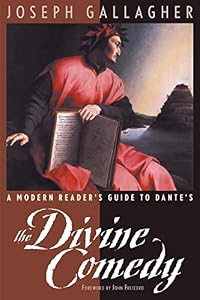
The story, of course, is perplexing. Dante is regarded as a "Christian poet"--perhaps the greatest of the late Middle Ages at the onset of a golden age in the Italian Peninsula. Yet Christ is never mentioned, nor is there a metaphoric "lion" in this gyric wardrobe. As John Freccero says in the Foreword, it is Hell, and this "Hell is the parody of a city" devoted to only to Self and insatiable desires. All hope is gone--"Lasciate ogne speranza, voi ch'intrate". [III.9, at 18]
Had me of course with the first sentence: Nel mezzo del cammin di nostra vita / mi ritrovai per una selva oscura, / che la diritta via era show more smarrita.
Midway in my life, the entire world collapsed as all of the major financial institutions liquidated the largest middle class in the world and destroyed themselves. With only a guide--OK, it was not Vergil, but my wife!--I was in a rough patch in a dark forest.
Dante was exiled from Florence, amid political and financial turmoil. He was famous as a poet of the "Commedia", but all benefit from that was gone. The words "I found myself", move out of himself, into where he is lost. Then he shifts to the plural "our life", and we have shared human experience. The Notes indicate that "dark woods" correspond to a place of sin and corruption among the figures of the time, as well as in the soul. In "Convivio", Dante speaks of the "erroneous forest of this life". These are great Notes!
And don't get me started about Beatrice! show less
Members
- Recently Added By
Lists

Unread books
1,063 works; 87 members

Shaykh Hamza's Book Recommendations
439 works; 3 members

Five star books
1,755 works; 108 members

100 Most Recommended Works
100 works; 11 members

The College Board: 101 Great Books Recommended for College-Bound Readers
111 works; 7 members

Authors from Italy
13 works; 1 member

Ten+ Books About the Afterlife
13 works; 2 members

Books Read in 2019
4,052 works; 110 members

The Great Courses: St. Augustine's Confessions
17 works; 1 member
BBC Big Read
100 works; 10 members

Top Five Books of 2020
982 works; 348 members

Books I read in high school
52 works; 1 member
Books I Wrote Essays on
34 works; 1 member

Novels/Poems/Short Stories/Anything Storytelling Related
112 works; 2 members

Jones & Newman: Best Horror Books Further Recommended Reading
577 works; 4 members

Mad Men Reading List
25 works; 5 members

Books Read in 2015
3,298 works; 129 members

Well-Educated Mind
150 works; 3 members

Mustich's 1000 Books to Read Before You Die: A Life Changing List
1,001 works; 18 members
Books With Our Favorite First Lines
168 works; 104 members

Book Titles Mentioned In Newberry Medal And Honor Books
884 works; 3 members
The Well-Educated Mind, Susan Wise Bauer, 2016
179 works; 3 members

Books Read in 2024
4,623 works; 126 members

The Luca Guadagnino Universe
62 works; 1 member

The Complete Rory Gilmore Reading List
506 works; 5 members
David Bowie’s Top 100 Favourite Reads
100 works; 3 members

Books Read in 2025
4,090 works; 97 members
School Made Us Read It
380 works; 196 members
My Mad Men Reading List
47 works; 1 member

el
1,139 works; 1 member

Books in the Bibliography of The History of Hell by Alice K. Turner
155 works; 1 member

The Books I Read in 2016
54 works; 1 member
Harold Bloom - The Western Canon: B. The Aristocratic Age
231 works; 13 members
Folio Society
831 works; 48 members

Top Five Books of 2013
1,564 works; 716 members

Best Satire
188 works; 29 members

Best Books Involving Satan
63 works; 26 members

Most Popular Penguins
70 works; 5 members

Narrative verse for pleasure
75 works; 8 members

Books You Read During High School (For School)
301 works; 53 members
Books That Changed Me
156 works; 47 members
Allegorical Fiction
16 works; 4 members

Best of World Literature
431 works; 51 members

Books Set in Italy
167 works; 19 members
David Bowie's Top 100
97 works; 23 members
The Telegraph's 110 Best Books: The Perfect Library
101 works; 17 members

2013 Notable Books for Adults
26 works; 5 members
Great Books Favorites
71 works; 6 members

Christianity Books You've Read
179 works; 19 members
Books I've Read More Than Once
602 works; 49 members

100 Books to Read in a Lifetime (That Are Older Than 200 Years)
415 works; 173 members

Books Featured on Gilmore Girls
307 works; 21 members

25 Books Every Christian Should Read
27 works; 4 members
GreatBooks Worldview Academy Lists
133 works; 4 members
Generation Joshua
115 works; 3 members

CCE 100 Great Books List
145 works; 8 members

Literary Works Read in College
316 works; 15 members

Poetry Corner
187 works; 15 members
100 World Classics
99 works; 15 members

Blue Pyramid 1,276 Best Books of All Time
1,248 works; 32 members
Truly old classics
63 works; 6 members
Dark Books for Winter Reading
71 works; 11 members
Best Books About Journeys and Quests
117 works; 30 members

50 Tough Books for Extreme Readers
71 works; 39 members

bound
100 works; 1 member
Talk Discussions
Past Discussions
Paris Review Challenge : The Divine Comedy, Season 1 in Dante's Sitting Room (October 2013)
Author Information

Some Editions
Awards and Honors
Awards
Distinctions
Notable Lists
Series

Belongs to Publisher Series
Doubleday Dolphin (C1)
Penguin Clothbound Classics (2010)
Wereldbibliotheek (57-58)
Oscar Classici [Mondadori] (75; 613)
Penguin Classics (L006)
Work Relationships
Is contained in
Contains
Is retold in
Has the adaptation
Is parodied in
Inspired
Has as a reference guide/companion
Has as a commentary on the text
Common Knowledge
- Canonical title
- Inferno
- Original title
- Comedìa - Inferno
- Alternate titles*
- Commedia - Inferno; Divina Commedia - Inferno; La Divina Commedia - Inferno
- Original publication date
- 1308 - 1321; 1949 (Dorothy L. Sayers translation) (Dorothy L. Sayers translation); 1472-04-11 (first printed edition) (first printed edition)
- People/Characters
- Dante Alighieri; Virgil; Beatrice Portinari; Beatrice; Charon the Ferryman; Francesca da Rimini (show all 25); Paolo Malatesta; Cerberus; Phlegyas; Farinata degli Uberti; Minotaur; Centaurs; Nessus; Chiron; Harpies; Brunetto Latini; Geryon; Pope Nicholas III; Malebranche, Nicolas de, 1638-1715; Malacoda; Odysseus; Diomedes; Nimrod; Ugolino della Gherardesca; Satan
- Important places
- Hell; Purgatory; Dark Wood; Limbo
- Important events
- 14th century; Middle Ages
- Epigraph
- E quant' io l'abbia in grado, mentre io vivo convien che nella mia lingua si scerna.
Inf. xv. 86-7
(Penguin Classics, Dorothy L. Sayers translation, 1977 reprint) - Dedication
- To the dead master of the affirmations, Charles Williams
(Penguin Classics, Dorothy L. Sayers translation, 1977 reprint) - First words
- When I had journeyed half of our life's way, I found myself within a shadowed forest, for I had lost the path that does not stray. [translator: Allen Mandelbaum]
Nel mezzo del cammin di nostra vita
mi ritrovai per una selva oscura,
ché la diritta via era smarrita.
The ideal way of reading The Divine Comedy would be to start at the first line and go straight through to the end, surrendering to the vigour of the story-telling and the swift movement of the verse, and not bothering ... (show all)about any historical allusions or theological explanations which did not occur in the text itself.
Introduction (Dorothy L. Sayers, 1949).
Midway this way of life we're bound upon, I woke to find myself in a dark wood, Where the right road was wholly lost and gone. [translator: Dorothy L. Sayers]
THE STORY. Dante finds that he has strayed from the right road and is lost in a Dark Wood. ...
Midway this way of life we're bound upon,
I woke to find myself in a dark wood,
Where the right road was wh... (show all)olly lost and gone.
Canto I (Dorothy L. Sayers, 1949).
Midway in our life's journey, I went astray from the straight road and woke to find myself alone in a dark wood. How shall I say [translator: John Ciardi]
Midway upon the journey of our life I found myself in a dark wilderness, for I had wandered from the straight and true. [translator: Anthony Esolen] - Last words
- (Click to show. Warning: May contain spoilers.)And with no care for any rest, we climbed--he first, I following--until I saw, through a round opening, some of those things, of beauty Heaven bears. It was from there that we emerged, to see--once more--the stars. [translator: Allen Mandelbaum]
(Click to show. Warning: May contain spoilers.)By that hid way my guide and I withal,
Back to the lit world from the darkened dens
Toiled upward, caring for no rest at all,
He first, I following; till my straining sense
Glimpsed the bright burden of the heavenly cars
Through a round hole; by this we climbed, and thence
Came forth, to look once more upon the stars.
(Dorothy L. Sayers, 1949).
(Click to show. Warning: May contain spoilers.)He first, I following, till my straining sense Glimpsed the bright burden of the heavenly cars Through a round hole; by this we climbed, and thence Came forth, to look once more upon the stars. [translator: Dorothy L. Sayers]
(Click to show. Warning: May contain spoilers.)He first, I second, without thought of rest we climbed the dark until we reached the point where a round opening brought in sight the blest and beauteous shining of the Heavenly cars. And we walked out once more beneath the Stars. [translator: John Ciardi]
(Click to show. Warning: May contain spoilers.)He first and I behind, we climbed so high that through a small round opening I saw some of the turning beauties of the sky. And we came out to see, once more, the stars. [translator: Anthony Esolen] - Blurbers
- Davidson, Will
- Original language
- Italian
- Disambiguation notice
- This work contains the first cantica of Dante's Comedy. Please do not combine it with other works containing the other cantica
*Some information comes from Common Knowledge in other languages. Click "Edit" for more information.
Classifications
- Genres
- Poetry, Fiction and Literature
- DDC/MDS
- 851.1 — Literature & rhetoric Italian, Romanian & related literatures Italian poetry Early Italian; Age of Dante –1375
- LCC
- PQ4315.2 .C5 — Language and Literature French, Italian, Spanish and Portuguese literatures Italian literature Individual authors and works to 1400
- BISAC
Statistics
- Members
- 27,540
- Popularity
- 144
- Reviews
- 229
- Rating
- (4.07)
- Languages
- 29 — Catalan, Czech, Danish, Dutch, English, Esperanto, Estonian, Finnish, French, German, Irish, Greek, Hebrew, Hungarian, Italian, Japanese, Latin, Lithuanian, Multiple languages, Norwegian (Nynorsk), Polish, Romanian, Russian, Serbian, Spanish, Swedish, Turkish, Portuguese (Portugal), Portuguese (Brazil)
- Media
- Paper, Audiobook, Ebook
- ISBNs
- 527
- UPCs
- 7
- ASINs
- 345