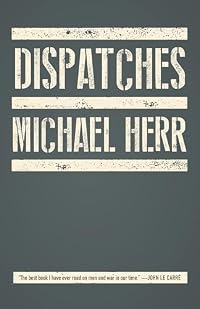
Dispatches
by Michael Herr
On This Page
Description
"The best book to have been written about the Vietnam War" (The New York Times Book Review); an instant classic straight from the front lines.From its terrifying opening pages to its final eloquent words, Dispatches makes us see, in unforgettable and unflinching detail, the chaos and fervor of the war and the surreal insanity of life in that singular combat zone. Michael Herr’s unsparing, unorthodox retellings of the day-to-day events in Vietnam take on the force of poetry, rendering show more clarity from one of the most incomprehensible and nightmarish events of our time.
Dispatches is among the most blistering and compassionate accounts of war in our literature. show less
Tags
Recommendations




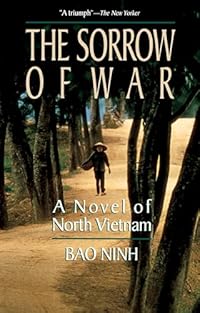
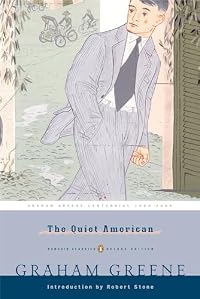
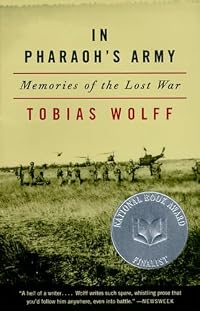
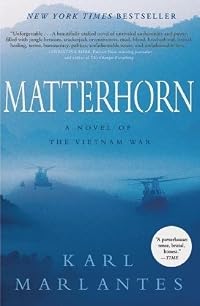

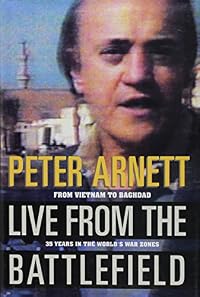
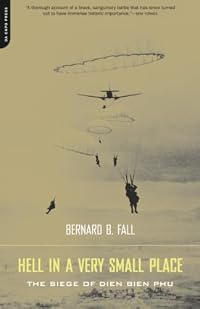
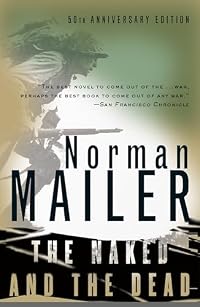
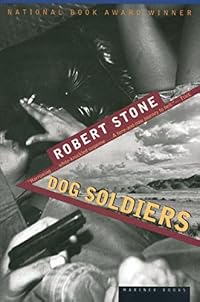













Member Recommendations
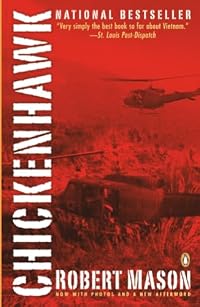
Peter4444 The autobigraphical recount of a young man who flew UH-1 Iiroquois helicopters in Viet Nam. He flew personnel rather than gun ships, but his take on what Viet Nam came to mean for him and how he ended up back in civilian life are a must-read, as well as the sequel "Chickenhawk: Back In The World"
Also recommended by chrisharpe
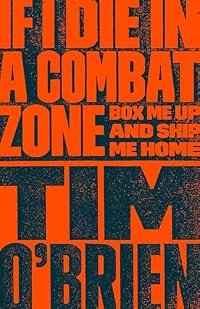
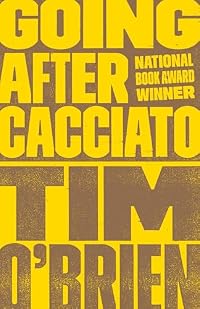
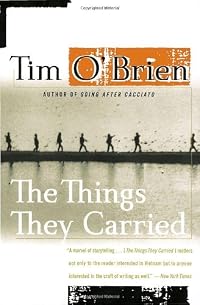
hazzabamboo Dispatches was the central source for the film Apocalypse Now. It's non-fiction, but it conveys the hallucinatory horror of the Vietnam War in the same way as O'Brien's novel.


villemezbrown One of the books discussed in the text.
Member Reviews
I was saddened to read the obituaries of Michael Herr who died just a few days ago at the age of seventy-six. For a lot of people, particularly men, of around my age his book Dispatches captured the essence of the Vietnam War, a campaign with which I have always had a bit of an obsession.
I turned twelve years old in 1975, just as the Americans withdrew from South Vietnam and, shortly afterwards, the Khmer Rouge marched into Phnom Penh, capital of Cambodia. For the previous few months I had been captivated by the seemingly interminable reports each night on the television news showing firefights, helicopter sorties and general mayhem as the war drew gradually towards it close. Of course, I had very little idea what it was all about but show more to a young boy it simply all looked very exciting.
The Vietnam War was perhaps the first multimedia engagement, with footage broadcast nightly to the rest of the world, courtesy of a huge corps of reporters (from both the traditional press and the burgeoning television companies who were eager to fill their news programmes with footage from the front). Michael Herr spent several years as part of that press corps, travelling all over the country in military helicopters and planes, writing articles for Esquire, Time and Life magazines.
The book is very difficult to describe – Herr effortlessly conveys the horrors of engagement, the terror and the brutality, yet also the camaraderie and sensitivity that the troops displayed, all set against the backdrop of the draft and the Civil Rights movement back home. His style is vibrant – Herr was, after all, one of the earliest and most adept exponents of what was then the emerging literary form of ‘New Journalism’. Fact written as seamlessly and engagingly as fiction.
Herr’s prose is meticulous, often veering towards the poetic, paradoxically often hitting its most purple patches when tackling the most awful subject matter. He also captures the zeitgeist of the times. Rest and recreation spells in Saigon were played out to an amazing sound track of 1960s rock, fuelled by handfuls of hallucinogens and downers. There is a wistfulness there, too (‘Of course, coming back home was a down. What could you do for a finish’), and a feeling that the rest of his life would always be coloured by his experiences in Vietnam. (‘I think that Vietnam was what we had instead of happy childhoods.’) He doesn’t glamourise war, but there is an inescapable sense that participation made combatants different from the rest of us. show less
I turned twelve years old in 1975, just as the Americans withdrew from South Vietnam and, shortly afterwards, the Khmer Rouge marched into Phnom Penh, capital of Cambodia. For the previous few months I had been captivated by the seemingly interminable reports each night on the television news showing firefights, helicopter sorties and general mayhem as the war drew gradually towards it close. Of course, I had very little idea what it was all about but show more to a young boy it simply all looked very exciting.
The Vietnam War was perhaps the first multimedia engagement, with footage broadcast nightly to the rest of the world, courtesy of a huge corps of reporters (from both the traditional press and the burgeoning television companies who were eager to fill their news programmes with footage from the front). Michael Herr spent several years as part of that press corps, travelling all over the country in military helicopters and planes, writing articles for Esquire, Time and Life magazines.
The book is very difficult to describe – Herr effortlessly conveys the horrors of engagement, the terror and the brutality, yet also the camaraderie and sensitivity that the troops displayed, all set against the backdrop of the draft and the Civil Rights movement back home. His style is vibrant – Herr was, after all, one of the earliest and most adept exponents of what was then the emerging literary form of ‘New Journalism’. Fact written as seamlessly and engagingly as fiction.
Herr’s prose is meticulous, often veering towards the poetic, paradoxically often hitting its most purple patches when tackling the most awful subject matter. He also captures the zeitgeist of the times. Rest and recreation spells in Saigon were played out to an amazing sound track of 1960s rock, fuelled by handfuls of hallucinogens and downers. There is a wistfulness there, too (‘Of course, coming back home was a down. What could you do for a finish’), and a feeling that the rest of his life would always be coloured by his experiences in Vietnam. (‘I think that Vietnam was what we had instead of happy childhoods.’) He doesn’t glamourise war, but there is an inescapable sense that participation made combatants different from the rest of us. show less
Intense, hallucinogenic, truer than true, this is the story of a hard year in Vietnam by a very talented writer. Michael Herr spent 1968 with the grunts, in Tet, at Khe Sanh, on China Beach. He spent it drinking in the bar of the the Continental Hotel, smoking dope in Saigon slums, sipping whiskey in bunkers by the light of parachute flares. You can't read this book and not feel the madness, the glamour, the transfixing power of War, and the way it touched and and transformed the men who fought it.
This book is the most haunting, visceral account of the Vietnam War that I have yet read. Michael Herr captures the essentially surreal character of the war, from the isolated and strange atmosphere in the Saigon drug scene to the absurdities of the "five o'clock follies", to the front-less fighting against the Viet Cong in both the jungles and in set battles. I felt in reading this that I got a real sense for how crazy it must have felt to be involved in the war from an American perspective, and what mental gymnastics were required to continue to justify a U.S. presence that became increasingly absurd as time went on. This is a highly readable account from a journalist who was there, who doesn't have any ideological or professional show more agenda to redeem or explain. show less
Wow.
I wasn't there "in the shit", but nothing I have ever read on Vietnam reads more authentic that this work by a correspondent that hunkered with "the grunts", was at Khe San, smoked weed and drank whiskey in the bunkers and got real with it in a way bordering on gonzo journalism.
I did a little research and was in no way surprised to learn that Michael Herr later became a Hollywood writer, lured to the movies by Francis Ford Coppola to work on Apocalypse Now. The tone and outlook of this book and that movie are very much aligned. The scene at the bridge is exactly as described, right down to the stoned M79 gunner killing the screaming VC with a single, instinctive shot in the dark. The movie was surreal based on a war that was show more surreal and Herr reported that surreal aspect as he experience it, it appears. show less
I wasn't there "in the shit", but nothing I have ever read on Vietnam reads more authentic that this work by a correspondent that hunkered with "the grunts", was at Khe San, smoked weed and drank whiskey in the bunkers and got real with it in a way bordering on gonzo journalism.
I did a little research and was in no way surprised to learn that Michael Herr later became a Hollywood writer, lured to the movies by Francis Ford Coppola to work on Apocalypse Now. The tone and outlook of this book and that movie are very much aligned. The scene at the bridge is exactly as described, right down to the stoned M79 gunner killing the screaming VC with a single, instinctive shot in the dark. The movie was surreal based on a war that was show more surreal and Herr reported that surreal aspect as he experience it, it appears. show less
Snappy writing, mixing up war reporting with lots of memoir episodes and anecdotes, about a quarter of the material becomes a bit navel gazing about the war reporters themselves and a vietnamese perspective is essentially missing.
The anger is here, the waste, the lack of a goal. But what this isn't, is some kind of history of the Vietnam war, even in part. Khe Sanh features heavily, but only with an indirect eye. This is a slice in time, with quick sketch portraits of named and unnamed soldiers, brief encounters, great quotes. It all felt very Hunter S Thompson and it made sense in retrospect as this is categorized in the "new journalism" style (he'd call it gonzo), which calls into question how accurate this all is. Reviews by show more veterans suggest it rings true, but is that in the sense of capturing the vibe rather than the literal truth of what happened? As Herzog suggests in his own memoirs, the literal truth can be less True than the fictionalized account.
What did we learn here? A bit of the trough every Vietnam movie has been siphoning inspiration from, and not just in the sense of the capsule moments, but the style, a roving camera circling our protagonist storyteller as waves of horror, boredom and action wash over him in a conflict he doesn't understand or particularly wants to fight. show less
The anger is here, the waste, the lack of a goal. But what this isn't, is some kind of history of the Vietnam war, even in part. Khe Sanh features heavily, but only with an indirect eye. This is a slice in time, with quick sketch portraits of named and unnamed soldiers, brief encounters, great quotes. It all felt very Hunter S Thompson and it made sense in retrospect as this is categorized in the "new journalism" style (he'd call it gonzo), which calls into question how accurate this all is. Reviews by show more veterans suggest it rings true, but is that in the sense of capturing the vibe rather than the literal truth of what happened? As Herzog suggests in his own memoirs, the literal truth can be less True than the fictionalized account.
What did we learn here? A bit of the trough every Vietnam movie has been siphoning inspiration from, and not just in the sense of the capsule moments, but the style, a roving camera circling our protagonist storyteller as waves of horror, boredom and action wash over him in a conflict he doesn't understand or particularly wants to fight. show less
In Dispatches Michael Herr recaptures his time in Vietnam in a vivid and stylishly harsh manner. As an independent journalist, he was able to choose which story to follow and often would catch helicopter rides between locations. He covered a huge part of Vietnam, including Saigon, Khe Shan and Hue. This is an excellent read about Vietnam but it is full of fear, death and the ravaging effect that this war had on both the people there and America as a whole.
He was able to get up close and personal with the serving soldiers and it is here, with a backdrop of rock and roll music, the psychological effects of drugs and the general demoralization of the troops, that one gets the clearest picture of the turmoil and uncertainty that the show more average grunt was facing. In covering the war, Michael Herr became one of them, eating their food, smoking their joints, and sharing their bunkers as bombs fell around them. One particular story of him being the only living passenger on a chopper full of body bags was particularly harrowing.
Michael Herr guides his reader through the craziness that was Vietnam and by the end of the book I felt numb and drained. From the chaos to the inhumanity, Herr doesn’t flinch from showing us the way it was. show less
He was able to get up close and personal with the serving soldiers and it is here, with a backdrop of rock and roll music, the psychological effects of drugs and the general demoralization of the troops, that one gets the clearest picture of the turmoil and uncertainty that the show more average grunt was facing. In covering the war, Michael Herr became one of them, eating their food, smoking their joints, and sharing their bunkers as bombs fell around them. One particular story of him being the only living passenger on a chopper full of body bags was particularly harrowing.
Michael Herr guides his reader through the craziness that was Vietnam and by the end of the book I felt numb and drained. From the chaos to the inhumanity, Herr doesn’t flinch from showing us the way it was. show less
Chaotic scenes for pages on end, hard to digest. Probably the purest, most honest way of writing about war. There are film that achieve this even better, but the part about the correspondents' role and position in this war is brilliant and covers all the controversies including Herr's own doubts about what to write.
Members
- Recently Added By
Lists

1001 Books You Must Read Before You Die
1,448 works; 1,131 members

Best Military History Books
123 works; 21 members

Stories of War and Revolution
143 works; 54 members

Recommend the 20 best books you've read in the last five years
2,167 works; 606 members

New York Public Library's Books of the Century - All
170 works; 14 members

Non-Fiction Worth Reading
1,015 works; 260 members

Swinging Seventies
255 works; 18 members

Read These Too
458 works; 9 members

1,001 BYMRBYD Concensus
723 works; 27 members

Mustich's 1000 Books to Read Before You Die: A Life Changing List
1,001 works; 18 members
THE WAR ROOM
813 works; 24 members
LibraryThingers' 1001 Books You Must Read Before You Die
442 works; 30 members
Author Information

10+ Works 4,332 Members
Michael Herr was born in Lexington, Kentucky on April 13, 1940. He attended Syracuse University, but dropped out to travel in Europe and write. He served in the Army Reserve and wrote for publications including The New Leader and Holiday. From 1967-1969, he was a correspondent for Esquire magazine during the Vietnam War. He wrote the article Hell show more Sucks, which put him in the forefront of the journalists who were writing on the war at that time. The piece became part of Dispatches, a memoir of his time in Vietnam, which was published in 1977. He also wrote Walter Winchell: A Novel, an experiment in which he combined a novel and a screenplay to tell the story of one of the country's most influential gossip columnists. He was active in the motion picture industry with writing credits for Apocalypse Now, Full Metal Jacket, The Island of Dr. Moreau, Heart of Darkness, and The Rainmaker. In addition, he served as an associate producer of Full Metal Jacket. He died on June 23, 2016 at the age of 76. (Bowker Author Biography) show less
Some Editions
Awards and Honors
Awards
Distinctions
Notable Lists
Series
Belongs to Publisher Series
Work Relationships
Is contained in
Has as a study
Has as a student's study guide
Common Knowledge
- Canonical title*
- Putain de mort
- Original title
- Dispatches
- Original publication date
- 1977
- Important places
- Vietnam; Khe Sanh, Vietnam
- Important events
- Vietnam War
- Dedication
- For my mother and father
- First words
- There was a map of Vietnam on the wall of my apartment in Saigon and some nights, coming back late to the city, I'd lie out on my bed and look at it, too tired to do anything more than just get my boots off.
- Quotations
- Bob Stokes of Newsweek told me this: In the big Marine hospital in Danang they have what is called the "White Lie Ward," where they bring some of the worst cases, the ones who can be saved but will never be the same ag... (show all)ain. A young Marine was carried in, still unconscious and full of morphine, and his legs were gone. As he was being carried into the ward, he came out of it briefly and saw a Catholic chaplain standing over him.
"Father," he said, "am I all right?"
The chaplain didn't know what to say. "You'll have to talk about that with the doctors, son."
"Father, are my legs okay?"
"Yes," the chaplain said, "Sure."
By the next afternoon the shock had worn off and the boy knew all about it. He was lying on his cot when the chaplain came by.
"Father," the Marine said, "I'd like to ask you for something."
"What, son?"
"I'd like to have that cross." And he pointed to the tiny silver insignia on the chaplain's lapel.
"Of course," the chaplain said. "But why?"
"Well, it was the first thing I saw when I came to yesterday, and I'd like to have it."
The chaplain removed the cross and handed it to him. The Marine held it tightly in his fist and looked at the chaplain.
"You lied to me, Father," he said. "You cocksucker. You lied to me."
...what a story he told me, as one-pointed as resonant as any war story I ever heard; It took me a year to understand it:
"Patrol went up the mountain. One man came back. He died before he could tell us what happened.... (show all)"
I waited for the rest, but it seemed not to be that kind of story; when I asked him what happened he just looked like he felt sorry for me, fucked if he'd waste time telling stories to anyone as dumb as I was. - Blurbers
- le Carré, John; Thompson, Hunter S.; Burroughs, William S.; Wolfe, Tom
- Original language
- English
*Some information comes from Common Knowledge in other languages. Click "Edit" for more information.
Classifications
- Genres
- History, Nonfiction, General Nonfiction, Biography & Memoir
- DDC/MDS
- 959.70438 — History & geography History of Asia Southeast Asia Vietnam 1949- 1961–1975 Vietnamese War Other military topics
- LCC
- DS559.5 .H47 — History of Europe, Asia, Africa and Oceania Asia History of Asia Southeast Asia French Indochina Vietnam. Annam Vietnamese Conflict
- BISAC
Statistics
- Members
- 3,566
- Popularity
- 4,558
- Reviews
- 72
- Rating
- (4.14)
- Languages
- 10 — Dutch, English, French, German, Italian, Norwegian (Bokmål), Polish, Portuguese, Spanish, Swedish
- Media
- Paper, Audiobook, Ebook
- ISBNs
- 51
- ASINs
- 36